Bishops of global south urge abandonment of fossil fuels; some Catholic economists warn against it
Catholic bishops from Africa, Asia, Latin America, and the Caribbean, along with others from Europe and Oceania, issued a manifesto this week urging world governments to abandon the use of fossil fuels because of “record global warming” that they say has increased the suffering of the poor. Catholic economists disagree with this assessment, however.
The document, titled “Manifesto of the Churches of the Global South for Our Common Home,” was guided by Pope Francis’ Laudato Si’ and Laudate Deum, according to the bishops, who write that climate change as a result of the burning of fossil fuels is a “consequence of unsustainable patterns of production and consumption and an ‘economy that kills.’”
The world, according to the bishops, again quoting Francis, “‘is crumbling and perhaps approaching a breaking point.’”
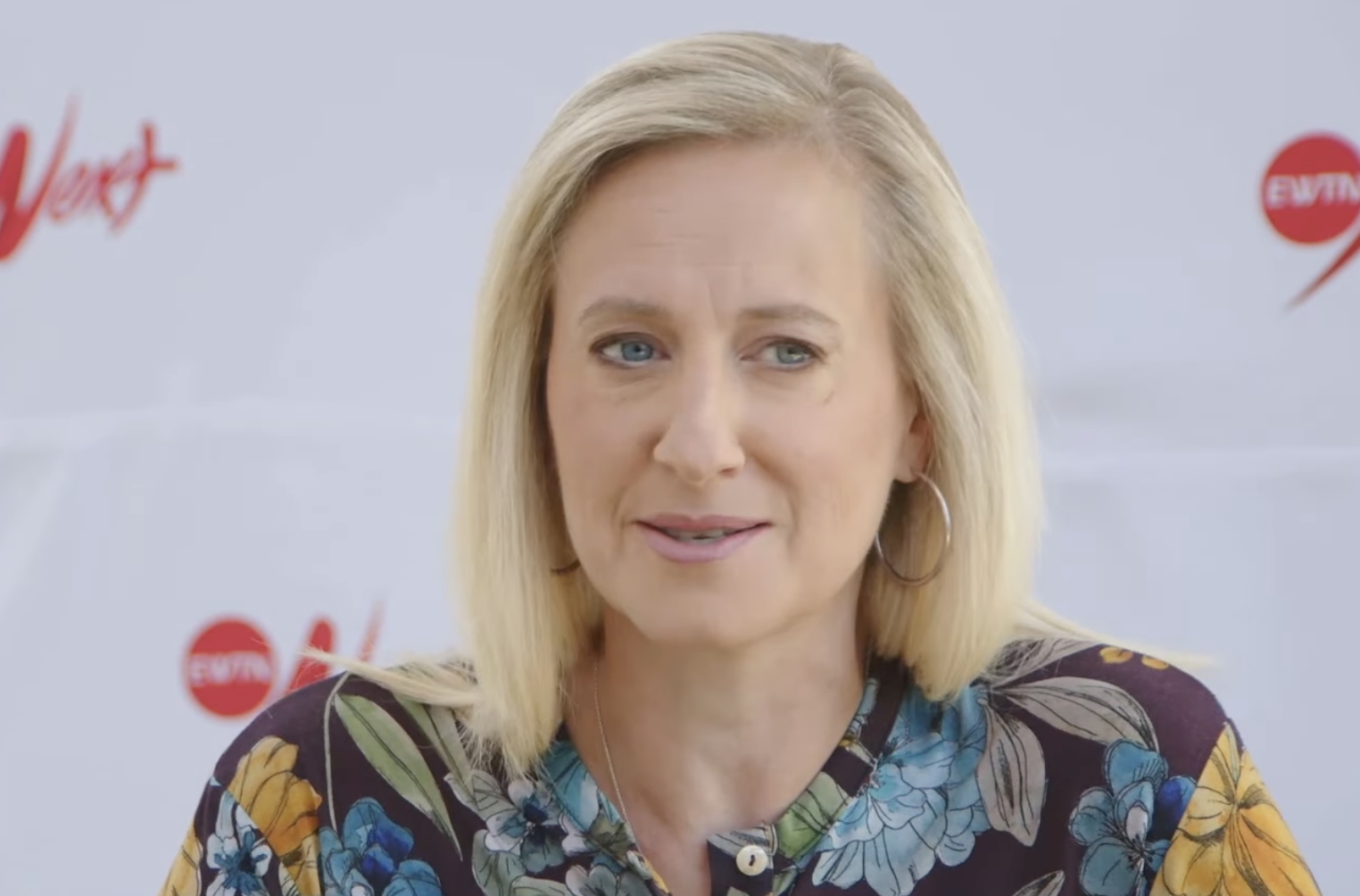
Catherine Pakaluk, an economist at The Catholic University of America, told EWTN News this type of “the-sky-is-falling” language does not reflect reality.
While she lauded Pope Francis’ notion that human life is part of creation and both are gifts, she disputed the idea that the earth is on the brink of an environmental catastrophe and called a reduction of fossil fuel reliance the opposite of helping the poor.
On the contrary, she said, a “clear-eyed” view of economic development is one that acknowledges that “the No. 1 thing poor nations and poor people need” to be lifted out of poverty is “cheap energy.”
The West “became wealthy using these cheap fossil fuels. It is stingy and inhumane” to deny developing nations this same opportunity, she said, and to instead require the use of wind and solar energy, which “are costly and don’t work” as well as fossil fuels.
Patrick Fleming, a Catholic environmental and agricultural economist who evaluates public policies related to agricultural sustainability and poverty at Franklin and Marshall College, agreed.
“To get the horsepower for large-scale efficient farming, nothing can match the power of machinery that burns fossil fuels,” he told EWTN News. “Likewise, heating a home in winter can’t be done with battery power. You need something you can burn.”
Fleming, who also holds a degree in theological studies from the Pontifical John Paul II Institute, acknowledged that while wealthier countries have a greater responsibility to develop more sustainable practices, “poorer countries need to build roads, schools, hospitals; fossil fuels make the building of such infrastructure more affordable and feasible.”
“You can’t do a lot of that development work with renewable energy,” he said.
Fleming said that globally, “by far, the biggest source of emissions is land use change, or deforestation for agriculture.”
He advocated for regenerative agricultural practices, telling EWTN News that “agricultural soils could sequester all the carbon globally if they were managed with regenerative principles.”
“You fit farming to the place, you work in cooperation with the natural order, as opposed to extracting and getting as high of a yield as you can without an eye to the long-term health of the land,” he said.
The manifesto’s three principal signatories are Cardinal Jaime Spengler, president of the Latin American and Caribbean Episcopal Council; Cardinal Fridolin Ambongo, president of the Symposium of Episcopal Conferences of Africa and Madagascar; and Cardinal Filipe Neri, president of the Federation of Asian Bishops’ Conferences.
Additional signatories include Monsignor Ryan Pagante Jiménez, vice president of the Federation of Catholic Bishops’ Conferences of Oceania, and Cardinal Ladislav Nemet, vice president of the Council of Bishops’ Conferences of Europe.
U.S. bishops‘ letter does not call for fossil fuel ban
Last month, the U.S. Conference of Catholic Bishops (USCCB) issued “An Invitation to Ecological Conversion for U.S. Catholics,” noting that “progress to slow climate change remains elusive” and emphasizing the need for personal and communal conversion, prayer, and action to protect the vulnerable and the earth as humanity’s common home.
Citing Pope Francis’ Laudato Si’ and Laudate Deum, the U.S. bishops’ Lenten letter described how “instances of extreme weather, wildfires, droughts, and floods are now common,” disproportionately affect vulnerable groups like refugees, farmers facing erratic patterns, children suffering hunger and dehydration, migrants fleeing lost livelihoods, and declining species in forests and coral reefs.
Everything is “interconnected,” with the “cry of the earth” linked to the “cry of the poor,” the bishops wrote.
In its letter, the USCCB promoted discernment and advocacy but did not call for treaty-level interventions or direct fossil fuel bans.
In their manifesto, however, the global south bishops praise an initiative called the Fossil Fuel Treaty as a way to address “the root of the problem.”
To ensure that all nations are held accountable for the dictates of the Fossil Fuel Treaty, the bishops claim a mandatory open-source Global Fossil Fuel Registry must be created to ensure “a just and equitable transition.” They do not explain who will monitor this registry or hold nations that fail to meet the treaty’s standards to account, however.
The treaty advocates for an immediate stop to all new coal, oil, and gas exploration and production, calling any new authorization of such endeavors “unethical.”
The bishops demand that wealthy nations reduce their energy consumption, promoting the values of “happy sobriety” and the “less is more” approach to “good living” promoted in Laudato Si’, emphasizing reduced consumption in wealthy nations to ensure access to “clean” energy as a fundamental right for all.
Pakaluk called such language “ignorant.”
“There’s a pattern: People continually think we will run out” of resources, she said, but the “laws of economics are well understood.”
“The bishops don’t understand the nature of economic growth. They are worried that the consumption of some takes away from the consumption of others,” she said. “This is patently false. When you consume, you have more opportunity. To consume, you have to work … My consumption doesn’t diminish yours; it contributes to it. It’s why anyone gets wealthy.”
Pakaluk said she is certain “the path these countries will follow will be what” the West followed as it became wealthy: as countries become richer, they will “start caring for the environment in various ways because they can now absorb that.”
As wealth builds, “people will switch to more electric power” and will develop a “renewed and sustained interest in nuclear power,” which, she said, is the “only way to sustain a technology-based future.”
The manifesto also strongly rejects what it calls “false solutions” such as “green capitalism,” neo-extractivism, carbon markets, and the creation of new sacrifice zones for critical mineral extraction in the global south.
The manifesto stresses equity and differentiated responsibilities, asserting that rich nations, which are, historically, responsible for fossil fuel-driven wealth and “bear an ecological debt to the global south,” must lead the phaseout by providing financial support, technology transfers, and compensation for poorer, fossil-fuel-dependent countries.
In this context, the bishops also call for a “fair distribution” of goods but do not give specifics for what this would look like practically.
The bishops also demand participatory, democratic processes that protect Indigenous, Afro-descendant, and marginalized communities and safeguard human rights.
Pakaluk blamed political and economic corruption and a lack of property rights, not greed in the West, for the slow development of the global south, calling developing countries’ “terrible monetary regimes” a “plague.”
Saint of the Day – rosary.team