Catholics in the Philippines observed a day of mourning Wednesday, one day after a shooting at a Catholic school left two students dead.
A ninth-grade student shot and killed a classmate in the grade above him on the morning of Aug. 18 at the junior high school campus of Ateneo de Zamboanga University in the southern Philippines before taking his own life, police said.
Authorities have identified the attacker only as a minor. Officials said he livestreamed the attack on Facebook.
The junior high school is part of Ateneo de Zamboanga University, founded by the Society of Jesus in 1912. The institution educates students from grade school through postgraduate level.
Father Guillrey Anthony Andal, SJ, the university president, canceled classes at all levels and declared a day of mourning and prayer across the universityʼs campuses. “We do not want any of these things to happen,” he said, adding the safety of students was the universityʼs first priority.
The university urged the public in a statement not to share unverified information, photographs, or videos of the incident, saying these could harm those affected and hinder the investigation.
The Catholic Educational Association of the Philippines, which represents the countryʼs Catholic schools, colleges, and universities, cautioned against speculation, saying in a statement that behind every report and social media post were students, families, and teachers in “profound grief and shock.” Ateneo de Manila and Ateneo de Davao universities issued statements of solidarity, local media reported.
The attack was the second at a Philippine school in two months. Three students were killed in June when two schoolmates opened fire at a public high school in Tacloban City in the central Philippines, local media reported.
President Ferdinand Marcos Jr. ordered an investigation and directed agencies to work with schools on safety measures. Schools “must also be among the safest places in our country,” he said in a statement. Education Secretary Sonny Angara traveled to Zamboanga City on Wednesday to meet the university president, city officials, and police.
A senior Bureau of Customs official told local media one of the weapons used had been issued by the agency to the attackerʼs father, a customs enforcement officer at the Port of Zamboanga, who has been placed under preventive suspension.
The State Department has awarded $50 million to Catholic Relief Services as part of a $1.4 billion partnership with faith-based organizations around the world.
Catholic Relief Services (CRS) will receive the funding through the State Department’s Faith and Community Initiative (FCI) announced Aug. 6, alongside other international aid groups, including World Vision, Compassion International, and Samaritan’s Purse.
“CRS is so proud to be among the recipients of the new Faith and Community Initiative! We received $50 million in first-year funding to lead programming in Cameroon, Liberia, and Nigeria, working as part of a group of faith-based organizations,” CRS spokesperson Brittany Wichtendahl said in a statement to EWTN News.
“The funding will help improve hospitals, clinics, and the health networks in rural parts of the countries — where a lot of families have limited access to quality healthcare,” she said. “This investment reflects a core strength of CRS’ approach: working alongside trusted local Church, Caritas, and faith-based partners that are deeply rooted in the communities they serve.”
CRS’ financial statements show that U.S. government grants routinely constituted 40% to 50% of total revenue in fiscal 2023 to fiscal 2025, and the 2026 federal grants to the U.S.-based international humanitarian nonprofit organization are only a fraction of the government funding CRS previously received. CRS’ fiscal 2023 budget totaled $1.3 billion, rising to $1.4 billion in fiscal 2024 before dipping to $1.2 billion in fiscal 2025.
The aid CRS is set to receive is part of $850 million the State Department earmarked for distribution among faith-based groups over the course of five years.
The State Department also said an additional $570 million will be provided directly to faith-based hospitals and clinics under memorandums of understanding with country governments.
The State Department said leveraging faith-based and community-run hospitals and clinics ensures that “at least 80% of resources go toward frontline health services that reach patients and clients while streamlining overhead and management costs, a significant increase from the 35% to 40% of resources that went to frontline health services in historical awards from the State Department.”
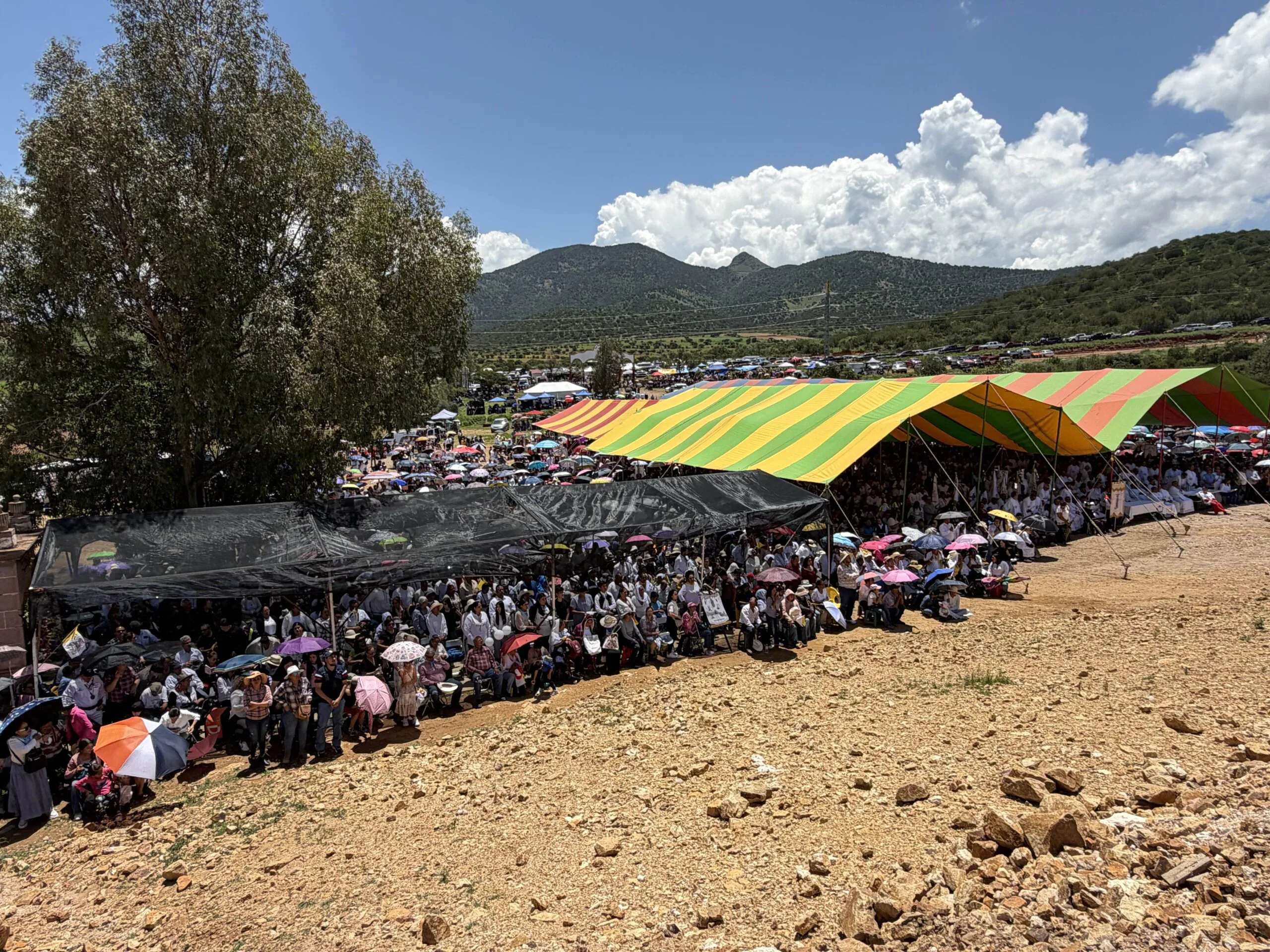
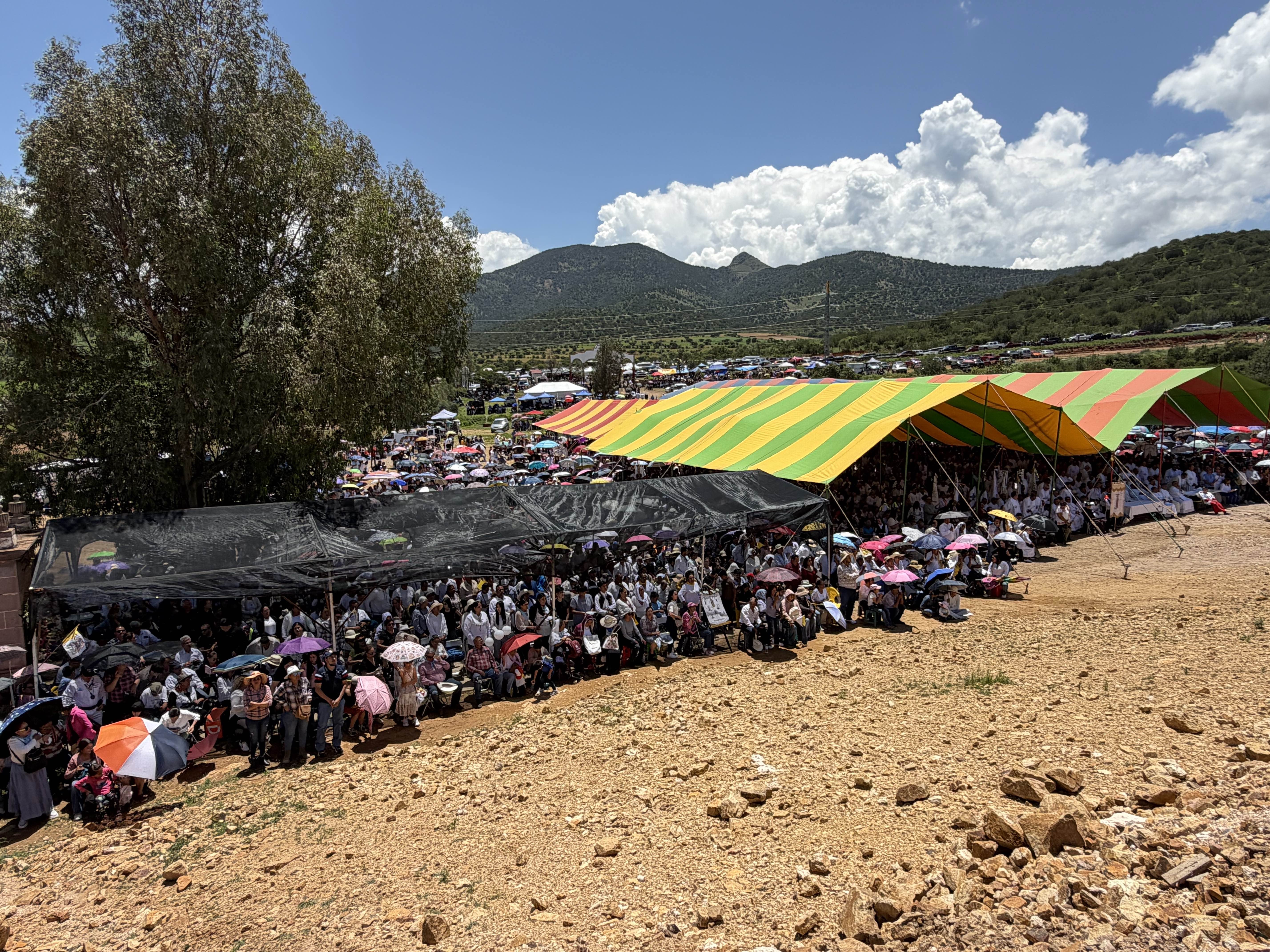
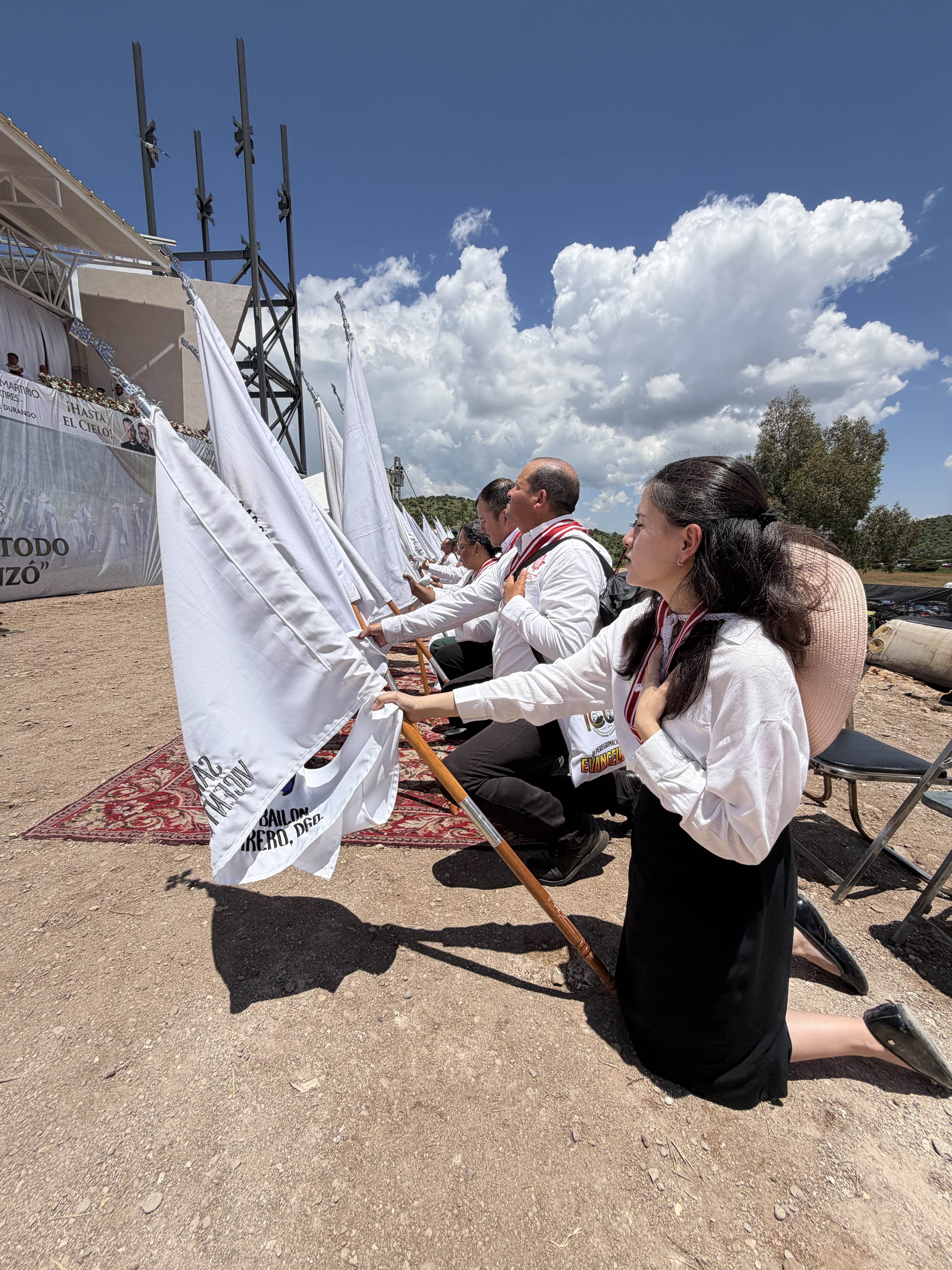
Around 15,000 faithful gathered on Saturday, Aug. 15, at the Holy Places of Chalchihuites in the Mexican state of Zacatecas to commemorate the centenary of four martyrs killed during the Cristero War.
Archbishop Joseph Spiteri, apostolic nuncio to Mexico and representative of Pope Leo XIV in the country, presided over the celebration that concluded the centenary jubilee year.
The Archdiocese of Durango shared images of the crowd gathered at the site where Sts. Luis Bátis Sáinz, Manuel Morales, Salvador Lara Puente, and David Roldán Lara were killed.
The four martyrs were shot to death on Aug. 15, 1926, at Puerto de Santa Teresa, a town located in the state of Zacatecas and under the ecclesiastical jurisdiction of the Archdiocese of Durango.
Thousands of the faithful attend the Mass marking the centenary of the martyrdom of four Mexican saints on Aug. 15, 2026, at Puerto de Santa Teresa, Zacatecas. | Credit: Photo courtesy of Father Rafael López
‘God does not die’
“God does not die,” Spiteri said at the beginning of his homily, echoing the words spoken by St. Manuel Morales before his execution.
The nuncio recalled that the four martyrs “offered their lives while freely and peacefully professing their faith in God.”
“Their crime was wanting to profess publicly, freely, and peacefully their faith in the God of life and in the Church founded by Our Lord Jesus Christ,” he stated.
Spiteri noted that the four saints were victims of “an ideology that did not admit freedom of thought and conscience,” which some sought to “impose with violence.”
In the face of this violence, he continued, the martyrs bore witness to the value “of peaceful resistance.” He emphasized that authentic freedom “is not wanting to do whatever we feel like, but being able to choose freely, consciously; choosing good and not evil.”
He said that “choosing to respond to bad actions, violence, and injustice” by doing good and extending forgiveness “is true freedom.”
The Vatican diplomat also encouraged Catholics to work “to build a more just society grounded in solidarity.”
He emphasized that the Church relies not on “the force of power” but on “the power of service,” and he encouraged the faithful to renew their commitment to offering a witness “of dialogue, understanding, and listening to the most vulnerable and those on the margins, in order to build the kingdom of God.”
Who were the 4 martyrs?
St. Luis Bátis Sáinz was a priest in San Pedro Parish in Chalchihuites and was particularly noted for his work with young people, according to the Vatican website. He was arrested just 15 days after the suspension of public worship in Mexico, amid the intensification of religious persecution under the government of Plutarco Elías Calles.
St. Manuel Morales, a husband and father of three, was a member of the Mexican Catholic Youth Action and president of the National League for the Defense of Religious Liberty, an organization that sought the repeal of the federal governmentʼs anticlerical provisions.
When Bátis asked the soldiers to spare Morales’ life because he had a wife and children, Morales replied: “Father, I am dying, but God does not die. He will look after my wife and my children.”
St. Salvador Lara Puente, who had just turned 21, worked for a mining company and was an active member of Catholic Action. When soldiers arrived looking for him, he replied: “Here I am.”
St. David Roldán Lara, 24, also worked for a mining company and was actively involved in the parish apostolate. He and Lara were cousins.
Bátis and Morales were the first to be shot to death. A few feet away, soldiers subsequently executed Salvador Lara and David Roldán.
The four were beatified by St. John Paul II on Nov. 22, 1992, and canonized by the same pontiff on May 21, 2000, alongside St. Cristóbal Magallanes and other Mexican martyrs.
The Archdiocese of Durango also counts among its martyrs St. Mateo Correa Magallanes, a priest murdered on Feb. 6, 1927, in the city of Durango.
Eucharistic adorers participate in the Mass marking the centenary of the martyrdom of St. Luis Bátis and his three companions on Aug. 15, 2026, in Puerto de Santa Teresa, Zacatecas. | Credit: Photo courtesy of Father Rafael López
Religious freedom and freedom of conscience
On Friday, Aug. 14, during a press conference held upon his arrival in Durango, the nuncio said his message for the local Church was one “of peace and communion, as the Holy Father, Pope Leo XIV, also asks of us.”
Spiteri highlighted the martyrs of Durango as examples of freedom of conscience.
“Whenever the respect for freedom of conscience has been lacking … the results have always been very sad and tragic,” he warned.
The pope’s representative clarified that religious freedom protects not only Catholics or those who profess a particular faith but also an individualʼs right not to adhere to any religion.
“When this freedom of thought is restricted … it is always a step in the wrong direction; we are moving backward, not forward,” he stated.
A shrine dedicated to the martyrs is currently being built at the Holy Places of Chalchihuites.
The celebration was preceded by an eight-day archdiocesan pilgrimage that traveled the road to the Holy Places.
At its conclusion on Aug. 14, the archbishop of Durango, Faustino Armendáriz Jiménez, stated: “Blessed are those who have traveled this path, because those of us who live this experience have experienced God.”
The archdiocese also shared images of the pilgrims after completing the pilgrimage, “tired, but happy,” and with their “hearts full of gratitude and joy.”
This story was first published by ACI Prensa, the Spanish-language sister service of EWTN News. It has been translated and adapted by EWTN News English.
Twelve Polish pilgrims died and 10 were seriously injured when their bus crashed in Hungary on Aug. 16. They were returning from a pilgrimage to the Marian shrine at Medjugorje in Bosnia and Herzegovina. Others among the roughly 60 people on board suffered minor injuries, and an investigation into the crash has been launched.
The tragedy prompted immediate reactions from public figures, including condolences from Hungarian Prime Minister Péter Magyar and his Polish counterpart, Donald Tusk. The Polish prime minister sent a special aircraft to Hungary carrying representatives of the Ministry of Foreign Affairs and medical services to assist those affected. Polish President Karol Nawrocki said he was praying for “the families and loved ones of the victims.”
The heads of both the Polish and the Hungarian bishops' conferences also responded to the accident.
Archbishop Tadeusz Wojda of Gdańsk, president of the Polish Bishops' Conference, received the news “with great sadness” and prayed “for eternal life for the tragically deceased victims of the accident and for the recovery of the injured.”
Wojda extended prayers “to the families of those who died and those injured,” asking “God to grant them relief from their pain, as well as the strength and hope that will help them survive these extremely difficult times.”
Bishop János Székely of Szombathely, president of the Hungarian Catholic Bishops' Conference, expressed solidarity with the Polish victims who died while passing through his country.
“I was deeply moved to learn of the tragic bus accident,” he said, and prayed “for the eternal salvation of those who lost their lives.”
Székely asked “the Almighty to grant comfort to the families of the deceased in these difficult hours and to help the injured recover as quickly as possible.”
On behalf of the entire Catholic community in Hungary, the bishop assured “our Polish brothers of compassion and solidarity.”
The bus carrying the Polish pilgrims overturned in the early hours of Sunday and went off the road into a ditch on the M3 motorway in eastern Hungary. Some media have reported that the driver may have fallen asleep and that he has been taken into custody.
Archbishop Anthony Fisher, OP, of Sydney has demanded an investigation from the Australian Broadcasting Corporation (ABC) over its coverage of calls to lift the federal ban on using telehealth and other carriage services for voluntary assisted dying (VAD), as euthanasia and assisted suicide are termed in Australian law.
The Australian reported that in a letter to the ABC ombudsman, Fiona Cameron, he claimed the national broadcaster had breached its own guidelines on impartiality.
He asked the ombudsman whether its platforms “operated to amplify one side of a contentious policy debate."
VAD is legal throughout Australia apart from the Northern Territory, which is expected to pass enabling legislation soon.
However, a federal law banning advice about committing suicide over the phone or internet also bans telehealth consultations for VAD.
VAD advocate Andrew Denton — a former ABC television host, comedian, and founder of Go Gentle Australia — has campaigned to have the ban overturned.
Fisher cited four occasions in nine days in July when Denton promoted his views on ABC platforms. Three of them appeared before the Australian Labor Partyʼs national conference in July, which supported an end to the federal ban on telehealth consultations.
In his letter, Fisher set out what he said was documentation of a failure by the ABC to present the contentious issue impartially.
He wrote: "Over a period of nine days the ABC repeatedly provided the founder of an organization established to advocate for euthanasia and assisted suicide law reform with opportunities across television, radio, online, and social media to make the case for amending a federal prohibition on the use of telehealth for euthanasia and assisted suicide.”
"The principal arguments for retaining the prohibition were not put forward by those who hold them; rather, they were largely summarized or characterized by Denton,” he said.
The imbalance is particularly significant, the bishop continued, “because three of the relevant items, as well as two associated social media posts, were published or broadcast in the four days immediately preceding an Australian Labor Party National Conference vote on the issue being advocated.”
A subsequent ABC current affairs program interview occurred in the context of a foreshadowed parliamentary attempt to amend the law, Fisher added.
He stressed: "In those circumstances, providing an alternate perspective at some indefinite later time could not remedy the absence of diversity during the period in which the issue was the subject of an active and imminent political decision.”
Given the “significance of the issue, the imminence of the political decisions to which the coverage related, and the ABCʼs particular obligation to maintain public confidence in its impartiality,” Fisher asked that these matters be carefully investigated and addressed.
The archbishop also said Denton had misrepresented remarks he made in 2011 on “redemptive suffering.”
“Denton omitted [my] immediately preceding response, which clearly states that the goal of the Catholic Church is to reduce suffering,” he wrote in his letter to the ombudsman.
Responding to questions from The Australian, an ABC spokesman said a complaint had been received by the ombudsmanʼs office.
This story was first published by The Catholic Weekly, the news outlet of the Archdiocese of Sydney, and is edited and republished by EWTN News with permission.
The U.S. Conference of Catholic Bishops is urging the U.S. Supreme Court to require 12-person juries in criminal cases, with the bishops arguing against a Florida policy allowing smaller six-person juries in many cases.
The case Kian v. Florida, which the Supreme Court agreed to hear in June, was brought after Florida chiropractor Hamed Kian was convicted of five felony counts for practicing without a license.
Kian was found guilty by a six-person jury; the state of Florida only requires 12-person juries in capital cases. Several other states have similar rules.
Kian sued the state arguing that the Sixth Amendment to the U.S. Constitution guarantees a right to a 12-person jury. He lost his appeal at the Fourth District Court of Appeal of Florida and subsequently appealed directly to the Supreme Court, which will hold arguments in the case in its upcoming term.
In their amicus filing, the U.S. bishops argued that the term “jury” in the U.S. has historically referenced a body of 12 jurors; the bishops pointed to “Founding-era dictionaries” as well as “common-law history.”
The bishops said they have a “strong interest” in the case, insofar as the Catholic Church over the centuries has played a “central role in shaping the legal culture from which the common-law jury emerged.”
Among the historical examples of 12-person juries the bishops cited include the General Fundamentals of Plymouth, “the earliest codified legal system by English colonists in North America,” which guaranteed that “all trials” would be “tried by a jury of twelve good and lawful men.”
The prelates disputed the Supreme Court’s 1970 ruling in the case Williams v. Florida, which held that the Sixth Amendment does not require 12 jurors in court cases.
That ruling in part “discard[ed] the robust common-law history of the jury right,” while the high court in that decision “set far too high a bar for historical relevance,” they said.
The bishops further cited the biblical commandment to “love your neighbor justly.” They pointed to the Catholic catechism’s mandate for public authorities to “dispense justice humanely by respecting the rights of everyone.”
They urged the Supreme Court to “return to its previously long-held understanding that the Constitution entitles criminal defendants to a jury of twelve of their peers.”
Numerous advocacy groups have also filed amicus briefs advocating the 12-juror standard, including the American Civil Liberties Union, the Innocence Project, several dozen current and former prosecutors, and the Florida Association of Criminal Defense Lawyers.
The Archdiocese of Quebec in Canada will pay out an eight-figure sum as part of a major class action lawsuit that has played out there over the last several years.
The archdiocese said in a press release that the agreement was ratified on Aug. 12 by Quebec Superior Court Judge Danye Daigle. The law firm Dufresne Wee, which had originally brought the lawsuit in 2020, also confirmed the settlement on its own website.
An Aug. 12 filing in the superior court said the agreement would consist of $31.5 million “to compensate the class members covered by [the] class action.”
The agreement also stipulated that a “letter of apology” would be delivered to abuse victims.
In its press release the archdiocese said its leaders “welcome this news.” The archdiocese said Church officials were “aware that [the settlement] can help members continue on their path to peace and healing.”
Announcing the settlement, Auxiliary Bishop Jean Tailleur told victims: "Faced with the suffering you are carrying, there is little that my words can relieve or heal.”
“However, something must be said,” the prelate continued. “On behalf of the Catholic Church of Quebec, I would like to offer you our most sincere apologies.”
The archdiocese said alleged abuse victims would have a final chance to join the class action settlement prior to the distribution of the funds.
The payout signals the looming end of a process that has taken place over more than half a decade, starting in August 2020 when the first filing in the class action suit was made in the superior court.
Filings in the lengthy lawsuit had accused two major Church leaders in Quebec of committing abuse. In January 2024, Archbishop Cardinal Gerald Lacroix was accused of abusing a 17-year-old teenager decades before. Lacroix was ultimately cleared by the Vatican after an investigation.
Archbishop Richard Moth of Westminster in England issued “a vital call to action in support of people around the world oppressed for their faith” to national governments and the United Nations.
Moth, president of the Catholic Bishops’ Conference of England and Wales, called on Catholics and people of goodwill to sign a petition urging world leaders to ensure countries fulfill the religious freedom requirements in Article 18 of the Universal Declaration of Human Rights.
“Religious freedom is a right not a privilege,” Moth said in the Aug. 18 statement.
The article, created and adopted in 1948, “affirms the right to freedom of religion or belief,” he said. “It was ratified by the United Nations and quickly became recognised around the world.”
“The Second Vatican Council affirmed this right, teaching that ‘this freedom means that all people are to be immune from coercion… in such a way that no one is to be forced to act in a manner contrary to his or her own beliefs,’” he said.
The petition is part of a campaign organized by the Catholic charity Aid to the Church in Need (ACN). It is intended to advocate for Article 18 ahead of the 10-year anniversary of Red Wednesday, an annual global campaign by ACN to raise awareness about religious persecution.
It is “a critical moment to act,” as “more than 5 billion people live in countries where persecution, oppression, and discrimination restrict religious freedom, including more than 200 million Christians,” ACN reported.
Despite Article 18’s recognition, “all too often Article 18 is ignored,” Moth said.
The bishop said: “Men and women are imprisoned, others are driven from their homes, or even killed, simply because of their peacefully held beliefs.”
“In some countries women and girls are kidnapped, forced to renounce their faith and marry their abductors; children are denied the right to learn about their faith; many people — young and old alike — are the victims of religious hatred; they suffer abuse and discrimination in the streets, at school and at work.”
“We need to stand up for our brothers and sisters in Christ and stand in support of all those who suffer for their beliefs, recognising religious freedom as a universal human right,” Moth said.
“As Pope Leo has said, ‘Religious freedom is not merely a legal right or a privilege granted to us by governments. It is a foundational condition that makes authentic reconciliation possible,’” Moth said.
“In the words of the Holy Father, there can be … ’no peace without freedom of religion, freedom of thought, freedom of expression, and respect for the views of others,’” he concluded.
“Truth is not decreed; rather, it is sought and recognized through free and pluralistic debate,” stated Mexico’s bishops as they questioned various aspects of the government’s proposal to regulate the rights of radio and television audiences.
In an Aug. 13 statement, the Mexican Bishops’ Conference (CEM, by its Spanish acronym) warned that the proposal could make freedom of expression contingent upon the government’s criteria of “truth” and also compromise religious freedom and the editorial independence of the media.
The public consultation, open from July 27 to Aug. 21 and conducted by the country’s Telecommunications Regulatory Commission, addresses a regulation that, according to the bishops, “will touch the daily lives of millions of Mexicans: what we hear on the radio, what we watch on television, and the spaces where information, culture, faith, opinion, and constructive criticism find a voice.”
The CEM acknowledged positive aspects of the proposal, such as the explicit prohibition of prior censorship, nondiscrimination based on religion, and the protection of vulnerable groups against manipulation, misleading advertising, and content that degrades human dignity.
“That these rights have clear mechanisms to be enforced is a good thing for everyone,” the conference highlighted.
However, the bishops warned that, although the purpose of protecting the rights of audiences is legitimate, the way in which the goal is attempted to be achieved also matters.
The CEM statement joins others made by the Catholic Church in Mexico. On Aug. 1, the Primatial Archdiocese of Mexico stated that “there can be no prior censorship” and that no administrative authority should determine the veracity or acceptability of opinions.
A week later, an editorial in Semanario, a publication of the Archdiocese of Guadalajara, questioned who would have “the authority to decide when information is true, false, or presented out of context,” and highlighted the importance of balancing state regulation with media independence.
No authority can act as an ‘arbiter of truth’
The bishops emphasized that “freedom of expression is a fundamental pillar of the democratic order” and noted that “no administrative authority can set itself up as an arbiter of truth, particularly regarding ideas, opinions, convictions, and beliefs, whether religious or otherwise.”
The CEM drew a distinction between the veracity required of journalistic information and personal convictions, which cannot be subjected to administrative verification.
“The truthfulness legitimately required of journalistic information is a duty of due diligence: to cross-check, verify, distinguish fact from opinion, and rectify errors,” the CEM explained.
Something different, the conference noted, is “the truth of convictions, which admits of neither administrative verification nor sanction, and whose assessment by the state would be, in itself, incompatible with freedom of conscience and freedom of expression.”
The episcopate expressed particular concern regarding the possibility that a governmental authority might classify and potentially sanction the dissemination of information deemed “false” or “taken out of context,” given that the bill does not clearly define the boundaries of these concepts.
In the bishops' view, such a mechanism could “make freedom of expression contingent upon the government’s criteria for truthfulness” — something “incompatible” with the Mexican constitution, international treaties, and “various judicial precedents.”
Religious freedom and editorial independence
The CEM pointed out that by Mexican law “religious associations may not own or manage radio and television licenses.” Consequently, it called for the pluralism envisioned by the guidelines to “also include the pluralism of religious convictions and beliefs.”
This protection, they added, must benefit all faiths as well as those who profess no religion, to prevent them from being subjected to “administrative judgments regarding truthfulness” or “compulsory labels.”
The bishops also expressed reservations regarding the powers the bill would grant the governmental authority “to review and validate media codes of ethics,” review the decisions of audience ombudsmen, and order the rectification or modification of content.
“Ethical self-regulation is a good that flourishes in freedom; when permanently subject to governmental validation, it ceases to be self-regulation,” they pointed out.
Participation in consultation encouraged
The CEM deemed it “essential” for the public to participate in the consultation before Aug. 21.
“Citizen participation is not merely a procedural step in the regulatory process, but an exercise of co-responsibility for the common good; a democracy is strengthened when citizens participate, not when they remain silent,” it stated.
The bishops also expressed their “willingness to engage in frank and constructive dialogue” with authorities and license holders, and offered their educational and pastoral network “to collaborate on media education and literacy programs, the development of audiences that exercise critical thinking, and the dissemination of mechanisms for defending rights.”
The CEM also noted that no regulation can replace the responsibility to discern information, verify it before sharing, and avoid spreading content that harms others or creates confusion.
“The primary defense of the truth is not a regulation; it is a well-formed conscience,” they emphasized.
This story was first published by ACI Prensa, the Spanish-language sister service of EWTN News. It has been translated and adapted by EWTN News English.
In April, the Center for Applied Research in the Apostolate’s (CARA) survey was released and showed that 18% of priests ordained this year attended a Franciscan University of Steubenville Youth Conference during their vocational journey. This was more than any other Catholic conference ministry in the United States.
In previous years — specifically from 2010 to 2025 — this percentage ranged between 8% to 16%.
In 1976, Franciscan University of Steubenville held its first youth conference on its campus in Steubenville, Ohio. Celebrating 50 years this summer, the youth conferences have helped over 1 million young people encounter Jesus Christ through dynamic talks, the Mass, Eucharistic adoration, confession, prayer, and fellowship.
So, what is it about the Steubenville Youth Conference that is having such an impact on young people and specifically vocations?
EWTN News spoke to a priest and a transitional deacon — both of whom credit their experience at a Steubenville Youth Conference with impacting their vocations — about their journeys to the priesthood and why they believe this conference is igniting a fire for the faith in the hearts of young people.
Seeing joyful priests changed everything
Father Rufino Corona is a Third Order Regular Franciscan in Steubenville who was ordained in 2020. Originally from Puebla, Mexico, Corona came to the United States with his parents at the age of 8 and grew up in San Diego.
As a teenager he was active in his youth group, and it was his youth minister who frequently told Corona that he could see him becoming a priest.
“It was something that he would say to me and I would kind of write it off,” Corona recalled. “Itʼs one of those things that as I look back now, I think part of the reason why was — for one thing, I was a teenager and really in that world, but also another thing, I feel like I had priests around me who were not bad priests but Iʼd seen people very passionate for the Gospel, be very passionate for evangelization, but that was not something that Iʼd ever really seen in a priest.”
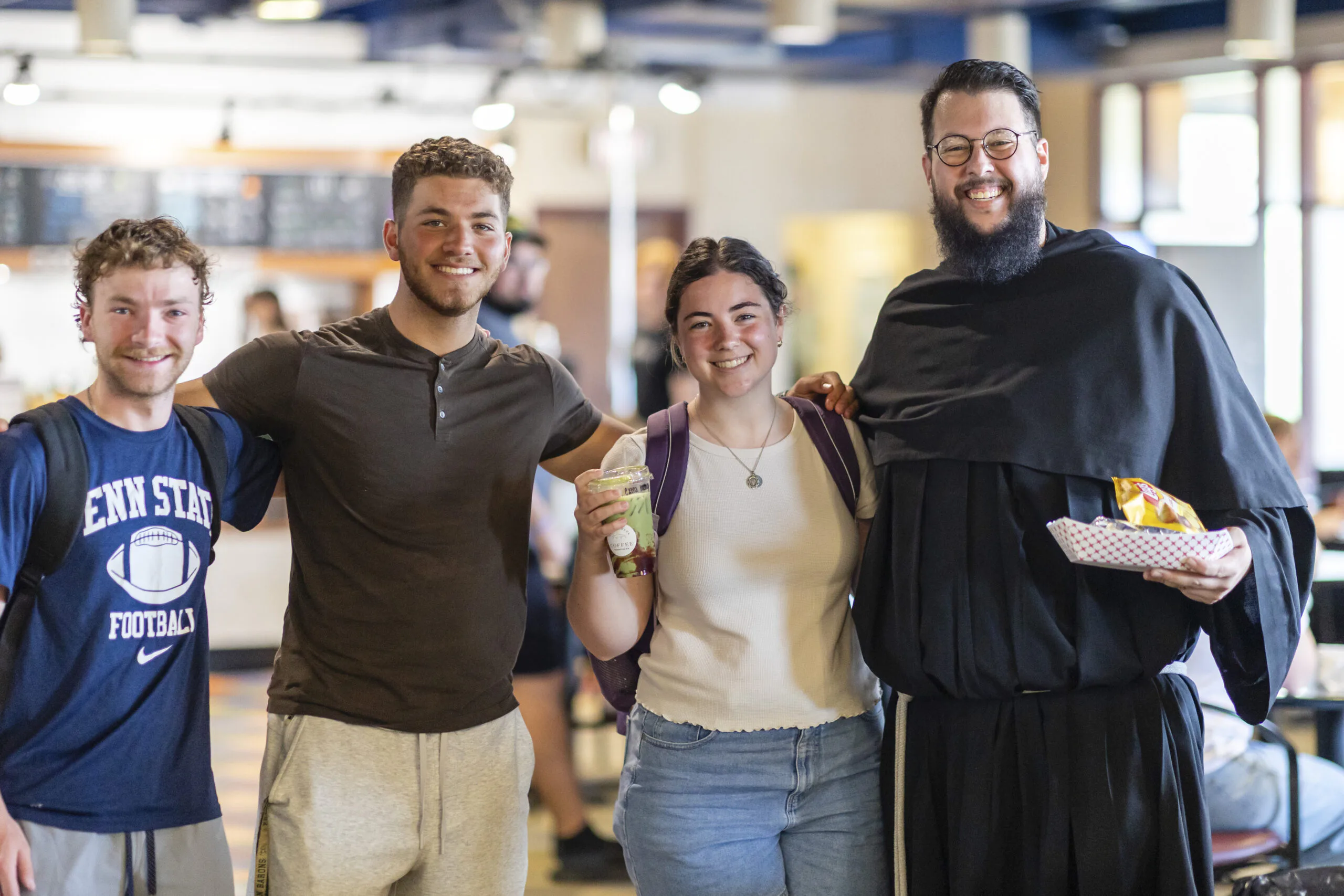
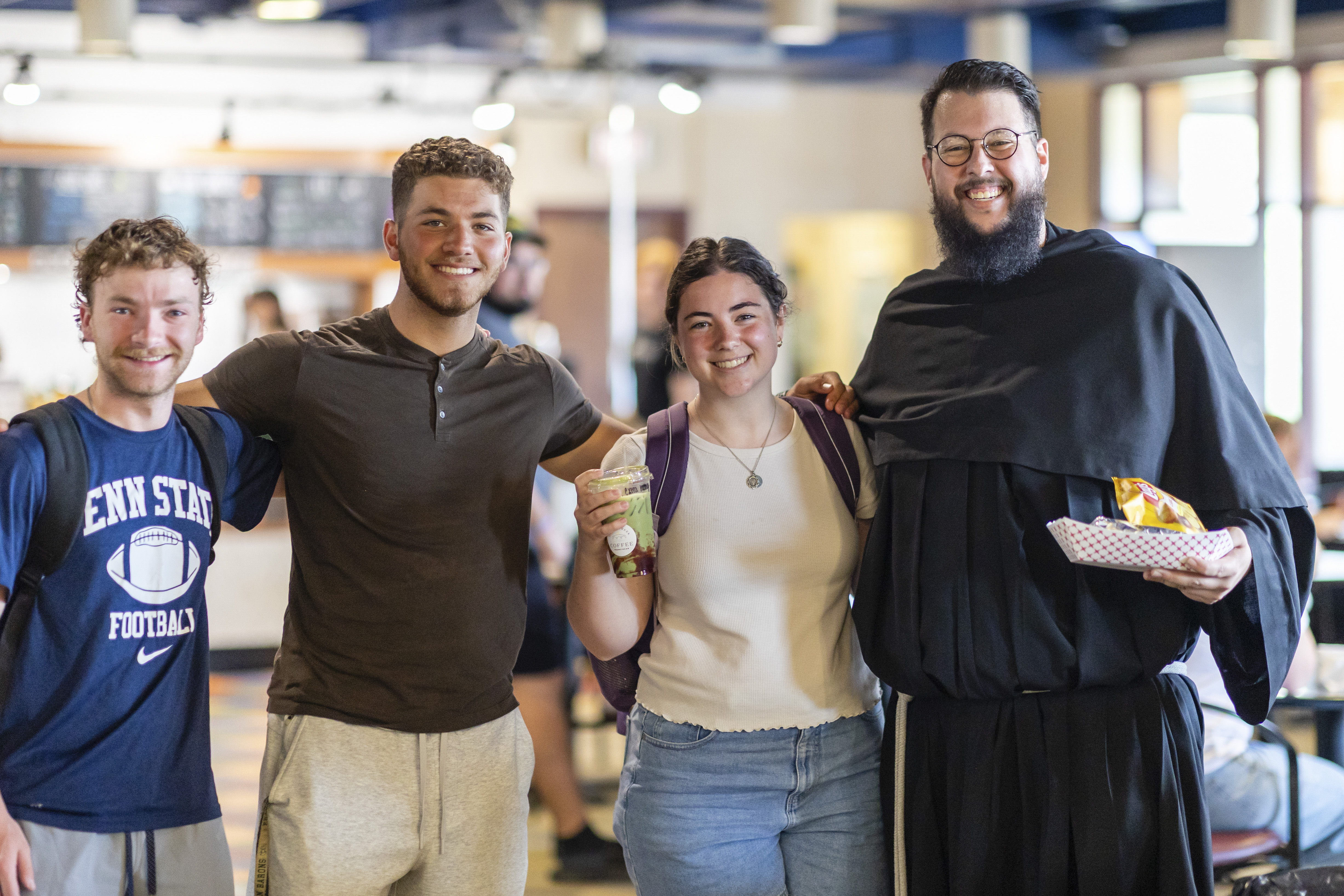
Father Rufino Corona, far right, with students at a Steubenville Youth Conference. | Credit: Franciscan University
He continued: “So all of a sudden I go to these youth conferences and, it wasnʼt necessarily one in particular, but it was these men were so on fire for the Lord, so on fire for the youth hearing the Gospel. That was really my first time seeing a priest just be passionate about the Lord, and be passionate about their faith, and be passionate for souls.”
Another impactful moment for Corona was the vocations call that takes place at the end of the weekend. On the last day of the conference, anyone who may be considering religious life is asked to stand up so they can receive a blessing.
“I joke about it now that that used to be my least favorite part of the weekend, because, especially, I went to four conferences, and especially in my third and fourth conference, I started to feel the Lord moving that way but I never got up,” he shared.
However, those moments also served as a “powerful witness” for him because Corona saw so many other men his age stand up and say that they were considering it, which was “part of what really started to open up my heart to it.”
A couple of years went by and Corona was put into a leadership position where he was ministering more to his peers and felt a great desire toward the sacrament of reconciliation as he was working with these individuals. Eventually he spoke to his spiritual director — a layman who worked at Franciscan University — who told him he could continue to pray about it or he could take a step. Corona decided to take a step.
He emailed the vocations director in San Diego but never heard back. However, after speaking more with his spiritual director he was encouraged to look into becoming a friar.
“He just knew how big brotherhood was for me and literally 24 hours into the Come and See [with the Franciscan friars], I knew thatʼs where I was supposed to be,” he recalled.
From the back bleachers to the altar
Deacon Arthur Bodenschatz is a transitional deacon in the Diocese of Youngstown, Ohio, who was ordained on June 6. He grew up in a very devout Catholic household. His parents met as NET missionaries — a youth ministry program — and instilled a love for evangelization in their four children.
In the second grade, Bodenschatz began to dress in all black to attend Mass — pretending that he was the priest. However, it wasn’t until he was 14 when he had a powerful encounter with God at a Steubenville Youth Conference that he knew he was meant to be a priest.
“The moment was during Saturday night adoration … and I was sitting on the back bleachers, in one of the uncomfortable spots, when the Eucharistic procession was going by and I just had a moment of locking eyes with the Lord in the Eucharist and just had a moment of realization, of grace, where I just knew that that was Jesus in the Eucharist. I knew that he loved me. I knew that I loved him. And I knew I was going to be a priest. And it was just a joyful moment filled with a lot of joyful tears,” he recalled.
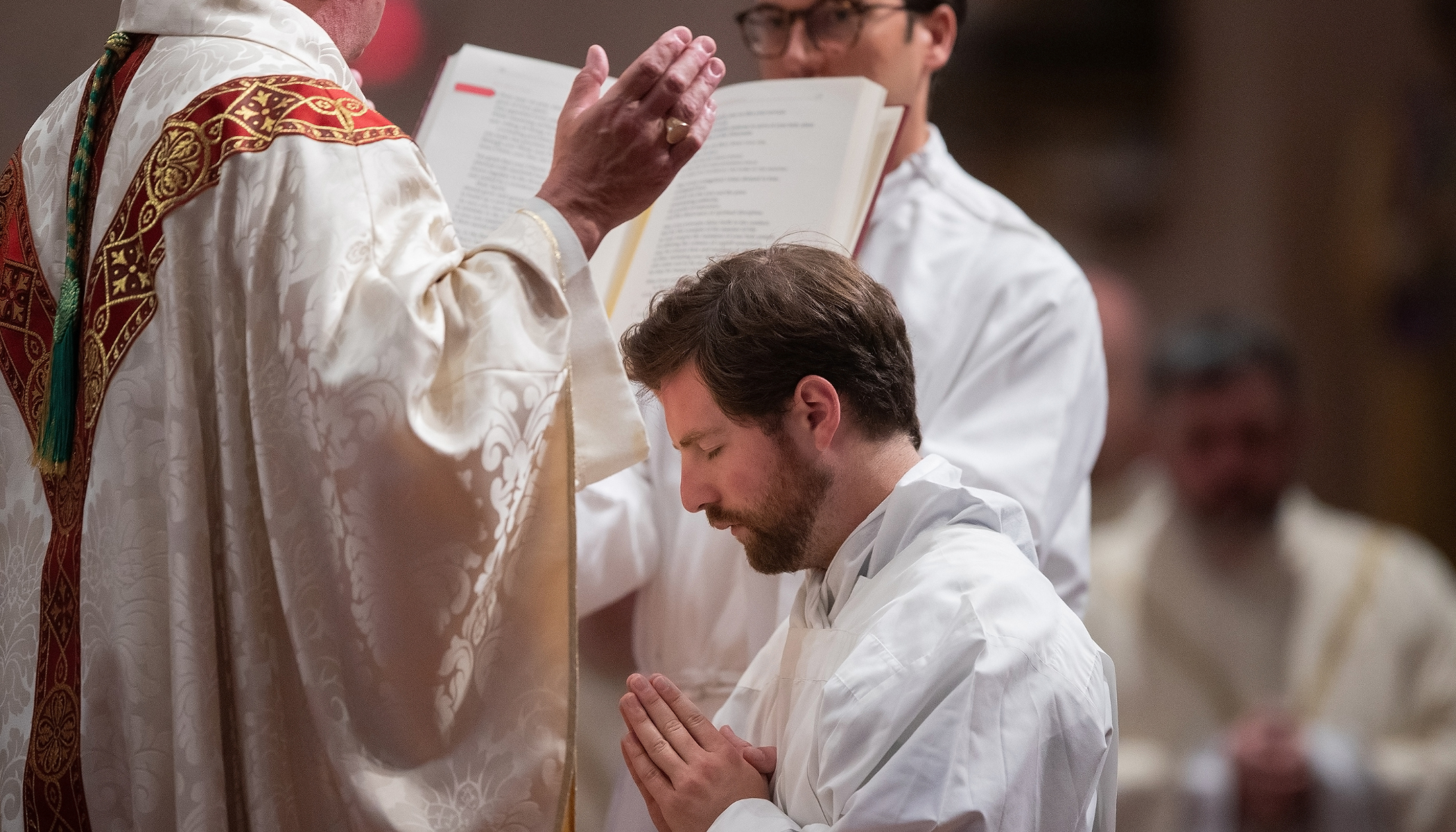
Deacon Arthur Bodenschatz during his ordination on June 6, 2026. | Credit: Ed Hall/Catholic Echo
After that experience, Bodenschatz went back home and became very involved with his youth group, began to attend daily Mass, and found a spiritual director.
After he graduated from high school, Bodenschatz went straight into Borromeo Seminary in Cleveland and will be ordained a priest in 2027.
“Iʼm looking forward to the completion of a nine-year journey. So much preparation leading up to it,” he shared. “And just the idea of celebrating that first Mass — it brings a smile to my face. Knowing that what I feel God has been calling me to for so long, that he wants to use me to turn bread and wine to his body and blood for the people of God … I just canʼt wait to be his instrument.”
The power of encountering a joyful Church
So, what is it about the Steubenville Youth Conferences that is inspiring so many vocations in young people?
For Bodenschatz, it was hearing the Gospel “in such a way that was personal to me.”
“Hearing the insistence and the repeated message that Jesus loves me and that the Holy Spirit is alive in me and wants to work in me was something that maybe Iʼd heard before but I was actually starting to experience it there,” he recalled. “So I think that was just a really powerful message that is embodied by the people who are up there speaking and embodied by the people up there leading worship and the whole community, the whole environment. Itʼs just so joyful.”
He added: “Whereas in my normal experience of parish life, I didnʼt see as much joy and I didnʼt see as many people my age or as many priests and sisters running around who were just so happy to be there. So I think something about that unique experience of just the universal Church so full of life really opened me up to what the Holy Spirit was doing in me.”
Corona echoed a similar sentiment in that it is powerful for young people to see the joy their peers are also carrying for the Lord and their faith.
“There is something about coming to a conference and seeing a thousand other kids there for the same reason,” he said. “It makes your faith seem like ‘OK, this is more than just my high school. OK, this is more than just my area. This is something real. This is something that Iʼm seeing other teens honoring God and so maybe thereʼs something here.’”
“I think that there is so much to the witness of the other groups that I think goes just a really, really long way because all of a sudden the faith becomes something so much more than my familyʼs thing or something so much more than, ‘Well I go to this youth group because thatʼs where my friends go.’”
Corona added: “Itʼs like, ‘Oh my gosh, I am surrounded by anywhere from 1,000 to 4,000 to 4,500 teens who all believe that this is real’ or at least who are trying to and are wanting to see this as something real.”