France’s National Assembly approved for consideration on June 1 a bill aimed at preventing and combating violence in schools, a measure the countryʼs bishops warn could put in jeopardy the seal of confession.
The French Bishops' Conference contends the legislative initiative infringes upon several fundamental freedoms, including freedom of conscience, freedom of education, and freedom of worship.
Although the bishops support the governmentʼs intention to combat psychological, physical, and sexual violence perpetrated against children and adolescents, they specifically expressed concern that the proposed legislation could compromise the seal of confession and the autonomy of Catholic education.
The bishops point to Article 9 of the bill, which mandates the obligation to report acts of violence against minors even if knowledge of such acts was acquired in the exercise of the priestly ministry and adds that no “seal of confession” may be invoked to override said obligation.
The prelates further warned that the measure would jeopardize the autonomy of Catholic schools, as it provides for an expansion of state control over government-subsidized private institutions.
The French bishops maintain that these new oversight measures could open the door to greater state intervention in areas such as moral formation, affective and sexual education, or even teaching Christian anthropology.
They point out that the state would also have the authority to impose administrative sanctions and even order the closure of schools that fail to comply with the established regulations.
What does the Church say regarding the seal of confession?
The sacramental seal is governed by canons 983, 984, and 1388 as well as No. 1467 of the Catechism of the Catholic Church, which states: “Given the delicacy and greatness of this ministry and the respect due to persons, the Church declares that every priest who hears confessions is bound under very severe penalties to keep absolute secrecy regarding the sins that his penitents have confessed to him.”
“He can make no use of knowledge that confession gives him about penitents' lives. This secret, which admits of no exceptions, is called the 'sacramental seal,' because what the penitent has made known to the priest remains 'sealed' by the sacrament,” the catechism adds.
In July 2019, the Vatican’s Apostolic Penitentiary published a note regarding the importance of the private natureand the inviolability of the sacramental seal in order to highlight the importance and foster a better understanding of these concepts, “which today seem to have become more alien to public opinion and sometimes to civil juridical systems.”
“The inviolable secrecy of confession comes directly from the revealed divine right and is rooted in the very nature of the sacrament, to the point of not admitting any exception in the ecclesial sphere, nor, least of all, in the civil one,” the note states.
This story was first published by ACI Prensa, the Spanish-language sister service of EWTN News. It has been translated and adapted by EWTN News English.
Archbishop John Charles Wester urged continued international efforts toward nuclear disarmament in a speech Tuesday to a nonpartisan policy organization of arms control proponents.
“There is no such thing as a ‘just’ nuclear war,” Wester of Santa Fe, New Mexico, said in a live video address to those gathered for the annual meeting of the Arms Control Association on June 2 at the National Press Club in Washington, D.C.
The Arms Control Association, founded in 1971, encourages nonproliferation and disarmament efforts for nuclear, chemical, biological, and other weapons the organization says pose dangers to humanity. Wester has been one of the most outspoken bishops on this topic in recent years.
In his address, Wester quoted extensively from papal writings and speeches from recent popes, including Pope Leo XIV, who encouraged disarmament efforts from nuclear powers in his papal encyclical Magnifica Humanitas last month.
Leo called the 2021 Treaty on the Prohibition of Nuclear Weapons a step in the right direction but warned it’s “largely symbolic since the major nuclear powers have not agreed to it.” He also voiced concern for “a new arms race,” the development of miniaturized nuclear weapons, and the potential use of artificial intelligence (AI) to make combat decisions.
Wester quoted from the text in which Leo said it is erroneous to believe nuclear deterrence is an “indispensable prerequisite for security.” The archbishop noted “there had been progress” in the past with U.S. and Russian disarmament, but “whatever momentum we had is completely gone.”
“We’re now in a nuclear arms race that’s even more dangerous than the first,” Wester said in reference to efforts in the U.S., Russia, and China to modernize nuclear arsenals.
Wester said “we’ve got to take a sober look at what’s going on today” and take the “momentum of the past and harness it and move it forward” toward nuclear weapon abolition.
“We’ve done this in the past and we can do it again,” he said.
Wester also referenced Leo’s encyclical comments on fears that AI could be used in weapons of war, with the Holy Father urging leaders to “avoid a race to develop such arms.” The archbishop referenced research that found that AI models would choose to use nuclear weapons in 95% of the researchers’ simulated crisis situations.
The possibility that AI could hypothetically choose to “wipe out human civilization overnight is rather scary,” the archbishop said, echoing the Holy Father’s warnings.
In addition to citing Leo, Wester also cited Leoʼs predecessor Pope Francis, who also gave strong warnings against nuclear weapons, going so far as to say “the use of nuclear weapons, as well as their mere possession, is immoral.” Wester called this “a huge, huge statement” that goes further than other popes.
“The pope has said it’s immoral,” he said, and added that his question to Catholics who do not focus on the issue is: “What are you going to do about that?”
The archbishop penned a 51-page pastoral letter on nuclear weapons in 2022 and said most of the feedback he received from fellow bishops was favorable, but “there’s not a huge urgency” from most clergy because there are “so many other issues to deal with these days.”
“How do we get people to look at an issue that, for many, it just doesn’t seem that urgent?” he said.
Wester said he hopes for a stronger focus on nuclear disarmament from the U.S. bishops and intends to ask Leo to write an encyclical specifically about the threat.
A grassroots movement to celebrate faithfulness to God is being recognized by state leaders during the month of June.
Several elected officials are recognizing “Fidelity Month,” including the governors of Arkansas and Utah.
Gov. Sarah Huckabee Sanders of Arkansas recently announced her recognition of the month along with Gov. Spencer Cox of Utah, the Kentucky Senate, and Mayor Jerry Weiers of Glendale, Arizona.
Fidelity Month was founded in 2023 by Professor Robert P. George, an American legal scholar and professor of jurisprudence and director of the James Madison Program in American Ideals and Institutions at Princeton University.
“He was inspired by a WSJ [Wall Street Journal] poll that showed declining rates of commitment to patriotism, religion, having children, and community involvement among Americans,” Christopher Parr, a spokesman for the movement, told EWTN News.
“We believe that faith in God, our spouses and families, and our country and communities are the sources of America’s unity and strength,” Parr said. “Professor George thought that it would be fitting for Americans to take one month of the year to rededicate themselves to these basic values.”
Parr described Fidelity Month as “a grassroots movement, not a top-down organization.”
“We grow as individuals, congregations, and organizations find our mission compelling and join it each June,” Parr said. “That’s why we list numerous ways that people can celebrate Fidelity Month on our website and organize programs such as our webinars and high school essay contest.”
“We give some direction on the website, but our emphasis is on Americans taking initiative to celebrate and promote Fidelity Month in their communities,” Parr explained.
Parr said Fidelity Month has seen “steady growth in our social media and website engagement, event attendance, and the number of organizations and elected officials partnering with us” since its inception three years ago.
Those involved “seem to be from many different backgrounds and across the country,” Parr added. “Our hopes are that each year, more and more Americans will come to celebrate June as Fidelity Month.”
Sanders formally recognized June as Fidelity Month on May 29, saying that “Fidelity Month provides an opportunity for residents to reflect on and renew commitments to these shared values and institutions.”
"The United States of America was founded on the values of faith, liberty, and patriotism as acknowledged in its founding documents and in the statements of its Founding Fathers,” the proclamation reads.
“The commitment of Arkansas to spiritual and civic institutions is at the core of the state’s collective identity,” the proclamation continued. “Cultivating fidelity to God, family, community, and country contributes to human flourishing and supports a healthy, stable, well-ordered society.”
“We are honored whenever elected officials choose to recognize June as Fidelity Month,” Parr said. “We hope that people will recognize Fidelity Month as an opportunity to unify all Americans around what matters most.”
A Christian motorcycle ride-hailing driver is battling for his life after allegedly being shot nine times by members of a police anti-crime patrol, renewing concerns over police conduct and the use of force in Pakistanʼs Punjab province.
Alyan Johnson, 22, was critically injured in a shooting involving personnel of the Dolphin Force in Rawalpindi, the garrison city adjoining Islamabad, on the night of May 26.
According to his family, Johnson had just dropped off a passenger when police arrived in pursuit of a suspected armed man. The suspect allegedly fired into the air and attempted to flee, after which officers opened fire.
Johnson, who joined a ride-hailing company six months ago to help support his family, remains hospitalized.
His family has filed a complaint at Sadiqabad police station, demanding an impartial investigation, strict action against those responsible, and compensation for the injuries and losses suffered.
Four Dolphin Force personnel allegedly involved in the shooting have been suspended and charged on the orders of the Rawalpindi city police officer.
Joseph Michael, Johnsonʼs uncle, said the family was dissatisfied with what he described as a limited official response.
“We demand justice and imprisonment for the shooters who misused their authority,” Michael told EWTN News. “Johnson raised his hands and identified himself as a rider in a loud voice, but the shooting continued. He had no weapon and no criminal record. He only wanted to help his father, who works as a sanitary worker.”
Michael said Johnson suffered multiple gunshot wounds and two fractures in his right leg.
“Anything could have happened. We are grateful he survived,” he added.
Raja Abdul Hanif, chairman of the Punjab chief ministerʼs inspection team, visited Johnson in the hospital on May 29 and assured the family of justice. He directed authorities to ensure all medicines and treatment costs were provided by the hospital.
“The law is equal for everyone and action will be taken against those involved in the incident following a transparent investigation,” Hanif said.
Police have yet to issue a detailed public explanation of the shooting.
The incident has triggered strong reactions among Christian activists and rights advocates.
A delegation led by Tariq Mehmood Ghouri, coordinator of the Catholic bishops' National Commission for Justice and Peace in the Islamabad-Rawalpindi Diocese, visited the hospital and pledged legal and moral support to the family.
“The situation was mishandled. Doctors are still uncertain whether the young laborer will ever walk normally again,” Ghouri said.
“For many poor families, motorcycle ride-hailing is one of the few ways to earn a living amid soaring inflation and fuel prices. The state must recognize these realities and act with compassion.”
Ghouri said the shooting raised serious questions about police training and operational procedures.
“The incident is an eye-opener for those who claim that religious minorities enjoy equal rights and protection in Pakistan,” he said.
A pattern of police ‘encounters’ in Punjab
The shooting comes amid growing scrutiny of police encounter practices in Punjab.
A fact-finding report released in February by the Human Rights Commission of Pakistan (HRCP) concluded that Punjabʼs Crime Control Department has pursued a policy of staged police encounters, often resulting in extrajudicial killings and undermining constitutional safeguards and the rule of law.
Based on media reports, the commission documented at least 670 Crime Control Department-led encounters during the first eight months of 2025, resulting in the deaths of 924 suspects, while only two police officers were reported killed.
“In genuine armed confrontations, such a ratio appears to be statistically implausible,” the report states. “This imbalance suggests deliberate executions and reckless disregard for the sanctity of life.”
The report also documented allegations of intimidation against victims' families, including pressure to bury relatives quickly, obstacles to independent medical examinations, and threats against those seeking justice.
Concerns over Dolphin Force operations are not new. In 2022, members of the unit shot dead a dismissed police constable and injured two others in Lahore, the capital of Punjab, after allegedly mistaking them for robbers.
Parishes in the Diocese of Buffalo, New York, will undergo “rapid” bankruptcy proceedings as part of a larger Chapter 11 process, the diocese has told the faithful.
A statement included in parish bulletins on May 31 said all parishes in the diocese would file “rapid prepackaged bankruptcy” cases in federal court “in an effort to bring the bankruptcy proceedings of the Diocese of Buffalo to a successful conclusion.”
The announcement at parishes on May 31 said the parish bankruptcy filings would occur “immediately before a hearing on confirmation of the plan.”
The move “will happen if and only if sufficient votes [from abuse victims] are received for approval of the plan,” the statement said, adding that the approach “has the support of pastors and the diocese.”
“The parish bankruptcy cases will not be commenced until later this year and will come at the very last minute before the ‘confirmation’ hearing on approval of the diocese’s plan,” the statement said, adding that it was “anticipated that parishes will emerge from bankruptcy within 48 hours.”
Similar approaches have been taken in other dioceses undergoing bankruptcy, the statement said, including the Diocese of Rockville Centre in New York as well as the Archdiocese of New Orleans.
“With the prospect of officially achieving this goal, we look to the future with renewed commitment and focus on our mission and work in service to the Catholic faithful throughout Western New York and our broader community,” the diocese said in its statement.
In addition to its yearslong bankruptcy proceedings, the Buffalo Diocese has also fended off both legal and ecclesial challenges from parishioners who have objected to an ongoing diocesan merger plan.
Opposition to proposed closures and mergers in the diocese reached the New York Supreme Court in 2025; the state court ultimately tossed the suit out, ruling that it did not have jurisdiction over Church governance disputes.
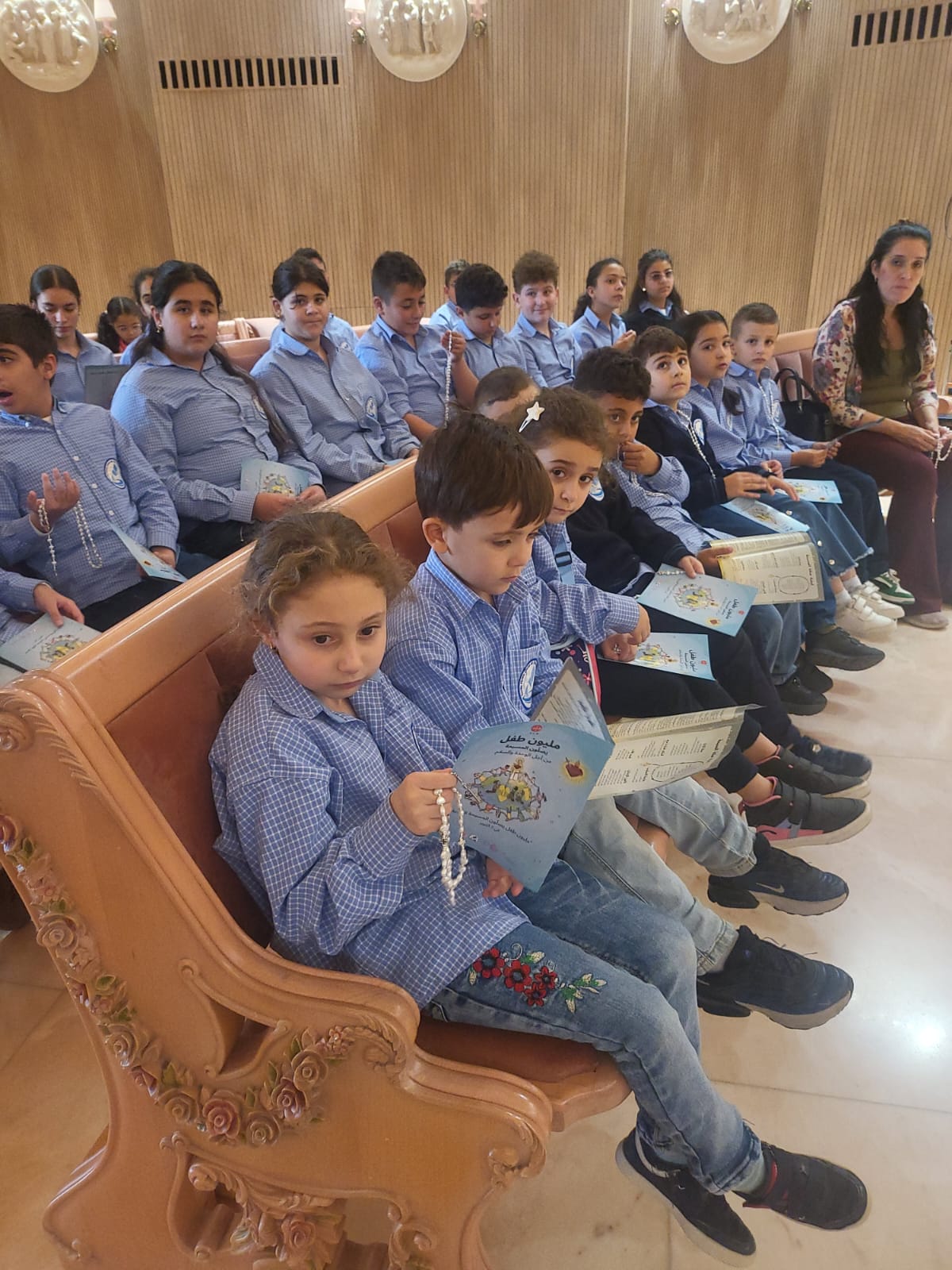
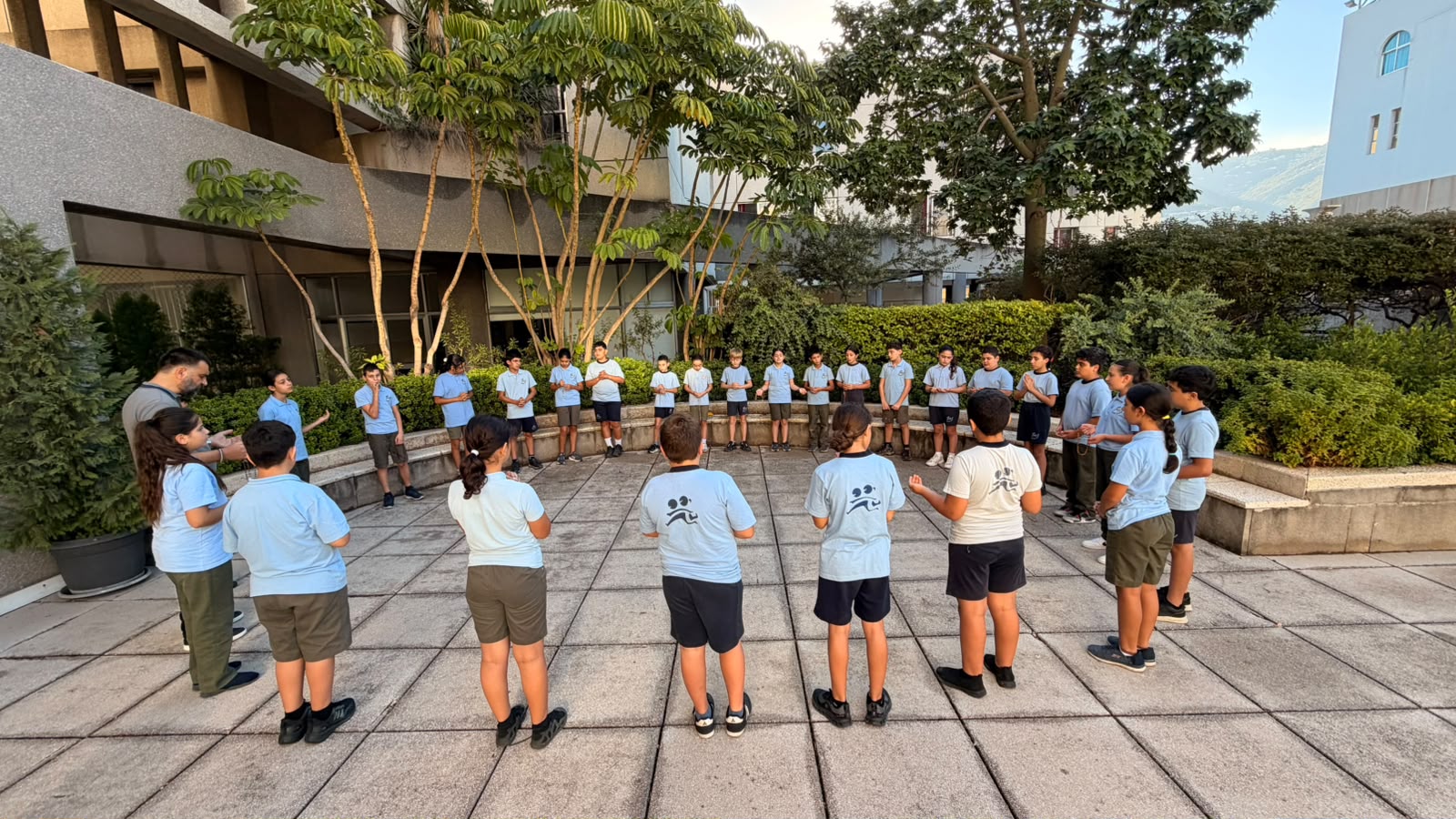
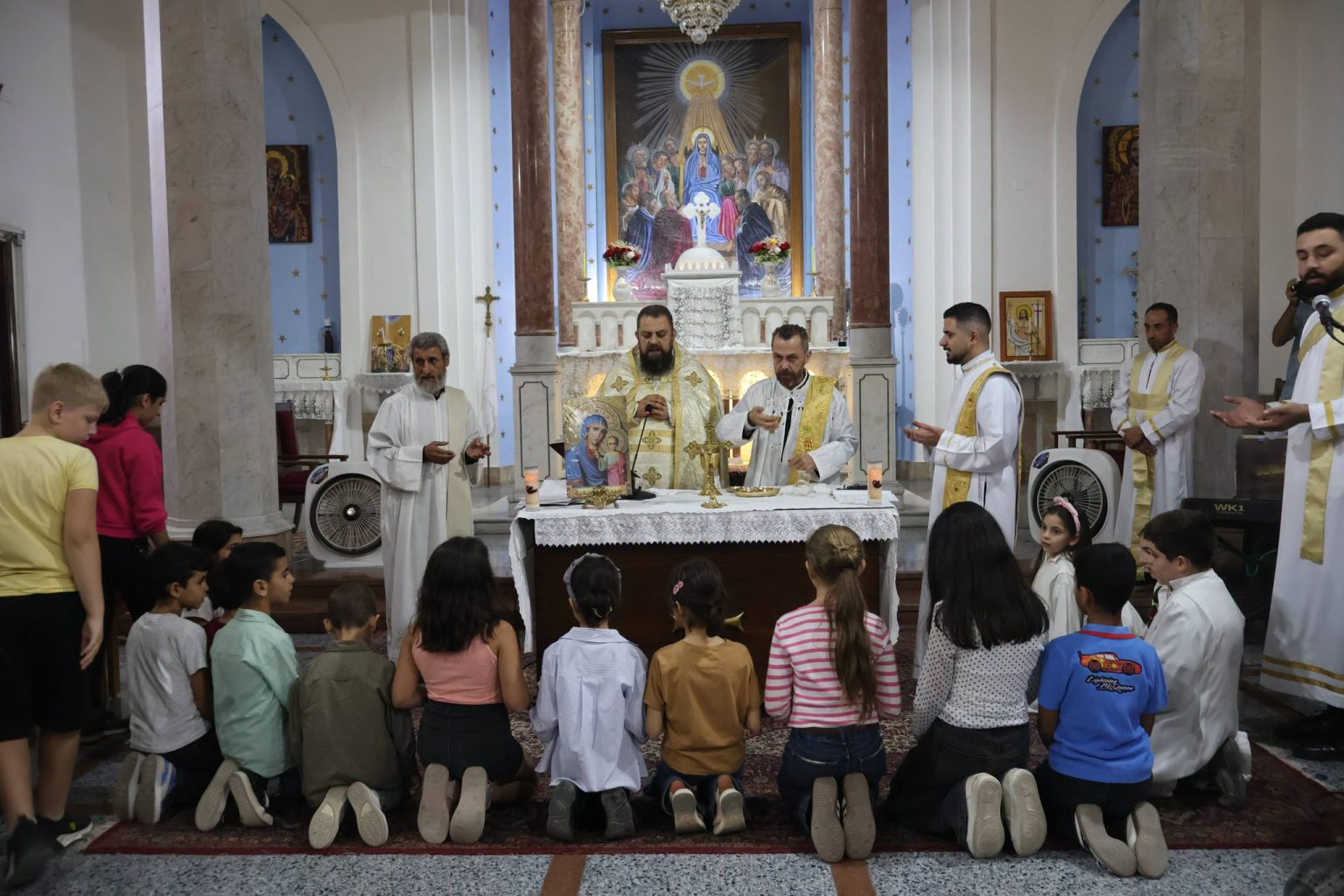
Amid a rocket attack launched by Hezbollah on residential homes in the village of Rmeish in southern Lebanon, more than 50 children celebrated their first Communion in a testament to faith, resilience, and hope in the midst of war.
In comments to local media, Rmeish Municipality Head Hanna Al-Amil said a missile fell between inhabited homes on Sunday morning and “narrowly avoided causing a major disaster.”
Al-Amil stressed that the village contains no military forces, armed groups, or weapons, emphasizing that residents “simply want to live safely on their land, away from confrontation and escalation.”
The people of Rmeish remain attached to their land and continue their lives “despite difficult circumstances,” he said, calling for the protection of civilians and for the village and its residents not to be placed at risk.
The incident is not an isolated one. It comes amid a series of missile launches affecting Christian villages in the south, increasing fears among local residents. On Friday, several Hezbollah rockets fired toward Israeli forces operating in the town of Dibbin landed in residential and civilian areas of Marjayoun, causing significant property damage.
According to local reports, one rocket struck the Greek Orthodox Church of St. George, damaging parts of the church, while another landed within the grounds of the Sacred Hearts Secondary School, leaving extensive destruction to the building and its surroundings.
Speaking to ACI MENA, the Arabic-language sister service of EWTN News, Rizkallah Alam, a resident of Rmeish whose daughter received her first Communion, said villagers have effectively been living in a state of war since Oct. 8, 2023.
“We have been living the reality of war since then,” he said, adding that the village has not experienced a genuine ceasefire at any point. “The children and their parents live in constant anxiety. We asked to postpone the first Communion to another time, but our parish priest refused and insisted that it take place.”
Alam described the daily reality facing children in the village, saying they live without a sense of security or psychological stability. “My children pray and sing hymns all the time, and they live according to the news cycle. Some days schools are open, and other days they are not. Today the situation has become even worse because of the siege.”
He said the restrictions affecting the village have impacted even the most basic aspects of daily life. “Everything has become unavailable. We wait for the aid convoy and hope it will be allowed to reach the village.”
In previous years, families would hold large celebrations for first Communion. This year, however, circumstances forced them to scale back their plans. “This year the celebration was limited to family homes, with no large festivities,” he said. “The number of children was also lower than in previous years because families are scattered. Some are in Beirut, while others have left the country.”
Alam described the immense uncertainty facing both parents and children. “The situation is extremely difficult. We cannot even plan for tomorrow,” he said. “As we speak, rockets have fallen in Rmeish again, one person has been injured, and a car has caught fire.”
Between missiles and first Communion, Rmeish embodies one of southern Lebanonʼs most painful paradoxes: a village that wants to live, families determined to remain, and children learning faith in a time of fear.
This storywas first published by ACI MENA, the Arabic-language sister service of EWTN News, and has been translated for and adapted by EWTN News English.
This year the Church marks 800 years since St. Francis of Assisiʼs death at the age of 44 — his “Transitus,” as Franciscans call it. Pope Leo declared a special Franciscan Jubilee Year from Jan. 10, 2026, to Jan. 10, 2027, inviting Catholics to visit churches and places linked to Francis’ spirituality, love of animals, and devotion to the poor.
“The jubilee year provides us the opportunity to be more than a tourist … to be a pilgrim, joining the millions of pilgrims expected in Assisi for the jubilee, with even more pilgrims who will travel to Franciscan churches throughout the world,“ explained Father John Puodziunas, OFM , the new Franciscan commissary of the Holy Land USA based in Washington, D.C. “The pilgrim returns changed … they see themselves, their world, God differently.”
Vista of Assisi, Italy. | Credit: Stephanie Green
A must-see is the Basilica of St. Francis in Assisi, a vast church overlooking his Umbrian hometown. In the crypt, pilgrims rest their hands on the saint’s neo-Romanesque tomb, where a votive lamp softly illuminates the dim space and only the shuffle of footsteps breaks the silence.
In February and March, many viewed his skeletal remains in the basilica, displayed for the first time in honor of the jubilee year. Vatican News estimates that 400,000 people came to pay their respects and venerate the relics of this extraordinary Christian saint.
His epic life is told through the artistic genius of Giotto in frescoes painted above the crypt in the upper basilica: Francis hears the voice of Christ while praying to the San Damiano cross; his surrender of all his clothes and worldly goods back to his wealthy father; his meeting with Pope Innocent III; his creation of the first Christian manger scene at Greccio; Francis preaching the Gospel to the birds; Francis receives the stigmata.
Franciscan Father David Wathen at the Vatican Gardens in Rome. | Credit: Stephanie Green
Father David Wathen, OFM, also of the Franciscan Monastery in Washington, D.C., is a veteran guide who has led more than 200 pilgrimages to the Holy Land but took a detour to Italy this year in honor of the jubilee.
Wathen celebrated Mass with 10 pilgrims from all over the country in April in the Portiuncula, the small chapel where St. Francis acted on Christ’s call: “Francis, Francis, go and repair my house, which, as you can see, is falling into ruins…” Francis responded by giving up his family’s wealth and status and embracing a life of chastity, poverty, and obedience with his small band of brothers. Today there are 35,000 Franciscan friars worldwide spread across 100 countries.
Pilgrims outside the Basilica of St. Mary of Angels, which houses the Portiuncula, in Assisi, Italy. | Credit: Stephanie Green
The Portiuncula became the spiritual center of the new Franciscan community and the place where Francis welcomed the young woman who would become St. Clare of Assisi, founder of the Poor Clares.
Today the Portiuncula, housed inside the Papal Basilica of St. Mary of the Angels, is another major pilgrimage site, right outside Assisi. A bronze statue of Francis in the basilica’s rose garden commemorates his conversations with turtle doves, inviting them to join him in worshipping the Lord. Today doves still nest in the hands of the statue while birdsong creates a symphony of praise.
It was also in this garden that St. Francis, in an act of penance, rolled through the brambles, which mysteriously turned into dog roses on contact with his body. This hybrid of rose is still flourishing centuries later.
“A pilgrim experiences the spirituality of space, where the location … a chapel, a cave, a town square, a garden … speaks to the inner yearnings of the individual. In Assisi, we not only encounter Francis, but we step into his personal encounter with God formed on medieval streets or on the side of a mountain,” Puodziunas said.
A statue of St. Francis features icons of other world religions celebrating the universality of his spiritual appeal. | Credit: Stephanie Green
Asceticism, bodily mortification, and fasting were constant reminders to St. Francis of Christ’s suffering. At the Carceri hermitage, a favorite retreat of St. Francis, pilgrims can see the small stone alcoves where he slept, often using a wooden board as a pillow.
Being close to sites strongly associated with St. Francis and St. Clare has inspired pilgrims to deepen their faith and to serve others.
“Some of my neighbors in the Florida retirement community where I now live are dying,” said Regina Brown, one of Wathen’s pilgrims who volunteers with St. Timothy Catholic Church Ministry to the Sick and Homebound in Florida. Brown explained that the Franciscan pilgrimage has fortified her practice of taking Communion to her bedridden friends.
“Itʼs the closest I can get to keeping in mind and expressing my (our) hope in Christ, the promise of eternal life, the Mass, our glimpse into heaven,” she said.
Wathen’s pilgrimage concluded in Rome, where everything his group had learned about St. Francis came into focus. At a papal audience in St. Peter’s Square, they witnessed its grandeur as Pope Leo reflected on the living mystical body of Christ, the Church.
Throughout the jubilee year, pilgrims are granted plenary indulgences by making a visit to any Franciscan church — including the Franciscan Monastery in Washington, D.C. — or to any site dedicated to St. Francis, receiving holy Communion on the day of the visit, reciting the Our Father, the Hail Mary, the Creed, and the Glory Be for the intentions of the Holy Father, and making a confession within eight days.
Magnifica Humanitashas opened the doors for deeper conversations between the Church and the tech industry regarding “how AI is going to affect humanity,” priest and former Silicon Valley executive Father Brendan McGuire said.
McGuire, pastor of St. Simon Parish in Los Altos, California, told “EWTN News Nightly” that tech companies are searching for “wisdom” right now, and Pope Leo’s encyclical can offer it.
The Church has “been working with the different tech companies for a number of years … directly from Rome, in the Vatican, and also here locally,” he said.
In 2024 Anthropic, an AI safety company and creator of the Claude AI system that filed to go public June 1, reached out to the Vatican for ethical guidance. McGuire helped shape Claudeʼs Constitution, the 23,000-word document governing how Claude reasons through complex moral questions.
McGuire also co-founded the Institute for Technology, Ethics, and Culture — a formal partnership between Santa Clara Universityʼs Markkula Center for Applied Ethics and the Vaticanʼs Dicastery for Culture and Education.
Earlier he had worked for the Personal Computer Memory Card International Association (PCMCIA), an industry consortium of computer hardware manufacturers.
The Irish priest holds degrees in engineering and computer science from Trinity College Dublin and has a theology degree from St. Patrickʼs Seminary and University.
‘Engaged in deeper conversations’
“More intensely over this last year, weʼve been more deliberately, and more intentionally, engaged in deeper conversations monthly … mostly with Anthropic, and we believe this document now will be able to deepen these relationships even more,” he said.
These relationships will prompt “real dialogue as to how AI is going to affect humanity,” he said.
“I love the reframing that the pope has done” by asking “How do we have all of humanity … flourish inside of AI? Instead of the other way around,” McGuire said. “Itʼs a reframing of the whole issue.”
While some wonder if tech companies will listen to the pope’s call, McGuire said he believes they will, as people in the industry “are looking for wisdom.”
Those in the tech industry “are men and women of goodwill, and they want this AI to go well,” he said. “And if itʼs going to go well, then theyʼre going to have to have people outside of the programmers, and the mathematicians, and the technology people, and engineers.”
“They need wisdom from outside. Itʼs not just the Catholic Church. Every religious tradition needs to lean into this moment,” he said.
Reading the pope’s encyclical is ‘the most important thing’
The encyclical comes years after AI really took off, but “itʼs not true” when people say the pope’s call is too late, McGuire said.
“The technology people themselves say that itʼs not true. But I do believe that the window is closing,” he said.
The “whole intention” of the popeʼs encyclical is “to start asking those more difficult questions,” McGuire said.
The pope has asked: “What [does it] mean for a human being to flourish? What is good for all of humanity? And not what is just good for a handful of people, but what is good for all of us?”
“So what weʼve done here is raised questions more than got answers,” McGuire said. Now we must “bring about a dialogue to go for those answers.”
The “first thing I implore everyone to do is to read it,” he said. Reading it is “the most important thing” and “not relying … on soundbites from somebody else.”
The first half of the encyclical “is a survey of the previous documents of the Church and social doctrine” and it is “a great summary of them,” he said.
Then, focus on reading “Chapter 3 on artificial intelligence” and “Chapter 4 [on] the impact of it.”
Pope Leo “uses two biblical metaphors” that “are beautiful and really important”: the Tower of Babel and the rebuilding of Jerusalem by Nehemiah, he said.
He is “basically saying we donʼt want to go back to the Tower of Babel, where everyone builds it for their own … purposes,” he said. Instead, it must be like the city Jerusalem where “everyone has a role. Every family, every person, every engineer, every journalist, every philosopher.”
“Everyone needs to play a role, and we need to engage with this because it will, in large part, determine our future as a humanity,” McGuire said.
Patriarch Paul III Nona did not hide the weight of responsibility he felt after the fathers of the synod announced his election as patriarch of the Chaldean Church. He said that moment was difficult to describe, marked by a mixture of awe, fear, and reverence before the responsibility entrusted to him, together with deep respect for the confidence placed in him by his brother bishops.
In an exclusive interview with EWTN News, the new Chaldean patriarch described his return to serve as patriarch in his homeland more than a decade after leaving it as part of the Church’s mission of service.
“The Church sends us wherever there is a need,” he said. “We served in Mosul during difficult years, when the Church needed us there. We do the same whenever the Church sees a need for our service in another place. The purpose of our service is to fulfill our mission: to be wherever the Church sends us and to do the will of Our Lord in that place.”
Nona served as bishop of the Chaldean Eparchy of Mosul in extremely difficult circumstances for nearly four years, before the city fell to terrorist groups in 2014. He accompanied the displaced faithful of his eparchy and continued serving them in the villages and towns where they took refuge after their displacement. In 2015, the Chaldean Synod appointed him to serve the Eparchy of Australia and New Zealand, where he remained until his election as patriarch this past April.
Speaking about his experience in Mosul, Nona said the years before ISIS as well as the period marked by the terrorist group’s advance shaped him deeply.
“I think the experience of Mosul before ISIS, and also the experience with ISIS, enriched my personality and made me more mature as a person and as a Christian,” he said.
He recalled living with the faithful in Mosul during a very difficult period, saying their faith was “very strong.” He also described the displacement of Christians to the Kurdistan Region of Iraq as a painful but spiritually powerful experience.
“It was sad to see all these people in that situation,” he said. “But on the other hand, it was very good to see that their faith was the first and most important thing for them.”
Fear and faith
Asked about his patriarchal motto, “Do not be afraid, just believe,” Nona said fear is not limited to the Middle East but is present throughout the world.
“I believe that fear is the most common aspect in all the world, not just in the Middle East,” he said. “I lived in Australia, in what we can call the Western world, and the fear there is the same as here — of course, with different challenges. But there is always fear. So we have to face our fear with faith.”
Safeguarding rights and dignity
Asked about the expected relationship between the new patriarch and Iraq’s new government, whose formation coincided with his installation, Nona said the Church has historically defended the rights of its faithful and remains committed to participating in building the country on sound and legal foundations that respect the dignity of all people and freedom of religion.
He highlighted the Church’s essential role in society wherever it is present, through educational, healthcare, and other institutions, as well as through serving its people and working to secure their rights and protect their dignity.
Challenges of being rooted in faith
Regarding the challenges facing members of the Chaldean Church in diaspora countries — whether in terms of being rooted in the faith and preserving identity or in facing moral challenges — Nona drew on his experience of service in Australia. He stressed that confronting these challenges, and succeeding in doing so, is possible by deepening the meaning of faith in the lives of believers, especially among new generations born and raised in diaspora countries.
He said the challenges facing young people have pushed their families to return to the Church. When these young people come to know their faith properly and hear meaningful answers to their complex and important questions, he said, they give the Church strength and support and become the strongest defenders of its faith and identity.
On strengthening dialogue among the three Churches that share the heritage of the Church of the East today, and on efforts toward the desired unity, the Chaldean patriarch said that a true relationship of human fraternity is the foundation of unity and common action.
While stressing respect for the different traditions and distinct heritage of each Church, he said the shared heritage and tradition of the three Churches open doors to joint work in cultural and liturgical fields while respecting the particular identity of each.
Magnifica Humanitas
Nona also addressed the issue of artificial intelligence and its threat to human dignity, citing Pope Leo XIV’s recent encyclical Magnifica Humanitas. He stressed the need for technology to remain at the service of the human person and human dignity, and to be used properly to promote a sound humanity built on upright values and principles — not one that demeans human beings and their dignity or encourages violence.
He encouraged people to read and study the pope’s teaching, saying its timely importance led Leo to choose it as the subject of his first encyclical.
Peoples longing for peace
Nona assumes his responsibilities amid the current challenges facing the Middle East, which he described as complex and painful. Wishing peace and stability for the countries and peoples of the region, he said: “I believe and think that all the peoples of the Middle East want to live in peace and security. Years of wars, divisions, and violence have exhausted them.”
Asked where he sees the future of the region heading amid ongoing conflict, Nona said major changes appear to be underway in the Middle East.
“Something is happening now that will change the Middle East a lot,” he said. “We hope it will be for the good, not for the bad. So we pray that everything will be good.”
He said taking on any responsibility in such a complex situation is a serious matter that requires responsible discipline in words and actions, directing them toward achieving peace and stability and defending the rights and dignity of peoples.
On the possibility of Christians returning to the Middle East, Nona said their return and continued presence depend on peace, stability, and a genuine sense of citizenship.
“When there is peace in this region, when there is stability, when they feel that they are citizens of this land and of these countries, they will come back, and they will stay here,” he said. Asked whether he hoped Christians would one day return, he replied: “I hope that. Of course, we pray for that also.”
A message to Catholics in the West
Nona also addressed Catholics in the West, asking them first to pray for the Chaldean Church.
“We need them to pray, because we are all Christians and Catholics,” he said. He also asked them to learn more about the Chaldean Church and the reality of Christians in the Middle East, and to help support efforts that allow Christians to remain in the region.
He emphasized the role of Chaldean youth, and Christian youth in general, as the foundation of the Church and a firm pillar of its mission. He stressed the need to give young people the place they deserve in the Church.
Nona concluded with a message to Christian youth, based on his personal experience: “Our Christian faith is our foundation, our strength, and our life. In the Chaldean Church, we live it through our Chaldean identity, distinct in language, liturgy, and tradition. The closer young people come to knowing their identity of faith in its proper form, the more they will become a tremendous force of faith and humanity, capable of defending faith and humanity.”
In a final message to Catholic youth around the world, Nona said: “Prayer is the most important thing. And also try always to live your faith with joy.”
Bishop Michael Martin of the Diocese of Charlotte, North Carolina, ordained 10 men to the priesthood on May 30, the highest number of priests ordained in one year in the diocese’s history.
The number surpasses the previous record high of seven ordinations (set in 2000 and 2024) and follows six ordinations in 2025.
“We stand in awe of God’s work in our midst,” Martin told EWTN News in a statement. “We give thanks for the ‘yes’ of these men, which is freely offered by them to God’s free invitation.”
The ordinands will bolster the diocese’s 145 active priests who serve more than 575,000 Catholics. The Diocese of Charlotte, covering western North Carolina, has seen steady growth in vocations amid a booming Catholic population.
“There is always a desire to explain a moment such as ours,” Martin said, noting that there are “factors unique to each man in our seminary formation program” that explain the record number of ordinations and that there is “no one set formula.”
“God uses whatever he chooses to invite and foster a faith-filled response from these men,” he said.
He credited families, who are “responsible as they are placing faith in Christ in its rightful place at the center of daily life,” as well as the diocese’s priests, who “are more regularly inviting young men to consider the priesthood.”
He also said the diocese has promoted a culture of vocations” for years and it “is clearly making a difference.”
In 2016, then-Bishop Peter Jugis founded St. Joseph’s College Seminary. Eight of this year’s 10 ordinands studied there before advancing to major seminary. The other two lived there during their pastoral years of parish ministry.
“Many years ago, seeing the desperate need for priests, Bishop Jugis and his clergy made the cultivation of vocations the highest priority,” said the seminary’s rector, Father Matthew Kauth, in May.
In addition, under the leadership of Father Christopher Gober, who served as the diocese’s vocations director until July 2025, two vocations camps were launched: “Quo Vadis Days” in 2014 for young men and “Duc in Altum” in 2016 for young women. The programs are held at Belmont Abbey College.
“We are now reaping the harvest of 20-plus years of labor. It didn’t just happen,” Kauth said. “God has blessed our efforts and a culture of vocations has been established — yielding increasing returns, just as Christ said it would. Now, we must cultivate and care for those vocations and give thanks to God.”
Saturdayʼs ordination drew an overflowing crowd of more than 1,640 attendees, many of whom arrived hours early.
In his homily, Martin described the occasion as “a day of great joy for the Church and for these 10 men.”
The bishop urged the new priests to love so that people “will follow not just what you say but follow who you are,” and encouraged them to “love the people of God you’re being sent out to serve.”
“His sheep are every human person on the face of the Earth, every person in whatever school or parish, every community, every hospital or nursing home,” Martin told the new priests. “Wherever you go, love them all … you cannot wait for them to come to you, you have to go out to them. That is the nature of the apostolic Church. As you feed them with this holy banquet, you nourish them in ways only the Lord can.”
The new priests are Father Robert Bauman, Father Michael Camilleri, Father Daniel Chaves Peña, Father John Cuppett, Father Maximilian Frei, Father Juan González Hernández, Father Bryan Ilagor, Father Michael Lugo, Father Peter Townsend, and Father James Tweed.
They offered first blessings for more than two hours after the Mass and will celebrate their inaugural Masses of thanksgiving in the coming days. Effective July 1, they will take up assignments across the diocese, serving as university and high school chaplains and in parochial vicar positions.
Also on May 30, the nine perpetual pilgrims from the National Eucharistic Pilgrimage arrived in the diocese where they were greeted by more than 100 Catholics at Our Lady of Lourdes Parish in Monroe.
The 2026 theme, “One Nation Under God,” recognizes the nation’s 250th anniversary. The pilgrimage began on Pentecost Sunday and will continue through Independence Day weekend.
A group of nine perpetual pilgrims carrying the Blessed Sacrament will journey up the Eastern Seaboard on the St. Frances Xavier Cabrini Route, named for the first U.S. citizen to be canonized.
All are invited to join the public processions and other events.