Two parishes in the Diocese of Buffalo, New York, have won reprieves from the Vatican and will not have to close amid a diocesan-wide closure and merger plan.
Mary Pruski, the leader of the advocacy group Save Our Buffalo Churches, told EWTN News on Aug. 14 that the parishes of St. Josaphat and Our Lady of the Rosary both won appeals at the Holy See over closures that were mandated by the diocese’s “Road to Renewal” plan.
That plan was announced in May 2024, with Bishop Michael Fisher revealing that the diocese would merge about a third of its parishes amid declines in attendance and financial struggles.
Pruski told EWTN News on Aug. 14, meanwhile, that the St. Josaphat Parish “won their appeal to not merge and close,” while Our Lady of the Rosary “won their appeal against being reduced to common use and sold.”
She said a few parishes represented by the group “continue to await their appeal decision from the Dicastery for the Clergy,” while several other parishes have raised their appeals to the Apostolic Signatura.
“These cases may take up to another year for a final decision,” she said.
Diocesan spokesman Gregory Tucker confirmed to EWTN News on Aug. 14 that per the Vatican’s decision the parishes would not be forced to close.
Fisher “respects the decision of the dicastery and will not appeal these decisions,” Tucker said. “That said, these parishes will be closely monitored to ensure that they can remain viable and self-sustaining going forward.”
The Buffalo parish group’s fight against the closure plan made it all the way to the New York Supreme Court in 2025. The court in July of that year ordered a brief halt to some diocesan-mandated parish payments into the diocese’s abuse settlement fund. The New York Supreme Court ultimately dismissed the case, saying it did not have jurisdiction over internal Church matters.
In April, however, the Vatican issued a revocation of multiple “assessment allocation decrees” against parishes in the diocese, citing canon law violations regarding parish fund procurement “as well as the amounts and methods undertaken to procure those monies.”
Elsewhere in New York state, parishioners in the Diocese of Rochester are petitioning the Vatican to let them save a 160-year-old parish that has been locally recognized for its historic significance.
Advocates hope to preserve Holy Family Parish in Auburn in part to preserve the memory and legacy of Bishop Patrick Byrne, an apostolic delegate to Korea who was martyred in 1950 during a four-month-long forced march while in the captivity of communist forces in North Korea. Byrne was confirmed at the parish in 1900.
The head of the U.S. bishops is criticizing the state of Massachusetts for what he said was its “shocking” decision to remove any limits to abortion there.
State Gov. Maura Healey signed a bill into law on Aug. 10 making Massachusetts the 11th state to impose no limits on abortion. The law removes all of the state’s restrictions on abortion, leaving the decision to perform a late-term abortion up to the “judgment of the physician” carrying it out.
Oklahoma City Archbishop Paul Coakley, the president of the U.S. Conference of Catholic Bishops, called the decision “shocking” and “horrendous.”
“I hope it will not stand, but weʼll see,” the archbishop added, describing the decision as “a shocking blow to the pro-life movement and to everyone whoʼs concerned about the dignity and sanctity of human life.”
Meanwhile, the political advocacy group CatholicVote is calling for the excommunication of Healey, who is Catholic.
CatholicVote President Kelsey Reinhardt said in a letter that CatholicVote believes that Healey is an “accomplice” to the procurement of abortions by signing the law. Reinhardt added that the signing caused “scandal” and “was not a private sin.”
“The logic of medicinal punishment is ancient and coherent and teaches that you do not withhold medicine from a sick person to protect their feelings,” Reinhardt wrote. “You administer it because you love them and because you take their illness seriously. Governor Healey is a Catholic in a state of grave sin. She has publicly and now legislatively cooperated in the destruction of innocent human life.”
“Governor Healey did not sign this legislation reluctantly or with any expression of the gravity of what she was authorizing,” Reinhardt said. “She signed it at a celebratory public event. She was met with applause. The ceremony was festive.”
When asked about calls for Healey’s excommunication, Coakley said that the law constitutes a “scandal” but that the matter is between the governor and her bishop.
“Itʼs an affront against the teaching of the Church,” Coakley said of the law. “But truly, the United States Conference of Catholic Bishops or any episcopal conference really does not have that kind of authority” to excommunicate Healey.
“This is really a matter that will have to be addressed between the governor and her bishop and the bishops of Massachusetts,” Coakley continued.
The Massachusetts Catholic bishops decried the bill before it was signed, saying that the “elimination of any legal restraint on late-term abortion is, in our judgment, a radical measure which is gravely immoral.”
Pro-lifers praise attorney general for pledging to review mail-order abortion
Pro-life advocates are praising then-Acting U.S. Attorney General Todd Blanche for his promise to review the legality of sending abortion pills through the U.S. mail.
During his confirmation hearing on July 15, Blanche pledged to review the Comstock Act, a law already on the books that prohibits the mailing of abortion-related materials. If enforced, the law would halt mail-order abortions.
An Aug. 7 letter signed by 35 pro-life leaders commended Blanche for his promise to “carefully evaluate” the law and whether or not it is being properly enforced.
Lawsuit against Virginia abortion amendment rises to appeals court
A lawsuit against a Virginia state constitutional amendment to establish an unlimited right to abortion is currently before a state appeals court.
Liberty Counsel, a nonprofit Christian legal group, said on Aug. 13 that it had appealed to the Court of Appeals of Virginia about a court order dismissing a legal challenge to the ballot measure.
The lawsuit argues that the Virginia government neglected proper legal processes for proposed amendments, rendering the abortion amendment itself ineligible for inclusion on the ballot.
The surrogate mother who refused to abort her baby after the biological parents allegedly called for an abortion gave birth two weeks early.
The child, called Gabriel by his surrogate mother, McKenna West, was born in Dallas on Aug. 12. He was born amid an ongoing legal dispute after his biological parents, identified in court documents as Nausheen Gilkar and Omar Ahmed, allegedly demanded West undergo an abortion.
At about 20 weeks, Gabriel was diagnosed in utero with hypoplastic left heart syndrome (HLHS) — a serious congenital heart condition. Treatment for HLHS typically involves three surgeries, beginning with one procedure shortly after birth.
“Itʼs horrific to think that so-called intended parents, when they found out that their baby had hypoplastic left heart syndrome, told the surrogate mother that they wanted her to abort that child,” Amy O’Donnell, executive director of Texas Alliance for Life, said in an interview with “EWTN News Nightly.”
“Thatʼs horrific at any stage to want to abort a child simply because of a disability or a diagnosis, but late term after 20 weeks is even more so,” she said.
West traveled to Texas from Alaska to ensure that Gabriel could be near doctors experienced in treating his condition. She allegedly offered to take full responsibility of the baby, but the baby’s biological parents reportedly refused.
Gabriel was born “just 24 hours after Attorney General Ken Paxton initiated legal action,” O’Donnell said.
Paxton filed an intervention in the case on Aug. 11 asking the Texas district court to enter orders directing the child’s care upon birth, prohibiting his removal from the state, and setting an expedited hearing on any refusal of treatment.
“According to the district court, because McKenna [West] so bravely fled to Texas from Alaska to ensure that baby Gabriel had lifesaving care, baby Gabriel, now born in Texas, is a Texas resident,” O’Donnell said.
The order stated that UT Southwestern Medical Center and Children’s Medical Center of Dallas were legally obligated to care for Gabriel.
Gabriel has “received the lifesaving treatment available” at Dallas Children’s, O’Donnell said. He is “in great hands and he has either had a heart surgery or itʼs pending.”
“Due to HIPAA, we probably wonʼt get information on the unfolding care, but we are certain that nobody can deny treatment, can demand transfer, and nobody can request that he receive anything less than the best that Texas has to offer.”
“Our laws protect every child born in Texas and guarantee their right to life. The Department of Family and Protective Services [DFPS] holds authority under Texas law to protect children from medical neglect,” Andrew Mahaleris, press secretary for Texas Gov. Gregory Abbott, said in a statement.
“DFPS will be closely monitoring this case and will take any action necessary to safeguard those rights,” he said.
Pope Leo says surrogacy reduces a child to a ‘product’
While acknowledging infertility is an immense cross to bear, the Catholic Church has a clear stance against surrogacy. The practice requires conceiving a child through in vitro fertilization (IVF) or artificial insemination and then transferring the embryo to the uterus of the surrogate.
Pope Leo XIV has affirmed that, by transforming gestation into a negotiable service, one “violates the dignity both of the child, who is reduced to a ‘product,’ and of the mother, exploiting her body and the generative process, and distorting the original relational calling of the family.”
“Techniques that entail the dissociation of husband and wife, by the intrusion of a person other than the couple (donation of sperm or ovum, surrogate uterus), are gravely immoral,” the Catechism of the Catholic Church (CCC) states.
“These techniques (heterologous artificial insemination and fertilization) infringe the childʼs right to be born of a father and mother known to him and bound to each other by marriage. They betray the spouses' ‘right to become a father and a mother only through each other’” (CCC, 2376).
“There are a lot of concerns with surrogacy, and the more we look into it, the more concerns we have,” O’Donnell said.
“We believe that no contract should be able to require death of a child due to a disability or an imperfection. And so we believe that there should be … nationwide protections there,” she said.
“We need to protect the dignity of mothers who are involved in surrogacy as well, as long as it is legal in our nation and in our state,” she said.
Archbishop Paul Coakley, president of the U.S. Conference of Catholic Bishops (USCCB), addressed the loss of federal grant money for refugee resettlement and ongoing deportation efforts from President Donald Trump’s administration during an EWTN interview Aug. 13.
In 2024, the USCCB received more than $180 million in funding for government contracts, most of which supported services for migrants and refugee resettlement. When Trump took office, the president ended most of those contracts.
In an interview on “The World Over with Raymond Arroyo,” the archbishop said “we are no longer receiving those dollars, and we have, as a result, discontinued our resettlement services.”
“I donʼt think it has affected … our ability to continue our core mission, thatʼs for sure,” Coakley said. “But weʼll have to adjust our budgets and act accordingly.”
Coakley also addressed Trump’s immigration policy, saying nations have a right to control their borders but they should also be welcoming to immigrants.
“Every nation has a right to protect its sovereign borders, and we bishops have emphasized that again and again,” he said. “… People have a right to live in security in their own land.”
However, he also pointed to a USCCB special message on immigration, which the U.S. bishops approved in a 216-5 vote, which expressed opposition to “the indiscriminate mass deportation of people.”
“[The message] called upon the bishops to continue to accompany and support migrants and assured migrants of our continued support and accompaniment,” Coakley said. “And thatʼs happening around the country in different places and certainly along the border in different ways.”
“Itʼs obviously a challenging situation, both for the people who are concerned about their safety and security within the borders of the United States, but also those who are seeking peace and security and safety by striving to become a part of our people and our culture, our nation,” he said.
“Weʼve always been a nation welcoming of immigrants,” the archbishop said.
“Weʼre all — all but a few of us — are from migrant immigrant families,” Coakley said. “So we have a sensitivity as Americans to the plight of immigrants on both sides of the border.”
The powerful earthquake that struck western Colombia on Aug. 10 also put to the test those who look after the most vulnerable, such as those working at the Panamericana Clinic in the town of Apartadó where in the urgency to evacuate, a doctor, not thinking of himself first, grabbed up two newborns to carry them to safety outside the building.
In images that have gone viral, Dr. Germán Somoyar is seen holding the infants outside the medical center alongside colleagues and the families of other patients who had to evacuate the building.
Speaking with Noticias Telemundo, Somoyar recounted that he was with his colleagues when everything began to shake and as the intensity increased, “everyone started evacuating the clinic immediately.”
He said that at that moment, he thought he had to go get the babies — the ones the nurses or parents might not be able to reach in their cribs. “In my line of work, the children always have 100% absolute priority,” Somoyar stated.
The doctor added that “there were two mothers in their rooms who were paralyzed with fear and werenʼt evacuating. I had to quickly explain the situation, calm them down, and tell them we’re going to evacuate.”
“After they proceeded to leave, I headed to the room where the newborns are, the neonatal unit” and picked up the babies, carrying them down from the sixth floor to the street, ensuring their safety.
So far, the deaths of 234 people have been confirmed as a result of the 7.4-magnitude earthquake. The hardest-hit cities are Cali, with 95 fatalities, and Pereira, with 72.
This story was first published by ACI Prensa, the Spanish-language sister service of EWTN News. It has been translated and adapted by EWTN News English.
The Catholic Church and Indigenous Christian leaders in Bangladesh have called on the authorities to protect families terrified by an attack on a Christian village and to bring those responsible to justice.
On Aug. 12, houses in the village of Gazarikura, a community in the Diocese of Mymensingh in the north of the Muslim-majority country, were attacked, looted, and vandalized. Local Indigenous Garo people said the stolen property included cash, cows, goats, and other valuables.
The Indigenous families said the attack and looting were carried out by people from a neighboring Muslim village after the body of a Muslim man was found in their village.
Father Simon Hacha, vicar general of the Diocese of Mymensingh, visited the village together with other priests, sisters, Garo Indigenous leaders, and local leaders.
“We never want unrest; we are for peace,” Hacha, who is himself a Garo, told EWTN News.
“We pray for the soul of the deceased person around whom this problem has arisen and we offer our condolences to his family,” he said.
He urged police not to harass those who are not guilty and to identify the culprits and take appropriate action.
“I hope that the administration will provide security to the Garo Indigenous of this village and that the villagers will maintain good relations with each other so that peace can prevail in the future,” Hacha added.
Losses and arrests
Village leaders told EWTN News that six houses in Gazarikura were vandalized and that the furniture of one house was burned. The attackers took away seven cows, 10 goats, a motorcycle, cash, and expensive furniture. The incident spread panic among local residents.
Father Lawrence Ribeiro, the parish priest of Mariamnagar, told EWTN News by telephone during a visit to the village on Aug. 14 that 11 houses had been looted and that televisions, refrigerators, cows, and goats had been taken away. The families do not have enough food, he said. “So, we brought food, soap, and other items for these families.”
Ribeiro said the families had been calculated to have suffered losses of about 4 million taka (about $32,000). “We are preparing to file a case of looting for this,” he said.
The body of a rice trader, Billal Hossain, 40, was recovered by police. Nineteen people, including men and women from the Garo community, were arrested on suspicion of involvement in the case. Police later released 14 of them.
According to police sources, Hossain, a resident of the Jarultala area of the upazila, or subdistrict, went missing on Aug. 4. On the afternoon of Aug. 12, local farmers working in a field smelled a foul odor near a canal, searched the surroundings, and found the body buried in the ground. Police went to the spot and recovered it after being informed.
An organization of Garo Indigenous students said in a statement: "We want to say very clearly that the responsibility for the crime of an individual can never be imposed on an entire ethnic group, community, or population.”
“If someone is involved in any crime, his involvement will be determined through an impartial and fair investigation. If the crime is proven, he will be tried according to the prevailing law. But suspecting, harassing, or victimizing another innocent person on the basis of an individualʼs identity, ethnic identity, or community identity is against justice,” the student organization said.
S.M. Noor Mohammad, officer in charge of the Jhenaigati police station, said the atmosphere in the village is now calm and that police have been deployed.
“The police are investigating the incident and are continuing their efforts to identify the criminals involved in the incident,” Mohammad said.
On Aug. 9, Indigenous people had rallied for their rights and to protest atrocities against them on the occasion of the International Day of the Worldʼs Indigenous Peoples.
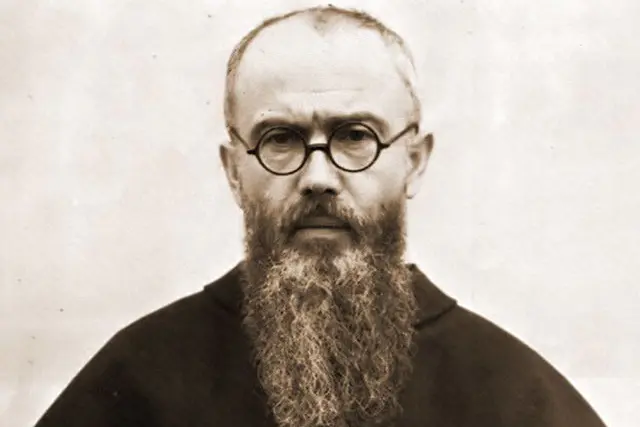
In 2022, the Catholic Church in Poland shared a photo commemorating the 81st anniversary of St. Maximilian Kolbe’s arrest by the Nazis. The image, the last one taken of the saint before his final arrest, was notable for what it didn’t show — his signature long beard.
By the time the photo was taken, Kolbe had already been arrested by the Nazis once but was clearly resolved to continue his nationwide evangelization efforts. The monastery he had established at Niepokalanów, 25 miles west of Warsaw, had become a major Catholic publishing center.
The beard with which Kolbe is often pictured is notable for several reasons, one of which was the fact that not many of his Franciscan counterparts in Poland sported them. He shaved his signature beard in order to blend in with his fellow Franciscans and with society at large.
St. Maximilian Kolbe. | Credit: Public domain
The second reason is that Kolbe’s beard is the only first-class relic that exists of him. The rest of his body was incinerated in the ovens of Auschwitz after he was murdered by the Nazis in 1941.
Father James McCurry, a Conventual Franciscan and minister provincial of the Our Lady of the Angels Province, gave a homily in 2016 commemorating the 75th anniversary of Kolbe’s martyrdom in which he mentioned the saint’s beard.
McCurry, author of the book “Maximilian Kolbe: Martyr of Charity,” said Kolbe chose to keep the beard upon his return from six years of missionary work in Japan. In those days, it was customary for missionaries to grow long beards, and Kolbe wanted to keep it as a reminder of his missionary days and as a reminder to always be a “missionary” of the Gospel.
McCurry said Kolbe’s beard made him unusual among his Conventual Franciscan counterparts, who generally did not wear them. Kolbe’s fame was spreading in Poland thanks to his publishing work, and his unique beard helped him to stand out all the more.
It was for this reason that Kolbe eventually, after the 1939 Nazi invasion of Poland, made the decision to shave it, McCurry said, so as not to stand out. Kolbe’s founding of the Militia Immaculata (MI), an evangelization movement identifying with Mary, put him high on Nazi watchlists.
One book on his life offers this quote from the saint: “Beards provoke the enemy who rapidly is approaching our friary. Our Franciscan habits also will provoke him. I can part with my beard. I can’t sacrifice my habit.”
After a fellow brother cut off Kolbe’s beard for him, the brother at first tried to save the beard, but Kolbe objected and told him to throw it in the stove. So, obediently, the brother threw it into the stove, but the fire was not lit, so the brother later retrieved it and stored it in a pickle jar.
Today, Kolbe’s beard is his only surviving first-class relic.
McCurry was also a friend of Franciszek Gajowniczek, the man for whom Kolbe laid down his life at Auschwitz in late July 1941, following his arrest on Feb. 17.
Gajowniczek was one of the 10 men selected to be executed in reprisal for one prisoner’s escape from the barracks. He cried out: “What will happen to my wife and children?” And in response, Kolbe stepped forward and offered to take his place. The 10 were placed, naked, in a starvation chamber.
All 10 of those condemned that day died eventually; six starved, and the deaths of the rest, including Kolbe, were hastened by an injection of carbolic acid.
This story was first published in August 2021 and has been updated.
Thousands gathered in the city of Chennai in southeast India on Aug. 8–9 for the country’s fifth National March for Life, bringing together Catholic bishops, clergy, religious, families, young people, and pro-life advocates for two days of prayer, formation, and public witness to the dignity of human life.
Organized by CHARIS India and hosted by the Archdiocese of Madras-Mylapore, the event featured Catholic leaders including Cardinal Anthony Poola, archbishop of Hyderabad and president of the Catholic Bishops’ Conference of India.
JCD Prabhakar, speaker of the Tamil Nadu Legislative Assembly, opened the event. According to march organizers, he is the first Indian politician to publicly express his commitment to the protection and promotion of human life. At the march, he unveiled a memorial dedicated to unborn children. India’s National March for Life has previously been held in Delhi (2022), Pune (2023), Thrissur (2024), and Bengaluru (2025).
UK bishop urges prime minister to push for Jimmy Lai’s release
Auxiliary Bishop James Curry of Westminster, England, has written a letter to Prime Minister Andy Burnham urging him to do everything possible to secure the release of jailed China democracy activist Jimmy Lai.
“Jimmy Lai’s ‘crime’ was to voice concerns, engage in peaceful protest, and publish a newspaper which was critical of oppressive new laws,” Curry said, expressing concern that Lai “has no access to the sacraments” and about his deteriorating health conditions.
“Around 200,000 migrants have come to the U.K. from Hong Kong since 2020, many of whom are Catholic. The Church in England and Wales continues to provide pastoral support to all those from Hong Kong who seek it,” he said. “I also offer my prayers for those who are persecuted because of their faith or political beliefs throughout the world. I ask Catholics in England and Wales to join with me in seeking the intercession of St. Maximilian Kolbe for Jimmy Lai, and in seeking the intercession of St. Alban and St. Frances Cabrini for all those who have had to leave their own country because of persecution.”
Lebanon’s general amnesty law raises concern among Christians
Lebanon’s Parliament approved a sweeping general amnesty law on Aug. 12, drawing support from a majority of lawmakers, including representatives of Christian parties.
The vote came shortly after the country abolished the death penalty, but the amnesty has proved far more divisive, ACI MENA, the Arabic-language sister service of EWTN News, reported Aug. 11.
Critics, particularly within Christian circles, fear the release of large numbers of prisoners without adequate rehabilitation programs could deepen Lebanon’s security problems. They argue that the measure does little to address overcrowded prisons, prolonged pretrial detention, slow judicial proceedings, or the rights of victims.
The law also permits some Lebanese who fled to Israel after 2000 to return, provided they did not participate in military or security activities. Lebanese activist Maryam Younes, who was deported to Israel, rejected the measure as inadequate, saying returnees could not be certain of their safety from Hezbollah.
Young Russian Catholics gather to discuss Christianity in a digital world
Around 80 young Russian Catholics participated in the 24th annual Catholic Youth Meeting in the Diocese of St. Joseph in Irkutsk, Siberia, the largest geographical diocese in the world.
Participants in the program, titled “Nets of Jesus: Towards Dull Presence,” included young people from Krasnoyarsk, Irkutsk, Transbaikalia, and Buryatia, Vatican News reported Aug. 10.
The Aug. 6–9 event included reflections on the parable of the good Samaritan, discussions on remaining Christian in a digital age, and discussions of their experiences and plans for future projects at their respective parishes. Participants were also guided in a daily spiritual reflection centered on young saints of the Church, including St. Carlo Acutis.
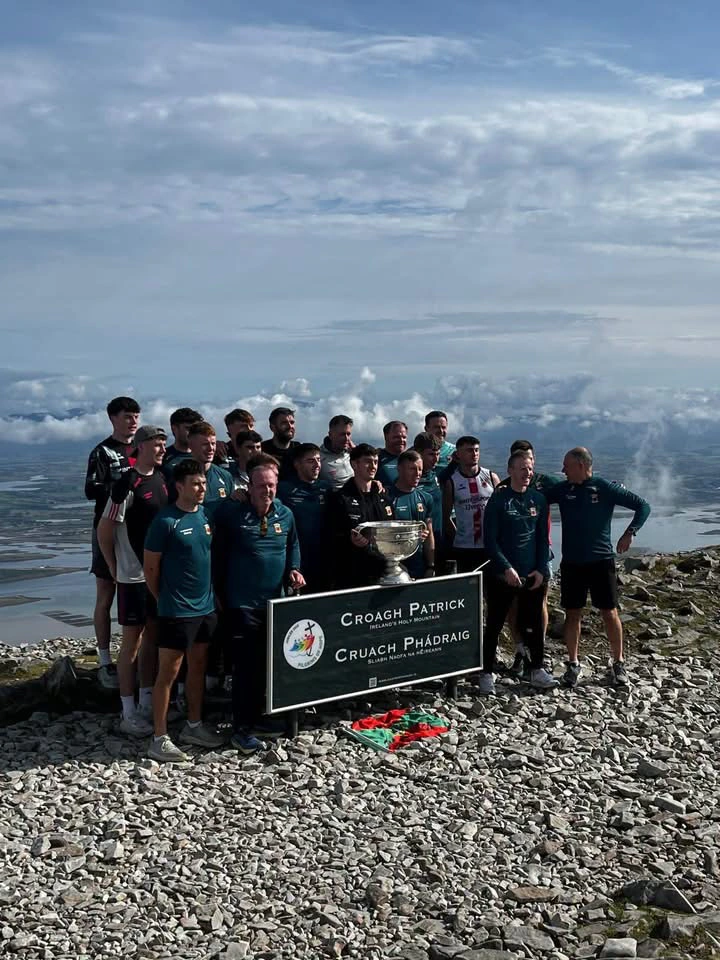
The All Ireland winning Mayo Gaelic football team carried the Sam Maguire cup to the summit of Croagh Patrick, Ireland’s holy mountain, in thanksgiving for the historic win. | Credit: Father John Kenny, Westport Parish, Tuam Archdiocese
Ireland’s Mayo Gaelic football team carries trophy to Croagh Patrick in thanksgiving
Footballers from the All Ireland winning Mayo Gaelic football team carried the Sam Maguire cup to the summit of Croagh Patrick, Ireland’s holy mountain, in thanksgiving. They won a historic All Ireland match on July 26, breaking the legend of a 75-year curse by a parish priest placed on the last Mayo team that won for disrespecting a funeral procession during homecoming celebrations.
Mayo won their all Ireland Championship on Reek Sunday, traditionally a day of pilgrimage in the western county, when thousands of Catholics climb the mountain, many barefooted.
The group of Mayo players led by manager Andy Moran and captain Jack Coyne brought the famous trophy to the summit, where there is a small oratory. There they greeted other pilgrims and said a prayer of thanksgiving for their victory.
Kidnappings heighten anxiety among Syrian Christians
A series of reported kidnappings involving Syrian Christians has renewed concern over security in the region.
The cases include the abduction of a deacon near Homs and the disappearance of a young Christian man in Saidnaya, ACI MENA reported Aug. 11.
Elias Khazal, a farmer and deacon at the Syriac Orthodox Church of St. George in Zaidal, was seized by masked gunmen while working about two miles north of his village. His captors held him for 41 days near Tall Manin, between Damascus and Saidnaya, and demanded a ransom of $1 million. Father Hamid Masouh of Our Lady of Deliverance Syriac Catholic Church said security forces eventually raided the building where Khazal was being held. They freed him without a ransom payment and arrested members of the gang. Although the deacon endured several forms of torture, he returned home in good physical condition.
In Saidnaya, local sources reported that armed men abducted jeweler Fadi Samaan after entering a parking area in vehicles without license plates and opening fire. His fate remains unknown.
Mauritius religious leaders pledge united action against drug abuse
Leaders from several religious communities across Mauritius expressed their commitment to closer collaboration in confronting the country’s growing drug crisis in a meeting at Bishop Jean Michaël Durhône’s residence in the Diocese of Port-Louis.
At the Aug. 11 meeting, Durhône emphasized the importance of the family, which he described as “the foundation of society,” and called on Mauritians not to lose hope, ACI Africa, the sister service of EWTN News in Africa, reported Aug. 12. “We are not giving up,” he said, inviting the different religious communities to pool “their experiences, programs, and strengths.”
In a statement issued after the meeting, participants described the drug situation as “alarming,” noting that drugs, particularly “synthetic drugs,” are affecting all sectors of Mauritian society, with young people becoming increasingly involved.
“Families, both rich and poor, are directly affected, while communities are facing a growing deterioration of their social fabric,” the religious leaders said in their statement.
Roman pilgrims prepare to return to the Holy Land
After months of suspended pilgrimages because of war in the Middle East, the Opera Romana Pellegrinaggi, the Diocese of Rome’s pilgrimage office, is preparing to return to the Holy Land. Its first trip is scheduled to depart Monday, Aug. 17.
Father Giovanni Biallo, the organization’s spiritual assistant, told ACI MENA on Aug. 13 that preparations resumed after fighting between Lebanon and the Galilee region ceased and direct flights between Rome and the Holy Land began returning during the past two months. He said European pilgrims have been slower to return than groups from Asia and Latin America, partly because of widespread fears about instability across the region.
The priest welcomed the resumption as a sign of solidarity with local Christian communities whose livelihoods have been devastated. In Bethlehem alone, he said, 100 hotels had been closed and are now waiting for pilgrims to return.
Kevin Mario and Patrick J. Passmore contributed to this report.
A Pew Research Center survey found that 65% of American Catholics favor the death penalty for people convicted of murder, with 28% who “strongly” favor it.
The research showed that support for the death penalty among U.S. adults is 6 percentage points higher than it was in April 2021, and it is about equal to where it was in August 2020 (65%).
It found that about two-thirds of all Americans (66%) favor the death penalty for people convicted of murder.
Pew surveyed 3,554 U.S. adults from July 6–12. Participants were all members of Pew’s American Trends Panel, which is a nationally representative panel of randomly selected U.S. adults. The margin of sampling error for the sample of respondents was plus or minus 1.9 percentage points.
While most Catholics favor it, 34% said they oppose it, with 15% who "strongly oppose” it.
When asked in the context of morality, 68% of all respondents said they see the death penalty as morally justified for those who have committed murder, while 28% believe it is morally wrong.
Of Catholics, 64% believe the death penalty is morally justified when someone commits murder, and 32% said it is morally wrong.
A 59% majority of all Americans said the death penalty is not a crime deterrent, while 39% said that it is. A majority of Americans (73%) also said there is some risk that an innocent person could be put to death, but a quarter said that there are safeguards in place to prevent this.
“I condemn capital punishment. I believe that human life is to be respected and that all people — from conception to natural [death] — their lives should be respected and protected,” the pope said in April.
His remarks against the death penalty echo a relatively new magisterial teaching in the Catholic Church, which was promulgated by Pope Francis in 2018. The Church teaches that “the death penalty is inadmissible because it is an attack on the inviolability and dignity of the person,” (Catechism of the Catholic Church, 2267).
Views differ by political party, age, and education
The poll showed partisan divides on the death penalty persist among U.S. adults.
Republicans and independents who lean toward the Republican Party overwhelmingly support the death penalty with 84% in favor, including 47% who “strongly favor” it. Democrats and Democratic leaners were about split between support (51%) and opposition (48%).
Most Republicans (85%) also said the death penalty is morally justified for a crime like murder, while Democrats are more split on the issue with 55% who believe it is morally justified and 42% who do not.
Republicans and Democrats were most divided over whether the death penalty is fairly applied to different races.
Most Republicans (77%), said white and Black people are equally likely to be sentenced to the death penalty for similar crimes, and only 23% of Democrats reported the same.
The report also noted that younger adults are slightly less supportive of the death penalty than older adults. Of adults ages 18 to 29, 58% said it is morally wrong, compared with 47% of those 65 and older.
Adults with a college degree, especially those with a postgraduate degree, are also slightly less likely than those with a high school degree or only some college education to favor the death penalty for people convicted of murder.
Claims circulating widely on social media that Finland’s first Catholic school will open this month, or that it is already operational, are inaccurate.
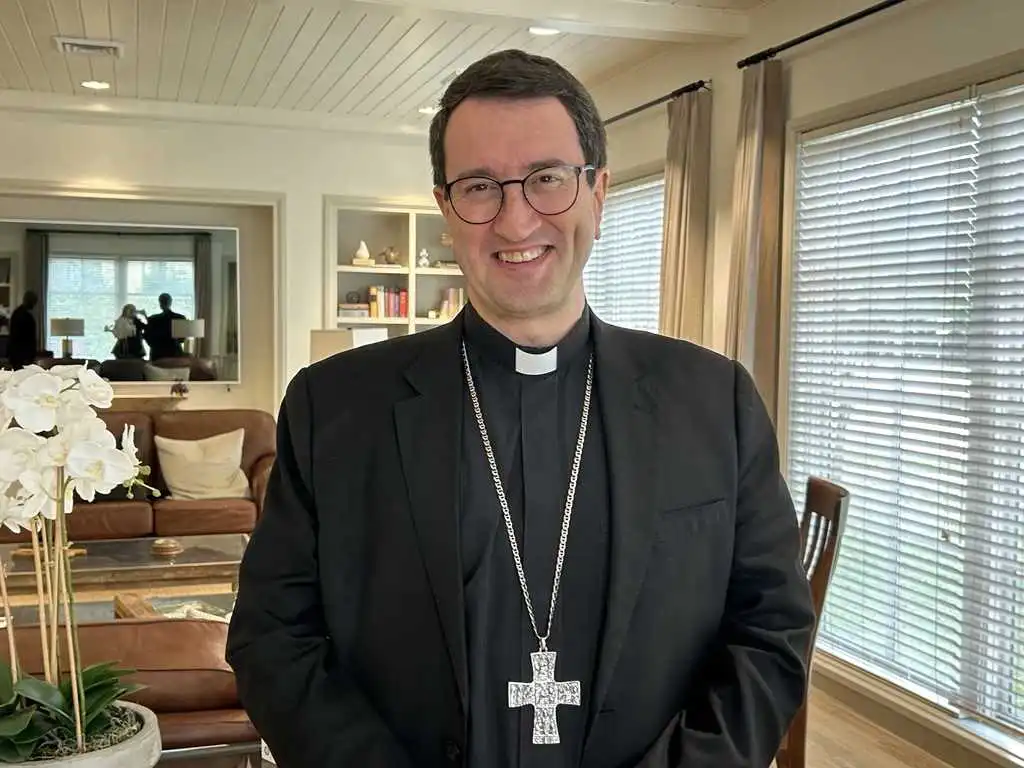
The Helsinki Catholic School, which was scheduled to begin operations in August, has postponed its opening until next year, according to Bishop Raimo Goyarrola of Helsinki.
The planned school gained attention after the Helsinki Diocese announced the project in its diocesan magazine last November. By the time of the announcement, groundwork was already underway, with fundraising efforts and the necessary administrative and bureaucratic processes being pursued.
Once completed, the school would be the first Catholic school in Finland in roughly 500 years, following the near disappearance of Catholic institutional life in the country after the Reformation and the adoption of Lutheranism as Finland’s state religion in the 16th century.
Bishop Raimo Goyarrola of Helsinki, Finland. | Credit: Amira Abuzeid/EWTN News
The school’s planned model
Goyarrola previously described the project to ACI Prensa, the Spanish-language sister service of EWTN News, as an important step in rebuilding Catholic educational life in Finland.
He said the school was intended to open in August 2026 and would initially operate on the second floor of a Lutheran church dedicated to St. James the Apostle on Lauttasaari, an island in Helsinki. The bishop had also expressed hope that, if finances permitted, the diocese could acquire the building within three years.
The Helsinki Catholic School is planned as a small, inclusive school initially serving grades 1–3, following Finland’s national and Helsinki city curricula while incorporating Catholic values. Its approach focuses on personal attention, a calm learning environment, initiative, and a strong character foundation.
Opening delayed until 2027
In response to an inquiry from EWTN News, Goyarrola clarified that the school has not opened and that its launch has been postponed.
“The school will open once everything is fully in place,” Goyarrola said. “We had hoped to begin this August, but after careful consideration we have decided to postpone the opening until next year, as there are still several important matters to resolve.”
He also went on to say: “The administrative procedures, logistics, and financing alone are challenging.” He further noted that “when the school is also Catholic and privately run, the work and the requirements become even more demanding.”
Social media accounts and online posts have recently presented the Helsinki Catholic School as though it is already operating in an educational sense. This is inaccurate. The school is not currently teaching any students, and it is not open in the capacity that formal classes or regular educational activities are being conducted. The project remains in development.
The Diocese of Helsinki continues to work with its partners toward establishing the school and remains hopeful that it will become a reality in 2027.
Goyarrola asked the faithful to pray for the project as the diocese works through the remaining requirements. “We would be deeply grateful for your prayers as we continue working to make this project a reality,” he told EWTN News.