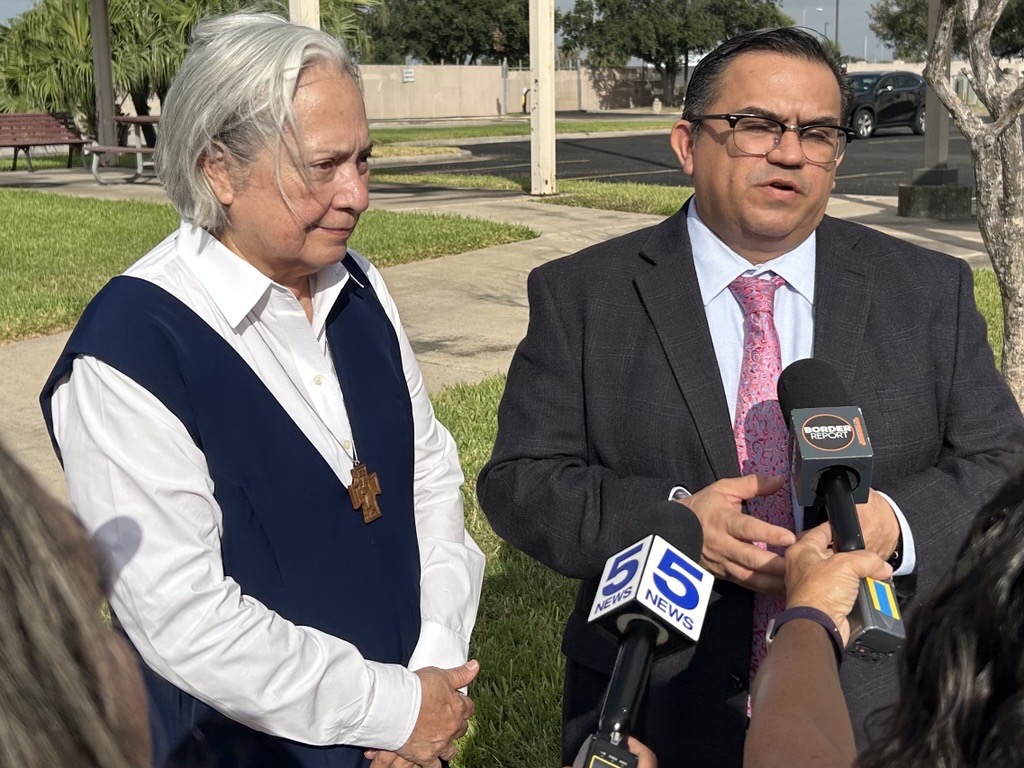
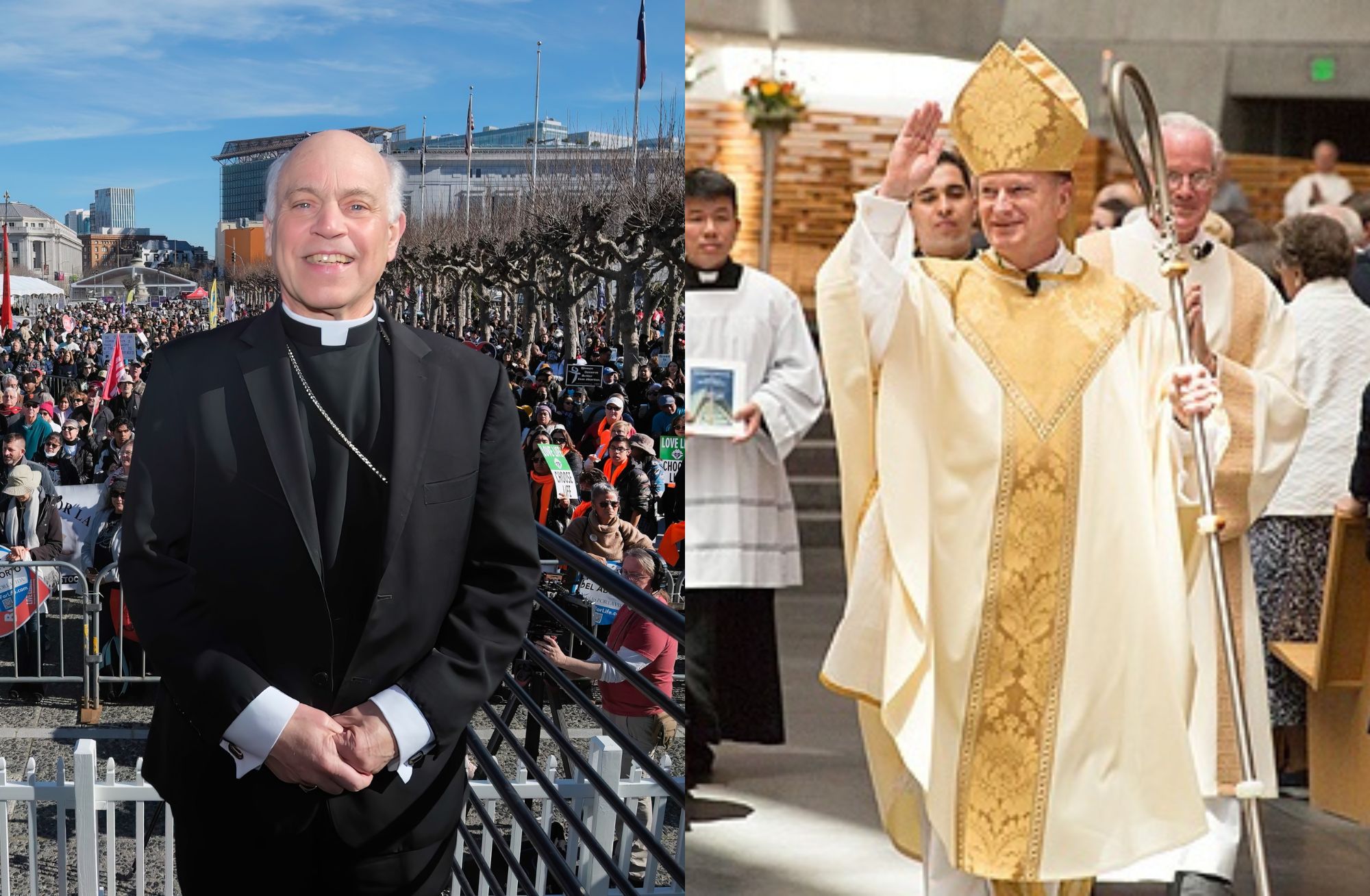
The Chaldean Synod has elected Archbishop Amel Shamon Nona as the new Patriarch of the Chaldean Catholic Church, succeeding Cardinal Louis Raphael Sako, who submitted his resignation to Pope Leo XIV on March 9 amid a financial and legal scandal concerning a former Chaldean bishop in San Diego.
The election took place during the synod’s meetings held in Rome since April 9.
This election comes at a critical time for both the Chaldean Church and the wider region, amid ongoing political challenges in Iraq and the Middle East, as well as internal ecclesial issues related to unity and the organization of Church life both locally and in the diaspora.
Following the election, the Chaldean bishops issued a statement saying: “After deep spiritual and fraternal deliberations, conducted in a spirit of prayer and ecclesial discernment, and mindful of the apostolic responsibility entrusted to them, the Fathers of the Synod elected the Patriarch of the Chaldean Church according to the established canonical procedures. After completing the required ballots, and in accordance with the will expressed by the Synod, His Excellency Archbishop Amel Shamon Nona was elected Patriarch of the Chaldean Church and chose for himself the name His Beatitude Patriarch Mar Paul III Nona.”
The statement continued: “His Beatitude accepted the election in accordance with canonical norms, expressing his reliance on God’s grace and his commitment to exercise his patriarchal ministry with fidelity and responsibility, in full communion with the Fathers of the Synod, in service of the unity of the Chaldean Church and its mission in the homeland and the diaspora.”
“The Fathers of the Synod raise their prayers to the Lord Jesus Christ, the Good Shepherd, asking that He grant the elected Patriarch wisdom and strength,“ the statement continued. ”They affirm their confidence that this ministry will contribute to strengthening the faithful in their faith, enhancing their unity, and revitalizing the Church’s mission in bearing witness to the Gospel.”
The Synod also called on all members of the Chaldean Church — clergy and faithful alike — to unite around the new Patriarch and support him through prayer and shared responsibility for the good of the Church and the growth of its mission.
Archbishop Nona was born in Alqosh in northern Iraq in 1967. He was ordained a priest in 1991 after completing his studies at the Patriarchal Seminary in Baghdad. He later pursued higher studies in Rome, earning a doctorate in theological anthropology from the Pontifical Lateran University.
He served in the parishes of Alqosh before being appointed Archbishop of Mosul in 2009, during a period marked by escalating violence against Christians in Iraq.
During the events of 2014, he left Mosul along with his faithful following the takeover of the city by the terrorist group ISIS, marking a pivotal moment in the modern history of the Chaldean Church.
In 2015, the Holy See appointed him head of the Chaldean Eparchy of St. Thomas the Apostle in Australia and New Zealand, where he continued his pastoral ministry among the Chaldean diaspora.
His appointment comes following the resignation of Cardinal Raphael Sako, who announced that he submitted his resignation to Pope Leo XIV of his own free will on the morning of March 9 so he could “dedicate himself quietly to prayer, writing, and simple service.”
The timing sparked controversy within the Chaldean community.
Pope Leo XIV on March 10 accepted the resignation of Bishop Emanuel Shaleta, a Chaldean Catholic bishop arrested in San Diego in March on charges of embezzling Church funds.
Sako had allegedly attempted to support or transfer the embattled bishop to a higher position, leading many to question whether the financial scandal played a role in the patriarch’s decision.
This story was first published by ACI MENA, the Arabic-language sister service of EWTN News. It has been translated and adapted by EWTN News English.
While discussing the role of educators in helping young people to heal from their wounds, Cozzens played a video of Abrams performing her song “Camden."
“The poetry that she sings about expresses the depth of pain that she carries in her heart, and whatʼs even more clear is that it resonates with tens of thousands of people in the stadium all her same age,” Cozzens said during his April 7 keynote, according to UCA News. "Many people in the stadium also feel like singing.”
In the song, an extended reflection on insecurity and personal struggles, Abrams sings, in part, “All of me, a wound to close / But I leave the whole thing open / I just wanted you to know / I was never good at coping.”
“This is the height of popular culture,” he said. “This is what our young people are singing about, the gaping wounds in their hearts."
Catholic educators must invite young people to encounter Christ in their wounds, rather than seeking value from social media, artificial intelligence, popular culture, or politics, he said.
The National Catholic Educational Association convention took place April 7-9. Other highlights at the event included a live butter sculpture of Pope Leo XIV, and “Puppy Love” sessions sponsored by Safe Hands Rescue and Healing Hearts Rescue, according to the event schedule.
Chicago Archdiocese says public school system abruptly cut off funding for students with disabilities
More than 800 students with disabilities attending Chicago Catholic schools will be affected after the city’s public school system suddenly suspended funding to social services before the end of the school year.
The Chicago Archdiocese said in an April 10 statement that Chicago Public Schools (CPS) targeted only Catholic schools in terminating services for individuals with special needs under the Individuals with Disabilities Education Act (IDEA).
The statement noted students with learning differences will lose access to math, reading, and writing tutoring, which will create “severe hardship for hundreds of students” who were relying on the services through the end of the year.
“We are not aware of any other non-public school system or individual school, religious or secular, whose IDEA services have been terminated,” the archdiocese said. “It is not clear why Catholic schools are being treated differently, but Catholic school students have the right to be treated equally under the law.”
Chicago Archbishop Cardinal Blase Cupich said the archdiocese "cannot allow this shocking and possibly discriminatory action by CPS to stand, not only given its affront to Catholics, but even more so since this injustice would disenfranchise the students we serve.”
The archdiocese said efforts to reach CPS Superintendent Macquline King “have not yielded a response.”
The archdiocese said the Chicago school system had verbally confirmed funding for the services would continue through the end of the school year “as recently as March 25" before informing the archdiocese during Holy Week that the services would be suspended.
“While federal funding for these services was provided to CPS for the full school year, we were informed that the last day of services would be [April 10],” the archdiocese said.
Georgia archdiocese launches virtual Catholic high school
The Archdiocese of Atlanta is starting a fully online Catholic high school program this fall in partnership with Catholic Education Services.
The launch of Sacred Heart Virtual Academy comes amid increased demand among homeschooling families, according to an April 8 report from the Georgia Bulletin.
Curriculum will be provided by Catholic Education Services, whose mission “is to partner with Catholic school leaders and provide services that extend the reach and impact of your school’s mission through a faith-centered, rigorously academic education with a flexible learning platform,” according to its website.
“We knew that we were not filling the needs of a group of kids that were in our parishes,” Kim Shields, the archdiocesan associate superintendent of schools, said in the report. “This allows a child that doesn’t want to go to a brick-and-mortar school to have that opportunity.”
The school will serve grades 9-12, according to its website, and is open to students outside of the archdiocese.
“My hope is that it serves what we’re about — to provide programs for students to help them develop in all areas of their life,” Shields said. “The premise is that everything is centered around the mission of the Catholic Church.”
Student debt almost prevented Sister Ann Dominic Mahowald from pursuing her vocation with the Dominicans.
When someone becomes a religious, he or she no longer receives an income, making it impossible to maintain student loan payments that can span decades. Fund for Vocations offers a solution.
Founded in 2004 by Corey and Katherine Huber, the organization now offers two programs: the long-standing St. Joseph Grant Program, which covers student loan debt, and the recently launched “DAD Fund” (Discretionary Anti-Discouragement Fund).
While the St. Joseph program handles monthly tuition payments, the DAD Fund takes on the smaller costs of discernment — what Fund for Vocations spokesperson Annie Ryland described as “hidden financial barriers to religious vocations.” The DAD Fund provides grants of $5,000 or $10,000 directly to religious communities to support discerners.
Two grant recipients, Sister Helene Therese and Sister Magdalene Grace of the Alhambra Carmelites, pose for a photo together. | Credit: Elizabeth Latham/Fund for VocationsSister Mary Agnes, a 2011 grant recipient and cloistered nun with the Poor Clares of the Diocese of Rockford, Illinois, visits with guests in the parlor after making her first profession of vows. | Credit: Fund for VocationsFund for Vocations Executive Director Mary Radford and grant recipient Father Malachy Napier of the Franciscan Friars of the Renewal (CFR). | Credit: Photo courtesy of Mary Radford/Fund for VocationsGrant recipient Father Andrew Panzer, a priest of the Society of St. John Cantius, incenses the altar during Mass. | Credit: Canons Regular of St. John CantiusGrant recipient Sister Maria Julia of the Eucharist, OP, makes her first profession of vows at the Dominican Monastery of Our Lady of the Rosary in Summit, New Jersey. This is cloistered community of Dominican nuns. | Credit: Dominican Sisters of the Monastery of Our Lady of the RosaryMother Ann Marie Karlovic receives Sister Ann Dominic Mahowald’s vows at the Mass for profession at the Cathedral of the Incarnation in Nashville, Tennessee. | Credit: Photo courtesy of the Dominican Sisters of Saint Cecilia
For instance, Mahowald, now a board member of Fund for Vocations, told the group how she had needed to ask her parish to sponsor her airfare to visit the Nashville Dominicans when she was discerning.
“We asked ourselves, ‘How many young people are getting stuck at that stage of discernment? Not being able to fly to the discernment retreat and quietly giving up?’” Ryland told EWTN News.
“Expenses like travel for ‘Come and See’ visits, psychological evaluations, or temporary health insurance can total several thousands of dollars, and that’s all before candidates even enter novitiate,” Ryland added.
Eleven religious communities have already reached out to Fund for Vocations for funds “to support the new discerners,” according to Ryland.
“The goal of the DAD Fund is to ensure that these smaller financial barriers do not delay or discourage men and women who are already showing great courage in sincerely exploring a vocation,” Ryland continued.
Work of renewal
In recent years, the Catholic Church has seen a worldwide decline in the number of priests and seminarians. The number of religious sisters has plummeted since 1965, with an 82% decrease over the past 60 years.
But religious and priests are vital to the life of the Church.
“Every vocation is a gift to the Church,” Mary Radford, executive director of the Fund for Vocations, said in a press release shared with EWTN News. “We want to make sure that practical concerns, whether travel costs, required evaluations, or basic entry expenses, never become the reason someone hesitates to take the next step in discernment.”
“Every religious vocation means a life given over to prayer and service for Christ’s Church,” Ryland said. “Religious serve in parishes, in schools, in medical clinics, on the streets with the homeless and suffering. They are living witness to the power of the Gospel.”
“Religious also serve to remind us all of our heavenly goal. When young people see devout, joy-filled priests and sisters, they catch a glimpse of the power of God’s love and are shown that the Catholic faith is worth living and dying for,” Ryland said. “And of course, we all need the sacraments, so vocations to the priesthood are especially critical for the salvation of souls.”
“By removing the financial obstacles that can stand in the way of a vocation, we get to play a small role in the great work of renewal and hope that God is stirring up in his Church today,” Ryland said.
In the past few weeks since the new fund launched, Ryland said that “the response has been overwhelmingly grateful and positive.”
“Vocations directors seem most excited about being able to assist with travel expenses for candidates who wish to attend a Come and See weekend but cannot afford the trip on their own,” Ryland said.
‘A late vocation’
Steven Ellison, a seminarian with the Discalced Carmelite order, describes himself as a “late vocation.” Raised by a devout Protestant family, Ellison joined the Catholic Church in his early 30s in 2022.
“When the Lord first lifted the veil that covered my eyes and allowed me to see the beauty of his Church for the first time, I perceived then in a passing moment of clarity my vocation to the Discalced Carmelite order and to the priesthood,” Ellison said.
He picked St. Teresa of Ávila as his confirmation sponsor, but it would be a few years before his vocation became fully clear to him.
When he began to pursue a vocation with the Carmelites, he faced the burden of student debt.
“When discerning religious life with its vow to poverty, all personal debts need to be either cleared away or assumed by a third party so that the aspiring religious can be free from financial entanglements,” Ellison said.
He remembered thinking: “If the Lord removes these circumstances that appear to be obstacles and opens every door to Carmel for me then I would enter through each open door so that I might do his will.”
Despite being an older candidate, at 34, the Carmelites said it would not be a barrier — but his student debt still would be.
“It was there that the Fund for Vocations and their donors became the avenue of God’s grace for me,” Ellison said. “In their assumption of my student loans, and in their pledge to support me throughout my formation, the final doors of entry to Carmel were opened and I was able to walk through them with confidence in the Lord because of the faithfulness of his Church.”
“The Fund for Vocations became for me a reflection of the Church’s goodness,” Ellison said.
“The fruits have been innumerable so far, and I have grown accustomed to referring to those fruits as treasures — treasures because these gifts from the Lord seem both hidden and imperishable,” he said of the vocations program.
‘A life given’
Mahowald “was seriously contemplating a religious vocation,” but she had a 30-year payment plan for more than $100,000 in student debt.
“I was dumbfounded by the simple fact that my Catholic education was both the reason for my deep love for Jesus and the obstacle to my pursuit of following Jesus in religious life due to the debt I had accrued,” Mahowald said.
Debt can be a barrier to joining religious life, especially student debt that is designed to be paid off over decades.
“My debt was too significant for the sisters to assume so I knew that I couldn’t enter until that financial difficulty was solved,” Mahowald said.
“There were moments of real sadness and confusion when I didn’t see how God would answer this dilemma,” Mahowald said. “The Fund for Vocations was the miracle that allowed me to enter religious life at the age of 24 instead of 54.”
“I applied for a grant and was eligible to enter religious life while the Fund for Vocations paid my monthly loan payments,” Mahowald said. “The genius behind this model is that it gave me the freedom to discern.”
“The Fund for Vocations is set up to make monthly loan payments while the candidate is in formation,” Mahowald said. “If the candidate discerns to leave, he or she just picks up the next loan payment. If the candidate makes final vows then the loans are taken care of completely.”
Ryland described Fund for Vocations as a “family” and “a beautiful microcosm of the generosity and love of the whole body of Christ.”
“We love to see the relationships of love and prayer that develop between our supporters and our grant recipients,” Ryland continued. “Supporters are like spiritual godmothers and godfathers to these young men and women. Many tell us they think of them as spiritual children.”
Mahowald found the same in her experience.
“One of the fruits of being a grant recipient is that I’ve been adopted into a larger family,” Mahowald said. “Katherine and Corey Huber, the founders of the Fund for Vocations, keep in contact with me and came to celebrate both my first and final vows. Other benefactors were placed in my life that I still keep in touch with to this day.”
“Knowing that donors to the Fund for Vocations were supporting me in my vocational journey taught me that the gift of my ‘yes’ to God was not just for me but also for the upbuilding of the Church,” Mahowald said.
‘I walk the halls with saints in the making’
Mahowald now works as the assistant principal of student life and discipline at Saint John Paul the Great Catholic High School in Virginia — the same school she taught at before she became a religious sister.
“My position allows me to watch over and shape the social development of our young students,” Mahowald said. “We care deeply about the formation of the whole person and desire our graduates to become disciples of Christ.”
“I joke with the students that my job is to plan parties and to keep everyone safe. While I say that with a smile, it’s not a bad summary of how I serve,” Mahowald said.
“Working with high school students brings daily adventures, and I am certain that I walk the halls with saints in the making,” Mahowald said. “God is raising up many young people who are sincerely eager to know, love, and serve him.”
“I anticipate more vocations to the priesthood and religious life and therefore am so grateful that the Fund for Vocations exists so that anyone experiencing financial obstacles to religious life will not be discouraged but will instead have hope and support to be able to leave everything and follow Christ,” Mahowald said.
A newly launched Catholic group is seeking to apply the Church’s teachings to the topic of animal welfare in order to counteract the “needless suffering” of animals and underscore the “inherent value” they hold.
“I believe most Catholics would be surprised, as I was, to learn about the extent of preventable animal suffering in our world today,” Kristin Dunn, the founder of the Saint Francis Institute for Animals, told EWTN News.
The group launched in March and is promoting community outreach and parish partnerships in order to spread its message. It also offers a guided 30-day program of “reflections, readings, short videos, and exercises” meant to introduce Catholics to the topic of animal welfare.
Dunn said she began learning more about animal welfare more than a decade ago. She “loved dogs,” she said, but had given “very little thought to other animals.”
Her growing awareness of the issue was bolstered by works such as Pope Francis’ encyclical Laudato Si’,which, as part of its reflections on the environment, criticized the “indifference or cruelty” humans often show toward animals.
Dunn also pointed to Catholic writer Matthew Scully’s 2003 book “Dominion,” which criticized “the many ways our society has turned its gaze away from animals” and allowed animal suffering to flourish.
“It’s something I’ve felt called to start for the past decade, since learning about the issues, realizing how connected they are to my Catholic values, and knowing that other Catholics could make a tremendous impact with increased awareness,” Dunn said.
The group has thus far drawn funding from small donors and has received pro-bono legal support and design assistance. Since the launch, “many Catholics have reached out sharing that they’ve hoped for something like this, which has been extremely encouraging,” Dunn said.
‘Not to hurt our humble brethren’
The institute is named for St. Francis of Assisi, who lived during the High Middle Ages and who became famous for his exhortations to treat animals kindly and respectfully.
Catholic theologians throughout the centuries have not always evinced such concern for animals. St. Augustine, for instance, largely dismissed objections to animal suffering in part by arguing that animals are “nonrational” and “do not share the use of reason with us.”
St. Francis, on the other hand, argued strongly for including animals within the human moral framework. He famously wrote that “if you have men who will exclude any of God’s creatures from the shelter of compassion and pity, you will have men who will deal likewise with their fellow men.”
“Not to hurt our humble brethren is our first duty to them,” the saint wrote, though he advised that “to stop there is not enough” and that we must “be of service to them wherever they require it.”
Pope Francis echoed those sentiments in his landmark 2015 encyclical Laudato Si’. In the document he also pointed to the Catechism of the Catholic Church, which, while arguing that it is “legitimate to use animals for food and clothing,” stipulates that it is “contrary to human dignity to cause animals to suffer or die needlessly.”
The Vatican also regularly recognizes the importance of animals within creation through a yearly blessing of the animals in St. Peter’s Square.
“God cherishes his creation. He cares for the animals, the plants, because these create the conditions for life to continue and flourish, especially intelligent life, the life of humankind,” Cardinal Mauro Gambetti said last year during the blessing.
Cardinal Mauro Gambetti, the archpriest of St. Peter’s Basilica, individually greets many of the animals after offering a blessing on the feast of St. Anthony Abbot, Jan. 17, 2023. | Credit: Alan Koppschall/EWTN News
Many animal advocates over the centuries have opted for vegetarianism or veganism in order to avoid any use of animals for food or other materials.
In the modern era, meanwhile, many consumers concerned about animal welfare have opted for “humane” agricultural options such as pasture-based farms rather than the intensive factory-style animal farming from which most meat comes.
Dunn said the Saint Francis Institute is “encouraging people to learn about factory farming, given what so many animals endure and given the urgent need for change.”
“Our focus is on choosing plant-based foods to make the greatest impact for animals, and, within that, to take the first step,” she said.
Among its other outreach efforts, “we’re focused on building partnerships with parishes to share practical, meaningful ways to protect God’s creatures,” Dunn said.
“We can advise on straightforward changes they can make to be more animal-friendly, coordinate talks with animal experts, provide our printed brochures, and explore other ways to work together,” she said.
Dunn said those uncertain of how to start advocating on behalf of animals should “learn about who the animals are — how smart, sensitive, and gentle they are.”
“For example, most people don’t know that pigs are known to be as intelligent as dogs. How can we treat them so differently?” she said.
She quoted Pope Francis, who in Laudato Si’ wrote that if humans “feel intimately united with all that exists, then sobriety and care will well up spontaneously.”
Learning about animals, Dunn said, “follows the example set by St. Francis, who saw each creature as an individual worthy of love and care.”
Now is the time to invite people to the faith, as it “is the moment for the American Catholic Church,” says bestselling author, Harvard professor, and renowned social scientist Arthur Brooks.
Catholics must have “the entrepreneurial zeal to go out and get souls and to promise people what they actually deeply want,” Brooks said. “This is so critically important, but the way it could fail is because we just donʼt have the guts for it. We donʼt have the stomach for it. We donʼt have the heart for it.”
In an April 10 interview with “EWTN News In Depth,” Brooks spoke about the increasing numbers of Catholics. He also shared what is driving people to the Church and how the Church can best reach new people in natural and simple ways.
While there have been increasing numbers of baptisms and confirmations, Brooks said Catholics “canʼt just rest on our laurels,” as there are still “trends largely going in the other direction with respect to people coming to church,” he said.
The Pew Research Center “shows us that 840 Catholics left last year for every 100 who came into the Church. These are not good statistics. But what we see thatʼs really encouraging is a lot of young people, especially young men, coming into the Church searching for a sense of transcendence and really looking for in-real-life community,” he said.
People want meaning, because the “sense of meaninglessness is characteristic of why people are feeling depression, anxiety, loneliness, addiction,“ Brooks said. “And people are starting to fight back.”
Brooks said: “Theyʼre starting to recognize that the little friend in their pocket, the supercomputer thatʼs their smartphone, is not doing them any favors because itʼs mediating their relationship with other people and they want real-life life.”
“We need meaning, and we have these natural questions: ‘Why am I alive? For what would I give my life? Why does my life matter?’ … And weʼre starting to figure out after about 15 years that you canʼt Google these questions,” he said.
People “feel that thereʼs something bigger,” he said. “Young people today, they have a craving for something thatʼs bigger and bigger. And if we donʼt feed it, then weʼre not feeding our sheep. Then weʼre not following the teachings of Christ.”
Bring back boredom, but not ‘in a bad way’
In his newest book, “The Meaning of Your Life: Finding Purpose in an Age of Emptiness,” Brooks discusses how he wants to bring back “boredom.”
“We have actual protocols built into the Catholic Church that give us moments of peace, that give us moments of perspective that most people just donʼt have,” he said. Catholics have prayer, Mass, and Communion that offer us these moments throughout our days.
“The first thing that I do is I get up very early, then I exercise, and then I go to Mass every day,” Brooks said. “Iʼve been a daily communicant for a long time and so has my wife. And we finish the day, even when Iʼm on the road … we pray the rosary together on the phone before we go to sleep.”
“These are the moments,” and “when I say boredom, I donʼt mean boredom in a bad way,” he said.
“Iʼm not casting aspersions at all. Iʼm talking about blank space. Iʼm talking about turning on the structures in the brain called the default mode network that you need to understand your life. ‘When do I understand my life the most?’ When Iʼm at holy Mass. ‘When do I understand it the most?’ When Iʼm in conversation with God,” he said.
This time in prayer can actually benefit brain function, because “you only have access to certain parts of your brain that you need to find meaning and to love your life when you have these metaphysical experiences,” he said.
"Thereʼs a lot of research on this," he said. "This is not speculation. Thereʼs a ton of neuroscience research that shows that you only have access to certain parts of your brain that you need to find meaning and to love your life when you have these metaphysical experiences.”
Evangelization should be ‘as natural as putting on your shirt’
Brooks also discussed his personal conversion and how through simple ways of “friendship and excellence,” people can invite others to the Church.
“When I was 15, I had an experience at the Shrine of Guadalupe in Mexico City on a music trip,” Brooks said. “I came into the Church when I was 16. I went and told my parents, ‘Iʼve discovered that Iʼm Catholic.’”
“I come from a good, strong, Christian background, good evangelical background. I had missionaries on both sides of the family. And my parents looked at each other and they said, ‘I guess itʼs better than drugs.’ They just thought it was rebellion, but the truth is I was called to it. I really was,” he said.
As people now come to the Church the question is: “‘Do you want to go deeper?’ I have something deeper. I have something more profound. I have something that has more historical significance. I have something that has more structure. Come with me, come with me … youʼre hungry and Iʼm going to give you real food,” he said.
“Itʼs the only thing that can fill this hollowness thatʼs in our lives. Itʼs the only thing that can break us out of the simulation,” he said. “People know it in their hearts, and we just have to show that to them. We have to take them by the hand and bring them along.”
As a professor, Brooks said he uses his role to guide students but does not force his faith and beliefs on them.
“I tell them on the first day of class at Harvard, my Catholic faith is the single most important thing in my life. And then I go on and I teach them science,” he said.
“The science of human happiness is what I teach. And they look it up and they say, ‘you know, thatʼs not weird. Itʼs not weird with him. Heʼs doing a good job with his life … He also has a good family life. He loves his wife a lot. Heʼs got kids and grandkids. Thatʼs apostolate. Thatʼs how apostolate actually works,” he said.
“Live your life and live it right and let people see your Catholic faith and donʼt make it weird … Just make it as natural as putting on your shirt. Thatʼs the deal. And thatʼs what Iʼm trying to do every day," he said.
“When my students come to me in office hours, the No. 1 question they ask me is not about my paper, my term project. The No. 1 question they ask me is, ‘How do I fall in love, stay in love, start a family?’ Which, of course, the university doesnʼt teach them, but thatʼs the single most important thing in their lives,” Brooks said.
“No. 2, ‘How do I find my faith?“ Brooks said. ”What do I do to find my faith? They want to be led. You know, this is what it means to be a shepherd … We all have an ability to actually influence other people. And the question is, ‘Am I influencing other people to get them a little closer to heaven? Am I cracking the door that the Holy Spirit in his wisdom can kick in or not?’”
MANILA, Philippines — Several parishes in the Philippines have begun enforcing smoke-free and vape-free policies on church grounds, citing both the sacredness of the premises and the health of parishioners.
“I support the smoke-free and vape-free policies in church premises for the good of all,” Maria Christina Jomen, a parishioner of St. John the Baptist Parish in Jimenez, Misamis Occidental, told EWTN News. “Having a healthy environment is a responsibility for all, especially in places of worship.”
Parishioners and clergy at St. John the Baptist Parish in Jimenez, Misamis Occidental, Philippines, after a Holy Week liturgy on April 1, 2026. | Credit: Photo courtesy of St. John the Baptist Parish
The church, some 755.89 kilometers (469.69 miles) south of Manila, is among the parishes implementing the smoke-free policy in response to health initiatives from the Catholic Bishops' Conference of the Philippines (CBCP) in collaboration with local governments.
On April 2, the executive secretary of the CBCP Episcopal Commission on Health Care, Camillian Father Dan Vicente Cancino Jr., issued a statement directing parishes nationwide to adhere to smoking bans as a sign of respect for sacred spaces. The Department of Health later circulated a video message from Cancino on its platforms.
Cancino said tobacco use leads to preventable disease, premature death, and suffering, and called on all parishes to strictly enforce smoke-free and vape-free policies. The bishops' conference has voiced alarm at the prevalence of smoking and vaping among Filipinos, particularly among the young.
Camillian Father Dan Vicente Cancino Jr., executive secretary of the Catholic Bishops’ Conference of the Philippines Episcopal Commission on Health Care, addresses participants at a community-based mental health and psychosocial support seminar at St. Joseph Pastoral Center in Ipil, Zamboanga Sibugay, on March 10, 2026. | Credit: Photo courtesy of CBCP Episcopal Commission on Health Care
“This initiative is in accordance with our existing laws, and the move is also out of respect for the sacred and concern for community health,” the priest said, noting that smoking in public places such as churches endangers both individual and community health.
“These habits pose serious threats to both individuals and the community. I hope that all our parishes and communities strictly enforce smoke-free and vape-free policies in accordance with existing laws,” Cancino said.
“We understand it is not easy. But with Godʼs grace, liberation is possible. We can do it,” he added.
A long-standing precedent
The National Shrine of Our Mother of Perpetual Help, Parañaque City, Manila, has enforced a no-smoking policy on its premises since 2015, partly in response to Pope Francis' encyclical on care for creation, Laudato Si'.
Other parishes have moved in step with municipal anti-smoking ordinances in cities including Baguio, Davao, Balanga, and Iloilo, pairing health-conscious campaigns with what Church officials describe as “green” initiatives to protect public health and the environment.
Smoking and vaping in the Philippines
According to the World Health Organizationʼs 2025 Global Report on Trends in Prevalence of Tobacco Use, roughly 1 in 5 Filipino adults — about 19.7% of those aged 15 and over — currently smoke, with the rate among men (35.6%) more than eight times higher than among women (4.2%).
The 2021 Philippines Global Adult Tobacco Survey, conducted by the Philippine Statistics Authority and the Department of Health with WHO support, similarly found that 18.5% of Filipino adults currently smoke tobacco. WHO estimates that smoking causes roughly 88,000 deaths in the Philippines each year.
Data from the Food and Nutrition Research Institute of the Department of Science and Technology indicate that 4.8% of Filipinos aged 10 to 19 smoked in 2023, up from 2.3% in 2021.
The World Health Organization has reported that, globally, children aged 13 to 15 are using e-cigarettes at higher rates than adults. The Philippine Department of Health has urged the public to reject vaping products, warning they are not a safer alternative to cigarettes and citing the rising trend of nicotine use among young Filipinos.
After the Trump administration appealed, a federal judge put on pause a lawsuit filed by the state of Louisiana that challenges the federal policy of allowing mail-order abortion pills.
U.S. District Judge David Joseph in Lafayette, Louisiana, ruled that the challenge be paused pending the U.S. Food and Drug Administration (FDA)’s review of the safety of the drug but noted that the state could continue the challenge after the review was completed.
Louisiana Attorney General Liz Murrill filed a lawsuit in late 2025 to challenge the 2023 deregulation of mifepristone, which is used in chemical abortions. The 2023 rule changes, initiated during former president Joe Biden’s administration, allowed the drugs to be delivered through the mail and prescribed without any visits to a doctor.
In January of this year, President Donald Trump’s Department of Justice (DOJ) filed a motion with a federal district court to pause the suit, pending a review by the FDA of the chemical abortion drug.
Louisiana had filed the lawsuit after residents — including Rosalie Markezich, who is named in the lawsuit — said they were coerced into taking abortion pills that were obtained through the mail. In Markezich’s case, she said her boyfriend forced her to take it.
Study: Maternal mortality decreased in states that protect unborn life
A recent study published by JAMA Network Open found a decrease in maternal mortality in states that protect unborn children from abortions as well as in states with permissive abortion laws.
The study considered 22 million births and more than 12,000 pregnancy-related deaths from 2018 to 2023, with 14 states with abortion bans and 37 control jurisdictions.
“This cohort study found that abortion bans were not associated with statistically significant overall or state-specific increases in pregnancy-associated mortality,” the study read.
In states with strong pro-life laws, on average, maternal mortality rates declined slightly faster than pro-abortion states.
Illinois pregnancy centers continue to appeal for conscience rights
A court heard arguments on Friday from Illinois pregnancy centers that are appealing an Illinois district court decision that affirmed a law requiring pregnancy centers to refer women for abortions.
The National Institute of Family and Life Advocates and three Illinois pregnancy centers appealed after an April 2025 court ruling found that requiring pregnancy centers to refer pregnant women for an abortion was not a violation of speech and conscience rights.
“No one should be forced to express a message that violates their convictions, and compelling people to refer others for abortions does that,” said Alliance Defending Freedom Counsel Erin Hawley. “The U.S. Supreme Court held in NIFLA v. Becerra that forcing people to promote abortion is unconstitutional.”
Maryland bill to force hospitals to offer abortions goes to governor’s desk
A Maryland bill that would force hospitals to offer abortions, even against their conscience, in some circumstances, heads to the stateʼs governor after the state Legislature passed it this week.
The bill would require “a hospital to allow the termination of a pregnancy in certain circumstances” under the federal 1986 Emergency Medical Treatment and Labor Act (EMTALA), which ensures that emergency care is offered regardless of a patient’s ability to pay.
The bill would also require a hospital to screen patients for “emergency pregnancy-related medical condition[s]” and to provide “transfer of a patient who has an emergency pregnancy-related medical condition.”
“This bill will result in a new government-created loss of valuable highly trained and experienced emergency department physicians, nurses, providers, and staff,” said Dr. James Kelly, representing the Association of American Physicians and Surgeons. “The legislation will increase the already existing severe shortages of qualified medical staff and will decrease access to emergency medical care, and endanger the health and safety of patients seeking emergency medical care.”
A New Jersey congressman sharply criticized the Vatican for giving a platform to one of Beijing’s top transplant officials at a 2017 international conference on organ trafficking.
During an April 9 event hosted by the Hudson Institute highlighting new evidence of forced organ harvesting in China, Rep. Chris Smith, R-New Jersey, called out the Vatican for hosting China’s leading transplant official at the Summit on Organ Trafficking and Transplant Tourism in 2017.
Smith was a panelist at the Hudson Institute event with Ethan Gutmann, the author of a new book, “The Xinjiang Procedure,” which presents evidence of forced organ harvesting targeting Uyghur and other Turkic Muslim communities on an industrial scale in China.
Gutmann testified during the panel about his findings while on an undercover mission where he secretly interviewed former detainees of Chinese concentration camps, whose testimonies included accounts of gang rape, water torture, and forced organ harvesting.
“I’ve argued with [the Vatican],” Smith said. “If you’re bringing in people who are doing terrible evil, you’re giving them a platform.”
Participants at the 2017 Vatican conference, organized by the Pontifical Academy of Sciences, signed a statement agreeing to unite in fighting the crime of organ trafficking, submitting 11 proposals for implementation by health care and law enforcement professionals around the world.
China’s participation in the conference was the source of controversy at the time, as the advocacy group Doctors Against Forced Organ Harvesting said in a statement that there was “no evidence that past practices of forced organ harvesting have ended” in China.
The group further criticized the Vatican’s decision to invite Huang Jiefu, Beijing’s top official on transplants, saying that it would compromise the conference’s image and objectives, when there was not sufficient evidence that China was changing its ways.
Human rights advocate and Hudson Institute Senior Fellow Nina Shea, who also spoke at the April 9 event, echoed Smith’s censure of the Vatican for hosting Jiefu.
She told EWTN News the Vatican’s first point of leverage to help prevent organ harvesting is to “start by doing no harm.”
“What they did was host the public face of the organ transplant sector of China at their conference in Rome,” she said, describing Jiefu as a “longtime member of the Central Committee of the Chinese Communist Party.”
Shea said the Vatican conference helped “open doors” for Jiefu with the World Health Organization (WHO), after which she said he proposed a “task force for best practices on organ transplants.”
“That’s part of his propaganda,” she said. “The Vatican thought that was a great idea and introduced him to WHO, and when he proposed it, they said, ‘Yes, at the Vatican’s urging we’ll create a task force and you’re on it.’”
“So, they appointed this Chinese Communist Party Central Committee member, who is the vice minister of health and the public face of their organ transplant sector, to this task force,” she said.
“Needless to say, the task force has done nothing," she said.
“I think Pope Leo should pronounce against forced organ harvesting. Itʼs a great human rights issue,” she said. “It hasnʼt been addressed on the world stage, and the pope has the platform to do that and the moral authority to do it."
Legislative efforts in the U.S.
On a policy level, Smith emphasized the need to “seriously criminalize” forced organ harvesting to combat the practice on an international level. He also lamented that the Senate failed to pass the Stop Organ Harvesting Act of 2023 after it passed in the House with nearly unanimously.
The congressman warned that the latest attempt to pass legislation with the Stop Forced Organ Harvesting Act of 2025 could face the same fate if the Senate fails to lend its support.
The current legislation, he noted, would require the president to impose sanctions on individuals and entities involved in forced organ harvesting and authorize the State Department to revoke passports of individuals found complicit in the practice.
“This would have a chilling effect on [organ] brokers,” Smith said.
Remembering "the lordship of Christ is over everything,” Catholic and Protestant leaders are prioritizing ethical investing by making their voices heard as shareholders.
At the 2026 Christian Institutional Investors conference in Lakewood, Colorado, on April 8, speakers urged Christian businesses, schools, and apostolates to stand up for their beliefs as investors.
More than 150 attendees from across the country attended the conference, which was hosted by the faith-based investment consulting company Innovest Portfolio Solutions along with the Archdiocese of Denver, Catholic Benefits Association, The Catholic Foundation of Northern Colorado, AmPhil, Alliance Defending Freedom, and Colorado Christian University, where the event took place.
“This ecumenical gathering brings together Catholic and Protestant leaders to explore portfolio screening, values alignment with asset managers, and the importance of proxy voting and corporate engagement,” Innovest principal Sarah Newman said.
“Our goal is for attendees to leave informed, inspired, and equipped to better understand how their portfolios are built and why the partners they choose truly matter to create returns they need for their Christian mission,” Newman told EWTN News.
Fighting for Christian values through proxy voting
In the fight to bring Christian values into investing, speakers emphasized the importance of proxy voting — a process where shareholders authorize someone else to vote on their behalf in shareholder meetings.
“As a shareholder, youʼre sort of a citizen of a company and are entitled to vote on these matters — but most people donʼt realize that their proxies are being delegated to an adviser and unintentionally support things that are opposed to their own values,” speaker Dustin DeVito said.
DeVito is a research director at the 1792 Exchange, a company working to bring “ideological balance back to public corporations.”
Nicholas Schmitz, the Traviesa chair of finance at The Catholic University of America’s Busch School of Business, noted that Christian investors “need a custom proxy option that actually represents Christian viewpoints” to have a cumulative, widespread impact across corporate America.
Custom proxy options enable institutions to vote according to their own guidelines rather than the default options.
“That would be a huge, huge uptake that would get long-term cultural change,” Schmitz said in a panel titled “Leading Change: Bringing Faithful Christian Proxy Voting Rules to Institutional Systems.”
In November, The Catholic University of America developed new proxy guidelines that leading companies representing shareholders accepted — giving a faith-based option in line with the Catholic Churchʼs teachings.
“Catholicism … I joke, weʼre the most organized religion in America, but the least organized in capital markets. We donʼt really have an excuse for not getting this right,” Schmitz said.
In his talk, “The Post-ESG Landscape: Where Corporate America Is Headed and How Faith-Aligned Capital Can Lead,” DeVito also encouraged Christian investors to stand up for their faith.
A panel discusses the Christian Investing Movement on April 8, 2026. Left to right: Jeremy Beer of AmPhil, Richard Todd of Innovest, Derek Kreifels of Prospr Aligned, and Bridgett Wagner of The Heritage Foundation. | Credit: Photo courtesy of Innovest
“As Christians, we want to be the ones boldly leading because the lordship of Christ is over everything,” DeVito said. “So if thereʼs any issue in which companies are engaging in something thatʼs biased and thatʼs harming Christians, we need to be willing to have the courage and put ourselves out there and engage on the issue.”
As an example, DeVito cited the debanking of Christians and conservatives. In 2025, President Donald Trump signed an executive order prohibiting banks and financial institutions from debanking clients based on their political or religious views after Christians and conservatives expressed concern about the controversial practice.
“Even just with a small amount of shares and the willingness to engage these companies and to talk through the research, we end up seeing incredible wins,” DeVito continued. “All it takes is just some people willing to fight.”
In his research at 1792, DeVito said he has seen a trend away from DEI (diversity, equity, and inclusion) initiatives and “ESG” (environmental, social, and governance) — politically-motivated standards that large companies subscribed to but that recently fell out of favor after criticism from conservatives.
DeVito pointed to the work of Robby Starbuck, an influencer known for raising awareness of DEI policies at companies like Tractor Supply, as well as the Trump administration as defining moments in the decline of DEI and ESG.
“For the first time in over 20 years, corporate America is headed back in the direction of depoliticizing and focusing on business,” DeVito said. “And this is good because the companies are supported for the value they bring in, the goods and services they provide, not for identifying and solving all the worldʼs problems.”
HELSINKI — Thousands of candles illuminated the steps of Finlandʼs Parliament in Helsinki on March 21 as pro-life advocates held a public vigil commemorating children lost to abortion.
Organized by the Finnish pro-life group Oikeus elämään ry, the “Muistamme” (“In remembrance”) event featured 8,645 candles, one for each abortion performed in Finland in 2024.
Johannes Laitinen, one of the eventʼs organizers, said approximately 100 preselected participants were invited to light the candles, chosen because of their personal connection to the loss of children through abortion. Members of the public were also given the opportunity to take part in the candle lighting during the vigil.
Johannes Laitinen, one of the organizers of the “Muistamme” pro-life vigil held outside Finland’s Parliament in Helsinki on March 21, 2026. | Credit: Miika Soininen
After the candles were lit, participants observed a minute of silence, while volunteers remained through the night as the display continued glowing in central Helsinki.
A public witness in the heart of Helsinki
Speaking to EWTN News, Kirsi Morgan-MacKay, chairman of Finlandʼs Right to Life Association, said the vigil sought both to honor the unborn and to confront the public with the scale of abortion in the country.
“The event created a visual that touched peopleʼs hearts and perhaps made them stop and think about how many children are actually lost every year through abortion,” she said.
Morgan-MacKay added that the vigil also aimed to acknowledge the often-unspoken grief experienced by women and families affected by abortion.
The full display of 8,645 candles glows on the steps of Finland’s Parliament in Helsinki on the night of March 21, 2026. | Credit: Jaakko Haapanen
She noted that leaders from multiple Christian denominations attended the event, which organizers viewed as an encouraging sign of broader ecclesial engagement.
“We have always hoped that churches would come together to defend the lives of unborn children,” she said, explaining that abortion is not merely political but “a spiritual, ethical, and moral issue.”
A prayer gathering was also held in connection with the vigil at Luther Church in Helsinki, where clergy from Lutheran, Presbyterian, and Catholic communities offered prayers. Representing the Catholic Church, Jean Claude Kabeza, vicar general of the Diocese of Helsinki, conveyed greetings from Bishop Raimo Goyarrola.
Finlandʼs welfare state and the limits of social support
While happy about Finlandʼs reputation for its strong social welfare system, Morgan-MacKay noted that many women facing crisis pregnancies still experience profound isolation. “Many women and families are still left alone in the midst of a crisis,” she said, adding that loneliness and lack of support often persist even within families.
She also observed that in Finland, the lives of unborn children often go unvalued when a pregnancy is unwanted. She pointed out that women confronted with an unplanned pregnancy, sometimes in shock, may see abortion as an “easy” way out, particularly since medical abortion is frequently presented as a simple “procedure.”
Pro-life advocates carry the “Muistamme” banner through central Helsinki during the candlelit vigil on March 21, 2026. | Credit: Miika Soininen
Morgan-MacKay also drew attention to Finlandʼs liberalized abortion framework, particularly the increased accessibility of medical abortion, arguing that women may be pressured into rushed decisions without adequate counseling.
“Sometimes the health care system offers abortion as the only option,” she said. “Many times, these women need space to pause, think everything through, and receive real support.”
She added that while Finlandʼs pro-life movement remains relatively small, it is gradually growing, with increased awareness of abortionʼs broader social and personal consequences. She expressed particular encouragement at the involvement of younger supporters, especially young men, saying she believes “God is raising up a new generation of pro-lifers” as more Finns begin speaking openly about the issue.
A bishopʼs medical perspective on abortion
EWTN News also spoke with Goyarrola, who said he remains hopeful that Finland can become more receptive to pro-life values, despite abortion remaining a sensitive and often taboo topic in public life.
Goyarrolaʼs comments carry added weight in Finlandʼs abortion debates because of his medical background. Before entering the priesthood, he trained as a physician, graduating with a degree in medicine and surgery from the University of Navarra in Spain in 1992, and has pursued doctoral research in palliative care at the University of Eastern Finland since 2022.
Drawing on his medical knowledge, he has also written extensively on social issues for general audiences, authoring “Ihmiselämää äidin kohdussa” (“Human Life in the Womb”), on abortion, and “Arvokas kuolema” (“A Dignified Death”), on euthanasia. Both books were widely praised for making complex bioethical questions accessible to ordinary readers.
Reflecting on his experience, Goyarrola said that with regard to discussing abortion, conversations require clarity and compassion rather than confrontation.
“I believe that positive language is what truly reaches people and opens hearts to reflection,” he said. “The Church speaks in defense of life by offering real solutions to real problems and proposing ways to prevent abortion.”
“No one celebrates abortion as a joyful experience,” he added.
Signs of change among younger Finns
Assessing the broader cultural climate, Goyarrola said abortion has historically remained difficult to discuss openly in Finnish society. “Abortion has long been a taboo subject in Finland, and to a large extent it still is,” he said, noting that public discourse is often narrowly framed around “the womanʼs right to her own body.”
Yet the bishop said younger generations appear increasingly willing to engage the issue more thoughtfully. “Among young people, the topic is beginning to be discussed more openly, and with many serious questions,” he noted.
Participants light some of the 8,645 candles on the steps of Finlandʼs Parliament in Helsinki on March 21, 2026, one for each abortion performed in Finland in 2024. | Credit: Jaakko Haapanen
Goyarrola explained that because over 90% of abortions in Finland are carried out for social rather than medical reasons, the underlying causes must be addressed socially as well. He called for “better education, access to information, healthier lifestyles, and more personal responsibility and support for marriage and family life.”
He added that the Church must continue promoting a concrete vision of family and human dignity, saying: “We aim to promote a culture that values life, family, and hope.” He also noted that the Catholic Church in Finland tries to speak about the “need for more children in society,” not for economic or labor-related reasons but rather for the future of Finnish society itself.
“I hope that we can speak about abortion and about life in the motherʼs womb without prejudice, in a rational and thoughtful way,” Goyarrola added. “Only through open and respectful conversation can we better understand the complexity of the issue and seek humane and responsible solutions.”