Abortionist and convicted serial killer Kermit Gosnell, believed to have murdered thousands of infants and convicted of involuntary manslaughter of a woman, died in prison at 85.
Gosnell died two weeks ago of unknown causes, but his death went unreported until March 23, when Irish husband‑and‑wife documentary filmmaking team Phelim McAleer and Ann McElhinney reported it.
For 30 years, Gosnell operated out of an abortion clinic with conditions so disturbing it was nicknamed the “house of horrors” after law enforcement raided the clinic that had gone unchecked.
Gosnell hoarded baby body parts in the abortion facility in Philadelphia, where law enforcement found blood-stained rooms, rusting and unsanitary medical equipment, flea-infested cats and cat feces, as well as severed feet of unborn babies preserved in specimen jars and body parts in the freezer next to staff lunches.
Convicted in 2013 of first-degree murder of three infants, Gosnell was sentenced to three consecutive life terms without parole, among other concurrent sentences. Gosnell would “snip” the spinal cords of the children born alive during illegal late-term abortions after inducing labor in pregnant women, according to employee testimony. Former clinic staff testified that this occurred hundreds of times.
Gosnell was also found guilty of involuntary manslaughter of Karnamaya Mongar, a 41-year-old refugee from Bhutan, who died of a lethal overdose of anesthesia administered by unlicensed staff in 2009.
Gosnell earned an estimated $1.8 million per year.
The Department of Health in Pennsylvania did not intervene in spite of the death of two women, injuries of many more, and years of complaints from staff and patients. Two high-ranking health department officials were fired after the clinic was exposed. The crimes were uncovered when Detective Jim Wood led a raid, along with the FBI and Drug Enforcement Administration, of the clinic on Feb. 18, 2010.
A 2018 film about Gosnell’s trial named him “America’s biggest serial killer.”
“May God have mercy on his soul but his soul was filled with evil so there may be no mercy for him, like there was no mercy for the babies,” said Wood, the detective who brought Gosnell to justice.
Maria V. Gallagher, spokesperson for the Pennsylvania Pro-Life Federation of National Right to Life, said: “We continue to grieve the loss of the babies and women who fell victim to Gosnell’s violent crime spree. And we hold out hope that the lessons learned from Gosnell’s reign of terror will not be forgotten."
“Tragically, public officials allowed his House of Horrors abortion facility to operate for years without being inspected,” Gallagher said. “As the grand jury stated, hair and nail salons received greater scrutiny than Gosnell’s catastrophic abortion center.”
“We at Students for Life pray that he repented before dying,” said a statement from Students for Life of America. “His operation was profit-driven, dangerous, and even led to the death of a mother.”
Amid the continuing war and restrictions on access to the holy sites, the Latin Patriarchate of Jerusalem has canceled the traditional Palm Sunday procession from the Mount of Olives to Jerusalem, announcing “exceptional measures” regarding this year’s Holy Week and Easter celebrations.
The Palm Sunday procession will instead be replaced by a time of prayer for the city in a location yet to be announced.
The patriarchate also announced the postponement of the chrism Mass until circumstances allow — most likely during the Easter season after necessary ecclesiastical approvals are obtained.
At the same time, it affirmed that the churches of the diocese will remain open and that priests and pastors will work, within the limits of what is possible, to ensure the participation of the faithful in prayers and liturgical celebrations.
The patriarchate explained that this year it has not been possible to hold the traditional Lenten pilgrimage in Jerusalem, with its celebrations at the Church of the Holy Sepulchre and the sites associated with Christ’s passion. It noted that, although the faithful have been able to prepare individually, they have felt the absence of the communal journey toward Easter, which is an essential element of the Church’s spiritual life.
Continuing restrictions
The patriarchate said the security conditions linked to the conflict do not suggest any improvement in the near future. It stressed that, in coordination with the other Churches and the relevant authorities, it is continuing to assess possible ways to hold the celebrations within the available framework.
Decisions, it said, will be made on a day-by-day basis according to developments on the ground. According to the statement, it has become clear that it will not be possible to organize normal celebrations open to all the faithful, prompting the patriarchate to adopt a set of organizational measures.
The patriarchate said this reality constitutes “another wound added to the many wounds caused by the conflict.” The pain, it said, is not limited to the consequences of war but also includes the inability to celebrate Easter together “in a fitting way.” Yet it stressed the need not to surrender to despair and called for perseverance in prayer.
In this context, the patriarchate called on the faithful to unite in prayer on Saturday, March 28, by reciting the rosary for peace and reassurance, especially for those suffering because of the conflict. It concluded by affirming that Easter remains, despite every circumstance, a sign of hope, recalling that “no darkness, not even the darkness of war, can have the last word” and that the empty tomb remains a witness to the victory of life over hatred and mercy over sin.
This story was first published by ACI MENA, the Arabic-language sister service of EWTN News. It has been translated and adapted by EWTN News English.
The Latin parish priest of the last entirely Christian village in the West Bank appealed for the solidarity of Christians worldwide in the face of new attacks by “fanatical Israeli settlers” seeking to displace the local population.
Father Bashar Fawadleh issued an appeal on Saturday, March 21, telling ACI Prensa, the Spanish-language sister service of EWTN News, that the lands seized this week by Israeli settlers “belonged to the people of Taybeh and were, moreover, our private property.”
These incursions, he continued, in addition to constituting “a violation of international law and of the rights of the local community,” represent an affront that, for the village’s inhabitants, goes far beyond a mere legal or political matter.
“This story is about the life of a Christian community that has been present in this land for more than 2,000 years,” Fawadleh said.
Taybeh is the modern name of the biblical village of Ephraim, where Jesus went to rest shortly before his passion (cf. John 11:54). In addition to being the only entirely Christian village in the West Bank, Jerusalem, and Gaza, it is also renowned for its beer.
In recent days, Israeli settlers have seized areas near the village’s quarry and cement factory. These encroachments have been ongoing for some time. In July 2025, settlers set fire in the area near the ruins of St. George Church, built in the historic Byzantine style and dating back to the fifth century, where the local community typically holds religious celebrations.
Several vehicles were also set ablaze, and the attackers “painted hateful graffiti,” according to sources in Taybeh. Christian leaders have demanded immediate action from Israeli authorities and called upon the international community to halt the escalating violence.
When asked what message he would like to send to Pope Leo XIV and to all Christians around the world, he said: “We ask not only for compassion, but for solidarity.”
Fawadleh, whose mother was born in Venezuela but returned to the West Bank at the age of 16, told ACI Prensa: “As a church, our mission is to help people remain in their land, to live with dignity, and to keep the Christian presence alive in the Holy Land. Our presence here is a living testament to the roots of Christianity — where it all began.”
According to the parish priest, “when the land is threatened, people become fearful.” The local community simply wants “to live in peace, with dignity, and on our own land,” he said, noting that the farmers of Taybeh are even afraid to go out to their fields.
“This is a matter that concerns the entire Church. We ask for your prayers, and for your visits to the Holy Land and to the ‘living stones’ in Taybeh and throughout the Holy Land,” he said.
“And your support, so that Christians may remain here through education, housing, and employment opportunities. For the Christian presence in the Holy Land is not merely a local matter,” he pointed out.
“For the truth is one; it is not a matter of distorting it. Thank you; we will remain in contact and united in prayer,” the priest said.
This story was first published by ACI Prensa, the Spanish-language sister service of EWTN News. It has been translated and adapted by EWTN News English.
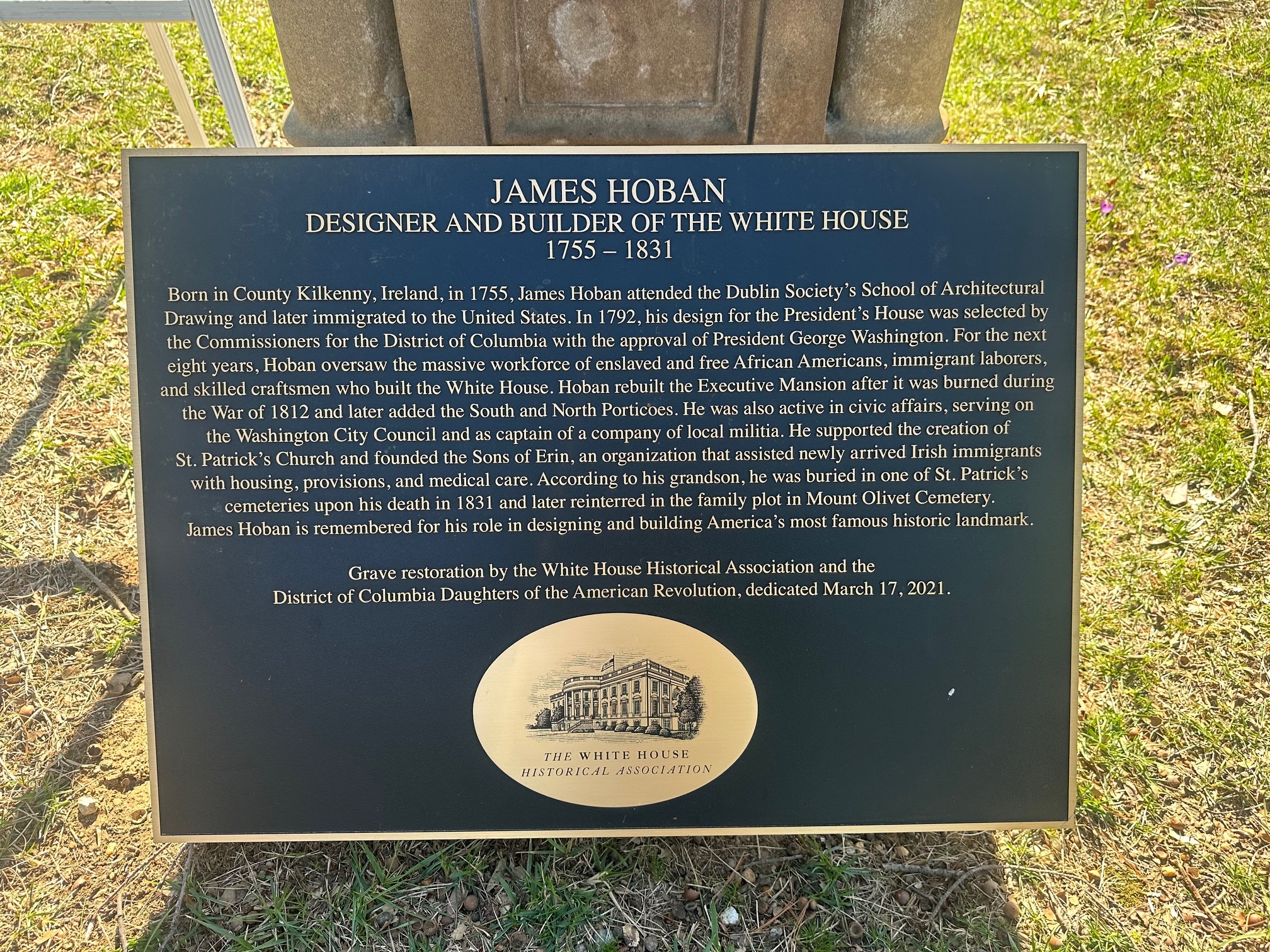
In 1792, a young architect from Kilkenny, Ireland, began what would become one of the most famous landmarks in the world. Centuries later, James Hoban, who designed and oversaw the building of the White House, is now being remembered alongside other Irish Americans who made significant contributions to American history.
At a reception on March 20 at the newly opened Irish embassy on Pennsylvania Avenue in Washington, D.C., Ireland’s ambassador to the U.S., Geraldine Byrne Nason, highlighted Hoban’s life, saying he is among those Irish Americans who have left their “Irish fingerprints” on American’s founding.
“Irish immigrants helped to shape the very ideas at the heart of this great country,” Nason told approximately 200 guests, pointing out that 23 American presidents are of Irish heritage.
According to historian Matthew Costello with the White House Historical Association, Hoban relied on other Irish immigrants, as well as enslaved laborers, to bring his vision — based on Leinster House in Dublin — to life in 1800.
John Adams would be the first president to move into the White House, but the British sent Hoban’s work up in flames, burning the mansion down during the War of 1812.
Costello told EWTN News that Hoban would return to rebuild the White House, using the same Irish brethren as his stalwarts. His camaraderie with Irish immigrants was fostered not only by their shared origins but also by their Catholic faith during a time when Catholics were viewed with great suspicion — and often hostility. Many state constitutions forbade Catholics from holding public office.
James Hoban, the Irish-born architect who designed the White House, is buried at Mount Olivet Cemetery in Washington, D.C. | Credit: Stephanie Green
Although the Jesuits brought Catholicism to America before the Revolution and founded Georgetown University in what was then Georgetown, Maryland, Hoban is celebrated as a founding father of the Irish Catholic community in the Federal City, which he nurtured and built like one of his renowned buildings.
In 1794, in anticipation of more Irish immigrants arriving in Washington, D.C., Hoban — along with fellow immigrant Father Anthony Caffry from County Mayo — started building St. Patrick’s Church, which is today the oldest Catholic parish in Washington, D.C.
Like the White House, the church was damaged by fire by British invaders but continues in its current iteration in the heart of the capital. Pope Francis visited the church in 2015.
By the time of Hoban’s death in 1831, Irish Catholics had made great progress in American society. The heralded architect would go on to serve as a captain in the Washington militia and on the city council. He is credited with the Octagon House in the Foggy Bottom neighborhood, various public buildings and city projects, and became superintendent of the construction of the U.S. Capitol.
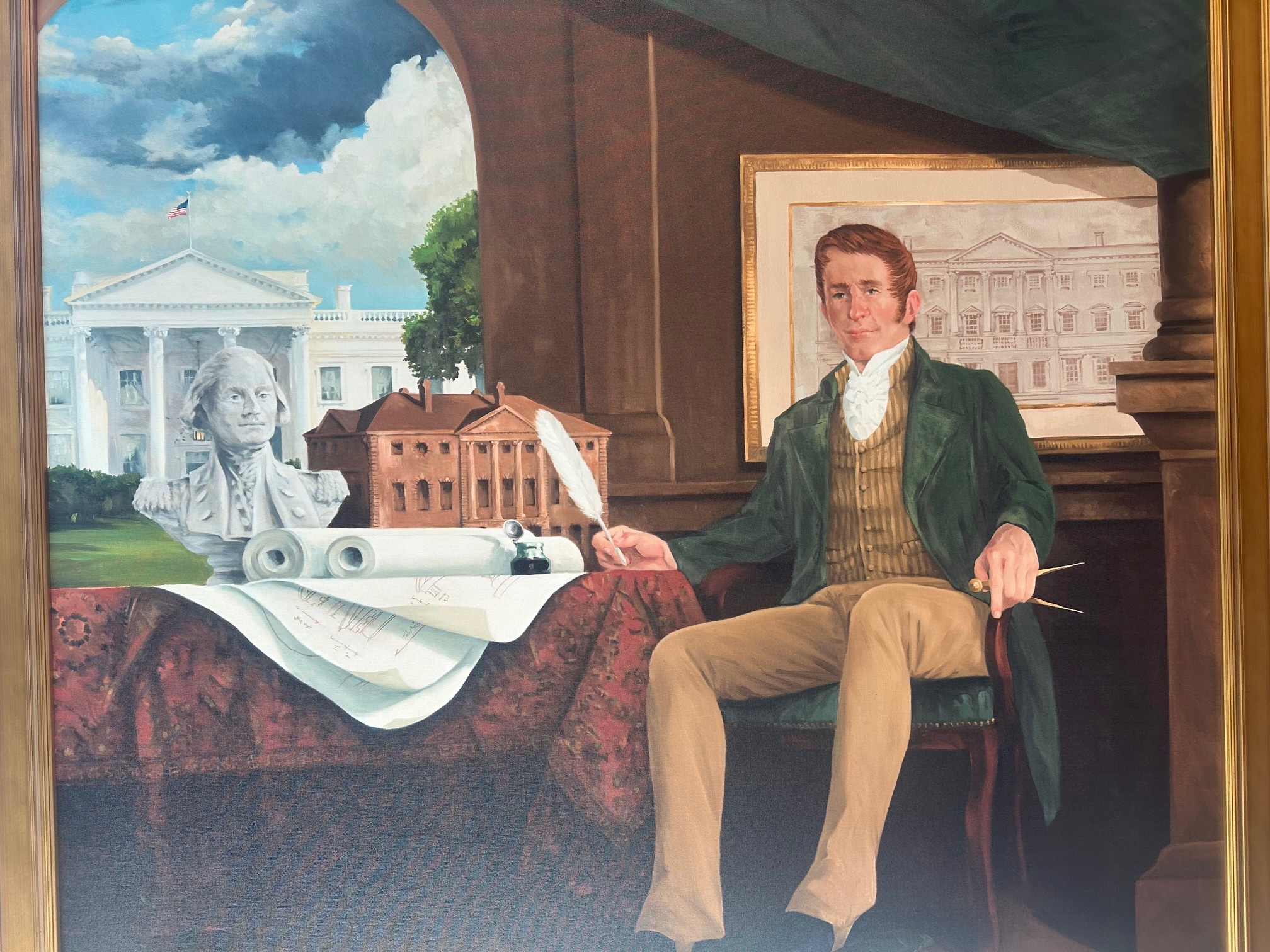
A portrait of James Hoban, architect and builder of the White House, an Irish-American immigrant. | Credit: Stephanie Green
Hoban’s personal papers were burned in a fire after his death, which has obscured historians from discovering more about the man. Nevertheless, every year, the White House Historical Association gathers at Hoban’s grave at Mount Olivet Cemetery to keep his memory alive.
At this year’s ceremony on March 20, Hoban’s contributions were honored in view of America’s 250th commemoration. Monsignor Veceslav Tumir, first counselor from the apostolic nunciature, was there to salute Hoban’s ongoing connection to the Catholic community.
After a wreath placement ceremony at the cemetery hosted by the White House Historical Association and featuring Mark Carney of the Ancient Order of Hibernians, guests of the Irish ambassador gathered at the embassy, where Nason praised Hoban and other Irish patriots for their impressive contributions to historic architectural buildings as well as for lending their “Irishness” to the ideals of a young nation.
The embassy has brought together many examples of these contributions in a new exhibit called “The Emerald Thread,” which depicts how Ireland’s diaspora has been woven into American history. The artifacts are on display in a room overlooking the city and will will run through the America 250 celebrations this summer.
A large portrait of Hoban — a gift to the ambassador from the White House Historical Association — is among the exhibition’s many treasures.
Among other Irish-American heroes being highlighted by the embassy in the exhibit is Stephen Moylan of Cork, an Irish Catholic who became part of George Washington’s inner circle and served as his aide-de-camp during the Siege of Boston.
A Catholic bishop in Belgium wrote an 11-page pastoral letter that included a plan to ordain married men into the priesthood by 2028, even though such actions would violate the Code of Canon Law.
Bishop Johan Bonny, head of the Diocese of Antwerp since 2009, noted that the topic of ordaining married men was discussed in the Vatican’s Synod on Synodality (2023-2024). Although the topic was openly discussed, neither the late Pope Francis nor the authors of the final document authorized the ordination of married men or recommended any future changes to canon law to authorize it.
Despite this, Bonny wrote in the pastoral letter that in every synodal discussion “the question arises of ordaining married men … for the priesthood.” He claimed “the consensus on this question is almost total … especially among the most faithful and devout” and “has existed for many years.”
“The question is no longer whether the Church can ordain married men as priests but when it will do so, and who will do it,” the bishop said. “Any delay comes across as an excuse.”
Contrary to the asserted consensus, Canon 1042 prohibits the ordination of married men in the Latin rite under most normal circumstances. It states clearly that the only holy orders “a man who has a wife” is eligible for is the permanent diaconate — not the priesthood. A married man can enter the permanent diaconate with the consent of his wife if he is at least 35 years old, but a permanent deacon who is a widower cannot remarry.
The rule is not completely universal in the Catholic Church. The Code of Canons of the Eastern Churches permits the ordination of married men in Eastern-rite Catholic Churches, which have long practiced it.
There are also limited exceptions in the Latin rite. A married Anglican priest who converts to Catholicism is allowed to be ordained as a Catholic priest and remain married. The Church makes some limited exceptions for other Protestant ministers who are married and also wish to convert to Catholicism and be ordained into the priesthood.
However, apart from rare exceptions, married men are not permitted to be ordained into the priesthood in the Latin rite.
Bonny does not address the relevant canons in his letter. He also did not cite any approval from the Vatican or reveal any insight about a potential change in canon law.
The bishop did not state that he will first seek approval before the ordinations, but he did say he would ensure “the necessary communication and arrangements” with the Vatican and Belgian Bishops’ Conference, “as we can learn from each other’s experiences and insights.”
“I will make every effort to ordain married men as priests for our diocese by 2028,” he said. “I will approach them personally and ensure that by then they have the necessary theological training and pastoral experience, comparable to that of other priest candidates. This preparation will be transparent but discreet, away from the media spotlight.”
“For many a bishop, the ordination of married men has become a matter of conscience,” he wrote. “At that level, too, transparency, accountability, and evaluation are important for the credibility of the Church.”
Bonny makes several cases for why he intends to ordain married men, such as the “historical shortage of local priests in many dioceses.” He said many foreign-born priests fill the gap now, but “it would not be fair to place the burden of our shortages on their shoulders.”
He noted that the Church in Belgium already works “with a number of married Catholic priests,” citing the Eastern-rite Catholic priests and converts who fell under the limited exceptions.
Bonny also said “there is a cluster of experiences related to the psychosocial health of priests and the transparency of their lifestyle.” He said “the issue of sexual abuse continues to weigh heavily” and “clerical subcultures and lifestyles have had their day.”
“The fact that almost no domestic candidates are coming forward for ordination seems to me undoubtedly related to the absence of synodal discernment in classical vocation ministry,” the bishop continued. “When I visit parishes or pastoral unities, I regularly meet people whom the community would consider to be a good priest. Just as I myself know several co-workers who would be well suited as candidates for ordination.”
Tom Nash, a staff apologist for Catholic Answers, told EWTN News that he hopes Bonny “is docile to the Holy Father, Pope Leo XIV.”
“It is the pope alone, the successor of St. Peter, who has God-given primacy in definitively teaching on faith and morals, and also the divinely given primacy of authority in binding and loosing on matters of discipline, and thus one must be very wary of going forward in a manner that would gravely violate that divinely ordained papal primacy of governance,” he said.
Nash explained that married men can be validly ordained to the priesthood, as one can see in the Eastern rite and the rare exceptions in the Latin rite. However, without approval from the pope and a change to canon law, such ordinations would be “illicit” under the circumstances discussed by the bishop in the pastoral letter.
If Bonny ordained married men to the priesthood, Nash said the situation would be similar to the Society of St. Pius X, which illicitly consecrated bishops in 1988 and are threatening to do so again. Such consecrations, he explained, were “valid but illicit.”
A priest who is ordained validly but illicitly would be a real priest and could validly celebrate Mass, according to Nash. However, such celebrations would be illicit, and in defiance of the Holy See, and sinful, he said. Other priestly faculties, however, may not be valid, he said.
“Just because such ordained priests could validly but illicitly celebrate Mass, they would need delegated priestly faculties from the pope to validly absolve sins in the confessional and also to receive the consent of the parties during the Church’s marriage rite, lest they marry each other invalidly,” Nash said.
“It’ll be interesting to see how this matter develops in the coming two years, and I pray that Bishop Bonny is docile to the Holy Father,” he added.
David Long, director of the Institute for Policy Research and Catholic Studies at The Catholic University of America and a canonist, told EWTN News that the question of ordaining married men “does not lie within the authority of a diocesan bishop acting on his own.”
“Any current change in practice in a Latin diocese would require action by the Holy See and could not be accomplished by a unilateral decision by a diocesan bishop, no matter how pastorally urgent the circumstances may be,” he said.
The day before he became the bishop of Chiclayo, Peru, Pope Leo XIV spent the night in prayer — but not in the diocese’s main cathedral.
Instead, the American missionary traveled 30 miles outside the city to the dusty, half-forgotten town of Zaña.
The purpose of his visit wasn’t just to get some solitude before his busy ministry began. It was also to keep vigil with a beloved Peruvian saint.
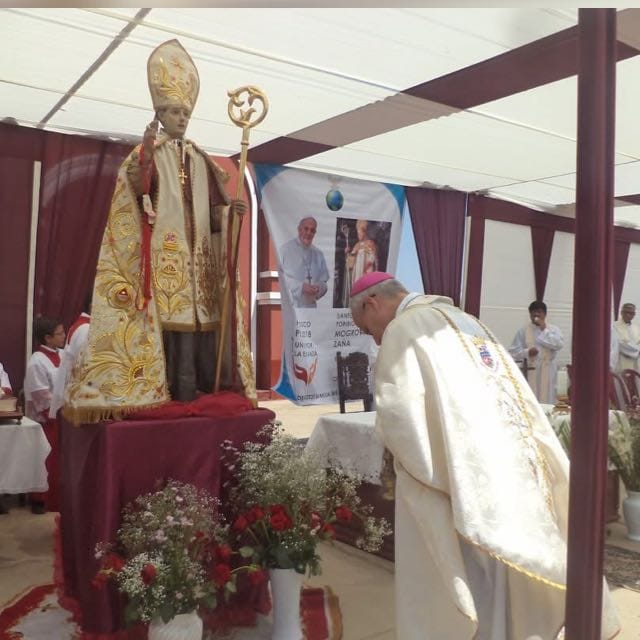
On that day in December 2014, the future pope prayed before a relic of St. Turibius of Mogrovejo, the 16th-century archbishop of Lima who is known today as “the Apostle of Peru.” The local parish in Zaña is named for St. Turibius and keeps a large leg fragment of the saint in a small chapel.
As Father David Farfán, a friend of Pope Leo’s and now the pastor of the local parish, told EWTN News, the soon-to-be bishop even asked to borrow pajamas so he could spend the entire night in prayer before the saint.
“He was so happy for that,” Farfán said. “And the following day, he officially took office as bishop in Chiclayo.”
A special connection
Why did Pope Leo have such a strong devotion to the Peruvian saint?
Because, in many ways, he was following in his footsteps.
Like Pope Leo, St. Turibius was sent to Peru as a missionary. Born in 1538 in Spain, Turibius wasn’t even a priest before becoming a Peruvian bishop — he was a lay canon lawyer.
But in 1579, King Philip II nominated the Spaniard to serve as the second archbishop of Lima. It was a vital assignment, given the centrality of Peru to the Spanish empire’s presence in the New World, and Turibius was selected for both his integrity and administrative abilities.
Pope Gregory XIII approved, and in 1580, Turibius was ordained to the priesthood, consecrated to the episcopate, and sent to Peru. He arrived in 1581 and spent the next 26 years leading what was then the largest archdiocese in all of South America.
St. Turibius’ time in Peru was marked by his profound love for the Indigenous people, who had suffered harsh treatment under Spanish rule. He translated the catechism into native languages like Quechua, founded the first seminary in the New World and opened it to local men, and protected the rights of Indigenous Peruvians from Spanish government officials. The saint even made three separate pastoral journeys across his massive archdiocese — a territory that spanned roughly 180,000 square miles — traveling mostly on foot.
Farfán said he sees several similarities between the Peruvian saint and how Pope Leo led as bishop of Chiclayo.
“Both of them were foreigners,” he said. “And the kind of approach you have when you are a foreigner … is not imposing things, but understanding, listening, and having a wide-open way of allowing people to tell what they feel.”
Marian spirituality, a focus on community, and attentiveness to social problems are other traits that Farfán said he believes the two figures have in common. For instance, he highlighted Pope Leo’s concern over the way mining companies impacted the local community in Chiclayo, an issue that is now being taken up in the Vatican.
And even though he is no longer in Peru, Pope Leo’s devotion to St. Turibius is alive and well.
When the Peruvian bishops came to Rome in January for their ad limina visit, Pope Leo told them it was “providential” they were visiting during the 300th anniversary of St. Turibius’ canonization. He held up the Peruvian saint as a model of evangelistic zeal and fidelity to God’s will.
And, quoting from documents from St. Turibius’ canonization in 1726, Pope Leo told the Peruvian bishops that they should be close to their people, so that what was said about the saint could be said of them: that he felt “so much love for everyone, that he held them in his heart as if he were the father of each one.”
The bishops left Pope Leo with a gift: a tondo depicting the saints of Peru, including St. Rose of Lima and the archbishop who confirmed her, St. Turibius.
Pope Leo bows as he shares the relic of St. Turibius of Mogrovejo with the faithful on April 27, 2023, in Zaña, Peru. | Credit: Photo of courtesy of Father David Farfán
The story of Zaña
During his nearly 10 years as bishop in Chiclayo, Pope Leo returned often to Zaña, including for a special Turibius-related celebration. Although St. Turibius’ feast day is March 23, he is also celebrated in Peru on April 27, the date that marks the transfer of the saint’s body to Lima.
And Zaña doesn’t just house a relic of the Apostle of Peru — it was also a pivotal place in St. Turibius’ ministry. In fact, although his final resting place is in the capital city’s cathedral, he actually died in Zaña in 1606 — an important reminder of how pivotal the now-provincial town was in the Church’s early missionary activity in Peru.
According to Alfredo Pérez Samamé, a local historian, St. Turibius made Zaña his initial base of operations, drawing 14 different religious orders to the valley, including Dominicans, Jesuits, and Pope Leo’s own Augustinians.
“According to history, the town once had 18,000 inhabitants — a city that was 100% religious,” Pérez said.
At one point, Zaña was even known as the “Seville of Peru.” However, a series of disasters, including pirate attacks, floods, and earthquakes, destroyed much of it, turning the older parts of Zaña into little more than a ghost town.
A papal homecoming?
However, with Pope Leo expected to make a Peruvian homecoming later in 2026, there is hope that he will make another pilgrimage to Zaña.
The regional government has even started designs for a visitor center and event venue at the original tomb of St. Turibius to not only accommodate a papal visit but also provide a hub for pilgrimage activity going forward.
Locals like Pérez are excited about the potential impact of a papal visit.
“God willing, if the pope visits Peru again and comes to our region of Lambayeque, it would bring significant development,” he told EWTN News. “Tourism would greatly increase due to the town’s religious importance, something that is already happening in Zaña.”
And if Pope Leo does return, he’s likely to stop by the small chapel in the local parish to see his old friend, St. Turibius — a local saint whom Peruvians believe continues to inspire their former bishop, now pope in Rome.
“He already is following his steps,” Farfán said. “And I believe and I pray to Toribio [to show] what he needs to do more for our Church. Because still we have a long, long way to continue offering Jesus Christ to the people.”
This story was first published by the National Catholic Register, the sister partner of EWTN News, and has been adapted by EWTN News.
The number of catechumens — people preparing to receive baptism — continues to grow robustly in France. After reaching the highest number in two decades in 2025, with a total of 10,384 baptisms during the Easter Vigil, several French dioceses indicated that this year the number could reach 20,000.
Young people are seeking something transcendent
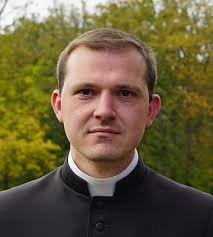
Father Gian Strapazzon, rector of St. Vincent de Paul Seminary in France, arrived in the country 12 years ago from his native Brazil. In an interview with ACI Prensa, the Spanish-language sister service of EWTN News, he said there he encountered exemplary priests whose witness confirmed his vocation: “They were like lights amidst the darkness.”
St. Vincent de Paul Seminary serves as the primary formation center for the Institute of the Good Shepherd, founded in 2006 in Courtalain within the French Diocese of Chartres. It is distinguished by its formation of priests utilizing the traditional Roman rite.
The record number of conversions in France, particularly among young adults, stems from “reaction to a society that’s not finding answers,” reflecting a spiritual awakening in Europe, according to Strapazzon.
“These are young people seeking something transcendent who find answers in preaching rooted in the tradition of the Catholic faith — just as it has always been done. This encourages many adults to take a more radical step and live out their faith more intensely,” he noted.
Father Gian Strapazzon, rector of the St. Vincent de Paul Seminary in France. | Credit: St. Vincent de Paul Seminary
The eight dioceses comprising the ecclesiastical province of Paris have convened a council that opened Jan. 25 and will continue through May 2027 with the aim of discerning an appropriate response to the growing numbers of younger people coming into the Church and establishing common guidelines at the provincial level.
This is indispensable, according to Strapazzon, who said “it is necessary to understand the source of this surge in order to offer good solutions.”
“People want Our Lord Jesus Christ,” he explained, “and this must be taught correctly. People are already weary of the superficiality they encounter in the world; they are seeking the true God, the revelation of God.”
The rector of the French seminary underscored the importance of teaching sound doctrine and noted that many adults who wish to receive the sacrament of baptism — even those raised in non-Catholic environments — attend the Traditional Latin Mass.
“This is what attracts people today: this truth and this search for something concrete, serious, and profound, something that stands in contrast to what they have become accustomed to in the modern world, as they realize that the latter does not quench the thirst of their souls,” Strapazzon said. “For this reason, obviously, it is essential that there be sound doctrine.”
Increase in applications to enter the seminary
Strapazzon has also witnessed an increase in applications to the seminary in recent years: “At the seminary, we have a young man who was baptized five years ago as well as another who converted from Islam.”
He noted, however, that the Church encourages “a certain prudence” regarding the acceptance and formation of newly baptized young men, who must wait at least two years after their baptism before entering the seminary.
“One can become confused in one’s fervor and fail to discern. It’s one thing to be a Christian and quite another to have a vocation to the priesthood. For this reason great prudence [is always exercised]. But yes, here we receive many inquiries every year from individuals who have been baptized only recently, individuals who require guidance to discern whether to enter the seminary.”
The priest emphasized that this unprecedented phenomenon in France “demonstrates to us that the Church of Our Lord is always alive, that our faith is truly catholic — that is to say, universal — and that it is always enduring and life-giving.”
He said this will continue to happen as long as there is a “faith preached with fidelity” on the part of the priests. “Even if there are no priests, the Lord has told us that the stones will preach,” he reminded.
Strapazzon explained that the correct way to interpret this phenomenon “is that the Catholic Church is always alive, will always be fruitful, and when it dies in one place, it revives in another. Moreover, in her resides a soul which is the Holy Spirit who constantly moves it and builds it up.”
This story was first published by ACI Prensa, the Spanish-language sister service of EWTN News. It has been translated and adapted by EWTN News English.
NAGPUR, India — Catholic leaders in one of India’s most populous states are demanding the repeal of a new law that criminalizes religious conversion — the 13th such measure enacted across the country under the ruling Hindu-nationalist government.
“We protest this move. We have urged the government to repeal this law. Copies of our [Western Regional Bishops’ Council] statement have been sent to the chief minister and governor of the state,” Archbishop Elias Gonsalves of Nagpur, chairman of the Western Regional Bishops’ Council, told EWTN News on March 23.
“Far from safeguarding religious freedom, this law, in its present form, effectively undermines the very right it claims to protect, i.e., the freedom to choose and profess one’s religion, as guaranteed under Articles 19, 21, and 25 of the Constitution of India,” the Western Regional Bishops’ Council said in its March 19 statement.
Expressing “deep disappointment and strong protest” against the bill, the bishops’ council said sections of the legislation “amount to a direct and unjustified interference in the legitimate religious practices of the Catholic Church, particularly its Rite of Christian Initiation of Adults program. It is equally disheartening that the ruling party has passed this bill [on March 16] without adequate consultation with the communities most affected by it.”
A threat to conscience
The statement pointed out that sections of the legislation “mandate that any individual intending to convert must submit a notice 60 days in advance to the competent authority. … This provision intrudes deeply into the personal domain of conscience and belief, opening the door to scrutiny, suspicion, and harassment.”
“This section, like most sections in the bill, is manifestly arbitrary and violative of individual’s right to privacy protected by Article 21 [under Fundamental Rights],” the statement cautioned.
Given the serious concern, the Catholic Bishops’ Conference of India distributed the statement to media across the country.
Laity and civil society
“We are very disappointed that the Maharashtra Freedom of Religion Bill was passed in haste and rammed through the Assembly owing to the brute majority of the BJP [Bharatiya Janata Party] government,” said Dolphy D’Souza, spokesperson of the Bombay Catholic Sabha — a lay forum of the Archdiocese of Bombay.
“One of our demands was to give opportunity to discuss the provisions of the bill, some of which are draconian, which has the propensity to be misused against minorities, women, and interfaith marriages, as is evident from states where this law has been implemented,” D’Souza said in a March 21 statement.
“This law will be a tool used to harass minorities, women, and interfaith marriages and those who want to convert out of their personal choice voluntarily. While the bill is titled Freedom of Religion Act, it curtails this fundamental right,” D’Souza told EWTN News.
“This bill also criminalizes all charitable works including imparting education under the vague terms of ‘allurement.’ It will give unbridled power to [Hindu] vigilante groups and ‘suo motu’ powers to police to harass and intimidate citizens, encouraging violence and attacks,” he cautioned.
A week before the legislation was passed, a coalition of 35 civil rights, social action, Muslim, and Christian groups had condemned the bill as a “threat to constitutional freedom.”
“Article 25 guarantees the freedom to profess, practice, and propagate religion, which includes the right to adopt and change one’s faith,” the groups asserted.
“The political agenda behind this legislation is to polarize and divide communities on religious lines,” said Irfan Engineer, who heads the Center for Study of Society and Secularism, one of the groups that signed the statement.
Hindu nationalists, Engineer said, are using the propaganda of “love jihad” — marriage for the purpose of conversion — to defend the legislation. He pointed out, however, that “the committee appointed by the state government studied 152 interreligious marriages and found no conversion motive.”
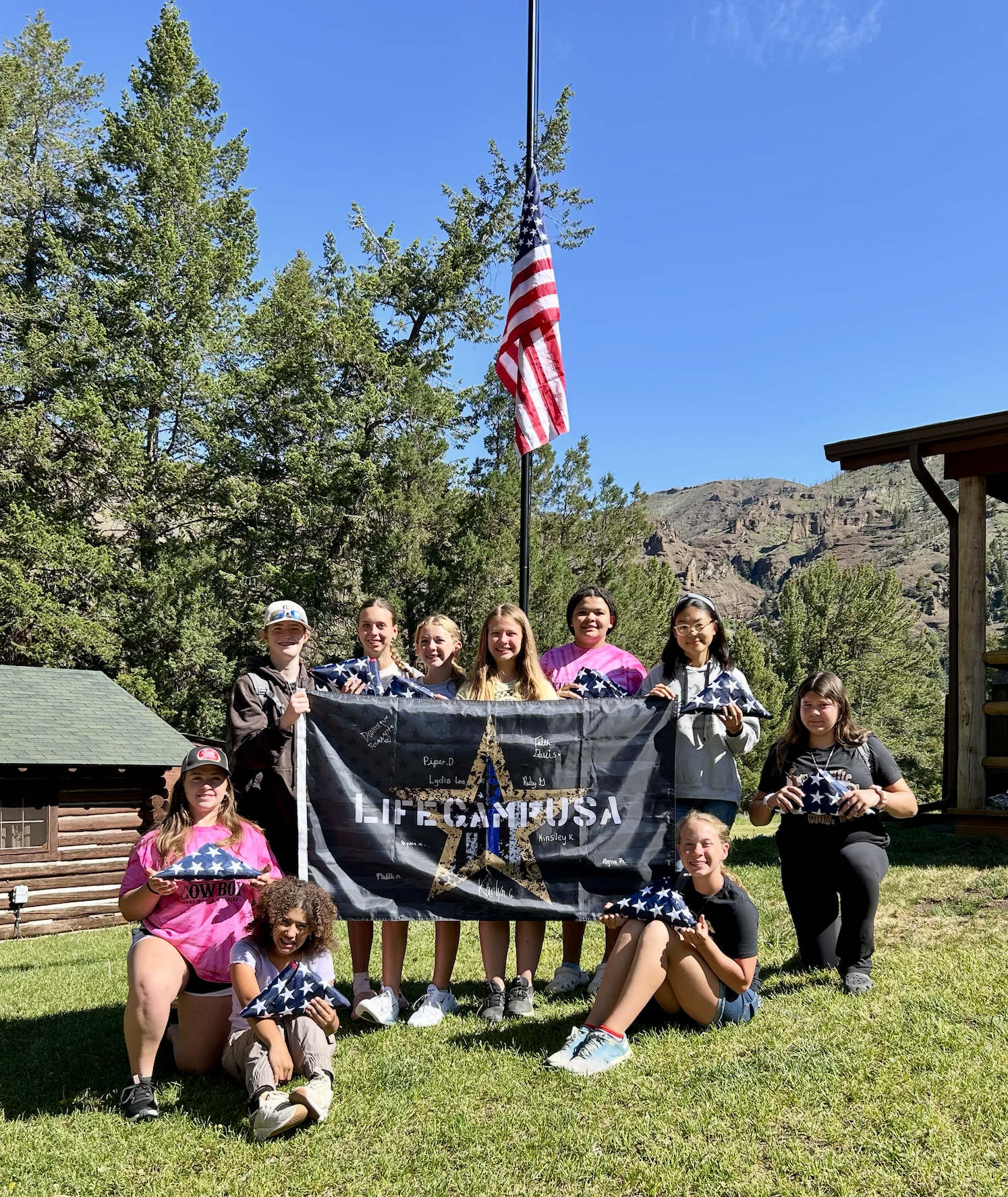
On their first day at LifeCampUSA, middle-school-aged campers are taught how to use a map and a compass to learn how to find their way around. Then they’re given a Bible — for many, their first time having one — and shown how to find the different books of the Bible, after which there’s a discussion about how God’s word can serve as a map and compass in life.
For boys and girls who have lost their dads in military service, as first responders, or in law enforcement, LifeCampUSA and its Bible-based curriculum can be a life-changing summer experience where they forge new friendships and find a relationship with God.
Founded by married couple Mark and Jane Neumann, the camp — which, according to its website, is “a Christian ministry unassociated with a specific church or religious denomination” — first opened in the summer of 2021 after the Neumanns met a group of middle schoolers from military families and heard about the struggles they faced in the aftermath of losing their fathers. Having experience working with middle schoolers in youth ministry at their church, the Neumanns felt called to help these children and “become fathers to the fatherless.”
Despite neither one growing up in a typical military family, both Jane and Mark grew up with a “general sense of patriotism,” Jane told EWTN News in an interview.
The Neumanns emphasized that they start the week at camp with the map and compass lesson because they want the children to leave knowing that “just like with the compass you’re not going to get lost if you follow the Bible’s lessons and what this book has for you; it’s going to give you direction in life,” Mark said.
Middle-school-aged girls attend LifeCampUSA. | Credit: Photo courtesy of LifeCampUSA
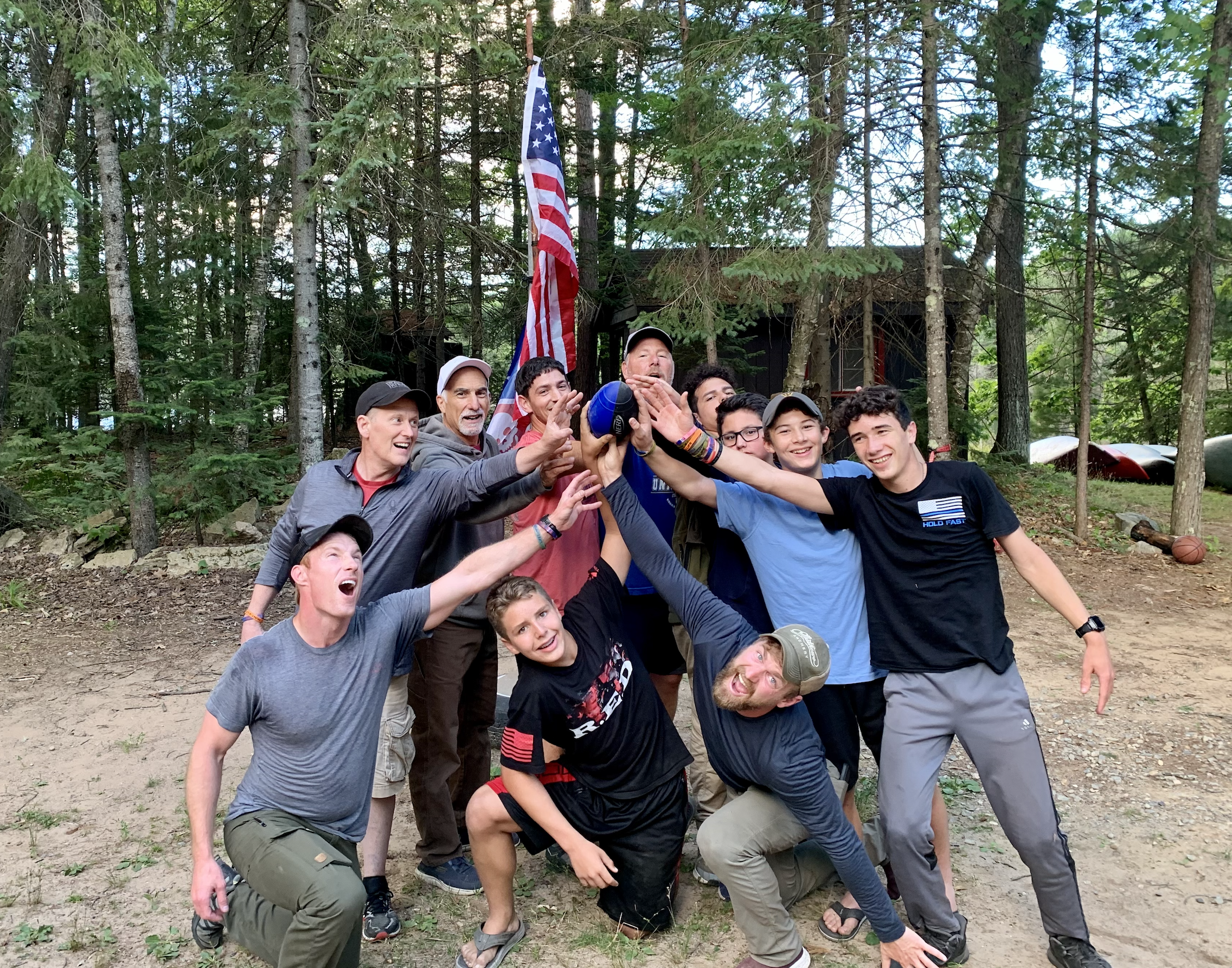
LifeCampUSA offers their summer camp program in several different states across the United States including Colorado, Montana, South Dakota, Minnesota, and Wisconsin. Each camp has spaces for 10 boys and 10 girls. Each boy is assigned his own male mentor, while five couples serve as mentors for the girls’ camp.
“We have five couples for the girls so that the men can speak into the girls’ lives safely there and that the girls can see father figures [and] hear the things that a dad would want to tell their daughters, but also see the healthy marriages,” Mark explained.
Additionally, all expenses — including airfare — are completely covered by LifeCampUSA for the campers who attend. Also, all campers can take part in a 12-month program called LifeCare after their week at camp to continue their mentorship.
Mark and Jane also highlighted the way in which they’ve seen young boys in particular grow into young men during their time at camp. Jane shared that much of the feedback she receives from moms once their sons get back home is how much more respectful they are and how they begin to take more initiative in helping around the house.
One of Mark’s favorite stories was from a mom who shared with him that her son began leading his family in prayer before every meal after getting back home from camp.
“I mean there’s countless stories — it’s been such a blessing,” Mark said.
The Neumanns also pointed out the impact camp has on the many children who have lost their fathers due to suicide after serving the country. They shared that out of the 100 children who are signed up to attend camp this summer, 80% have lost their dads from suicide.
“Moms will tell us that they didn’t mean for this to happen, but they feel a sense of shame when their husbands have taken their own lives, and they didn’t even want necessarily that sense of shame, but it just naturally happens and they don’t mean to project that onto their kids, but it just has,” Jane explained.
She added that these children also face bullying in school after kids find out the manner in which they lost their fathers.
A group of campers and their mentors at LifeCampUSA. | Credit: Photo courtesy of LifeCampUSA
“Their dads are our nation’s heroes. [Yet] somebody finds out that that dad had an injury to their mind, they don’t understand that, but they have no problem bullying our kids, teasing them that their dads took their own lives. And so they don’t want anybody to know,” she shared. “… And now these kids — they’re almost suppressing their patriotism, putting shame into their lives. So our kids come to camp with that stigmatism.”
However, many of the mothers of these children have shared that after they attend camp they witness a “change in their hearts and their heads and it puts more confidence in them, it puts a pride in there for their dad, it puts pride back in for our nation,” Jane said.
Most importantly, the children are introduced to Jesus, which Mark and Jane believe is the greatest reason for the success seen during their summer camps.
“So, [when] you put the Creator in the heart and you know who your creator is, so many things get worked out. … We recognize the fact that Jesus is the one — when we can put Jesus into the program, we’re going to have the best success for these kiddos and families,” Jane said.
“We know that really we have the answer to the healing for these kids. That’s it. And so we want to tell them about Jesus because that’s the real solution,” Mark added.
Mark shared that their main hope for children who attend LifeCampUSA is to give them “hope, to be honest, because a lot of them are pretty hopeless,” and to “change the direction of their life.”
Christians in the West Bank continue to face an onslaught of aggressions by Israeli settlers, threatening their presence in the region, according to Auxiliary Bishop William Shomali of Jerusalem.
“The aggressions against Christians in the West Bank are multiplying,” Shomali said in a March 20 interview with “EWTN News Nightly.”
The situation for Palestinian Christians had been “calm” in the Bethlehem area, he said. “But now, there is more expansion of the settlements and more aggressions from the side of the settlers.”
Shomali said settlers have prevented Palestinian Christians from accessing their land through various threats, physical aggression, and property damage, including burning their cars.
“This happened mainly in the Christian village of Taybeh, and we communicated this news to all the world, even to the American ambassador in Tel Aviv, who came to visit the place, and he promised to do something, but not many things were done,” Shomali said.
In Birzeit, a Palestinian Christian town about six miles north of Ramallah in the West Bank, Shomali said settlers have been coming “almost every day to threaten people in their own homes or in their work.”
“This has become a real threat to Christian families,” he said, “because they lost their livelihood and their source of income.” The Church must intervene and provide aid for them to survive, the bishop said.
Shomali said Israeli settlers have also recently occupied land belonging to a convent of sisters in a village near Bethlehem called Urtas. The sisters “have a hill where they plant and grow olives and other things,” he said. “Settlers came to occupy this hill and to make it theirs, where they think of building a new settlement.”
He also noted a settlement to be built on the Shepherds’ Field of his own village, Beit Sahour, which he said is a piece of land that belongs to Christian families there.
“I heard just today, that a piece of land, one acre, was also entered by settlers who put an Israeli flag to mean that this land now is Israeli, while there is a deed of ownership to a Christian family that I know from Beit Sahour,” he said. “So slowly, slowly, the land of Palestine that Israels call now Judea and Samaria, the biblical name, is becoming less and less Palestinian and more and more settlers’ land.”