Cardinal Michael Czerny, SJ, former prefect of the Dicastery for Promoting Integral Human Development, will be honored as the first recipient of the Pope Leo XIV Sustainability Medal in October.
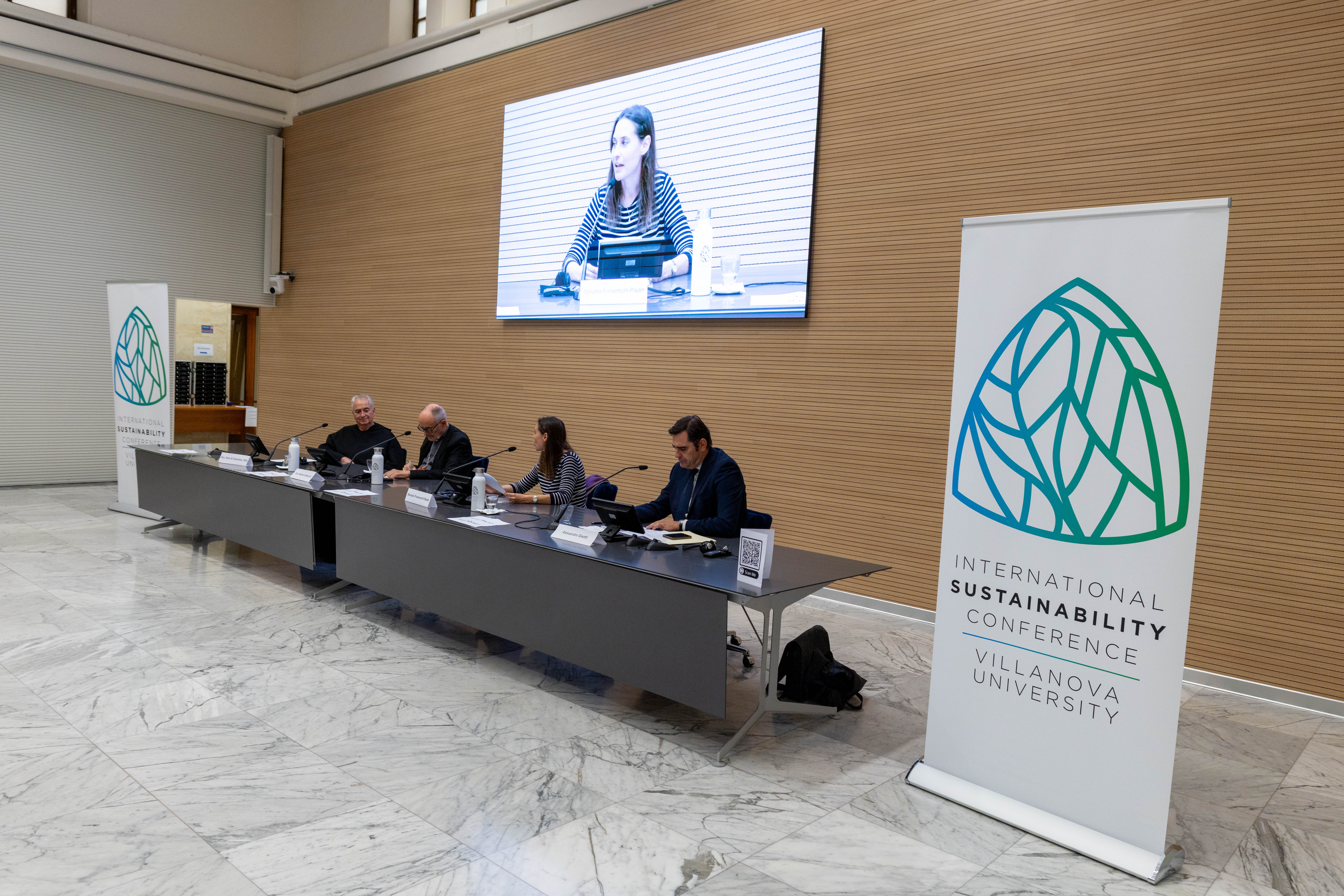
Father Peter Donohue, OSA, president of Villanova University, made the announcement at a Vatican press conference on Sept. 14.
The medal, established by Villanova University and named after Pope Leo XIV, recognizes individuals who have worked toward ecological sustainability. The pontiff will personally present the award at a ceremony on Oct. 13 in the Borgo Laudato Si’ garden, part of the Pontifical Gardens in Castel Gandolfo.
Father Joseph Farrell, OSA, prior general of the Augustinians, was also present at Monday’s press conference.
Villanova University is a Catholic liberal arts university in Pennsylvania. Leo XIV, formerly Robert Prevost, earned a bachelor’s degree in mathematics in 1977 and an honorary doctorate in 2014 from Villanova University.
‘Sustainability is about accompanying those who suffer’
In announcing the recipient of the Pope Leo XIV Sustainability Medal, Donohue praised Czerny’s “extraordinary passion for justice, human dignity, and the care of creation,” noting that his witness is an apt reminder of what authentic sustainability is.
“His witness reminds us that authentic sustainability is never solely about environmental stewardship. It is also about accompanying those who suffer, defending the dignity of the human person, and building a future that leaves no one behind,” Donohue said.
In his speech accepting the honor, Czerny cited Pope Leo XIV’s recent encyclical Magnifica Humanitas, saying the pope highlighted the need for shared responsibility in achieving sustainability.
Press conference on the Pope Leo XIV Sustainability Medal recipient at the Sala San Pio X in Rome on Sept. 14, 2026. | Credit: Daniel Ibanez/EWTN News
“[The pope] has made responsibility even more explicit. We are responsible for the world, not just to take care of it, even though it would be part of sustainability, but in fact we are building it,” the cardinal said.
Speaking to EWTN News after the conference, Czerny noted that many AI companies building data centers often do not consult residents before building on their land.
“The decision to build data centers is like all the big developmental decisions that we make,” Czerny told EWTN News. “It is not an unusual question, and itʼs one that needs to be answered with the participation of the significant stakeholders.”
“You have to ask about whether the people living there are going to pay the price, carry the burden, and suffer the consequences. Were they consulted? Otherwise, it is an imposition and an injustice,” he added.
The Casablanca group of experts and the French nongovernmental organization Juristes Pour l’Enfance (Legal Professionals for Children) have asked the United Nations to officially recognize surrogacy as “a new form of slavery involving women and children.”
The request was submitted to the U.N. special rapporteur on contemporary forms of slavery and human trafficking, Katarina Schwarz, to mark the centennial of the 1926 Slavery Convention and the upcoming Human Rights Council session dedicated to the occasion, “the agenda of which includes, among other issues, new forms of slavery.”
The request is based on the argument that surrogacy reduces the child in utero to an object of disposal, which corresponds to the definition of slavery set forth in the 1926 Geneva Convention, namely, the exercise of the attributes of the right of ownership.
In the case of the woman carrying the baby, her body is subjected to the will of third parties, which includes control over her diet and medical care as well as, potentially, embryo reduction or abortion, the statement explains.
The Casablanca Declaration experts and Juristes Pour l’Enfance point out that "at the international level, several United Nations bodies have already characterized surrogacy as the sale of children, including the Special Rapporteur on the sale of children in 2018 and the Committee on the Rights of the Child in 2019."
Furthermore, in her July 2025 report, the special rapporteur on violence against women and girls called for the eradication of all forms of surrogacy and the adoption of a binding international instrument to abolish this practice. Finally, a June 22 joint statement by states calls for a moratorium with a view to the universal abolition of surrogacy.
In their statement, the Casablanca Group of Experts and Juristes Pour l’Enfance also called on Schwarz to urge states to put an end to this practice within their territories and to commit to its universal abolition.
The Catholic Church also condemns the practice of surrogacy.
In his 2024 address to the diplomatic corps accredited to the Holy See, Pope Francis described the practice of so-called surrogacy as "deplorable," noting that it is "a grave violation of the dignity of the woman and the child, based on the exploitation of situations of the mother’s material needs. A child is always a gift and never the basis of a commercial contract.”
The Holy Father urged the international community “to prohibit this practice universally,” as “human life must be preserved and defended” at every stage of its existence.
This story was first published by ACI Prensa, the Spanish-language sister service of EWTN News. It has been translated and adapted by EWTN News English.
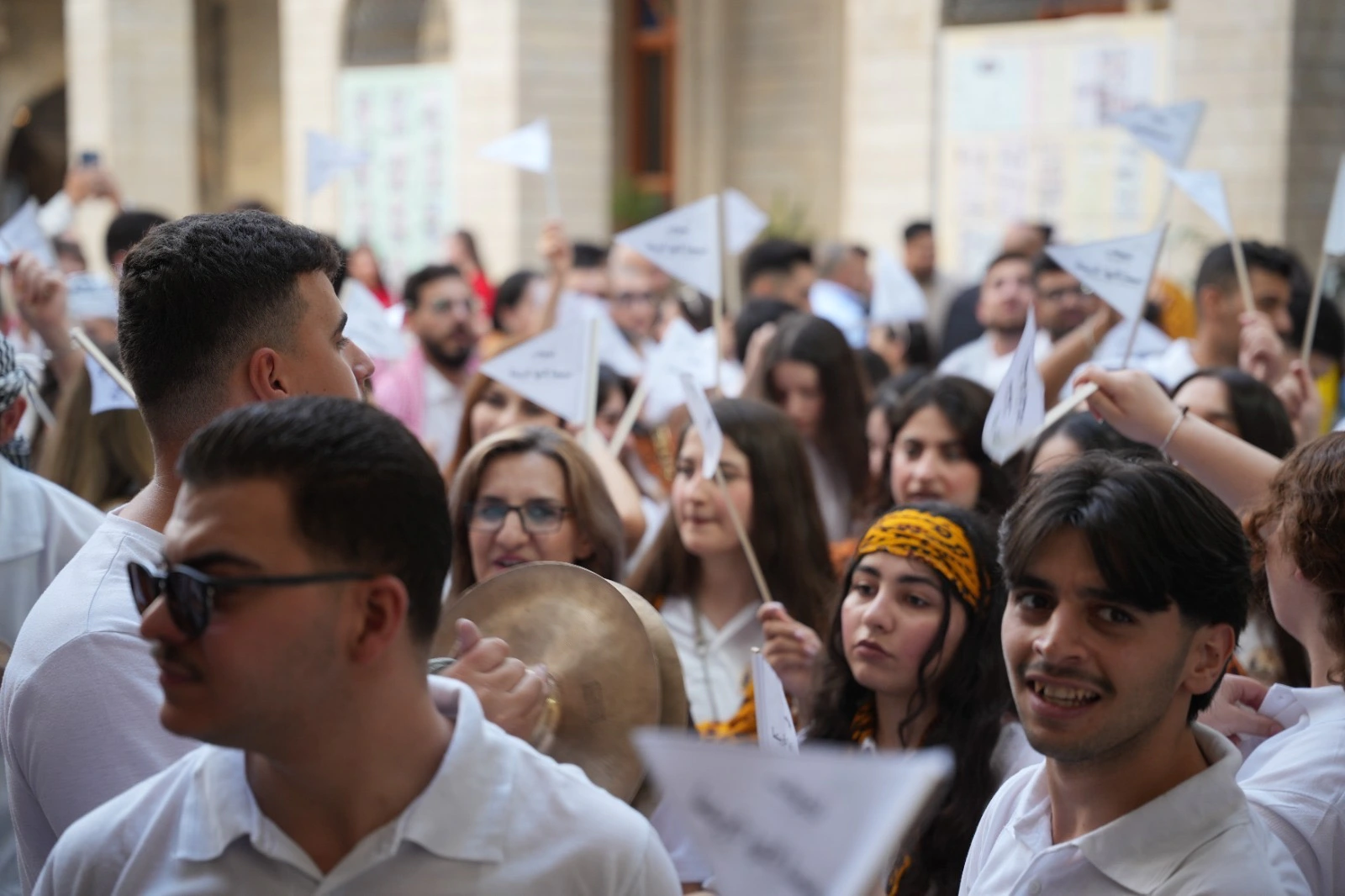
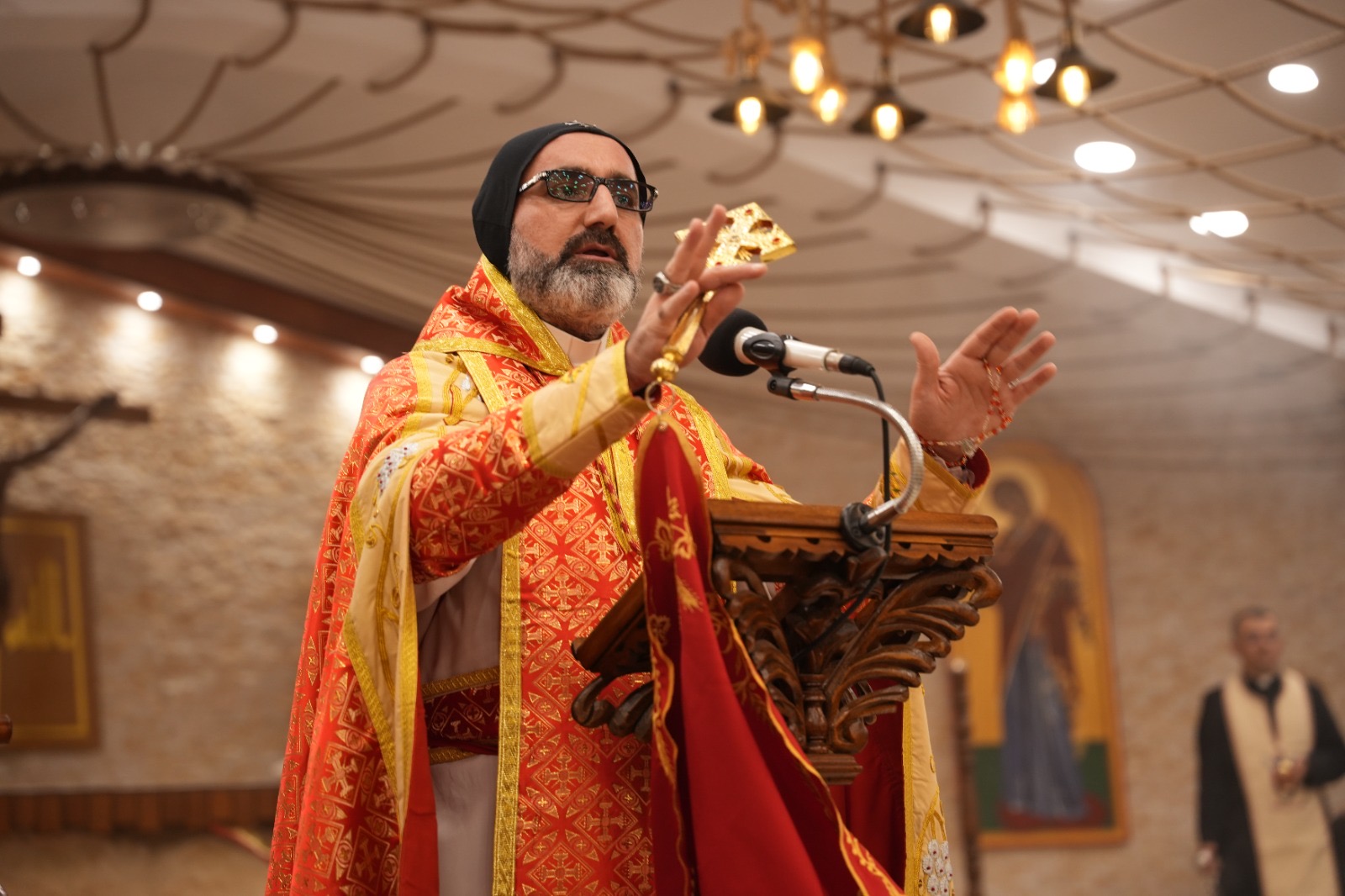
The sixth Baghdeda Youth Festival concluded Saturday, Sept. 12, with a large faith procession that brought together nearly 700 young men and women, led by Bishop Benedictus Younan Hanno of the Syriac Catholic Diocese of Mosul and its dependencies, along with former diocesan bishops Yohanna Boutros Moshe and Georges al-Qass Moussa, priests, religious men and women, and thousands of faithful.
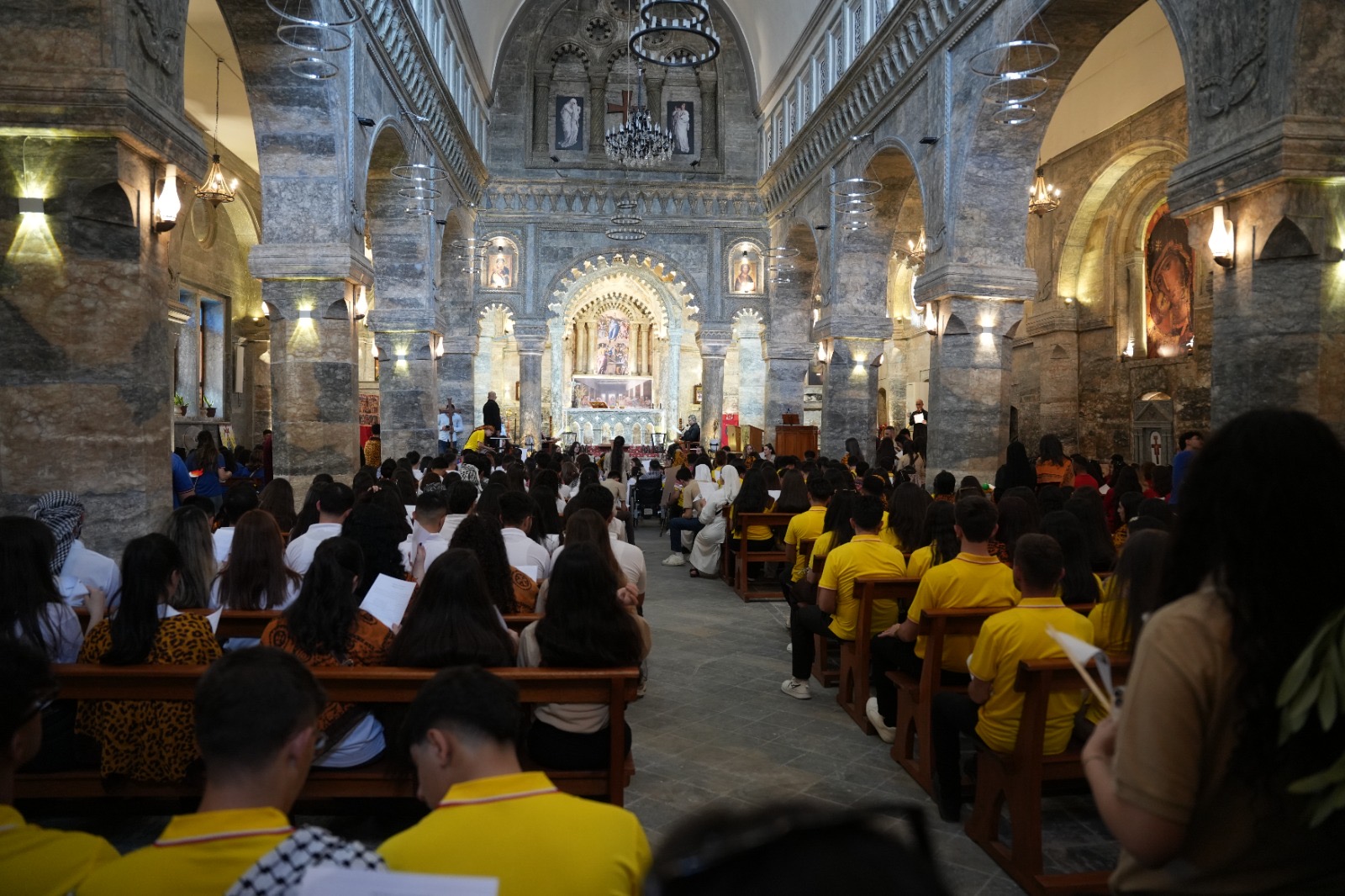
The procession, which organizers called the “Hosanna Procession,” began at the Cathedral of the Immaculate Conception in Baghdeda, also widely known as Qaraqosh — a predominantly Christian town on Iraq’s Nineveh Plains. Participants followed the traditional Palm Sunday procession route toward St. John Church.
The sixth Baghdeda Youth Festival concluded Saturday, Sept. 12, 2026, with a large faith procession that brought together nearly 700 young men and women, led by Bishop Benedictus Younan Hanno of the Syriac Catholic Diocese of Mosul and its dependencies, along with former diocesan bishops Yohanna Boutros Moshe and Georges al-Qass Moussa, priests, religious men and women, and thousands of faithful. | Credit: Ragheed Nenwaya/ACI MENA
Along the way, young people and other faithful prayed, sang hymns, and chanted while carrying olive branches as a symbol of peace. The procession concluded with the “Service of the Cross — Teshmeshta,” a prayer service from the Syriac tradition, followed by the lighting of the festival torch.
Before setting out from the cathedral, participants attended a spiritual conference titled “St. Francis: A Living Model for Our Young People in Living Hope,” presented by Dominican Father Nuwairan Nasser. He encouraged the young people to follow the example of St. Francis of Assisi, seeking to embody his spiritual values in their daily lives and to live more deeply the meaning of the festival’s theme.
‘In the footsteps of St. Francis’
The festival began Thursday under the theme “In the Footsteps of St. Francis.” The opening program included a spiritual reflection by Hanno titled “Leave Everything That Makes You Lose Yourself.”
The bishop stressed the importance of understanding Christian freedom as a free response of obedience to God rather than as freedom without accountability or responsibility. His reflection drew on the festival’s theme and the life of St. Francis.
Participants then divided into groups for pilgrimages and prayer at several churches in Baghdeda, including St. Ephrem the Syriac Church, Sts. Behnam and Sarah Church, St. James the Mutilated Church, St. John the Baptist Church, and St. Joseph Church.
Bishop Benedictus Younan Hanno of the Syriac Catholic Diocese of Mosul and its dependencies hosted and led the sixth Baghdeda Youth Festival in northern Iraq on Sept. 12, 2026. | Credit: Ragheed Nenwaya/ACI MENA
Mosul welcomes Baghdeda’s young Christians
The festival’s second day included visits to restored churches belonging to the diocese in Mosul, a city where the Christian community suffered severe persecution and displacement during the occupation of the Islamic State group.
The sixth Baghdeda Youth Festival concluded Saturday, Sept. 12, 2026, with a large faith procession that brought together nearly 700 young men and women, led by Bishop Benedictus Younan Hanno of the Syriac Catholic Diocese of Mosul and its dependencies, along with former diocesan bishops Yohanna Boutros Moshe and Georges al-Qass Moussa, priests, religious men and women, and thousands of faithful. | Credit: Ragheed Nenwaya/ACI MENA
Residents greeted the crowds of young Christians and welcomed what organizers described as “the renewed Christian presence in the community’s historic homeland.”
The day also featured a spiritual conference titled “Forgive So That You May Be Free,” presented by Chorbishop Emmanuel Kallo, the bishop’s special vicar and official responsible for the Syriac Catholic churches in Mosul.
Kallo reflected on the Christian understanding of forgiveness and explained how forgiving others can help free a person from the burden and pain caused by wrongdoing.
The young people also participated in Eucharistic adoration at Our Lady of the Annunciation Church.
This story was first published by ACI MENA, the Arabic-language sister service of EWTN News. It has been translated and adapted by EWTN News English.
For nearly 30 years, José Ignacio and Claudia Celis built a marriage filled with joys, children, shared projects, and the difficulties inherent in life together. But about six years ago, an unexpected trial arose: Claudia was diagnosed with early-onset Alzheimer’s at the age of 44.
Since then, José Ignacio has had to learn a new way of loving, one that is deeper and more self-sacrificing, reaffirming his vocation and his desire to reach heaven together with Claudia.
“I am a man eternally in love with his wife, a family man who, before being in love with his wife, is a child of God who has found answers to many questions along the way, precisely through suffering,” he recounted in an interview with ACI Prensa, the Spanish-language sister service of EWTN News.
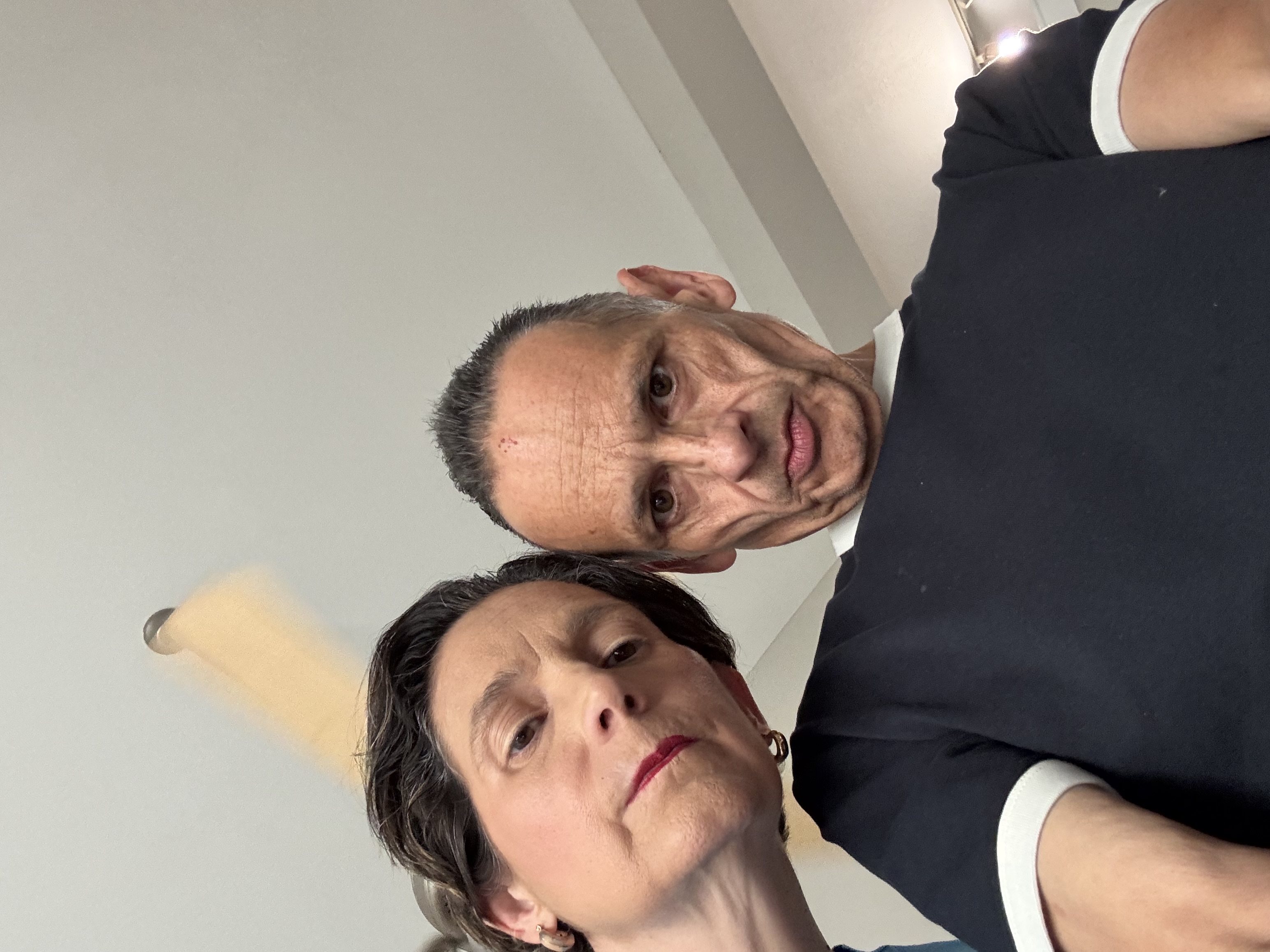
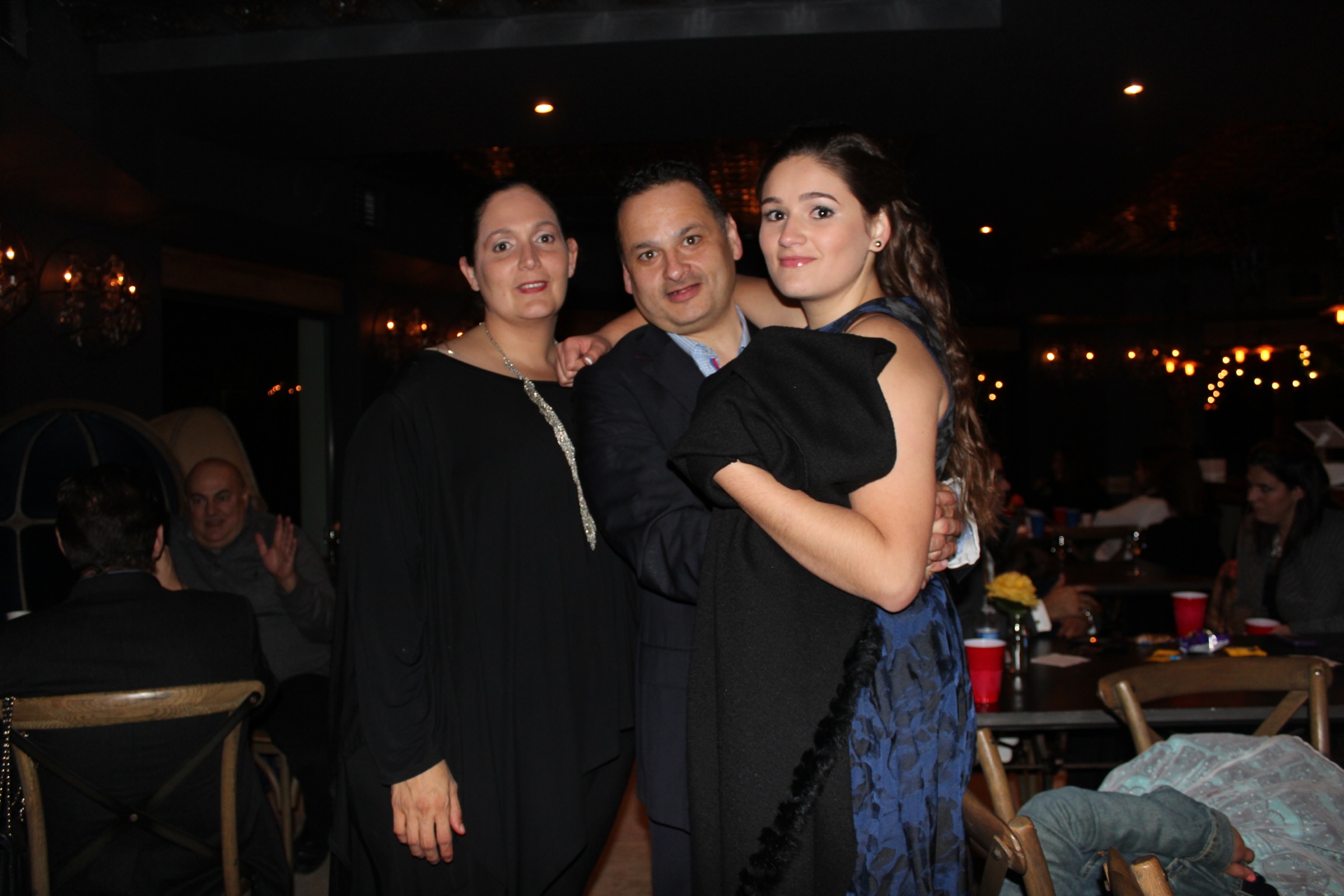
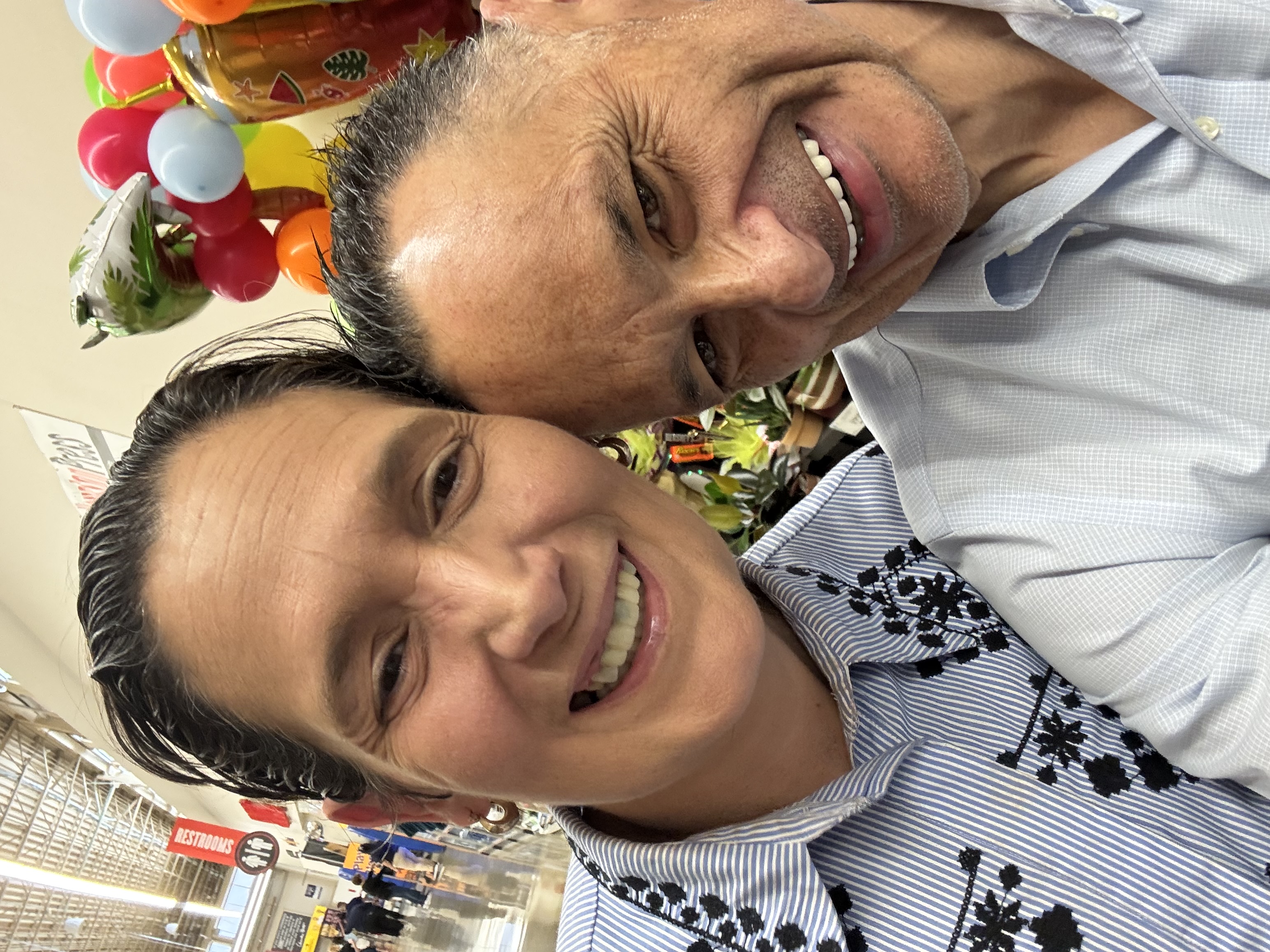
José Ignacio and Claudia Celis today. | Credit: Photo courtesy of José Ignacio and Claudia Celis
Claudia’s illness has changed many things in their marriage, but, he affirmed, it has not changed the promise they made on their wedding day.
“Love is a decision. Love is not a feeling. Love is a decision, and you have to decide to love every day,” he emphasized.
For him, their story is an opportunity to speak about the beauty of Catholic marriage and a promise that is not conditional on everything going well. It’s the story of a husband who, amid exhaustion, pain, and uncertainty, strives to remain by the side of the woman with whom he chose to share his life.
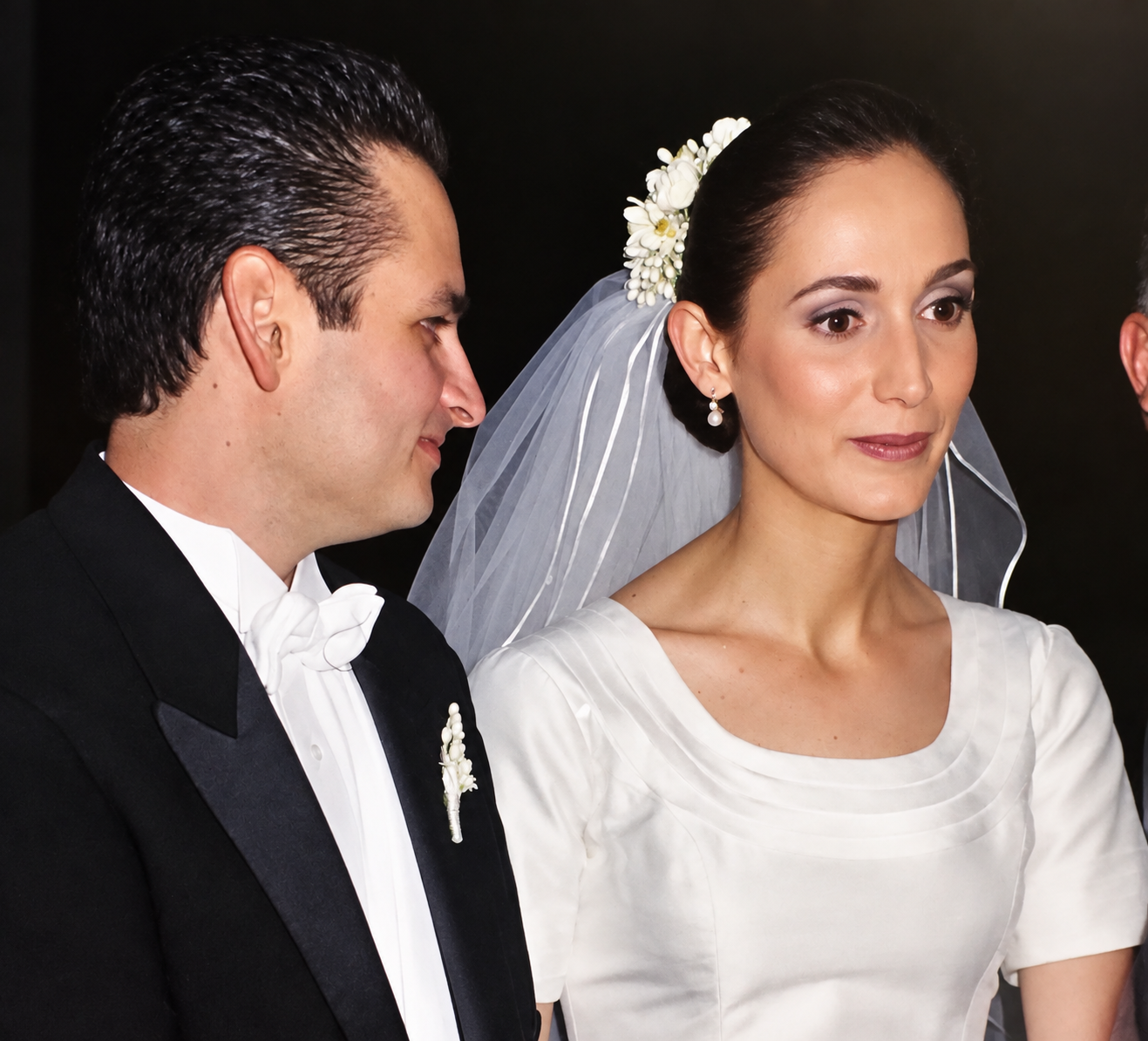
José Ignacio and Claudia Celis were married on March 20, 1999, at St. Engratia Parish in the Archdiocese of Monterrey, Mexico. | Credit: Photo courtesy of José Ignacio and Claudia Celis
‘God blessed us with 30 years of a very happy marriage’
José Ignacio and Claudia, both Mexicans, met on a blind date on Aug. 31, 1997. When he saw her for the first time, José Ignacio said he remembers thinking, “Wow.” Over time, they discovered that they shared many interests and, above all, that they enjoyed being together.
They were married on March 20, 1999, at St. Engracia Parish in the Archdiocese of Monterrey in Mexico. Claudia was 24 and José Ignacio was 28. They raised a family with three children: María José, Federico José, and Anaisabel, who are their pride and joy.
They currently live in Houston; they have a 6-month-old grandson and are expecting the arrival of two more grandchildren.
From the time they were dating and throughout their married life, they have lived out a steadfast faith.
“We went to Mass every day from the time we got married,” said José Ignacio, noting that they were both aware their journey as a married couple was heading toward a destination far greater than themselves: heaven.
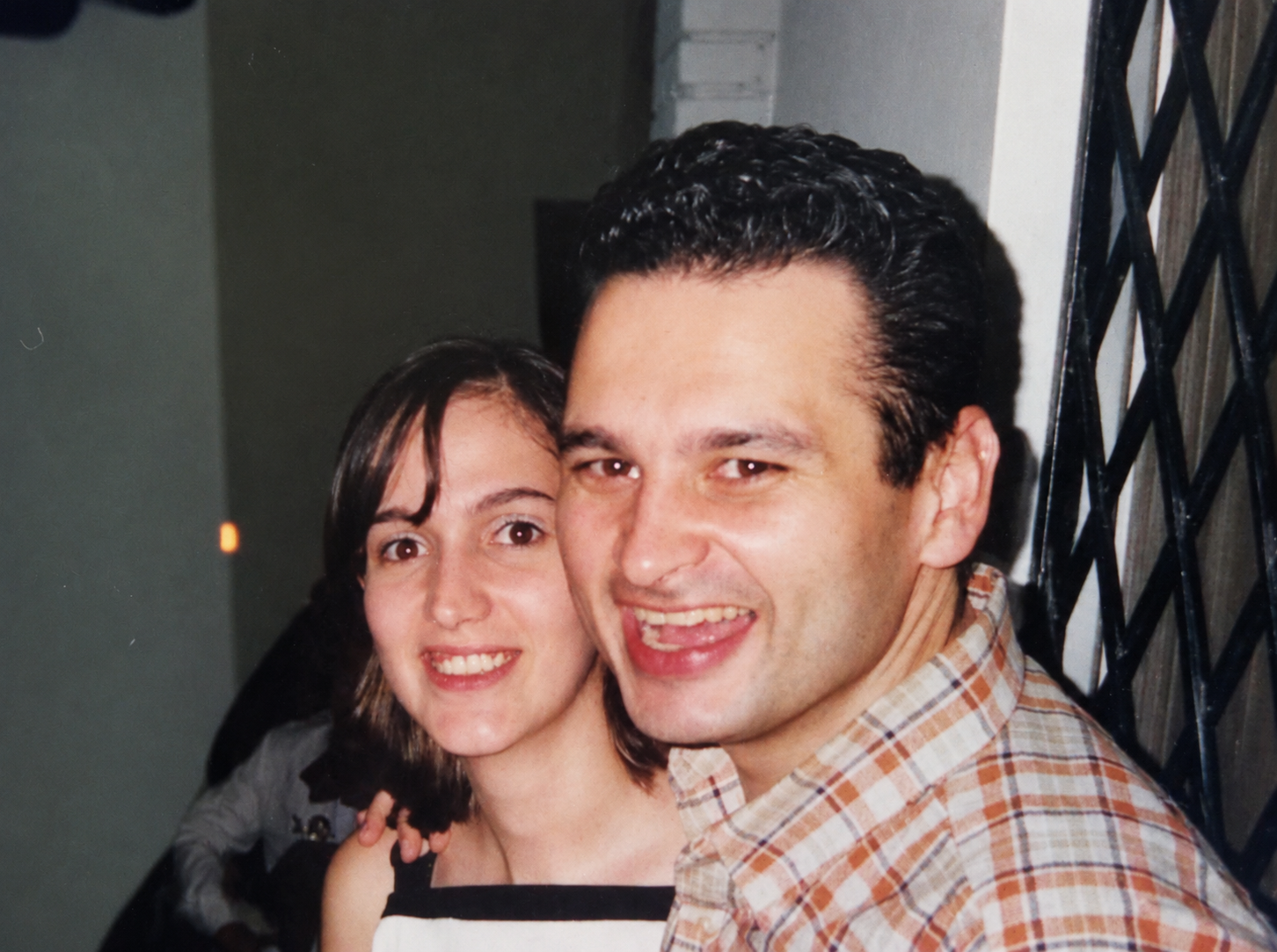
José Ignacio and Claudia Celis in the early days of their relationship. | Credit: Photo courtesy of José Ignacio and Claudia Celis
“God blessed us with 30 years of a very happy marriage though not without setbacks, like everyone else,” he related.
At the wedding, the priest shared a thought with them that José Ignacio still remembers: “You entered as single individuals; you will leave forever united as one.”
They looked at each other and understood that being one was not merely a nice expression.
“We truly are one,” they thought.
As the years went by, children, responsibilities, and difficult times came with it.
“Obviously, there were unpleasant moments. But I don’t remember them anymore, because I strive to always see her with love and for that love to grow,” he said.
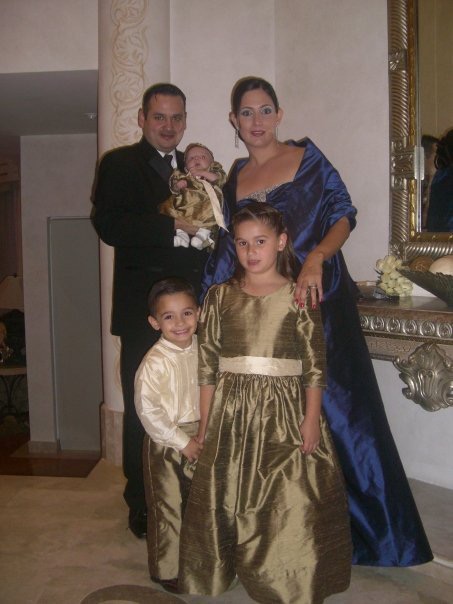
José Ignacio and Claudia Celis with their young children. | Credit: Photo courtesy of José Ignacio and Claudia Celis
The diagnosis that changed their lives
Claudia was 44 years old when she was diagnosed with early-onset Alzheimerʼs.
José Ignacio had already begun to notice some confusion, but he attributed it to fatigue. Moreover, the disease was not entirely unfamiliar to the family: Both her mother and her mother-in-law had suffered from it.
It was during a medical consultation that a neurologist noticed signs that led to further evaluations.
The diagnosis was devastating. Alzheimer’s is a neurodegenerative disease that eventually leads to death.
According to the U.S. Department of Health and Human Services’ website, the disease “slowly destroys memory and thinking skills and, eventually, the ability to carry out even the simplest tasks.” Furthermore, “people with Alzheimer’s also experience changes in behavior and personality.”
It is estimated that more than 6 million people living in the United States, many of whom are 65 or older, have Alzheimerʼs disease. According to the Mayo Clinic, early-onset Alzheimerʼs affects 41 out of every 100,000 people between the ages of 30 and 64.
The disease impacts many more people, such as the patientʼs family members and, above all, the person who takes on the role of caregiver, as is the case with José Ignacio.
Full-time care
Claudiaʼs treatment began shortly after her diagnosis. There is no cure for the disease, but treatment helps slow its progression. Claudia receives infusion therapy at the hospital every two weeks, or sometimes even more frequently.
José Ignacio and Claudia Celis today. | Credit: Photo courtesy of José Ignacio and Claudia Celis
During the early years, the decline was not very noticeable. However, José Ignacio explained that over the last two years, the disease has become much more apparent, particularly regarding orientation and the performance of simple tasks.
Her memory, he explained, still holds onto many recollections. But other abilities have begun to fade, and with them, the family dynamic has changed as well.
José Ignacio left his job in the financial sector and now devotes himself full time to caring for Claudia.
‘Marriage is about making your wife happy’
For José Ignacio, however, there is something that has not changed: the presence of God.
“When you have God in the midst, God dwells among Christian spouses and never leaves them,” he maintained.
That is why he views marriage not merely as living together or as a feeling that lasts only as long as circumstances are favorable.
“Marriage is about making your wife happy, and your wife’s role is to make you happy. You must dedicate yourself to your wife and choose to love her every day, because you have to nurture that love,” he explained.
Illness made the meaning of a promise even clearer to him. “When you get married, you make a promise. It is a promise in sickness and in health, for all the days of my life,” he added.
Adversity, he said, is not something couples usually imagine when they marry, yet it is part of life.
“Illness comes along. The last thing on your mind is illness, but the reality of marriage is that the very illness you vowed to face together does arrive. It will happen to one of you or the other, sooner or later.”
José Ignacio Celis, Claudia, and their daughter. | Credit: Photo courtesy of José Ignacio and Claudia Celis
‘God does not send suffering’
José Ignacio rejects the idea that God is the one who sends suffering.
“God does not send suffering. Suffering happens because that is simply how life is. Quite the opposite: God is with you in your suffering; he doesn’t like to see you suffer, he weeps with you, and he gives you or tries to give you the joy to move forward and he gives you the strength,” he stated.
That conviction is what by his own account enables him to do things every day that he often feels he could not accomplish on his own. Bathing Claudia, dressing her, and assisting her with her daily activities have become part of his life.
“I couldn’t take care of Claudia on my own; the pain is overwhelming. Yet God does it — it is not to my own credit. God takes care of Claudia.”
There are even seemingly small moments that for him reflect the dignity with which he wishes to continue treating his wife: “I apply her makeup because she needs to leave the house with the dignity of a queen. And it is God who does that through me.”
“I couldn’t do it alone. Without God, I am nothing,” he emphasized.
St. Joseph and a new way of caring
When the illness began, José Ignacio turned especially to St. Joseph.
“St. Joseph, help me care for Claudia. How would you care for the Virgin if she had Alzheimer’s? [I want to do it] just like that, exactly the same way. Don’t let me fail,” he said he always prays.
St. Joseph thus became a model of a husband and caregiver: a man called to protect and serve without seeking the spotlight. Yet, José Ignacio admits it’s far from easy.
“I don’t want to lie to you by saying I don’t get tired, or that I don’t feel the urge to run, to just run away; that would be lying to you,” he acknowledged.
José Ignacio and Claudia Celis. | Credit: Photo courtesy of José Ignacio and Claudia Celis
Loving even when illness changes the other person
One of the most difficult aspects of Alzheimer’s is the gradual loss of the reciprocity that characterizes married life.
“I know that perhaps due to the illness itself she sometimes cannot offer the reciprocity one expects, but I look for it in small gestures,” he said.
For José Ignacio, love does not vanish when the other person is no longer able to respond in the same way. On the contrary, that is precisely when the marriage vow takes on a new meaning.
“Authentic love bears the mark of permanence, of spending oneself, wearing oneself down, and giving until you can give no more… yet as long as you live, you will be able to give,” he maintained.
José Ignacio has also had to learn to take care of himself in order to be able care for his wife. His routine includes professional and spiritual guidance during the week as well as support from friends and family.
However, he points out that there is one priority above all others: “The first priority is the spiritual one. If you don’t have it, if you don’t hold fast to your spiritual life, to God, you can’t do it. We are God’s creatures. And without God, we are nothing.”
A family also learning to live with Alzheimer’s
Claudia’s illness affects more than just José Ignacio; it has also changed the lives of their three children.
One of their daughters feels the pain of losing the chance to have her mother present in the way she had envisioned for her own family. Their son wonders if his mother will be able to attend important milestones, such as his graduation. And the youngest daughter has lost the mother with whom she could talk and share her worries.
The illness has taught them that the family, too, needs to stand by and support one another.
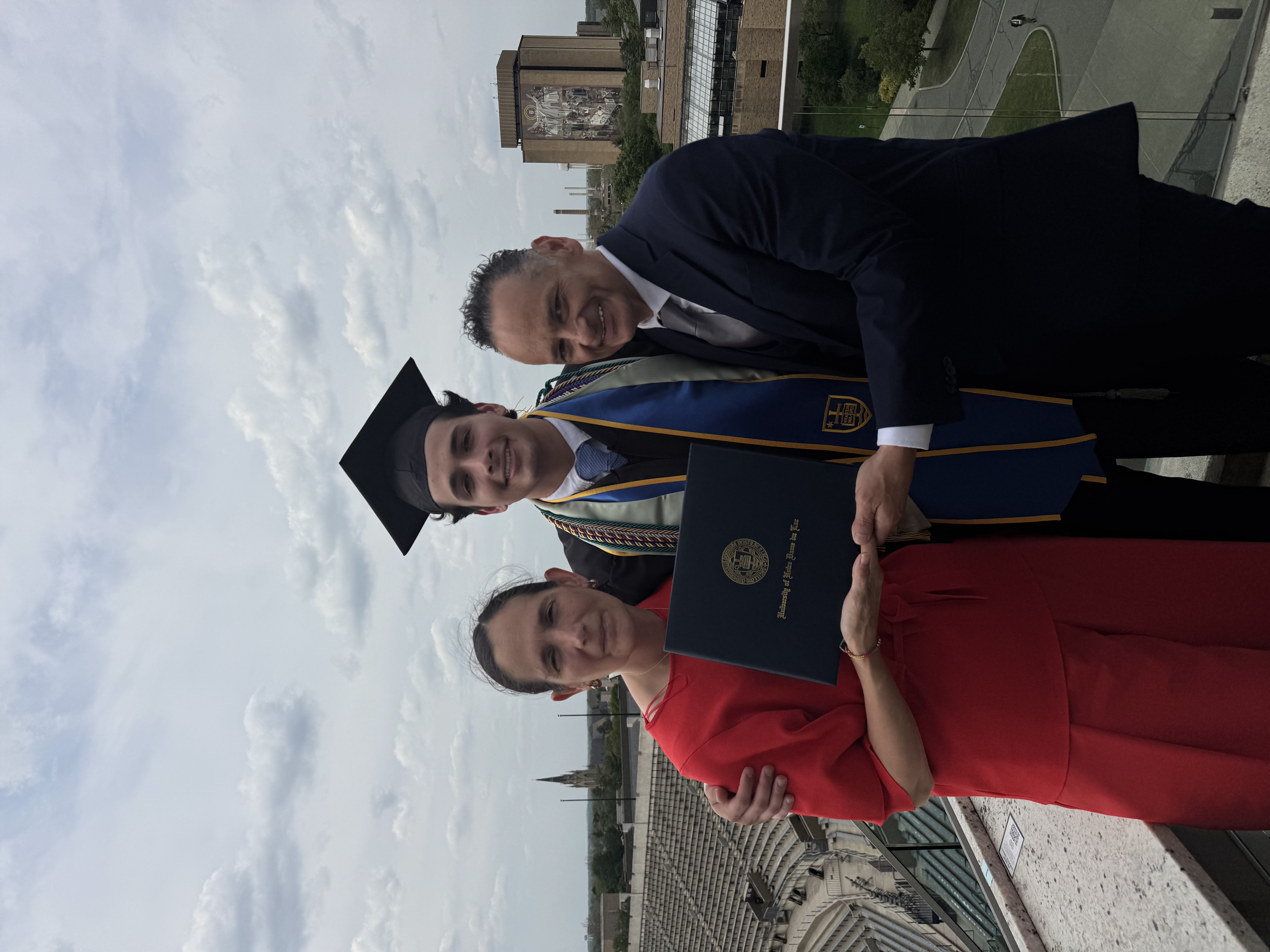
José Ignacio and Claudia Celis with their son Federico at his graduation from the University of Notre Dame, South Bend, Indiana. | Credit: Photo courtesy of José Ignacio and Claudia Celis
‘Pain has taught me to try hard to be happy’
Among the things that move José Ignacio the most is the way he looks at Claudia now.
Illness has transformed her face and the way she relates to the world. He speaks of a kind of innocence he perceives in her.
And then he asks himself: “How could you not fall more in love with that every day?”
His answer lies not in denying the pain but in discovering that love can take on new forms. “Pain has taught me to try hard to be happy,” he explained.
But he also does it for Claudia. When she sees him sad, he knows his sadness affects her as well. That is why he strives for joy.
José Ignacio often says he is “God’s favorite.” Not because his life is easy, but because, despite the suffering, he recognizes that he has received the strength to keep loving.
“Because I love her more every day,” he said.
And in the most difficult moments, he said he feels they are not alone: “I know that God weeps with me, and sometimes I feel that St. Joseph and the Virgin Mary wipe away our tears.”
A promise that lives on
José Ignacio knows that Claudia’s Alzheimer’s is progressing, but his focus is on something he considers even more important.
“I have to work to earn my place in heaven. She doesn’t, but I do. So I say, ‘My God, I am increasingly aware that my work here is to earn my place in heaven.’ And at the same time, I want to be with her, walking that path.”
With each passing day, José Ignacio chooses to love. He chooses to stay. He chooses to care. He chooses to start over. Because, for him, marriage is not about hoping the cross never comes, but rather discovering that when it does, the spouses don’t have to shoulder the burden alone.
“It is very painful to walk that Way of the Cross, but what a joy it is to do so with God by your side.”
And that is perhaps the lesson he wants to leave to other husbands: that love in marriage does not lose its beauty when dark days arrive. On the contrary, it reveals the depth of the promise made one day before God.
“Love is a decision,” José Ignacio often says.
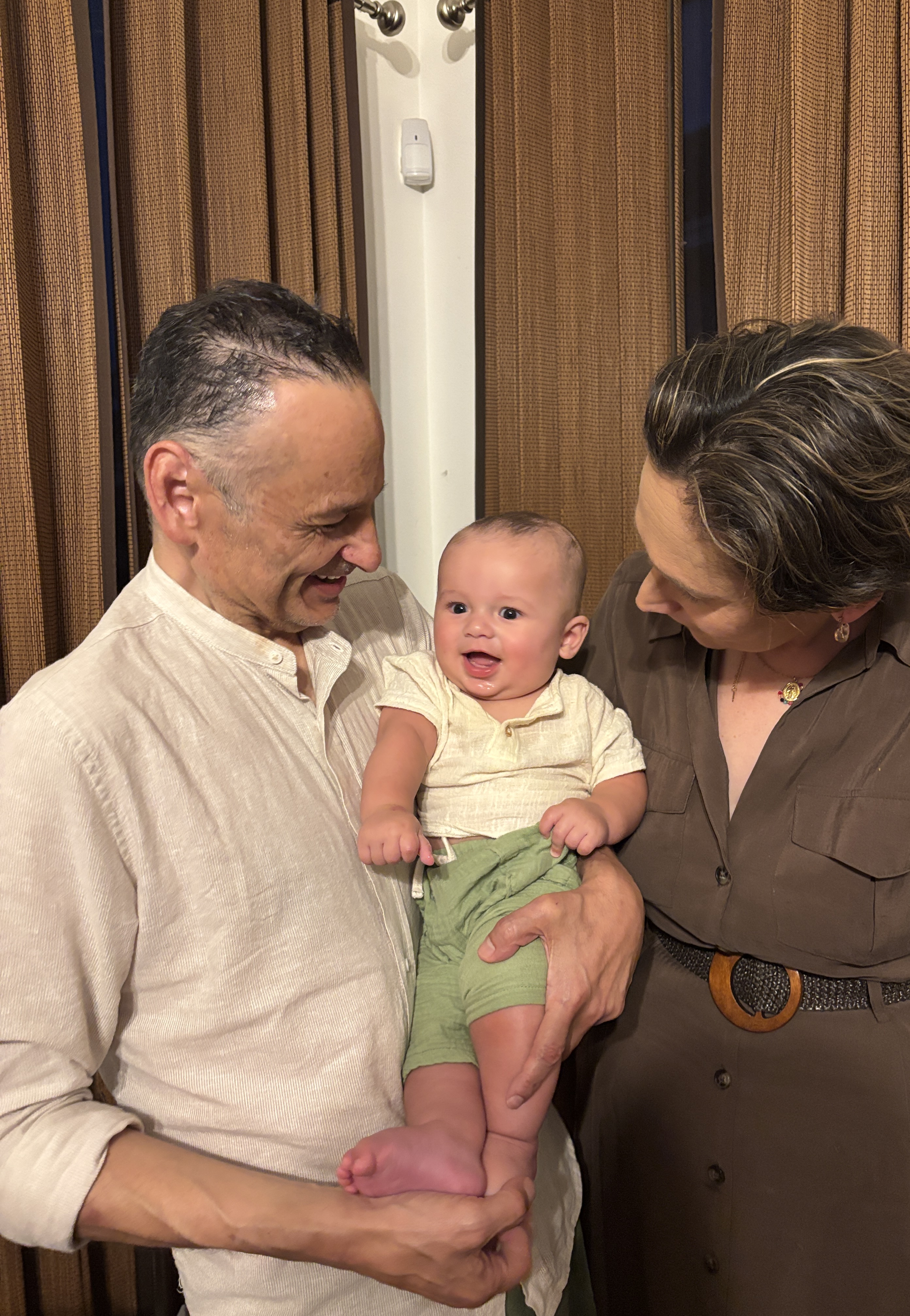
José Ignacio and Claudia Celis and their grandson. | Credit: Photo courtesy of José Ignacio and Claudia Celis
Those who wish to support José Ignacio and Claudia on this journey may do so through prayer and financial assistance. Having left his job to care for his wife, José Ignacio, along with his family, is facing the challenges brought about by the progression of Claudia’s Alzheimer’s disease.
This story was first published by ACI Prensa, the Spanish-language sister service of EWTN News. It has been translated and adapted by EWTN News English.
The highly-anticipated beatification of Venerable Fulton Sheen will take place on Sept. 24 in St. Louis. As Catholics prepare for this historic day, EWTN is offering the faithful a plethora of Sheen-focused programming.
Throughout September, EWTN’s television, streaming, news, and digital platforms are providing comprehensive coverage leading up to and following the beatification, on-the-ground reporting of events from both Peoria, Illinois, and St. Louis, and special coverage exploring the life and legacy of Sheen.
“Archbishop Fulton Sheen was one of the great evangelists of the 20th century and a pioneer in using the media to proclaim the Gospel,” Michael P. Warsaw, chairman and CEO of EWTN, said in a statement.
“His beatification is a historic moment for the Church in the United States and a powerful reminder of the universal call to holiness. EWTN has always understood its mission as a service to the Church, and part of that service is bringing the great moments in the life of the Church to people wherever they may be,” he added. “It is a privilege to bring this celebration to audiences across the United States and around the world.”
From Sept. 15–23, EWTN will air nightly broadcasts of the nine-day novena of Holy Hours at 8 p.m. ET from the Cathedral of St. Mary of the Immaculate Conception in Peoria, Illinois.
On Sept. 20 at 4 p.m. ET viewers can watch the anniversary Mass of Sheen’s priestly ordination live from the Cathedral of St. Mary in Peoria. On Sept. 23, the solemn vespers at the Cathedral Basilica of St. Louis will be broadcast live at 6 p.m. ET.
On the day of Sheen’s beatification, Sept. 24, EWTN will have live, all-day coverage starting at 9 a.m. ET. The beatification Mass at The Dome at America’s Center in St. Louis will begin at 2 p.m. ET.
EWTN’s live coverage of the beatification Mass will be hosted by Lila Rose, host of “The Lila Rose Show” podcast, which airs on EWTN+; Father Aquinas Guilbeau, OP, vice president of ministry and mission and university chaplain at The Catholic University of America; and Matthew Bunson, vice president and editorial director of EWTN News, who will provide historical context, commentary, analysis, and reaction throughout the celebration.
For EWTN, this day carries significance. Decades before the network was founded, Sheen exemplified the potential of using emerging media to evangelize through his radio broadcasts and television series, “Life Is Worth Living,” which brought Catholic teaching into the homes of millions.
“Archbishop Sheen showed what was possible when someone with deep faith was willing to enter a new medium and use it boldly for Christ,” said Peter Gagnon, president of EWTN Studios. “Mother Angelica admired Sheen and was inspired by his ability to use television to reach people with the truths of the Catholic faith. In many ways, he helped blaze the trail that she would later follow. It is especially meaningful for EWTN to celebrate his beatification and to introduce his extraordinary legacy to a new generation.”
During the live event, EWTN News will also provide reporting before, during, and after the beatification across its television, print, and digital platforms, with feature stories, interviews, analysis, and more.
Mark Irons will serve as EWTN News’ broadcast and digital correspondent reporting from St. Louis and Peoria, while Jonah McKeown will provide coverage from St. Louis for EWTNNews.com and the National Catholic Register.
Other EWTN News team members will be stationed in both cities to cover the celebrations, pilgrimages, liturgies, and local communities at the center of the historic events.
From Peoria on Sept. 25, the Mass of thanksgiving will be aired at noon ET, followed by the Divine Liturgy of thanksgiving on Sept. 26 at 4 p.m. ET.
Additional special coverage
In celebration of Sheen, EWTN has featured special programming highlighting Sheen’s life, spirituality, ministry, and enduring influence, including: “The Spiritual Legacy of Archbishop Fulton J. Sheen” (Seasons 1 and 2) running daily throughout September at 6:30 a.m. ET; “Archbishop Fulton J. Sheen: Servant of All” will air on Sept. 19 at 2 p.m. ET; and “A Matter of Faith — Mother’s Day with Archbishop Fulton J. Sheen” will be available on EWTN.com starting on Sept. 19.
Select “Life Is Worth Living” episodes can be watched online for a limited time at EWTN.com and on the EWTN YouTube Channel from Sept. 19–25.
EWTN Publishing will release “America’s Apostle: Celebrating the Life and Legacy of Blessed Fulton J. Sheen,” which is the official commemorative book of the beatification, on Sept. 15 on the EWTN Religious Catalogue.
The faithful can also download multimedia resources and a free eBook titled “In His Presence: Fulton Sheen on Our Time with the Lord,” which is available here.
Pope Leo XIV remembered the victims of the Sept. 11, 2001, terrorist attacks on Sunday and renewed his appeal for peace amid conflicts and violence around the world.
Speaking in English after praying the Angelus with the faithful gathered in St. Peter’s Square on Sept. 13, the pope recalled the 25th anniversary of the attacks, which was observed two days earlier.
“Two days ago marked the 25th anniversary of the Sept. 11th terrorist attacks in the United States of America. I renew my prayers for those who lost their lives and for those who continue to bear the wounds of that tragic day. At a time when conflict and violence afflict so many of our brothers and sisters, I invite everyone to pray that the Lord will bestow his gift of peace upon the world,” he said.
Continuing in Italian, Leo said the memory of the tragedy should prompt a renewed commitment to peace, above all through prayer entrusted to the intercession of the Virgin Mary.
The pope then greeted the Romans and pilgrims gathered in the square, including groups from Brazil and other countries, pilgrims who had traveled from Assisi along the Way of St. Francis, and motorcyclists gathered in support of peace and life.
Earlier, in his reflection before the Angelus, Leo focused on the Sunday Gospel and the Christian meaning of forgiveness, recalling that Christ taught forgiveness and bore witness to it even on the cross, when he prayed to the Father for his persecutors.
Reflecting on Peter’s question to Jesus about how many times he should forgive someone who sins against him, the pope noted that Peter’s suggestion of seven times already indicated abundance, since the number seven symbolizes fullness in Scripture. Jesus, however, went further, telling him to forgive “70 times seven” — without limit or measure.
Leo then recalled the parable of the servant whose enormous debt was forgiven by his master but who refused to show the same mercy to a fellow servant who owed him far less.
“All things are given to us by God out of pure love, and none of us can claim to be perfect in responding to such goodness. For this reason, gratuitousness — which is the source of our existence — is also the best rule for our life together,” the pope said.
“We experience this every day. Forgiveness is indispensable, and without it, we cannot live in peace.”
Without forgiveness, Leo warned, conflicts, accusations, grudges and acts of vengeance eventually arise, destroying relationships, dividing families and unleashing wars.
“Only forgiveness sets us free and restores the light, even where human material and moral poverty has darkened the horizon and made the path uncertain. Forgiveness, like a gentle breeze, sweeps away even the thickest clouds until the sun shines once more,” he said.
The pope also pointed to St. Peter’s own experience of forgiveness after denying and abandoning Jesus during the Passion. When Peter encountered the risen Christ on the shore of the Sea of Galilee, Jesus asked him only whether he loved him and once again called him to follow.
Leo said that forgiving and healing love confirmed Peter in his mission as the first of the apostles.
Concluding his reflection, the pope asked the Virgin Mary, Mother of Mercy, to help Christians forgive even when taking the first step is difficult, and to spread the healing light of a love that overcomes hatred and disarms resentment.
This story was first published in two parts by ACI Prensa, the Spanish-language sister service of EWTN News. It has been translated and adapted by EWTN News English.
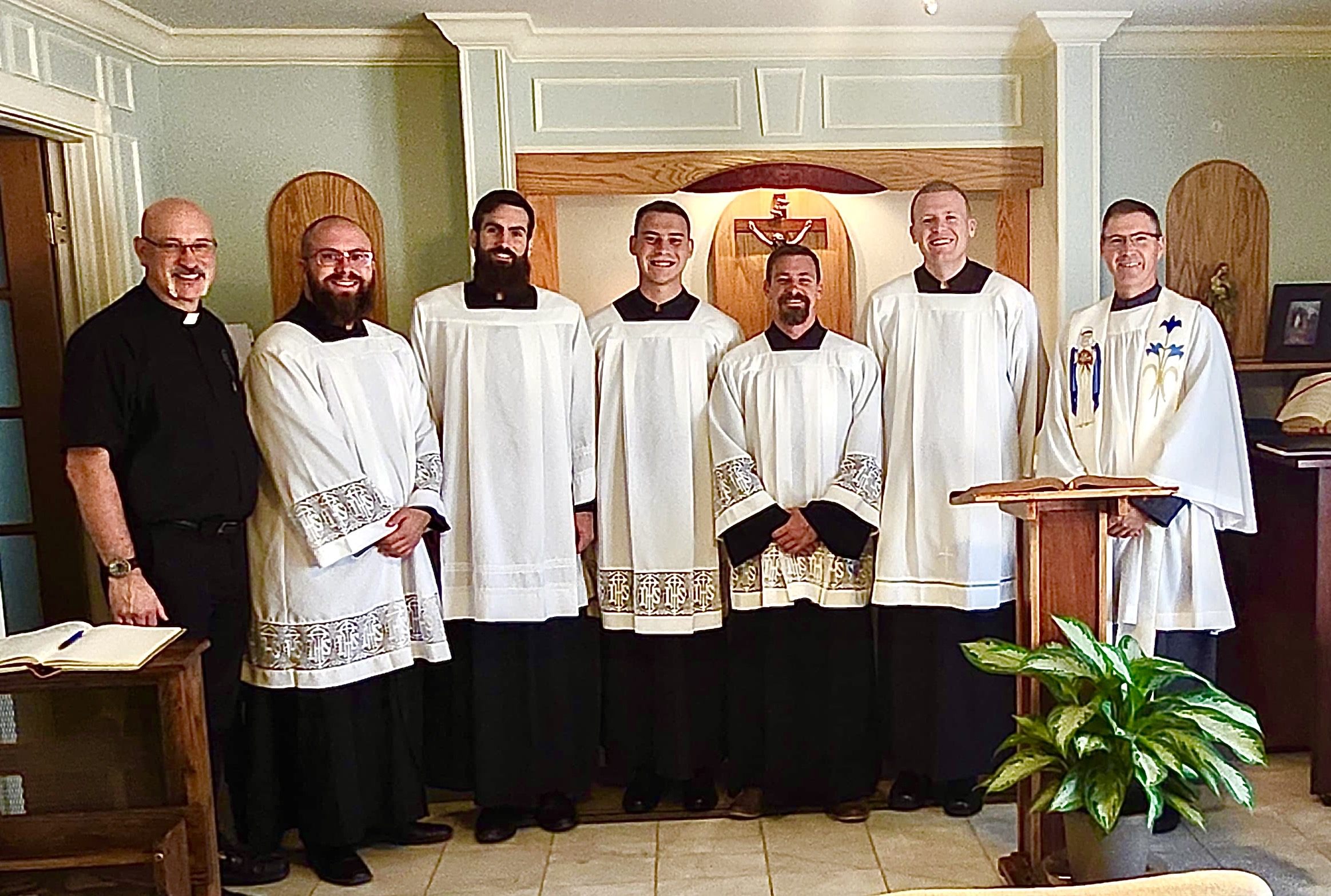
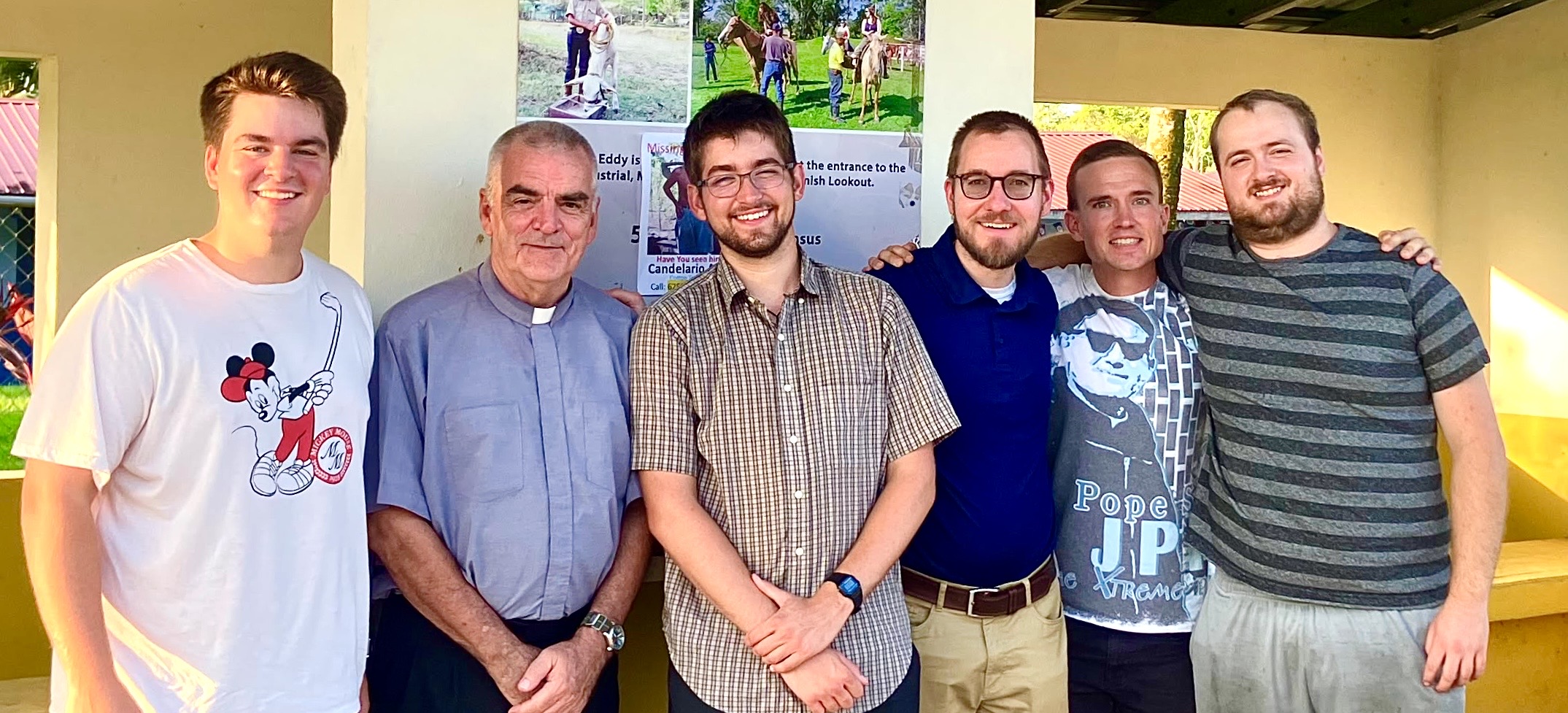
The General Chapter of the Clerical Branch of the Society of Our Lady of the Most Holy Trinity (SOLT) is embracing the traditional practice of ember days as a spiritual means of fostering and growing vocations.
Ember days — the Christian periods of prayer, fasting, and thanksgiving — take place for three days over the four seasons each year. The next ember days will be Sept. 16, 18, and 19.
“The Church, although it doesnʼt require it, still encourages it,” Father Dave Brokke, SOLT priest and vocations director, told EWTN News.
“Even in terms of the [United States Conference of Catholic Bishops] document on fasting,” he explained. “It encourages people to do the ember days, and you can find different canons about it still today.”
The document clarifies that “Vigils and Ember Days, as most now know, no longer oblige to fast and abstinence.”
“However, the liturgical renewal and the deeper appreciation of the joy of the holy days of the Christian year will, we hope, result in a renewed appreciation as to why our forefathers spoke of ‘a fast before a feast,’” the bishops wrote.
While the prayer is not required, the SOLT chapter voted on the addition of ember days to create a more intentional way of asking God for vocations. It passed in 2023 and over the past three years, the community has seen almost as many men enter into formation as it had in the previous 10 years.
Ember days
The phrase “ember days” is an alteration of the Latin phrase “quatuor tempora,” meaning “four seasons.” Ember days are documented as being celebrated as early as the fifth century and are among the oldest traditions of the Church’s liturgical calendar.
Their original purpose was to thank God for the gifts of nature, notably the crops used to make bread and wine for the Eucharist.
“Jesus said: ‘Ask the master of the harvest to send laborers into the vineyard.’”
“With the master of the harvest, thereʼs this understanding that we have the need to ask Our Lord for help in providing the grain and the wheat and the grapes,” Brokke said.
In total, there are 12 ember days throughout the liturgical year.
“From an early time in the Church,” it was established that the ember days “would be a Wednesday, Friday, and Saturday.”
The “penitential days” were “Wednesday, because that was the day that Judas betrayed Jesus, Friday because of the Passion, and then Saturday because Our Lord was in the tomb.”
“The way that I remember it is ‘Lenty, Penty, Crucy, and Lucy,’” Brokke said.
“Lenty” is to indicate the full Wednesday, Friday, and Saturday of ember days that follow Ash Wednesday in the springtime, and “Penty” is the ember days after Pentecost in summer. The “Crucy” ember days then follow the Exaltation of the Holy Cross in fall, and “Lucy” is for the days after the memorial of St. Lucy in winter.
“They correspond to the time of both the sowing of the seeds and the reaping of the harvest of the wheat and the grape. So even then it is connected to the elements that is used for the Eucharist,” he said.
The Church would “fast and pray not only for a good harvest but also for vocations, for laborers in the vineyard to the priesthood, and they would often ordain men on the Saturdays of ember days,” Brokke said.
SOLT witnesses ‘lots of good fruit’
Brokke and the General Chapter of the Clerical Branch of the SOLT began looking into embers days as a way of “community fasting and praying for vocations,” Brokke said.
“We do have a prayer that we say every day for vocations,” which “started from the very foundation of our community,” Brokke said.
SOLT is “a community of priests, brothers, sisters, and members who work together to show the relationship of Our Lady with the most Holy Trinity,” Brokke said.
The community reflects how “the Father, and the Son, and the Holy Spirit are distinct, but not separate. Theyʼre united.”
“Similarly, the vocations are distinct, but theyʼre not separate. So we strive to live with a united will of charity and our service to areas of deep need,” Brokke said.
“We go where a bishop has identified his deepest need and serve as missionaries in the world, trying to bring that communion of the Most Holy Trinity in imitation of Our Lady, who leads us into those relationships because she was mother of the Son and daughter of the Father, spouse of the spirit.”
For more vocations, SOLT wanted to add another act “specifically geared towards vocations,” in addition to its daily prayer.
“I mentioned the ember days,” which would “dedicate at least 12 days a year to fasting and praying and to be more intentional with it,” he said. “When we started discussing it, we didnʼt focus so much on the agricultural aspect but the vocational aspect.”
When the idea of incorporating the days of prayer was under discussion, Brokke looked up some of the prayers for ember days.
“We discovered that the prayer that we have prayed every day from our foundation of the community is actually one of the ember day prayers for vocations,” he said.
Shortly after the community began the traditional prayer, vocation numbers began to rise.
A group of novices with the Society of Our Lady of the Most Holy Trinity. | Credit: Photo courtesy of Father Dave Brokke/Society of Our Lady of the Most Holy Trinity
“The first September doing ember days … one guy showed up from a mission in Honduras at our mission in Belize and expressed his interest in the community. He is now a novice with our community.”
“On the Saturday of that first ember days, we had 27 men from Franciscan University show up for the priestly discernment program to learn more about our community. The man who led that is now anaspirant with our community.”
“The year that we started, we had seven men in formation. And in three years, we now have 18 men in formation,” Brokke said. Before, “we were maybe averaging one or two to enter a year. In that very first year we had nine men.”
“Weʼve seen lots of good fruit,” he said.
“I know thereʼs a mystical body of Christ and weʼre all connected. The Lord is going to use it, like heʼll use everything, and nothing goes to waste.”
A group of aspirants with the Society of Our Lady of the Most Holy Trinity. | Credit: Photo courtesy of Father Dave Brokke/Society of Our Lady of the Most Holy Trinity
“This summer I received a cancer diagnosis and will be undergoing treatment in the UK,” Claire Lai said in a statement first reported by the Daily Wire on Sept. 8. “I am optimistic about the outcome but will be unable to travel and attend functions for the duration. I am endlessly grateful for my parents’ example of perseverance. Our Christian faith teaches — and my father bears witness — that suffering can be redemptive. Mine is but a fraction of my father’s, but I hope to bear it as a grace as well as he has. I deeply wish that dad was here, and pray that he will be released soon. I am so very grateful to everyone who continues to work toward securing his freedom.”
Iraq to build largest Marian shrine in the country
Inishke, a Chaldean village overlooking the Sapna Valley, is preparing for a 59-foot-tall monument to Our Lady of the Sapna Valley, planned as the largest Marian shrine in Iraq.
The design brings together Marian devotion and Iraqi heritage. Sculptor Thabit Mikhail has given Mary and the child Jesus Middle Eastern features, while Maryʼs two braids represent Iraqi mothers and grandmothers, ACI MENA, the Arabic-language sister service of EWTN News, reported Sept. 5. The 43-foot-wide base takes inspiration from the spiral form of Samarraʼs famous minaret and ancient Mesopotamian architecture.
A chapel inside the base and another prayer space near the statue will give pilgrims places for prayer and candle lighting. Funded by donations from people from Inishke around the world, the project has been under development for more than a decade and is expected to become a new destination for religious tourism in northern Iraq.
Canonization cause opens for murdered Northern Ireland priests
The causes of canonization for two priests killed in Belfast, Northern Ireland, by members of the British Army in the 1970s has officially been opened.
The Diocese of Down and Connor confirmed that the canonization cause has been opened for Father Hugh Mullan and Father Noel Fitzpatrick, who were shot in two separate instances while administering last rites to parishioners in Corpus Christi Parish in Ballymurphy, according to a report from the Irish Catholic on Sept. 10.
News of their canonization cause comes after an official inquest into the deaths of the two priests and other victims at the hands of the British Army found that the soldiers had “lost control,” the report said. Bishop Alan McGuckian said during a Mass for victims’ families in May that the finding “restores dignity to the deceased, and it brings a measure of justice to those who grieve.”
Christian doctor in Canada fined for refusing to give teen puberty blockers
A Canadian human rights tribunal has ordered family physician Dr. Henry Ajaero to pay $28,100 after he denied a teen puberty blockers at his clinic in March 2021.
Ajaero told the tribunal that “he did not feel comfortable administering” the hormone medication Lupron and that “doing so would go against his religious beliefs” and “because it is outside the scope of his practice,” according to a Sept. 9 CBC report.
The tribunal ruled that Alaero’s testimonial did not establish sufficient proof that administering the drug was in conflict with his religious belief or professional expertise.
While the tribunal acknowledged Ajaero likely made the decision quickly and in the context of a busy day, it ultimately ruled that "this context is an explanation for Dr. Ajaero’s decision, but it does not justify his decision to deny medical services to a vulnerable trans youth because of her gender identity,” according to the report.
Saydnaya, Syria, looks beyond its annual Marian celebrations
The feast of the Nativity of the Virgin Mary once again brought pilgrims from Syria and abroad to Saydnaya, where prayers and the traditional procession with an icon of Mary marked one of the cityʼs most important celebrations. Yet the occasion has also renewed discussion about Saydnayaʼs future.
Researcher Elias Azar, founder of the Saydnaya Center for Studies and Research, is working on a nonprofit initiative to preserve the cityʼs history while developing religious tourism, environmental projects, traditional agriculture, and local media, ACI MENA reported Sept. 9.
The effort comes after years of war and emigration. Azar estimated that Saydnaya has lost about half of its Christian population since 2011, although it remains a Christian-majority city. Residents are also calling for greater security, which they see as essential to protecting daily life and Saydnayaʼs place as a major Christian pilgrimage destination in Syria.
Vatican UN Permanent Observer Mission speaks against nuclear testing
Monsignor Robert Murphy, chargé d’affaires of the Permanent Observer Mission of the Holy See to the United Nations, called for renewed international commitment to ending nuclear weapons testing in a letter to the president of the U.N. General Assembly.
The Sept. 1 letter came amid a high-level plenary meeting marking International Day Against Nuclear Tests.
“The suffering caused by nuclear testing should have reinforced the common conviction that peace cannot be preserved by developing ever more destructive weapons,” Murphy said. “However, today renewed reliance on nuclear deterrence, increasingly aggressive nuclear rhetoric and attempts to question the long-standing international norm against nuclear testing risk undermining this conviction.” Murphy further called for an entry into force of the Comprehensive Nuclear-Test-Ban Treaty.
St. Charbel communities in Poland call Catholics back to prayer
The sixth national gathering of St. Charbel communities in Poland focused on a simple question: Can people become so occupied with religious activities that they leave little time for God?
Maronite priest Father Fabio M. Lattouf warned against replacing a personal relationship with God with a search only for inner peace, constant Church activities, or an endless stream of religious content, ACI MENA reported on Sept. 8.
Bishop Andrzej Siemieniewski presented St. Charbel as another way forward, pointing to the Lebanese saintʼs long hours of silence before the Eucharist as an example of a spiritual life centered on Christ rather than activity.
At Bkerke, 26 couples choose marriage amid Lebanonʼs difficulties
Twenty-six brides and grooms took part in the 17th collective wedding organized by the Maronite League at Bkerke, continuing an initiative launched in 2009 to help young Lebanese couples establish families despite growing financial pressures.
The collective weddings have so far helped form 404 families, which now include 521 children, ACI MENA reported Sept. 6.
Maronite Patriarch Cardinal Bechara Boutros Rai told the newlyweds that forming a family in difficult circumstances is an “act of faith in the future” and prayed that their homes would be marked by love, fidelity, forgiveness, faith, and peace.
The Archdiocese of Chicago will pay out more than $5 million to a small number of abuse victims after a recent settlement, attorneys said this week.
Lawyers with Jeff Anderson & Associates, a law firm that specializes in abuse cases, announced at a press event on Sept. 10 that they had settled with the archdiocese for $5.5 million to be paid out to nine survivors of abuse in the Church.
Attorney Jeff Anderson describe the development as a “tipping point and a turning point” regarding allegations of abuse in the archdiocese. He said the settlements were a matter of both “reckoning” and “accountability.”
“It is about the courage of every survivor with whom we and others have had the privilege to work to bring about change, change in the Archdiocese of Chicago and change across the state of Illinois and change across this country,” the lawyer said.
The Chicago Archdiocese did not immediately respond to a request for comment on the settlement. But the archdiocese has paid out major settlements to abuse victims numerous times in recent years.
In 2022 leaders settled multiple cases with abuse victims, one totaling $1.2 million and another $1.75 million.
In 2024, meanwhile, the archdiocese settled one abuse case for $950,000.
Multiple settlements by the archdiocese have involved allegations regarding disgraced former priest Daniel McCormack, who pleaded guilty to abusing numerous children years ago and who spent more than a decade in prison on those charges.
Archdiocesan attorney James Geoly said at the time that the lawsuit was meant to protect “the interests of legitimate victims.”
“We do not want [the racketeering lawsuit] to deter any legitimate victim from coming forward. I would encourage anybody who’s had a problem with a priest or cleric to do that,” he told the archdiocesan news outlet.
The Archdiocese of Chicago and a group of Catholic religious sisters won a temporary reprieve against Illinois’s assisted suicide law this week, with a federal judge ordering the state not to enforce the law against the Catholic objectors while a federal lawsuit continues.
U.S. District Judge Franklin Valderrama’s Sept. 11 order said the state would be blocked from enforcing the suicide law against the Carmelite Sisters for the Aged and Infirm and the Little Sisters of the Poor who had brought the lawsuit.
Chicago Archbishop Blase Cupich is also a plaintiff in the suit. The order applies only to the sisters and the archdiocese, the judge said; the state is free to enforce the suicide law elsewhere.
The Catholic objectors brought the lawsuit on Sept. 3, arguing that the suicide law infringes on religious liberty by requiring Catholics to participate in helping patients end their own lives. The lawsuit was filed by lawyers with the religious liberty law firm Becket.
On Sept. 11 Cupich said in a statement that the law should be struck down “permanently.”
“To be clear, the Church’s objection to this statute is not an attempt to impose Catholic teaching on non-Catholics,” the archbishop said. Rather, “it is an effort to stop the State from compelling Catholic health care providers to violate their conscience.”
Mother Mary Rose Heery, O. Carm., prioress general of the Carmelite Sisters for the Aged and Infirm, said the temporary order “brings real peace of mind to our Sisters, our residents, and their families.”
“It allows us to continue our vocation of showing Christ’s unbounded love to those who need it most—a love that endures in every circumstance and through every hardship,” she said.
Catholic health groups join another Illinois lawsuit
Illinois has become a battleground in recent weeks over its suicide law, which Democratic Gov. JB Pritzker signed in December 2025. The measure allows residents with a terminal illness to receive lethal prescriptions from doctors in order to take their own lives before they die naturally.
In August Springfield Bishop Thomas Paprocki, a Lutheran care home, and four Illinois-based doctors filed a lawsuit in federal court arguing similarly to the Chicago lawsuit that the state suicide law infringes on their religious freedom and their ability to care for their patients.
Later in the month the state agreed to not enforce the law against the plaintiffs while the suit plays out. In the meantime, multiple additional Catholic objectors have joined the Springfield Diocese’s lawsuit against the suicide policy.
The Thomas More Society announced on Sept. 11 that five religious health care associations had joined Paprocki’s suit, including the Illinois Catholic Health Association and the National Association of Catholic Nurses. A doctor and a nurse also joined the suit.
The Thomas More Society said the plaintiffs “represent 95% of Catholic health institutions in Illinois and more than 13,000 health care professionals nationwide.”
Peter Breen, the head of litigation at the legal group, said attorneys were seeking to extend the protection secured by the initial plaintiffs to the “thousands of Catholic and Christian health care professionals” represented in the new filing.
"The First Amendment protects the rights of Catholic and Christian doctors, hospitals, and health care ministries to reject assisted suicide and heal and care for the ill and infirm in accord with their consciences,” Breen said.
He argued that the suicide law “flagrantly violates those rights by forcing dedicated healthcare professionals to promote deadly drugs to their patients.”