The Diocese of Knoxville is mourning the passing of American artist and Tennessee native Dolly Parton and reflecting on her legacy.
“I am very sorry to hear of her passing, and I am praying for those who are mourning her loss,” said Bishop Mark Beckman of Knoxville in a statement. "She made a wonderful contribution to our world and our community, and she will be greatly missed.”
The artist passed away on Aug. 25 at the age of 80 following a brief battle with cancer. Parton is being remembered across the world for her work as a singer, songwriter, actress, businesswoman, and philanthropist whose career spanned over 60 years.
“East Tennessee knew Dolly Parton as more than a world-famous star. We knew her as one of our own,” the diocese said in a statement.
“She was shaped by these hills and these churches. Her life shows what can grow from faith, perseverance, imagination, and love for oneʼs neighbors — even from humble beginnings,” the statement said.
Parton, who was not Catholic, sang and spoke frequently about her Christian faith and love for Jesus. Some of her public views — including her support for same‑sex marriage — differed from Catholic teaching. She was publicly silent on her views about abortion.
“She first sang in a small Pentecostal church, long before the world knew her name,” the diocesan statement said. Parton included the Southern Gospel Music Hall of Fame in her Dollywood theme park.
“She never hid her faith. It showed up in the hymns she recorded across six decades, in how openly she talked about God, and in the millions of free books her Imagination Library has placed in childrenʼs hands,” the statement said.
Parton’s “life carried the spirit of our mountain home far beyond the Smokies,” the statement said.
“As Catholics, we entrust her to the mercy of Almighty God. We pray that Jesus, who is the resurrection and the life, will receive her into His eternal kingdom,” the statement said.
Remembering Parton’s ‘generosity’
Father Jim Sichko, a papal missionary of mercy who has repeatedly referred to Parton as a friend, also mourned the artist’s passing, calling her “a woman whose extraordinary gifts reached far beyond the stage.”
“As a Papal Missionary of Mercy, I will remember Dolly not simply as an icon of American music, but as a woman who understood that blessings are meant to be shared,” Sichko said in a statement.
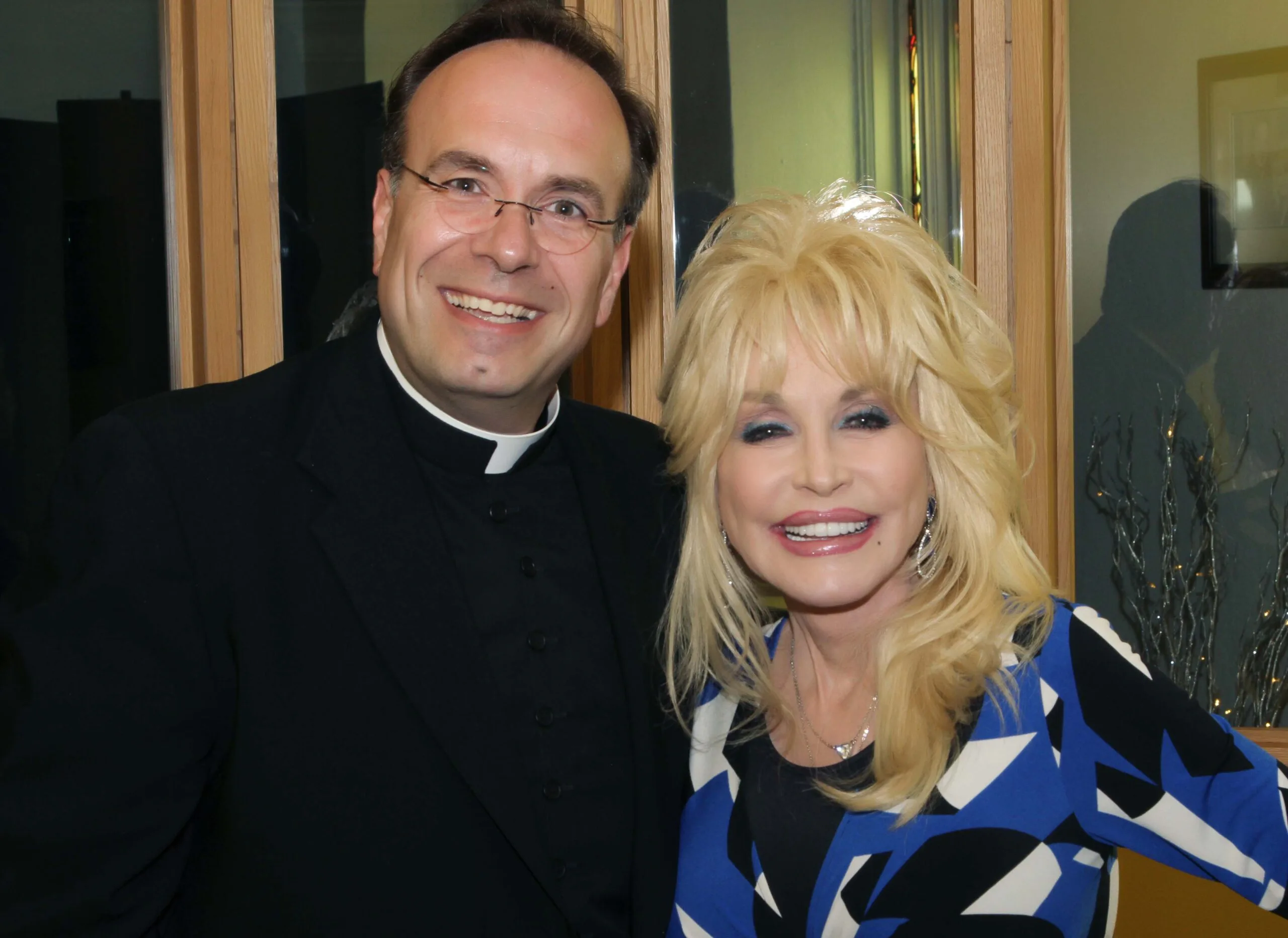
Father Jim Sichko and Dolly Parton on May 27, 2014. | Credit: Steve Bates/photo courtesy of Father Jim Sichko
Sichko, a priest of the Diocese of Lexington, said he “had the privilege of welcoming Dolly to my church on several occasions.” He added: “She generously used her presence and influence to help raise money to support my ministry and its work of mercy.”
Parton “never forgot where she came from, and she never seemed to forget the people who needed a helping hand,” Sichko said.
“Her faith, generosity, humor, and unmistakable spirit touched millions,” he said.
"My faith impacts everything that I do because I do believe that, through God, all things are possible,” Parton said in a 2023 interview with Fox News. “And so I always ask God to bless everything that I do and the people that I work with and to bring all the right things and right people into my life and to take the wrong ones out.”
“So, I try to just live through love as much as I can,” Parton said.
When a storm pummeled the electric grid and plunged much of northwest Indiana into darkness two weeks ago, Karen Simon was grateful she had a generator at her house to keep her refrigerator running so her food wouldn’t spoil.
But unlike most people, she had another set of refrigerators to worry about — the commercial ones at the food pantry she coordinates at her parish, St. Mary of the Lake in Gary.
“I have two or three freezers full of meat. I have two refrigerators full of refrigerated items. Panic sets in, because I do not have a generator there,” Simon told the National Catholic Register, the sister partner of EWTN News.
Not having an alternative power source, Simon was able to secure alternative storage options for the food, allowing St. Mary’s to continue serving the poor as some in the region enter their third week without electricity.
The outages began on Aug. 11, when 100 mph wind gusts and heavy rain blew through northwest Indiana and east Chicago. Numerous municipalities in northern Indiana including Gary, Portage, Lake Station, and Munster suffered widespread power outages, with as many as 400,000 customers affected at the peak.
Northern Indiana Public Service Company (NIPSCO) announced that power would be restored for nearly all of its customers in the area by Aug. 25. But more than 7,000 customers in Gary were without power for two weeks. The outages heavily affected the predominantly African American city of about 70,000 people, which has a poverty rate of about 33%, more than three times higher than the national average.
Indiana’s Republican governor, Mike Braun, called for an investigation into NIPSCO over the lengthy outages.
‘Trying to meet the need’
While conditions were extremely difficult, they also fostered solidarity.
When Simon was searching for alternative options for storing St. Mary’s perishable food pantry items, she started calling around to other ministries around Gary that the Catholic food bank works alongside. Many of them were also struggling due to the lack of electricity, but a nearby Christian church that still had power offered to keep 100 containers of milk cold, while the local secular food bank was able to keep the meat frozen.
Father Declan McNicholas and volunteers at St. Matthias in Crown Point, Indiana. | Credit: Diocese of Gary/Northwest Indiana Catholic
Last Saturday, the volunteers at St. Mary’s loaded up their cars and distributed nonperishable food to 200 households in a local housing complex, including for several people with disabilities who were trapped with nonfunctioning elevators amid the blackout. Other parishes around Gary, along with local Knights of Columbus councils, also stepped up to offer food and other aid to their neighbors.
Bishop Robert McClory of the Diocese of Gary said in an Aug. 14 social media message that the trying times in the region are an “opportunity for us … to be attentive to each other’s needs, to check in on your neighbors."
“I know many of us have already experienced a certain solidarity coming together with our neighbors during this time of need,” McClory continued. “Now is our opportunity to allow our Christian witness to shine forth. Know that you’ll all be in my prayers, and as we work together to navigate through this, we trust in the Lord, and we seek, as St. Paul says, to bear each other’s burdens.”
Terry Seljan, executive director of Catholic Charities of the Diocese of Gary, told the Register that while roughly 99% of those who had lost power have now had it restored, significant needs remain among residents recovering from the recent storms.
Many people had to throw away food from refrigerators and freezers and are seeking assistance to restock their food, he explained. Others whose sump pumps stopped working during the heavy rain lost appliances, mattresses, and other belongings due to water damage. Additionally, some people who were unable to work while local businesses were shut down are seeking help with rent, while others need building supplies to make home repairs they cannot afford to address through insurance.
With the help of roughly 60 regular volunteers, the St. Mary of the Lake pantry normally distributes mostly nonperishable food on the third Monday of each month. Normally at this time of year, the pantry serves about 155 households, or roughly 450 individuals.
Amid the power outages, St. Mary’s also donated some 1,400 pounds of fresh produce grown at a massive community garden associated with the parish to the local fire station for further distribution.
Father Jayababu Nuthulapati, rector of the Cathedral of the Holy Angels in Gary and pastor of two other parishes, including St. Mary of the Lake, told the Register that prayers for their community are greatly appreciated.
“[The storm] was very devastating,” he said, but “we never stopped feeding the poor.”
“We continue doing that even in the difficult moments, because we want to be out there for the people. And I’m very grateful for the volunteers,” Nuthulapati said.
On Aug. 22, the Chicago Bears announced a donation of $100,000 to the Chicago and Gary Catholic Charities to help them in this work.
While St. Mary of the Lake’s pantry is managing with the help of the wider community, the church is currently seeking the donation of a backup generator to protect the investment of its food in the case of another emergency like this, Nuthulapati added.
For Simon, the experience has been a heartwarming show of community cooperation and a chance to practice gratitude.
“Thank God that we have what we have,” she said. “It could be worse. It could be a lot worse.”
This story was first published by the National Catholic Register, the sister partner of EWTN News, and has been adapted by EWTN News.
Since the fourth century, Christians have revered St. Monica, the mother of Church Father St. Augustine, as a woman of unwavering faith in God.
In an interview with EWTN News reporter Valentina Di Donato, two Augustinian priests living in Rome explained why the woman they refer to as their “grandmother” continues to be a source of hope and inspiration, especially for Catholic wives and mothers.
Augustinian Father Angelo Di Berardino, who has worked and lived at the Augustinian International College of Santa Monica in Rome for 50 years, said St. Monica had a great interior strength that influenced all members of her family.
“Respecting her husband, she was able to convert him,” Di Berardino told EWTN News. “Then, she was a strong woman to educate her three children, especially Augustine.”
“I think she was so strong in her life, in her prayer, that she had a great influence on the great theologian Augustine,” he added.
According to Augustinian Father Edward Daleng Daniang, vice regent of the Prefecture of the Pontifical Household and former general counsellor and procurator general of the Order of St. Augustine, St. Monica is the saint to turn to for spouses who feel alone in their desire to create a Christian family home.
“St. Monica did not have it easy with her husband Patrick,” he said. “She tried to win him with her love, with her patience and endurance and tolerance and, above all, bringing her husband to God through prayer.”
Describing the ancient saint as a “living example” of a mother who does not give up on her children, Daniang said those struggling with their children can have hope that their prayers, and tears, are never wasted.
“St. Monica was struggling with her son St. Augustine who wandered away from home,” he said. “He left Monica, his mother, to come to Italy in those days and Monica did not give up.”
“He left the faith which she tried to transmit to him but she did not give up,” he emphasized.
Following her son to Italy, Daniang said her main intention of leaving Africa was not to bring her son back home but to lead her son to Jesus Christ for the salvation of his soul.
“St. Monica stands as someone who led her husband to God, to Christ, and also brought her son St. Augustine to Christ,” he said.
“That’s bringing the unity of family together,” he added.
This story was first published on Aug. 27, 2025, and has been updated.
An alleged “Eucharistic manifestation” has drawn the attention of the faithful in Guatemala, where a consecrated host reportedly remained intact inside a glass of water, bearing apparent stains of what “could be blood.”
While the event has captured the attention of the Catholic community in the country, the Church has urged the faithful to exercise “prudence and restraint.”
A consecrated host that reportedly failed to dissolve
The Niño Dios (Child God) Cathedral of the Diocese of Santa Rosa de Lima announced in a statement that the occurrence took place on July 30 during a Mass for Eucharistic Missionary Week held at a private school in Cuilapa, a city located approximately 40 miles southeast of Guatemala City.
According to the statement, during Communion, the priest celebrating the Mass noticed that one of the young people who had received the Eucharist “was taking the sacred host out of his mouth; he quickly approached him and was able to prevent him from discarding it on the floor.”
“Following the guidelines for such cases, the priest placed the sacred host in a glass vessel containing water in the rectory chapel,” the statement explained.
The intention was for the host to dissolve naturally. However, according to the statement, “the following Thursday [Aug. 13], while cleaning the chapel, a parish volunteer noticed that the host had not dissolved and bore red stains that could be blood.”
The discovery was reported to the parish priest, who questioned and took a statement from the volunteer who had noticed the situation. Subsequently, the matter was reported to Bishop José Cayetano Parra Novo of the Diocese of Santa Rosa de Lima.
‘Prudence and restraint’
The cathedral explicitly urged the faithful to exercise “prudence and restraint.”
“Throughout history, the Church has received testimony regarding the real and substantial presence of Jesus Christ in the Eucharist, under this unique form of manifestation,” the cathedral noted in its statement, cautioning that such cases “have been neither common nor easy to discern; therefore, they cannot be called miracles until a full investigation, which must be carried out and will take time, is concluded.”
The cathedral also announced that the host is being reserved “in a special place and will not be on public display,” while Parra Novo is providing “guidelines for the necessary discernment and to enable a study of this possible Eucharistic manifestation” of the Real Presence.
This story was first published by ACI Prensa, the Spanish-language sister service of EWTN News. It has been translated and adapted by EWTN News English.
When a deadly shooting devastated Annunciation Catholic School in Minneapolis on Aug. 27, 2025, a neighboring Catholic parish quietly provided support to the school, opening its doors for the parish school’s needs.
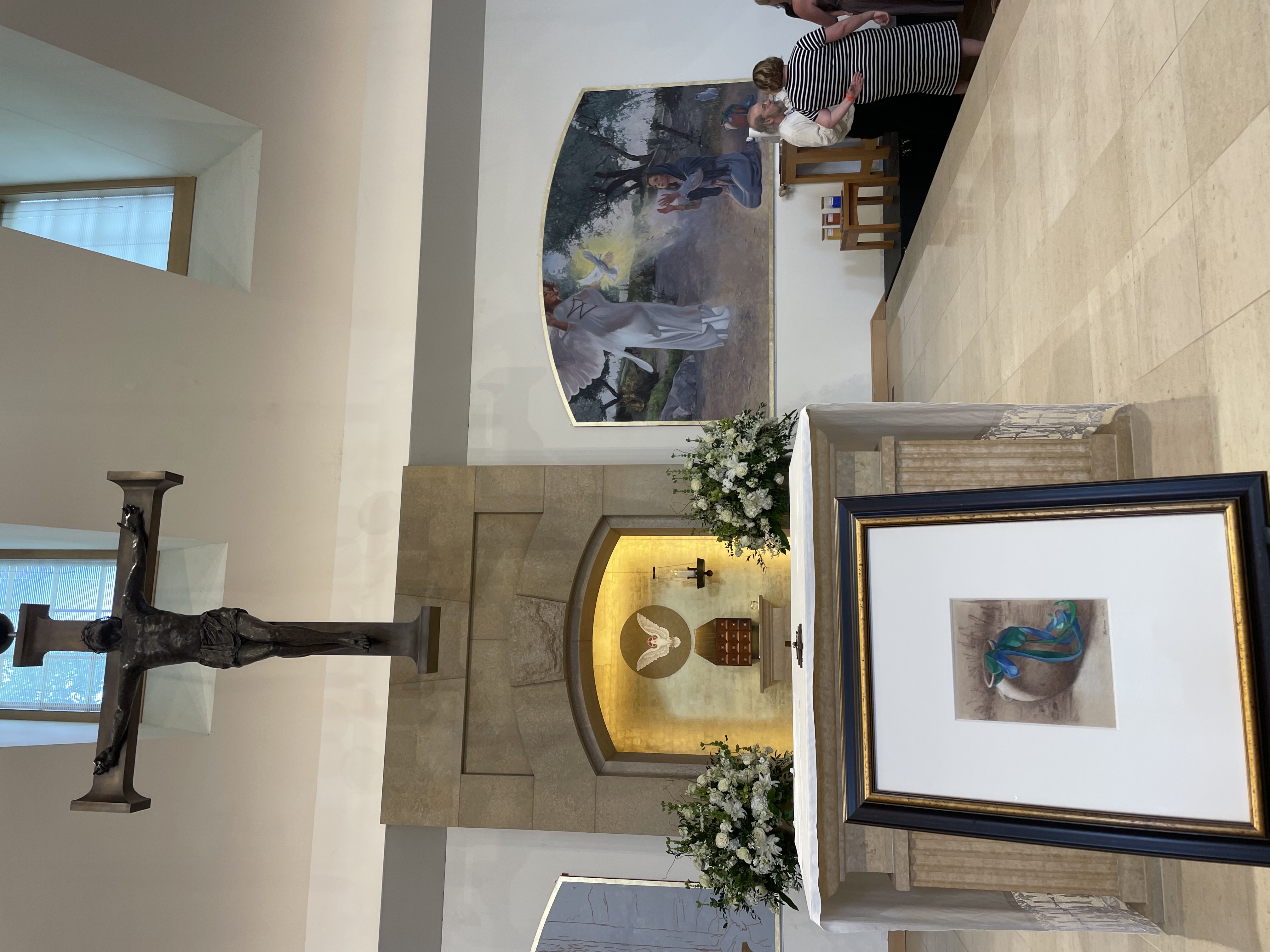
Now, Our Lady of Grace is memorializing that connection in a fresco by Minnesota-based artist Mark Balma.
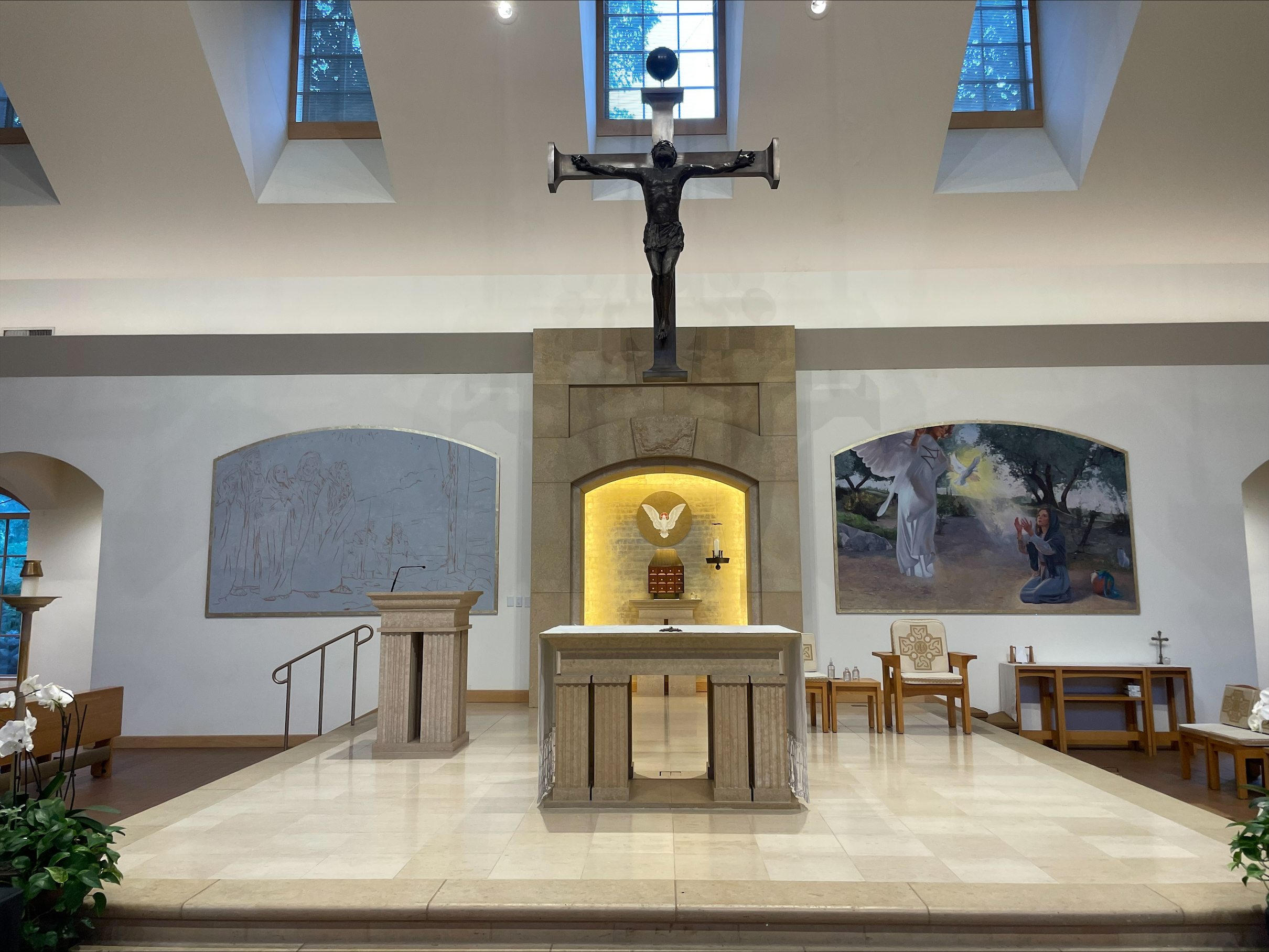
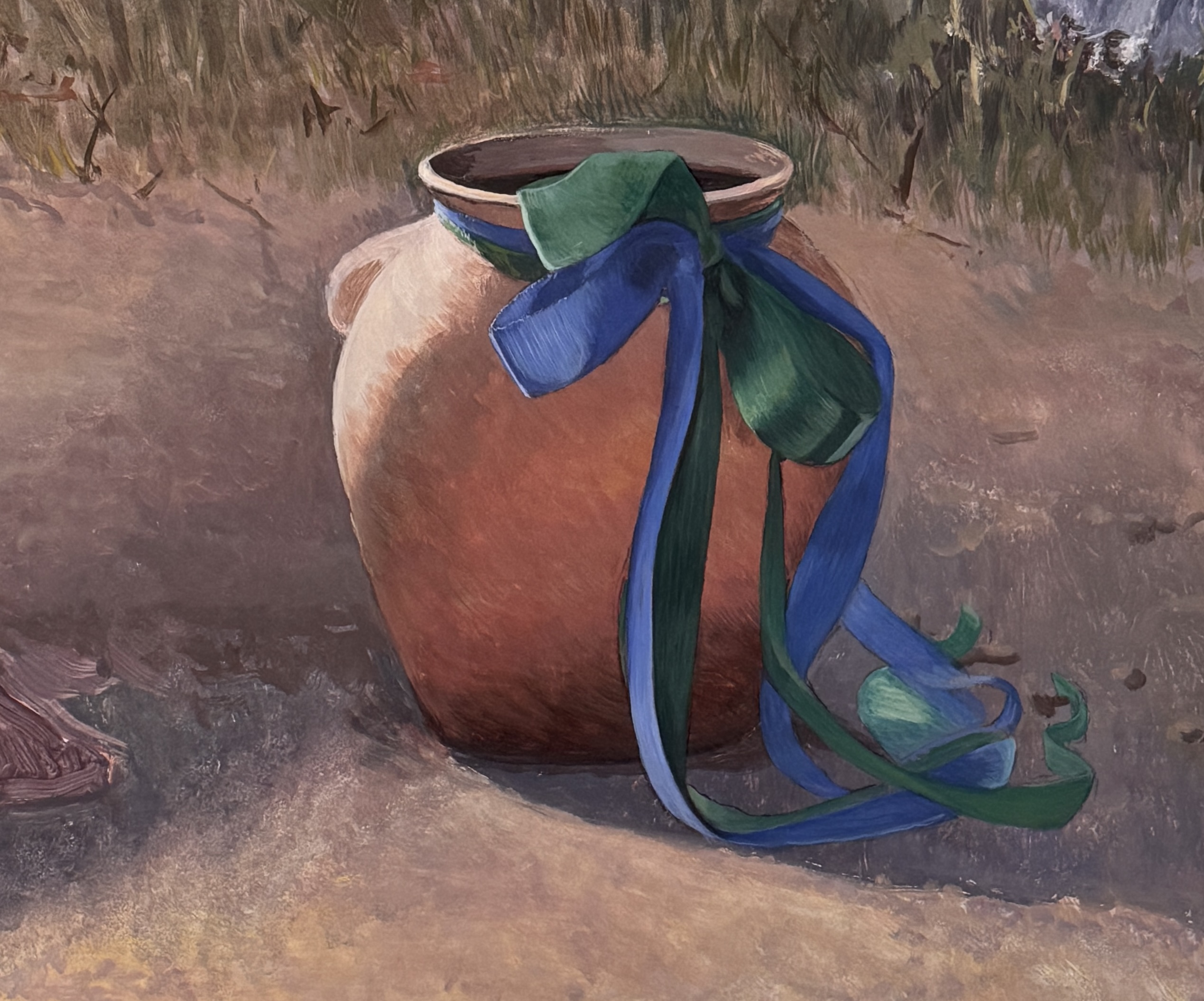
Balma is in the process of painting two large frescoes at the altar of Our Lady of Grace. On the right, already finished, is an image of Mary and the angel at the Annunciation. Green and blue ribbons painted in the bottom-right corner pay tribute to the school and the community.
Our Lady of Guadalupe with the unfinished fresco, left, and the completed Annunciation fresco, right. | Credit: Photo by Rámond Mitchell
“In the centuries-old tradition of Catholic sacred art, images have always carried more than beauty — they carry the prayers, memories, and stories of the communities who create and encounter them,” Rámond Mitchell, director of liturgy for Our Lady of Grace, told EWTN News.
“Sacred art has a unique ability to hold memory, communicate faith, and invite people into prayer,” Mitchell continued.
“Because our two communities had walked so closely with one another through such a difficult time, we wanted to create a lasting remembrance within our own sacred space as a reminder of the people we accompanied, the lives that were forever changed, and the hope and faith that sustained us,” Mitchell said.
Meaning of the ribbons
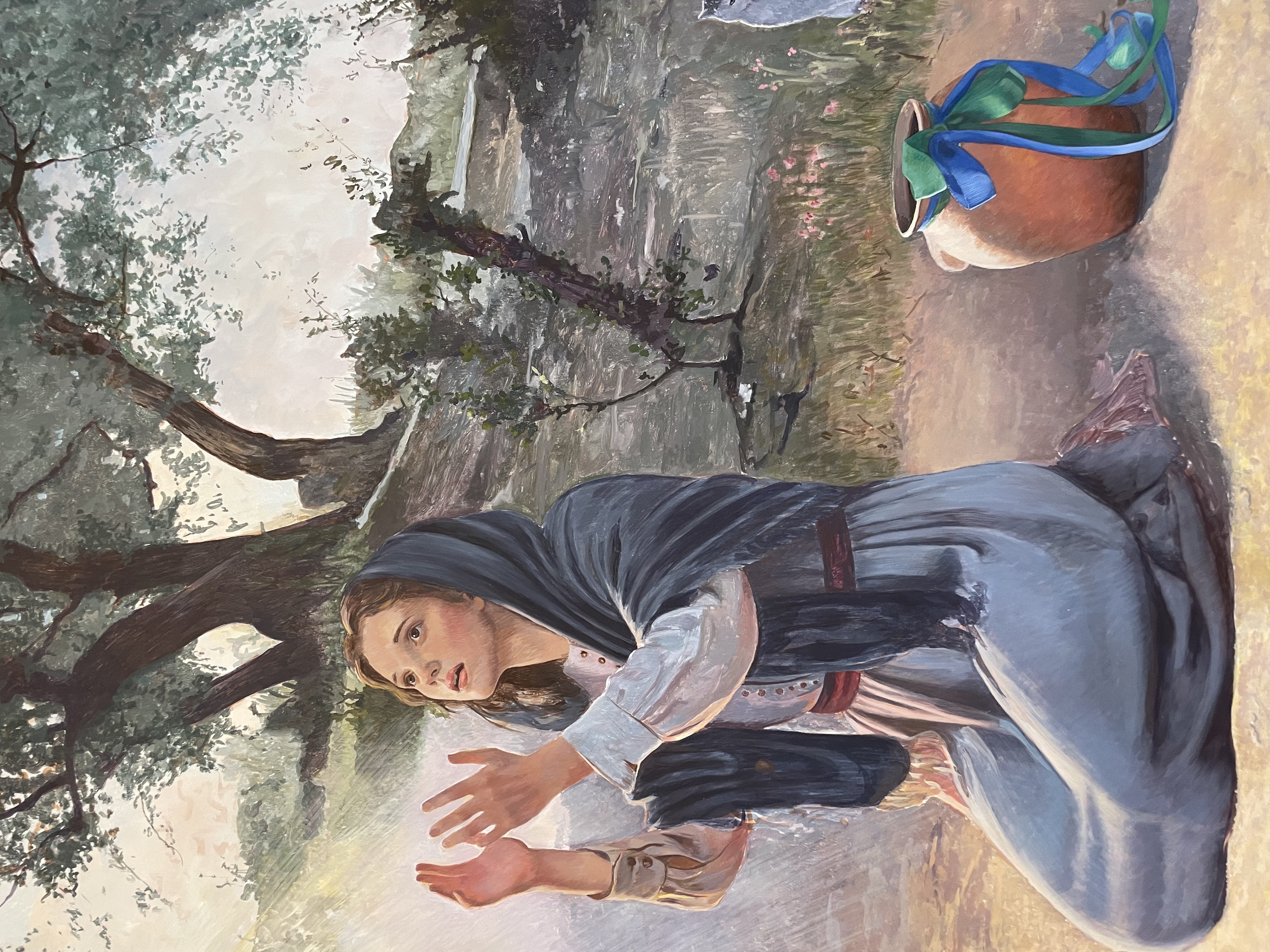
Balma painted blue-and-green ribbons onto a vase within his Annunciation fresco as a tribute to the community of Annunciation Church and School.
Mitchell explained how blue-and-green ribbons were an important symbol to the community after the shooting.
“Following the shooting, people throughout the surrounding community tied blue-and-green ribbons to doors, trees, lampposts, fences, and other places as a visible sign of solidarity and remembrance,” Mitchell said.
“In the fresco, the ribbons are tied around a water jug beside Mary. We wanted the ribbons to feel integrated into the scene rather than separate from it,” Mitchell continued. “The water jug is an ordinary object, much like the ordinary details of daily life that surrounded Mary when the angel appeared to her.”
Close-up of Mark Balma’s Annunciation fresco. | Credit: Photo by Rámond Mitchell
“In that way, the ribbons become part of an ordinary moment that has been transformed by the presence of God and a reminder of the Annunciation community and of the sacredness of their lives and stories,” Mitchell continued.
Balma, who was in the Twin Cities at the time of the shooting, was asked to “find a way to honor the Annunciation community.”
“This tragedy really touched me and I prayed for guidance at how to best honor the children and families,” Balma told EWTN News.
“As a painter I try to find within Scriptures a word or concept that might help me unlock a vision to reveal a fresh way to transform the words into images,” Balma said. “For instance in the Annunciation fresco, the line ‘I am the handmaid of the Lord’ became the focal point of the imagery.”
“My concept for the Annunciation fresco is different than most historical depictions. They usually place an older-looking Mary in a room or cloister visited by Gabriel and the Holy Spirit,” Balma said. “As I studied the Scriptures, I found no reference to her being in a room.”
Balma pointed out that at the time of the Annunciation, Mary “was not that much older than the children” of Annunciation School.
“I imagined the 14-year-old Mary as carrying on her daily chores like going to the well for water,” Balma said. “So full of beautiful symbolism, the water vase then became the place I could attach the ribbons that were placed in the community in remembrance of the children.”
“Water is healing, and tying the ribbons around the vase seemed to be the heartfelt way to honor the children,” Balma said.
A detail in a fresco by Mark Balma pays tribute to victims of the Annunciation school shooting. |Credit: Courtesy of Our Lady of Grace Parish
Sister communities
The community at Our Lady of Grace stepped up after the shooting; it was a tragedy that struck them deeply.
“Annunciation is not far from Our Lady of Grace, and there have long been many connections between our two communities,” Mitchell said. “Some of our parishioners attended Annunciation themselves, while others have children or grandchildren who attended the school. Our teachers knew teachers there, and some members of our parish community were neighbors or friends of students, staff, and families affected by the shooting.”
Study of vase by Mark Balma at the altar at Our Lady of Guadalupe. | Credit: Photo by Rámond Mitchell
“Because of those relationships, the tragedy was felt very deeply at Our Lady of Grace,” Mitchell said. “In the aftermath, our parish and school community was able to offer a place of safety, hospitality, prayer, and support. Our campus became a place where members of the Annunciation community could simply be together when so much of their world had been disrupted.”
The principal of Annunciation was present at the live painting session when Balma painted the ribbons into the fresco, which was a particularly significant moment, Mitchell said.
“Having members of the Annunciation community participate in and witness the creation of the work has made the memorial even more meaningful,” Mitchell said.
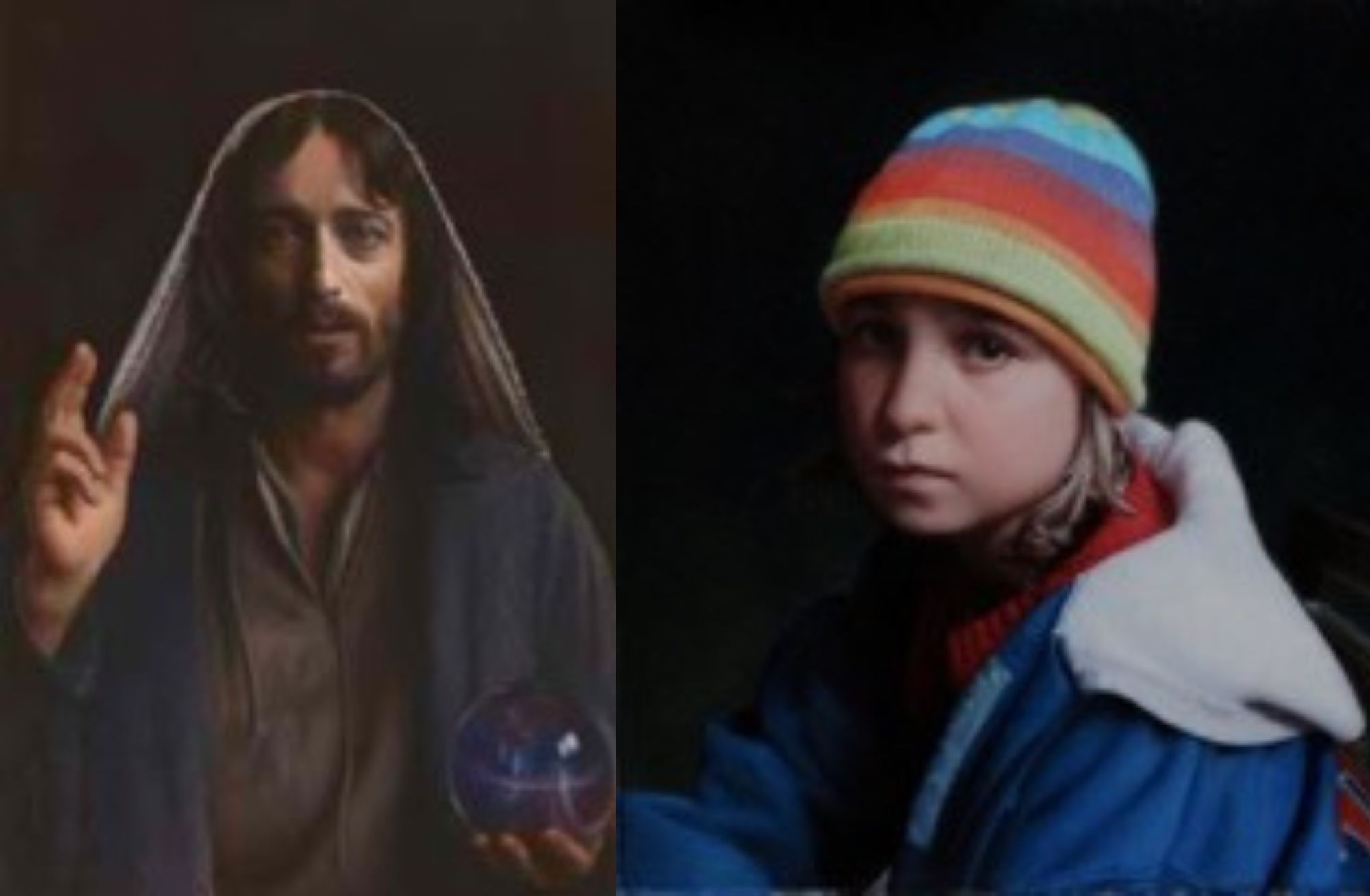
Other artwork by Mark Balma. | Credit: Courtesy of Mark BalmaTriptych by Mark Balma. | Credit: Courtesy of Mark Balma
The Communion Project initiative hopes to repair polarization in the U.S. Church and aid the Church in offering a better and more joyful witness in a divided country, organizers said.
“Unfortunately, too often Catholics and Catholic leaders are acting more like thermometers instead of thermostats,” Jonathan Lewis, mission strategy officer for the Paulist Fathers and co-director of the Communion Project, told EWTN News.
“Weʼre reading the temperature of the room or the culture, instead of setting the temperature according to our values and the truths of the Church,” he said.
“So, part of what this effort is aimed to do is to lower the temperature of division and distrust, starting with those of us Catholics who call ourselves brothers and sisters, who are a real spiritual family,” Lewis said.
“As we approach any election season, thereʼs always a need to help lower the temperature, have more thoughtful conversations, discern our Catholic values,” he said.
The Catholic initiative hopes to heal toxic polarization in the Church by creating dialogue, providing resources, promoting unity through national communication methods, and by aiding local communities to create unification at their level, organizers said. Exact plans are still being formed.
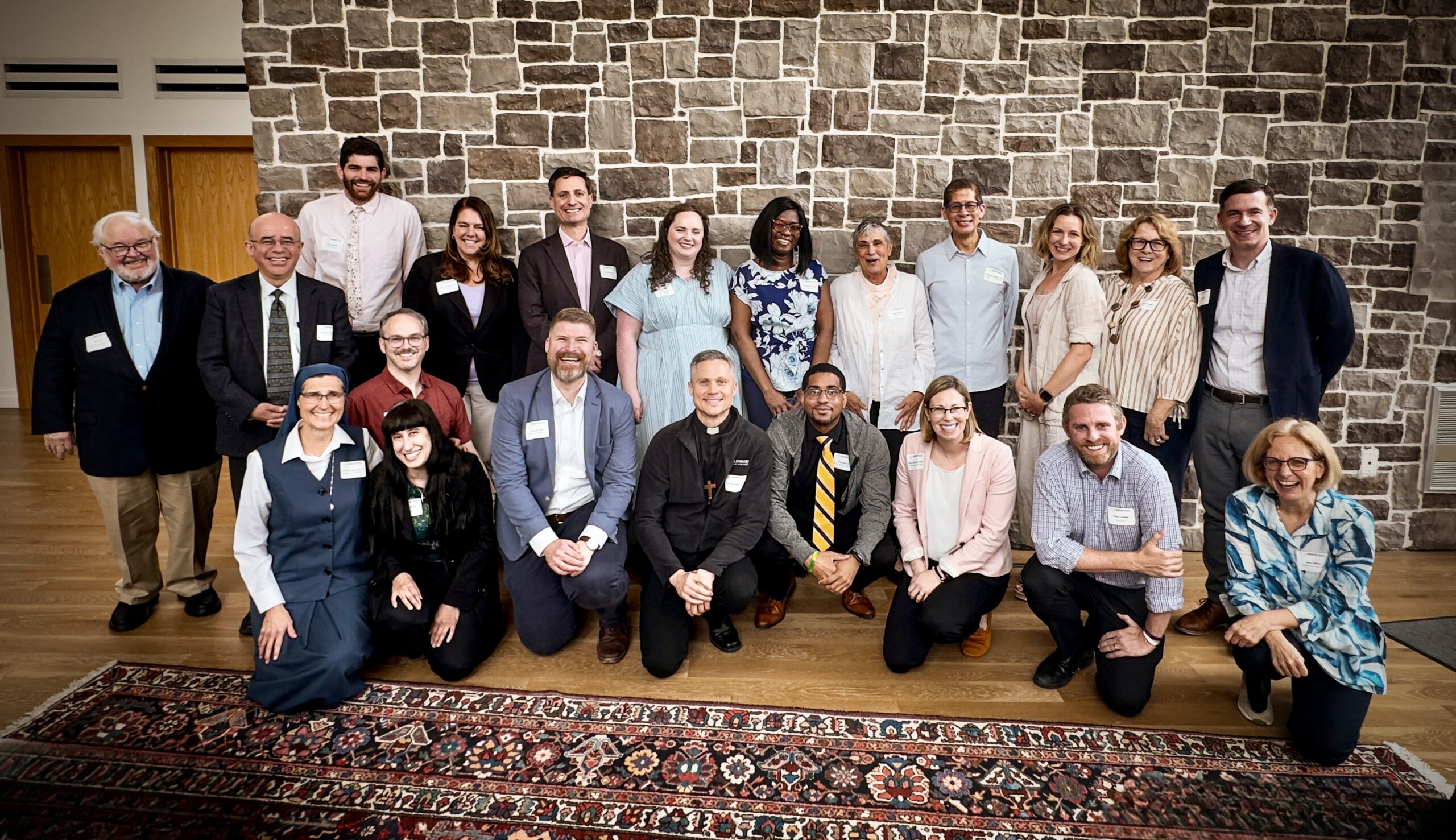
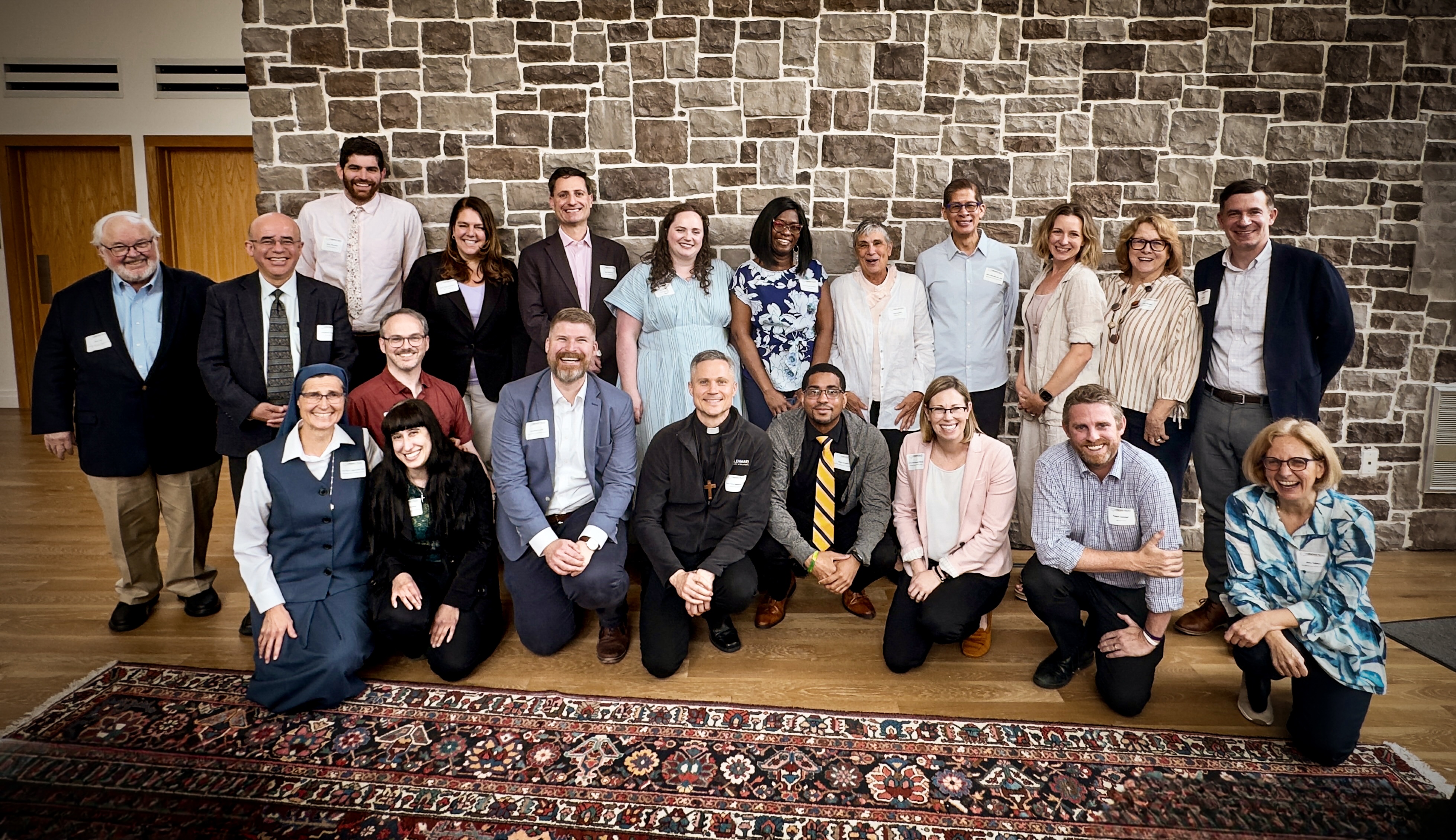
Participants gather at the Communion Project “Building Catholic Communion” national leader summit in Washington, D.C., in June 2026. | Credit: Photo courtesy of Jonathan Lewis
“Weʼre just beginning … and trying to share,” Lewis said. “Weʼre starting with a lot of resources” and “adapting resources that already existed.”
“Then weʼre planning, over the next year or two years, to develop programs for dioceses and organizations and religious communities, students in Catholic schools.”
The movement to start the project began in 2022 at the Paulist Fathers’ general assembly.
“One of the priorities of the Paulists is to read the signs of the times, like the Second Vatican Council tells us to do, so that we can respond in a spirit-filled way,” Lewis said.
At the gathering, they discussed “the realities of the United States and the Church in the United States today that we need to respond to or engage,” he said. “And thatʼs when the topic of toxic polarization emerged.”
"The polarization affecting the U.S. Catholic Church is not merely a matter of policy dispute or partisan loyalty,” said Father Ricky Manalo, CSP, co-director of the Communion Project. “It is a deeply spiritual and relational rupture, shaping how Catholics imagine moral life, celebrate the sacraments, interpret tradition, and remain in communion amid difference.”
“Within Catholic life, polarization is more than disagreement; it is the loss of our capacity to remain in relationship, even amid difference, as one body in Christ,” he said.
Inspired by Pope Francis, the group founded The Paulist Initiative on Polarization as a national partnership of Catholic leaders committed to strengthening unity across political, theological, and cultural divisions.
In 2025, the effort was renamed the Communion Project following Pope Leo XIV’s public commitment to building communion in the Church.
“This is really a priority of Pope Leo,” Lewis said. “In his first inaugural Mass, Pope Leo said his first great desire would be for a unified Church in communion. We really see this as an initiative that is trying to live out the message and the priority of the Holy Father.”
Polarization in the U.S.
When people think of polarization, they usually first think of “left and right politics, Republicans, Democrats,” Lewis said. “And certainly thatʼs one area, but I really see polarization showing up in a lot of different ways.”
“This isnʼt only in public life or in politics, where one might expect, itʼs also in the Roman Catholic Church in the United States,” Lewis said.
It can come up due to division surrounding the liturgy, or cultural or generational differences, but ultimately the goal is to remind Catholics of shared beliefs and values.
The project hopes to help the faithful “see that while people might prioritize different dimensions of our Catholic social teaching, thereʼs unity within that work, and we need to bring people together,” Lewis said.
For example, the Church has a mission to protect human dignity, and “some people focus on ending the death penalty,” while “other people might focus on ending abortion and the work of the pro-life movement,” Lewis explained. “Even if weʼre working in different areas, those areas are not in conflict.”
Connection through communication
The initiative’s resources and formation experiences are organized around three interconnected dimensions: the head, the heart, and the hands.
The project offers a “development of resources that impact our head, meaning our knowledge and our self-awareness,” and “also our hearts in terms of our prayer and discernment,” Lewis said.
There are also resources that impact “our hands,” which focus on “building skills and building relationships,” Lewis said.
“So we want to help organizations and churches work with leaders in particular, to equip them with the resources and programming to help them make a positive impact in their local community,” he said.
The resources can be found in the Communion Project’s “resource library” on its website, which offers a number of options for people to independently utilize or bring to a group. It also offers gatherings and workshops to aid its cause.
In the online library, people can find upcoming events, online courses, prayers for communion, articles, learning sessions to be used in small groups, and a Communion Project podcast.
It also has educational videos provided by outside organizations including Georgetown University, University of Notre Dame, and Boston College.
So far the podcast has included conversations with Archbishop William E. Lori of Baltimore on what happens when the faithful stop seeing one another as brothers and sisters,and University of Notre Dameʼs Tim O’Malley on liturgical division and what it means to live in communion with people.
The first episode featured a conversation “with Tim Busch, founder of Napa Institute, and Father James Martin from America Media, two people who speak to very different parts of the Church … but have developed a personal friendship,” Lewis said.
“It was a great opportunity to put people in the same place to talk about their friendship, of their shared faith, realizing that what unites us is so much stronger than what divides us,” he said.
“What matters most is gathering around a particular Eucharistic table and a particular family table and having hard conversations or sitting in discomfort, because love compels us to do hard things,” Lewis said.
The initiative is only “just beginning in terms of programming and trying to share.” But since starting, “thereʼs a great interest” among local communities wanting to be involved.
“The path of healing begins not in dominating strength, but in shared vulnerability. When both Church and nation dare to move toward one another — wounded yet willing — they may discover that grace lives precisely in the places we thought were beyond repair,” Manalo said.
Michigan Democratic U.S. Senate candidate Abdul El-Sayed is facing backlash after comments he made during a television interview comparing Muslim sharia law to Catholic canon law.
In a heated exchange that aired on the evening of Aug. 24 on Fox News’ “Jesse Watters Primetime,” Watters asked El-Sayed if he thinks opposing sharia — the religious law of the Islamic faith — is akin to “white supremacy.”
Watters pointed to a 2022 speech El-Sayed made for the Oklahoma branch of the Council on American-Islamic Relations where he likened the 2010 passage of a law preemptively banning sharia in Oklahoma to white supremacist “forces” in the state who “destroyed Black Wall Street” and “drove native peoples from their lands.” That law passed with over 70% of the vote but was struck down by a federal judge.
Responding to Watters, El-Sayed said: “I don’t begrudge you your right to practice your faith as you choose. I don’t know why the idea that I could practice my faith as I choose is a problem.”
“Nobody is trying to push sharia law on anyone else,” he continued. “Just like I hope nobody is trying to push canon law on anybody else, because we live in America, where you should have the freedom of your religion.”
He said that with Muslims comprising around 1% of the U.S. population, preemptively trying to ban sharia law “seems to me to be deliberately targeting the Muslim community because theyʼre different.”
Watters and El-Sayed also sparred during the interview on topics including immigration enforcement, environmental issues, transgender medical procedures, taxes, Iran, and the economy.
Difference between canon law and sharia law
Sharia law, which governs Islamic religious practice along with family matters and financial transactions, also deals with aspects of political governance and public law, forming part or all of the political and legal systems in several Muslim-majority countries.
Canon law, on the other hand, regulates only the Catholic Church’s internal structure and functions, including rules about clergy, sacraments, and other ecclesiastical and administrative norms. It does not function as a civil or political legal code for the state or for non-Catholics, as sharia can for Muslims and non-Muslims alike.
Catholics are generally expected to obey the just civil laws of their countries, and canon law does not affect those laws.
Catholic media personality Michael Knowles mocked El-Sayed’s position on X, writing: “[T]he Catholic Church requires ministers to use plant oils in sacraments with the blessings of a bishop, so why shouldnʼt courts allow Muslim men to have four wives?"
Kyle Shideler, the director and senior analyst for homeland security and counterterrorism at the Center for Security Policy, wrote on X that El-Sayed’s comparison between canon and sharia law is “deliberately misleading.”
He noted that sharia law contains elements that conflict with U.S. laws, including “Islamic marriage contracts which conflict with policies on child welfare,” among others.
The Democrat is set to face Republican nominee Mike Rogers in the general election in Michigan this fall.
El-Sayed was born in Michigan to Egyptian parents. An epidemiologist, if elected he would be the first Muslim and the first Egyptian-American elected to serve in the U.S. Senate.
The U.S. bishops raised concerns about proposed federal sponsor-vetting rules, warning that they could further delay the release of unaccompanied migrant children and deepen the harms of prolonged custody.
The U.S. Department of Health and Human Services (HHS) refugee office proposed a rule on June 26 to update how it runs the program for unaccompanied children, including adding tougher background checks for adults who want to take in those children.
In a letter to HHS Secretary Robert F. Kennedy Jr., William Quinn, general counsel for the United States Conference of Catholic Bishops (USCCB), warned that the proposed rule could negatively affect unaccompanied children and their families.
The rule would add more requirements for evaluating sponsors before releasing unaccompanied migrant children from federal custody to them, including proof of identity and income, and background checks for sponsors and adult household members.
The bishops said they’re “grateful” for efforts to ensure “children are placed in safe and stable environments upon their release from government custody” but warned proposed sponsor‑vetting rules exclude otherwise eligible parents and relatives from sponsoring children, the letter said.
The bishops said they fear the proposed rule could keep children separated from their families longer because some parents or relatives “without lawful immigration status” may not have the documents the government would require including proof of identity and income. Under federal law, prospective sponsors may be noncitizens, including those without lawful immigration status.
The bishops warned that without enough flexibility, the rules could block eligible parents and relatives from taking in children, making reunification harder and keeping kids in government custody longer.
Longer custody stays for migrant children
The bishops said they are concerned about a “striking increase in the average length of time children are already spending” in the government’s care, the letter said.
The letter detailed federal data that found an increase in the average length of care over the past 10 fiscal years. Average monthly time in government care has surged in fiscal 2026 even as far fewer children entered the system, according to HHS data.
The average length of care in fiscal 2026 so far is nearly 190 days, according to federal data. The number is up from 2025, when the average stay was 117 days.
Previously, the highest monthly average length of care was 69 days in fiscal 2020. The average decreased during the Biden administration with an average number of 33 days in government care in 2021 and 29 days in 2022.
The bishops’ letter also points to government research indicating that children who remain in custody for prolonged periods of time can experience more stress, anxiety, and behavioral issues. These affects could lead to higher levels of defiance, hopelessness, and frustration, as well as more instances of self-harm and suicidal ideation, the letter said.
Proposed recommendations
“Pope Leo XIV has referred to children as ‘the most vulnerable group within the global movements of migration,’” the letter said.
“Unaccompanied children are particularly vulnerable to human trafficking, domestic servitude, and other exploitative situations. The Church considers it a moral obligation on the part of society as a whole to ensure that all children are protected from such harms, consistent with their God-given dignity,” the letter said.
To carry out this obligation, the bishops said they urge the government “to maintain and ensure reasonable flexibility regarding sponsor suitability requirements proposed.”
They asked that the government allow “deviation from the enumerated list of documents on a case-by-case basis” and allow “waivers for the requirement to collect Social Security or taxpayer identification numbers.”
They added that an “inability to show formal proof of income should not automatically disqualify a prospective sponsor.”
The bishops said while the changes aim to fix problems in how sponsors are vetted, the government’s own poor recordkeeping is one reason those problems exist. A 2024 HHS inspector general report found serious failures in how the agency documented the vetting.
The letter highlighted the need for “post-release services,” including access to legal counsel, enforcement of federal anti-trafficking and child labor laws, and general protection of children after reunification with a safe sponsor.
During his visit to Russia, Archbishop Paul Richard Gallagher, the Vatican secretary for relations with states and international organizations, reaffirmed the Holy Seeʼs position that the conflict with Ukraine “cannot be resolved by military means.”
The archbishop made the remarks during a press conference following his Aug. 25 meeting in Moscow with Russian Foreign Minister Sergey Lavrov.
As the Vatican Secretariat of State reported Tuesday on X, the men discussed “topics of mutual interest and current international issues, with particular attention to the war in Ukraine and prospects for peace.”
During the event, Gallagher stated that “the Holy Seeʼs position is clear: The conflict cannot be resolved by military means,” adding that “it is essential to create the conditions for a political and diplomatic process.”
“To be clear: This war must end,” he said, noting that “it is urgent and necessary to end the hostilities and plan future relations so as not to remain prisoners of the wrongs of the past.”
He stated that “any concrete result in the humanitarian sphere will contribute to alleviating suffering and help restore a minimum level of trust between the parties to the conflict.”
Lavrov expressed appreciation for the Holy Seeʼs openness to dialogue with Russia and its commitment to peace, Vatican media reported. He also agreed with his Vatican counterpart on the need to step up cooperation on humanitarian issues.
On Aug. 26, Gallagher was scheduled to meet with Yuri Ushakov, foreign policy adviser to Russian President Vladimir Putin.
The Vatican representative will return to the Vatican on Aug. 28.
This story was first published by ACI Prensa, the Spanish-language sister service of EWTN News. It has been translated and adapted by EWTN News English.
Comments by Israel’s ambassador to the Holy See, Yaron Sideman, about the West Bank town of Taybeh have drawn attention among local Church leaders after he condemned the violence there but disputed accounts of its seriousness.
Speaking at the Meeting for Friendship Among Peoples in Rimini, Italy, Sideman said that “any act of violence against anyone is unacceptable” and that those responsible should be dealt with according to the law. However, he added that the situation in Taybeh had been “described in far more serious terms than it actually is.”
Sideman maintained that Israel is governed by the rule of law and guarantees religious freedom. He also assured pilgrims that visiting the holy sites is safe and encouraged them to return to the Holy Land.
The Observatory for the Christian Presence in the Holy Land said the ambassador’s characterization was inconsistent with the documented pattern of attacks and incursions affecting Taybeh — the last town in the West Bank with an entirely Christian population.
The incidents have been documented by the local Church and town institutions and followed by diplomatic missions, international media, and human rights organizations.
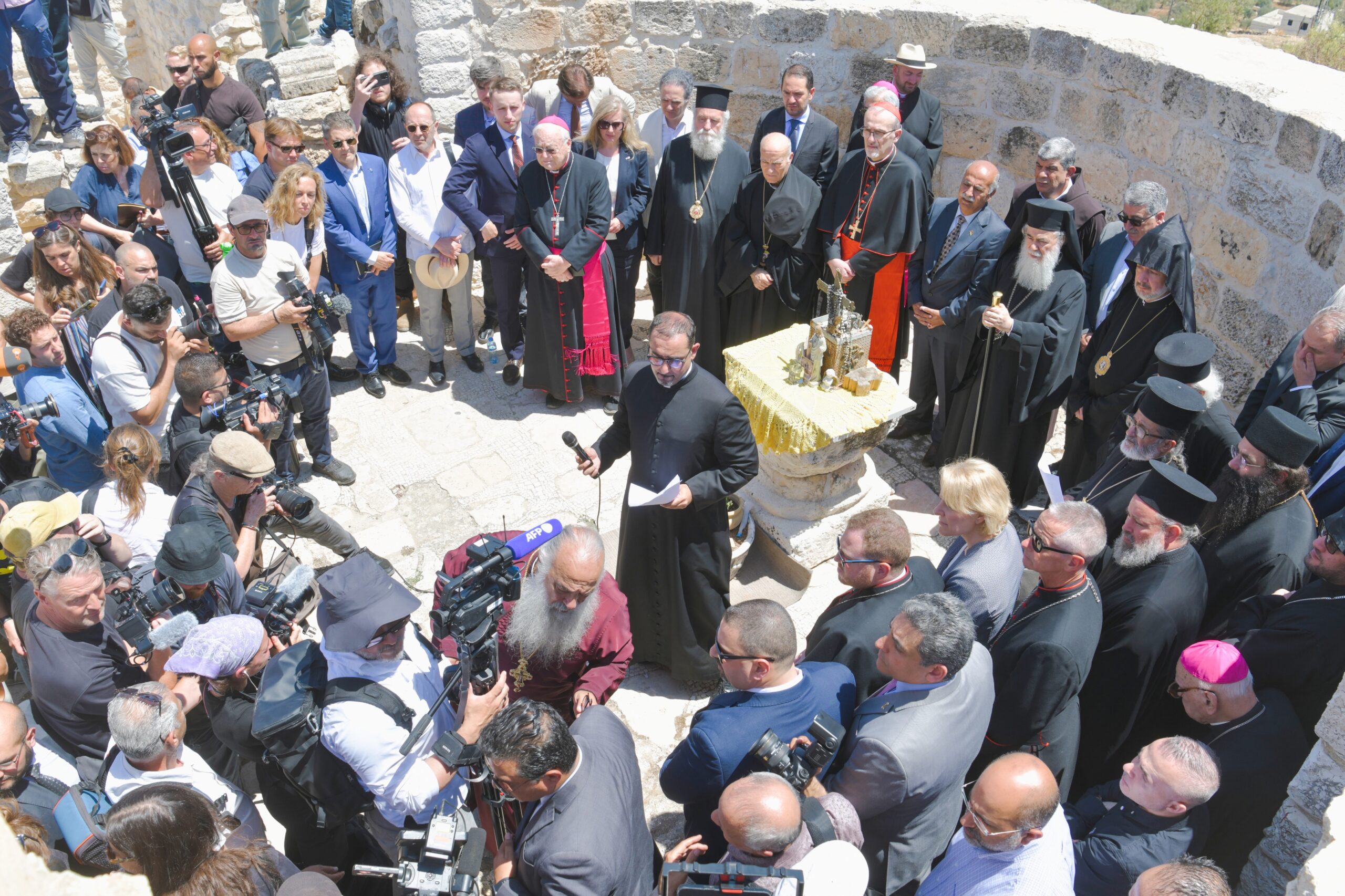
Patriarchs and heads of churches in Jerusalem, accompanied by diplomats and representatives from more than 20 countries, visit Taybeh in July 2025 in solidarity with residents following an escalation of attacks against the town and its religious sites. | Credit: Imad Diab
In July 2025, patriarchs and heads of churches in Jerusalem visited Taybeh alongside diplomats and representatives from more than 20 countries following an escalation of attacks against the town and its religious sites.
Cardinal Pierbattista Pizzaballa, the Latin patriarch of Jerusalem, warned at the time that the violence was leading some Christians to consider leaving the West Bank.
The World Council of Churches reported in August 2026 that Taybeh had received more than 50 diplomatic visits over the previous year, in addition to continued media attention. The organization highlighted residents’ concerns about attacks, incursions, and the effects of the violence on their daily lives.
Father Bashar Fawadleh, the Latin Patriarchate’s parish priest in Taybeh and head of the Observatory for the Christian Presence in the Holy Land, said the issue was not a series of isolated incidents but an accumulating reality affecting residents’ security, access to their land and livelihoods, and ability to remain in the town. He stressed that condemnations of the attacks must be followed by protection, accountability, and concrete measures to prevent their recurrence.
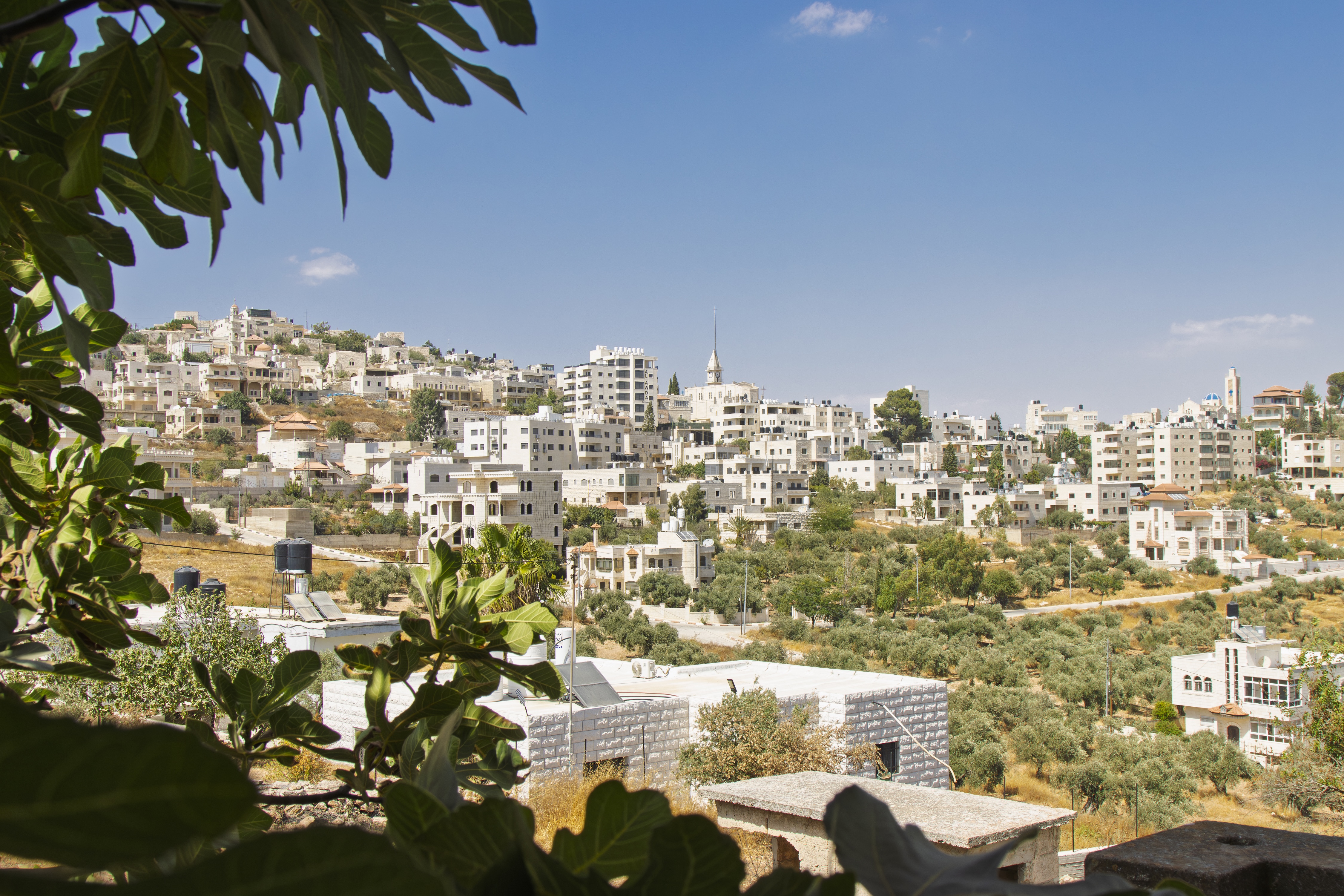
The churches of Taybeh are visible across the West Bank town, whose population is entirely Christian. | Credit: Sanad Sahelia
For local Christians, the official measure underscored the gap between the level of danger recognized by authorities on the ground and the ambassador’s assessment of the situation.
Christians in Taybeh are therefore repeating their invitation: “Come and see.” They are calling on visitors to meet the town’s families, farmers, and young people, listen to their testimonies, and witness firsthand the conditions affecting the Christian community, its land, and its property.