Colombia’s president-elect, Abelardo de la Espriella, went on a spiritual retreat alongside his vice president and various cabinet nominees just one week before the inauguration of his administration.
Accompanying the president-elect on the retreat were his wife, Ana Lucía Pineda; vice president-elect José Manuel Restrepo; and cabinet nominees Jaime Andrés Beltrán, Mauricio Gómez, Iván Cancino, and Elsa Noguera, among others.
“With faith, hard work, and love for our land, we will make the country of our dreams a reality,” De la Espriella wrote.
In another post published on Aug. 2, the president-elect stated that the retreat strengthened his and his team’s faith and commitment “to serve Colombia with humility, responsibility, and love for the nation.”
As part of the event, each participant was given a copy of the Bible, featuring a map of Colombia and the heart of Jesus on the cover. Additionally, a video of Pope Leo XIV was shown.
Beltrán, the country’s incoming minister of labor, stated on his X account that “human effort is futile without God’s help” and that the together the retreatants experienced “a moment of encounter and unity, because we know that the battle ahead is also spiritual. God bless Colombia.”
Meanwhile, the retreat drew sharp criticism from members of current President Gustavo Petro’s outgoing administration. Among them, Labor Minister Antonio Sanguino and Rep. Mafe Carrascal argued that the event undermined the secular state established by the Colombian Constitution.
However, the spiritual gathering was defended by other political leaders, including some outside the incoming administrationʼs political party.
“What stands out is the double standard. When shamanic rituals and Santería were promoted from within the government, many spoke of diversity and respect. Today, a spiritual retreat is portrayed as an attempt to replace the Constitution with the Bible, something that never happened. The Constitution remains the same; the only thing that changed was the president. And, judging by the reaction of some, it seems that is what truly makes them uncomfortable,” López added.
This story was first published by ACI Prensa, the Spanish-language sister service of EWTN News. It has been translated and adapted by EWTN News English.
In response to President Donald Trump’s announcement last week of a deal between the U.S.-led Board of Peace, Israel, and Hamas, the United States Conference of Catholic Bishops (USCCB) called for “intense prayers” for the deal’s success as Gaza faces a worsening humanitarian crisis.
In an Aug. 3 statement, Bishop A. Elias Zaidan, chairman of the USCCB’s Committee on International Justice and Peace, said he is “heartened by news of an agreement which aims at the disarmament of Hamas and Israel’s military withdrawal from the [Gaza] Strip,” calling for “intense prayers for the success of these negotiations.”
“As I previously articulated, as ‘people of faith who deeply care for all our brothers and sisters who live in the land of Christ’s life, death, and glorious resurrection, we cannot lose this opportunity for peace,’” Zaidan continued, calling on the U.S., Israel, and the international community “to facilitate greater amounts of humanitarian and development assistance to the Strip.”
U.S. President Donald Trump announced on July 30 that his Board of Peace had reached a deal for Hamas to fully disarm after nearly three years of war.
“The agreement will be carried out in carefully structured phases,” Trump indicated. “As disarmament is completed, Israeli forces will withdraw, and the International Stabilization Force will work with a new Palestinian police force to take responsibility for Gaza being safe for its residents and its neighbors.”
Though a Hamas official confirmed the disarmament pact the next day, according to the Associated Press, significant hurdles remain, leaving the deal’s implementation uncertain despite U.S. optimism. Israel has not publicly endorsed the agreement and has continued airstrikes, with the AP reporting that at least 17 people, including children, were killed in Gaza over the weekend.
‘People are living with nothing’
“Alleviating the suffering of the Gazan people is not only a vital moral imperative but is also necessary for the consolidation of peace in the Holy Land and the entire region,” Zaidan declared. “This should include restoring educational opportunities for children and youths, jobs, and clean water.”
In an interview last week with Vatican Media, Father Gabriel Romanelli, pastor of Holy Family Church in Gaza, begged for humanitarian aid for the region, emphasizing that “when people say the situation here is disastrous, believe me: It really is disastrous — if anything, it calls for an even stronger word.”
“People are living with nothing,” Romanelli said. “Reconstruction is certainly essential, but so too are all the basic necessities of everyday life.”
Former U.S. ambassador and EWTN contributor on Middle East issues Alberto Fernandez told EWTN News that while the deal is “extraordinarily shaky from both sides,” he is hopeful because “the situation of the civilian public in Gaza is so dire,” Fernandez said. “Gaza is destroyed, people are traumatized, there’s no economy.”
‘Deeply conflicting agendas’
“The agreement on paper is a positive, concrete step in the right direction,” Fernández said, pointing out that the issue of which side will act first “is a small part of a bigger problem. There is no trust between the two sides, and deeply conflicting agendas.”
In Zaidan’s statement, the bishop wrote that the “agreement’s successful implementation, as its principles statement says, has the potential of finally providing the Palestinian people with a ‘credible political path that achieves self-determination and Statehood.’ This would be a major milestone.”
Hamas said Friday that it would give up its heavy weapons, including rockets, contingent on Israel’s withdrawal from Gaza and the creation of a Palestinian state, the latter condition one Prime Minister Benjamin Netanyahu’s government strongly rejects.
“The two-state solution among the Israeli public is moribund,” the ambassador continued. “We’re not there at all in a situation where they will compromise. They’ve become more intransigent. That’s a reality.”
“It’s not time for celebration, but time to recognize there is small progress being made, and huge obstacles remain,” Fernandez said.
‘Serious security concerns’
Doron Spielman, a spokesperson for Netanyahu, told the AP on Aug. 2 that Israel has “serious security concerns” surrounding the deal. Spielman said Israel believes Hamas is still committed to building up its military, not demilitarizing, and said Israel would not withdraw from the Gaza Strip, where it controls more than half the territory, before Hamas disarms.
“Disarming means physically giving up the weapons. Nothing less,” he said.
“Our assessment is that if we redeploy before Hamas is truly disarmed, it will quickly expand its presence throughout Gaza, rebuild its terrorist infrastructure, once again threaten Israeli communities, and seek to carry out another Oct. 7-style attack,” Spielman told the AP.
After an Aug. 3 meeting between Netanyahu and Board of Peace High Representative Nickolay Mladenov, the Board of Peace said on X that the meeting was “constructive and detailed” and that Israel and the board “share a common understanding of the ultimate objectives” — specifically, the complete decommissioning of Hamas’ weapons in Gaza and the transition to civilian governance.
The social media post clarified that the withdrawal of Israel Defense Forces (IDF) beyond the Yellow Line would occur only after Hamas’ weapons decommissioning is complete, including “light weapons, heavy weapons, and the tunnels alike.”
The “Yellow Line” refers to the demarcation line separating the area under IDF control from the rest of Gaza.
Zaidan concluded his statement acknowledging the “extreme challenges inherent in this ongoing peace process” but called on all to “entrust the hearts and minds of the negotiators to the maternal care of Our Lady of Wisdom, that she may illumine and enliven their efforts to finally achieve peace in those sacred lands.”
This story was updated at 12:03 p.m. ET on Aug. 4, 2026, with the information on the meeting between Benjamin Netanyahu and Board of Peace High Representative Nickolay Mladenov.
A new podcast called “Stand Firm and Be Strong” with Father of Mercy Wade Menezes launched Aug. 3 on EWTN+. The new podcast is aimed at, and intended for, men. Menezes is especially inviting them to learn how to live and strengthen their Catholic faith, one day at a time.
Menezes is already familiar to EWTN audiences from his many appearances on various shows across the network. The numerous televised and online series he has produced and hosted include “The Gospel of Life vs. the Culture of Death” and “The Ten Commandments of Catholic Family Life.”
He is also familiar to EWTN audiences as a guest on various episodes of EWTN’s “Mother Angelica Live” and “Life on the Rock,” during which he discussed such topics as the sanctification of marriage and family life, vocations, and the sacred liturgy.
He is the current host of EWTN Global Catholic Radio’s “Open Line Tuesday.”
Menezes has also served as the chaplain-in-residence at the Shrine of the Most Blessed Sacrament of Our Lady of the Angels Monastery in Hanceville, Alabama.
Prior to the launch, and while inviting listeners, Menezes spoke about the podcast with the National Catholic Register, the sister partner of EWTN News.
Register: Father Menezes, please tell us how your “Stand Firm, Be Strong” audio podcast came to be.
Menezes: This 200-day audio-only podcast grew out of the popularity of my men’s daily devotional book of the same title that was published in 2024. The book is a six-month spiritual manual for men. Each day has a different spiritual or temporal (secular) topic that is followed by three components: a Scripture quote, a saint quote, and a short meditation written by me. Both the book and podcast titles are based on 1 Corinthians 16:13, wherein we read: “Be watchful, stand firm in your faith, be courageous, be strong.”
Will the podcast follow the same daily devotional format?
The “Stand Firm, Be Strong” daily audio podcast is related closely to the book’s own format. For example, each of the 200 days’ prerecorded short audio podcasts correspond directly — and in proper order — with each of the book’s own 200 days’ topics. But whereas the book is designed to be a five- to 10-minute exercise each morning for men as they begin their day, each podcast episode is itself under five minutes in length and highlights the most pertinent points of the book’s topic for that same day.
What does it mean to be a man of God? | Credit: EWTN Studios
Why did you decide on a daily podcast?
EWTN pitched the idea to me to do a “Stand Firm, Be Strong” daily audio podcast precisely because the book has done so well with male readers. The book has proven to hold men’s attention as a committed daily exercise to strengthen their spiritual and temporal lives. I hope that a podcast will likewise strike at the male heart and spark the male intellect to help men live their vocations more fully and committedly — whether single, married, widowed, or as a consecrated brother, deacon, priest, or bishop.
Please share a highlight or two that listeners will hear about in opening episodes.
The timely wisdom offered by the “Stand Firm, Be Strong” podcast will help prepare men to put on the armor of God for their daily struggles and help them withstand trials at home and at work. It will also help them to kindle their prayer life, better utilize their talents, and order their priorities in daily life. It will also help guide men in imitating Christ in guarding their senses and responding to temptation — all important factors when navigating life in this third millennium.
Please share or give a hint of what will be a few topics or themes you will be dealing with that are certainly relevant.
During the course of the first 20 [days] … for example, episodes will cover the following topics [titled]: “The Committed Man of God,” “Strength and Fortitude,” “Having No Duplicity or Guile,” “Shunning Sin and Vice,” “Fraternity and Brotherhood,” “The Demands of Virtue and Aiming Toward Salvation,” “The Virtue of Diligence,” “The Truth,” “The Need for Humility Amid Trials and Successes,” “Accountability,” “Confidence,” and “The Athlete of God.” Other podcast episodes include such topics as the “Importance of Eucharistic Adoration,” “Sanctifying Grace,” “Filial Fear of God vs. Servile Fear of God,” and the “Importance of Fostering Devotion to the Blessed Virgin Mary and St. Joseph.”
Why are these topics essential for today?
Navigating third-millennium society and culture can be challenging. These various topics are essential today because we live in a day and age that tragically downplays authentic masculinity and what that means. Whether it’s the prevalence of television commercials that frequently make the husband or man look like a buffoon to the misguided direction being offered by various movements within the so-called “manosphere,” what it means to “be a man” in the authentic Christian sense is greatly attacked today.
But as Dr. Tim Gray of the Augustine Institute reminds us: “The virtues give us a blueprint for being a man. Indeed, the very term ‘virtue’ comes from the Latin word for man, ‘vir.’ For the ancients, to be manly was to be virtuous. The term ‘virtue’ in Latin (‘virtus’) signifies power, strength, and ability. Thus, the virtues are habits that give us the power to act in a manly way, with strength sufficient to do what is right. Without virtues we will neither be godly nor real men. Virtues are the building blocks of character, and without them our moral lives will eventually collapse under the pressures of the world.”
Will your podcast appeal to, and be relevant to, men of any age?
Just like the book, the podcast is designed to appeal to any male that is 14 years of age and older. In other words, if a guy is a high school freshman or older and is serious about living his faith authentically and well in the midst of the modern world, he will benefit from hearing this podcast. This fact, in turn, will hopefully inspire him to “go deeper” with the “Stand Firm, Be Strong” book as a daily devotional that he commits himself to for a six-month period.
Will men learn to live a balanced life through your podcast?
Yes, listeners of the “Stand Firm, Be Strong” podcast (as well as those readers of the book) will learn to live a balanced life — both spiritually and temporally. For example, a main theme peppered throughout the podcast and book is “faithfulness to daily duty” and what this means and why it is a main ingredient needed when a man strives for sanctification and advancement in the spiritual life according to his particular vocation and state in life. In short, a man is called to fulfill his duties with diligence and balance — all the while serving God and others.
What is the ultimate goal and hope for this podcast?
To help men of all vocations and states in life realize that they are called to become saints “right where they are.”
Both the podcast and book are designed to help jump-start and strengthen a man’s spiritual life over the course of six months. The podcast’s daily topics and accompanying meditations are power-packed, offering achievable resolutions and prudent advice to help a man attain his spiritual and temporal goals in everyday living.
Will it improve their families, too, in any way?
Yes. Just as there is crisis in today’s culture regarding authentic masculinity and what that means, the same can be said regarding the sanctification of marriages and family life. The “Stand Firm, Be Strong” podcast can help a married man become a better husband and father. For single men, it can help them to become a better brother, brother-in-law, co-worker, etc. This same goes for married men and those men in the consecrated religious state, of course.
Themes in the podcast call upon all men to provide, protect, and lead — again, according to each one’s particular vocation and state in life.
Based on the popularity of your book, do you think the podcast will have a similar appeal?
I believe the podcast will appeal to listeners because it will help the individual man to grow in knowledge of his faith and gain strength for the spiritual battle. These, in turn, will help the individual male listener to become more fully the man he was created and meant to be in God’s plan for him.
Is there anything else you would like to say or add about the podcast?
The “Stand Firm, Be Strong” podcast launched Aug. 3 and is posting a new episode daily over the course of 200 days. It is available from EWTN+, a free, ad-free digital streaming platform by the Eternal Word Television Network that offers on-demand Catholic podcasts, movies, live TV and radio, and original series.
Also, for those listeners of the “Stand Firm, Be Strong” podcast and/or readers of the book who are so interested, there are three additional “Stand Firm, Be Strong” merchandise items available from EWTN Religious Catalogue (EWTNRC.com). These include a “Stand Firm, Be Strong” T-shirt, travel mug, and 12-in-1 pocket knife. Along with the podcast and book, these items make great gifts for men who are striving to increase their faith and grow in holiness.
I would encourage all women — such women could include, of course, a wife, mother, sister, sister-in-law, friend, or girlfriend — who may stumble across the podcast, book, or three items of merchandise to think about sharing these with the men in their lives so as to encourage them to “stand firm [and] be strong.”
This story was first published by the National Catholic Register, the sister partner of EWTN News, and has been adapted by EWTN News.
When most Catholics think about Carmelites, they picture friars and nuns in full habits. If they love St. Teresa of Ávila, St. John of the Cross, and St. Thérèse, they may even think about their teachings on prayer, the “Dark Night of the Soul,” and the “Little Way.”
But like many of the so-called mendicant orders — which have traditionally relied on charity to survive — Carmelites have an order of laypeople who meet monthly in community and who develop a deep life of prayer over many years. They also study and discuss the writings of the Carmelite saints so they might become more like them and therefore more like God.
The call to Secular Carmelites
In 2003, in a move meant to signal that the laity is of equal importance to the priests and nuns who make up the first and second orders, the Order of Discalced Carmelites (OCD) — which is St. Teresa’s reform group — changed the name of its lay order from Third Order Carmelites to Secular Carmelites (OCDS). Not everyone in the order truly understood what that meant in practice.
That changed during the first world meeting of OCDS Carmelites in the history of the order, held July 23–26, 2026, in Ávila, Spain, where the leaders of the Order of Discalced Carmelites called upon their almost 33,000 Seculars to fully embrace their vocation as coequal members of the order.
This historic call was enthusiastically embraced by the more than 900 Secular Carmelites who attended from almost 80 of the 92 countries in which Secular Carmelite communities are present.
“In the past, people thought, ‘Whatever the priests say.’ Seculars were more like followers whereas now, they are called to be leaders,” said Father Ramiro Casale, OCD, general delegate to the OCDS, in an exclusive interview with EWTN News.
“The Fathers are called to the sacraments, preaching, teaching, accompanying people. Carmelite nuns are cloistered so they offer their lives for Christ and the Church and the world. [But] the Seculars have access to so many places where the friars and nuns are not present. They have biological children and are very engaged in their work and in different apostolates in the Church, and they are very well-prepared. I tell them that they have a voice and that voice needs to be heard,” Casale said.
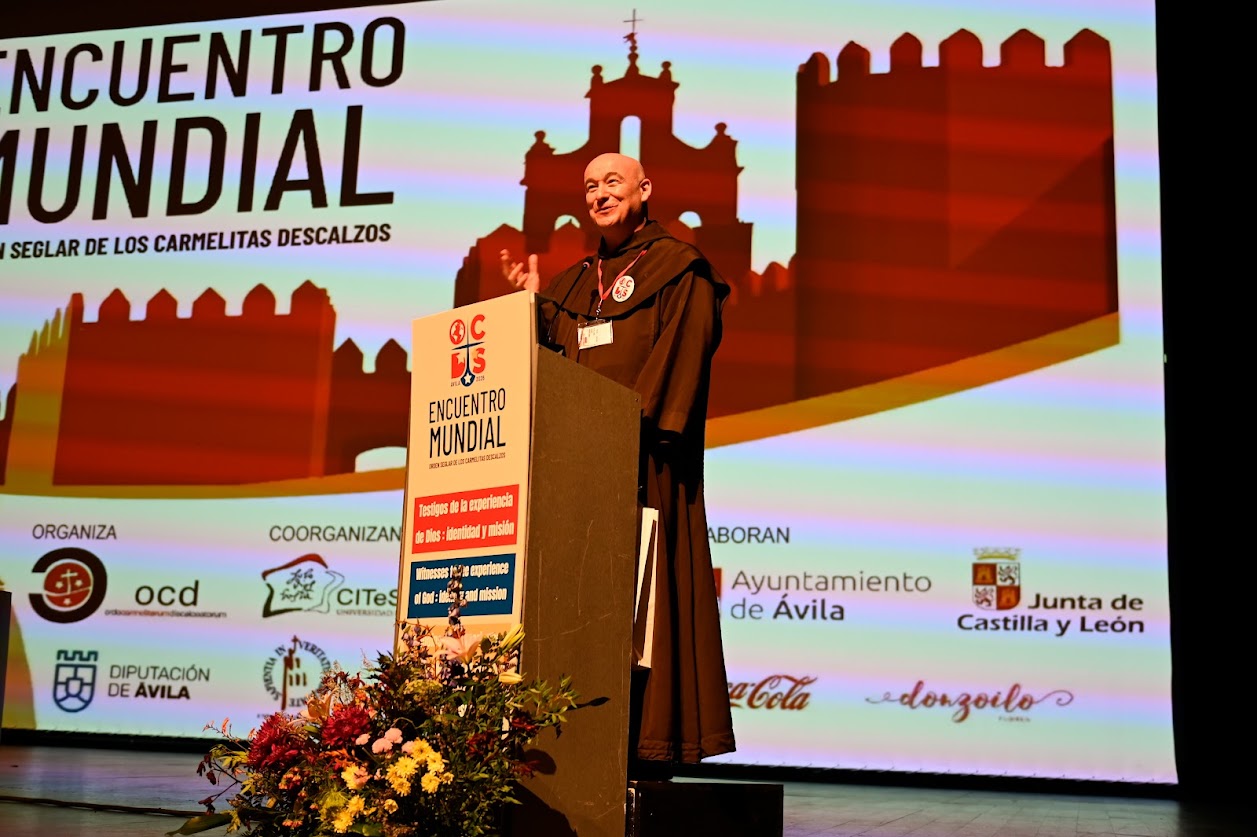
Father Ramiro Casale, OCD, general delegate to the OCDS, speaks at the first world meeting of OCDS Carmelites in the history of the order, held July 23–26, 2026, in Ávila, Spain. | Credit: Photo courtesy of OCDS World Encounter/Gonzalo Gonzalez de Vega Pomar
Of course, this call to the laity is partly due to the fact that Secular Carmelites outnumber Carmelite priests by more than 8 to 1. This imbalance is not limited to the Carmelite order. The Secular Franciscan Order outnumbers its friars by roughly 25 to 1, while Lay Dominicans outnumber their friars by more than 26 to 1.
Another major factor is also at play.
“We need only look around us to see that the world is still on fire,” Ramiro said. In a world in which consumerism, secularization, self-promotion, and a thirst for power rule, the Secular Carmelite order needs “a greater awareness of its professional and vocational identity … [a] rich prayer life … [and a] growing cooperation with the entire Carmelite family. We live in a time where human beings — even if they do not often express it in words — want to find a path that gives meaning and direction to their lives. They thirst for us.”
‘Everyone is a house for God’
Father Miguel Marquez Calle, OCD, superior general of the Order of Discalced Carmelites, explained in a one-on-one interview with EWTN News that the charism of the Carmelite order is what Carmelites lovingly refer to as “a call to ‘The Interior Castle.’” That is a reference to St. Teresa’s masterwork in which she compares the soul to a mansion with many rooms, all of which lead to the center of the castle, which is where God dwells.
“We offer an invitation to live this richness of the presence of God in the soul of everyone, and to share it as St. Teresa did, with a joy that is contagious. We show the world that we are not empty, everyone is a house for God, and that gives life meaning.”
The temptation, even for Carmelites, is to become divided like the world is divided. But Calle said the remedy is to be like St. Teresa, who was able to handle criticism with humor because she was not full of self but full of God. In fact, when a group of friars wanted St. Teresa’s partner in reforming the old order, St. John of the Cross, removed as head of the friars, he famously joined his detractors and signed the petition requesting his removal, saying he was not worthy of the position.
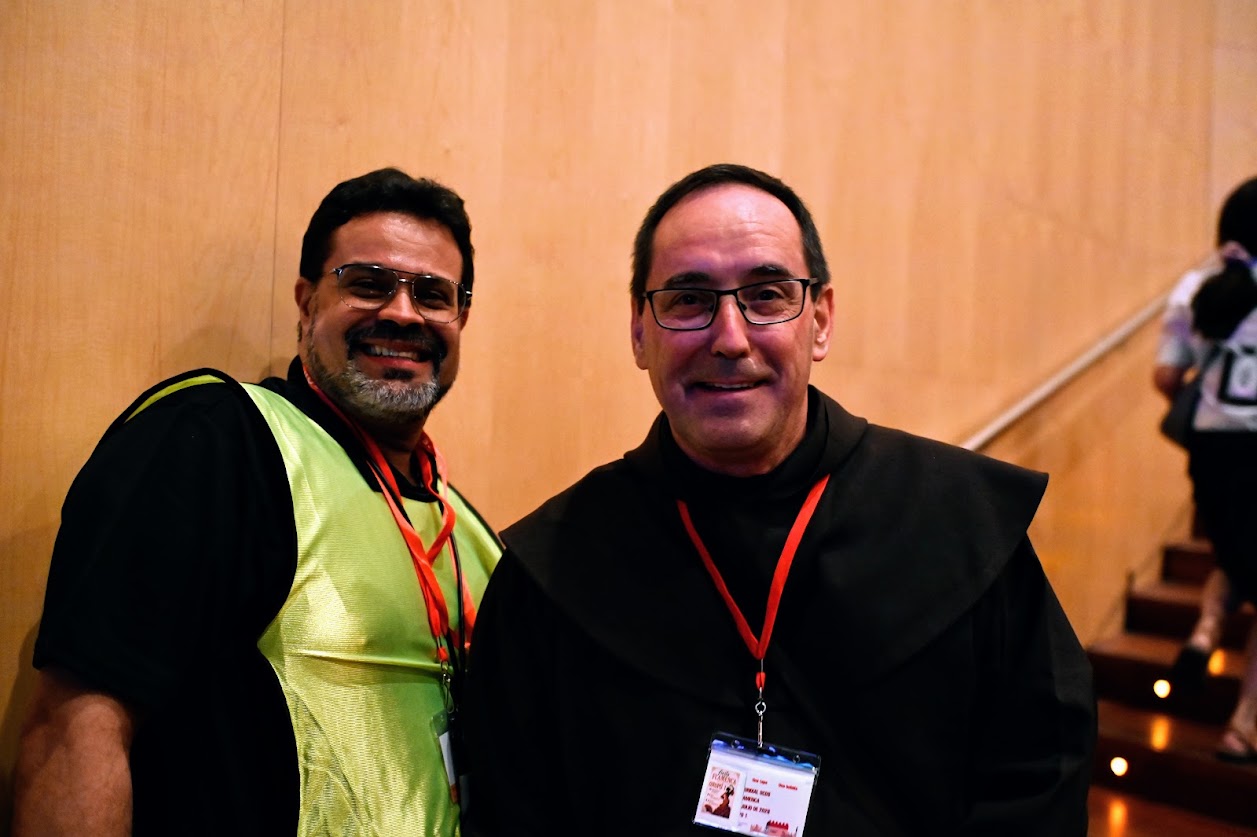
Father Miguel Marquez Calle, OCD, superior general of the Order of Discalced Carmelites, right, with a volunteer at the first world meeting of the Order of Discalced Carmelites (OCD) July 23–26, 2026. | Credit: Photo courtesy of OCDS World Encounter/Gonzalo Gonzalez de Vega Pomar
Meeting highlights call to prayer, service, and leadership
The world meeting (“encuentro mundial”), appropriately titled “Witnesses to the Experience of God: Identity and Mission,” was a call to communion, to a deeper prayer life, and to leadership. In recent years, the secular order has been making important inroads into the leadership role to which the order is explicitly calling them.
With the largest population in the Western world, the United States boasts approximately 6,000 Secular Carmelites, the largest of any country, although Asia has the largest number of Seculars on any continent. A collaborative effort to standardize and unify various regional formation practices into a single national program by and for OCDS Carmelites began in 2017, was officially approved in early 2023, and was released and distributed by ICS publications on March 1, 2024.
The program consists of a handbook for formators and six official formation manuals covering all stages of formation. In the works are two manuals for those who are definitively professed and a manual for spiritual assistants. The program was presented at the world meeting by Angela Vel from the Washington Province of the Immaculate Heart of Mary and may become a model, or perhaps the basis of a similar effort, for OCDS communities around the world.
“I think that we have lost sight of our apostolate in many communities,” said Ramon Gras, who is also a member of the Immaculate Heart of Mary community in the Washington Province. “One of the things that we have been reminded of this week is that we, as Secular Carmelites, have access to the world in ways that the other two branches of the order do not. The national formation program is not just something to fill our head with facts, but it’s something to help us to develop our spirituality and to give us a renewed sense of purpose.”
He added: “Our formation program tells us that our saints say prayer and service are two sides of the same coin, so we need to review what we are currently doing in our apostolates and determine whether we are serving the current needs of the Church.”
When asked for examples of successful community apostolates, Casale highlighted two that he finds especially impressive.
“There is one in Venezuela called Nagoanagoa,” he said. “Thatʼs an Indian name. It was formed by medical doctors who began to go to the jungle to help people with no access to healthcare. It was something so attractive to others that many other people began to join them: engineers, people who knew about agriculture, dentists — so many people wanted to help. But everything began in the OCDS. Thatʼs something really beautiful, and itʼs happening still.”
The other example is a project in Portugal called Casa de Comunión. “The interesting thing about this is that they have a community of nuns, a community of friars, and two communities of OCDS and they share life together,” Casale explained. “They don’t live together, but they do things together. They organize retreats, they organize talks for young people and for marriages, and they help in the local diocese, so this is an example of collaboration between the three branches of the order.”
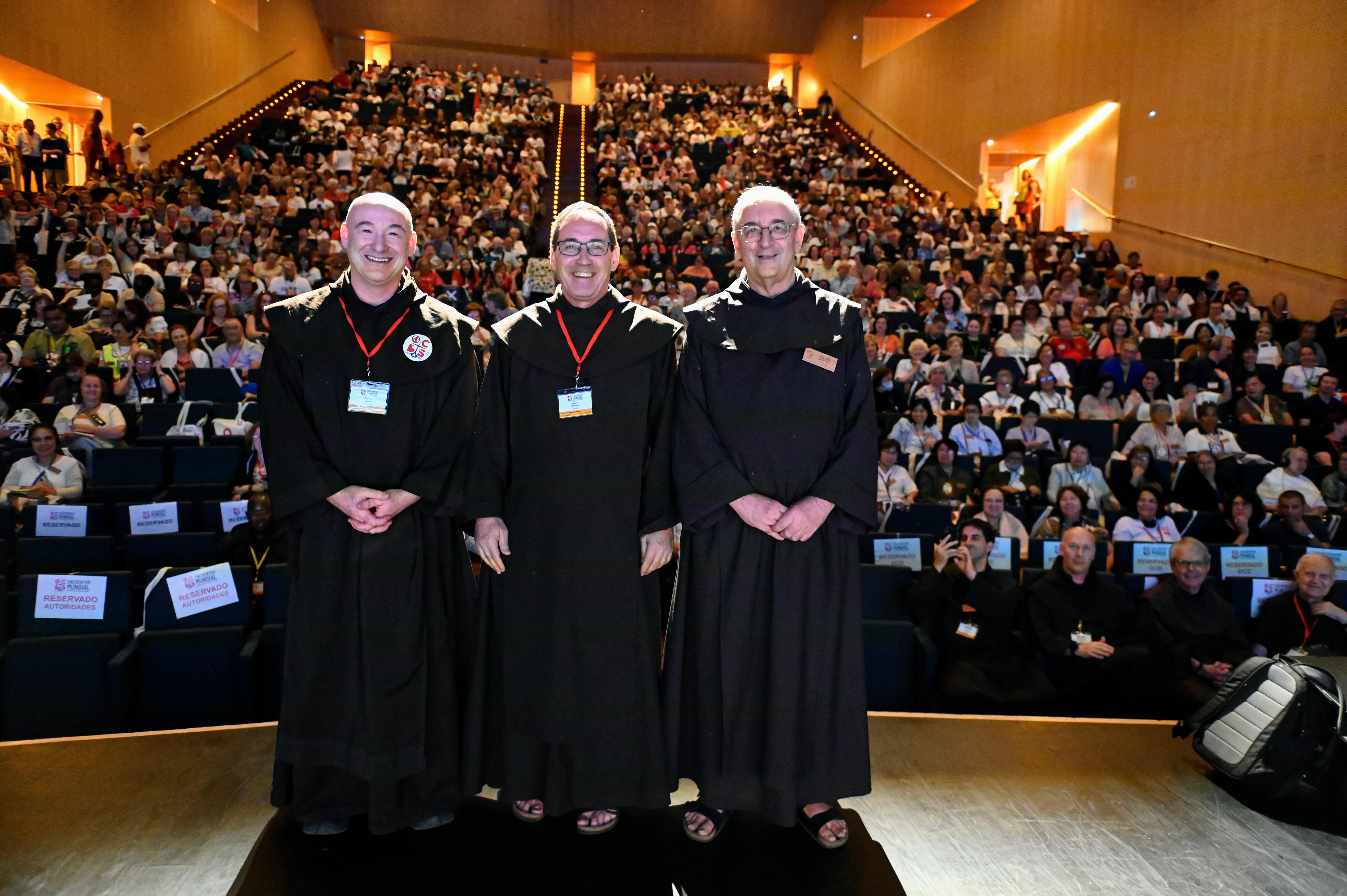
Left to right: Father Ramiro Casale, OCD, general delegate to the OCDS; Father Miguel Marquez Calle, OCD, superior general; and Father Agusti Borrell, OCD, definitor general, at the 2026 OCDS World Congress in Avila, Spain, held from July 23–26, 2026. | Credit: Photo courtesy of OCDS World Encounter/Gonzalo Gonzalez de Vega Pomar
‘We are a family’
The three branches don’t just work together; they enjoy one another’s company via various forms of recreation and by sharing the joys and challenges of the work. As Casale said: “We [the Discalced Carmelites] are a team; we are a family, and we need to help each other.”
Esther Tijerina, a community-minded Carmelite from Texas, came to the conference despite some difficult health challenges over the past year. She had her own epiphany regarding the order’s call to fraternity and community during the conference. Tijerina reached out to one woman who rebuffed her not once but twice. “It took three days, but she walked with me and she smiled and she apologized for how she had been on that first day,” Tijerina said. “I learned not to give up because I donʼt know what her load is; I donʼt know what her baggage is.”
Susy Stokes, immediate past president of an Alabama community, focused on another important aspect of the meeting: “By being in Ávila, the birthplace of my order, I received a much deeper sense of belonging to an international family and appreciation for my vocation. The bonus gift I received was a much better understanding of the role of the friars and spiritual assistants.”
Indeed, as superior general of the Order of Discalced Carmelites, Calle kicked off the conference with a talk on the history of the Secular Carmelites.
In it, he explained that the friars were originally heavily involved in every aspect of the community, even down to determining who had a vocation to join the secular order. That deep involvement had to change because there are simply not enough friars to do such work.
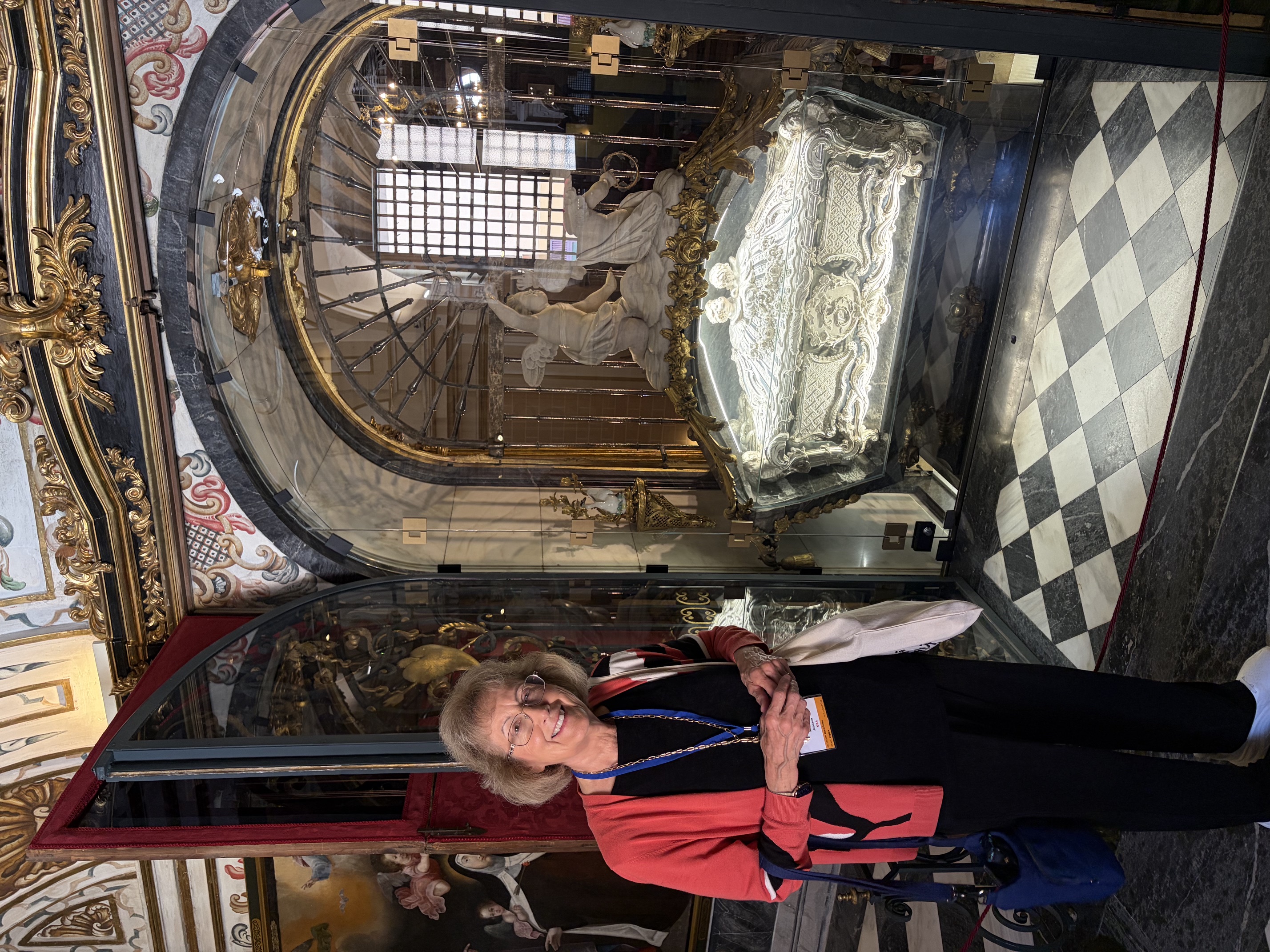
Michelle Johnson stands beside the tomb of St. Teresa of Ávila located at the Carmelite Monastery of the Annunciation in Alba de Tormes, Spain. Along with the tomb of St. John of the Cross in Segovia, this is arguably one of the Carmelite order’s most revered sites. | Credit: Photo courtesy of Michelle Johnson
Despite this, or maybe even because of this, fraternity within and outside of the order has become even more important. During the four-day meeting, many had the opportunity to visit important sites in the life of St. Teresa such as the convent in which she spent much of her life and her birthplace. One Secular said she was amazed to see that St. Teresa had placed a large painting of St. Francis in the local convent. When asked about this, Calle made a surprising statement.
“I am 30% Franciscan,” he said, smiling at the reaction of the questioner. “My preparation for solemn profession was to go to Assisi in Italy without money, asking for food, and sleeping on the road for one month.”
When one of his brothers insisted it was dangerous to do this without money, he promised him he would bring money, so he put one peseta (this was before the euro) in his pocket.
Calle said he discovered: “When you ask for food, people give food.” Where did he sleep? “In the countryside, in a gas station, in the forest.” He had a backpack and a sleeping bag. He said the experience set him up for 13 years of pilgrimages to the Holy Land and parts of Spain, traveling 170 kilometers (almost 106 miles) every year for 13 years. Through this, he learned the importance of fraternity and communion, which he is asking of Secular Carmelites — indeed, the entire order — today.
In addition to many important talks, which were translated into many languages, the four-day conference included excursions to nearby Carmelite sites, a flamenco celebration, and a visit to a special exhibit of St. John of the Cross celebrating his 300th anniversary as a saint and his 100th anniversary as a doctor of the Church.
The closing Mass at the Ávila Cathedral ended with more than 30 priests on the altar, a magnificent choir, and more than 900 Carmelites raising their voices in the song that ends every Carmelite meeting around the world: the Salve Regina, a salute to the Queen of Heaven and Earth and of the Carmelite order under the title of Our Lady of Mount Carmel.
As Calle said, in this divided time, the spirituality of the Blessed Mother is of central importance. Just as she was literally filled with the presence of God, her Carmelite order witnesses to the fact that “the presence of God is in every soul without exception. The world needs to understand that everyone is a home for God.”
For more information about the Secular Carmelite Order in the U.S., visit ocdswashprov.org (Eastern Province), thereseocds.org (Central Province), or ocds.info (Western Province). Information about communities worldwide can be found at https://www.carmelitaniscalzi.com/en/.
From Anjar, the Lebanese town known among Armenians as “Little Armenia,” the voices of young Armenian Catholics rose this week “with one heart in Christ” (Acts 4:32).
The gathering, held from July 28 to Aug. 3, brought together participants from Europe, the Middle East, and North America. More than simply a youth event, it offered a space for prayer, service, fellowship, and a renewed understanding of what Christian witness means in an increasingly complex world.
Catholicos-Patriarch Raphaël Bedros XXI Minassian of the Armenian Catholic Church presided over a festive Mass on Sunday at the Monastery of Our Lady of Bzommar. In his homily, Minassian noted that the participants came from different countries and dioceses, bringing with them diverse cultures, experiences, and hopes, yet they had gathered under the banner of "Christ the Savior.”
The patriarch said the people of the Middle East live amid recurring crises and suffering while continuing to long for peace, freedom, and dignity. The young people’s gathering, he said, sent a clear message: The final word belongs not to pain and division but to hope, love, and fraternity.
Minassian stressed that the gathering should not remain merely a cherished memory but should become a “spark” that continues to burn in the participants’ hearts, inspiring them to draw closer to others, build peace, and serve with love.
He urged the young people to take initiative in their churches and communities, to offer words that unite when others are divided, and to extend a helping hand when others withdraw. Faith, he emphasized, is not simply an inheritance from the past but a calling that must continually be renewed.
Concluding his homily, the patriarch explained that the gathering sought to entrust a new generation with the deposit of faith that the Church had preserved through adversity. It is now their responsibility, he said, to live that faith and pass it on to those who come after them.
Fadi Beshkenji, general coordinator of the Armenian Catholic Youth Union of Lebanon, which organized the event, told ACI MENA that participants came from France, Luxembourg, Italy, Canada, Iraq, Jordan, Armenia, Lebanon, and Syria.
The Syrian delegations included young people from Aleppo, the country’s northeastern Jazira region, Damascus, and Kessab in the Latakia countryside.
Beshkenji explained that the program was organized around three principal areas. Its spiritual component included talks on the gathering’s theme, drawn from Acts 4:32, as well as reflections on the participants’ relationships with God, others, and themselves.
The service and humanitarian component included a visit to a home for the elderly, activities with the Society of St. Vincent de Paul, and service and beautification projects at the Armenian Catholic church and complex in Anjar.
The gathering also included pilgrimages to the Shrine of St. Charbel in Annaya, the Shrine of Our Lady of Lebanon in Harissa, and the Monastery of Our Lady of Bzommar, where participants visited the monastery’s museum and viewed its historical collection, including items associated with St. Gregory the Illuminator and St. Ignatius Maloyan.
A cultural evening also gave each delegation an opportunity to present the heritage of its country.
Beshkenji said Lebanon was chosen to host the gathering because it is a “country of message” and should remain a source of hope for young people in Lebanon, the Middle East, and around the world.
He encouraged participants to trust that Christ accompanies them and to use their talents in the service of their churches and communities.
This storywas first published by ACI MENA, the Arabic-language sister service of EWTN News. It has been translated and adapted by EWTN News English.
Following the recent vandalism at the famous Marian shrine of Medjugorje in Bosnia and Herzegovina, authorities arrested alleged perpetrator Bartłomiej Włodzimierz Krakowiak, a 31-year-old Polish national with a troubled past.
Krakowiak was apprehended in the village of Cerno, near Ljubuški, shortly after the incident on July 28. A local man, Ivan Vučić, recognized and detained him before handing him over to the authorities. Bosnian judicial authorities have charged him with damaging or destroying religious property. He could face a prison sentence ranging from six months to five years.
A hearing was held July 30 in which the prosecution proposed ordering the accused held in pretrial detention “due to the risk that he might flee or repeat the offense,” according to the local outlet Avaz.
The prosecutor reported that Krakowiak “showed no remorse during questioning” and stated that, through the attacks, he sought to demonstrate “that the visions are a fraud and that the whole thing is a fabrication.” The Polish national declined legal representation during the hearing and, according to local media, said he wanted to remain in prison.
A difficult childhood
“Bartek,” a common diminutive of his name in Poland, has his own conversion story from Medjugorje, which he recounted in a film released in 2024: “Called 2” produced by the Powołany Film Foundation.
Sharing his testimony in the film, Krakowiak recalled coming “from a family with a history of alcoholism,” a disease that afflicted his great-grandfather, his grandfather, and his father. “Because of that, from a very young age, I thought it was normal,” he noted.
His father was “very aggressive” and abused him. He began to feel “more at ease” on the streets, so he started running away from home. Amid an environment of poverty and deprivation of all kinds, his father’s beatings grew worse, until eventually his mother decided to move out.
“I also became a very peculiar person because I took out all the anger I carried inside on others. I wanted people to suffer as much as I did,” Krakowiak said.
At the age of 18, he met a girl who soon became pregnant. Krakowiak said that this pregnancy made him feel “unconditional love for the first time,” marking a turning point in his life. Sadly, his girlfriend suffered a miscarriage in her sixth month.
“That was when I realized that what my father had said — that I didn’t deserve love, that I would never achieve anything, that I was worthless — was true. That was when I sank even deeper into alcoholism, drugs, and violence,” he remarked.
Amid despair and resentment toward God and his family, Krakowiak decided to take his own life: “I was deeply in debt and suffering from depression and anxiety. I knew I was going to do it that day, and I remember the moment I opened the window and the fear left me.”
‘I am with you’: A journey to Medjugorje
Standing at the window, no longer afraid of the suffering he would leave behind upon his death, Krakowiak received a notification on his phone: A rapper had released a new song titled “I Am With You.”
The song was about the love of Jesus Christ and his closeness during times of greatest difficulty. “That I would overcome this, that he loves me, fights for me, and desires me. It was such a powerful experience — so powerful for me — that I closed the window, and a great hope simply filled my heart that something would change,” Krakowiak recalled.
Afterward, having surrendered himself to God’s will, asking only to be made happy, he heard the word “Medjugorje” deep within himself, though he could not quite describe how. He then understood that he “had to go there” and that, through that journey, God would transform his life. Without delay, he began preparing for the trip of over 800 miles.
“During this trip, I experienced a powerful presence of God. I simply felt his physical presence, that he was with me. During that time, extraordinary miracles occurred in my life, and I saw things I had never seen before,” he said.
“I remember passing the Medjugorje sign and, for the first time in my life, feeling proud of myself. For the first time in my life, I felt proud of who I was and what I was. And although I still had much to process and experience, I simply came to know the living God, the living Christ, who exists and who rose from the dead,” he added.
After returning from Medjugorje, he dedicated himself “to evangelizing, serving, and bringing people closer to God,” striving to show them that “he loves them, fights for them, and that there is hope.” By the time the film premiered, Krakowiak stated that he had been married for five years and was then a father for three.
The shrine restored in record time
The Medjugorje shrine reported on July 28 that the statue of Our Lady that was vandalized on the hill of the alleged apparitions has already been completely restored, thanks to the work of the parish community and members of the Cenacolo Community.
In addition, the outdoor altar of St. James the Apostle Parish was also restored and activities at the shrine have resumed.
“The shrine remains open to all pilgrims. The prayer program is taking place regularly, and all the spaces are being rapidly cleaned and prepared so that they can once again be a place of prayer and encounter with the Lord through the intercession of the Queen of Peace,” the parish office reported in a statement.
“In a special way, we invite all faithful to respond to this event in the way that Our Lady has been teaching us for over 40 years in Medjugorje: with prayer, fasting, and forgiveness,” the parish stated.
The Vatican has approved the “spiritual experience” taking place in Medjugorje, without recognizing the supernatural nature of the alleged apparitions.
This story was first published by ACI Prensa, the Spanish-language sister service of EWTN News. It has been translated and adapted by EWTN News English.
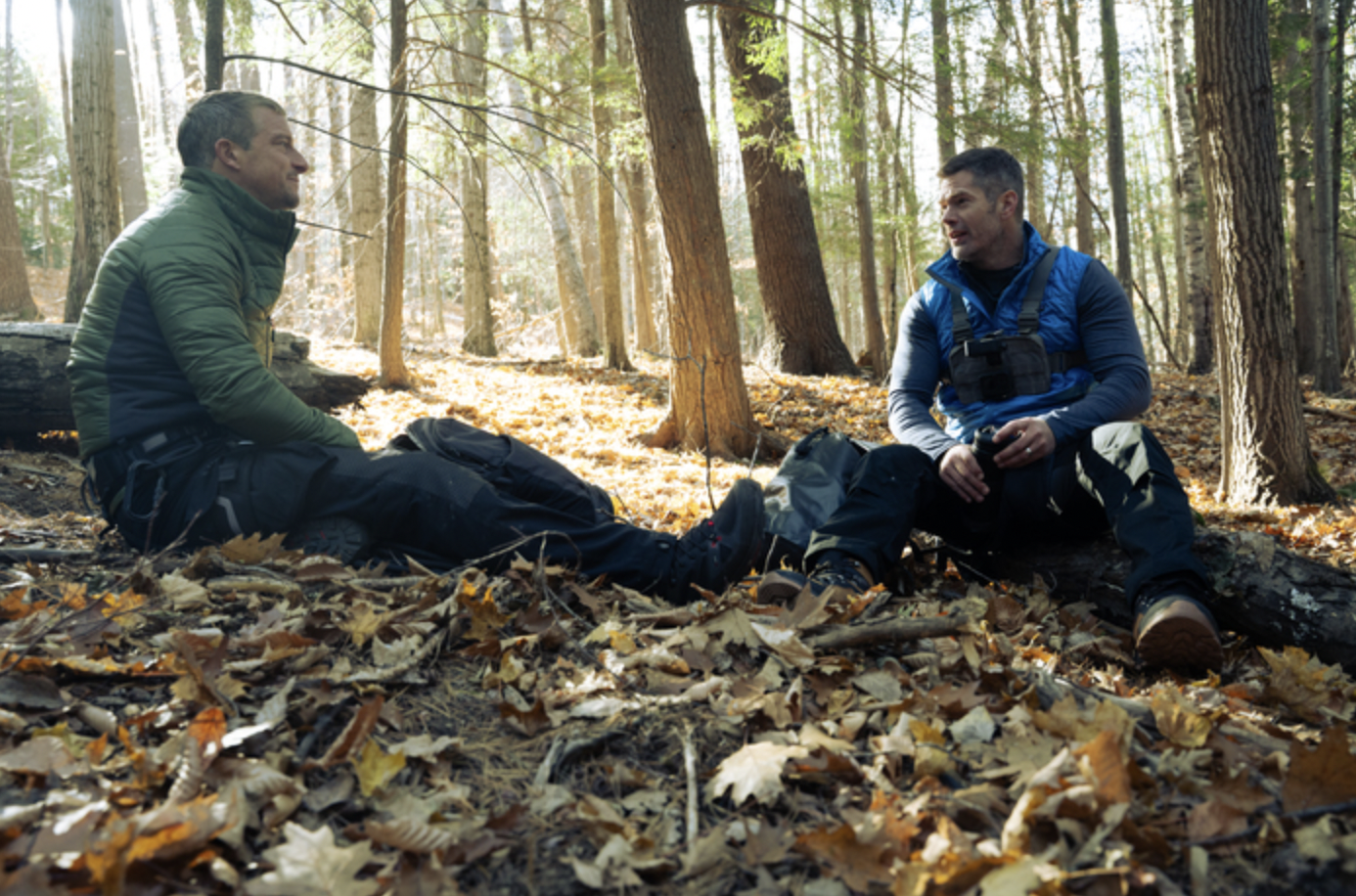
Several cast members from the hit series “The Chosen” will be trading in the sets of Jerusalem for the wilderness of America as they leap from planes, scale cliffs, eat scorpions, and zip-line over canyons in “The Chosen in the Wild with Bear Grylls.”
The new survival series is the latest project from 5&2 Studios — the production company behind “The Chosen.”
The show will include six episodes featuring actors Jonathan Roumie (who plays Jesus in “The Chosen”), Noah James (Andrew), Paras Patel (Matthew), Luke Dimyan (Judas Iscariot), Elizabeth Tabish (Mary Magdalene), and creator, writer, and director of “The Chosen,” Dallas Jenkins.
Each individual will join renowned adventurer and survivalist Bear Grylls — known for his series “Running Wild” on FOX — on an adventure in the wild where they will be pushed beyond their comfort zones while exploring what makes them who they are and share personal conversations about their lives and their faith.
Some of the places visited in the series include Utah’s Castle Valley and Canyonlands, the Great Basin Desert, the Colorado River, the Ausable River, and the Adirondack Forest.
The series premieres on Aug. 9 on Prime Video.
Grylls spoke to EWTN News in an interview and shared that he has always been a fan of “The Chosen,” with the series having a great impact on his own faith.
“I was one of those fans. I loved it,” he said. “But I kind of always felt that, unlike big movies or big TV shows normally where you sort of also know the characters as human beings, so few people actually knew much about the actors. Jonathan Roumie, for example, who plays Jesus, what has actually that journey been like for him?”
When speaking with Jenkins, the two thought it would be great to do a spinoff show “where we take some of these [actors], and we actually introduce you to what theyʼre like as human beings, what their journey has been like playing these characters, [and] how itʼs impacted their lives.”
He added: “I think what I wasnʼt ready for is just what a huge effect this TV show has had on all of their lives personally. And that was a really emotional sort of beautiful part of the whole ‘Chosen in the Wild’ series for me.”
Dallas Jenkins, creator, writer, and director of “The Chosen,” in the wild with Bear Grylls. | Credit: Photo courtesy of Prime Video/Amazon MGM Studios
Reflecting on the episodes featuring the cast members of “The Chosen,” Grylls shared that the episode with Roumie is the one that “in terms of an experience of an episode — out of all the ‘Running Wild’s’ and everything Iʼve done — I actually would rate that for me the one that will always stay in my heart.”
“Heʼs such a sort of icon of a guy, and his portrayal of Jesus is so powerful. Iʼm a man of faith, and at the start of every episode I do, I always say a prayer, like, ‘Jesus be with me,’” he recalled. “And on this one, it was about as close as youʼre going to get, you know. So, I kind of really wanted to honor that and do it well.”
He added that Roumie “was wonderful” and “incredibly honest,” talking about “things heʼd never spoken about before,” which was a “great privilege” for Grylls.
“I think out of all the roles an actor is going to play, that one is going to mess with your head and heart a lot, because you know at heart, youʼre not that guy. And he was really open about that. I think that conversation sat with him. There was a lot of emotion there,” he shared. “I mean, I donʼt want to kind of over-spiritualize it, but you could feel a presence there. And both of us said that afterwards, [we] said that was kind of weird, but good.”
When asked why the wild sparks so many deeper, more vulnerable conversations, Grylls said: “The wild opens people up. And as you know, you go into the outdoors, and you hike, and you face a few fears, and you cross a river or climb a cliff, you get to see the real people.”
He highlighted that each cast member who participated arrived “ready to be honest and to talk about their journey and how this show, ‘The Chosen,’ has impacted their lives.”
“I really value that honesty. And the wild is a great space — it gives it the space to breathe and to have those sorts of conversations on a level you never normally have,” he said.
Grylls said he hopes viewers will take away a strong “connection with the characters they love” after watching the series.
“This show is made specifically for those hundreds of millions of people around the world who love this TV show and are invested and care about the characters and just want to know more. And I think thereʼs no better way to get to know people than going on an adventure together,” he said. “Weʼve only done a few of these episodes — there are only six of them — [but] theyʼll always hold a really special place in my heart. And I canʼt wait for people to see it.”
Bishop Evelio Menjívar-Ayala has charged parishes in the Diocese of Wheeling-Charleston, West Virginia, with carrying out special collections to support disaster relief efforts after severe flash flooding on July 21.
State Treasurer Larry Pack said the deadly flash flooding that swept through Upshur, Lewis, and nearby counties killed at least two people. West Virginia Gov. Patrick Morrisey said preliminary assessments show about 151 homes in Upshur County suffered damage.
Morrisey, a Catholic Republican who was elected governor in 2024, acknowledged the work of “faith-based organizations” in aiding relief efforts in a July 27 statement.
“Volunteer organizations remain at the heart of the recovery effort,” Morrisey said.
Menjívar-Ayala, who was installed on July 2, asked parishes to hold the collections on Aug. 1–2 or Aug. 8–9. All of the funds collected will remain in West Virginia and will be managed by Catholic Charities West Virginia (CCWVa), a July 22 press release said. CCWVa will direct funds first to parishes aiding families, then to CCWVa regional staff assisting victims, followed by partner agencies, with any remaining money supporting CCWVa’s long‑term recovery work, the statement said.
“West Virginia is truly one community. The way the people of this state support each other, especially in times of great need like this, is a testament to how we are called to love our neighbors as ourselves,” Menjívar-Ayala said in the release. “Let us now put that love into action by helping our sisters and brothers during this tragic time.”
“Please remember in prayer all those whose lives have been changed in the wake of these disasters. Let us come together now to support our brothers and sisters in Christ who have been injured and lost their homes, cars, employment, and access to food and water,” Menjívar-Ayala said.
Catholic counselors in Michigan who offer Catholic-based “talk therapy” to children who struggle with gender dysphoria and gender identity will be allowed to continue their services, according to a federal court order issued on July 31.
Government officials in Michigan have agreed they will not enforce the state ban on "conversion therapy” on the counselors who work for Catholic Charities of Jackson, Lenawee, and Hillsdale Counties or any other counselors engaged in “talk therapy.”
The Catholic Charities affiliate sued Democratic Gov. Gretchen Whitmer and other state officials after the governor signed into law a ban on “conversion therapy.” This prohibited treatments that seek to “change an individual’s sexual orientation or gender identity.” This includes “efforts to change behavior or gender expression.”
According to the law, counselors were allowed to offer “acceptance, support, or understanding” of a child who self-identifies with a gender inconsistent with his or her sex. The lawsuit filed by the Catholic Charities affiliate argued the law forced them to “affirm” that the child could identify with a gender that is inconsistent with his or her sex, which conflicts with Catholic teaching.
The Catechism of the Catholic Church teaches that “everyone, man and woman, should acknowledge and accept his sexual identity.” The Vatican’s 2019 document “Male and Female He Created Them” teaches that sexual identity is a reality “given” through one’s biological and physiological nature.
Officials in Michigan consented to a court order that acknowledges that the law — as enforced against the Catholic Charities affiliate — violates the counselors’ First Amendment right to freedom of speech.
According to the court order, the state cannot enforce this law against the Catholic counselors or any other counselors in the state if the treatment “consists exclusively of talking.” The order is permanent and took effect immediately, upon the signature of Judge Jane M. Beckering.
The Catholic Charities affiliate was represented by lawyers at the Becket Fund. Luke Goodrich, senior counsel at Becket and lead attorney for the counselors, said in a statement that the order is “a major victory for children, counselors, and common sense.”
“Kids who are hurting deserve compassion, not a one-way ticket to harmful drugs, hormones, and surgery,” he said. “Now counselors can offer compassionate counseling without fearing that state bureaucrats will come knocking.”
This agreement comes four months after the U.S. Supreme Court ruled 8-1 that a similar ban on “conversion therapy” in Colorado violated the First Amendment rights of counselors, warning the state-level bans “suppress speech based on viewpoint.”
Kimberly Bush, a spokesperson for Michigan’s attorney general’s office, said in a statement to EWTN News that Michigan entered into the agreement because of the Supreme Court ruling, but added: “We remain deeply disappointed in this decision and have grave concerns for the implications this could bring for the safety and welfare of Michigan’s children.”
A spokesperson for Whitmer also expressed disappointment in the agreement in a statement to EWTN News.
"Governor Whitmer believes that every young person deserves the right to grow up safe, supported, and free to be themselves,” the spokesperson said.
“This order is disappointing and represents a step back for the LGBTQ+ community,” the spokesperson added. “Michigan will never support any practice that harms or shames LGBTQ+ youth. The governor will continue to fight to ensure that LGBTQ+ individuals are protected from attacks and that their voices are heard.”
In June, Oregonʼs Board of Licensed Professional Counselors and Therapists withdrew disciplinary action against Catholic counselors who engaged in similar talk therapy, citing the Supreme Court decision as its reason.
In a video message on the occasion of Peru’s National Youth Congress, Pope Leo XIV encouraged young people to not be afraid to be God’s instruments in rekindling the hope of many suffering hearts.
The message was shown as part of the July 30–Aug. 2 event, held in Chulucanas, a town in the Piura region, that brought together thousands of young people from throughout the country.
Chulucanas is the site of then-Father Robert Prevost’s first missionary assignment in northern Peru in 1985, when the man who would become pope — and who has held Peruvian citizenship since 2015 — arrived as an Augustinian missionary in this region entrusted to his order.
In his message, the pope thanked the country’s young people “from the heart, for having responded to this initiative, which renews and strengthens the life of the Church.”
“The motto bringing you together for this gathering is: ‘Be brave, Christ lives.’ It is precisely the certainty of the Lord’s living presence in our midst that is the inner fire driving us to be brave and to step out of the comfort of individualism — to become part of a community of brothers and sisters in faith, to forge true bonds of friendship, and thus bear witness that it is possible to live united in Christ,” Pope Leo declared.
“I invite you to open your hearts wide to welcome the gifts the Lord wishes to pour out upon you,” the Holy Father continued in his message.
“And do not keep what you experience during this event just for yourselves — do not let it remain only in photos on your phones or videos on social media; share it, reflect it in your lives, because today many people need that joyful and contagious witness that a young person in love with Christ can convey,” Leo encouraged.
“Do not be afraid to be God’s instruments in rekindling hope for so many — for so many suffering hearts,” he emphasized.
In closing, the pope entrusted the young people to “the maternal intercession of Our Lady of Evangelization. May she intercede for you, so that you may be Christ’s ‘salt and light’ in this beloved Peruvian land. May God bless you!”
Highly anticipated papal visit
Peruvians are preparing to welcome the Holy Father this November to the country where he served as bishop of Chiclayo and apostolic administrator of Callao, prior to his tenure as prefect of the Dicastery for Bishops at the Vatican.
Although the Vatican has not yet officially confirmed it, the cities Pope Leo is expected to visit in Peru include Lima, Chiclayo, Piura, Cusco, and Pucallpa as part of a trip that is also expected to include stops in Argentina and Uruguay.
This story was first published by ACI Prensa, the Spanish-language sister service of EWTN News. It has been translated and adapted by EWTN News English.