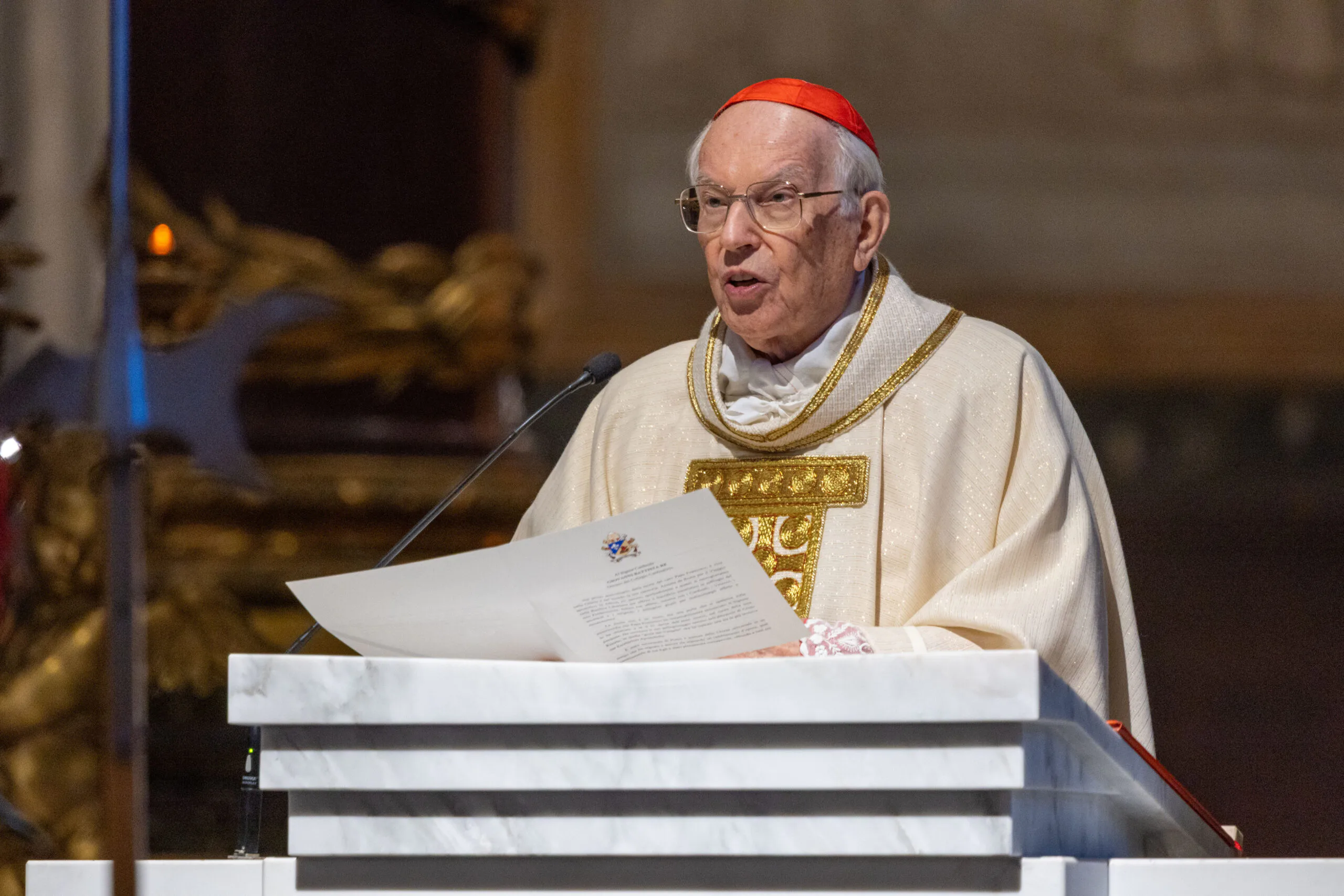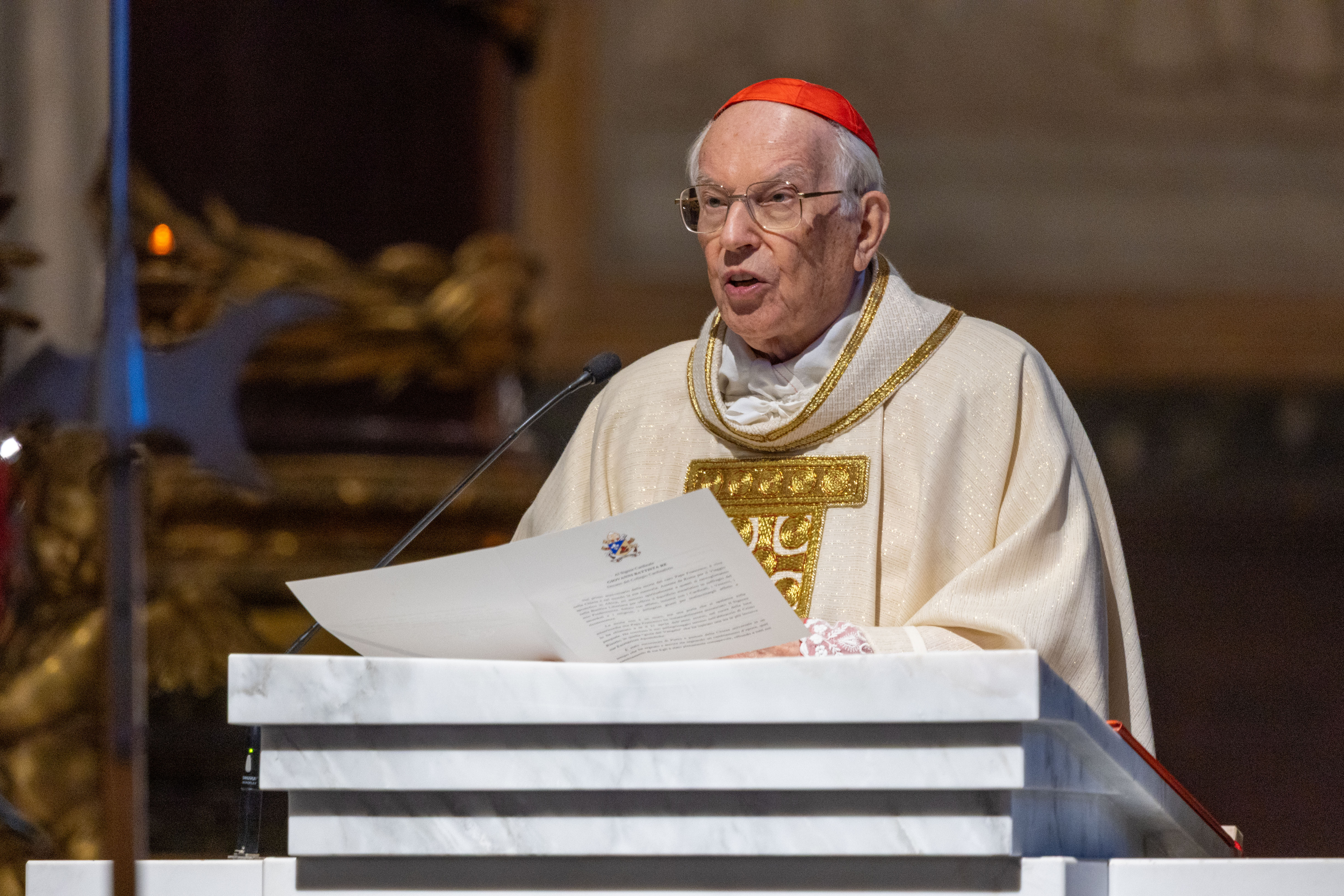
Pope Leo XIV has encouraged the Poor Clares not to be discouraged by their lack of vocations but to view it as a call to renew their commitment.
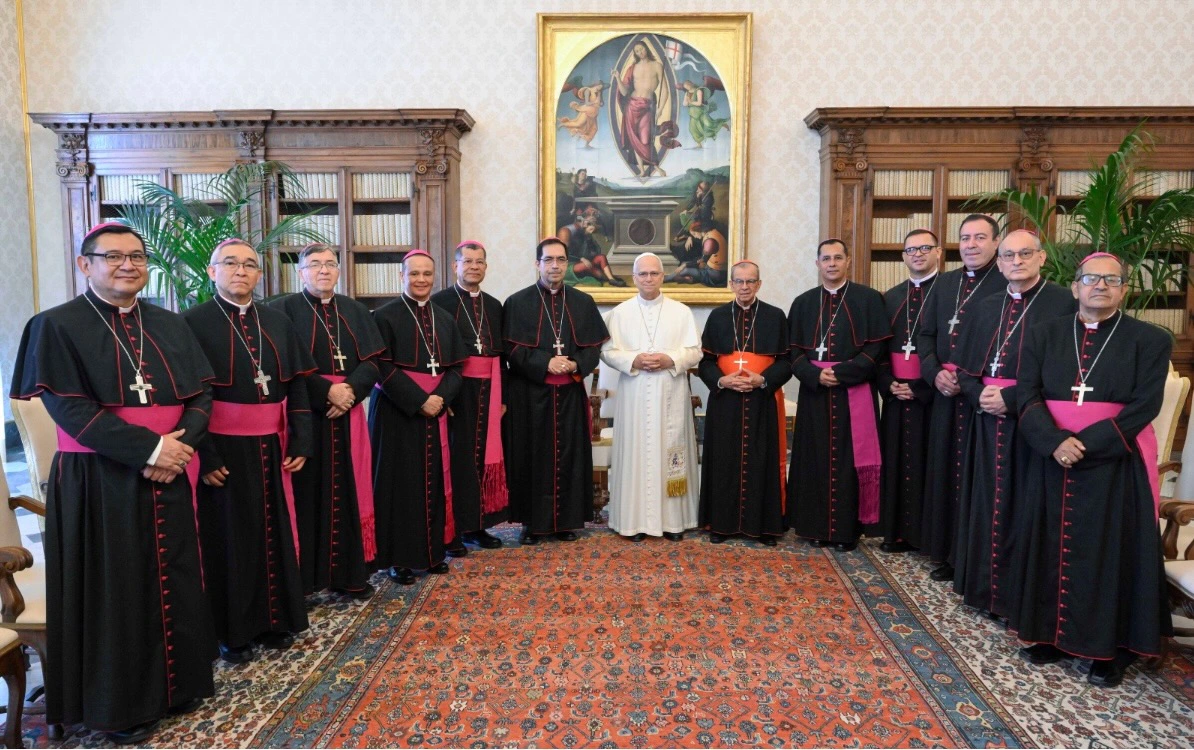
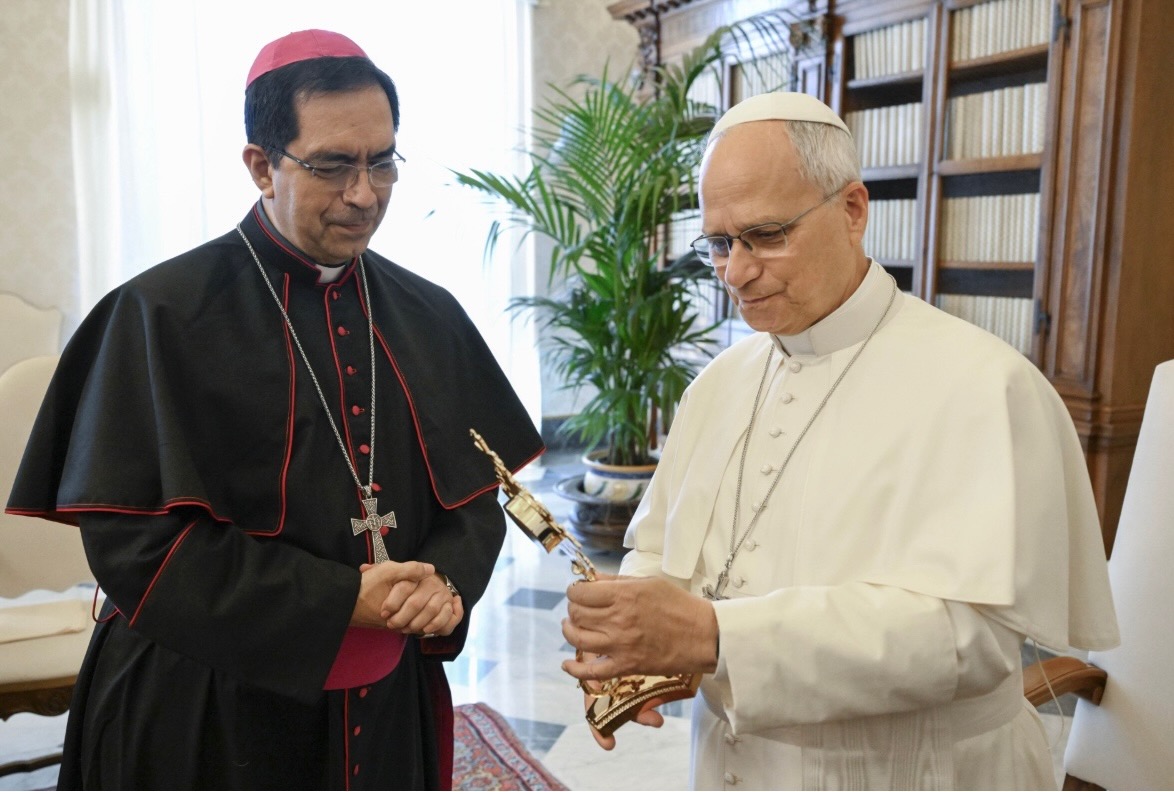
The pontiff made these remarks during a private audience with a delegation from the Federation of Capuchin Poor Clare Nuns of Italy on Sept. 21. The Capuchin Poor Clares, a branch of the Poor Clares, was founded in 1535 by the Spanish nun Blessed Maria Lorenza Longo.
Addressing the lack of vocations to their order and throughout Italy, Leo encouraged them not to give in to hopelessness and to renew their commitment to their spiritual values.
“The numerical decline of communities, and the fear of losing their autonomy that may result from it, should neither trouble you nor deprive you of hope,” Leo said. “Rather, it should encourage a renewal of your way of life and an even greater commitment to the spiritual accompaniment of those who knock on the doors of your monasteries.”
Leo also explained to them the true origins of vocations, stating that vocations do not come from campaigns but from “prayer, familiarity with the Gospel, silence, acceptance of oneself with one’s imperfections, and a sense of belonging.”
The pope also encouraged the nuns to prioritize ongoing formation, fostering deep communion with the Church in a society dominated by noise.
“Be formed, and form others, in a cloistered life lived in a spirit of deep communion among yourselves and with the Church; in a silence that, within a society dominated by haste and noise, awakens the need for times and spaces to stop, discern, and reflect,” he said.
Between 700 and 1,000 children will pray a rosary for peace with Pope Leo XIV on Oct. 1 at the Lourdes Grotto in the Vatican Gardens, part of a prayer initiative promoted by Aid to the Church in Need.
Coming from schools and parishes throughout Rome, the children will join the pontiff in the “One Million Children Praying the Rosary” campaign organized by the pontifical foundation Aid to the Church in Need (ACN).
They will also be spiritually united with children, families, schools, and Christian communities around the world in an event marking the beginning of the global week during which the prayer initiative is observed.
During that week, any diocese, parish, religious community, school, or family anywhere in the world can participate. The week concludes on Oct. 7, the feast of Our Lady of the Rosary.
Inspired by the message of Fátima
The 2026 campaign is inspired by the message received by the children at Fátima: “In the end, my Immaculate Heart will triumph.”
Cardinal Kurt Koch, president of ACN International and prefect of the Dicastery for Promoting Christian Unity, said in particular that “the Immaculate Heart of Mary represents a life completely open to the Holy Spirit and presents Mary as a model of faith, love, and prayer.”
According to ACN, “the initiative takes on special significance at a time when millions of people are facing war, violence, persecution, poverty, and uncertainty.” For this reason, the prayer campaign “seeks to be a simple yet universal sign of trust and hope: children of different languages, cultures, and countries united in the same prayer for peace.”
The origins: Padre Pio and Venezuela 20 years ago
The “One Million Children Praying the Rosary” initiative began in Venezuela in 2005. Today it has become a worldwide prayer movement involving children, families, parishes, schools, and Church groups on every continent, inspired by the words of St. Pio of Pietrelcina, who said that “when 1 million children pray the rosary, the world will change.”
ACN said the invitation is not limited to children and that praying an entire rosary is not required: “Even a single decade prayed with faith can become part of this global chain of prayer.”
The pontifical foundation also provides prayer materials in several languages and asks participants to register so that the network of children joining the prayer in different countries can be displayed on a map.
The initiative is organized in collaboration with the Shrine of Fátima, the Pope’s Worldwide Prayer Network, and the World Apostolate of Fátima. This year, World Rosary Day is also joining the campaign for the first time.
Bolivia, Sudan, Zimbabwe, and Paraguay
The prayers of Pope Leo XIV and the children of Rome will be joined by prayer gatherings planned in locations around the world, “from the Bolivian Amazon to parishes in Sudan, Zimbabwe, Mozambique, Sierra Leone, and many other places affected by war, poverty, or instability,” ACN said.
In war-torn Sudan, Father Franck Mandozi of the Kosti Pastoral Region confirmed that children from several parishes and schools will take part. From the Tsimané Indigenous community in the Bolivian Amazon, Sister Patricia Alejandra Botello López said they will pray in both their local language and Spanish.
Children from St. Christopher Parish in the Archdiocese of Bulawayo, Zimbabwe, will gather on Sunday, Oct. 4, to pray with their pastor, Father Charles Mafurutu, who in the following weeks will travel to other communities.
In Paraguay, Radio Pa’i Puku plans to promote the initiative through its broadcasts and will carry a live transmission of the rosary prayed by children at St. Eugene de Mazenod Parish.
This story was first published by ACI Prensa, the Spanish-language sister service of EWTN News. It has been translated and adapted by EWTN News English.
An estimated 2,200 pro-life advocates gathered in Zurich’s outer district of Oerlikon on Saturday for the annual March for Life, delivering a message focused on restoring family life and encouraging fatherhood under the banner “Together for Life!”
For six consecutive years, municipal authorities have barred the march from gathering in Zurich’s city center, citing security risks posed by the threat of hostile counterprotesters. Organizers pointed out that municipal officials routinely permit other demonstrations in the heart of the city, applying a clear double standard to the pro-life witness.
Similar to previous years, the Sept. 19 event faced opposition. One group of roughly 200 masked protesters on bicycles attempted to disrupt the event by setting off firecrackers, overturning trash bins onto the roadway, and attempting to block the route.
Masked counterprotesters holding banners reading “My body my choice” and “Burn the patriarchy” attempt to disrupt the Zurich March for Life, hurling projectiles and blocking the route before police intervened with water cannons, on Sept. 19, 2026. | Credit: Copyright Marsch fürs Läbe
Swiss police maintained control of the situation by shielding marchers, conducting identity checks, and using two water cannons to disperse protesters. The Zurich March for Life proceeded without any reported injuries to participants.
While organizers estimated about 2,200 advocates, police counted more than 1,000 participants.
The fact that security was maintained in Oerlikon shows that law enforcement can manage counterprotests, undermining the cityʼs justification for keeping the march out of central Zurich, according to observers.
Restrictions prompt legal challenge
Speaking previously to CNA Deutsch, the German-language sister service of EWTN News, Beatrice Gall, president of the Swiss March for Life, pointed out that municipal officials routinely allow other groups permits to hold demonstrations in Zurich city center yet relocate the Zurich March for Life to the city outskirts. This results in reduced visibility and logistical issues, Gall said.
By restricting the march to the commercial and residential district of Oerlikon, city officials argue they are minimizing potential public order disruptions and protecting urban infrastructure.
Critics argue that authorities are effectively rewarding the violence of counterprotesters by allowing hostile agitators to veto a peaceful groupʼs constitutional rights to freedom of assembly and free expression.
To challenge this policy, organizers have launched a public petition and initiated legal proceedings against the City of Zurich, demanding equal access to the city center and insisting that police maintain law and order without suppressing peaceful pro-life voices.
Breaking the silence
Speaking to EWTN News, Gall described the current social climate surrounding abortion in Switzerland as “one of silence.”
“There is no public debate and no objective examination of the facts; instead, people remain silent about the high abortion rates, the suffering this causes many people, and the consequences thereof,” Gall said.
She noted that since Switzerland introduced its 12-week deadline regulation in 2002, at least 200,000 abortions have taken place. Estimating that five or more people are affected per procedure, including fathers and extended family, Gall stressed that over 1 million Swiss citizens carry the impact, making public awareness vital. This further justified the march in the city center so that greater “communication, dialogue, and discussions with people can begin.”
Pushing back against opponents and media outlets attempting to portray the pro-life movement as regressive, Gall rejected the stereotype. “Advocating for human life is not backward — it’s forward-looking!” she asserted, pointing to a “new wave of interest and strong commitment” among the younger generation.
Gall stressed that a mother’s womb should be “the safest place in the world, not the most dangerous,” calling on men to support their partners rather than leaving them isolated or pressuring them into abortion. “Even if you’re surprised by the pregnancy, be there for your partner and your child,” Gall urged. “They need you, even before birth.”
Call for responsibility and dialogue
Nicolas Kolly, a Swiss People’s Party national councilor and former member of the Pontifical Swiss Guard, addressed participants, encouraging society to “give a voice to those who do not yet have one,” and summarized his core message simply as “Protect life.”
He also urged comprehensive support for women facing difficult pregnancies, arguing that offering viable alternatives must be a societal duty. Furthermore, Kolly stressed paternal duty, stating that a man’s priority is “to take responsibility. To support. To listen. To protect.” Ultimately, Kolly framed maternal assistance and child protection as inseparable priorities, concluding that “these two ideas must go hand in hand: the protection of the child and the support of the mother.”
Among those who addressed the crowd was also Jonas Streule, regional director of ProLife Europe in Switzerland. Speaking to EWTN News, Streule acknowledged the broader hurdles facing pro-life advocacy in Switzerland, pointing specifically to distorted social media stereotypes that damage public perception.
“What people associate with the word ‘pro-life’ comes from screaming videos in the TikTok world of short clips,” Streule said. “That is not what actually happens when you engage in pro-life work.”
An estimated 2,200 marchers — many of them families with young children, a demographic organizers pointed to as evidence of growing youth commitment to the pro-life cause — walk the Zurich-Oerlikon route for the annual Swiss March for Life, Sept. 19, 2026. | Credit: Copyright Marsch fürs Läbe
Turning to ProLife Europe’s outreach on university campuses, Streule explained that the organization prioritizes personal encounters over hostility. “Abortion is a severe matter, and it deserves to be touched face to face, in a loving way,” he noted, stressing that compassion and clarity go hand in hand.
According to Streule, few students he encounters actively view abortion as desirable. Instead, the primary challenge lies in helping young people realize they can play an active role in building a culture that supports life.
“We rarely leave a conversation without having made someone think about an opinion they simply adopted from the dominant culture,” Streule said. He added that across numerous Swiss campus outreaches, he has “never once received a bad word from the person I was talking to.”
For Streule, direct street outreach serves as a vital bridge to those personal conversations. By creating spaces for face-to-face dialogue, he said, he believes advocates can break through online misconceptions, encourage people to reconsider deep-seated assumptions, and foster genuine reflection on the value of human life.
News headlines in recent years have periodically reported on Catholic priests accused of various types of misconduct, including financial crimes and sexual abuse, among other allegations.
Much of the public will only be aware of the beginning and the end of such controversies — when a clergyman is accused of a misdeed and when he is ultimately either found guilty of it or cleared of any wrongdoing.
But U.S. dioceses have complex and at times lengthy ways of addressing such allegations — processes that ensure both a full treatment of the alleged misconduct and the rights of priests to be presumed innocent until proven otherwise.
‘The smoke of truth’
Monsignor William King, JCD, serves as an assistant professor of canon law at The Catholic University of America. His academic expertise includes the study of both canon and civil law as well as the study of “temporal goods” such as Church finance and corporate structure.
King told EWTN News that bishops who receive allegations of wrongdoing against priests must first determine if there is sufficient credibility to the allegations, a principle he said in canon law is known as “fumus veritatis,” or “the smoke of truth.”
“It’s not proof [of the allegations] in any way,” King said, “but if there’s sufficient suspicion that it might be truth, then the bishop would accept that allegation” and launch what is known as a “prior investigation” meant to gather facts.
Amid the start of the process, King said, a bishop may or may not remove the priest from ministry if he “felt that it was necessary for any of several reasons.” After that he would appoint an investigator, who may or may not be a priest, to lead the inquiry.
“That person is bound to secrecy so as to protect the reputation of the priest, and any of the accusers and witnesses,” King said.
Such an investigator has “pretty broad powers” to ask questions of, and seek evidence from, those connected to the case. After that process, he or she would bring the results to the bishop.
The prelate would likely then speak to his canon law experts. He may also talk with mental health experts and could potentially order the priest to submit to a psychological assessment. “That’s not uncommon, and depending on the nature of the allegations, it might be appropriate,” King said.
After the fact-finding and consultation process, the bishop will decide whether or not to move forward with a criminal or penal process. In some cases, the ordinary may opt instead for a “penal remedy.“
“It could be a warning or rebuke, or a ‘penal precept’ — a formal document that prohibits the priest from undertaking certain actions or doing certain things,” King said. A precept, he said, can be used even in cases where no crime is committed, to ensure that the actions that led to the controversy are not repeated.
If a penal process is instigated, the preferred method for most bishops is to convene a tribunal; in some cases, a prelate may opt for a less formal “administrative process.” Either option involves the calling of witnesses, testimony from both the accuser and the accused, and the collection of additional evidence.
Tribunals are usually overseen by three judges, King said; they must be priests, and "they would typically be brought in from other dioceses.”
Tribunals are meant to determine both whether a priest committed a crime, King said, as well as whether or not the crime itself is “fully imputable” to the priest.
Sexual abuse allegations: Rome must be notified
The process is largely the same whether the allegations involve claims of administrative or professional misconduct or if they involve accusations of sexual abuse, King said.
However, allegations against a priest of abuse of a minor are “reserved to the Holy See,” he said. In those cases, following the results of a preliminary investigation, a bishop is obligated to send a summary of the case, including the evidence, to the Dicastery for the Doctrine of the Faith, specifically its special disciplinary section.
“[The dicastery] will review that and instruct the bishop as to what type of process should be followed — administrative or judicial,” King said.
“When the bishop sends the initial dossier or file over, most of the time he will make a recommendation” as to which process should be followed, King said. A bishop in certain cases may recommend “no process, or another remedy or way of addressing the situation.”
The dicastery “will take that into consideration. But ultimately, they make the determination, and the bishop is bound to follow their direction,” King said.
The Vatican can approve or reject a diocese’s decision if the matter is reserved to Rome, King said. In all other cases, it is resolved domestically either via administrative process or tribunal.
A priest, King said, can appeal a diocese’s decision to the Roman Rota if he wishes.
Pope Leo XIV on Sunday appealed for greater international assistance to Somalia, where violence and extreme weather are worsening an already severe humanitarian crisis, particularly for women and children.
After reciting the Angelus on Sept. 20, the pope said: “With great concern, I am following the humanitarian crisis unfolding in certain areas of Somalia, where acts of violence and extreme weather events are exacerbating the already precarious living conditions of the population, particularly of women and children.”
“I hope for the generous involvement of the international community, so that our brothers and sisters may not lack the necessary assistance,” he added.
According to UNICEF, about 4.8 million people in Somalia need urgent humanitarian assistance, including some 3 million children. The U.N. agency has also warned that about 1.9 million children are suffering from acute malnutrition, including nearly half a million experiencing severe acute malnutrition.
The pope also used his remarks after the Angelus to emphasize the importance of historical memory.
He sent his blessing to residents of Pescantina, near Verona, who gathered Sunday at a monument honoring those who were deported and held prisoner during World War II.
Leo said the commemoration should serve “to emphasize that we must not forget, but rather learn from history so as not to repeat the mistakes of the past.”
God’s plans are greater than human calculations
Before the Angelus, Pope Leo XIV reflected on the day’s Gospel account of the laborers called to work in the vineyard, some for the entire day, others for only a few hours and still others near the end of the day.
Drawing on the prophet Isaiah, Leo said that God’s ways exceed human expectations.
“God’s plans are infinitely greater — and, let us say, more ‘human’— than those that we men and women, marked by sin, can conceive or bring to fruition,” he said.
The pope recalled Isaiah’s invitation to turn away from sin and return to the Lord, saying “the prophet’s call, which is more relevant than ever, is that we abandon our warped ways and return to the Lord, who is mercy and forgiveness.”
Turning to the Gospel parable, Leo said its central moment comes when the vineyard owner pays the workers. Although he keeps the agreement made with those hired first, the owner also gives the same payment to those who arrived later.
“Jesus’ parables describe the newness of what God has in store for us; yet they also reveal the resistance we generally offer to a more generous justice and greater love,” the pope said.
Leo drew particular attention to the landowner’s instruction that the workers be paid “beginning with the last and then going to the first.”
“The negative reaction of those who had worked all day, then, could easily have been avoided; it was intentional, however, because the revelation of God’s goodness is for everyone, not just for a few,” he said.
The pope said the parable also challenges those who see themselves as having earned their place or accomplishments.
“God has different ways and fresh ideas even for those who consider themselves to be first and believe they have earned what they have, that they deserved the results they have achieved,” he said.
Leo concluded that God’s mercy moves beyond calculations based solely on merit and reward.
“Instead, we all gain joy, wisdom and a better future when the law of love interrupts that of calculation, when the experience of mercy broadens that of merit, and when the gift of peace suspends rivalries and brings us closer together in gratitude,” he said.
This story was first published in two parts by ACI Prensa, the Spanish-language sister service of EWTN News. It has been translated and adapted by EWTN News English.
In southern Lebanon, the story of Christian villages is not defined only by the destruction and isolation left by war but also by a deeply rooted presence and a determination to remain.
Rmeich, Ain Ebel, Debel, and other border towns continue to be home to families who have chosen not to leave their land despite the dangers and hardships they face.
In support of these communities, a prayer walk will take place Sept. 26 from Byblos to Annaya, home to the shrine of St. Charbel, carrying the intentions of Christians who continue to remain in the south, turning the journey into an act of solidarity and hope.
Anthony Jarjour, a native of Rmeich and organizer of the initiative, told ACI MENA, the Arabic-language sister service of EWTN News, that “the goal of the walk is to unite our prayers and offer them for the Christians who remain steadfast in the south.”
“Sometimes we feel that the state has abandoned us and that some people are unaware that families are still living there, in the border villages, safeguarding the country’s borders simply through their continued presence,” he said.
This is not the first time Jarjour has organized a pilgrimage of this kind. Last year, he walked approximately 112 miles from Rmeich to Annaya, offering the journey for those who had died in traffic accidents.
Anthony Jarjour and fellow pilgrims at the St. Charbel Shrine in Lebanon in 2026. | Credit: Photo courtesy of Anthony Jarjour
This year, because of road closures, he will begin his own journey Tuesday, Sept. 22, from Tyre, covering approximately 93 miles before reaching Annaya on Saturday to take part in the conclusion of the pilgrimage.
Explaining why Annaya was chosen as the final destination, Jarjour said: “I have a personal experience with St. Charbel, and I felt his presence during the previous walk. I believe he always protects us through Our Lord Jesus. As for Annaya, it needs no introduction.”
He said the pilgrimage is being organized in cooperation with several organizations and local authorities, including the Monastery of St. Maron in Annaya and the municipalities of Byblos and Annaya. Lebanon’s Civil Defense and Red Cross will provide support and assistance along the route.
Jarjour has served his hometown of Rmeich and other communities along the border through volunteer work with the Red Cross, Caritas, and Civil Defense, taking part in field operations and helping residents during difficult circumstances.
However, he wanted to add a spiritual dimension to that service. Through the pilgrimage, he seeks to turn every step into a prayer for peace and for those who continue to remain in southern Lebanon.
This storywas first published by ACI MENA, the Arabic-language sister service of EWTN News. It has been translated and adapted by EWTN News English.
Baltimore Archbishop William Lori this week praised an assembly of women religious major superiors for their witness of “evangelical poverty,” with the prelate noting the outsized influence that women religious have had on American society over the past 250 years.
“You and those who came before you have taught our children, tended to the sick, welcomed immigrants, accompanied the dying, consoled the brokenhearted, and proclaimed Christ where no one else was willing to go,” the archbishop told the major superiors on Sept. 18 in Florissant, Missouri.
“For that, the Church gives thanks. But gratitude alone is not enough. The Church also looks to you with hope,” he said.
The archbishop spoke at the 2026 National Assembly of the Council of Major Superiors of Women Religious, the theme of which was: “250 Years of Freedom: Daughters of the Church from One Generation to the Next.”
The council comprises major superiors and vicars from 112 religious communities around the U.S. The group describes its national assembly as “the springboard for collaboration, participation, and dialogue among members” which “promotes unity among the major superiors that gives witness to the joy of religious life.”
Addressing the gathering as the keynote speaker, Lori acknowledged the assembly’s recognition of the 250th anniversary of the founding of the United States.
The U.S. has been instrumental in advancing religious freedom and human dignity across the world, the archbishop argued. He noted that most histories of the founding of the U.S. focus on the Founding Fathers such as George Washington, Thomas Jefferson and others.
But “the American experiment would have looked very different” without the contributions of “thousands and thousands of women religious,” he said.
“Who welcomed wave after wave of immigrants? Who cared for the victims of epidemics when others fled? Who taught generations of children not simply arithmetic and grammar, but honesty, sacrifice, discipline, and love of God?” he said.
Women religious “changed the nation because they first allowed Christ to change them,” the archbishop said. He noted the “paradox” in which those who take vows of poverty “enriched countless communities” and those who “renounced worldly ambition” often “exercised the greatest influence upon society.”
“The world struggles to understand this paradox,” Lori said. “The Gospel does not.”
Women religious have historically both upheld the ideals of America while challenging it when it “falls short of the Gospel,” Lori said.
He cited the witness of St. Frances Xavier Cabrini’s “evangelical poverty” as she carried out the founding of schools, hospitals and orphanages around the world.
And he further pointed to the work of Servant of God Sister Mary Thea Bowman, praising her for her “profoundly Catholic way” of confronting racism while evangelizing about the love of Christ.
Urging the women religious to pursue “an ever-new embrace of the heart of your vocation,” Lori told the assembly: “The world needs women who have been seized by Christ.”
“It needs women whose lives bear unmistakable witness to the truth that God is real, that holiness is possible, that sacrifice is fruitful, and that love poured out in communion with Christ can transform the world,” he said.
“I vividly remember driving home with tears streaming down my face, overwhelmed by the feeling that our young Catholic family had been excluded simply because our son experiences the world differently.”
These are the words of Sarah Taylor, a Catholic mother of three whose 9-year-old son, Reid, was excluded from parish activities because of his autism.
“As a mother, it was heartbreaking to see my child denied opportunities to participate in the very community where we sought belonging, acceptance, and spiritual growth,” Taylor told EWTN News.
Reid was asked to leave sacramental preparation classes and Vacation Bible School because the parish couldn’t accommodate his special needs. His mother described this as “devastating” — but she decided to do something about it.
“In the days that followed, I felt a wide range of emotions — sadness, frustration, disappointment, and a fierce determination to advocate for greater inclusion of individuals with disabilities within the Catholic Church,” Taylor said. “My husband and I knew that something needed to change, not only for our son, but for other families who might face similar barriers.”
Taylor reached out to her home diocese of Baton Rouge, who put them in contact with the All Are Welcome ministry. Through the ministry, she and her family found genuine, “life-changing” acceptance.
“We were welcomed not despite Reidʼs autism, but with an understanding that his differences are part of who he is,” Taylor said. “That sense of acceptance was life-changing for our entire family.”
“The ministry has also strengthened our faith journey in unexpected ways,” Taylor said. “During a time when we felt hurt and disconnected from the Church, the kindness, compassion, and support we received reminded us of what it truly means to be the body of Christ. Through the ministry, we experienced the love and inclusion that Jesus demonstrated throughout his ministry.”
An estimated 1 in 4 people have a disability, according to 2022 CDC data. About 3.2% of children — 1 in 31 children — have autism. But ministries designed for inclusivity can be hard to find.
Jodi Devore, who has three children with autism, founded All Are Welcome along with another Catholic mom, Edda Dupaquier, after having similar experiences. The Catholic special needs support ministry began as a backyard rosary group and has since expanded throughout the diocese.
“As we prayed and shared our stories, we realized we all carried the same desire,” Devore said of the backyard rosary group. “We didnʼt want a ministry beside the Church — we wanted our families to fully belong within the Church. We wanted our children to know Christ, receive the sacraments, build genuine friendships, and participate fully in parish life alongside everyone else.
Jodi Devore with her husband and three children. | Credit: Photo courtesy of Jodi Devore
“As we prayed and shared our stories, we realized we all carried the same desire,” Devore said of the backyard rosary group. “We didnʼt want a ministry beside the Church — we wanted our families to fully belong within the Church. We wanted our children to know Christ, receive the sacraments, build genuine friendships, and participate fully in parish life alongside everyone else.
The ministry has had a powerful impact on the diocese.
“Weʼve watched families return to Mass after years away. Children have received sacraments,” Devore said. “Parents who once felt alone have found a community that truly understands them. Most importantly, weʼve witnessed families rediscover that they have a place in the life of the Catholic Church.”
“Our hope has always been simple: that every individual with special and exceptional needs — and every parent, sibling, and caregiver who walks beside them — would know they are not just welcome in the Church, but that they are an essential part of the body of Christ,” Devore said.
Running to the altar: Sensory-friendly Masses
Mass is a key area where families with children with disabilities can feel excluded — but it’s one of the most important parts of being Catholic. Sensory-friendly Masses — designed for people with special needs like autism — are “one of the most meaningful parts of our ministry,” according to Devore.
These Masses feature lower lighting, softer music, and shorter and more literal homilies.
Adoration at a family retreat. | Credit: Photo courtesy of All Are Welcome
“Families know they can move around as needed without fear of judgment,” Devore explained. “Most importantly, everyone gets Jesus.”
Before and after Mass, the environment is full of excitement and beauty, according to Devore.
“Children and adults with disabilities often run to the altar with joy. They arenʼt afraid. They arenʼt worried about doing something wrong. Theyʼre simply drawn to Christ,” Devore said. “Every time I see it, Iʼm reminded thatʼs what the Church should feel like — a place where people are free to run toward Jesus.”
Attending Mass can be incredibly challenging for families with children with special needs.
“For many families, Sunday morning isnʼt as simple as getting everyone dressed and going to Mass,” Devore said. “Sometimes the clothes are too itchy. The smell of incense can be overwhelming. The music may be painfully loud. Sitting still for an hour can feel impossible. A child may need to move, vocalize, or leave the pew altogether.”
“As a parent, youʼre doing everything you can to help your child, but at the same time youʼre painfully aware of every glance, every stare, and every whispered comment around you,” Devore said.
“What hurts most isnʼt the noise or the outbursts. Itʼs the feeling that you and your child, your family, donʼt belong in the very place where you should feel most at home,” Devore said.
Taylor explained how children with autism may behave differently during Mass, but that doesn’t make them any less reverent.
“As a mother of a child with autism, my hope is that every member of the Catholic Church understands how important it is to welcome individuals with disabilities into the Mass — not just occasionally, but as a natural and expected part of parish life,” Taylor said.
“A child may wear noise-canceling headphones to manage the sounds of a crowded church,” Taylor said. “They may flap their hands when they are excited, rock back and forth for comfort, stim during the homily, or carry a beloved dinosaur up with them when they receive Communion. These behaviors are not distractions; they are part of how that child experiences and navigates the world. They do not lessen the reverence of their worship or the sincerity of their faith.”
At an All Are Welcome family retreat, there are activities for kids as well as opportunities for moms, dads, and kids to share about their experiences. | Credit: Photo courtesy of All Are Welcome
“The Catholic Church is meant to be a home for everyone,” Taylor continued. “When individuals with disabilities are present at Mass, they are not interrupting the community — they are enriching it. Their presence reminds us that Godʼs love is not reserved for those who fit a certain mold. It is for all of his children.”
“What matters most is not whether a child sits perfectly still, remains silent, or follows every social expectation,” Taylor said. “What matters is that they are there. They are present. They are experiencing Jesus in the way they are able. They are witnessing the miracle of the Eucharist and participating in the life of the Church.”
“Our differences are not obstacles to Godʼs love; they are reflections of the beautiful diversity of his creation,” Taylor said. “If we truly believe that every person is made in the image and likeness of God, then every person deserves to be welcomed, valued, and embraced within our faith communities. A child with headphones, flapping hands, or a dinosaur in hand belongs at the Lordʼs table just as much as anyone else. And the Church is stronger, more compassionate, and more Christ-like because they are there.”
Edda Dupaquier, center, prays during Eucharistic adoration at a family retreat at St. John Activity Center. | Credit: Photo courtesy of All Are Welcome.
“These children of ours, they make the ground holy,” said Dupaquier, who helps lead the ministry alongside Devore and Deacon Randall Waguespack. “And they make us better people with more virtues, with more patience, with more understanding — capable of loving in ways that we weren’t sure that we could love.”
Coming home: Communities transformed
The ministry has helped bring families back into the Church; most importantly, it has made the Church feel like home.
Devore and her family experienced feeling “like outsiders in our own Church.”
“Not because people were intentionally unkind, but because many simply didnʼt understand what they were seeing,” Devore explained. “Over time, that judgment becomes exhausting, and for many families, it leads them to quietly stop coming.”
But Devore said the ministry has given her “hope.”
“Iʼve watched parishioners grow in understanding, volunteers embrace these families with incredible love, and parents finally take a deep breath because they know they donʼt have to apologize for their child simply being who God created them to be,” Devore said.
The All Are Welcome ministry hosts family retreats, support groups, and helps support persons with disabilities in participating in the liturgy, not only through sensory-friendly Masses but also through active lay participation.
Left to right: Edda Dupaquier, Deacon Randall Waguespack, and Jodi Devore lead the All Are Welcome ministry in the Diocese of Baton Rouge. | Credit: Photo courtesy of All Are WelcomeJodi Devore and Edda Dupaquier hug at a family retreat. | Credit: Photo courtesy of All Are Welcome
“Weʼre also passionate about meaningful participation in the liturgy. Individuals with disabilities serve as altar servers, proclaim the readings when theyʼre able, bring forward the gifts, and participate in the Mass in visible and meaningful ways. They arenʼt simply attending church — theyʼre helping lead the worship of the Church,” Devore said.
Through the ministry, Devore has seen transformation not only of families but also of parishes.
“The greatest transformation weʼve witnessed isnʼt just that families return to Mass. Itʼs that they begin to believe they belong there,” Devore said.
“Parishioners begin seeing gifts instead of limitations. Entire parish communities are transformed because they discover that these families arenʼt guests in the Church — theyʼre an essential part of it,” Devore said.
“Weʼve seen families return to Mass after years away,” Devore said. “Weʼve celebrated children receiving the Eucharist when their parents once thought it might never happen. Weʼve watched parish communities discover the incredible gifts these individuals bring to the Church.”
“Our greatest hope is that one day no family will wonder whether thereʼs a place for them in the Catholic Church,” Devore said. “We want every individual, regardless of ability, to know Christ, receive the sacraments, discover their God-given gifts, and live a life rooted in faith.”
Attendees at the All Are Welcome family retreat. | Credit: Photo courtesy of All Are Welcome
Understanding disability: Seeing as Christ sees
Devore and Taylor encouraged people to be accepting of people with special needs, sharing what they believe is most important for others to understand about disability.
“Families affected by disability often face barriers that many people never think about,” Devore said.
“I would want people to understand that no two children with disabilities are alike,” Taylor said. “My son may communicate differently, process information differently, or respond to situations in ways that others do not immediately understand, but those differences do not diminish his value, his intelligence, or his desire to belong. Like every child, he wants to be accepted, included, and loved for who he is.”
It’s not about big gestures, but more about the small moments, according to Taylor. “Simple acts of patience, understanding, and inclusion can make an enormous difference for our families,” she said.
But acceptance is also about how other people “see.”
“Perhaps most importantly, I would want people to move beyond seeing the disability and instead see the child: see their unique gifts, their personality, their sense of humor, their faith, their kindness, and their potential,” Taylor said.
“I would simply ask people to see one another through the eyes of Christ,” Devore said. “If you see a child making unexpected noises at Mass, an adult who communicates differently, or a family that seems overwhelmed, donʼt assume they donʼt care or donʼt want to be there.”
“More often than not, theyʼre doing everything they can just to be present,” Devore continued. “A smile. An invitation. Sitting beside them instead of moving away. Those simple acts of kindness can change someoneʼs entire experience of the Church.”
OSOGBO, Nigeria — Members of the Catholic Bishops’ Conference of Nigeria (CBCN) have designated Dec. 8 as a National Day of Prayer and fasting for the success of the country’s 2027 general elections, calling on Nigerians to prepare spiritually for the polls.
In a statement issued at the end of their 2026 second plenary assembly held at Our Lady and St. Kizito Pastoral Centre in the Diocese of Osogbo, the bishops urged stakeholders to work toward elections that are “free, fair and credible.”
“We announce that 8 December 2026 will be observed as a special national day for prayer and fasting for the success of the elections,” the bishops said in the statement following their Sept. 10–18 plenary assembly.
They encouraged eligible voters to participate in the elections and elect leaders who are qualified to serve while urging citizens to make their choices according to their consciences.
“We encourage eligible voters to come out en masse to vote qualified people into offices and in line with their good consciences,” the bishops said in the statement that their president, Archbishop Matthew Man-Oso Ndagoso, signed.
The CBCN also urged Nigerians to familiarize themselves with its pastoral letter on the forthcoming elections and follow the provisions and guidelines contained in the document.
As part of preparations for the polls, the bishops called on dioceses and parishes across the country to organize civic education and voter mobilization activities alongside end-of-month fasting and prayer.
They further encouraged the faithful to participate in rosary processions from October to December, linking the spiritual activities with preparations for the elections.
The bishops also addressed the role of technology and artificial intelligence (AI), urging politicians and other users to deploy emerging technologies responsibly and ethically, particularly in the context of the forthcoming elections.
“As a vehicle for evangelization, we enjoin all to use it to transform data into knowledge and insights for greater value,” they said while calling on political actors to exercise responsibility in their use of technology and AI.
The bishops said technology is closely linked to human freedom and autonomy but cautioned that its use must remain guided by ethical considerations.
“Technology is not inherently evil or antagonistic to humanity, but it is never neutral,” they said, referencing Pope Leo XIV’s encyclical Magnifica Humanitas.
They also raised concern over what they described as the growing challenge of neo-paganism in Nigeria, particularly among young people, which they attributed partly to economic hardship, cultural revival, and inadequate Christian formation.
The bishops observed that modern forms of neo-paganism spread rapidly through internet culture, media, and books, and called on pastoral agents to make greater use of digital platforms in evangelization and catechesis.
“We encourage pastoral agents to intentionally incorporate the use of digital spaces, social media, and online catechesis in teaching the truth of the Gospel,” they said.
They also called for what they described as healthy inculturation that respects positive elements of African cultural heritage while maintaining the foundational teachings of Christianity.
On education, the bishops described access to quality education as essential for human development and the peaceful integration of Nigeria’s diverse communities and cultures.
They said the Catholic Church remains committed to education and ready to collaborate with the government in providing quality learning opportunities while urging authorities to fulfill their constitutional responsibility to fund education.
“We, therefore, urge governments to embrace their constitutional responsibility of funding education,” they said, adding that children in public, private, and mission schools should have access to free education, particularly at primary and secondary levels.
They further called for policies that promote the development of the human person and contribute to the country’s overall development.
The bishops also expressed concern over a bill before the National Assembly that, according to them, could affect churches, mosques, schools, and humanitarian organizations involved in assisting vulnerable and conflict-affected communities.
They said provisions requiring the registration of foreign aid resources and giving authorities powers to supervise their use could create challenges for organizations providing critical assistance.
The bishops particularly raised concern about provisions that would allow authorities to deny or refuse renewal of an organization’s registration if its activities are considered not to be in the “national interest,” arguing that such provisions could give government officials broad discretionary powers.
They further said the proposed legislation could create additional bureaucracy, duplicate existing regulations, and increase government control over civic organizations.
“Non-profit organizations and Incorporated Trustees including churches, mosques, other religious bodies, and humanitarian groups are already strictly regulated by the Corporate Affairs Commission (CAC) under the Companies and Allied Matters Act (CAMA) and some other extant laws,” they said.
The bishops consequently called on the National Assembly and the federal government not to proceed with the bill, citing concerns over freedom of association, religion, thought, and conscience as well as its potential implications for the wider development of Nigerians.
This story was first published by ACI Africa, the sister service of EWTN News in Africa, and has been adapted by EWTN News.
In 2025, John Sansone made his television debut when he appeared on Fox’s reality dating show “Farmer Wants a Wife” as one of the farmers in search of love. Today, he has traded in the television screen for cellphone screens as a Catholic content creator.
Sansone, 27, was born and raised in a Catholic family. He and his five siblings grew up in St. Louis, where their faith played an important role in their daily lives.
“Catholicism was ingrained in just about every aspect of my childhood and my life growing up,” Sansone told EWTN News in an interview. “We were taught from a very young age that faith was extremely important. It came right before family and then two before hard work.”
He added: “We had a little prayer corner in every house that weʼve lived in that had a picture of Jesus and then right underneath was a kneeler and then a bunch of little pamphlets — prayer cards or funerals of loved ones, and things like that.”
Sansone was taught hard work on his family’s 170-acre soy, corn, and wheat farm located on his great-grandfather’s land. It was here that he learned about farm life.
Fast forward to 2024 and Sansone’s mother and sisters were watching Season 2 of “Farmer Wants a Wife,” a reality dating series that follows farmers as they search for love among a group of women willing to leave city life behind for a chance at a relationship and life on the farm. The show combines romance with the realities of rural life, as the farmers and contestants get to know one another with the possibility of building a future together.
“They were constantly telling me to come watch it and see an episode and things like that and I just kept saying, ‘No, not interested,’” he recalled.
Then Sansone received a direct message (DM) on Instagram from the creators of the show. After thinking about it and speaking to his family about it, he decided to take part in the show.
“Realistically, the motivation for me to actually entertain that DM and to ultimately go on the show was, hey, this is a fun, random, once in a lifetime thing. I can make the most of it … and perhaps even find a wife,” he said.
Despite Sansone not finding a wife on the show, he reflected that it “reinforced his faith.”
“There were no Catholics in my group. I was the only one … I think what it really did is reinforced my faith a little bit because we would have these faith-based conversations on the show and we would have conversations about our beliefs and things like that and it kind of forced me to reconcile with myself what I actually did believe. So I would say that in doing that it reinforced my faith,” he shared.
Coming off the show and once it aired, Sansone began to gain a following on social media. He explained that he came to the realization one day that he “didn’t do anything to earn it.”
“All of this kind of fame and publicity, I would say in air quotes, is not something that I earned,” he said. “So, my way of paying back that opportunity, that was obviously a gift from God, was to use my platform to promote my faith.”
Sansone, who goes by @notjohnsansone on Instagram, has 109,000 followers on the platform and uses his growing social media platform to share approachable Catholic content, often drawing from his own experiences to encourage others in their faith. His posts touch on Catholic teachings, prayer, and the realities of striving for holiness while acknowledging the imperfections and struggles of everyday life.
“The social media world is not the friendliest spot for that type of thing,” he said. “So, my way of doing it and my strategy is more so kind of to subtly incorporate that into everyday things and make it a relatable thing that people who donʼt understand the faith or maybe didnʼt grow up in it, itʼs something for them to relate to.”
Thanks to his content creating, Sansone admitted that it has “forced me to improve my faith” and has “strengthened it.”
“Iʼve met a lot of interesting people through it [social media]. People who are much stronger in their faith, know a lot more about the Catholic Church and her history,” he added. “And in being around them, I think Iʼve forced myself to kind of become better at my faith.”
Sansone’s content creation recently took him to Peoria, Illinois, ahead of the beatification of Venerable Fulton Sheen alongside a large group of other Catholic content creators. He called the experience “incredible” and that he also “learned a lot about my faith and it kind of made me realize how far I needed to go still.”
Reflecting on Sheen’s life and how his legacy can inspire Catholic content creators, Sansone said: “I think what was great about him is that a lot of his messages were, yes, based in the Catholic faith, but they were more relatable to an everyday person. You didnʼt have to be Catholic to utilize his messages and apply them to your own life. I feel like thatʼs one important thing that a lot of Catholic content creators can do. Itʼs what I try to do.”
As for what he hopes viewers of his content take away from it, Sansone emphasized that he wants “people to understand Catholicism for what it really is.”