Two long-standing religious communities of San Diego are joining together, according to a recent announcement by the Order of St. Augustine in California.
The Sisters of Nazareth will be aggregated into the Augustinian family, a step that requires both Vatican approval and consent of the local bishop. The union enables the Sisters of Nazareth to keep their autonomy while being a part of the Augustinians.
“This union, formalized by a decree from Rome, establishes a deep spiritual bond between the two institutes while allowing the sisters to maintain their canonical autonomy,” said Cindy Luyun, a spokesperson for the order.
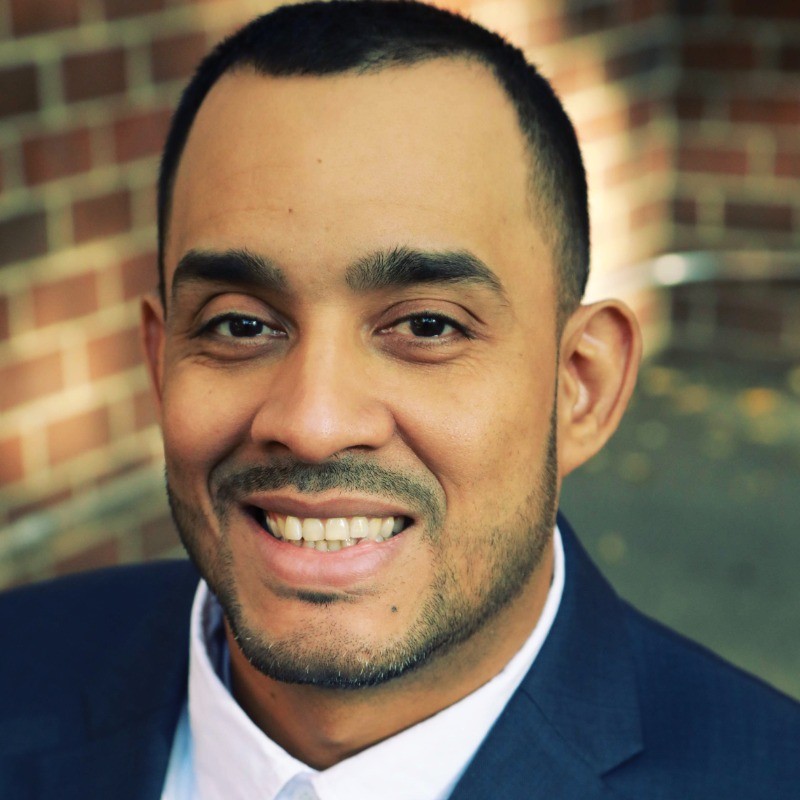
Father Barnaby R. Johns, OSA, prior provincial of the Province of St. Augustine in California, told EWTN News that “this aggregation will only strengthen the present unity.”
“Together, the Sisters of Nazareth (1925) and the Augustinians (1924) share over 200 years of service to the Church and the people of God of the Diocese of San Diego,” he said. “Over those many years we have forged support and unity with each other and our ministries.”
Father Barnaby R. Johns serves as prior provincial of the Province of St. Augustine in California. | Credit: Photo courtesy of Cindy Luyun
Johns noted several preexisting ties between the two groups.
“The sisters educate young children at Nazareth School in San Diego and many of their eighth grade graduate boys continue their education and faith journey at St. Augustine’s High School run by the Augustinians,” he said.
“In our assisted living home also in San Diego, we have received the spiritual support of the Augustinians for our residents and sisters while supporting Augustinians who need assisted living,” Johns continued. “A number of Augustinian priests and brothers have spent their last days in the care of our Nazareth House.”
The ties are present around the world. The motherhouse of the Sisters of Nazareth is based in Hammersmith, London, within an Augustinian parish. According to Johns, local Augustinian Bishop Michael Campbell prompted the aggregation, and the sisters agreed.
“The hope of the Sisters of Nazareth going forward is to strengthen and continue the spiritual bond we already share, as ‘brothers and sisters in Christ,’” Johns explained.
The sisters will add the word “Augustinian” to their institution while also adopting the Augustinian liturgical calendar and other liturgical books and rituals belonging to the order, according to a March 18 press release shared with EWTN News.
“At the practical level, we remain autonomous religious congregations but share a close Augustinian bond of spiritual goods and indulgences, privileges under the patronage of our holy father, St. Augustine,” Johns said.
The sisters will be in good company, as Pope Leo XIV is an Augustinian.
“We are of one soul and one heart turning towards God, to the same purpose of his rule, to build up the body of Christ,” Johns said.
“It‘s not about vengeance,” said Cardinal Baltazar Porras, archbishop emeritus of Caracas, while reflecting on Venezuela’s future following the ousting of President Nicolás Maduro by a U.S. military operation on Jan. 3.
The prelate made his remarks during an interview with Venevisión on Sunday, April 5. Porras acknowledged that, although there is much debate surrounding the legality of Maduro’s capture and whether it violated Venezuelaʼs sovereignty — “the important thing is to look forward.”
Vengeance always “causes greater division” within a society, because “everything done through violence, war, or death invariably leaves wounds," he emphasized, noting that the Church’s primary task in Venezuela now is to help heal those wounds.
Porras urged people to seek shared solutions and to strive for that which unites. Otherwise, he said, “we’ll get nowhere.”
“We must learn to foster fraternity. We must learn to be brothers and sisters,” he said. “Learning how to coexist, learning the meaning of friendship; I believe this can subsequently lead us toward other expressions of love.”
Justice and forgiveness in a post-Maduro Venezuela
Since Maduroʼs arrest on Jan. 3, Venezuelan authorities have repeatedly characterized this as a time of forgiveness and reconciliation, the cardinal said. In February, Venezuelan lawmakers passed an amnesty law that has benefited thousands of political prisoners, according to various independent organizations.
Porras emphasized that the amnesty process “has proceeded very slowly,” however, because those who pushed for the legislation and those charged with approving the prisoner releases are often the same people “who committed, condoned, or were complicit in” the abuses by the socialist regime.
The prelate lamented that there is no separation of powers in the country. Freedom, he continued, is not a gift but rather “a matter of justice.”
He said recent events in the country have opened a window of opportunity for Venezuelans to “seek … balance” in a society that, if it wishes to maintain hope for the future, must do so by “moving beyond a scale that tips in only one direction.”
Fundamental freedoms in the country
Porras noted that freedom of expression must be restored in Venezuela, “because we’re not slaves,” nor are people obliged to simply “do what others tell us to do.”
He said this is necessary so people can conduct their own analysis and exercise personal discernment. Today, many lack that ability simply because they don’t have enough information — or because the information they receive is manipulated by various interests, he noted.
The cardinal also pointed out that all authority “finds its raison dʼêtre in service to the people,” and its ultimate mission must be to seek the common good. “It is undoubtedly necessary to have regulations that ensure those services, which are fundamental to the development of a society … to serve precisely that common good which enables us to have a better life,” he stated.
A possible transition to democracy
When asked his thoughts about interim president Delcy Rodríguez, Porras recalled words once spoken to him by St. John Paul II: “Do not speak to those in power, for they do not listen. Speak to the people.”
The cardinal explained that the country must move toward a transition while simultaneously creating the conditions necessary to hold truly free elections.
“To move toward having elections, the first prerequisite is that citizens be able to decide for themselves, rather than simply accept what is dictated by those currently in power,” he said.
The archbishop emeritus also emphasized the urgent need to improve the country’s economy, a goal that can only be achieved through real and effective policies that guarantee legal certainty for investors.
“We are the … ones who have gotten ourselves into this deep ditch, and together, we must figure out how to climb out of it,” he said.
The cardinal pointed out the necessity of having hope and joy in the process, emphasizing that Venezuelans will have to shed "sweat and tears" in order "to envision a better future. He prayed: "May the Lord and the Virgin bless the entire Venezuelan people."
This story was first published by ACI Prensa, the Spanish-language sister service of EWTN News. It has been translated and adapted by EWTN News English.
Christians are called to live the Easter message of peace, especially during times of war and violence, said a Comboni missionary priest once kidnapped in Uganda.
“On the very day of Jesus’ resurrection, on Easter day, Jesus appeared to the apostles [and] the message he delivered to them was, ‘Peace to you!’” Father Giulio Albanese, MCCJ, said in an exclusive interview with EWTN News reporter Valentina Di Donato.
“Peace, from a Christian perspective, is not simply a wish, it’s a gift, and we must be aware that this is our vocation, to bring peace to the world. What is shameful is that nowadays we are doing exactly the opposite,” he said.
Albanese, who was kidnapped in northern Uganda by armed rebels in 2002 and witnessed several atrocities of war firsthand, said today’s Christians cannot turn a blind eye to people’s sufferings.
“We have to be aware that we are living in a society, at an international level, where there are many, many contradictions,” he said.
“There are many innocent people who are slaughtered out of human selfishness. Look at what is taking place in Iran, in the Middle East, in Africa,” he continued.
In order to address the obstacles to peace, Albanese said it is necessary for Christians to undergo a conversion and to take Jesus’ Easter message of peace to heart.
“During Easter day and even in the following days we have to pray for peace because if there is a lack of peace in the world it’s because our Christianity has become meaningless,” he said.
After witnessing the violent killings of a woman and her young children in Uganda, Albanese shared with Di Donato how his faith in the risen Jesus was put to the test.
“I must be sincere, in that very moment, I started screaming against the Lord, I said, ‘Lord where are you? Why are you allowing innocent people [to be] killed like that in that way? Why do they have to suffer in such a way? Lord have you forgotten us? Have you forgotten these people?” he said.
But it was through the help of an elderly priest that Albanese was able to sense the presence of God, when he was told: “You should ask yourself where is man, not where is God.”
Describing his heartfelt conversion as a “story of resurrection,” the Comboni missionary said these days of Easter can help Christians renew their commitment to work toward peace.
“We have to believe that our life is in the hands of God,” he said. “The Lord is faithful, and in the very moment you live an experience like this you understand also the significance of life.”
During Holy Week, Pope Leo XIV made several pleas to world leaders to bring all conflict and violence to an end.
Describing Jesus Christ as the “King of Peace” during the Palm Sunday Mass in St. Peter’s Square, the Holy Father said God does not listen to those who “wage war.”
“Just as the Church contemplates the mystery of the Lord’s passion, we cannot forget those who today are truly sharing in his suffering,” he said in his March 29 homily.
On Easter Sunday, the pope renewed his prayerful petition for peace during his “urbi et orbi”blessing delivered from the central loggia of St. Peter’s Basilica.
“The peace that Jesus gives us is not merely the silence of weapons but the peace that touches and transforms the heart of each one of us!” he said. “Let us allow ourselves to be transformed by the peace of Christ! Let us make heard the cry for peace that springs from our hearts!”
Pope Leo will preside over a prayer vigil for peace in St. Peter’s Basilica on April 11.
The Constitutional Court of the Czech Republic on April 1 found that parts of a treaty between the Czech Republic and the Holy See are inconsistent with the Czech constitution and therefore cannot be ratified.
“We disagree with the decision of the majority of judges at the Constitutional Court but accept it,” the Czech Bishops' Conference wrote in a press release. The episcopate finds it “positive that the court did not reject the idea of the existence of a treaty with the Holy See but only limited itself to partial passages.”
The agreement on certain legal issues was signed in 2024 by Vatican Secretary of State Cardinal Pietro Parolin and then-Prime Minister Petr Fiala. It was later approved by both chambers of the countryʼs Parliament and was submitted to the president of the country for ratification.
However, a group of senators filed a complaint with the Constitutional Court, which on April 1 stated that two parts of the accord are problematic.
The ruling says that the concordat would “give Catholic Church legal entities a powerful tool to prevent their documents (archive materials) from being made available.” Church archives are important sources of cultural wealth and history, but the accord would “exempt Catholic churches from the obligation to respect the Archives Act, which would, however, continue to apply to all other churches,” the court explained.
The second objection deals with the seal of confession, which would be enacted without any exceptions and would be “a clear violation of the neutrality of the state and the principle of equal treatment of different churches.”
Each side of the treaty understood it differently, the ruling observed, adding that the seal of confession would be more protected than professional secrecy.
Dissenting opinions
Three out of 15 judges of the Constitutional Court presented a different position, arguing the court did not deal with an important part of the legal file presented by senators, such as objections to “the alleged privilege of the Catholic Church in the provision of pastoral care in various types of institutions and facilities.”
However, they admitted that “the Holy See is a subject of international law, which the Czech Republic has recognized,” and so it is “undoubtedly an objective reason for the different treatment of the Catholic Church in various issues.” They further argued that the two problematic passages in the majority decision are not in conflict with the constitution.
Another two judges presented a different position each. One of them, Judge Tomáš Langášek, argued that “the dissenting opinions show that it was possible to adopt a rational interpretation of the concordat in good faith that would not in any way conflict with the constitutional order.”
He said he considers the decision “a paradigmatic change in the role and function of the constitutional judiciary.” The Constitutional Court opposed the intention of the Parliament “to take on an international legal obligation to maintain” the already existing and “legally guaranteed standard of protection of fundamental religious rights and freedoms in [the] future,” Langášek opined.
“The courtʼs concern for equal treatment among churches and religious communities is only a proxy problem,” the constitutional judge added.
‘A legal defeat for people who consider religious freedom an important value’
“It is a political victory for some, and a legal defeat for people, believers and nonbelievers, who consider religious freedom an important value,” commented Jakub Kříž, a lawyer who teaches at the Catholic Theological Faculty of Charles University in Prague.
At the same time, he said he believes “the absence of a concordat is not a tragedy” either for religious freedom or “for Catholics who, after all, always benefit the most when the state does not get along with them.”
The proposal “would have had no chance of success if” Czech President Petr Pavel “had not intervened and introduced new arguments,” for example suggesting that “the agreement contradicts the sovereignty of the state and its secular and republican character,” the scholar underscored.
The negotiated agreement was “poor in content, innocent, almost devoid of substance,” and the Czech side did not try to “negotiate anything beyond what is already in force today,” Kříž said, adding that it had “more a symbolic” value.
‘A big disappointment’
The decision was a “big disappointment” and “a very unfortunate event,” lamented Father Jiří Rajmund Tretera, a Dominican and professor of canon law at the Faculty of Law of Charles University.
On the seal of confession, there would be “no change to the current situation,” as all believers “were guaranteed that the current legal provisions” regarding “confessional secrecy could not be so easily eliminated” if a religion-averse group “came to power in our democratic state,” the priest said.
Tretera also said he believes the Constitutional Court committed “an unintentional attack against the ecumenical movement.” It argued that the proposed agreement “was not in accordance with the principle of equality of all churches,” yet “this is in conflict with the reality commonly recognized in non-Catholic churches.”
Kříž clarified that “non-Catholic churches did not” oppose the treaty, and “many even welcomed it, seeing its role as a stabilizer of guarantees of religious freedom.”
The only way to proceed is “to start negotiations from the beginning,” as this is not “a bill where a sentence can be deleted,” the lawyer warned.
Yet he said he is skeptical that the Holy See would risk another “embarrassment,” as “the Czech Republic showed to be a rather unreliable international partner.”
The attack occurred overnight from April 2 to April 3 in the village of Bafwakao in the Mambasa territory.
The Allied Democratic Forces (ADF), an armed group affiliated with the Islamic State, reportedly stormed the village around 8 p.m., setting fire to nearly 60% of the homes.
Bodies were reportedly found along the main road and in burned houses, some mutilated with machetes and others shot.
By Thursday afternoon, local authorities reported at least 10 bodies discovered, while civic groups counted 32 deaths. The Congolese army later confirmed a total of 43 victims.
In his homily for Easter on Sunday, April 5, Paluku called for prayers for peace and urged authorities to ensure the protection of lives and property amid ongoing insecurity.
The bishop expressed solidarity with those affected by conflict, both within the region and beyond.
“I share the pain of the brothers and sisters of parishes such as Masoy, of Christians in North Kivu, South Kivu, and Ituri, as well as of countries like Israel that are unable to celebrate Easter in proper conditions due to the lack of peace and security,” he said during the Mass on Easter.
“I therefore call on the authorities to invest in the search for peace to ensure national unity; they must protect citizens and their property,” he said.
“The passion of Christ was not his defeat; he was not overcome. It is the greatest manifestation of his boundless love,” the bishop said, encouraging believers to turn away from actions that diminish human dignity, noting that rising with Christ does not mean abandoning the world but fulfilling one’s responsibilities faithfully.
“Each person must do their duty as it should be done,” he said.
Human rights defender John Vuleveryo Musombolwa confirmed cases of kidnappings during the attack and highlighted the mass displacement of the population. Residents fled in panic to safer neighborhoods, including Afrique du Sud, Darsalam, Pays-Bas, and Hewabora.
Musombolwa praised the intervention of the Armed Forces of the Democratic Republic of Congo (FARDC) but urged authorities to strengthen security measures in the area.
“The enemy is already at the center of Mambasa. The chief town risks being emptied if the authorities do not take the situation seriously,” he warned.
The attack in Bafwakao is unprecedented, as the village had previously been spared from jihadist incursions.
It comes amid a resurgence of violence since early March 2025 in the Bandaka chiefdom, to which the village belongs.
The ADF, originally from Uganda, has been operating in eastern Democratic Republic of Congo since the 1990s, continuing to terrorize local communities despite joint military operations with the Ugandan army.
The effectiveness of the FARDC response has been questioned. While the territorial administrator said the army intervened the same night, civil society representatives denounced a delayed response that occurred the next morning without any exchange of fire. This discrepancy has fueled distrust between local communities and the military, highlighting long-standing concerns about government protection in rural areas.
In the wake of the attack, angry residents reportedly lynched a suspected ADF fighter in the Arua II neighborhood, located two kilometers (1.24 miles) from the center of Mambasa. The individual had allegedly been hiding in a residential house following the assault.
This story was first published by ACI Africa, the sister service of EWTN News in Africa, and has been adapted by EWTN News.
This Easter dioceses and archdioceses across the nation welcomed thousands of people into the Church with some noting elevated numbers of conversions compared with recent years.
The growth of people joining the Catholic Church is widespread, spanning across dioceses of all sizes and regions. Dioceses welcomed both catechumens (unbaptized people preparing for full initiation into the Church) and candidates (those already baptized who are entering into full communion through confirmation). The numbers are beginning to align more with pre-pandemic numbers after a decrease in conversions around the COVID-19 pandemic.
Based on a survey completed before Easter by the National Catholic Register, the sister partner of EWTN News, most dioceses and archdioceses expected to see increases in those entering the Church in 2026 compared with last year. Of the 71 U.S. dioceses in the survey, only five expected drops this year.
On average, American dioceses had 38% more people joining the Church in 2026 compared with 2025, according to an analysis of data by Hallow.
The four largest dioceses in the United States that witnessed significant increases were the Archdiocese of Los Angeles (139% increase), the Diocese of Phoenix (23%), the Archdiocese of New York (36%), and the Archdiocese of Chicago (52%).
Smaller dioceses also noted significant increases including the Diocese of Duluth, Minnesota (145%); the Diocese of Pensacola-Tallahassee, Florida (85%); the Diocese of Rapid City, South Dakota (96%); the Diocese of Honolulu (37%); and the Diocese of Fairbanks, Alaska (40%).
Archdiocese of Detroit
This year in the Archdiocese of Detroit there were 583 catechumens and 845 candidates received into the Church on Easter. A spokesperson for the archdiocese told EWTN News that 2026 was its largest class since 2005, when it received 584 catechumens and 905 candidates.
At the Cathedral of the Most Blessed Sacrament on April 4, Archbishop Edward Weisenburger of Detroit welcomed the newest members. Along with the dozens of individuals who entered the Church at the cathedral’s Easter Vigil, at least 1,428 people were received into the Church across the archdiocese.
Sharon Khalil, 26, is baptized at the Easter Vigil at the Cathedral of the Most Blessed Sacrament in Detroit on April 4, 2026. | Credit: Izzy Cortese/Detroit Catholic
The archdiocese has been witnessing increases the past few years, with 793 people in 2024 and 977 in 2025.
Diocese of Boise
The Diocese of Boise, Idaho, is still compiling numbers to determine exactly how many people the city welcomed into the Church on Easter this year but said it could confirm that there was "a meaningful increase in the number of both catechumens and candidates who have been fully initiated into the Church,” a spokesperson for the diocese told EWTN News.
The demographics of people differ across dioceses, but in Boise the growth was “especially evident among young people, many of whom are drawn to the transcendent beauty, clarity, and orthodoxy of the Catholic faith,” the spokesperson said.
The “broader reality is already clear: The Holy Spirit is at work, and the Church in the Diocese of Boise is experiencing a renewed vitality through those responding to the call to discipleship,” the spokesperson said.
Los Angeles
The Archdiocese of Los Angeles reported that it welcomed more than 8,500 people into the Church this Easter, with a 139% increase from last year.
In 2023, the city welcomed a combined 3,462 catechumens and candidates, including both children and adults. The following year, there was a slight growth to 3,596 people, and then the number jumped to 5,587 in 2025.
In 2026, the archdiocese had a large surge with 2,452 catechumens and 6,146 candidates for a total of 8,598 people.
While there is no clear answer to the large increase in the city or other areas, the Archdiocese of Los Angeles reported individuals in the archdiocese said it was God himself who brought them to their conversions.
Other notable numbers
While many areas saw increases, some did report slight decreases. The Diocese of Paterson, New Jersey, and the Diocese of Little Rock, Arkansas, were among the dioceses that experienced decreases this year, according to the Registerʼs survey.
The Diocese of Shreveport, Louisiana, welcomed about 257 combined candidates and catechumens this year. This was a decrease from 329 in 2025. But, its 2026 numbers are up considerably from 2021, when it only welcomed 89 people.
In the Diocese of Helena, Montana, diocesan officials believe this year’s group of those entering the Church is the largest that the diocese has had since the Rite of Election was restored after Vatican II. It also witnessed a notable 60% increase from last Easter, Hallow reported.
Many dioceses saw record-breaking classes in 2025 but still managed to surpass the numbers this year. In 2024, the Archdiocese of Mobile, Alabama, welcomed its largest group of candidates and catechumens in a decade. Both last year and this year it surpassed that number, even witnessing a 36% increase in 2026 from 2025.
The fastest-growing diocese was found to be the Diocese of Duluth, Minnesota, which grew 145%, with 186 combined catechumens and candidates in 2026, compared with just 76 last year.
The Diocese of Pittsburgh experienced a growth of 108%. The increase is especially notable after the diocese announced the permanent closure of seven churches, which went into effective March 12.
Following a federal judge’s dismissal of a lawsuit challenging the Johnson Amendment, the U.S. Treasury Department and the Internal Revenue Service (IRS) have announced that they plan to issue additional guidance on the law’s application to religious organizations.
The case, National Religious Broadcasters v. Bessent, was filed in August 2024 by the National Religious Broadcasters, two Texas churches, and Intercessors for America.
Plaintiffs argued the 1954 Johnson Amendment, which bars 501(c)(3) nonprofits from endorsing political candidates, violated the First Amendment and other protections.
On March 31, U.S. District Judge J. Campbell Barker dismissed the case for lack of subject-matter jurisdiction, citing the Tax Anti-Injunction Act and the Declaratory Judgment Act.
The forthcoming guidance “will provide clear, administrable standards for houses of worship, including how the law applies to certain communications made within the context of religious services,” according to an April 3 press release from the Treasury Department.
“Religious liberty is foundational to our Constitution … Treasury and the IRS will provide additional clarity and guidance to houses of worship that reflect these ideals and uphold the First Amendment,” Treasury Secretary Scott Bessent said, noting the administration’s commitment to protecting religious freedom.
In July 2025, the Trump administration had agreed to a proposed consent judgment with the plaintiffs that would have allowed certain religious communications about electoral politics from the pulpit.
That agreement was never approved by the court, however.
Last summer the U.S. Conference of Catholic Bishops reiterated that, despite that agreement, the Catholic Church will continue its long-standing policy of not endorsing or opposing political candidates.
The Johnson Amendment remains in effect for now, though the new guidance, which is expected later this year, could offer churches more clarity on permissible political speech during religious services.
Archbishop Timothy Broglio of the Archdiocese for the Military Services, USA, expressed relief that the United States and Iran entered a two-week ceasefire but maintained concerns about Lebanon’s exclusion from the deal.
“Obviously Iʼm happy for anything that might lead us toward peace,” Broglio told anchor Veronica Dudo in an April 8 interview on “EWTN News Nightly” prerecorded at 11:30 a.m. ET.
“Iʼm happy that at least the two sides are talking to each other and perhaps looking for a solution to avoid any sort of armed conflict and perhaps pull back on the tensions in the area,” he said.
President Donald Trump announced on April 7 that he would hold off on further attacks as both countries negotiate long-term peace.
Part of the ceasefire agreement is that Iran will keep the Strait of Hormuz open. Reports from Iranian media Wednesday afternoon claimed that Iran had again closed the strait because of Israeli strikes on Lebanon. White House Press Secretary Karoline Leavitt called the reports “unacceptable,” but as of the time of publication the ceasefire continues.
The ceasefire suspended Trump’s plan to destroy Iran’s power plants and bridges just hours after he threatened that “a whole civilization will die tonight, never to be brought back again.”
Although he expressed some relief for the potential progress, Broglio said in the interview there is “genuine concern” about Lebanon’s exclusion, and it is “problematic that it isnʼt a whole vision of the entire area," as the Middle East has been “a tinderbox for a long time.”
“It would be helpful that any sort of peace dialogue involve all of the participants and all of those who might be either belligerents or victims of any sort of military action,” Broglio said.
The archbishop said the dialogue “should have taken place before any sort of military action was taking place” and noted that the United States was not directly attacked before it launched the military strikes on Iran, and he believes some elements were missing to justify the American attack, based on Catholic just war doctrine.
“Itʼs a long process because the tensions are so extreme and also the emotions in that part of the world are so strong,” he said. “But I think that certainly what Pope Leo has said … is that we really have to sit down and dialogue rather than see men and women sacrifice their lives for an armed conflict. And I think itʼs essential to enter into a process of negotiation, which of course means that everyoneʼs going to have to cede something.”
Broglio said he hopes, in these negotiations, religious figures “could bring the notion of dialogue, the notion of understanding, the attempt to listen to one another.”
“I think it would be a valuable contribution to the discourse because the three great monotheistic religions are all involved in that area,” he said. “I think we could bring something to bear.”
Broglio said the archdiocese is united with Pope Leo XIV’s calls for Catholics to pray for peace in the region. The Holy Father announced on Easter that he will lead a prayer vigil for peace on April 11 at St. Peter’s Basilica.
“Weʼll certainly encourage people to pray for peace,” Broglio said. “We are more interested than most in peace because the men and women that Iʼm privileged to serve know what warfare costs firsthand.”
Spiritual needs of the soldiers
With many American soldiers stationed throughout the Middle East as negotiations continue, Broglio said the archdiocese is working “to meet the spiritual needs with the chaplains who are actually in the Middle East right now.”
“I know that they are working very hard to answer some of the questions that men and women might have,” he said. “Theyʼre bringing the sacraments to them. And at the same time, most of the families that were in the area, such as the ones who were in Bahrain, have been brought home. So [families of the soldiers are] either in Europe or theyʼre back in the United States.”
“But obviously theyʼre separated from their loved ones. So that is another area where there has to be some ministerial assistance,” the archbishop said. “And there also has to be some, some ability to listen and to try to comfort them in this time of separation. If you think about people who have moved to a place and then are completely uprooted, itʼs a very drastic situation for them. And so they certainly need the comfort of the sacraments and also the counsel that chaplains can bring.”
LAHORE, Pakistan — Police in Pakistan are continuing their search for a driver who fled after a truck rammed into an Easter procession, killing a teenage boy and injuring more than 60 people, as concerns grow over accountability and safety lapses four days after the incident.
The crash occurred in the early hours of April 5 in Mariamabad in Punjab’s Wazirabad district, where around 200 Catholics had gathered for a predawn Easter service. Irfan Bashir, a 17-year-old laborer, died of a head injury on April 6.
Officials said the suspect, identified as Muhammad Bilal, remains at large. The vehicle involved in the incident and the driver’s assistant are in police custody, and a case has been registered.
“We are conducting daily raids to arrest the driver,” said Muhammad Ahmad, the assistant sub-inspector who filed the case, attributing the incident to overspeeding.
He added that the vehicle was empty and heading to a poultry farm and claimed the procession was held without prior police notification.
At least 14 injured remain hospitalized in two hospitals in nearby Gujranwala, some in serious condition. Doctors said most victims suffered fractures and trauma caused by the impact and the ensuing panic.
The Punjab government set up a medical camp at the local Catholic church on April 6 to assist victims in Mariamabad, a village of about 100 families comprising both Christians and Muslims.
Disputed claims
Church representatives and community members have disputed police claims that authorities were not informed in advance. Organizers insist prior notice had been given, raising concerns over coordination failures.
Father Shahrukh Nathaniel, who led the sunrise service, said road processions have now been suspended following the tragedy.
“We have asked the government to install speed breakers [in some countries called speed bumps] and barriers outside the church, which is located on a main road,” he told EWTN News. “The faithful usually gather outside after Mass, which increases the risk.”
He said authorities have promised financial compensation for the victims and praised the establishment of a medical camp amid shortages in government hospitals, while urging the swift arrest of the driver.
‘It was the worst Easter’
Among the injured is the father of Mark Mathew, a ninth-grade student who was setting off fireworks at the front of the procession when the truck struck. His father, a furniture maker, suffered a fractured leg and is bedridden, while his mother sustained injuries to her knee and eye.
“I feel lucky to be alive,” Mark said. “It was the worst Easter, visiting injured relatives and friends in hospitals.”
Rights advocates say the case highlights broader concerns over the safety of minority religious gatherings in Pakistan.
Capuchin friar condemns ‘Christianophobia’
In an April 8 statement, Capuchin Father Lazar Aslam, convener of the Justice, Peace, and Ecology Commission, “vehemently condemned this irresponsible and heinous act,” describing it as a “clear Christianophobia-driven hate crime.”
“This was not a mere traffic accident; it was a targeted assault on innocent worshippers at the most sacred moment of their liturgical calendar,” he said. “The driver’s failure to stop or render aid, and his decision to flee the scene, further underscores the malicious nature of this crime.”
He added that “the persistent silence and minimization of such incidents are as painful as the violence itself,” warning that genuine interfaith dialogue cannot exist without truth and safety.
“Until the lives of Christians are treated with equal dignity and those responsible are held accountable, empty words of peace will remain insufficient to heal the wounds of the community,” he said.
Aslam called for immediate justice for the victims and urged authorities to ensure comprehensive medical treatment for impoverished families most severely affected by the tragedy.
In September 2025, a Catholic pilgrim was killed and a teenager injured when gunmen attacked a van carrying devotees to the country’s largest Marian shrine in Mariamabad. The group was traveling through the Sheikhupura district to attend the annual Sept. 8 feast of the Nativity of Mary, which draws thousands each year.
A group of Catholic religious sisters has taken care of terminal cancer patients free of charge in New York for almost 125 years without a problem.
Now, state officials are warning the sisters and other nursing home administrators about restricting rooms and bathrooms to one sex and failing to use preferred personal pronouns for patients who identify as transgender. The state is also requiring public postings of an antidiscrimination notice.
The Dominican Sisters of Hawthorne, who operate Rosary Hill Home, a 42-bed facility, have received three letters from the state’s public health agency, including one warning about “refusing to assign a room to a resident other than in accordance with the resident’s gender identity,” “prohibiting a resident from using a restroom available to other persons of the same gender identity,” and “willfully and repeatedly failing to use a resident’s preferred name or pronouns after being clearly informed of the preferred name or pronouns.”
The letters took the sisters off guard; a state agency’s website shows zero complaints against Rosary Hill Home, located in Hawthorne, a hamlet in the Westchester County town of Mount Pleasant, about 30 miles northeast of Manhattan.
But complying with the state’s rules is not an option for them, since the directives contradict their Catholic faith, the sisters told the National Catholic Register, the sister partner of EWTN News.
The Catholic Church teaches that sex can’t be changed or separated from gender, although it also says people identifying as transgender must be treated with respect and compassion.
“I think the most important thing is that we are adamant in keeping our Catholic identity. Without that, there’s no purpose for us to do what we’re doing,” Mother Marie Edward, OP, the superior of the religious congregation, told the Register.
Entrance to the Rosary Hill Home, a 42-bed facility located in Westchester County, about 30 miles northeast of Manhattan in New York. | Credit: “EWTN Pro-Life Weekly”/Screenshot
The sisters filed a lawsuit against the state on Monday, claiming the state is violating their rights under the First Amendment of the U.S. Constitution.
The lawsuit, filed in U.S. District Court for the Southern District of New York in White Plains, names as defendants New York Gov. Kathy Hochul and four state administrators in the New York State Department of Health. All are sued in their official capacity.
The complaint claims that the state is violating the sisters’ freedom of speech by requiring them to state a point of view they don’t agree with and their free exercise of religion by requiring them to make statements against their Catholic faith.
The complaint also notes that the state statute appears to exempt institutions run by the Church of Christ, Scientist — it doesn’t apply to those “whose teachings include reliance on spiritual means through prayer alone for healing” — which the complaint says violates the Catholic sisters’ religious freedom by favoring one religion over another.
A spokesman for the governor did not respond to a request for comment by publication of this story.
Cadence Acquaviva, senior public information officer for the New York State Department of Health, also contacted by the Register, emailed the Register the following statement: “While the department does not comment on pending or ongoing litigation, the department is committed to following state law, which provides nursing home residents certain rights protecting against discrimination including, but not limited to, gender identity or expression.”
New York law
The letters to the sisters from the state’s public health agency stem from a statute that the New York Legislature passed in 2023 with little fanfare and almost no opposition, known as “The Long-Term Care Facility Residents’ Bill of Rights for LGBTQIA+ New Yorkers and People Living with HIV.”
The state Legislature’s website shows no public hearing for the bill that created the law. When it was introduced on the floor of the lower chamber, the New York State Assembly, in June 2023, the bill drew questions from three Republicans over the course of about 10 minutes, mostly informational and none hostile. Religious liberty did not come up.
The Assembly passed the bill 144-2. The New York Senate passed the bill 55-7. Hochul signed the bill into law on Nov. 30, 2023, the eve of World AIDS Day.
“New York’s seniors should be able to live their lives with the dignity and respect they deserve, free from discrimination of every kind,” Hochul said, according to a press release issued by her office at the time. “LGBTQIA + and HIV-positive seniors are among our most vulnerable populations, and today we are taking steps to ensure that all New Yorkers — regardless of who they are, who they love, or their HIV status — find safety and support in places where they need it the most. Hate will never have a place in New York.”
The sisters told the Register they had never heard of the bill until the letters from the state started arriving about two years ago. State officials have not taken steps against the sisters, but the sisters say they’re worried that they will.
“Over 125 years, as far as they know, they’ve never once had a patient who was wanting to make the gender journey, to transition. And that’s significant, because why are we going through this?” said L. Martin Nussbaum, the sisters’ lawyer and a partner with First & Fourteenth, a law firm with an office in Colorado Springs, Colorado, in an interview. “This law imposed on the Dominican Hawthorne Sisters is a form of gender ideology virtue signaling, to require these sisters to be trained in an ideology entirely contrary to Catholic belief.”
“Why are we doing this? We don’t even have such patients,” Nussbaum said. “It’s the state requiring these holy nuns to bend the knee to an ideology contrary to their faith.”
One letter from the state warned the sisters that their nursing home can’t “restrict a resident’s right to associate with other residents or with visitors, including the right to consensual expression of intimacy or sexual relations, unless the restriction is uniformly applied to all residents in a nondiscriminatory manner.”
Rosary Hill Home belongs to the Catholic Benefits Association, which advocates for free exercise of religion rights of members in providing employee benefits. Nussbaum, who represents the association, said the state’s gender-identity requirements are creating a problem where there was none.
“The sisters do not want to litigate. They want this resolved, and they want to focus on their ministry,” Nussbaum said.
The congregation
The Dominican Sisters of Hawthorne was founded by Mother Mary Alphonsa, who was known as Rose Hawthorne Lathrop (1851–1926) before she entered religious life. She was one of three children of the 19th-century novelist Nathaniel Hawthorne, author of “The House of the Seven Gables” and “The Scarlet Letter.”
Raised Unitarian, Rose converted to Catholicism during the 1890s. In 1896, she opened an apartment on the Lower East Side of Manhattan for patients with incurable cancer.
The foundress of the Dominican Sisters of Hawthorne, Mother Mary Alphonsa, was the daughter of the renowned 19th-century American writer Nathaniel Hawthorne. | Credit: “EWTN Pro-Life Weekly”/Screenshot
“I set my whole being to endeavor to bring consolation to the cancerous poor,” she later wrote, according to a biography of her on the congregation’s website.
She founded a religious congregation in 1900, which opened a nursing home in Hawthorne, New York, in June 1901.
Pope Francis in March 2024 declared her venerable, which is two steps below canonization. Her cause needs a miracle to proceed to beatification and another to qualify her to be declared a saint.
The congregation currently has 44 sisters, split between New York and another nursing facility in Atlanta called Our Lady of Perpetual Help Home.
In the New York facility, about 14 sisters tend to sick patients with the help of lay certified nursing assistants, sisters told the Register.
The home has no limit on the length of stay, and some patients stay for years, sisters told the Register, though the average stay is about two to three months. The vast majority of patients who come to the nursing home die there.
‘We’ve given our life to God’
The New York facility was the subject of an admiring photographic essay and short article in The New York Times Magazine in May 2016, spearheaded by a photographer who appreciated the care the sisters had given to her Jewish mother-in-law when she was dying of cancer.
Mother Marie Edward, who joined the congregation in 1979, told the Register that living their Catholic faith and witnessing to it to others are essential for the sisters, whose work is only partly about taking care of the sick.
“Nursing is a marvelous work in and of itself, but our sisters are, we’re all consecrated, we’ve taken vows, we’ve given our life to God, and certainly prayer is utmost, primary. That we consider a work, and the sisters live a very enclosed life of prayer first, and then it spills over into the care of the patients, so that we are to care for the patients as if they were Christ, the suffering Christ,” she said.
“And to do that, we have to be very strong in our identity as Christians, and to follow the teachings of Christ,” she added. “So to do something that goes contrary to that, it just wouldn’t work.”
The superior general cited John 14:6 as one of the reasons the sisters can’t treat males as if they were females, or vice versa.
“Christ is the center, and the Eucharist sustains us. But Christ is also, as he said, the way, the truth, and the life. And if he’s the truth, then we cannot practice what we do, incorporating something that is an untruth,” she explained.
“And it is an untruth to say that a male should go into a female patient’s room. You’re just trying to contort things, for whatever reason. So we have to stand by the truth of what has been taught to us in the natural law. It is not to be changed,” Mother Marie Edward said.
“For us, this is what sustains us,” added Sister Stella Mary, the superior of Rosary Hill Home, who joined in 2006.
“This is our strength. If our faith wasn’t there, the type of care we provide would not be the same,” she said.
“I’m not saying that other people cannot do so, but the things and the environment that permeates in this place is very different because of our faith, because Christ is here present in the Eucharist,” she continued.
“And anybody that comes in here will always say how peaceful it feels in here, the difference from any other place that they’ve been to,” she said. “So I think there is no way we could do what we do day in and day out, with the difficulties that caring for the sick means, without having our faith.”
Nussbaum, the congregation’s lawyer, told the Register that the state’s requirements on gender identity pose an existential threat to the nursing home, because both the home and the staff members who work there need to renew their licenses under state rules.
The Register asked the sisters if they are concerned that the state might force their nearly 125-year-old nursing home to shut down if they don’t comply.
“I’m not really worried, because I know the Lord is going to take care of us,” Mother Marie Edward said.
This story was first published by the National Catholic Register, the sister partner of EWTN News, and has been adapted by EWTN News.