Pakistanʼs Catholic bishops have ended their “ad limina” visit to the Vatican with a formal invitation to Pope Leo XIV to visit the country, a move they and Christian activists hope will boost interfaith harmony and highlight minority concerns.
Bishop Samson Shukardin of Hyderabad, president of the Catholic Bishops' Conference of Pakistan, extended the invitation during a papal audience on May 15, according to UCA News.
Pope Leo XIV responded positively to the invitation and expressed a desire to visit Pakistan in the future, the outlet reported.
Shukardin said the bishops returned from the “ad limina” visit with renewed hope for the church in Pakistan.
“The challenges we have in Pakistan are first how to evangelize the Church and also reach other people. A big challenge is that our people are still illiterate but strong in faith; they are poor but very hardworking. Many of our people are not receiving equal rights,” he said in a video shared on May 16 on Catholic TV.
“We have a big problem regarding blasphemy cases and forced conversions. Sometimes our Church is rejected and persecuted because we are not doing what others expect. Our Church is going through difficulties, but we are hopeful that one day we will receive equal rights in Pakistan.”
According to the Human Rights Commission of Pakistan, religious minorities in the country, including Christians and Ahmadis, continued to face persecution and discrimination in 2025.
The commissionʼs annual report highlighted persistent cases of forced conversion and underage marriages involving Hindu and Christian girls in Punjab and Sindh provinces, exposing failures in enforcing child marriage laws.
Mary James Gill, a Christian politician, former lawmaker, and executive director of the Center for Law and Justice, said Christians continue to face social and economic marginalization along with challenges related to religious freedom and interfaith relations.
“Eighty percent of Christians in Pakistan live below the poverty line. The reasons are linked more to caste-based structures than religion itself. A papal visit can bring attention to these issues,” she told EWTN News on May 19.
Gill said the Vatican holds moral and diplomatic influence that could help amplify the concerns of marginalized communities.
“Pakistan as a state gives weight and respect to Vatican recommendations and to figures such as the archbishop of Canterbury. A papal visit could increase visibility for Christian concerns and resonate with expectations from the community. It would also be a positive gesture because Christian political leadership in Pakistan often remains divided,” she said.
Cardinal Jose Tolentino de Mendonça, prefect of the Dicastery for Culture and Education, on Thursday criticized AI deepfakes as a threat to human encounter.
Speaking at a conference on AI in Rome on May 21, Mendonça warned of the dangers of AI, saying that it can “have painful consequences on the destiny of individuals.”
“When a deepfake lends a personʼs face to words they have never spoken … it is the very grammar of the human encounter that is altered,” Mendonça said. “Technology that exploits our need for relationship … can not only have painful consequences on the destiny of individuals, but it can also damage the social, cultural, and political fabric of societies.”
Preserving humanity in the age of AI
Coming a few days before of the release of Pope Leo XIVʼs Magnifica Humanitas, which will treat moral and social questions related to AI, the theme of the conference was “Preserving Human Voices and Faces.”
Organized by the Dicastery for Communication and held at the Pontifical Urban University, the conference brought together professors, journalists, and engineers who offered insights into the risks AI poses to authentic human experiences.
Mendonça, citing the popeʼs message for the 60th World Day of Social Communications, clarified that the goal “lies not in stopping digital innovation but in guiding it.”
Paolo Ruffini, prefect of the Dicastery for Communication, added: “The greatest danger consists in passively accepting the idea that knowledge no longer belongs to us.”
Magnifica Humanitas: Keeping the human at the center
Some of the conference panelists expressed their hopes for Leoʼs upcoming encyclical on AI.
One of those was Bishop Paul Tighe, secretary of the Section of Culture of the Dicastery for Culture and Education. Speaking to EWTN News on the sidelines, Tighe gave his impressions about what the pope intends to contribute with this document.
“I think the pope is doing two things: First, he will be offering perspectives that enable people to reflect and think critically about AI and its role in society. Second, he is initiating a dialogue,” Tighe told EWTN News. “He wants to create an environment where all the various people who have a part in the development of AI are attentive to keeping the human at the center.”
Catholic Charities of Baltimore officially opened its new $35 million intergenerational center on May 21.
The Carolyn E. Fugett Intergenerational Center was created to offer care for all ages — from Head Start to senior care programs. It intends to bring the greater community together through weekly activities, sports teams, art classes, and career guidance.
Kevin Creamer, director of the center, told EWTN News that Catholic Charities of Baltimore has been working to bring generations together through community sites for about 10 years.
The new facility started "as an outgrowth of some of the early childhood supports that we were offering across the agency,” he said.
Catholic Charities is “one of the largest Head Start providers in Baltimore City,” with “13 unique locations and a little under 700 children and families being served there,” Creamer said. “So we have a good grasp on the impact of that early childhood support.”
“But weʼve tried to be intentional as weʼve grown with families and seen those families age out of Head Start and move on to school and eventually careers and college — the benefit of the wraparound services that Head Start provides.”
He continued: “So the question … presented itself: ‘How can we be more intentional about bringing services to attach, so that families arenʼt losing the support structure of Head Start or donʼt have an ability to connect in-house to services?’”
The facility, named after community leader Carolyn Fugett, was ultimately a way to answer the question.
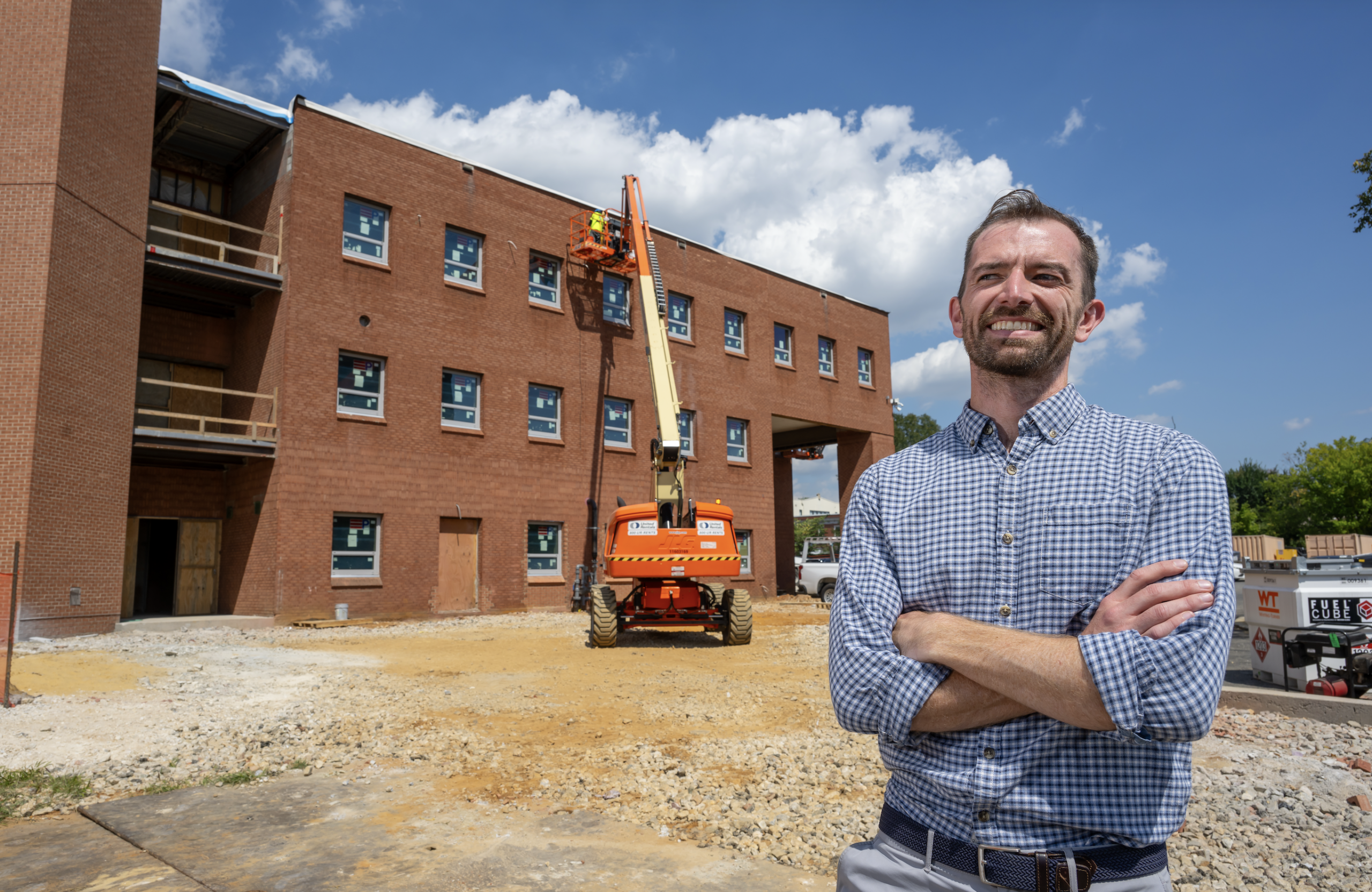
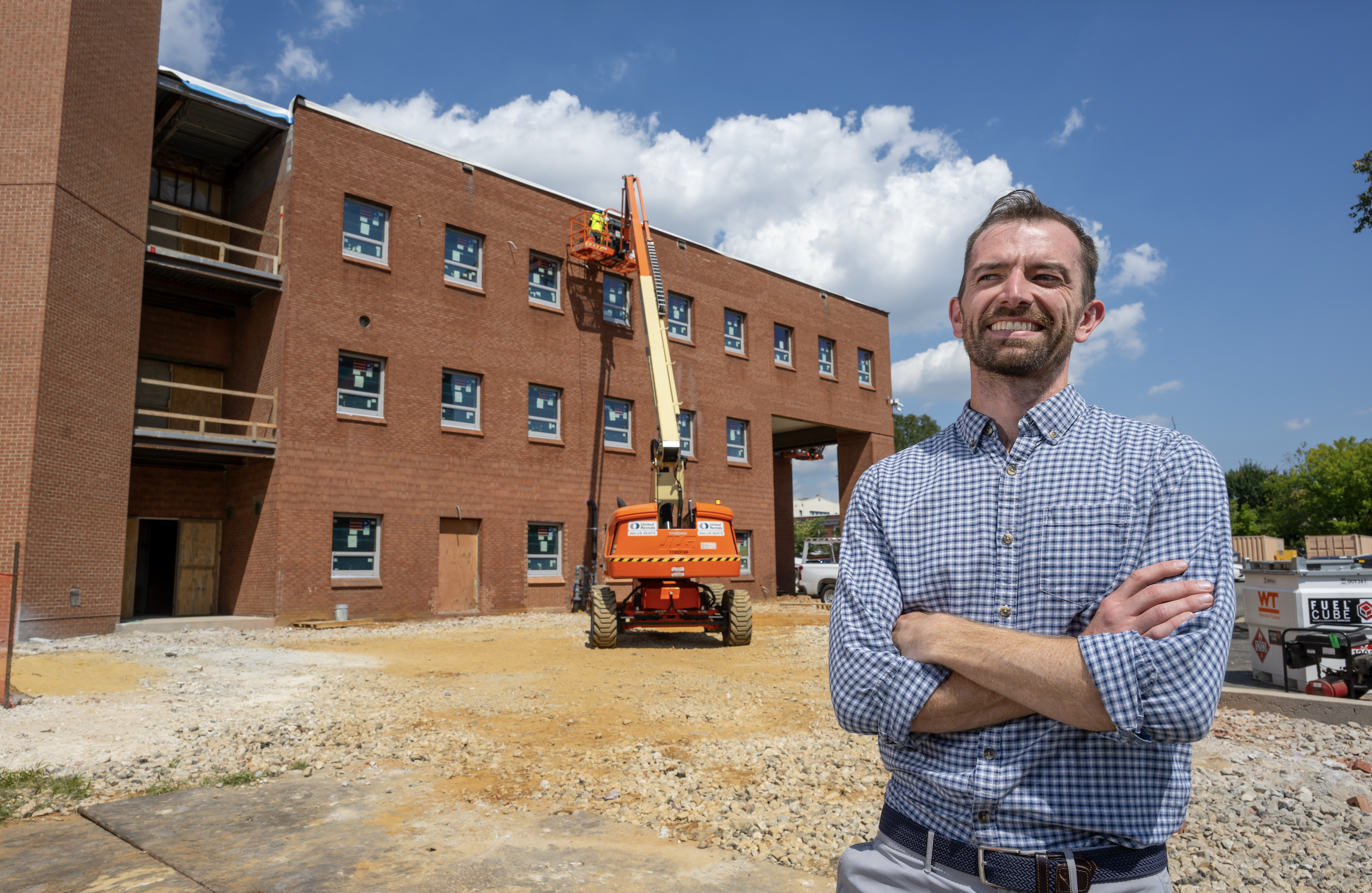
Kevin Creamer at the Carolyn E. Fugett Intergenerational Center in Baltimore while the building was under construction. | Credit: Photo courtesy of Catholic Charities Baltimore
Catholic Charities acquired the project site, which was previously an elementary school, in 2021. Construction for the project took about three and a half years.
“The center itself is a byproduct of our Centennial and Capital Campaign,” Creamer said. “Catholic Charities Baltimore turned 100 in 2023, and a campaign was launched to spearhead three milestone projects for the agency.”
The campaign raised a little over $100 million, which, along with the Fugett Center, contributed to the Gallagher Meaningful Day Center, a center for individuals with intellectual disabilities, and the Cherry Hill Town Center, a community gathering space.
The center has also been funded by private fundraising with a number of partners to support activities and programs.
Community engagement all under ‘one roof’
The intergenerational model allows for multiple program partners to be present and offer activities to different age groups all under one roof.
“We knew we wanted to bring in what we had already been doing well in the neighborhood: our food pantry program, our Head Start programming, some of our behavioral health services,” Creamer said. “But to fill in the gaps around that model, we needed to defer to the expertise of the leaders in the neighborhood.”
Catholic Charities of Baltimore Head Start program at the Carolynn E. Fugett Intergenerational Center. | Credit: Photo courtesy of Catholic Charities of Baltimore
Creamer began talking with community partners and leaders “to make sure that we got this right and that there was room in the project scope for the interests of the community.”
“The loss of recreation centers and access to things like after-school basketball and basketball leagues was something that came up a lot in those conversations,” he said.
So basketball became “a big driver,” Creamer said. “PeacePlayers is our in-house basketball partner,” and “theyʼll be running youth programming from [ages] 5 to, really, 25” at the center.
Starting this summer, PeacePlayers will use the Fugett Center as one of its locations for a free program for kids and a coaching and leadership development program for teens and young adults.
A “lack of senior programming space and activity space” also came up when leaders spoke with neighbors, especially since the center is “located right next to Rosemont Tower, which is a 200-unit Housing Authority building largely for seniors,” Creamer said.
To address this, the facility has “five community classrooms thatʼll house a rotating curriculum of classes” including “senior dance class, musical theater, chair yoga, candle making — all free of charge to our neighbors.”
It will offer community art projects led by outside vendors but will also engage the community with volunteer-led classes, as neighbors hope “to lead crocheting classes or jewelry-making classes,” Creamer said.
“We want to empower residents to also give back their gifts,” Creamer said.
The space will also provide “access to the internet, to learn computer skills,” Creamer said. It has a computer lab to offer “digital literacy instruction, job preparation, resume writing, and interview training.”
Named in honor of a lifelong ‘community leader’
The center is named after Carolyn E. Fugett, “who is the mother of Reginald F. Lewis … who was an entrepreneur and a lawyer — widely considered the first Black billionaire in U.S. history," Creamer said.
Fugett “was a community leader throughout her entire life" who "passed about three years ago at the age of 97."
"She did not ask for credit" and "she preferred to operate in the backdrop but was such a wellspring of compassion.”
As "a big advocate of child education,” she worked with bishops, schoolteachers, and principals to help Catholic schools integrate coming out of segregation.
“So when we thought about the early childhood education piece, the beacon that we want this community center to provide to the neighborhood, she represented all of what we hope to be."
“A handful of the team attached to this project were at her funeral service at St. Edwardʼs Church, which is right across the street from the [center]," Creamer said.
“We came out of that service after hearing the outpouring of love from her family and from the community at large, and the first thing you see walking out of those church doors was the building that was being constructed.”
"Sometimes God speaks very clearly, and itʼs hard not to listen,” he said.
“Weʼre honored to bear her name, and weʼre excited to carry that torch. Sheʼs shown us who we have to be, as has the community. We just need to keep listening and keep rising to the occasion,” Creamer said.
With the announcement of Pope Leo XIVʼs first papal encyclical, Magnifica Humanitas: “On the Protection of Human Dignity in the Age of Artificial Intelligence," there is much anticipation as to what guidance the pope will provide on the digital revolution and emerging technologies such as AI.
But what are papal encyclicals, and what can they reveal about the popeʼs priorities on the world stage and for the Church?
The pope’s pastoral letter
A papal encyclical is a pastoral letter written by the pope, primarily addressed to bishops but also to Catholics and all people, typically reflecting on Church teachings and suggesting ways to apply them to modern issues.
According to the 1917 edition of the Catholic Encyclopedia, encyclicals were “letters sent to all the bishops of Christendom, or at least to all those in one particular country, and intended to guide them in their relations with their flocks.”
Encyclicals are part of the pope’s everyday teaching authority, known as his “ordinary magisterium.” They are among the most common ways he presents Church doctrine and serve as authoritative and valuable sources of Catholic teaching and guidance on contemporary topics, including sexuality, Catholic social teaching, and stewardship of the earth.
Since Pope Leo XIII, encyclicals have become one of the most common means by which popes are heard across the globe on the most pressing issues of our time.
Are Catholics required to believe them?
A pope does not normally use an encyclical to make an "ex cathedra" declaration — a solemn, and rare, statement on faith or morals, normally promulgated in an apostolic constitution. Modern examples of "ex cathedra"proclamations include the popes' definitions of the dogmas of the Immaculate Conception (1854) and the Assumption (1950).
Encyclicals, however, are not merely letters or expressions of the popeʼs opinion. They carry significant doctrinal weight and are frequently cited as important sources of Catholic teaching.
According to canon law, Catholics are required to give “a religious submission of the intellect and will” to these letters and to “take care to avoid those things which do not agree with it.”
Simply put, Catholics are to presume that the pope teaches the truth in these letters and to sincerely respect the teachings they contain.
Recent encyclical trends
Initially addressed exclusively to bishops, papal encyclicals began reaching broader audiences in the modern period, beginning with Pope Leo XIII’s groundbreaking 1891 encyclical Rerum Novarum. It marked the first time in many years that the bishop of Rome had written a pastoral letter on matters other than doctrine or internal affairs of the Church, instead addressing workers’ rights, the right to private property, and the dangers of socialism.
With St. John XXIII’s Pacem in Terris in 1963, pontiffs increasingly addressed their letters to “all men of goodwill,” shifting from a mainly Catholic audience to the global stage.
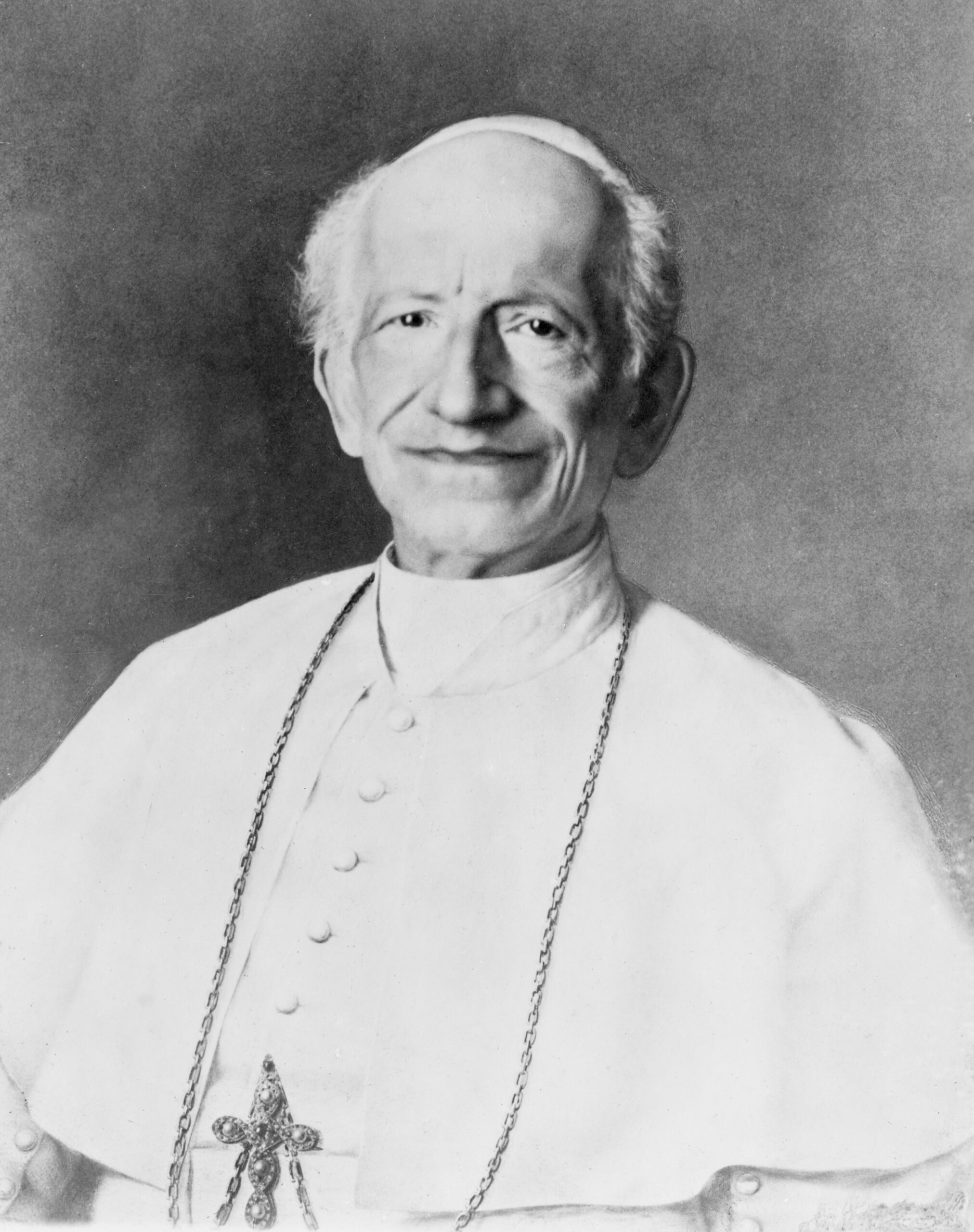
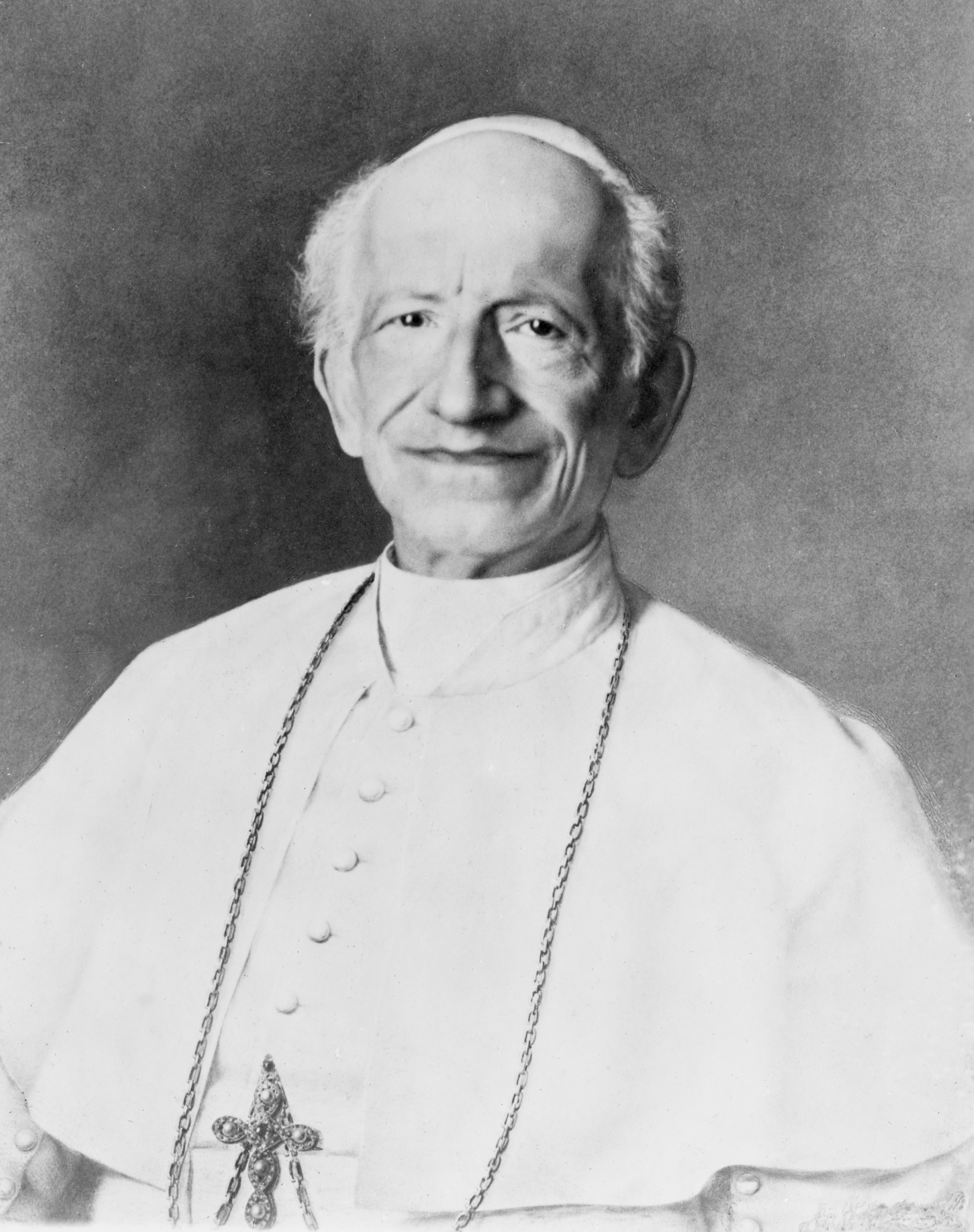
Pope Leo XIII in 1898. | Credit: Francesco De Federicis/Wikimedia Commons
Since the Second Vatican Council, papal encyclicals have increasingly focused on threats to the dignity of the human person and authentic human development. St. Paul VI wrote Humanae Vitae in 1968, reiterating and applying Church teaching to the question of artificial birth control. St. John Paul II dedicated four encyclicals to promoting Catholic social teaching, building on Leo XIII’s Rerum Novarum. Pope Francis’ four encyclicals largely addressed the preservation of ecology and universal fraternity.
Despite the importance given to these letters in the modern period, the average number of encyclicals per pope is relatively small. Francis wrote only four, while Benedict XVI, his immediate predecessor, wrote just three. John Paul II wrote 14, but the average number of encyclicals per pope since the Second Vatican Council has been just seven.
Leo XIII has the most encyclicals of any pope, with 88, 11 of which are dedicated to the rosary.
Pope Leo XIVʼs first encyclical builds on others
Pope Leo XIV indicated at the beginning of his pontificate that he intended to follow in the footsteps of Pope Leo XIII, his predecessor, by responding to todayʼs industrial revolution: “developments in the field of artificial intelligence.”
May 15 marked the 135th anniversary of the publication of Pope Leo XIII’s 1891 encyclical on capital and labor, Rerum Novarum: “Of New Things” — the first in a long line of social encyclicals produced in the modern era of the Catholic Church.
Addressing the College of Cardinals on May 10, 2025, Leo said: “In our own day, the Church offers to everyone the treasury of her social teaching in response to another industrial revolution and to developments in the field of artificial intelligence that pose new challenges for the defense of human dignity, justice, and labor.”
Magnifica Humanitas is expected to be released on May 25 at 11:30 a.m. Rome time in the Vaticanʼs Synod Hall.
Minnesota’s Catholic bishops are applauding the passage of a bipartisan bill this week that restricts what critics say are the addictive aspects of social media for children below age 15.
The Minnesota Catholic Conference, the public policy arm of the Church in Minnesota, issued a statement May 16 saying it is “encouraged” that lawmakers in both legislative houses overwhelmingly passed the Stop Harms from Addictive Social Media Act.
The bill is aimed at curbing the purportedly addictive design of social media for young children by imposing new requirements on large social media platforms earning $1 billion or more in global advertising revenue.
It prohibits several features for accounts of children 15 and younger, including infinite scrolling, algorithmic or profile-based feeds, push notifications for new content or likes, autoplay videos, visible engagement metrics such as likes and shares, and usage-based awards, badges, or streaks.
“No more ads, no more push notifications, no more infinite scrolling … and the strongest privacy protections,” state Rep. Peggy Scott, the author of the bill in the state House, said when presenting the bill.
Targeted or paid commercial advertising based on the child’s activity or personal information is also banned for youth accounts.
“This legislation puts parents back in the driver’s seat and helps them foster healthy dialogue with their kids about social media use,” said Maggee Hangge, assistant director for family policy at the Minnesota Catholic Conference, in a press release. “It will mean happier kids who are less anxious, less worried, and more focused on the present moment.”
After passing with a vote of 132-2 in the House and a vote of 66-0 in the Senate, the bill now requires Gov. Tim Walz’s signature to become law.
“I’ve seen the addiction, the mental health issues — this is an area [of concern] that crosses party lines,” said state Sen. Michael Kreun, who co-authored the bill.
“Parents really need help right now with all this technology,” he said. “Kids themselves are asking for help, as we have seen from the data.”
The bishops’ conference cited a recent Minnesota Student Survey that found that almost 20% of students are online between midnight and 5 a.m. at least five nights a week, along with a 2023 study that showed that 97% of students report using their smartphones during the school day.
Johann D’Souza, a Catholic psychologist who focuses on the destructive effects of screen overuse on youth, told EWTN News that the Minnesota bill is “a laudable step in the right direction given the documented mental health crisis in youth starting in 2010, the year Instagram came out.”
“Let’s build momentum from this small but real win to further protect children from toxic screen use and digital destruction,” he said.
If signed by Walz, the law would take effect July 1, 2027, for both new and existing accounts. It includes exemptions for email, direct messaging, streaming services, online games, and e-commerce platforms where social features are not central.
Enforcement includes a private right of action for families, with potential statutory damages of $10,000 per knowing or reckless violation, plus possible punitive damages and state attorney general enforcement as a deceptive trade practice.
Once known for building the beauty empire behind e.l.f. Cosmetics into a household name, Scott Borba spent decades immersed in boardrooms, branding, and the fast-moving world of consumer culture.
Today, however, his focus has shifted from profit margins to parish ministry. After years serving as a Catholic deacon, Borba now stands on the threshold of an even more profound calling: ordination to the priesthood.
In 2004, Borba — alongside father and son Alan and Joseph Shamah — founded the cruelty-free makeup brand e.l.f. Cosmetics, which stands for “eyes, lips, face.” By the mid-2010s the brand had reached immense levels of success thanks to its affordable prices and ethical products. By 2014, the makeup brand reached $100 million in sales.
Living a life of luxury, in his 40s Borba began to experience a call from God. In 2019, Borba gave up the fortune he had acquired from e.l.f., donating it all to different charities, and entered seminary in the Diocese of Fresno, California.
Borba was ordained a transitional deacon on June 21, 2025, and will be ordained a priest on May 23.
In an interview with “EWTN News Nightly,” Borba shared that he first felt the calling to the priesthood when he was 10 years old but, feeling unworthy, he “ran away from the call and in the process I was running away from my faith also.”
“I had a very big conversion when I was 40,” he added. “At that time, I was in transition of different businesses and through the help of God I was able to understand the state of my soul and where I was headed. I really wanted to recalibrate my life with him and to re-entertain what he offered me when I was 10.”
It was during a house party that Borba realized how lonely, empty, and unloved he felt, despite having everything in terms of material wealth.
“That was another grace from God that he gave me to understand my unhappiness,” he said. “Then he allowed me to ask him the question, ‘Help me be the man you created me to be, but I can’t do it without your help.’ And that’s when the love and mercy came into my life.”
Borba explained that after that moment, his journey continued with the sale of one of his luxury cars. All proceeds were donated to charity, and when he saw “how it could affect people’s lives with positive change — helping with the poverty and the homelessness — that was the key that God, Our Lord, used with me to open the floodgates for the rest of it to go.”
Letting go of the material wealth was one of the hardest aspects of the transition from secular life to religious life, Borba shared. The former beauty mogul went from owning houses to “living in a little tiny room” when he entered St. Patrick’s Seminary in Menlo Park, California.
“You can’t fit everything in there, so you have to make a decision to hold onto it or not. And the seminary gives you the opportunity to figure that out — to either unite to his will or not,” he said. “So, for me, it was to have to give that up. It took me years to get comfortable with that, but now I’m actually in tons of peace knowing that I don’t have many possessions and that I can actually travel and focus on where ministry and Our Lord takes me.”
“Once I surrendered to him and understood the reality of why I’m here, why we’re all placed here, is to get back in union with him, it literally changed my life,” he shared.
Borba encouraged those who might also be ignoring God’s call in their lives to “not give up.”
“If Our Lord is calling you and you’re just not ready for the call, ask him to have patience with you and to direct you in the life that you’re currently in. But let me tell you, if we orient ourselves to God right now, he takes care of everything for us in this life as well as prepares us for the next,” he said.
“If we’re able to do his will, the joy and the love and the success will come, but itʼs oriented to his divine providence. That’s what I didn’t know, that is the truth, and that’s what I want to let everyone know: Put him first and everything will fall into place, I promise you.”
The U.S. Conference of Catholic Bishops (USCCB) is urging lawmakers to prioritize the environment and conservation in the budget reconciliation package being negotiated by Congress.
In a letter to leaders of the House and Senate appropriations committees, Louisville, Kentucky, Bishop Shelton J. Fabre, chair of the USCCB Committee on Domestic Justice and Human Development, wrote that conserving the environment is a command from God and necessary for the common good.
“In the Book of Genesis, God commands humanity ‘to cultivate and care for’ the Earth and its resources,” Fabre wrote, quoting Genesis 2:15.
He listed the environmental priorities of both Pope Francis and Pope Leo XIV and said one important way to fulfill that mission is with federal funding to the Environmental Protection Agency (EPA) and the Department of the Interior (DOI).
Fabre encouraged the restoration of previous levels of funding after the fiscal 2026 budget decreased EPA funding by $277 million and DOI funding by $211 million. The Trump administrationʼs fiscal 2027 budget proposal called for cutting the EPA’s budget by more than half and decreasing the Interior Departmentʼs budget by nearly 13%.
Fabre said adequate funding and staffing is necessary for the agencies to fulfill their responsibilities under the National Environmental Policy Act, Endangered Species Act, Clean Air Act, and Clean Water Act, and to support certain initiatives.
“Notable initiatives from these agencies that foster care for creation and the common good include the Superfund Program to clean up toxic waste contamination; State Revolving Funds (SRF) programs that provide loans, matched by states, to upgrade aging infrastructure to improve access to clean and safe drinking water, improve the health of our nation’s rivers, lakes, and wetlands, and support economic opportunities; and programs that monitor air quality from power plants and industrial facilities, schools, and ports,” the letter said.
The bishop further expressed concerns about cuts to programs that were meant to promote clean energy, reduce greenhouse gas emissions, and safeguard endangered species and wilderness areas, among other things.
“Adequate funding for EPA and DOI is necessary for our nation to safeguard our God-given, life-sustaining natural resources such as water, air, lands, and wildlife,” Fabre wrote.
“These investments further promote economic opportunity and healthy environments where people live and recreate,” he added. “Congress should take care to ensure that these funds address environmental risks to God’s creation, especially for the most vulnerable amongst us.”
Fabre thanked the lawmakers for efforts to protect ecosystems and public health, ensure safe drinking water and clean air, address climate change, and support sustainable livelihoods.
“The common good requires sound stewardship of the environment and respect for the human dignity of all who share our common home,” he added.
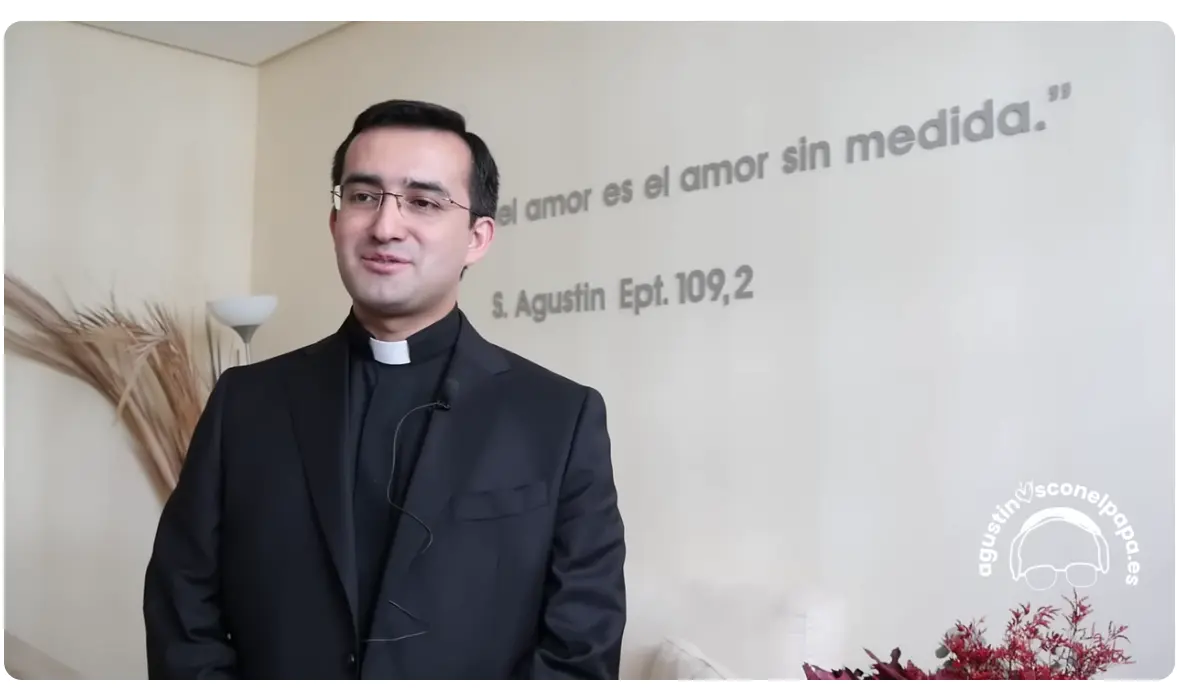
Pope Leo XIV goes through his day centered on prayer, silence, and seeking God amid his responsibilities at the helm of the Church, said his personal secretary, Peruvian priest Father Edgard Rimaycuna, in an interview released May 18 by the Order of St. Augustine.
Rimaycuna offered details regarding the daily spiritual life of the pontiff, whom he described as a man who “lives always in the constant presence of God.”
“From the very start of the day, he has his fixed times for prayer, including holy Mass and the recitation of the Liturgy of the Hours; we also pray the rosary,” the priest explained.
Father Edgard Rimaycuna speaks with ACI Prensa. | Credit: Screenshot/Los Agustinos
The pope’s personal secretary added that Leo XIV throughout the day “always seeks contact with God through silence and through prayer before the Blessed Sacrament in the chapel.”
According to Rimaycuna, the pontiff’s spirituality is deeply influenced by the thought of St. Augustine. “St. Augustine used to say: God is so intimately within man that man himself is within himself,” he noted.
“The Holy Father seeks God within himself; he speaks with him, that is prayer,” he added.
A spirituality that translates into closeness
The Peruvian priest said the pope’s spiritual experience is subsequently reflected in his interactions with “the people with whom he works.”
This closeness, he noted, is manifested in “the time he gives to every person who seeks him out” and in the attention he pays to those who confide their difficulties or concerns to him.
“When someone entrusts him with a specific intention or concern, he keeps them very much in mind,” he added.
A pope who listens before deciding
Rimaycuna also described Leo XIV as a patient and prudent man in the governance of the Church. “He is not a man of immediate decisions. He always thinks, listens, and takes into account even opposing views,” he stated.
The secretary emphasized that the pontiff seeks to avoid confrontation and promote unity.
“He is a man who seeks to build bridges, seeks dialogue, and always avoids confrontation,” he added.
Peace: A constant concern
The papal secretary also noted that one of the Holy Father’s greatest sources of suffering is the current wars. “He suffers a lot because of all of this,” he said, referring to the conflicts in Ukraine and the Middle East, noting that Leo XIV’s first words after being elected pope were a call for peace: “Peace be with all of you.”
“He always works for peace; he constantly calls upon authorities for a ceasefire,” he noted.
The pope will always need our prayers
Rimaycuna asked the faithful to pray constantly for the Holy Father, given the spiritual weight the pope bears in leading the universal Church.
“We can never offer too many prayers. The Holy Father will always need our prayers,” he emphasized.
This story was first published by ACI Prensa, the Spanish-language sister service of EWTN News. It has been translated and adapted by EWTN News English.
The Order of St. Augustine in Spain will welcome Pope Leo XIV in June with particular enthusiasm: He has visited the country on 10 previous occasions before becoming pope when he served as prior general of the Augustinians from 2000 to 2024. Robert Prevost traveled to Málaga, Seville, León, Valencia, Zaragoza, Santander, Huelva, Valladolid, Madrid, Bilbao, Palencia, and Ávila.
On June 7, the second day of his apostolic journey, the pontiff will hold a private meeting with a delegation of the Augustinian community at the apostolic nunciature in Madrid.
The Augustinian province of San Juan de Sahagún in Spain and Portugal comprises 338 religious with solemn vows, forming 36 communities distributed across 39 houses, including two communities in Portugal and two formation communities where 45 brothers are undergoing formation.
While primarily established in the Iberian Peninsula, the Spanish Augustinian province also extends to other parts of the world: Antilles, Argentina, India, Peru, Venezuela, and Tanzania, in vicariates. It also has two delegations in Central America and Cuba.
In total, this subdivision of the Order of St. Augustine is present in 12 countries in addition to Spain and Portugal: the Dominican Republic, Puerto Rico, United States, Argentina, India, Peru, Venezuela, Tanzania, Cuba, Honduras, El Salvador, and Costa Rica.
The orderʼs international character is evident in Spainʼs Augustinian communities. In Barcelona, the community consists of four religious, two originally from the Philippines and two from Tanzania. Together, the four of them provide pastoral care for three parishes within the Archdiocese of Barcelona.
One of these is St. Augustine Parish, where on June 10 Pope Leo XIV will meet with diocesan charitable and assistance organizations. Situated off the beaten tourist path, it is located in the Raval neighborhood, one of the most disadvantaged in Barcelona. Indeed, very close to the parish, the Missionaries of Charity provide meals to about 400 people each day.
In the Canary Islands, the Order of St. Augustine has maintained a presence since the 14th century, and numerous missionaries have set out from there. Currently, a single community remains in Puerto de la Cruz on Tenerife Island, comprising four religious: Father Ángel Andrés, a 77-year-old Spaniard who serves as coordinator; Father Manuel Ángel Andrés Alegre, a 96-year-old Spaniard; Father Aldrin Alvarado, 45, originally from the Philippines; and Father Jojo Neyssery Lonankutty from India, also 45.
The Order of St. Augustine in Spain runs 17 schools and three university residential colleges in addition to the Royal University Center Escorial-María Cristina. This work benefits nearly 18,000 students and employs 1,500 teachers, support staff, and administrators.
The Spanish Augustinians maintain two formation houses, one in Valladolid and another in El Escorial, where the novitiate is also headquartered.
Each educational center features a pastoral team coordinated by a designated leader and comprising both Augustinian religious and lay members responsible for planning and promoting activities related to the apostolate and evangelization.
The events surrounding the popeʼs visit to Spain are being organized by the Augustinian family in collaboration with other religious congregations including the Augustinian Recollects, Discalced Augustinians, Assumptionist Augustinians, Augustinian Missionaries, Augustinians of the Amparo, and Contemplative Augustinians, thereby bringing together approximately 8,000 pilgrims from various parts of Spain.
This story was first published by ACI Prensa, the Spanish-language sister service of EWTN News. It has been translated and adapted by EWTN News English.
An Ebola outbreak in the Democratic Republic of Congo (DRC) and Uganda could take more than a year to contain due to scarce resources, regional conflict, and misinformation among local communities, according to Catholic Relief Services.
“It is a very big crisis,” Rafaramalala Volanarisoa, head of office for Catholic Relief Services in the DRC, told EWTN News. “Of course, Ebola, there’s no treatment, there’s no vaccines, so it’s very difficult to contain.”
Volanarisoa, who is based in the capital, Kinshasa, said CRS is partnering with Caritas medical centers across seven Catholic dioceses as well as the DRC Ministry of Health and the World Health Organization (WHO) to help combat the outbreak.
She said CRS is providing funding to health centers for medical and hygiene supplies and distributing educational materials to help prevent transmission and counter misinformation.
“We have sent money to them to purchase those different supplies to protect the health center staff but also to protect those who are doing education in the community,” she said. “There are really big needs, so in many aspects, it’s reaching the community, doing proper education, and also supporting health center staff so they are protected.”
In addition to a lack of medical and sanitation supplies, Volanarisoa said population movement driven by armed groups and multiple warring factions is complicating response efforts. She also noted resistance among some local communities to accepting CRS-led public health education.
Volanarisoa said stigma and disbelief have fueled misinformation that Ebola is “fake” or intended to undermine local traditions, including burial practices. She said that while there is a high risk of transmission from bodies of those who have died from the disease, some communities remain resistant to changing burial practices.
“It’s very difficult for the population to do it in their proper ways, so there is misinformation that this is something brought to change the way we live here,” she said.
She noted that CRS does not operate directly on the front lines due to “cultural norms,” language barriers, and long-standing relationships between the Church and local communities.
Although she said the scope of the outbreak remains difficult to determine, she estimated the total cost to stop the spread of the virus at around $3 million and said past assessments suggest that if cases surpass 500, containment could take more than a year.
According to Volanarisoa, there are 33 confirmed Ebola cases in the DRC. There are also 516 suspected cases in the DRC, 131 deaths among suspected cases, and 541 people identified as contacts of confirmed cases or symptomatic deaths.
Two lab-confirmed cases have been reported in Kampala, Uganda, including one death, among two unrelated individuals who traveled into the country from the DRC, according to WHO.