Pope Leo XIV will launch a contemporary art exhibit focused on water at the Vatican Apostolic Library on Sept. 14.
The exhibit “AQVA Catastrophe and Wonder”will include artwork highlighting a “reflection on water as both a threat and a resource,” according to a July 12 press release from the library.
Notably, the pope will inaugurate the exhibition on his 71st birthday, which is Sept. 14.
“AQVA Catastrophe and Wonder” will include the works of French artist JR, American typographer Bill Moran, and Italian chef Fulvio Pierangelini.
According to Archbishop Giovanni Cesare Pagazzi, the Holy See’s librarian and archivist, the exhibit will reflect the pontiff’s desire to bridge the past and the present.
“These exhibitions are intended to foster dialogue between contemporary art and the library’s centuries-old heritage,” Pagazzi said in the press release. “On several occasions, the pope has emphasized fidelity to the past and fidelity to the future. The present — including the present of this exhibition — can become a home where past and future meet as friends.”
The Vatican Apostolic Library is both the national library of Vatican City State and the library of the Holy See. It was established in 1475 by Pope Sixtus IV, making it one of the oldest in continuous existence. Beyond its extensive collection of important texts and manuscripts, it hosts an elaborate art collection, featuring frescoes and sculptures from the High Renaissance.
The display “AQVA Catastrophe and Wonder” will be open to visitors from Sept. 25, 2026, to May 14, 2027.
In 2025, the library held the “En Route” exhibition from Feb. 15 to Dec. 20, connecting historical journeys to modern pilgrimages through a collection of rare 19th-century travel documents and contemporary artistic interpretations. It marked the sixth installment in the library’s ongoing dialogue between its historical patrimony and contemporary art, which began in 2021.
During the 2025 Jubilee Year, the Dicastery for Culture and Education introduced Conciliazione 5, a one-room gallery space with a large window onto the main thoroughfare leading to St. Peter’s Basilica, Via della Conciliazione. Beyond the jubilee, the space continues to feature the works of different contemporary artists, making them visible to the tourists and pilgrims who pass the window every day on their way to the Vatican.
The Holy See has also participated in the Venice Biennale — an international artistic and cultural festival held annually in the northern Italian city — since 2013.
The pope’s representative in Great Britain is hopeful that Pope Leo XIV will visit England and “awaken the conscience of the West.”
A papal visit to England is “likely, desirable, and I would even say unavoidable,” Archbishop Miguel Maury Buendía, apostolic nuncio to Great Britain since 2023, told ACI Prensa, the Spanish-language sister service of EWTN News.
A visit to Great Britain is “likely, because King Charles III paid a state visit to the Vatican last year, and it is logical that the United Kingdom would now invite Pope Leo XIV to return the visit,” he added.
The last pope to make an official visit to the United Kingdom was Pope Benedict XVI in 2010.
Maury said that, as the first English-speaking pope in more than eight centuries, the welcome for Pope Leo would be “extraordinary and his message amplified throughout the English-speaking world.”
“The bishops of England and Scotland also hope that a papal visit will reinvigorate the proclamation of the faith in one of Europe’s most secularized societies — one which, I would say, is currently experiencing a time of grace,” the papal representative said.
“The spiritual vacuum of recent decades is giving way to a quiet Christian revival among younger generations,” the archbishop continued. “Religious practice is increasing among Catholics, thanks in part to the thousands of immigrants and children of immigrants who are revitalizing parish life and contributing to the growth of Catholic communities.”
“Everything suggests that the pontificate of Leo XIV is called to awaken the conscience of the West just as that of St. John Paul II once stirred the conscience of the East, so that the Church may once again breathe fully with both of its lungs,” he said.
Born in 1955 in Spain, Maury was ordained a priest in 1980. He never imagined he would become an apostolic nuncio. Nevertheless, in obedience to one of his superiors, he entered the Holy See’s diplomatic service in 1987, beginning a career that would lead him to represent the pope in various countries around the world for more than 39 years.
The book “Faith, Life, Diplomacy,” published in Spanish and Italian, reflects on Maury’s nearly four decades of diplomatic service in countries such as Kazakhstan, Kyrgyzstan, Tajikistan, Romania, and Moldova.
ACI Prensa: You have published “Faith, Life, Diplomacy,” a book about your service in countries such as Kazakhstan, Kyrgyzstan, and Tajikistan, where Catholics are a minority. What did you learn there, and what left a lasting mark on you?
Maury: I discovered the great humanity of those peoples and the devastating effects on their souls of 70 years of communist and atheist rule. The Muslim majority and millions of Russian Orthodox believers abandoned their faith, while the Catholic minority preserved it — despite being deprived of priests for at least 20 years — thanks to the daily family rosary.
Another thing that impressed me positively was the desire of the younger generations to learn and to serve society, now free from the terror under which their parents lived. This contrasts sharply with the apathy and selfishness present among much of Western youth.
When Pope Benedict XVI sent me as his representative to those countries, I asked him for advice. “Go,” he told me, “to the remote places where none of your predecessors has gone, and bring them the pope’s blessing.”
I did so, just as I have continued to do in the countries to which Pope Francis later sent me.
Beyond the joy such — sometimes uncomfortable and risky — journeys bring to people, they provide an unfiltered view of realities on the ground, free from assumptions and prejudices, that can help enlighten officials in the Roman Curia.
You began your diplomatic service in Rwanda. You arrived at a difficult time, amid the massacres in Burundi, and remained there when the genocide erupted. What do you remember most? Were you afraid of dying?
I began my diplomatic service in Kigali at age 31, and I truly feared that a stray bullet might hit me. In fact, I still have one that came through my bedroom in the middle of the night.
Certainly, no one intended to kill us, but the combatants’ lack of training was evident. As far as I know, apart from a few Europeans who had married Tutsi women and were specifically sought out during the genocide, only one elderly French religious sister and an Italian volunteer fell victim to stray bullets.
We should not forget that most of the victims on both sides were killed with machetes. In other words, people knew exactly whom they were eliminating.
Civil wars are the most horrific because they are driven by hatred, even though they are often provoked and fueled by outside interests.
A nuncio’s mission is not the same as that of a typical ambassador. What are the methods and goals of the pope’s diplomacy?
I never tire of repeating that the Holy See has no oranges to sell and no oil to buy.
The very purpose of Vatican City State is different from that of other states, whose primary responsibility is to ensure the well-being of their citizens. The Vatican exists to guarantee the pope’s independence. He is the only global religious leader who is not subject to any political authority and is therefore free to proclaim the Gospel.
The Holy See’s diplomacy gives priority to the spiritual dimension of the human person, raising awareness among the various actors in the international community of the need and benefit of respecting and promoting human rights at both the individual and social level.
Every country’s embassies and consulates seek to protect the rights of their citizens abroad. The Holy See’s situation is different because Catholics living in different countries are generally citizens of those same states, so there is, at least in theory, a convergence of interests.
The pope has just traveled to Spain. I believe you worked on preparations for Pope Francis’ visit to Romania. How are these visits prepared so that the pope’s message has a lasting impact?
I followed the trip on Spanish television and saw that the enthusiasm of the Spanish people for the pope remains undiminished despite social changes.
I had the honor of helping prepare five apostolic journeys of St. John Paul II — to Rwanda, Uganda, Nicaragua, Egypt, and Slovenia — and I did indeed welcome Pope Francis to Romania.
When preparing papal trips, one must distinguish among different levels: program, logistics, message, and so on.
Lately, excessive emphasis on security concerns has unfortunately had the effect of distancing the pontiff from the faithful.
As for the lasting impact of his message, much depends on whether it responds to the expectations and historical circumstances of the countries he visits. Normally, it is the local Church that proposes the motto and themes of the trip, although the pope naturally has the final word.
This story was first published by ACI Prensa, the Spanish-language sister service of EWTN News. It has been translated and adapted by EWTN News English.
Marriage is one of the Catholic Churchʼs greatest paths to holiness. From the first Christian missionaries to modern-day martyrs, married couples have shown that a shared life rooted in faith, sacrifice, and love can become a powerful witness to the Gospel.
Throughout the month of July, the Church celebrates the feast days of several holy husbands and wives whose lives continue to inspire Catholic families today.
Here are four of those couples:
Blessed Joseph and Wiktoria Ulma (Feast day: July 7)
Blessed Joseph and Wiktoria Ulma were a young married couple living in the small Polish village of Markowa during the Second World War. Devout Catholics, they were raising six young children and were expecting a seventh when they made the decision to shelter eight Jewish people in their home after Nazi Germany occupied Poland. They knew the penalty for helping Jews was death, but their Christian faith compelled them to protect their neighbors despite the grave risk.
On March 24, 1944, German police discovered those they were hiding. Joseph and Wiktoria, along with the eight Jews they had sheltered, were executed. The soldiers then murdered each of the Ulmas' six children. During Wiktoriaʼs execution, she went into labor with her seventh child, who also died, making the entire family martyrs.
While they are not saints yet, the Ulmas were beatified together on Sept. 10 2023, becoming the first entire family — including an unborn child — to be beatified as martyrs. Today, they are honored as patrons of families and unborn children.
Sts. Priscilla and Aquila (Feast day: July 8)
Priscilla and Aquila, close collaborators of St. Paul, were among the earliest Christian married couples. Jewish converts to Christianity, they were forced to leave Rome after Emperor Claudius expelled the Jews from the city around A.D. 49. The couple settled in Corinth, where they met Paul, who shared their trade of tent-making. They welcomed him into their home, and together they worked while spreading the Gospel throughout the Roman Empire.
The New Testament frequently mentions the couple together, highlighting the strength of their marriage and shared mission. They traveled with Paul to Ephesus, where they hosted a church in their home, which is also referred to as a “house church.” Paul also writes that the couple “risked their necks” for his life — however there is no biblical record of the occasion.
The couple is perhaps best known for mentoring the gifted preacher Apollos, gently explaining the fullness of the Christian faith so that he could become an even more effective evangelist.
Priscilla and Aquila are the patron saints of marriage, love, and strong Christian families.
Sts. Louis and Zélie Martin (Feast day: July 12)
Sts. Louis and Zélie Martin are best known as the parents of St. Thérèse of Lisieux, but their own path to holiness began long before the birth of their famous daughter.
Both initially considered religious life before discerning that God was instead calling them to marriage. They were wed on July 12, 1858, in Alençon, France — the date that would become their feast day.
The Martins endured both profound joy and deep suffering. Of their nine children, four died in infancy or early childhood, while the remaining five daughters all entered religious life. Throughout these trials, Louis and Zélie remained steadfast in prayer, trusting Godʼs providence and making the practice of their Catholic faith the center of family life.
Cardinal Jose Saraiva Martins, the prefect of the Vatican’s Congregation for the Causes of Saints at the time of their beatification in Lisieux in 2008, said in his homily: “Louis and Zélie understood that they could sanctify themselves not despite marriage but through, in,andby marriage, and that their nuptials would be considered as the starting point for a mutual rise.”
Canonized together on Oct. 18, 2015, by Pope Francis, Louis and Zélie became the first married couple in Church history to be declared saints together.
Sts. Joachim and Anne (Feast day: July 26)
Sts. Joachim and Anne are honored by the Church as the parents of the Blessed Virgin Mary and the grandparents of Jesus Christ. Although they are not mentioned in the canonical Gospels, their story has been preserved through ancient Christian tradition, particularly through the second-century “Protoevangelium of James.” According to tradition, the couple was advanced in age and had long suffered the sorrow of childlessness before God answered their prayers with the miraculous conception of Mary.
Today, Joachim and Anne are the patron saints of grandparents, married couples, and families. Their feast is a reminder of the indispensable role parents and grandparents play in passing on the faith to future generations.
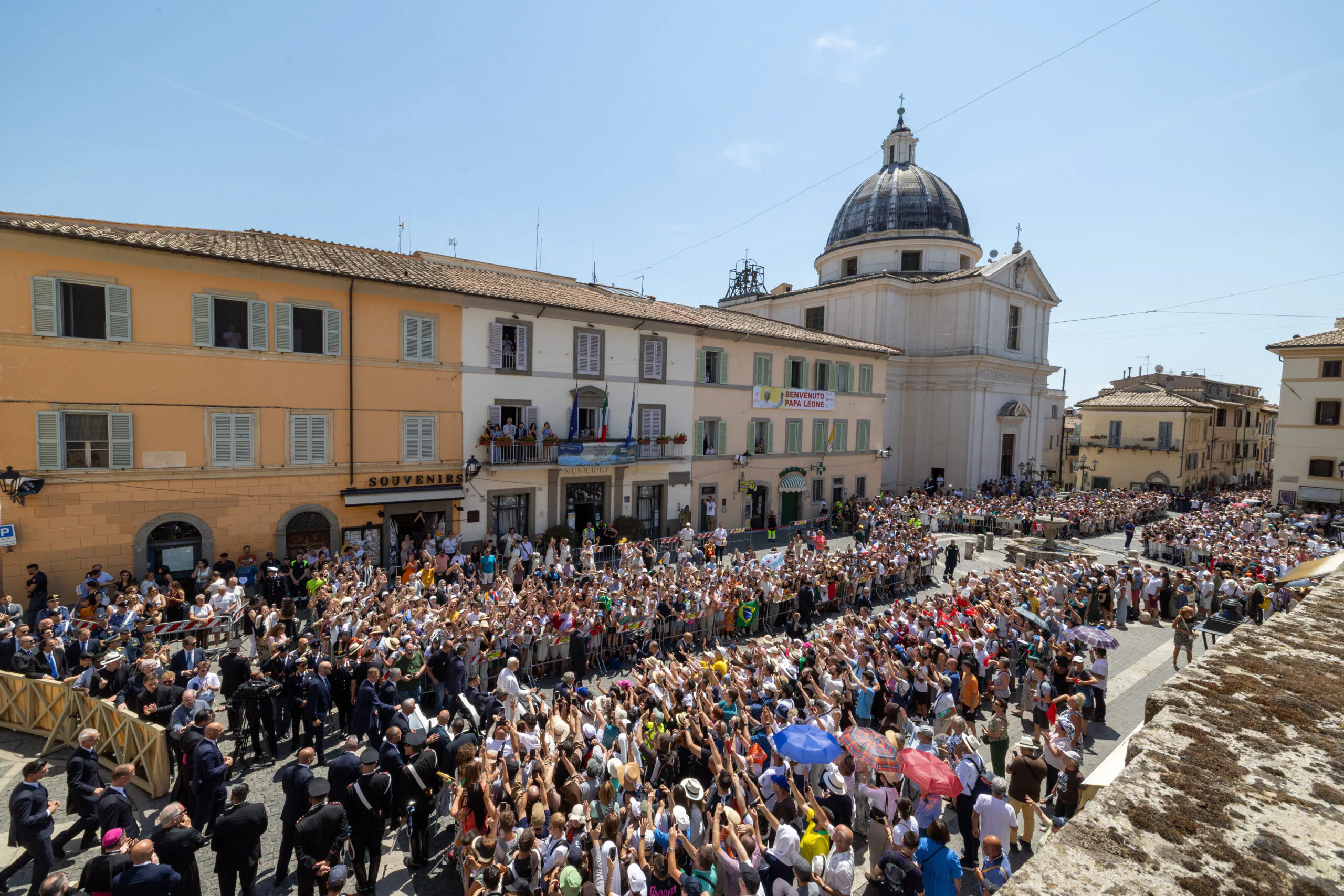
From the Apostolic Palace of Castel Gandolfo, where he moved on July 5 to enjoy a period of rest, Pope Leo XIV has invited the faithful to make time for “meaningful moments of silence and prayer” during the summer.
The pontiff’s remarks were made during his Sunday Angelus address on July 12 at Castel Gandolfo, where he will remain until July 27.
Reviving a summer papal tradition
This summer, Leo XIV decided to spend part of it on vacation at the Apostolic Palace of Castel Gandolfo, becoming the first pope to do so since 2012. The residence has been used by the popes as a countryside retreat for over 400 years, and was a preferred vacation spot of Benedict XVI and St. John Paul II.
Pope Francis, however, never left the Vatican during the summer of his 12-year papacy, choosing instead to remain at the Casa Santa Marta and repurpose the papal summer residence at Castel Gandolfo as a museum.
The palace itself is a 17th-century building on the shores of Lake Albano. Although it will be closed to the public during the pope’s vacation, the nearby papal gardens will remain open to visitors.
During Leo’s vacation, all private and public audiences, including the Wednesday general audience, are suspended. His only public audiences will be the Sunday Angelus, with the only exception so far being his lunch with the poor in the gardens on July 11.
The parable of the sower
Commenting on the Sunday Gospel for the day, which contains the parable of the sower, Leo XIV highlighted “the generosity and trust” with which God puts his word and power in the hearts of believers.
“Jesus himself, the Word made flesh, who gave his life for our salvation, is the seed that the Father continues to sow throughout the world so that, by dying, he may bear much fruit,” Leo said in his address.
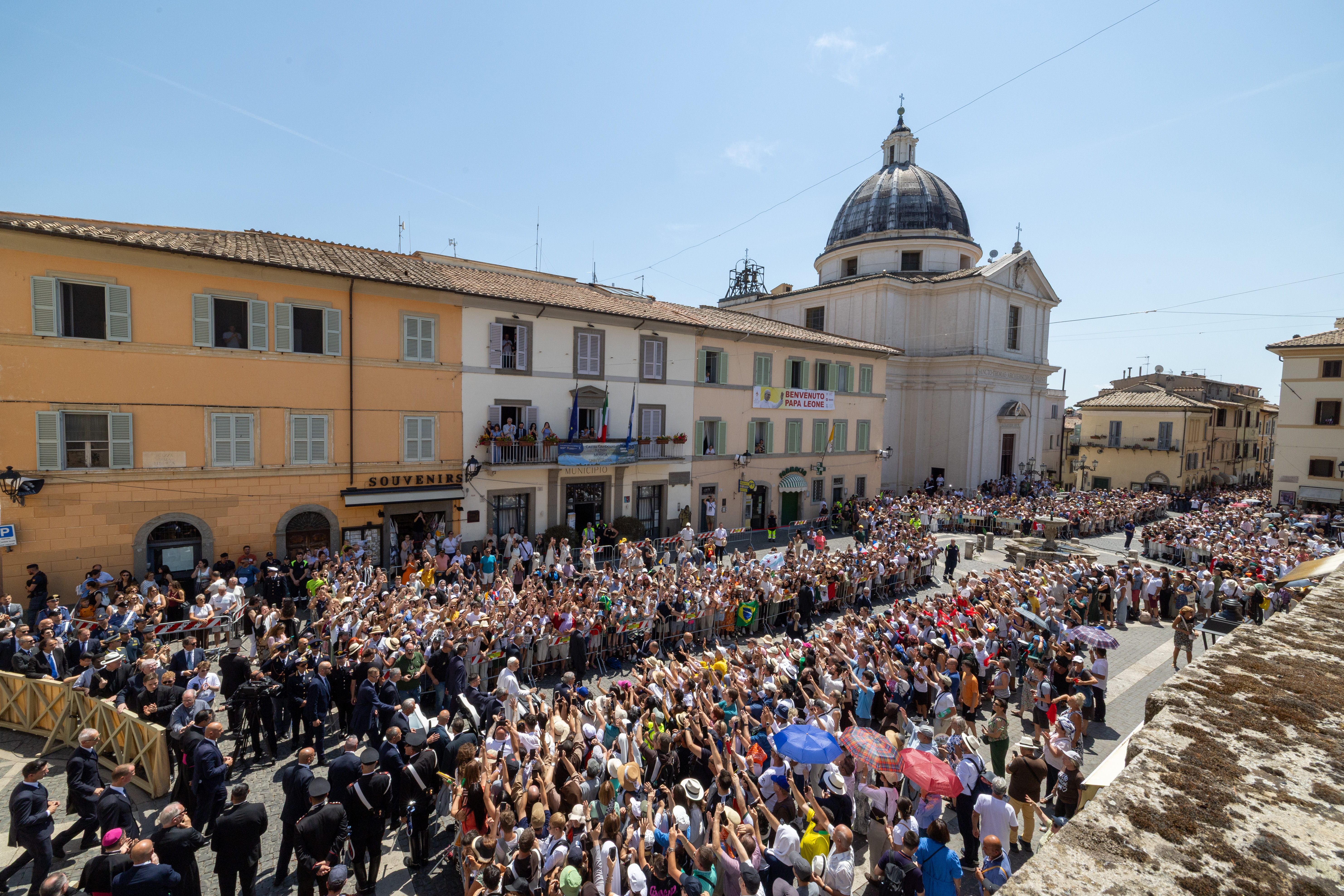
Pope Leo XIV greets the crowds after his Sunday Angelus on July 12, 2026, at the Piazza della Libertà at Castel Gandolfo. | Credit: Daniel Ibanez/EWTN News
The pope also explained that, just as in the parable where the seed is planted in different soils, the faithful do not each receive this gift in the same way.
“It is true that sometimes [God] finds in us hard and unresponsive soil, at other times distracted soil, like the beaten path, the rocky ground, or the thorny bushes. Yet there are also moments when he finds receptive and fertile ground, and then miracles of love are set in motion that have the power to transform everything — as we ourselves have no doubt experienced in our own lives.”
Leo also reminded the faithful present that God’s love “is stronger than our weakness” and that he never stops sowing and believing in them. He also invited them to take advantage of the summer holidays to experience God through silence and prayer.
“Let us therefore resolve, especially during these summer days of vacation, to make room for listening to, reading, and meditating on the Word of God, thereby fostering — together with rest and wholesome recreation— meaningful moments of silence and prayer,” Leo said.
A renewed appeal for peace
After praying the Angelus, Leo XIV renewed his appeal for peace in war-torn regions, lamenting that “the winds of war are blowing once again in the Middle East, in Ukraine and in many other parts of the world, sowing violence, terror and death.”
The pope also urged political leaders to resume dialogue and opt for diplomatic means to stop the escalation of conflicts.
Leoʼs words come at a time of rising international tension, after the United States and Iran once again became embroiled in a dangerous spiral of attacks. The United States launched new airstrikes against Iranian territory following the Revolutionary Guardʼs attack on a Cypriot-flagged cargo ship in the Strait of Hormuz.
Finally, the pope, recalling that July 12 is “Sea Sunday,” gave a special greeting to sailors, fishermen, and port workers. He praised them for their work despite being “marked by separation from their loved ones and sometimes by fear of the conflicts [that] occur on the seas.”
This storywas first publishedby ACI Prensa, the Spanish-language sister service of EWTN News. It has been translated and adapted by EWTN News English.
Pope Leo XIV on July 11 expressed a “hunger for justice [and] authentic charity” while attending a lunch with poor people at Castel Gandolfo outside of Rome.
“[I have] a hunger for a Church that truly knows how to open its doors and receive everyone — where there is love for all and no one is an enemy, where we all know how to live out reconciliation, forgiveness, and peace,” the pope told the crowd at the lunch, hosted in the gardens of the Borgo Laudato Si’.
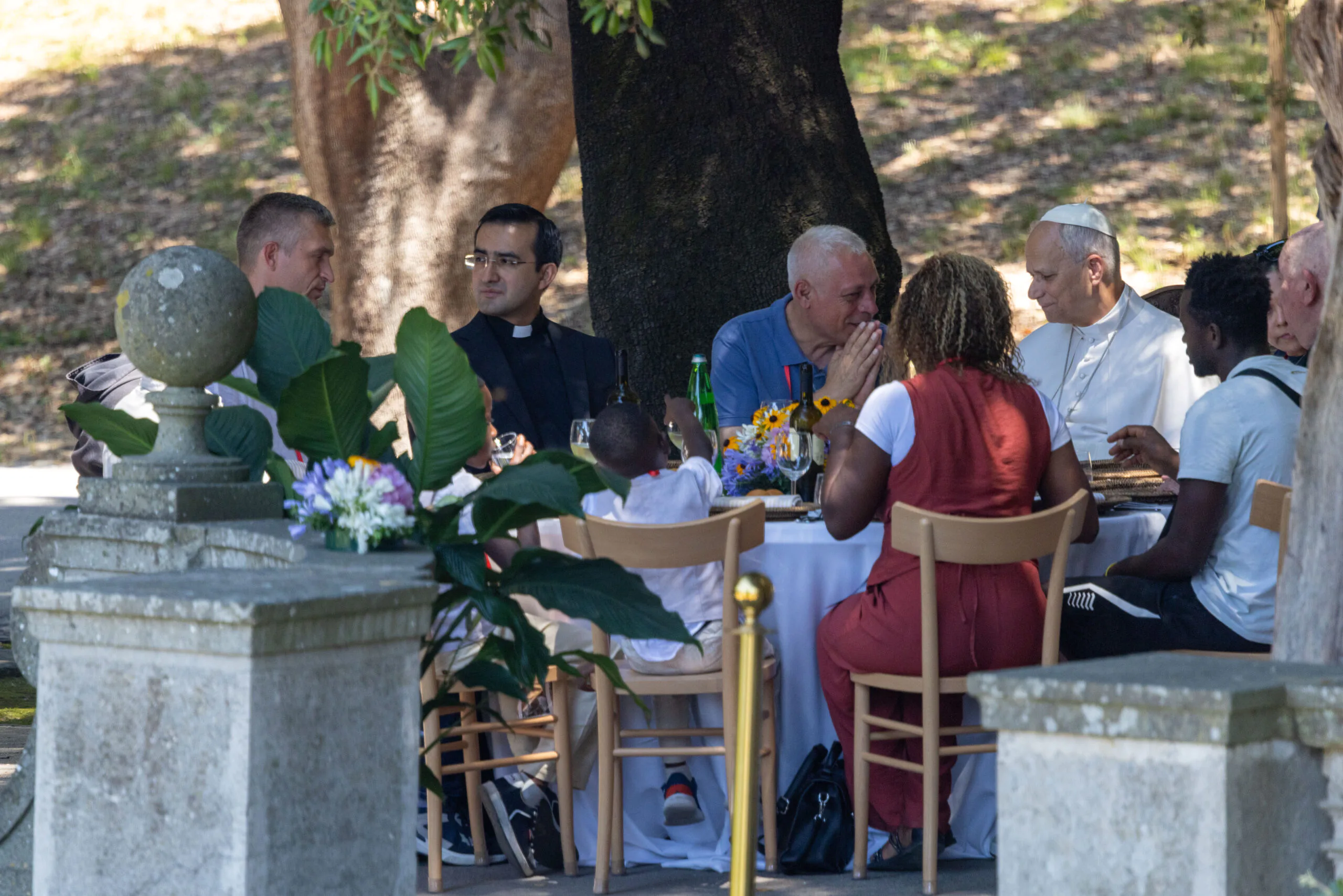
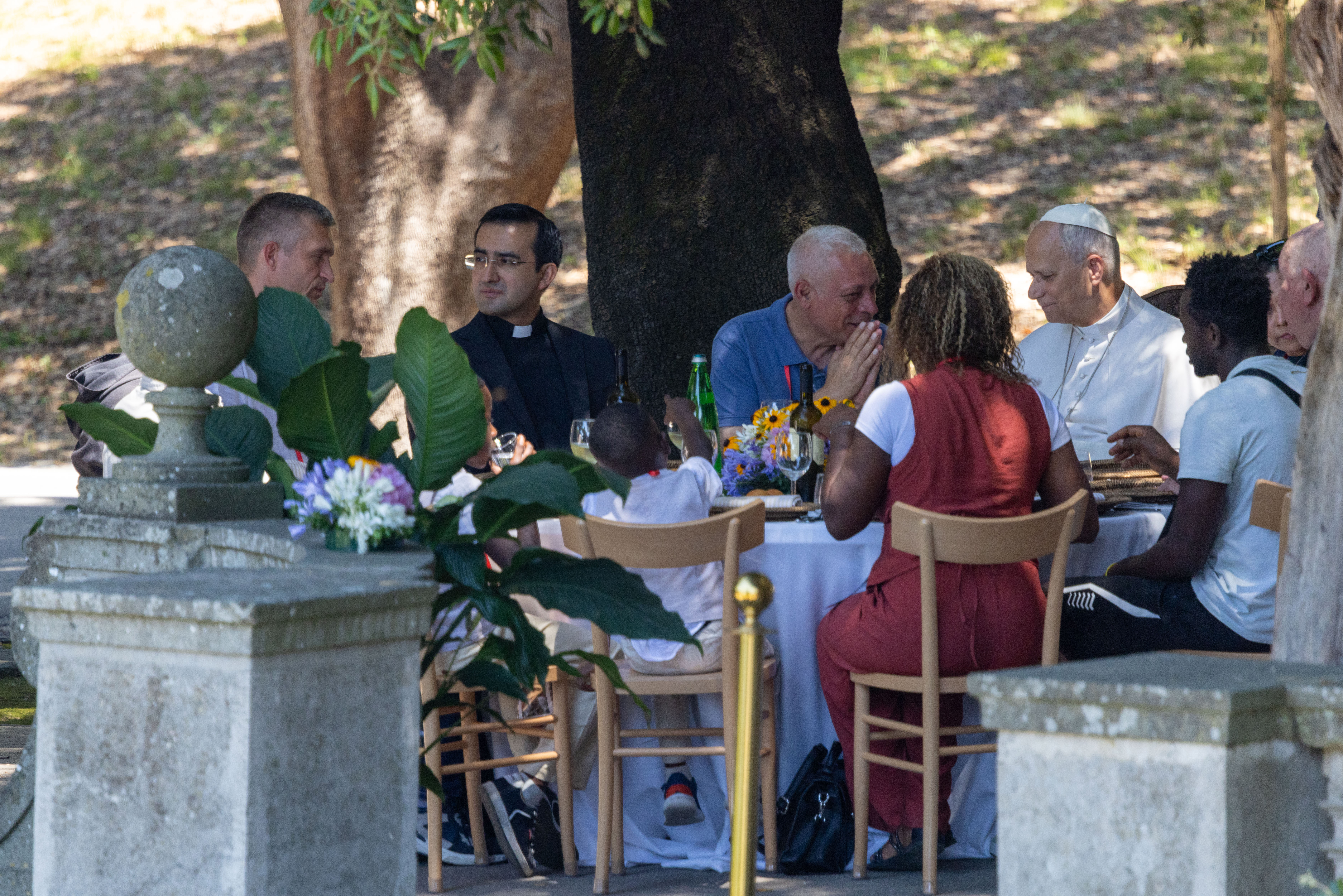
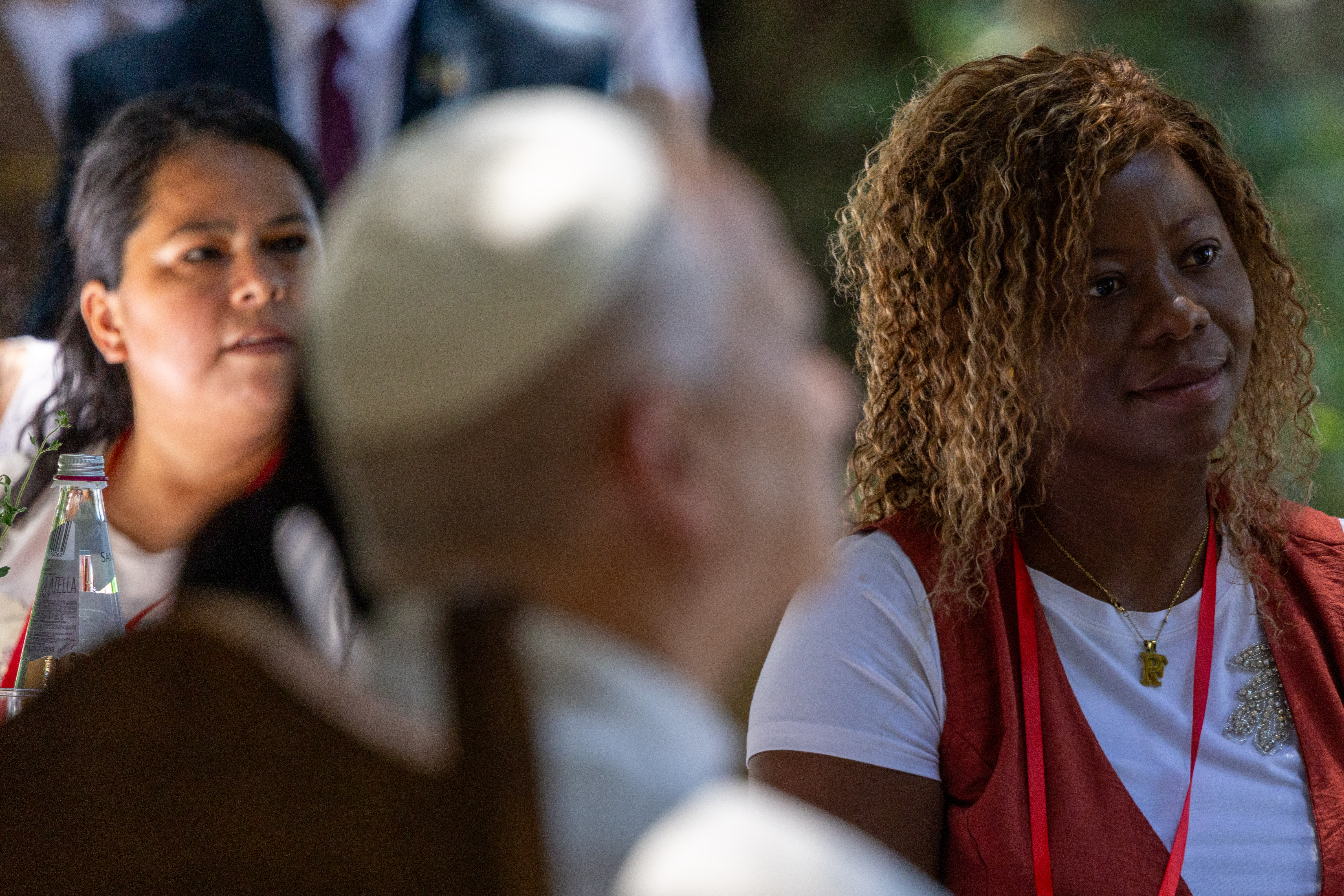
Pope Leo XIV dines with guests during a lunch for poor people at Castel Gandolfo outside of Rome, July 11, 2026. The event was the second lunch the pope has hosted with those facing poverty since the beginning of his pontificate. | Credit: Daniel Ibáñez/EWTN News
Leo pointed out that the historic papal title of “pontiff” means “a builder of bridges.”
“Today, we too wish to build a bridge with all of you, with your families, and with the society in which we want to live — but to live with justice, to live where the causes of poverty can be eliminated, where the causes of the injustices that still exist in our world can be removed,” he said.
Pope Leo XIV and guests sit for lunch at Castel Gandolfo outside of Rome, July 11, 2026. The event was the second lunch the pope has hosted with those facing poverty since the beginning of his pontificate. | Credit: Daniel Ibáñez/EWTN News
“This is the Church we want to be,” he said while thanking the organizers of the lunch, the second such event the pope has hosted since his pontificate began.
“When we gather together, when we experience this spirit of encounter around the table — the very table where Jesus is present with us — we are truly building a different world, a world of hope. Let us strive always to embody this experience of a Church of justice, peace, and love,” he said.
Before the pope spoke, Cardinal Fabio Baggio — the incoming pro-prefect of the Dicastery for Promoting Integral Human Development — had addressed the gathering.
Cardinal Fabio Baggio speaks during a lunch for poor people at Castel Gandolfo outside of Rome, July 11, 2026. The event was the second lunch Pope Leo XIV has hosted with those facing poverty since the beginning of his pontificate. | Credit: Daniel Ibáñez/EWTN News
“At a time when the ‘throwaway culture’ risks relegating many people to the margins, this place seeks to be a small sign of hope,” the cardinal said. “Here, we wish to remind everyone — through our lives rather than just our words — that no one is superfluous in the eyes of God and that every person is a gift to the entire community.”
About 200 people facing social vulnerability from the Diocese of Rome attended the lunch with the pope.
On Aug. 17, 2025 the pope hosted a similar lunch with people living in poverty from the Diocese of Albano; he held another such luncheon on Nov. 16 of that year.
This story was first published by ACI Stampa, the Italian-language sister service of EWTN News. It has been translated and adapted by EWTN News English.
Consecrated women and women religious who have suffered abuse face a significant legal loophole: Canon law and specialized commissions focus primarily on minors and adults with disabilities, leaving these women outside their scope of protection.
In practice, this means that if the victim is an adult who has received formation, it is assumed she can defend herself or that she consented. However, signs of change are beginning to emerge from the Vatican.
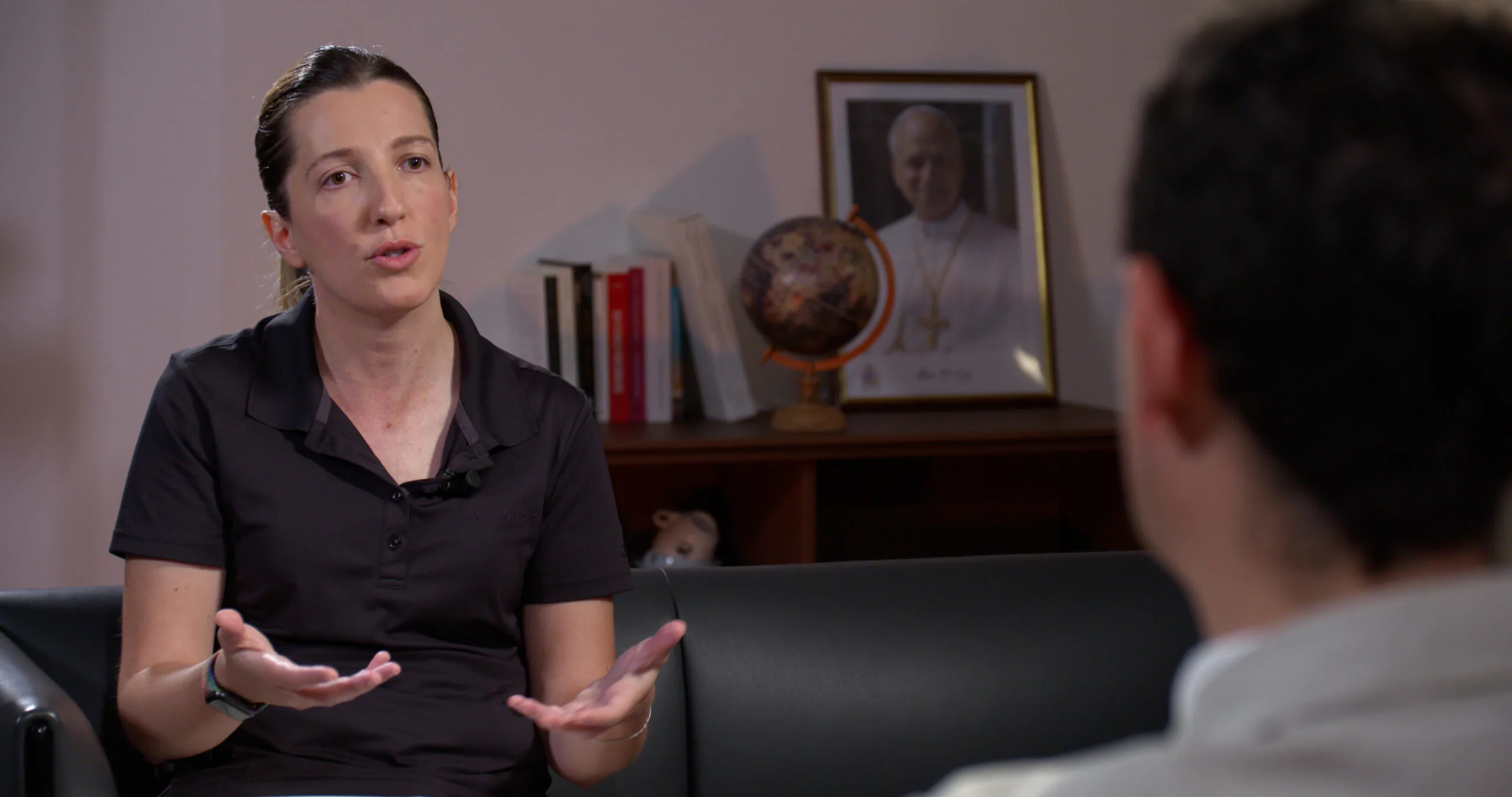
In addressing this issue, “it cannot simply be a label of ‘vulnerable adult,’” said Claudia Giampietro, an Italian canon lawyer working at the Pontifical Commission for the Protection of Minors (PCPM).
“We must understand that there are situations of imbalances of power … and situations involving abuse, and so it is these situations of vulnerability that we need to examine more deeply,” she told EWTN News on July 1.
Claudia Giampietro, an Italian canon lawyer working at the Pontifical Commission for the Protection of Minors (PCPM), during an interview on July 1, 2026. | Credit: EWTN News
One of the functions of the PCPM is to collaborate with the various dicasteries of the Roman Curia, the conferences and unions of religious men and women, and the institutes of consecrated life.
This enables them to gain firsthand knowledge of a complex reality: “There are a great many circumstances, situations, and people that can also affect women religious, including older ones, and so it is necessary to understand the contexts in which they work and carry out their ministry, both within their communities and also outside them,” Giampietro said.
The situation in Latin America
The Vatican helped break the taboo surrounding abuse against women religious by dedicating an extensive report to it in January 2020, published in Donne, Chiesa, Mondo (Women, Church, World), the monthly women’s supplement to L’Osservatore Romano. Issues covered include abuse of power, sexual abuse, and the difficulties faced by many nuns both within and outside consecrated life.
In subsequent years, there has been a proliferation of studies aimed at gauging the scale of a phenomenon that was traditionally hidden. Notable among them is the research published in 2022 in the Spanish-language book “Vulnerability, Abuse, and Care in Womenʼs Religious Life,” edited by Sister María Rosaura González Casas, who at the time was coordinator of the Commission for the Care and Protection of Minors and Vulnerable Persons for the Latin American and Caribbean Confederation of Religious.
Based on a survey of 1,417 women religious, the study revealed that 19.8% reported having suffered sexual abuse, and more than half stated they had experienced some form of abuse of power at the hands of superiors, priests, formators, or bishops. Additionally, 14.3% of respondents indicated having been harassed by a priest, 9.7% by laypeople, and 8% by other religious women, figures that highlight the scope and complexity of an issue that remained largely silenced for decades.
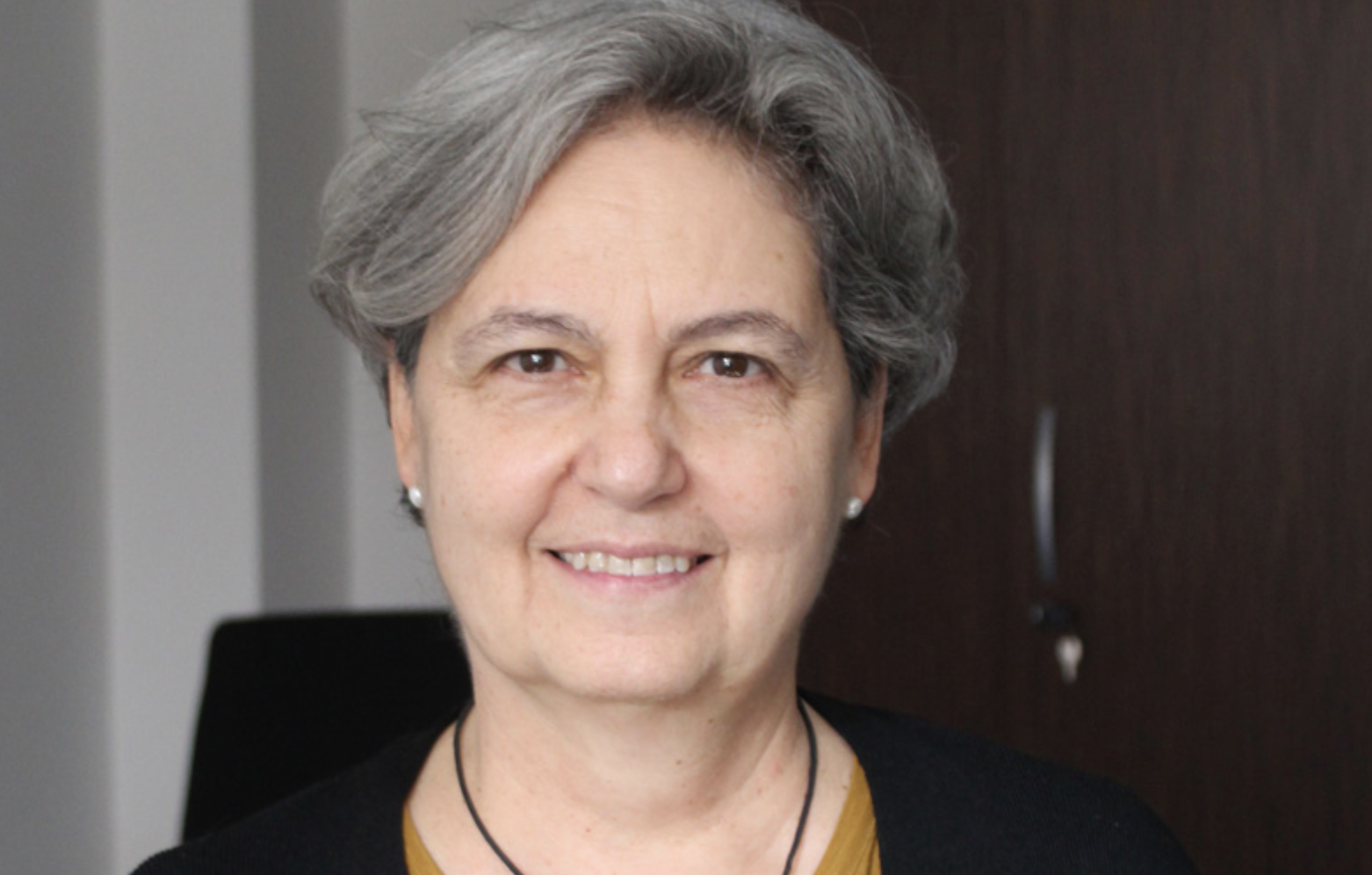
González Casas, dean of the Institute of Anthropology at the Pontifical Gregorian University, explained that since the study was published four years ago, “greater awareness of what abuse entails has grown at all levels” in the region.
Sister María Rosaura González Casas of the Company of St. Teresa of Jesus is dean of the Institute of Anthropology at the Pontifical Gregorian University. | Credit: Victoria Cardiel/EWTN News
“The sisters are more aware, and bishops and priests are also more alert to it. When we conducted the survey, many women religious did not want to respond, even though it was anonymous. There was fear of speaking out. Now there is greater awareness, although clear codes of conduct are still lacking. Unconscious and internalized machismo persists in society and has permeated religious and priestly life,” she explained in comments to EWTN News.
A conference in Rome on abuse prevention
In order to promote dialogue to prevent abuse against women religious, the PCPM will organize the second annual meeting on abuse prevention, focusing on consecrated life. It will be held in Rome on Dec. 9–11, centering on the theme “Communion, Care, and Justice: Mutual Relationships for a Shared Mission.”
This is not an academic conference but a synodal “learning lab” geared toward concrete results. Over the course of three days, bishops, representatives from institutes of consecrated life and societies of apostolic life, conferences and unions of major superiors, officials from Roman Curia dicasteries, and experts in abuse prevention will collaborate through roundtables, sessions on canon law, and working groups.
“The Pontifical Commission for the Protection of Minors has already taken up this issue, and with their involvement, superiors and women religious will take it more seriously,” said Sister Jacinta Ondeng of the School Sisters of Notre Dame in Kenya, who has been invited to participate in the forum.
“Safeguarding must be an essential part of community life,” emphasized the religious sister, director of the Safeguarding Initiative for Catholic Sisters, a project based at Tangaza University in Nairobi that provides training on abuse prevention across various African countries.
Many situations are covered up due to a lack of oversight
Ondeng emphasized the need for effective case follow-up. “It’s important for the relevant Vatican offices to oversee these situations because cases from Africa, and perhaps other parts of the world, are often covered up precisely due to a lack of oversight. If the relevant bodies of the Holy See intervene and evaluate cases when congregations fail to resolve them, that will help.”
Sister Jacinta Ondeng, of the School Sisters of Notre Dame congregation in Kenya, will participate in a Vatican-organized conference on abuse. | Credit: Photo courtesy of Sister Jacinta Ondeng
She also proposes developing clear guidelines for handling abuse cases within consecrated life — similar to those established by Pope Francis in Vos Estis Lux Mundi for allegations of abuse against minors — which require bishops and superiors to take action when faced with complaints or concerning indications.
“Once it becomes clear that the Vatican is involved in matters affecting members of consecrated life, there will be changes. Human nature responds to clear rules: When they exist, people tend to act with greater prudence,” she observed.
The sister also led a revealing, as-yet-unpublished study in Africa that brought to light harrowing testimonies from consecrated women, such as:
“Sisters leave not because they lack a vocation but because of abuse; superiors are abusing their authority.”
“Sisters suffer in silence rather than reporting it because they love the Church and fear damaging the reputation of a priest, bishop, or superior.”
“I told my superior what was happening, and since the sister in question was her friend, she did nothing.”
The study’s results were presented at the Pontifical Gregorian University in Rome during the 2026 International Safeguarding Conference, held June 16–19 under the theme “One Commitment, Many Contexts: Safeguarding Across Cultures.” The study was based on an anonymous online survey conducted between February and March in which more than 140 religious sisters from various African countries participated.
Fear of stigma and self-blame
The findings are revealing: 35.5% of congregations lack a formal safeguarding policy; 67.4% of those surveyed identify fear of stigma and self-blame as the main obstacles to reporting abuse; and 60.3% point to the absence of confidential reporting channels.
Personal factors such as “shame, guilt, and self-reproach are very prevalent among many women religious who wish to take the step of reporting abuse,” explained Ondeng, who dedicates her ministry to conducting workshops and training on safeguarding in Africa, with a particular focus on Catholic women religious.
Her goal is to raise awareness about abuse and its consequences, empower consecrated women to break the culture of silence, and promote safe environments for all. She also emphasized the importance of transparency and accountability as fundamental pillars for the success of safeguarding policies within the Church.
The religious also warned of the tendency toward cover-ups that can arise in certain ecclesial contexts.
“As numerous studies on abuse and the abuse of authority have shown, the Church hierarchy commands immense respect in many African societies,” she noted. While this is a positive cultural value, it also helps explain why individuals in positions of authority are rarely reported when involved in abusive behavior.
This phenomenon is reflected in several of the testimonies gathered during the investigation:
“Many sisters do not want to air dirty laundry. They do not wish to publicly expose these problems, in order to protect the institute’s reputation.”
“Some fear that if they speak out, they will be expelled from religious life, and they do not want to leave,” Ondeng added.
Lack of training in abuse prevention
Ondeng’s study also reveals that, when faced with situations of injustice or abuse, some women religious choose to leave consecrated life. Abuse can take many forms — sexual, spiritual, physical, emotional, or institutional — and, in certain cases, becomes unbearable.
However, the majority of victims remain in their communities, often out of fear of the social stigma or rejection they might suffer if they returned to their families.
Others are aware that leaving the convent could entail serious financial difficulties, as they lack employment or the means to support themselves, the religious explained.
Of the 141 women religious surveyed, more than 95% stated they had received some form of training on the prevention of sexual abuse. However, in many cases, this preparation proves insufficient.
“Most have taken short courses, but we cannot say that this 95% has received comprehensive training in safeguarding. At most, some have participated in one- or two-day sessions. That is very little, and it poses a problem,” the Kenyan religious sister noted in a statement to EWTN News.
For this reason, she insists on the need to strengthen safeguarding training as a true ministry within the Church.
“Much more preparation is needed for Catholic women religious to have the courage to speak about their experiences in their communities. Currently, training is very limited and must be ramped up to empower consecrated women,” she stated.
Added to this challenge is a significant cultural component. “People do not want to make their problems public. It is something deeply rooted in African culture, although it also occurs in European and American contexts,” she stated.
For its part, the Dicastery for Institutes of Consecrated Life and Societies of Apostolic Life does not publish aggregate figures on apostolic visitations conducted worldwide, as these are carried out on an occasional rather than a systematic basis.
The only large-scale investigation for which detailed data exist was the one conducted in the United States from 2008 to 2014, which involved 341 institutes of consecrated life and about 50,000 religious women.
“The entire Church must understand that safeguarding is a Gospel value. It’s not something imposed from the outside. The Gospel calls us to promote the dignity of every person, support those who suffer, and care for those who are hurting,” Ondeng pointed out.
This story was first published by ACI Prensa, the Spanish-language sister service of EWTN News. It has been translated and adapted by EWTN News English.
Fiat will donate 30 electric vehicles to Vatican City State to support the daily operations of employees of the governorate as part of efforts to advance more sustainable mobility and reduce the environmental impact of its fleet.
The Italian automaker said the vehicles will be used for internal operations and will help improve transportation within the Vatican through low-emissions mobility.
The initiative is part of the Ecological Conversion 2030 program launched by the Governorate of Vatican City State in 2023. The plan calls for the gradual decarbonization of the Vatican’s official fleet, with the goal of reaching zero emissions by the end of the decade.
The first phase of the project took place June 30 with the delivery of 20 Fiat Topolino vehicles. The handover was held on the esplanade in front of the Governorate Palace and was attended by Archbishop Emilio Nappa and lawyer Giuseppe Puglisi-Alibrandi, secretaries-general of the governorate, as well as Olivier François, CEO of Fiat and chief marketing officer of Stellantis.
The fleet will be completed with the addition of 10 Fiat TRIS vehicles, also fully electric.
The Ecological Conversion 2030 plan goes beyond the renewal of the Vatican’s vehicle fleet. The project includes a range of measures aimed at reducing the environmental impact of the Holy See’s activities, including the responsible use of natural resources, improved energy efficiency, and the modernization of technological infrastructure.
The initiative also seeks to promote cleaner energy sources for transportation, strengthen waste management policies, and support future reforestation projects as Vatican City State works toward climate neutrality.
After launching the program in 2023, the Governorate of Vatican City State said it intended to place itself among the leading states in sustainability by adopting innovative solutions that contribute both to care for the environment and to the transformation of its work and management practices.
This story was first published by ACI Prensa, the Spanish-language sister service of EWTN News. It has been translated and adapted by EWTN News English.
The Holy Seeʼs declaration this month that formally recognizes the Society of St. Pius X (SSPX) to be in a state of schism has prompted numerous questions among the faithful. One of the most frequently asked questions is why the Catholic Church recognizes the validity of marriages performed in Orthodox churches while marriages now performed by priests of the society are considered invalid.
Father Davide Cito, professor of canon law at the Pontifical University of the Holy Cross in Rome, emphasized that the answer has to do with profoundly different juridical and ecclesial realities.
As he explained to ACI Prensa, the Spanish-language sister service of EWTN News, although the Orthodox churches are not in full communion with Rome, they are not currently in a state of formal schism comparable to that of the Society of St. Pius X.
“These are two different situations. The Orthodox are not in full communion with the Catholic Church, but they are not excommunicated. In contrast, the fraternity has committed a formal act of breaking ecclesial communion,” he explained.
The canon lawyer noted that, prior to the recent declaration of schism, the situation of the SSPX was different. Although there were serious doctrinal and disciplinary tensions with Rome, it was not juridically in its current situation.
“The society could perform valid marriages because it was not in a state of formal schism,” he noted.
In fact, during the pontificate of Pope Francis, the society’s priests received faculties to validly hear confessions and, under certain circumstances, to witness marriages with the authorization of the competent ecclesiastical authority.
However, following the formal declaration of schism, the Vatican has made it clear that those faculties can no longer be exercised.
Specifically, sources in the Dicastery for the Doctrine of the Faith (DDF) emphasized to ACI Prensa “the invalidity of those two sacraments" (referring to confession and marriage), which Pope Francis had previously granted them permission to administer in 2019 as a gesture of pastoral outreach.
The DDF source went on to confirm that the dicastery’s July 2 explanatory note on the matter “was published with the pope’s approval. The pontiff himself formally warned that this would happen if they ordained bishops in the letter he sent to [SSPX Superior General Father Davide] Pagliarani just hours before the episcopal ordinations took place without a papal mandate. There is no doubt whatsoever regarding his will. That is the decision of the Holy See.”
The DDF, led by Cardinal Víctor Manuel Fernández, also clarified that, in declaring the schism, it did not get into considering the SSPXʼs past situation following the lifting of the excommunications by Benedict XVI in 2009 and the concessions subsequently made by Francis. Instead, it focused “on the fact that the new ordinations — a schismatic act — have undoubtedly created a situation of excommunication and schism, and that what they were clearly warned about is now being applied.”
Regarding this point, Cito explained that “a schismatic cannot validly hear confessions or validly witness a marriage, because since the Council of Trent, these sacraments require a canonical faculty or authorization.”
Why are Orthodox sacraments recognized?
Relations between Catholics and the Orthodox underwent a decisive shift during the Second Vatican Council and the pontificate of St. Paul VI. In December 1965, Pope Paul VI and Ecumenical Patriarch Athenagoras I signed a joint declaration lifting the mutual excommunications pronounced in 1054, events traditionally regarded as the beginning of the Great Schism between East and West.
Although that gesture did not restore full communion, it put an end to centuries of mutual condemnations and excommunications and opened a new chapter of ecumenical dialogue.
“We are in communion, though not in full communion,” Cito summarized. “That is why there are areas where it is possible to share sacramental life, something unthinkable in a situation of formal rupture caused by a schism, such as the situation of the fraternity,” he observed.
The Catholic Church recognizes the validity of Orthodox sacraments because it maintains that the Eastern churches have preserved apostolic succession and a valid priesthood. For this reason, Cito explained, there is the possibility of a certain “communicatio in sacris” — participation in certain sacraments among the faithful of different churches as provided for by canon law.
“Canon 844allows Catholics and Orthodox, in certain cases, to receive some sacraments from one another. I myself have seen this in pastoral practice. This is possible because there is authentic sacramental communion, even if it is not full,” he stated.
The expert pointed out that the situation is very different for those affected by excommunication or who knowingly participate in a schismatic group.
Excommunication is a canonical penalty that prohibits the administration and reception of certain sacraments. Schism, on the other hand, entails the rejection of communion with the Church and the authority of the Roman pontiff — in other words, a formal separation from the Catholic Church.
In the case of the Society of St. Pius X, the Holy See considers that there is now a formal rupture of that communion, which entails juridical and sacramental consequences.
“When someone rejects an ecumenical council or denies essential elements of communion with the pope and the college of bishops, the situation becomes very complex from a canonical standpoint,” Cito said.
The professor pointed out that some traditionalist communities that emerged from the SSPX, such as the Priestly Fraternity of St. Peter (FSSP), have remained in full communion with Rome and continue to celebrate the traditional liturgy without any difficulty.
“The problem has never been simply the liturgy. The issue touches upon fundamental doctrinal aspects related to the Second Vatican Council and ecclesial communion,” he stated.
How those who leave the SSPX might return to Catholic unity
New regulations issued by the Holy See establish that the faithful and priests who decide to leave the SSPX and return to full communion with the Church will no longer depend on a specific structure like the Ecclesia Dei Commission, created by St. John Paul II in 1988.
Going forward, they may turn directly to diocesan bishops or to the heads of traditionalist institutes that are fully integrated into the Church. The new protocol from the Dicastery for the Doctrine of the Faith aims to facilitate this return.
"The procedures for doing so are very simple because, ultimately, these are people who want to be Catholic and desire to be in communion with the Church," Cito added.
The Vatican document warns that those wishing to fully rejoin the Catholic Church may not continue to regularly attend activities of an institution now considered schismatic.
“The explanatory note from the Dicastery for the Doctrine of the Faith, attached to the decree of excommunication, is very clear on this point: The sacred ministers administer the sacraments illicitly and, regarding penance and matrimony, also invalidly. Therefore, dioceses and their pastors are urged to be vigilant and to exhort the faithful to remain steadfast in ecclesial communion and not to participate in celebrations or activities promoted by the SSPX,” noted Father Pierpaolo dal Corso, who teaches at the St. Pius X department of penal canon law in Venice, Italy.
This story was first published by ACI Prensa, the Spanish-language sister service of EWTN News. It has been translated and adapted by EWTN News English.
Pope Leo XIV, drawing on his recent encyclical Magnifica Humanitas, has again called for dialogue on artificial intelligence (AI) while acknowledging the serious concerns that remain.
His remarks were delivered in a July 8 message sent through Vatican Secretary of State Cardinal Pietro Parolin to the participants in the AI for Good Global Summit in Geneva, Switzerland. The annual summit is the primary platform for AI at the United Nations (U.N.), taking place this year from July 7–10.
In the message, the pontiff assured participants of the Holy See’s continued openness to dialogue with secular organizations on AI.
The letter, in explaining the aims of Magnifica Humanitas, stated that the pope had written this document as a result of conversations on AI with scientists, political leaders, and parents.
The letter also explained that the encyclical was born out of persistent concerns over AI misuse.
Magnifica Humanitas “was also impelled by troubling accounts of the potential misuses of algorithms and by the loss of human agency in critical areas,” the message stated.
The AI for Good Global Summit is an annual U.N. conference on artificial intelligence gathering academics, civil leaders, and industry leaders to discuss how to safely govern AI systems while maximizing its positive impact on humanity.
The Permanent Observer Mission of the Holy See to the U.N. in Geneva has also participated in the summit, publishing a statement on the need to increase human oversight over AI autonomous systems.
Pope Leo XIV will spend his vacation at the Apostolic Palace of Castel Gandolfo in Italy until July 27, but he also plans to devote part of that time to sharing lunch with about 200 people experiencing poverty and social vulnerability in the Diocese of Rome.
The meeting will take place Saturday, July 11, as part of a day of welcome, prayer, and fraternity organized at Borgo Laudato Si’, the ecological project promoted by the Holy See in the Pontifical Gardens of Castel Gandolfo, a town on Lake Albano about 18 miles south of Rome.
The initiative, titled in Italian “A pranzo con il Papa” (“Lunch with the Pope”), is intended to offer a space of closeness and fellowship for people facing economic or social hardship in an atmosphere inspired by fraternity, care for creation, and solidarity.
The day will bring together homeless people and others assisted by parishes, Caritas, and various Church organizations that work with people facing poverty, exclusion, forced migration, or social fragility.
The gathering will begin with the celebration of Mass using the “Missa pro custodia creationis,” or “Mass for the Care of Creation,” an official addition to the Roman Missal made by Pope Leo XIV that includes new readings and prayers focused on integral ecology.
Afterward, participants will take part in a time of fellowship and a guided visit to Borgo Laudato Si’ before the most anticipated moment of the day: lunch with the Holy Father.
More than a shared meal, the organizers said, the event is intended to become a concrete sign of the pastoral style Leo has sought to give his pontificate: a Church close to those living on the human and social peripheries.
The initiative is rooted in an experience that marked the first months of Leo’s pontificate. On Aug. 17, 2025, Leo shared a meal with people living in poverty from the Diocese of Albano. That experience led to the decision to make the gathering an annual event promoted by the Laudato Si’ Center for Higher Education, which is responsible for the development of Borgo Laudato Si’.
Each year, a different diocese will be invited to bring vulnerable people for a day of contact with nature, fraternity, and encounter with the pope, the organizers said in a statement.
Cardinal Fabio Baggio, director general of the Laudato Si’ Center for Higher Education, said the project seeks to show that “care for creation and attention to the human person are part of one mission.”
“After Lampedusa, this day represents a new stage on Pope Leo XIV’s path toward the social peripheries of our time,” Baggio said. “At Borgo Laudato Si’, the Holy Father meets people living in situations of vulnerability, reaffirming that the Church is called to be present wherever human dignity calls for listening, closeness, and hope.”
Archbishop Luis Marín de San Martín, prefect of the Dicastery for the Service of Charity, said the pope’s gesture recalls that “charity consists of closeness, encounter, and sharing.”
“When the Church places the most vulnerable people at the center, it makes the Gospel visible and bears witness that no one is on the margins of God’s heart,” he said.
Cardinal Baldassare Reina, the pope’s vicar general for the Diocese of Rome, said the main participants in the day will be people who are accompanied each day by the Christian communities of the Italian capital.
“The meeting with the Holy Father restores a leading role to those who too often remain on the margins and reminds the entire Christian community of its responsibility to welcome,” Reina said.
Among the organizations collaborating in the initiative are the diocesan Caritas of Rome, the Community of Sant’Egidio, Centro Astalli, ACLI Rome, the Vincentian Family, and numerous parishes and associations dedicated to accompanying vulnerable people.
With the event, Borgo Laudato Si’ again presents itself as a living laboratory where the integral ecology promoted by the Church is translated into concrete acts of inclusion, encounter, and human development. Once again, Leo seeks to place at the center those who often remain outside the spotlight, recalling that attention to the most fragile is not a secondary activity of the Church but an essential expression of the Gospel.
This story was first published by ACI Prensa, the Spanish-language sister service of EWTN News. It has been translated and adapted by EWTN News English.