Pope Leo XIV on Wednesday created a commission to identify solutions for long-term sustainability at the Casa Sollievo della Sofferenza, a major hospital complex founded by St. Pio of Pietrelcina and directly overseen by the Vatican Secretariat of State.
The Catholic hospital — which is located in the southern Italian region of Puglia — is facing a debt crisis from which “we will emerge together,” Secretary of State Cardinal Pietro Parolin said during a May 5 visit to the facility.
The hospital in San Giovanni Rotondo, where the saint known as Padre Pio lived for most of his life, has debts estimated to run between 250 million to 300 million euros (about $290 million to $350 million).
The hospital is currently in a dispute with officials from the Puglia region over reimbursements — the regional authority claims it is owed 32 million euros ($37 million) — and is also involved in a conflict over new labor contracts.
The new commission now aims to resolve what is a highly complex situation.
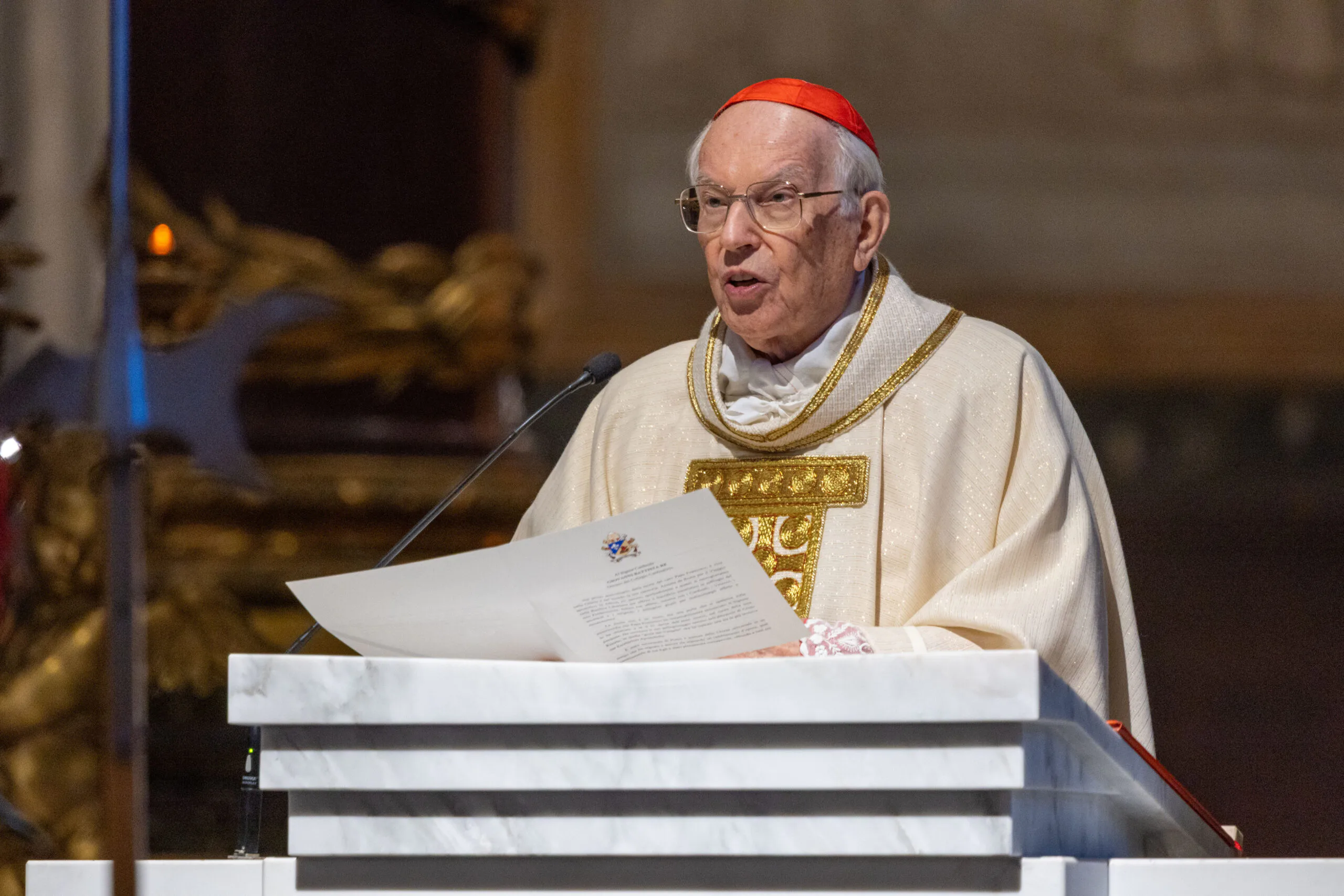
The papal chirograph (a kind of decree) establishing the commission states that the pope’s decision arises from the Apostolic See’s love for works of charity and from the awareness that large institutions, in order to remain faithful to their mission, must be capable of facing the challenges of change.
“The evolution of the times, technology, law, and economics places the mission of the Church before the challenge of continuous renewal,” particularly in sectors such as healthcare that require vision, investment, and prudent management, the chirograph says.
Among these institutions is Casa Sollievo della Sofferenza, founded “with the aim of providing hospitality, assistance, and care to the sick, pilgrims, and their families, inspired by the spirituality and the figure of its saintly founder.”
The guidance and oversight commission has the task of analyzing the hospital foundation’s “current situation, identifying the best solutions for ever-greater efficiency, effectiveness, and long-term sustainability of its work and mission, and ensuring the concrete implementation of those solutions.”
The commission will operate on all fronts — financial, patrimonial, and operational — with full authority to carry out the necessary acts of both ordinary and extraordinary administration. It will report directly to the pope before any decision of particular significance and before adopting measures of special importance or those that would have a decisive and substantial impact on the foundation’s assets or modify its statutes.
The commission represents a combined effort by Vatican economic bodies and the Secretariat of State. Maximino Caballero Ledo, prefect of the Secretariat for the Economy, will serve as president. The coordinator is Fabio Gasperini, secretary-general of the Governorate. Archbishop Giordano Piccinotti, president of the Administration of the Patrimony of the Apostolic See, is a member together with Archbishop Paolo Rudelli, undersecretary for general affairs of the Secretariat of State. The technical committee includes Benjamín Estévez de Cominges, Gino Gumirato, and attorney Alessandro Ela Oyana.
Casa Sollievo della Sofferenza was born from Padre Pio’s concrete faith, rooted in the conviction that caring for the body is an integral part of the Christian mission.
The decision to establish an ad hoc commission is a sign of Leo’s interest in the hospital but also unusual, given that Pope Francis already established a Vatican commission for Catholic healthcare.
This story was first published by ACI Stampa, the Italian-language sister service of EWTN News. It has been translated and adapted by EWTN News English.
At the general audience on May 27, Pope Leo XIV urged priests to respect the “norms of the liturgy” and not to make changes to the Mass “on their own initiative,” in order to avoid confusing the faithful.
“I encourage all priests to respect the texts and norms of the liturgy with openness, humility, trust in God’s greatness, and with sincere fidelity to ecclesial communion,” the pope said in remarks in St. Peterʼs Square.
Pope Leo XIV waves to pilgrims in St. Peter’s Square during the general audience on May 27, 2026. The pope spoke about the Second Vatican Council and the need for priests to follow liturgical norms. | Credit: Daniel Ibáñez/EWTN News
The Second Vatican Council “affirmed that legitimate progress in the liturgy must also preserve sound tradition and that certain elements of the liturgy can never change because they are divinely instituted,” he said.
Vatican II’s reform of the Mass
Leo’s catechesis on Wednesday continued his reflections on the magisterium of the Second Vatican Council, focusing on the constitution Sacrosanctum Concilium, promulgated by St. Paul VI on Dec. 4, 1963. It is one of the most important documents to emerge from the council, since it transformed the way Catholics celebrate the Mass.
The pope offered a historical overview of the context in which Vatican II was convened, noting: “At that moment in history, there was a strong sense of the need for a renewal of the ritual forms through which, for centuries, the Church had glorified God and sanctified the Christian people.”
Pope Leo XIV blesses a baby in St. Peter’s Square during the general audience on May 27, 2026. The pope spoke about the Second Vatican Council and the need for priests to follow liturgical norms. | Credit: Daniel Ibáñez/EWTN News
He also underscored that, thanks to the liturgical movement, the conviction had developed — later expressed by St. John Paul II — that “‘a very close and organic bond exists between the renewal of the liturgy and the renewal of the whole life of the Church. The Church not only acts but also expresses herself in the liturgy, lives by the liturgy, and draws from the liturgy the strength for her life’ (Letter Dominicae Cenae, 13).”
The pontiff reflected on Sacrosanctum Concilium, which he said sought “to encourage the access of the faithful to the richness of the gifts of grace dispensed by the sacred liturgy.” The pope highlighted the formula adopted by the council fathers: “That sound tradition may be retained, and yet the way remain open to legitimate progress.”
To deepen this idea, the pope quoted Pope Benedict XVI, who explained that the council fathers’ “reform program” sought “a balance between the great liturgical tradition of the past and that of the future."
Pilgrims stand in St. Peter’s Square during Pope Leo XIV’s general audience on May 27, 2026. The pope spoke about the Second Vatican Council and the need for priests to follow liturgical norms. | Credit: Daniel Ibáñez/EWTN News
Benedict XVI said that “tradition and progress are often clumsily opposed,” but the late pope noted that “actually, the two concepts merge: Tradition is a living reality, which therefore includes in itself the principle of development, of progress.”
Leo XIV said the progress referred to by Sacrosanctum Concilium “in no way compromises ecclesial communion; rather, it seeks to confirm and foster it.”
He emphasized that “changes of this type have taken place constantly over the centuries in order to enable the faithful to participate fruitfully, through ritual actions, in the paschal mystery of Christ, the foundation of the Christian faith.”
“For the good of the entire Church, every reform must always be preceded by careful ‘theological, historical, and pastoral’ investigation,” the Holy Father said. “The council magisterium, in this way, thus calls for the avoidance of confusion amongst the faithful, discouraging anyone from adding, removing, or altering anything in liturgical matters on their own initiative.”
The Church’s worship, he added, has been “embodied” in the cultural forms of each age and has been able to influence them and even transform them.
“The liturgy has thus been, for centuries, a driving force for evangelization. Today, this energy must be renewed in continuity with the authentic and living Catholic tradition, that is, in accordance with a dynamic aimed at introducing believers to the fullness of the truth,” he said.
War in Ukraine
In an appeal at the end of the audience, Leo expressed his concern over a recent intensification of the war in Ukraine. The Holy Father said he was entrusting everyone affected by war to the protection of Mary, Queen of Peace.
“I wish to express my solidarity with all those suffering as a result of the recent attacks, which have also targeted civilians,” he said.
“War does not solve problems; it exacerbates them,“ he said. ”It does not build security; it multiplies suffering and hatred. Where missiles and drones fall, hopes are crushed, homes and places of worship are destroyed, and innocent lives are cut short.”
This story was first published by ACI Prensa, the Spanish-language sister service of EWTN News. It has been translated and adapted by EWTN News English.
The Vatican Museums and the Archdiocese of Sydney have launched an immersive experience of the Sistine Chapel in Sydney, Australia.
The exhibit will enable visitors to experience Michelangeloʼs world-famous Renaissance frescoes beyond the Vatican ahead of the International Eucharistic Congress in Sydney in 2028.
A conference was held in Rome on May 22 to celebrate the initiative “Sistine Chapel Revelations: An Immersive Exhibition.”
Barbara Jatta, director of the Vatican Museums; Archbishop Anthony Fisher, OP, of Sydney; and Australian Ambassador to the Holy See Keith Pitt, among others, attended the conference.
Human capability at its best
Fisher called the Sydney exhibit a valuable chance for visitors to see one of the Churchʼs masterpieces of art without traveling to Rome. He praised the exhibitʼs evangelizing power and ability to help visitors understand the artʼs mysteries in ways “even the most devoted pilgrim to the Vatican Museums may not always manage.”
"Until you have seen the Sistine Chapel, you can have no adequate conception of what man is capable of,” Fisher said, referring to a famous quote by Johann Wolfgang von Goethe. "Not that any virtual reality experience can substitute for visiting the Sistine itself! [But] in Sydney … we have seen how beauty and transcendence can mesmerize the senses and speak to the heart, as the painted stories have revealed themselves anew."
The Sistine Chapel is widely regarded as the site of some of the greatest artworks of the High Renaissance. It is the main chapel of the Apostolic Palace, the popeʼs official residence in Vatican City. It was built from 1473 to 1481 under Pope Sixtus IV and has hosted papal conclaves since 1492.
Its famous artworks are by some of the periodʼs most celebrated artists, such as Michelangelo Buonarotti, Domenico Ghirlandaio, and Sandro Botticelli.
Michelangeloʼs frescoes in the Sistine Chapel, including the ceiling and the “Last Judgment” behind the high altar, are among the most renowned in art history.
Australia hopeful for a papal visit in 2028
There is hope that the Sydney exhibition will be a precursor to a future visit by Pope Leo XIV to Australia. The last pope to visit the country was Pope Benedict XVI, for World Youth Day, in 2008.
Pitt praised the immersive Sistine Chapel project as an “extraordinary opportunity for Australia” and expressed his hope that it would lead to Leoʼs future visit to the country for the 54th International Eucharistic Congress in 2028.
The International Eucharistic Congress is a gathering of Catholics from around the world to celebrate the central doctrine of the real presence of Jesus Christ in the Eucharist.
Held about once every four years, the congress is often attended by a papal representative and, at times, the pope himself goes to celebrate the closing Mass. The last time a pope attended the Eucharistic congress was in 2021, when Pope Francis celebrated the closing Mass in Budapest, Hungary.
“We are very hopeful that the pope will attend. He has been invited by the government, the prime minister, and, of course, the embassy. We are working closely with the Holy See,” Pitt said. “It would be almost exactly 20 years since the last papal visit to Australia, and he would be very warmly received.”
The Sistine Chapel exhibition will run from May 15 to July 19 at St. Maryʼs Cathedral in Sydney.
VATICAN CITY — Pope Leo XIV on Monday personally attended the presentation of his first encyclical, Magnifica Humanitas, in an uncustomary gesture. Upon his arrival at the event, held in the Vaticanʼs Synod Hall, he was greeted with sustained applause from an audience made up of members of the Roman Curia, representatives of academia, and the diplomatic corps.
Among the speakers was Canadian Christopher Olah, co-founder of Anthropic, one of the leading artificial intelligence (AI) companies. The firm has recently had tensions with the administration of U.S. President Donald Trump after prohibiting the U.S. Department of Defense from using its software for military purposes.
Some observers had raised concerns about including a representative of a major tech company like Anthropic in an event of this kind. The Holy Father himself dispelled any hesitation by thanking Olah for his presence: “What a great sign of hope it is that with our differences we can listen to one another,” he said in his remarks.
“This interchange clearly bespeaks the gravity of the moment, as well as confidence that together we can discern the major questions of our time, and so the future of humanity,” he added.
In his remarks prior to the pope’s address, Olah echoed the same idea: "That is why, if we want this technology to go well, it is enormously important that there be people outside those incentives — people who care about things going well and insist on safety, who are paying close attention, who are willing to say hard things, who are willing to be our earnest, thoughtful, critics. It is through dialogue and mutual effort, through the push and pull, that humanity will achieve great things. That is what I see in Magnifica Humanitas, and it is why I am grateful to His Holiness and the Church for taking up this work of discernment.”
Christopher Olah, co-founder of AI company Anthropic, says he is grateful to Pope Leo XIV and the Church for “taking up this work of discernment” on artificial intelligence, during his address at the presentation of the encyclical Magnifica Humanitas on May 25, 2026, in the Synod Hall of the Vatican. | Credit: Daniel Ibáñez/EWTN News/Vatican Pool
Olah, who is not a believer, also issued a call to various sectors — religious communities, civil society, academics, and governments — to follow the pope’s example with this document: “to take this seriously, to look closely, and to push events in a better direction. We need informed critics who will tell the labs when we are failing. We need moral voices that the incentives cannot bend.”
It is no coincidence that Leo XIV signed his first encyclical on May 15, the same date on which his predecessor Leo XIII promulgated Rerum Novarum (“On New Things”) in 1891 in response to the dehumanization brought about by the Industrial Revolution. As the pope explained, the world today faces a transformation of perhaps even greater scope.
“Today we find ourselves facing a transformation of similar magnitude, with perhaps even greater consequences. Artificial intelligence already touches many areas of our lives and affects decisions that shape human coexistence,” he said.
The pope expressed particular concern about the impact of new technologies on the conduct of war, which, he warned, is changing dramatically.
“Like the earlier Leo, I feel entrusted to look upon another huge transformation with eyes of faith, with lucidity of reason, with openness to mystery, and with cries of the poor and the earth resounding in my heart,” he said.
The Holy Father also described the method behind the drafting of this magisterial document, which began in July 2025 at the papal residence in Castel Gandolfo. In it, he seeks to reaffirm what makes us human in a society shaped by technology.
He emphasized that Magnifica Humanitas was born from listening: “I have listened to scientists and engineers who work with sincere enthusiasm on technologies capable of alleviating immense suffering, to political leaders and public officials who have perseveringly sought just rules, to parents and teachers who are deeply concerned for the future of younger generations,” he said, without naming individuals.
At the same time, he acknowledged hearing “Other very troubling voices have also reached me about increasingly autonomous weapons systems practically beyond any human reach to govern them effectively.”
“I hear very troubling accounts of algorithms that can block access to healthcare, employment, and security on the basis of data tainted by prejudice and injustice. And Iʼve heard the silence of those who have no voice when decisions are made — decisions likely to generate new forms of exclusion and suffering,” he lamented.
In line with the document — which states that artificial intelligence is not morally neutral — the pope called for AI to be “disarmed.”
“The word is strong, I know, but deliberately chosen because this moment needs words capable of attracting attention, awakening consciences, and indicating paths forward for humanity,” he warned.
“The Church has long been working for nuclear disarmament, aware that every great technical power can affect peopleʼs lives, and so must be accompanied by adequate moral discernment and public control. Nuclear disarmament remains a service to peace and the dignity of the human family,” he added.
Also speaking at the presentation were three cardinals of the Roman Curia: Secretary of State Pietro Parolin; Cardinal Víctor Manuel Fernández, prefect of the Dicastery for the Doctrine of the Faith; and Cardinal Michael Czerny, SJ, prefect of the Dicastery for Promoting Integral Human Development.
Two theologians also took the floor: Anna Rowlands, a specialist in Catholic social teaching and migration ethics at Durham University, and Leocadie Lushombo, an expert in political theology and Catholic social thought at the Jesuit School of Theology of Santa Clara University in California.
This story was originally published by ACI Prensa, EWTN News' Spanish-language news service. It has been translated and adapted by EWTN News English.
Pope Leo XIV devotes a substantial portion of his first encyclical, Magnifica Humanitas, to the impact of the digital revolution on education and family life.
The pontiff acknowledges that “rapid technological transformations reveal just how unprepared we are on the educational level.” He warns that “the pervasiveness of digital media fosters a culture of immediacy and hyper-stimulation, which gives rise to fatigue, boredom, and apathy concerning the effort required for seeking the truth.”
In response, he emphasizes that education “is a long journey requiring patience and therefore needs time for development and for engagement with reality beyond appearances,” something he considers “fundamental,” because — as he recalls — every technology “shapes those who use it.”
The risk of extinguishing the desire to ask questions
In the encyclical, Leo XIV does not offer ready-made answers or an easy list of tips. Rather, he issues a broad call to rethink what it means to educate people in the use of artificial intelligence and its implications. Ultimately, as he himself states, it is a matter of educating people “to decide when and for what purpose it ought not to be used.”
“The speed and ease with which answers or summaries can be obtained risk extinguishing the desire to ask questions, which is a process that bears fruit only over time,” the pope writes. To illustrate this point, he turns to the Seventh Letter of the Greek philosopher Plato, from 353 B.C., a cornerstone of Western thought.
“We must learn, then, how to exercise restraint in the use of AI and to protect our young people from the promise of the perfect machine, from that subtle temptation which renders human thought seemingly superfluous precisely when it is most needed,” he suggests, recalling that, as Plato said, the deepest and most important realities are learned only with great time and effort.
‘Early and unsupervised exposure’
The pope also warns about the negative impact on sleep, attention, and emotional regulation caused by “early and unsupervised exposure to digital devices and social media.”
This is compounded, he continues, “by easy access to violent or degrading content that offends sensibility, to pornographic and hypersexualized material, to messages that trivialize the body and emotions, and to proposals that normalize risky behavior.”
“Having a personal mobile device at too early an age and using it without adult supervision can exacerbate young people’s vulnerabilities, foster addiction, and expose them to isolation, bullying, and cyberbullying, as well as to pressures to share intimate images or sensitive information,” he warns.
In this regard, the pontiff acknowledges that it is difficult for parents to resist on their own the “influence of business models that monetize attention and time.” Hence his call for “an alliance among policymakers, educational institutions, and families that is capable of concretely supporting adults in this task.”
“Farsighted public policies are needed,” he insists, “to oppose the immediate interests of platforms, concentrated in a few hands, when they conflict with the well-being of minors.”
Along these lines, without pointing to any specific government, he speaks positively of legislative initiatives promoted in countries such as Australia, France, and Spain, and urges the promotion of “setting age limits, holding service providers accountable rather than shifting the whole burden of control onto families, and for providing specific protections against all forms of online sexual exploitation and violence. Thus can children and adolescents, who are entrusted to our care, be genuinely protected as a precious treasure.”
Leo also identifies several pressing challenges within education in the face of the emergence of artificial intelligence.
“Many educational systems struggle to keep pace with change and to support the integral development of students,” he notes.
The development of information technologies and AI is causing curricula designed for another era to be obsolete, while school organization, spaces, assessment methods, and the very role of the teacher must be rethought “in order to promote an authentically integral education that addresses every dimension of the person.”
“It is necessary to support the ongoing formation of teachers throughout their professional lives, so that they can engage positively with new technologies, helping students to use them responsibly, critically, and creatively rather than passively succumbing to their influence,” he says.
The Holy Father also identifies a challenge of an intellectual and wisdom-based nature. “Without careful attention, an educational system lacking in a love for truth may emerge, in which an incessant flow of information replaces the essential exercise of research, reflection, and discernment,” he laments.
A healthy attitude of attention
In this context, he warns of the proliferation of a fragmented knowledge, while “it becomes difficult to grasp reality as a whole, to ask profound questions about meaning, or to develop authentic, critical, and creative thought.”
“A genuinely healthy attitude is needed, requiring rhythms that incorporate silence, in-depth study, reading, and judicious analysis, for without these elements inner freedom may be compromised,” he proposes.
The Church’s social doctrine, the pope says, calls for a renewed educational alliance among families, schools, Christian communities, and public institutions. This takes concrete form when principles are translated into educational goals: educating in sobriety and a sense of limits; in recognizing the right of others and of future generations to enjoy the goods received or created by human ingenuity; in freedom and responsibility; and in a sense of transcendence and the common good.
“Schools are not called to follow the pace of the digital world but to offer that which the digital sphere by itself cannot provide, namely a shared time for learning and developing trustworthy relationships,” he concludes.
This story was first published by ACI Prensa, the Spanish-language sister service of EWTN News. It has been translated and adapted by EWTN News English.
In his encyclical Magnifica Humanitas, published Monday, Pope Leo XIV calls on society and AI developers to implement “shared standards of social justice” in order for artificial intelligence to respect human dignity and serve the common good.
He also warns that “a more moral AI is not enough if that morality is determined by a few … In fact, as with every major technological shift, AI tends to amplify the power of those who already possess economic resources, expertise and access to data.”
The first encyclical letter of Leo XIV covers a wide range of social issues, focusing heavily on the impacts of AI in the areas of education, the economy, unemployment, work, the development of young people, human trafficking and war.
He proposes the principles of Catholic Social Doctrine — the dignity of the person, the common good, the universal destination of goods, subsidiarity, solidarity and justice — as guidelines for decision-making and the “criteria for judging whether technologies truly serve humanity or are subjugating it.”
While rejecting dichotomous thinking that pits the opportunities of AI against its risks, or enthusiasm against fear, Leo offers a stark assessment of the technological paradigm the world finds itself in today and describes a path of progress that serves people “or a progress that subjects them to the mentality of power.”
“The risk extends beyond the misuse of certain technologies. More gravely, the pervasive technocratic paradigm in which we are immersed, and that is amplified by the digital revolution and AI, threatens to normalize an anti-human vision,” he writes.
Leo borrows the term, “technocratic paradigm,” from Pope Francis’ 2015 encyclical Laudato Si', in which, Leo writes, Francis critiqued a paradigm “that seeks to reduce everything to an object to be dominated.”
In that anti-human vision, he continues, “the fullness of life is equated with having more, reducing weakness, eliminating uncertainty and exerting total control. When efficiency becomes the ultimate measure of value, human beings are tempted to see themselves as a project to be optimized rather than as persons called to relationship and communion.”
According to Pope Leo, the central question — safeguarding our humanity — is something everyone should have a role in answering.
He invokes one of his spiritual guides, St. Augustine of Hippo, quoting from “De Civitate Dei” (“The City of God”): “‘Two loves have built two cities: the earthly city, the love of self even to the contempt of God; the heavenly city, the love of God even to the contempt of self.’ As throughout history, these two loves continue to contend for dominance in our hearts today.”
Pope Leo XIV signed his first encyclical, ‘Magnifica Humanitas:’ On Safeguarding the Human Person in the Time of Artificial Intelligence, on May 15, 2026, the 135th anniversary of the encyclical ‘Rerum Novarum’ by Pope Leo XIII. ‘Magnifica Humanitas’ was released on May 25, 2026. | Credit: Vatican Media. Image composition: EWTN News
From Catholic Social Doctrine to the fight for power
The encyclical’s 245 paragraphs are broken down into an introduction and five chapters, with the first two dedicated to an explanation of the development of the Church’s Social Doctrine from Pope Leo XIII to today, the main principles of that doctrine, and how they can be applied to the current technological age.
Chapter three introduces “the technocratic paradigm” of artificial intelligence and the imbalance of digital power.
Chapter four turns to the importance of safeguarding truth, democracy, work, education, and human freedom in the age of AI, while the fifth chapter is dedicated to an analysis of the normalization of war, the fight for power, and how everyone has a responsibility to help build a civilization of love through the cultivation of peace and justice.
Throughout the encyclical, Leo draws on the image of construction to ask how humanity will respond to the new technological age. Humanity, he says, must choose between building the Tower of Babel (Genesis 11:1-9) and building a city where God and humanity can dwell together, as Nehemiah gathered together people to rebuild the walls of Jerusalem after the Babylonian exile (Nehemiah 2-6).
“In light of these two images, the Holy Spirit challenges us today regarding our relationship with technology and the ongoing digital revolution,” he writes. “Technology has the power to heal, connect, educate and protect our common home; but it can also divide, exclude and generate new forms of injustice.”
Pope Leo XIV draws on quotations from prominent 19th and 20th-century thinkers, both Catholic and Jewish, including St. John Paul II, Victor Frankl, Hannah Arendt, J.R.R. Tolkien, Giorgio La Pira, and Fr. Romano Guardini, to argue that while technology is not a solution in itself to humanity’s problems, nor is it inherently evil.
“In practice, however, technology is never neutral, because it takes on the characteristics of those who devise it, finance it, regulate it and use it,” he writes.
The choice, he continues, is not between a “yes” or “no” to technology, but “between constructing Babel or rebuilding Jerusalem; between a power that claims to dominate the heavens and a people who work together in the presence of God to rebuild the walls of fraternal coexistence.”
Writing that he does not wish to give a comprehensive overview of AI, the pope points readers to previous writings by the Church on AI, in particular, the 2025 note Antiqua et Novaby the Dicastery for the Doctrine of the Faith and the Dicastery for Culture and Education and Quo Vadis, Humanitas? published earlier this year by the International Theological Commission — both of which are cited often in the footnotes of Magnifica Humanitas.
Christian humanism and the technocratic paradigm
The pope writes about the mindsets of transhumanism and posthumanism and how they are the ideological vision underlying technology.
He proposes a Christian humanism, where human beings “are not confined by the boundaries of their own nature; rather, they are called to self-transcendence, not through an escape from reality or a contempt for their limitations, but through their fulfillment in love.”
In Magnifica Humanitas, the Holy Father also expresses concern about the “new monopolies of AI.”
“To speak of the common good means exposing this new form of epistemic, economic, and political asymmetry,” he writes.
The key question, he says, is that posed by Saint John Paul II: Does AI “make human life on earth ‘more human’ in every aspect of that life? Does it make it more worthy of man?’”
Leo writes that “a decisive test for the ethical discernment of AI and digital transformation” is in the fight against new forms of slavery, such as human trafficking. The pontiff goes on to “sincerely ask for pardon,” in the name of the Church, for the “immense suffering and humiliation endured by so many” before slavery was unequivocally condemned in the 19th century.
“This development offers a clear example of the Church’s growth in understanding the perennial truths of Revelation that she safeguards. Although there was not always consistency in practice,” he writes, “there has been a continuous affirmation throughout history of the dignity of every human being, created in the image of God, even if it took eighteen centuries for its full incompatibility with slavery to be explicitly recognized.”
The memory of past blindness and complicity regarding the injustice of slavery is “a call to vigilance,” the pope says. “What we have learned must be translated into discernment and responsibility in the present.”
‘A violent culture of power’
A large section of the pope’s letter is devoted to what he writes is, “a troubling revival of war as an instrument of international politics,” AI use in warfare, a crisis in multilateralism, and the erosion of ethical principles that used to limit war.
“Humanity is slipping into a violent culture of power,” he warns. “Today, more than ever, without prejudice to the right to self-defense in the strictest sense, it is important to reaffirm that the ‘just war’ theory which has all too often been used to justify any kind of war, is now outdated. Humanity possesses far more effective and capable tools for promoting human life and resolving conflicts, such as dialogue, diplomacy and forgiveness.”
“The modern Babel can be seen not only in the globalized technocratic paradigm, but also in the remote clash between opposing imperialisms, between powers that wish to preserve their supremacy, and those that aspire to seize that supremacy, resulting in a multiplicity of local conflicts. Moreover, there seems to be no limit to the race — driven by a dehumanizing ambition — to develop evermore powerful technologies or to secure control over them,” Pope Leo writes.
But the pontiff does not conclude on a negative note. He adds that, “despite this downward spiral, we can also glimpse a great part of humanity that is striving to remain human and working to build the holy city of coexistence and peace.”
Concluding the document, he expresses the hope that, “In the humble fidelity of daily life, even the era of AI can become a time in which the Holy Spirit brings about the civilization of love in our lives.”
“Indeed, the Lord continues to make all things new and offers every era the possibility of becoming part of salvation history in the light of the Incarnation.”
Pope Leo XIV signed Magnifica Humanitas, the first encyclical of his pontificate, on May 15. The document was released by the Holy See on May 25.
The encyclical develops the Churchʼs social teaching in light of artificial intelligence, situating new questions of human dignity, labor, and the common good within the tradition that runs from Rerum Novarum through Centesimus Annus and Laudato Si'.
Download and read the full encyclical as a PDF below.
Unknown block type “cdn77.asset”, specify a component for it in the `components.types` option
As the first encyclical of his pontificate, Magnifica Humanitas, published Monday,can beregarded as an indication of Pope Leo XIVʼs doctrinal approach.
One of the most significant aspects of magisterial documents like encyclicals, is the sources of inspiration the pope draws upon beyond the strictly ecclesial sphere — that is, not only citations from great theologians, Church Fathers, or pontiffs, but also references from traditions and disciplines outside the Church.
For example, Leo XIV cites Viktor Frankl, the physician and survivor of four Nazi concentration camps, including Auschwitz, between 1942 and 1945. From that extreme experience — marked by the total destruction of his surroundings and the extermination of his loved ones — emerged his universal work “Man’s Search for Meaning,” in which Frankl argues that, despite suffering, life remains worth living.
The pope also points to the “almost prophetic significance” of various cultural expressions: Beethoven’s Ninth Symphony, which he describes as a “desire for unity; ”Pablo Picasso’s “Guernica,” “as a denunciation of dehumanization;” and Steven Spielberg’s film “Schindler’s List,” “as a call not to consign the past to oblivion.”
In the encyclical, the pontiff warns of the risks facing democratic life in a context in which “the question of what is true loses interest,” giving way to a pragmatism satisfied with “what seems useful or effective.”
To illustrate the consequences of this indifference to truth — which, according to the pope, “leads slowly but inexorably toward totalitarianism” — he turns to the German-American philosopher and political theorist Hannah Arendt.
In “The Origins of Totalitarianism,” published in 1951, Arendt maintains that the ideal subjects of such regimes are not necessarily those who are ideologically convinced, but rather “people for whom the distinction between fact and fiction (i.e., the reality of experience) and the distinction between true and false (i.e, the standards of thought) no longer exist,” as quoted in Magnifica Humanitas.
The pontiff also cites 20th-century Catholic writer J.R.R. Tolkien, specifically “The Lord of the Rings: The Return of the King,” the epic conclusion of his famous trilogy. Through the wizard Gandalf, the pope recalls the moral responsibility of each generation: “It is not our part to master all the tides of the world, but to do what is in us for the succor of those years wherein we are set, uprooting the evil in the fields we know, so that those who live after may have clean earth to till.”
Alongside these references, the pontiff evokes the civil rights movement in the United States, associated with the leadership of Martin Luther King Jr., as well as the end of apartheid in South Africa following Nelson Mandela’s release and his decision not to “surrender the future to hatred.”
The magisterial text also recognizes the witness of “courageous and generous” women such as St. Laura Montoya, St. Teresa of Calcutta, Dorothy Day, and Elisabeth Elliot (1926–2015), an influential American Christian missionary, writer, and speaker.
Alongside them, Leo mentions prominent figures from various fields of knowledge and social action who are not necessarily Catholic. Among them are Marie Curie (1867–1934), a pioneer in the study of radioactivity and the first person to receive two Nobel Prizes in different fields (physics and chemistry); Maria Montessori, the Italian physician, educator, and philosopher who revolutionized education by placing the child at the center of learning; and Wangari Maathai (1940–2011), the Kenyan activist, founder of the Green Belt Movement, and the first African woman to receive the Nobel Peace Prize in 2004 for her contribution to sustainable development, democracy, and peace.
He also refers to Benazir Bhutto (1953–2007), a prominent Pakistani political leader and the first woman elected to govern a Muslim-majority country, serving as prime minister on two occasions, from 1988–1990 and 1993–1996.
All of them, together with many other women from different continents, Leo XIV notes, have contributed through their efforts to “making history more humane.”
In addition, in the section addressing education, the pontiff cites Plato — specifically his Seventh Letter, dating to 353 B.C. — in which, while recounting his stay in Syracuse under the tyrants Dionysius the Elder and Dionysius the Younger, the Greek philosopher sets forth part of his political and ethical doctrine.
The encyclical also highlights religious communities that choose to live in poor and dangerous places. The pope calls them “martyrs of fraternity and justice,” such as St. Maximilian Mary Kolbe, St. Óscar Romero, and Blessed Enrique Angelelli; as well as other witnesses who, under harsh and often inhuman conditions, have embodied the hope of the Gospel and the dignity of the human person, such as the Venerable François-Xavier Nguyễn Văn Thuận.
This story was first published by ACI Prensa, EWTN News' Spanish-language news partner. It has been translated and adapted by EWTN News English.
VATICAN CITY — Pope Leo XIV marked Pentecost Sunday with a plea for peace, praying that the Holy Spirit would save the world “from the evil of war” and renew the Church in its mission to transform confusion into communion.
Celebrating Mass in St. Peter’s Basilica on May 24, the pope centered his homily on the risen Christ’s appearance to the disciples in the upper room, where Jesus showed them “his hands and his side” and breathed the Holy Spirit upon them.
“The Lord reveals his glorious body, specifically his wounds, the marks of the crucifixion,” Pope Leo said. “These signs of the Passion, more eloquent than words, are now transfigured; he who was dead lives forever.”
The pope said the same upper room that had been marked by fear and betrayal became, through Christ’s gift of the Spirit, “for the entire Church, the womb of the Resurrection.”
“Pentecost is therefore a paschal feast and a feast of the body of Christ, which by grace is all of us,” he said.
Leo framed his homily around three aspects of the Holy Spirit: peace, mission, and truth.
“First of all, the Spirit of the risen One is the Spirit of peace,” he said. “Indeed, through his paschal mystery, Christ restores peace between God and humanity, and the Holy Spirit pours this peace into our hearts and spreads it throughout the world.”
That peace, the pope said, “stems from forgiveness and leads us to forgiveness,” beginning with Christ’s forgiveness of humanity.
The pope then described the Holy Spirit as “the Spirit of mission,” citing Christ’s words: “As the Father has sent me, so I send you.”
“We are truly co-workers of the Gospel: The whole Church is its protagonist, not merely its guardian,” Leo said. “Through the power of the Spirit, our proclamation is filled with joy and hope, for we — yes, we ourselves — are the newness of the world, the light and the salt of the earth.”
The pope warned that some changes “do not bring new life to the world, but make it grow old through error and violence.” By contrast, he said, “the Holy Spirit enlightens minds and instils new vitality in our hearts.”
“This is how he transfigures history, opening it to salvation, which is the gift that the Lord offers to everyone,” he said. “The Church’s mission bears witness to this offer, thereby transforming the world’s confusion into communion with God and among ourselves.”
Finally, Leo said the Spirit is “the Spirit of truth,” who “always promotes unity in truth” and protects the Church from “partisanship, hypocrisy, and fads that obscure the light of the Gospel.”
“The truth that God gives us thus stands as a liberating word for all peoples, a message that transforms every culture from within,” he said.
Concluding his homily, the pope offered a prayer for a world wounded by war, poverty, and sin.
“Dear friends, with fervent hearts, let us pray today that the Spirit of the risen One may save us from the evil of war, which is overcome not by a superpower, but by the omnipotence of love,” he said. “Let us pray that he free humanity from misery, which is redeemed not by immeasurable wealth, but by an inexhaustible gift. Let us pray that he heal us from the scourge of sin through the salvation proclaimed to all peoples in the name of Jesus.”
After the Mass, Pope Leo appeared from his study in the Apostolic Palace to pray the Regina Coeli, returning again to the theme of the Holy Spirit as the one who opens what fear and sin have closed.
The pope said the Spirit was poured out abundantly on the newborn Church and is given anew to the faithful today as “light and strength” in every circumstance of life.
“The Spirit opens doors,” he said, pointing to the image of Christ opening the doors of the upper room and to the Acts of the Apostles, where the Spirit comes “like a violent wind.”
Leo asked: “What doors does the Holy Spirit open?”
The first, he said, is “the door of God himself,” opening access to the mystery of God as revealed in Jesus Christ. The Holy Spirit, he said, helps believers encounter God personally in Jesus, recognize him within themselves, and discover the signs of his presence in daily life.
The second door is that of the upper room, “that is, of the Church.” Without the fire of the Spirit, the pope said, the Church “remains a prisoner of fear,” timid before the challenges of the world, closed in on itself, and unable to enter into dialogue with changing times.
The third door, Leo said, is “the door of our hearts.” The Spirit helps believers overcome resistance, selfishness, mistrust, and prejudice, making them capable of living as children of God and brothers and sisters to one another.
“Where the Spirit of the Lord is, fraternity is born among persons, groups, and peoples of the earth,” he said, adding that all are called to speak “the one language of love, which unites and harmonizes differences.”
The pope also recalled the day of prayer for the Church in China, observed on the liturgical memorial of the Blessed Virgin Mary, Help of Christians, who is venerated at the Shrine of Our Lady of Sheshan in Shanghai.
Leo invited the faithful to join in prayer with Chinese Catholics “as a sign of our affection for them and of their communion with the universal Church and with the successor of Peter.” He prayed that Mary’s intercession would obtain for the Church in China the grace of unity and the strength to witness to the Gospel in daily hardship, becoming a seed of hope and peace.
The pope also remembered victims of a recent mining accident in northern China and entrusted to Mary the Christian communities of the Holy Land, Lebanon, and the wider Middle East suffering because of war.
This story was first published in two parts by ACI Stampa, the Italian-language sister service of EWTN News. It has been translated and adapted by EWTN News English.
This week the Vatican announced the upcoming release of Pope Leo XIVʼs long-awaited first encyclical, Magnifica Humanitas.
Amid anticipation of the encyclical there is renewed interest in what papal documents are. Understanding these documents has become important for Catholics as well, as they typically reveal the popeʼs pastoral and theological vision for the Church.
So, what are the different types of papal documents, and how should Catholics interpret them?
Papal bull
A papal bull is a formal papal letter authenticated by the popeʼs seal. The name “bull” derives from the Latin “bulla,” meaning seal.
Bulls have been used by popes since the early Middle Ages and have been a popular means of communicating their decisions outside Rome, including denouncing heresies, calling for crusades, establishing jubilee years, and issuing high-profile excommunications.
Since at least the 13th century, these documents have been authenticated by a lead seal with the popeʼs name on one side and the heads of Sts. Peter and Paul on the other. In some cases, they were also authenticated by the Ring of the Fisherman, the popeʼs ring.
In modern times, popes have used bulls to announce jubilee years, appoint bishops, and issue apostolic constitutions. They are typically written in Latin and are now authenticated with a red-ink stamp of the seal rather than the seal itself.
Bulls are the only formal document in which a pontiff will refer to himself as “servus servorum Dei” (“servant of the servants of God”).
Modern examples include the bull with which St. John XXIII opened the Second Vatican Council in 1962 and the bull with which Pope Francis proclaimed the Jubilee Year of Hope in 2025.
Apostolic constitutions
Apostolic constitutions are among the most authoritative documents a pope can issue.
According to canon law, the pope is the Churchʼs supreme legislator, possessing “full, immediate, and universal ordinary power in the Church.”
Apostolic constitutions are a means by which the pope establishes laws, defines doctrine (in rare cases), and makes institutional changes in the Church, such as erecting a diocese or reorganizing offices in the Roman Curia.
In rare instances, apostolic constitutions have been used to issue ex cathedra statements that define doctrine, which are regarded as infallible and obligatory for all Catholics to believe. Recent examples include the solemn declarations of the Immaculate Conception in 1854 and the Assumption in 1950.
Encyclicals
A papal encyclical is a letter written by the pope primarily to the bishops but also to Catholics and all people regarding certain social, moral, or theological questions.
According to the 1917 edition of the Catholic Encyclopedia, encyclicals were “letters sent to all the bishops of Christendom, or at least to all those in one particular country, and intended to guide them in their relations with their flocks.”
Encyclicals, along with his homilies and apostolic exhortations, are part of the pope’s everyday teaching authority, known as his “ordinary magisterium.” They are commonly used by popes to indicate pastoral priorities for the Church and the world.
Encyclicals are not merely letters or expressions of the popeʼs opinion. They carry significant doctrinal weight and are frequently cited as important sources of Catholic teaching.
According to Lumen Gentium (No. 25), Catholics are required to give “a religious submission of the mind and will” to these letters as the “authentic magisterium of the Roman pontiff, even when he is not speaking ‘ex cathedra.’”
So, while Pope Leoʼs Magnifica Humanitas may not rise to the level of an “ex cathedra” statement, it would still be part of his teaching that Catholics should treat with respect.
Apostolic exhortations
Apostolic exhortations are documents issued by the pope to encourage the faithful in matters of faith, particularly to promote certain devotions or to guide Catholics in responding to societal challenges.
A recent example is Pope Leoʼs apostolic exhortation Dilexit Te, in which he reminded the faithful of the inseparable nature of faith and service to the poor.
While exhortations are not infallible, they also indicate the popeʼs priorities. For example, Pope Francis' Laudate Deum, in which he emphasized the urgency of addressing ecological challenges, has prompted many Catholics to implement measures and found institutes dedicated to preserving the popeʼs ecological vision.
Popes also have regularly released post-synodal apostolic exhortations, responses by a pontiff to the work of a Synod of Bishops. Two well-known such post-synodal exhortations are St. John Paul II’s Christifideles Laici (1988) and Pope Francis’ controversial Amoris Laetitia (2016).
Motu proprios
While apostolic constitutions and other papal documents are usually issued in response to the faithful, a motu proprio is issued at the popeʼs own initiative. Its name, in fact, means “on his own impulse.”
A motu proprio is a common way for a pontiff to change Church law and the bureaucratic dimensions of the Roman Curia. For example, in November 2025, Pope Leo issued a motu proprio restructuring the Governorate of Vatican City State, allowing non-cardinals to serve as its presidents.
In modern times, motu proprios have also been used by popes to regulate the liturgy. Recent examples include Pope Benedict XVIʼs Summorum Pontificum in 2007, which allowed greater freedom for priests to celebrate the Traditional Latin Mass, and Pope Francis' Traditionis Custodes in 2021, which imposed restrictions on its celebration.
Motu proprios and apostolic constitutions normally take effect when they are published in the official acts of the Holy See, the Acta Apostolicae Sedis.
Papal rescripts
Papal rescripts are the official responses of the pope or a dicastery to a petition. Under canon 59 of the Code of Canon Law, these documents can grant privileges and dispensations and clarify existing laws.
These are the most common kinds of papal documents, ranging from formal speeches (traditionally called allocutions), homilies, special messages, and weekly catecheses.
Papal addresses and speeches are also important indicators of the popeʼs pastoral priorities, and the catecheses during his general audiences each week are particularly notable expressions of his mind. For example, the catecheses delivered by Pope John Paul II from 1979 to 1984 during his general audiences on human sexuality and the human person formed the basis for what has been hailed as the theology of the body.
In the case of Leo XIV, many of his public addresses have been devoted to the theme of peace, the interpretation of the Second Vatican Council, and artificial intelligence.
Leoʼs first encyclical is expected to clarify the Churchʼs response to artificial intelligence and other developing technologies. But many of his addresses, including his first address to the cardinals after his election, have already indicated artificial intelligence as a central focus of his pontificate.
Chirographs
A seldomly used papal document, a chirograph is used by the pope only to reorganize the Roman Curia. It is also circulated only within the Roman Curia.