The Diocese of El Paso will file for bankruptcy amid more than a dozen lawsuits over allegations of sexual abuse, Bishop Mark Seitz said this week.
In a message to the Texas diocese on March 6, Seitz said the diocese is facing “18 pending lawsuits” for alleged sexual abuse that occurred between 1956-1982.
The alleged abuse occurred “long before society or the Church was aware of the presence and extent of child abuse taking place within its institutions” and “long before the Diocese implemented the strong child protection policies and practices that exist today to guard against these crimes,” Seitz said in the message, which was accompanied by a video posted to YouTube.
Seitz said he decided to have the diocese file for Chapter 11 bankruptcy after consultation with priests and diocesan officials as well as “prayerful consideration.”
He described it as “the most prudent course of action” because “there are now financial claims pending against the diocese that exceed our means.”
The diocese will work “to equitably compensate those who have been harmed, and to carry on the essential ministries of the Church in our diocese so we can continue to meet the needs of all who rely upon the Church,” Seitz said.
Describing diocesan resources as “very limited,” the bishop said the bankruptcy filing will allow the diocese to streamline its abuse compensation plan into one process overseen by the bankruptcy court, allowing the diocese to “move forward on stable financial ground.”
Apologizing for the abuse inflicted on victims by diocesan officials, Seitz said the process will be a “difficult journey,” though he said the diocese will “continue to serve the Lord with all our hearts through whatever trials may come.”
El Paso is the first diocese in Texas to file for bankruptcy over abuse claims. The southern U.S. state is home to 13 dioceses and two archdioceses.
WARSAW, Poland — From Nicaragua to Nigeria, Belarus to China, the Catholic Church is once again facing repression in many parts of the globe. Among those whose witness speaks directly to that reality is Archbishop Antoni Baraniak (1904–1977), a forgotten dry martyr of Stalinism who refused to betray the primate of Poland despite suffering months of extremely painful and humiliating tortures.
Baraniak was born to a farming family in the Greater Poland region, then part of the German partition of Poland. At 16, he entered the Salesian novitiate in Oświęcim and was ordained a priest in 1930. In 1933, the primate of Poland, Cardinal August Hlond, Baraniak’s fellow Salesian, appointed the latter as his secretary.
Six years later, after the fall of Poland, the Polish government urged Hlond to flee the country, first to Rome and then Lourdes.
The cardinal used this as an opportunity to write reports detailing Hitler’s atrocities in Poland addressed to Pope Pius XII and organize humanitarian aid for war refugees; Baraniak assisted him in these efforts.
In 1943, Hlond was arrested by the Gestapo and would be freed only after the liberation of France; during Hlond’s absence, Baraniak continued the former’s humanitarian efforts.
In 1948, Hlond died, and the new primate, Blessed Cardinal Stefan Wyszyński, retained Baraniak as his secretary. Three years later, Baraniak was appointed auxiliary bishop of Gniezno, Poland’s first capital and oldest Catholic see.
Arrest and torture
At this point, Poland was behind the Iron Curtain. The Stalinist persecution of the Polish Church reached its climax in 1953, with many priests and laypeople arrested on trumped-up charges.
Baraniak was detained for maintaining contacts with the anti-communist Freedom and Independence Association (Wolność i Niezawisłość, WiN). He was jailed at the notorious Mokotów prison in Warsaw, run by the Ministry of Public Security, Poland’s equivalent of the NKVD.
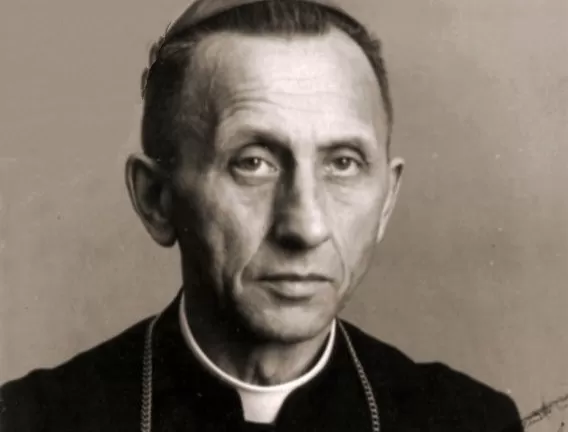
Archbishop Antoni Baraniak of Poznań, Poland, in an undated photo. Baraniak served as archbishop of Poznań from 1957 until his death in 1977 after enduring imprisonment and torture under Poland’s Stalinist regime. | Credit: Institute of National Remembrance Archive/Wikimedia (CC0)
Other anti-communist bishops were then imprisoned in Mokotów (Wyszyński, meanwhile, was held in several isolated former monasteries across Poland), including Bishop Czesław Kaczmarek of Kielce, who in a Stalinist show trial had been falsely charged with being a Nazi collaborator, and Wojciech Zink, the heroic ethnic German apostolic administrator of Warmia whose “crime” was refusing to sign a statement condemning the Polish primate.
Baraniak was kept in Mokotów for 27 months. During this time, he was starved and beaten; his fingernails were ripped off; and he was often kept in solitary confinement, naked, in a freezing, claustrophobic cell filled with human excrement. He was brutally interrogated 145 times yet never signed statements falsely vilifying Wyszyński; his refusal made it more difficult for the regime to later manufacture accusations in a campaign defaming the primate.
Signing such statements could have instantly ended Baraniak’s agony. In Jolanta Hajdasz’s documentary “Żołnierz Niezłomny Kościoła” (“The Indomitable Soldier of the Church”) Marek Jędraszewski, archbishop emeritus of Krakow and Lodz, quotes Baraniak’s priestly acquaintance as saying that after each interrogation, the jailed bishop would tell himself, “Baraniak, you can’t act like a swine.”
Archbishop of Poznań
Amid a post-Stalin thaw, Baraniak was freed in 1956. The Holy See nominated him to be the new archbishop of Poznan; the communist regime accepted, apparently confident that the emaciated, sickly Baraniak’s ministry would be brief.
Indeed, Baraniak led the Archdiocese of Poznan for 20 years. During this time, the Salesian bishop took to heart St. John Bosco’s concern for the young, promoting youth ministry and vocations, ordaining an impressive 600 priests during his episcopacy.
Baraniak participated in all four sessions of the Second Vatican Council; he urged his fellow council fathers to speak up explicitly in defense of Christians persecuted by communist regimes. He maintained contacts with the underground Church in Czechoslovakia and the Soviet Union, even clandestinely ordaining Czech priests.
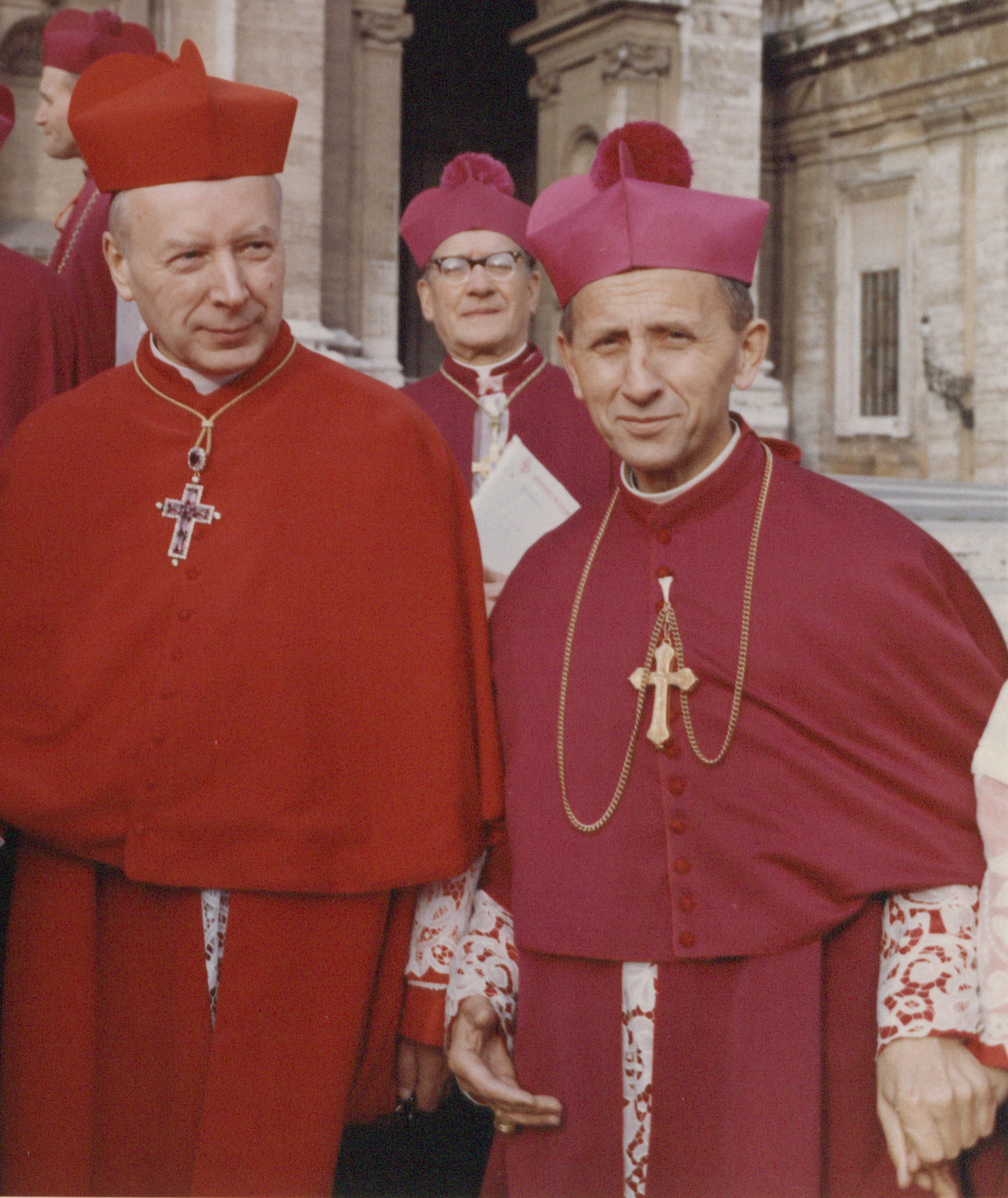
Archbishop Antoni Baraniak of Poznań (right) and Blessed Cardinal Stefan Wyszyński, primate of Poland, are seen outside St. Peter’s Basilica at the Vatican in an undated photo. | Credit: Archiwum Archidiecezjalne w Poznaniu
During the Polish bishops’ ad limina visit to Rome, Pius XII introduced Baraniak to Roman Curia officials with the words: “Ecco il vero martire” (“Here is a true martyr”).
A week before Baraniak’s death, Cardinal Karol Wojtyła visited the hospitalized archbishop of Poznan. “Your Excellency, the Church in Poland will never forget that you defended her under the worst possible circumstances,” he said. A year later, Wojtyła would be elected pope and become a true spokesman for the persecuted Church.
Cause for beatification
In October 2017, the Archdiocese of Poznań announced it would open a cause for beatification for its heroic former shepherd; four years later, the Congregation (now Dicastery) for the Causes of Saintsstated a cause would be opened upon sufficient evidence of “lively devotion” to the bishop.
Meanwhile, in 2024, the Polish Parliament declared the Year of Archbishop Antoni Baraniak. For many, a blessed Baraniak would be a perfect intercessor not only for the Church persecuted in many parts of the world but also for the faithful in every circumstance.
Anne-Marie Gustavson’s voice was joyful when she recounted her recent visit to New York to speak on a panel about the 19 Algerian martyrs, one of whom was her brother, Bishop Pierre Claverie, OP.
“I was absolutely amazed by everything,” she said of New York Encounter — held in February at the Metropolitan Pavilion in New York City’s Chelsea neighborhood — where her brother was featured in an exhibit alongside his fellow 18 martyrs of the so-called “Black Decade” of Algeria from 1992–2002. The Algerian-born French citizen living in New Jersey exclaimed: “I had no idea this existed at all, this New York Encounter!”
Gustavson participated in a panel discussion alongside Father Thomas Georgeon, the postulator for the 19 martyrs of Algeria’s cause; Georgetown University professor Paul Heck; and Bishop Steven Raica of Birmingham, Alabama, who moderated the discussion.
She said the exhibit was “absolutely beautiful” and marveled at its being scheduled to travel to England and Paris.
Indeed, according to Georgeon, the exhibit will travel to many more cities, including Chicago and Nashville, Tennessee, in the U.S. as well as Lourdes, France, and Milan, Rome, and “at least 10 other cities in Italy.”
Prior to the New York Encounter, the exhibit was first presented at the Rimini Meeting, the Italian equivalent of the encounter, in August 2025. “The success in Rimini was phenomenal: 15,000 people visited the exhibition in five days,” Georgeon said.
“That their reputation of holiness is growing, growing, and growing — that’s clear,” Georgeon said.
“Nineteen consecrated men and women, eight different religious congregations; seven women and 12 men who had answered God’s call to devote themselves to him and were called twice to give their lives to the end for the love of Christ and their neighbor,” he said. “The profiles of the 19 martyrs show astonishing variety against the background of the dynamism of a local Church, discerned by events and in a state of resistance to the prevailing violence.”
Claverie and his 18 companions were beatified by Pope Francis on Dec. 8, 2018, in Oran, Algeria, marking the first instance of a Catholic beatification taking place in a Muslim-majority country. Claverie served as bishop of Oran from 1981 until his Aug. 1, 1996, martyrdom.
The best known of Claverie’s companions are the seven monks of Tibhirine, who were kidnapped from their Trappist priory in March 1996. They were kept as a bartering chip to procure the release of several imprisoned members of the Armed Islamic Group of Algeria and were killed in May 1996. Their story was dramatized in the 2010 French film “Of Gods and Men,” which won the Grand Prix at the Cannes Film Festival.
In her interview with EWTN News, Gustavson described her brother as having “a balanced personality,” saying he shared their mother’s vivaciousness and was often “very joyful and teasing people.” At the same time, she said, “he also had my father’s intelligence and a more sober and thoughtful kind of temperament.”
“He never doubted his faith,” she said. “Once faith came upon him, he never doubted after that, and his path led him back to Algeria.” Gustavson and her brother were born in Algeria, and their family’s history there had stretched back for five generations. During Algeria’s war of independence from France in the 1960s, the family left Algeria for France. Claverie’s faith journey famously began when he joined a scout troop run by the Order of Preachers, also known as the Dominicans, the order he would eventually enter.
Gustavson emphasized the importance to her brother of remaining in Algeria. He was dedicated to helping Algerians to realize their dreams of democracy and peace in wake of the civil war in the 1990s that killed thousands of people. She recounted how he had begun to speak up as bishop of Oran about the suffering of the Algerian people, who were caught between a “a very repressive government and a rebellion based on an extreme form of Islam that had infiltrated the country.”
The question for Catholics became, “Do we stay or do we go?” she said.
“For us, for the family, at that point, my mom had passed away in ’92,” she recalled. “So for my father, and for us, my husband and I, and our daughters, we knew that something might happen.”
“But none of us had the thought of telling him, ‘OK, Pierre, just stop. Just go to France, go wherever.’ No, because he was on the path he wanted to be on,” she said. “And we knew also that he was a great help to the people, the Muslims around him.”
The last time Gustavson spoke with her brother was over the phone, a little over a day before he was killed. She said she could hear that “his voice was really not the way that it usually was,” and it had been several months since the monks at Tibhirine had disappeared. “The next day, a friend of ours gave me the call in the evening saying that Pierre had been killed along with [his driver] Mohamed.”
“When my brother was killed… so there was a six-hour difference with Algeria. And at the time when he was killed, I was in our bedroom, and I was rearranging some things on the shelves. And I had a picture of my brother at the top of that shelf, and it fell. And I picked it up; it wasn’t broken. And at that point, I said, ‘Oh my God.’ It was such a relief to think that it didn’t break.”
“In the years that followed, for me, it became a symbol of the fact that Pierre’s spirit goes on,” she said. “And the proof is now, today, after 30 years, his spirit is still alive.”
In the coming month, Georgeon and her brother’s biographer, Father Jean-Jacques Pérennès, OP, will join a delegation including Cardinal Jean-Paul Vesco of Algiers in visiting Pope Leo XIV ahead of his April trip to Algeria. Georgeon said he has seen “great joy, pride, and a desire for brotherhood being expressed” in the Algerian press and on social media.
Georgeon said there is nothing specific he expects regarding the cause of the 19 martyrs but said it “will be an opportunity to take stock of the cause and the spread of the reputation for holiness of these men and women throughout the world.”
For her part, Gustavson revealed excitedly that she will send a copy of her brother’s biography with them to give Pope Leo and that she has written a message to him inside, saying: “To Pope Leo XIV, from Anne-Marie Gustavson-Claverie. My brother Pierre used to say, ‘I need the truth of others.’ I will be praying for you as you search for that truth among the Algerian people he loved.”
Gustavson will visit the country in August on the 30th anniversary of her brother’s martyrdom.
Luxembourg has become the second country in Europe to enshrine the “freedom to abort” in its constitution, following the precedent set by France in 2024.
The Luxembourg unicameral legislature approved establishing the “freedom to abort” in the constitution on March 1 with a large parliamentary majority in a 48-6 vote with two abstentions.
The amendment to the constitution comes four years after the strengthening of the 1978 legislation that originally permitted abortion in the country. The effort was initiated by the left-wing party Déi Lénk with a proposal presented in 2024, which was subsequently approved by the Council of State.
A number of French-speaking countries refer to abortion with the euphemism “voluntary interruption of pregnancy,” or IVG by its French acronym.
Following the debate prior to the measureʼs approval, it was decided to include the phrase “freedom to abort” in the text instead of “right to an abortion.” This choice establishes the legality of abortion, albeit subject to certain legal limitations.
Its incorporation into the constitution also grants it greater legal protection than that afforded by ordinary laws.
‘Every human being possesses an inalienable dignity’
In September 2025 the countryʼs bishops expressed their disagreement with the constitutional initiative and emphasized that “every human being possesses an inalienable and indispensable dignity at every stage of life, even before birth.”
On behalf of the Catholic Church in the country, they reiterated that human dignity and the protection of life “are inextricably joined together” and that the inclusion of this supposed public freedom in the constitution “represents a shift in the ethical and legal paradigm.”
They denounced the fact that the starting point for legalizing abortion is the womanʼs right to self-determination over her own body, meaning that the fetus ceases to be distinguished “in any meaningful way as a separate human being.”
“The right to life of the unborn child is relegated to a secondary level compared to the womanʼs right to self-determination,” they lamented.
In this context, the prelates emphasized that “creating a legal framework that simply allows individuals to pursue their own life projects in a self-determined manner cannot be the sole consideration.”
They therefore proposed promoting a balance between family and work, fostering a shared approach to parenting, supporting single parents, preventing child poverty, and guaranteeing equal rights in the workplace.
In their view, establishing a fundamental right to abortion in the constitution “promotes the logic of the law of the strongest" and they argued that the problems and crises many families face during pregnancy could be resolved without amending the constitution.
Currently, abortion is legal in Luxembourg up to 12 weeks of gestation. Furthermore, in July 2025 certain requirements were eliminated such as the mandatory three-day waiting period and the pre-abortion counseling session.
Other European countries could be poised to follow the example of France and Luxembourg, as is the case in Spain, after the Council of State endorsed its inclusion as a right in the constitution last February.
This story was first published by ACI Prensa, the Spanish-language sister service of EWTN News. It has been translated and adapted by EWTN News English.
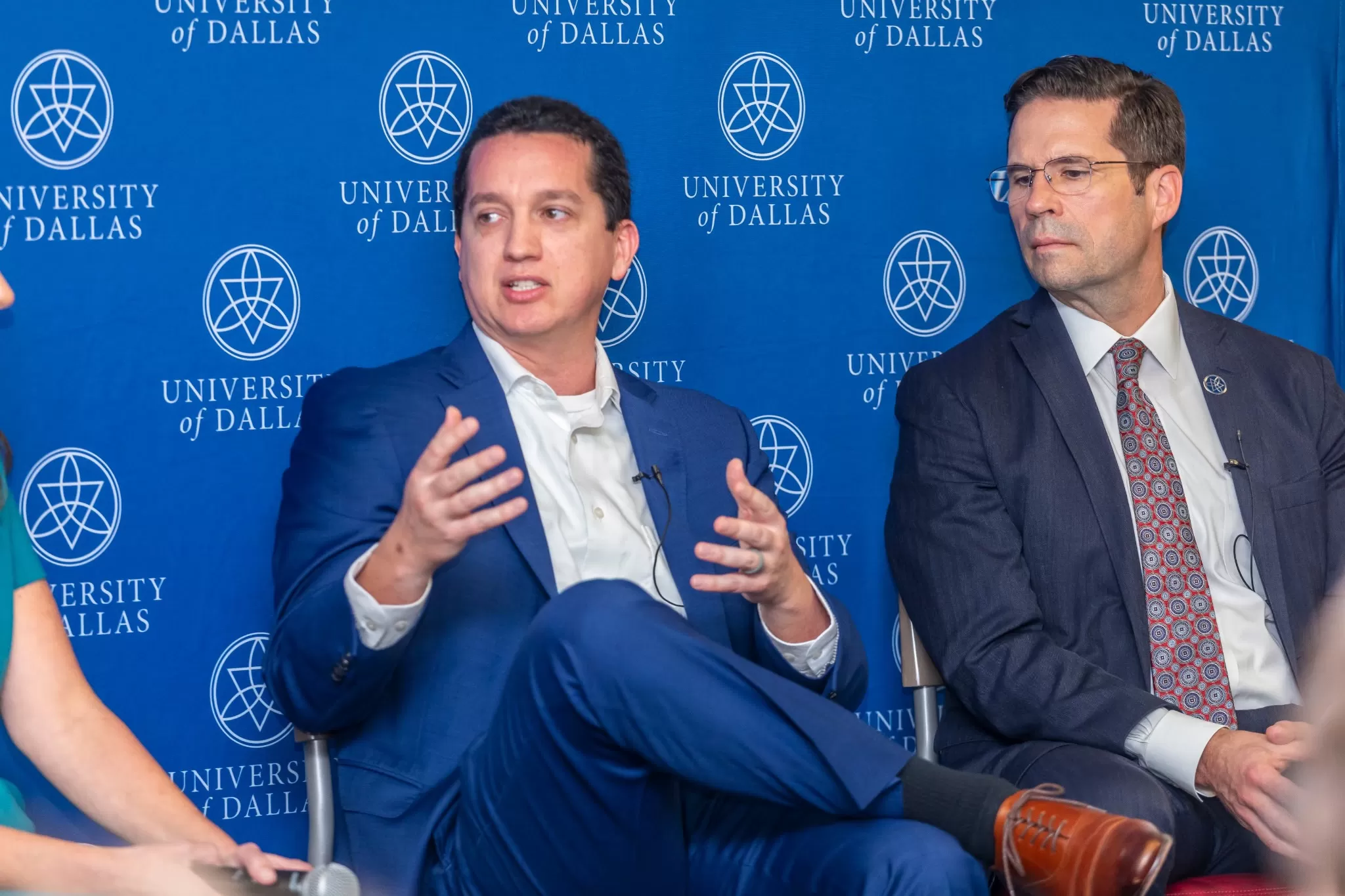
In a standing-room-only event, college students lined the walls of a large room at the University of Dallas to hear three Catholic academics and an apologist reflect on what makes America exceptional in a celebration marking the 250th anniversary of the founding of the United States.
Liam Ritter, a junior and the founder of the university’s Young Americans for Freedom chapter, which hosted the discussion, told EWTN News that the March 4 panel of speakers served as the capstone of three days of celebrations at the university.
The panel was comprised of University President Jonathan Sanford; Trent Horn, staff apologist with Catholic Answers; Burt Folsom, distinguished fellow at Hillsdale College and economic historian; and Susan Hanssen, associate professor of history at the University of Dallas.
‘We have a population of people who know what is at stake’
In response to Ritter’s question, “Why [is it] that our political regime has been so stable for so long,” Hanssen recalled America’s first immigrants.
“I think the first thing that makes America exceptional, and its political regime exceptional, is the fact that America was first populated by people who fled the rise of the modern nation state and totalitarianism … and so we have a population of people who know what is at stake in political liberty," she said.
“Theyʼve seen what happened to their ancestors,” she continued. “They remember the stories. And America has been blessed in its political constitution with the regime of liberty, which has made possible the flourishing of subsidiary communities and societies.”
Hanssen said we should not take for granted today that we still “have a free people."
“We need to listen to our latest immigrants … those who have fled Venezuela, those who have fled Iran, like my uncle, a Persian Jew, who refuses to call himself Iranian because he associates modern Iran with the regime of the Ayatollah.”
‘Get married, have children, raise them well’
Sanford said that though we are a nation of immigrants, “there won’t be enough to pull in to make up for” the continuing demographic decline.
“Get married, have children, raise them well,” he said to chuckles from a receptive audience, which was mostly composed of college students.
He encouraged the students not to focus on “one big step,” but rather, to take smaller steps: “Get up early. Pray. Exercise. Go through the day in an ordered fashion, give Caesar what is Caesarʼs, and God what is God’s.”
“Do the little things thousands and thousands of times,” he said.
“In order to exercise liberty properly,” he continued, one has to ask, "How should I live my life?” and then rely on the institutions that “help you do that.”
He called the family the “foundational institution” of America. “Recover the family,” he said.
In addition, “we need to see those institutions that mediate the virtues — schools, universities — that embrace fully the idea of what [the virtues] are.”
Horn also encouraged students to focus on family relationships, telling them “get off the phones and the internet. They’re killing all of us. They’re rewiring our brains.”
Trent Horn (left), an apologist at Catholic Answers, and University of Dallas President Jonathan Sanford participate in a panel on American exceptionalism at the University of Dallas on March 4, 2026. | Credit: Courtesy of University of Dallas Young Americans for Freedom Chapter
Of people currently in their 20s in America, "one in three will never have children,” he lamented, implying too much technology use is partly to blame.
The Catholic Answers apologist pointed out, however, that though the Second Industrial Revolution “broke the family” by encouraging workers to move away from their homes and families to pursue careers, the internet “post-Covid,” in the age of “Zoom and telecommuting … might be good” because many people no longer have to choose between a job and staying near their extended families.
“Maybe tech can help build up family networks,” he said.
‘The greatest outpouring of economic development’ in history
Ritter told EWTN news that he chose speakers who could address “the wonderful things the U.S. has contributed” to the world because “a lot of young people don’t have appropriate gratitude for the country.”
Ritter asked Folsom, a historian who focuses on economics and industrial affairs, about what the professor believes the U.S. has contributed to world economics and world innovations.
Folsom said that the generation after the Civil War, from 1865 to 1905, was responsible for “the greatest outpouring of economic development … in world history” and “gave us the rise of an America that became a world power” by World War I.
He listed inventions that facilitated the rapid development of industry and infrastructure in the country during the Second Industrial Revolution, including the typewriter, the telephone, adding machines, the light bulb, electricity, factory-produced cars, and recording devices for music and movies, among other innovations.
Through the Declaration of Independence and the U.S. Constitution, “the founders gave us the freedom” to develop these technologies, he said. “We had amazing infrastructure that allowed people to produce, and not have government get in their way.”
The professor said the post-Civil War period could be eclipsed in the present day “because with artificial intelligence, this generation may yet be able to come up with more.”
‘A responsibility for this political regime of freedom’
At the conclusion of the panel discussion, Hanssen called the feeling in the room “electric, it’s teeming with patriotism. This isn’t a normal college campus.”
Referring to Sanford’s earlier admonition to ”get married and have kids,” she said: “I agree, be fruitful and multiply … Preach the Gospel, and baptize in the name of Jesus, but also, go into politics!” she exclaimed.
She encouraged the students to develop “the ability to love something so much that you would die for it: God, family, country.”
“Recognize what is at stake. We have a responsibility for this political regime of freedom, to the immigrants who come here … to our children… to preserve the rule of law.”
She concluded to loud applause: “So family; yes! Faith; yes, but to the barricades, ladies and gentlemen!"
The U.S. Conference of Catholic Bishops (USCCB) will advocate for “just immigration policies” with the successor to Homeland Security Secretary Kristi Noem.
President Donald Trump said Noem would become special envoy for a security initiative called “The Shield of the Americas” the day after a tense hearing with the Senate Judiciary Committee on March 4. Trump said he will nominate Sen. Markwayne Mullin, R-Oklahoma, to replace her. The position requires Senate confirmation, a process requiring a simple majority (51 votes) for approval.
Following the announcement, USCCB Committee on Migration Chair Bishop Brendan J. Cahill said in a statement to EWTN News that the bishops will advocate for just immigration policies with Noem’s successor, focused on the dignity of the human person.
“Without commenting on the qualifications of any specific individual, my brother bishops and I remain committed to dialoguing with all leaders in every administration, as well as Congress, in support of just immigration policies that recognize the God-given dignity of all involved,” Cahill said.
“We will continue to urge an approach to immigration enforcement that is targeted, proportionate, and humane, always respecting each person’s inherent dignity, the sanctity of families, and religious liberty,” he added.
“At the same time, we will continue to call on Congress to undertake a meaningful reform of our immigration system to rectify the ways our current laws lead to unjust consequences for families and communities,” Cahill said.
During her tenure, Noem has overseen the president’s mass deportation initiative, which faced criticism from the bishops. DHS oversees Immigration and Customs Enforcement (ICE) and Customs and Border Protection (CBP).
In November, the USCCB approved a special message with a 216-5 vote to oppose “the indiscriminate mass deportation of people.” The bishops also objected to “dehumanizing rhetoric and violence” directed at immigrants and law enforcement and expressed concern about family separation.
Impact of leadership shake-up
It’s unclear whether the shake-up will lead to any significant policy changes, considering that Mullin has strongly supported the administration’s strict enforcement of immigration laws, such as mass deportations, policy scholars said.
The Catholic Legal Immigration Network (CLINIC), which works closely with the bishops, is following the shift, with a spokesperson telling EWTN News that the organization hopes the incoming secretary “will recognize the inherent dignity of immigrants and refugees and uphold policies that protect those seeking safety and opportunity.”
“Mullin has a past record of recognizing the importance of providing refuge to Afghans who assisted the United States, and we hope that same understanding of our nation’s moral responsibility will be applied more broadly to people around the world seeking safety and security,” the spokesperson said.
Kevin Appleby, senior fellow for policy and communications for the Center for Migration Studies and former director of migration policy for the USCCB, told EWTN News he sees the change as “an opportunity to get the administration and the [DHS] to change course.”
However, he said the mass deportation policy “will remain in place until President Trump and his advisers decide that it’s the wrong approach [and] that an immigration reform package is in the best interest of the country, and I don’t see that happening in the near future.”
“Until the president takes a different approach, just because you change someone at the top, you won’t change the fundamental policy and what’s happening,” he said.
Appleby said he does not think the leadership change will alleviate the bishops’ concerns because the Church is “opposed to the basic policy” of mass deportations.
Andrew Arthur, resident fellow in law and policy at the Center for Immigration Studies, told EWTN News that he also doubts the bishops’ concerns will be alleviated, saying: “I don’t believe that his appointment is going to change the president’s immigration policies.”
He said there may be some differences between Noem and Mullin, such as “a continuation of the Tom Homan vision of enforcement — more targeted enforcement,” referring to the border czar. He said there may be a stronger focus on those who have committed additional crimes and more worksite enforcement.
President Donald Trump’s administration eliminated a federal rule that sought to force foster homes to affirm a child’s same-sex attraction and a child’s self-asserted gender identity when that identity is inconsistent with his or her biological sex.
The Administration for Children and Families (ACF) formally rescinded the rule on March 6 based on concerns it could force faith-based foster parents and foster homes to violate their religious beliefs.
“This Biden-era rule was an affront to common sense, but most especially, it sent the wrong message to faith-based foster parents and organizations who simply seek to provide a loving home for foster youth,” Alex Adams, ACF assistant secretary, said in a statement.
“We can do better, and we must do better to make sure children in foster care find lovely, nurturing homes,” he said.
The formal elimination of the rule comes nine months after a federal court blocked enforcement, finding it exceeded the statutory authority of the Department of Health and Human Services (HHS). ACF is a division of HHS.
On March 3, ACF also sent letters to all 50 states explaining that children may not be removed from foster homes solely because the foster parents do not affirm a child identifying as a gender inconsistent with the child’s sex.
“Parents have the right to raise their children according to their sincerely held religious beliefs and moral convictions,” Adams said in a statement. “When states overstep their bounds, ACF will take action to deter inappropriate policies that drive unnecessary interactions with child welfare systems. This is one such example.”
These moves are part of Trump’s broader efforts to combat what he calls “gender ideology extremism.” In an executive order, Trump established an official policy to affirm “the biological reality of sex” and recognized that the terms “man” and “woman” refer to biological distinctions rather than self-identification.
Ahead of International Women’s Day, Sister of Life Mother Mary Agnes Donovan discussed finding her calling to religious life and her decades of working with women in need.
Donovan said “it’s uniquely true now” that it can be hard for women of faith to see the God-given gifts in themselves. “If you are a woman of faith, you’re living in a way that’s countering a prevalent culture. So you don’t fit in, and you don’t fit the mold,” she said in an interview with EWTN News’ Colm Flynn, with an excerpt aired on “EWTN News Nightly” and broadcast in full on EWTN’s YouTube channel.
“So it’s very important to have other people around you ratify, and encourage, and identify that ‘You are uniquely gifted in this way and this is a gift that has been given, that you can develop, and give back to the world,’” she said.
To honor her many years of helping women, the GIVEN Institute announced this week Donovan will receive the 2026 GIVEN Fiat Award. GIVEN, a nonprofit organization that helps young women identify their gifts for the Church and the world, will honor her witness to the dignity of women and the gift of life.
To recognize these God-given gifts, Donovan said “other people notice it first, and they’ll tell you.”
Path to religious life
Before joining religious life, Donovan said she had other plans. Growing up in Pennsylvania in the farming country, “I always thought, because of the circumstances, I’d be a farmer’s wife,” she said. “I thought I would have six children.”
Later on, Donovan developed an interest in psychology. “I think I loved people, and that was probably the basis of my own interest in pursuing psychology,” she said. “I think just to understand the human person.”
She went to college for a degree in educational psychology and eventually completed her doctorate at the University of North Carolina at Chapel Hill. After school, Donovan began teaching at Columbia University in New York.
While at Columbia, “I thought that would be my life forever,” she said. “I had no intention of leaving.” But then everything changed during a retreat at the end of her first year teaching in New York.
“It was an Ignatian retreat where you pray in silence for eight days and basically listen to, and see things, that you don’t see when you’re not silent and you’re not praying,” she said. “I think what happened was that essentially an encounter with the love of God just turned my life upside down.”
It was “a calling to give all of my life to God, and he would decide what that would look like. So in other words, it was a call to love, to give all of my mind, my heart, my soul, the entirety of my life,” she said.
Joining religious life then “seemed obvious to me,” she said. “I told my retreat director that. I said, ‘I’ll be in a convent next year at this time.’” Donovan then entered religious life in 1991, when the Sisters of Life was founded, and became a sister by 1993.
Sisters of Life
While many call her a founder or co-founder of the Sisters of Life, Donovan said: “I’ve never thought of myself that way.” It was Cardinal John O’Connor who “actually received the charismatic grace, that is the foundational grace of our community. I was the first superior, and a long-term superior.”
“I think all of the first 50 sisters are probably foundational sisters. We all contributed to the foundation of mission, to the foundation of our common life, everything about our lives. You do it together in a community,” she said.
More than three decades after the order was founded, the sisters continue their mission in a time it is especially needed, she said.
“We live in an age when most people don’t get up in the morning and feel that their life matters deeply to many. They question the meaning and the purpose of their lives,” she said.
“Our purpose as Sisters of Life is to answer that very ache in the heart of man, which is to say that ‘You are of infinite value, that you came from a Creator who created you with a particular purpose for your life. And only you can fulfill that purpose.’”
The Sisters of Life primarily work with women experiencing unexpected pregnancies and are “deliberating among their options,” she said. “I think that the women that call us are calling us because they want to know everything before they make that decision.”
“They may not be practicing their faith, but they have some life of faith within them. They don’t want to ignore that because everything in their being tells them that this is an important decision,” she said.
“So our job is simply to help them slow down long enough to simply think through with their heart more than their mind: ‘What is before me and what my options are,’” she said. “It’s really a call to listen deeply to the heart of another and to allow her to speak what is within her heart, so that she can hear herself.”
Many women who come to the sisters have already had abortions after they “quickly made a decision,” she said. They are not as quick to do it again because “the experience of abortion is not what it’s described to be. It’s an experience they never want to have again,” she said.
“No woman would ever choose abortion if she had options that were real,” Donovan said. The sisters then “help her find what she needs so that she can reasonably make that decision. Because the decision for abortion is often one that is vaguely coerced by the culture, by withdrawing all the supports that are needed.”
“No one comes to us by force. They only come to us voluntarily. We don’t seek them. They walk through our doors,” she said. “She is coming to us because, in fact, she’s feeling coerced into a decision that she doesn’t like or desire.”
Impact of the sisters’ ministry
After 35 years of ministry, many of the children the Sisters of Life helped bring into the world are now adults. The sisters “stay in touch with many of them and they’re part of our family,” Donovan said.
“They do their confirmation service hours with us” and “they come back and they volunteer,” she said.
“Every Christmas, when we have our Christmas party, you look at all these children that are there … and you stand there and you say: ‘Not one of them would probably be alive. Not one of them,’” Donovan said.
“It’s the most wondrous mission … to receive these women, to usher them through a program of retreat and prayer and gatherings where they explore and understand what has happened in their life. They come to us sometimes weeks and months after the abortion. Sometimes they come decades after,” Donovan said.
“It’s the most wonderful thing … to see these women actually begin to believe in the mercy and the tenderness of the heart of God,” she said.
The Sisters of Life continues its mission, and the number of sisters continues to grow with it. As the number of religious vocations goes down, the order has not experienced a decline with around 145 sisters today.
“God has blessed us with vocations,” Donovan said. But, “we need many more.”
A Jesuit priest says he has a “much larger perspective” of the crisis of war after fleeing the Holy Land at the outset of U.S. and Israeli aggressions against Iran.
Father Anthony Wieck, SJ, told EWTN News he was leading a pilgrimage of about 20 Catholics in the Holy Land when the war began on Feb. 28.
“We had just spent a week in Galilee and prayed our way through the holy sites of Jesus’ teaching and miracles,” Wieck said, describing the region as “a lovely land [God] created for himself to enjoy on this earth.”
The group arrived in Jerusalem on Feb. 26, he said, and the next day word began to spread of the need to evacuate from the region. Several pilgrims were able to leave immediately, Wieck said, while others who attempted to leave the next day were unable to get a flight out and eventually had to return to the pilgrim group.
Ben Gurion International Airport “is not a safe place to be because there are military installations near the airport,” he said. “Iranian missiles were being sent that way, and our people … were taken into the bomb shelter five stories down below the airport.”
Wieck said that even as the conflict broke out, his group still toured holy sites, including the Church of the Pater Noster, where tradition holds that Christ taught the disciples to pray the Our Father.
“We were instructed by our guide to continue the tour and to simply seek cover whenever the sirens went off,” he said, pointing out that “those living in Jerusalem are so used to warning sirens there that they have much less fear than we do. They’re observant but not fearful. And we were trusting them.”
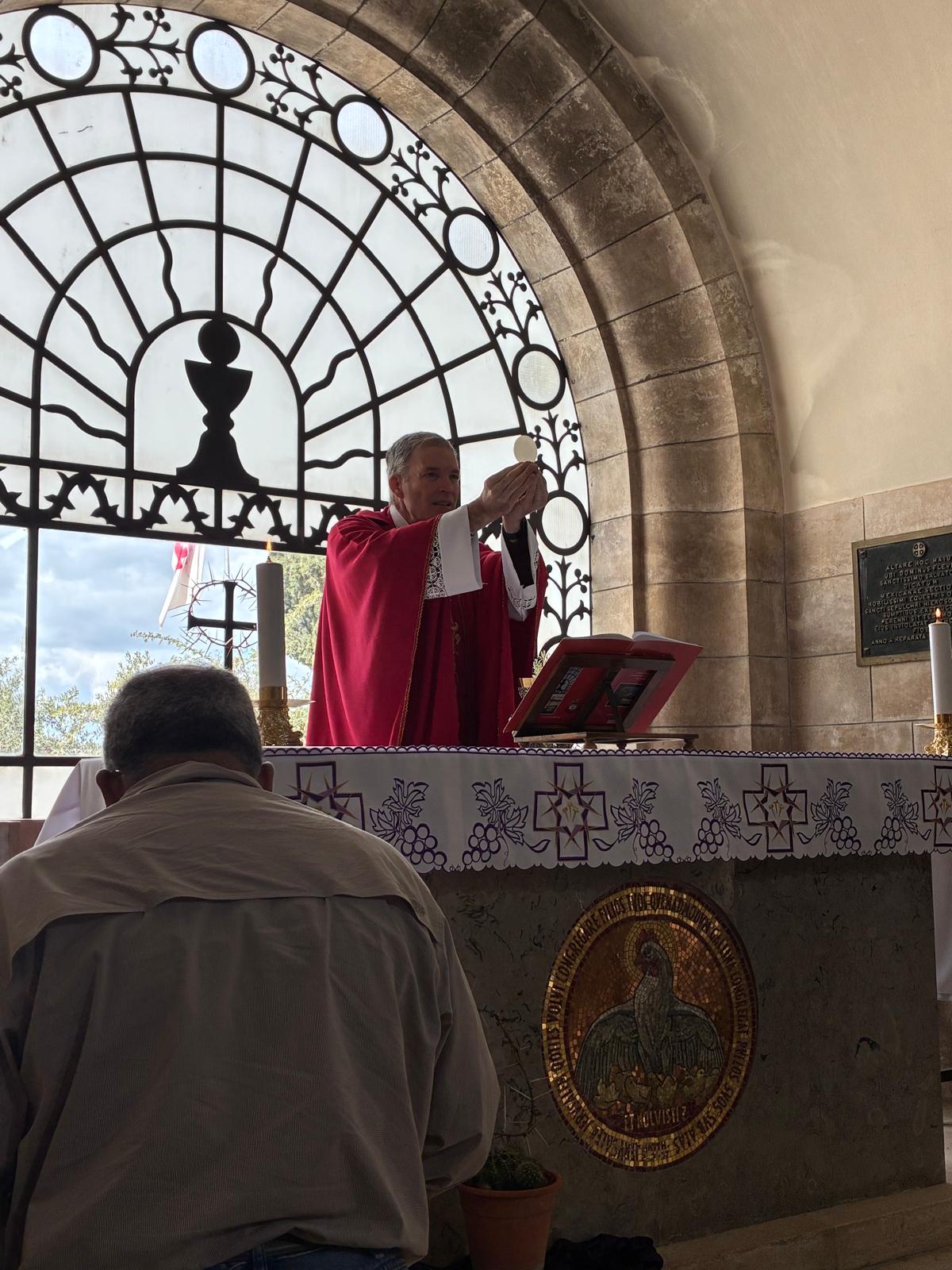
The priest was offering a chanted Mass at the Dominus Flevit Church while explosions sounded in the distance as Israel’s Iron Dome intercepted Iranian missiles.
“It was scary, yes,” Wieck said. “But I continued the Mass with trust, and after Communion (before the final prayer) asked all pilgrims to pray for a couple minutes regarding where the Lord was in all of this situation.”
Father Anthony Wieck, SJ, says Mass at the Dominus Flevit Church in Jerusalem on Saturday, Feb. 28, 2026. | Credit: Father Anthony Wieck, SJ
After Mass, a group of pilgrims from Kansas joined them in the church amid sirens and explosions in the surrounding region.
“It struck me as supremely important that we not make decisions based on fear but on faith,” he said.
The priest’s group took a truncated walking tour of Jerusalem, he said, which “became eerily quiet that evening.”
The tour company ordered them to evacuate the following morning.
Departing for Jordan, the group found itself stuck amid a crush of evacuations in the area. “A typical two-hour trip to Amman, Jordan, took us seven hours,” Wieck said. And while the group initially “felt much safer being outside of Jerusalem,” they eventually felt “locked in” at their hotel, particularly amid mass flight cancellations.
Missile contrails are seen over the Holy Land region on Sunday, March 1, 2026. | Credit: Father Anthony Wieck, SJ
Jordanians in the area kept assuring the Americans that the country’s King Abdullah II would protect them. “Not feeling the same allegiance to their king, my trust was in God,” the priest said.
The U.S. Department of State provided military evacuations to Americans in the area. “Little by little, our pilgrims found an occasional flight that [shuttled] them out of the war zone,” Wieck said.
The priest and one other pilgrim, a religious from Phoenix, were the last from their group to remain in Jordan before they took a flight with Royal Jordanian Airlines on March 4. Wieck said the pilot took “great efforts to circumvent Israeli airspace.”
The air carrier “was bold enough to keep to their travel plans despite the threats,” Wieck said, describing the airline as “my new favorite.”
‘Truly a Catholic experience’
Wieck told EWTN News that he “would not say that I was stellar in my response to what God was doing here.”
“I wanted to pray much but felt so much stress and trauma around me that it was truly difficult,” he said. “I was exhausted.”
Yet during the frightening evacuation, he said, “hundreds of people” back home were lifting up the pilgrims with prayers and sacrifices.
“They knew our plight was becoming a bit more grave,” he said.
Back home in the U.S., Wieck, who lives in Louisiana, said he was still reflecting on what happened but said the harrowing ordeal gave him “a much larger perspective to have experienced profoundly how much we need the help of our brothers and sisters in times of crisis.”
“It was truly a Catholic experience,” he said.
“Though as humans we usually don’t carry our crosses in times of crisis all that well, our brothers and sisters in the faith can see us through. That was my experience,” he said.
A New Jersey man has pleaded guilty to having attempted a bombing plot against an October 2025 Red Mass in Washington, D.C., a liturgy whose attendees regularly include Supreme Court justices and other high-ranking government officials.
The U.S. Department of Justice said on March 5 that Geri pleaded guilty to a violation of the Hobbs Act, specifically “extortion by wrongful use of force, violence, or fear.”
Geri also pleaded guilty to possession of an unregistered firearm, the Department of Justice said.
The government said Geri had with him a list of demands that included “hundreds of thousands of dollars in payments to himself and others” as well as “extended accommodations” at the Mayflower Hotel in downtown Washington.
Geri also demanded an expatriation flight to Japan and that the Supreme Court “remove Arizona from the United States and declare it a ‘foreign enemy,’” the government said.
He further “made numerous demands directed at leaders of the Catholic and Jewish faiths,” according to the Justice Department.
Testing subsequently confirmed that Geri’s explosive devices were “in operable condition,” the government said. Geri’s sentencing is set for July 27.
Nobody was injured in the incident. Though Supreme Court justices have regularly attended Washington’s Red Mass, none were present at the 2025 liturgy due to security concerns.
Attendees at the 2024 liturgy included Supreme Court Chief Justice John Roberts Jr. as well as Associate Justices Brett Kavanaugh and Amy Coney Barrett. Elizabeth Barchas Prelogar, the U.S. solicitor general, was also in attendance.
Red Masses are offered for those who work in all legal professions. The practice dates back to the 13th century.