A Nebraska man is in police custody after officials say he made threats against Catholic schools and nuns as well as the children of the state’s Catholic governor.
The Nebraska State Patrol said they initially arrested 32-year-old Ean Halstead on June 29. The patrol said in a press release that police were investigating a threatening online message against Columbus Catholic Schools and the family of state Gov. Jim Pillen.
The investigation led police to Halstead, who was arrested on June 29 after a standoff at his apartment in Omaha. He was charged with obstructing a police officer and failing to obey a lawful order.
A search at his residence revealed “evidence linking [Halstead] to the threatening message sent to Columbus Catholic Schools,” the patrol said. He was subsequently re-arrested on July 17 and charged with “terroristic threats and destruction of evidence.”
Local news reported that the message, posted to the Facebook page of Columbus Catholic Schools, had declared: “I’m going to shoot up this school and kill Jim Pillen’s children and a few nuns for (expletive) funsies.”
A spokesman for Pillen said the governor’s office was “extremely grateful” for law enforcement’s “quick and thorough work to track down this individual and ensure the security of the First Family.”
“We have zero tolerance for political violence here in Nebraska, including threats to carry it out. If you threaten violence against a public official or their family in this state, you will be found and held accountable,” the governor’s office said.
Pillen has four children with his wife Suzanne. He has been governor of the state since 2023.
Earlier in 2026 he told EWTN News that there was “no way I could possibly be governor without my faith.”
His faith life includes the regular praying of the rosary; describing his average day, he said: “I get up and I pray to do God’s will.”
Haile McAnally’s words still ring years after her experience with abortion pills sent her to the hospital.
Alone in her apartment after she took the pills, McAnally was discovered passed out in the bathtub, surrounded by blood.
“I started hemorrhaging, and the only strength I had when I was sitting on the toilet was to take myself into the bathtub,” she said in a press call on July 13. “And when I laid down in the bathtub, I thought that I was going to die that day.”
Her phone was on the opposite end of the bathroom — out of reach.
“I didnʼt have enough strength to get up and call anybody, so I laid there,” she said. “And that was really all I remember until I woke up in the hospital.”
“My friend had let me know that she found me and called 911, and they came and thankfully rescued me,” McAnally recalled. “I had a blood transfusion at the hospital, and it was a horrifying experience for someone so young that thought that they could trust these medical professionals.”
Now, McAnally is advocating against mail-order abortion pills by signing a letter in support of a woman suing the Food and Drug Administration (FDA) for not having safeguards for women.
“We have to raise awareness about the danger of these pills,” McAnally said.
“I was in a center; I was there where there were nurses and there was a doctor and I had oversight,” McAnally continued. “Mailing these [abortion pills] across the country and putting them in dorm rooms and in bathrooms all around the country with no oversight is, I believe, very reckless.”
McAnally said she hopes she and the other women who have had similar experiences “will be heard.”
“I’m just one story out of many,” McAnally said.
McAnally is one of more than a dozen women harmed by abortion drugs who are asking Acting Attorney General Todd Blanche to settle a lawsuit over abortion pill guardrails in a July 8 letter.
The women are rallying behind Rosalie Markezich, the leading voice in an ongoing lawsuit against the federal government. Markezich’s boyfriend at the time allegedly coerced her into taking abortion pills.
“If mail-order abortion wasn’t a thing, I’m 100% sure I would have my child,” the letter read, quoting Markezich.
The women are advocating for in-person prescription requirements for chemical abortions.
“We grieve with Rosalie because many of us recognize parts of our own stories in hers: the pressure, the confusion, the fear, the absence of real medical care, and the feeling that the system was designed to move drugs faster than it was designed to protect women,” the letter read.
Rosalie Markezich, a Louisiana woman coerced into taking abortion drugs that her then-boyfriend obtained via mail from a doctor in California. | Credit: Alliance Defending Freedom
Numerous cases of abortion pill poisonings and coercions have been documented in recent years in addition to Markezich’s.
“No woman should be forced, pressured, deceived, or abandoned into taking drugs that end her child’s life and place her own health at risk,” the letter said.
“The FDA’s illegal abortion drug policy is responsible for this danger, and it is the same policy the department is defending in court,” the letter continued.
“The death toll is climbing, and we need action immediately,” Dangers said in a press call on July 13. “This is our new drug crisis. Mifepristone takes more lives every year than fentanyl, cocaine, and heroin combined.”
“As many as 11% of the women who take these drugs will experience really serious complications, including hemorrhage, infection, sepsis, and more,” Dangers continued.
Jessica Williams, a registered nurse whose baby was saved through abortion pill reversal, also signed the letter and shared her story in the press call.
She obtained abortion pills without ever meeting with a provider.
“My now ex-husband was pressuring me to abort my pregnancy,” Williams said. “At the time, I was also experiencing the emotional roller coaster of going through a divorce.”
“I was vulnerable, emotionally exhausted, and experiencing one of the lowest points in my life,” Williams said.
“I took the first abortion pill after succumbing to the pressures from my ex-husband,” Williams said. “Within the next 24 hours, my mind, body, and spirit spiraled with confusion and a variety of emotions. I wondered if my baby was still alive.”
Because of her background as a nurse, Williams knew there might still be a chance that her unborn daughter was still alive. Staff at a pregnancy resource center stepped in to help her and her unborn daughter.
“I was connected with a compassionate pregnancy resource center in Las Vegas, where I obtained a free ultrasound, was prescribed the abortion pill reversal, and was supported through one of the hardest times of my life,” Williams continued.
“Because of abortion pill reversal, my daughter, Kaylie, is alive,” Williams said. “She is now 3. Sheʼs healthy, beautiful, thriving, and one of the greatest blessings of my life.”
As a nurse, Williams calls the current system “predatory.”
Mail-order abortion lacks the safeguards that in-person visits entail — including ensuring the drugs go to the right person.
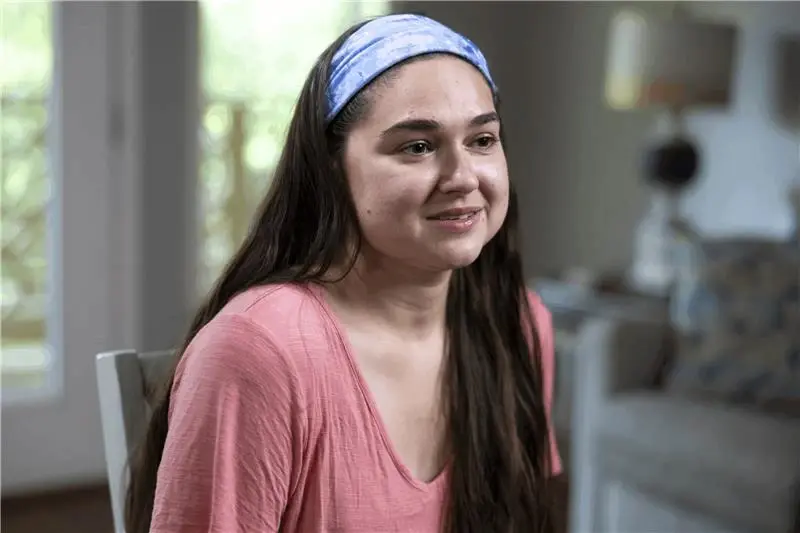
Jessica Williams, a registered nurse, advocates for informed consent for women who take the abortion pill. In her own experience, abortion pill reversal saved the life of her daughter, who is now 3 years old. | Credit: Photo courtesy of Jessica Williams
“No woman should ever feel trapped, isolated, or without someone to help or understand her options,” she said. “As a medical professional we are sworn in to do no harm.”
“Every woman deserves to make decisions free from coercion or pressure, and with appropriate medical support,” Williams continued.
In addition, Williams is advocating for more information about abortion pill reversal to be given to women. In her own case, she was told that the practice was dangerous.
“As a registered nurse, informed consent has always been one of the most fundamental principles of medicine,” Williams said. “Women deserve complete information about their medical options. They deserve compassionate care.”
If things had been a little different, Williams might not have her daughter Kaylee with her — and that thought motivates her to advocate for other women in similar situations.
Jessica Williams and her 3-year-old daughter were helped by First Choice Pregnancy Services in Las Vegas. | Credit: Photo courtesy of Susan B. Anthony Pro-Life America
“I often think about what my life would look like had I never learned that another option existed,” Williams said. “Thatʼs why I continue to share my story.”
“[We] will not receive an extension or any second chances.”
That’s the urgent message Catholics in western New York are telling the local faithful in their bid to preserve a Civil War-era parish in the small town of Auburn.
The Diocese of Rochester is moving to permanently close and potentially sell Holy Family Church due to structural issues that officials say make it unsafe to use as a parish.
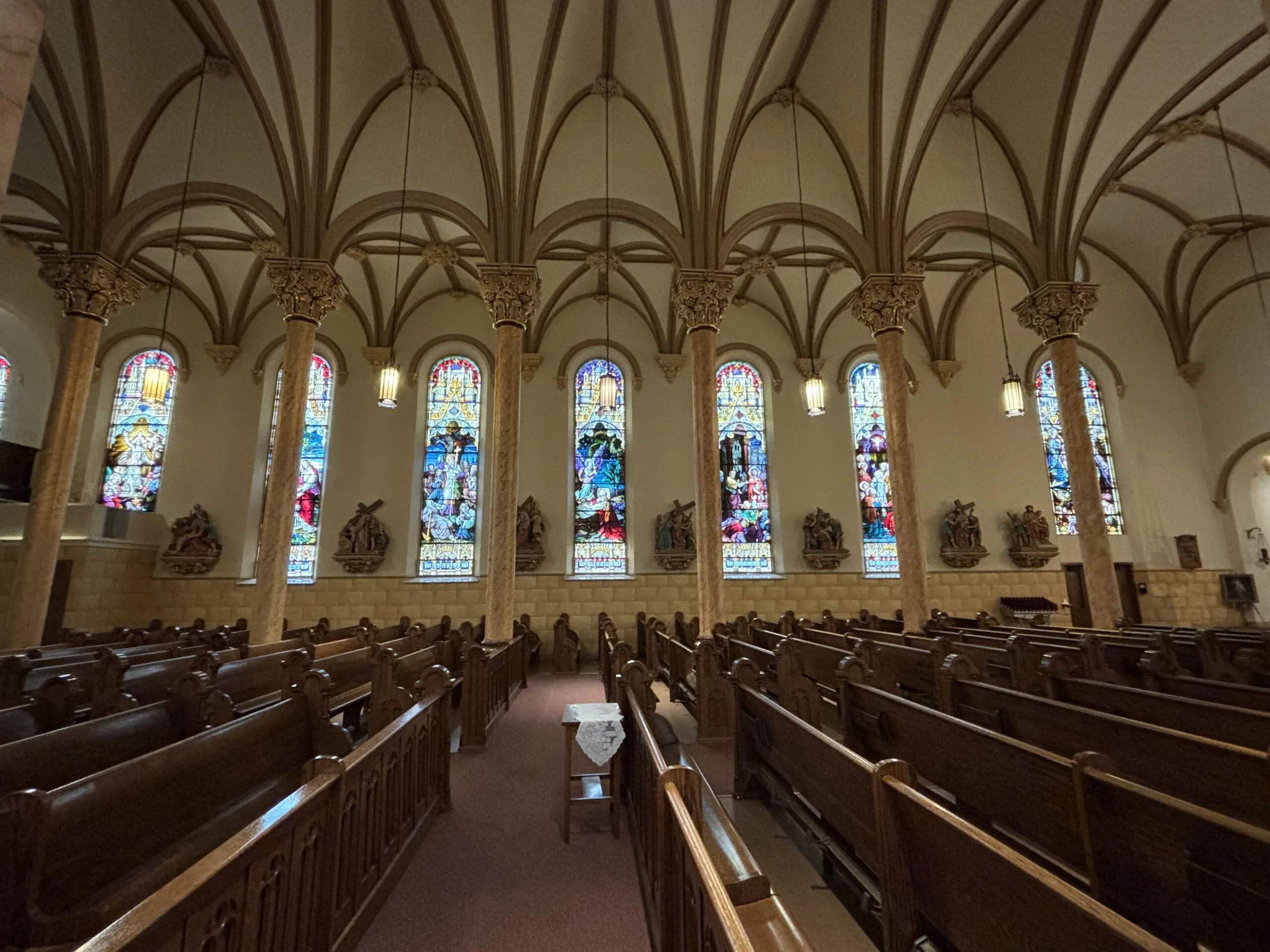
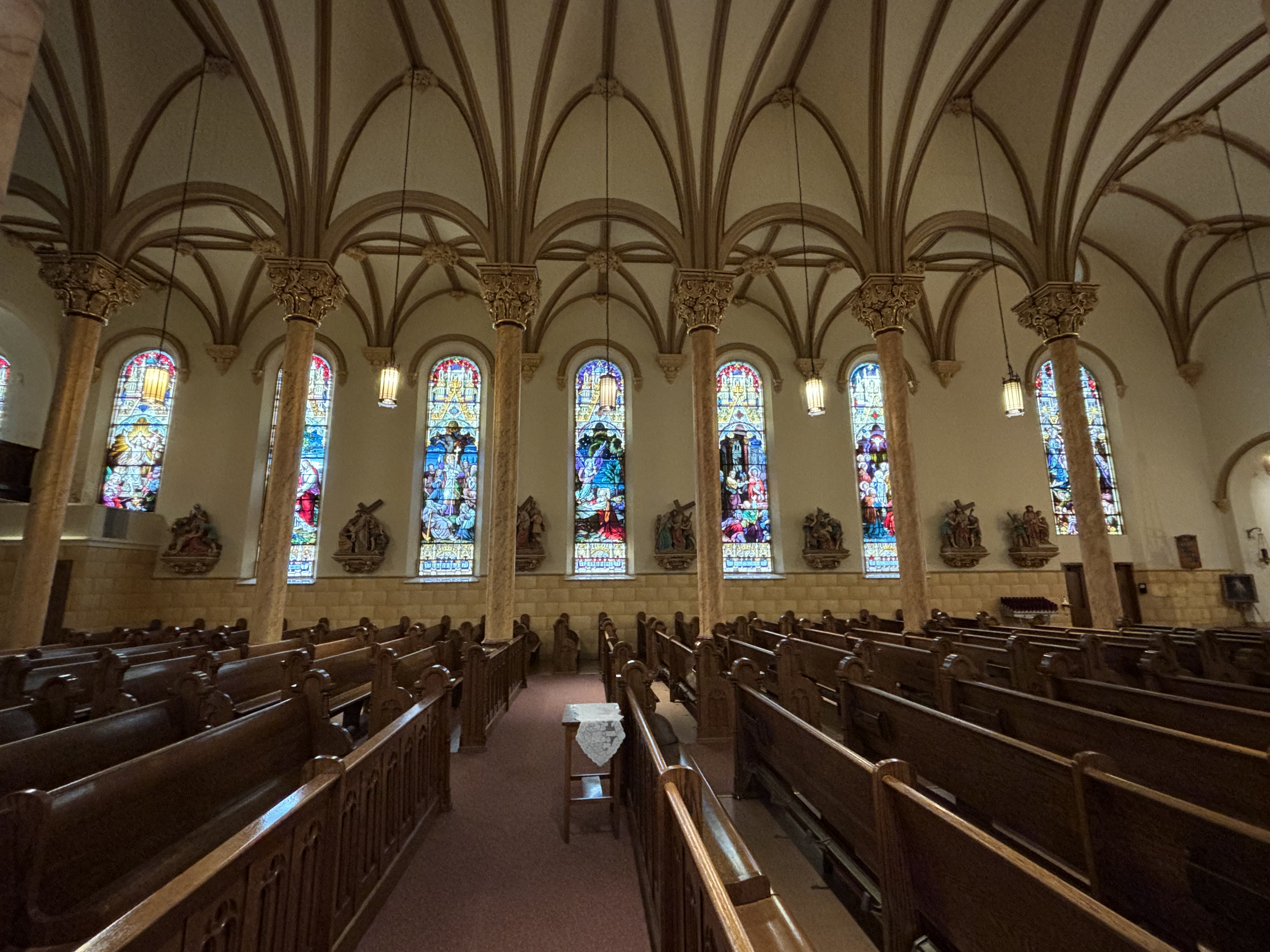
Interior details of Holy Family Catholic Church in Auburn, New York. | Credit: Photo courtesy of H.O.P.E.
The diocese shut down the church in June 2024, but parishioners of the parish in Auburn — located about 40 minutes outside of Syracuse — are petitioning the Vatican to keep the church an active holy site rather than allow it to be sold off to potential developers.
On its website, Holy Family Organization to Preserve and Endure says the Vatican has requested that the group “demonstrate funding for the purchase, repair, and maintenance of the church.”
The organizers say they are working to raise pledges to support the parish but there is a “narrow time window” and numbers “must be provided to the Vatican by mid-late summer 2026.”
“If H.O.P.E. fails to demonstrate sufficient evidence to the Vatican by mid-late summer, then Holy Family Church could be sold to a secular buyer and could be destroyed,” the group said.
Parish’s roots stretch back to early 1800s
The Auburn-based Roblee Historic Preservation said in a “statement of significance” report that Auburn was the site of the first Catholic Mass in the Western New York region in the early 1800s.
The Roblee report was drafted in order to assist the city’s historic review board in potentially awarding a landmark designation to the parish. The New York Historic Preservation Office had previously said the property was eligible for listing on both the state and national historic registers.
Holy Family Church hosts the wedding of Joseph Paul Staehr Sr. and Jean Marie Hayes Staehr on Nov. 29, 1958. | Credit: Photo courtesy of Richard Staehr
The Church of the Holy Family was initially dedicated in 1830 in a chapel previously used by local Methodists. The current building was built in 1861 by local Dutch-born master builder John Vanderbosch.
The report described the parish as the “mother church” of Auburn and “an iconic part of its downtown skyline.”
On its website, the Catholic preservation group says it hopes to retain the parish for “Catholic religious activity,” including rosary groups and private prayer groups, “occasional worship,” sacred music concerts, sacred art displays, and architecture tours.
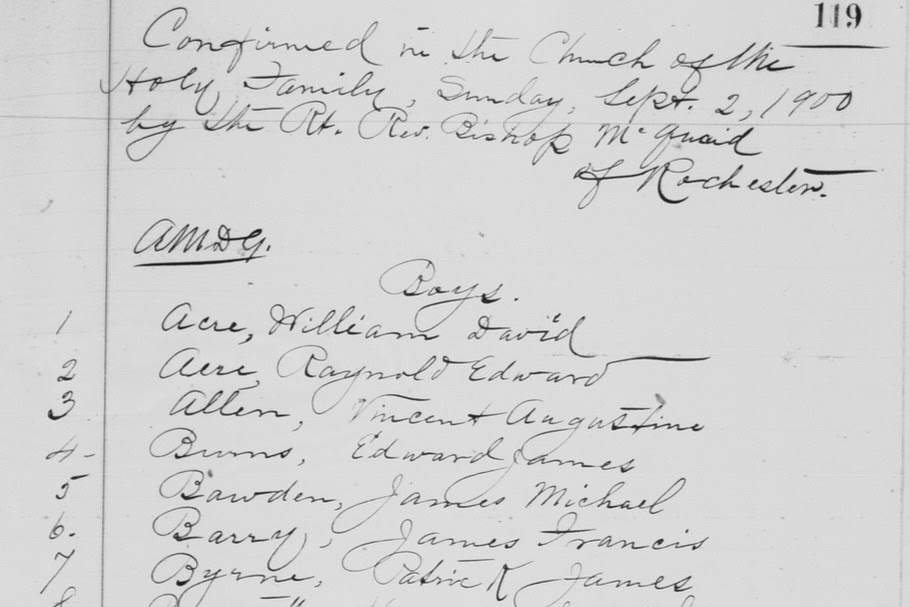
Karen Odrzywolski, the president of the parish preservation group, said the church is also meant to preserve the memory and legacy of Bishop Patrick Byrne, an apostolic delegate to Korea who was martyred in 1950 during a four-month-long forced march while in the captivity of communist forces in North Korea.
Born in Washington, D.C., Byrne spent his formative years in Auburn, living just a few blocks from the parish. His family attended Mass there and he attended the parochial school; he was confirmed at the parish in 1900.
A record from Holy Family Church shows the Sept. 2, 1900, date of Bishop Patrick Byrne’s confirmation. | Credit: Courtesy of H.O.P.E.
Odrzywolski told EWTN News the preservation group formed in July 2024, a month after the parish was officially shuttered by the diocese.
“We initially put together a preservation plan, which we shared with our pastor and with the Diocese of Rochester,” she said. “We’ve also shared it with the Vatican.”
“We’ve also worked on educating the community as to the significance of the church,” she said. “We’ve had events in honor of Bishop Byrne and of his family, and on the 75th anniversary of his martyrdom we had a prayer vigil.”
In addition to the link with Byrne, Odrzywolski said the parish was also once host to another famous Catholic bishop, now-Venerable Archbishop Fulton Sheen. The prelate, at the time the bishop of the Diocese of Rochester, officiated the funeral Mass of Father William Davie at the parish in 1968.
The Vatican has requested that the group demonstration its ability to fund the church’s upkeep, she said. “We’re very appreciative of this opportunity. We’re hopeful if we can demonstrate the funding they’ll allow us to proceed with preserving the church.”
Thus far, Odrzywolski said, the group isn’t accepting cash donations; instead, it is collecting pledges “so we can demonstrate our ability to fund the maintenance, repair, and preservation of the church.”
“We’ve received over 300 pledges,” she continued. “We’re extremely grateful to every single person who has pledged. Many people have pledged as much as they possibly can. Many who pledge in general may be of limited or fixed income.”
Odrzywolski said the needed repairs are limited to the exterior facade. The interior, she said, has been well maintained over more than a century and a half.
The Vatican, meanwhile, is expecting the group’s proof of viability by August. “We’re trying our best to aim for an Aug. 1 deadline in order to allow enough time to prepare the documents in a timely manner,” she said.
“The truth is, we need the entire community to come together,” she said. “The closure of the church impacts the entire community, and we need individuals, families, and businesses to come together.”
“It’s about the future of Auburn,” she continued. “but it’s also about honoring Bishop Byrne, and ultimately honoring God.”
More than 22 million Catholics across the globe make up a network dedicated to praying daily for the challenges facing humanity and the Church, uniting their prayers with Pope Leo XIV’s monthly intentions.
While the pope “has an endless list” of prayer intentions, he chooses 12 to offer for each month of the year, Father Cristóbal Fones, SJ, the international director of the Pope’s Worldwide Prayer Network, explained in an interview with “EWTN News In Depth.”
In order to do so, the network will “help the pope to discern the intentions a year ahead,” Fones explained. “So we ask many people — all the dicasteries and our national directors — to give us some proposals, and we offer to him lots of them … about 20 of them.”
The Holy Father “takes some time to pray on these proposals” and then chooses the 12 intentions for the upcoming year in advance.
“So we published, for instance, the 2027 monthly intentions last February. So you can already know what we are about to pray for next year too, so that we can have some time to make the translations, to create the materials in Indonesian, Hindi, Swahili, Guarani, and so on.”
Pope Leo has continued the tradition of Pope Francis, who recorded the first video of the monthly intentions in 2016, but the current pontiff has put his own take on it.
Pope Leo is “not only asking us to pray but praying himself for the monthly intention and inviting us to join him in prayer,” Fones said. “Thatʼs why we call this campaign ‘Pray with the Pope,’ because heʼs the first one interceding for the needs of humanity, and he is inviting us through this campaign to do it with him.”
“Some people may watch the video and participate with him by praying. Others can do it [on] their own. But the important thing is to be united in this network of hearts — compassionate hearts for the needs of the world.”
Pope Leo is also “constantly asking us to pray for contextual … prayer intentions, like a flood or an earthquake in Venezuela, for instance,” Fones said.
All these prayer intentions are then updated “in what we call the popeʼs prayer profile,” Fones said. It consists of “all the requests for prayer that he normally does, whether on Sunday in the Angelus or on Wednesdays during the general audience.”
In order to aid the Holy Father, the network is run by a team of an administrative council appointed by the Holy See, international coordinators, formation leaders, and communications teams.
The network “is a participation in the mission of the Church by offering ourselves through prayer, service, and spiritual formation,” Fones said. Made up of Catholics in more than 90 countries, the Pope’s Worldwide Prayer Network is “a very old pontifical work with more than 180 years.”
The network started in 1844 and was first called the Apostleship of Prayer. It was later renamed and established as a formal Vatican foundation in 2020 to support Christ’s mission of compassion for the world across continents and cultures.
Call for prayers to respect life
Pope Leo’s prayer intention for the month of July is for respect for human life in all circumstances.
The Holy Father drew attention to the importance of the intention when he dined with 200 vulnerable people on July 11.
“Having a lunch is just to show a sign [of] what we actually have to do with one another, to sit at the same table, to recognize our common dignity, because we are all sons and daughters of the same God. And when you understand that, you treat others as equal in dignity,” Fones said.
“We may think differently. We may have different positions in life — opinions, backgrounds, stories — but we are all sons and daughters of God. So when you recognize that you can treat others as brothers and sisters, even if you disagree with them,” he said.
Catholic and Eastern Orthodox bishops exchanged dialogue and joined together in prayer at an ecumenical conference in Washington, D.C., this week with a hope that one day the Eastern and Western churches will be reunited.
The conference, held at the retreat house for the St. John Paul II National Shrine on July 13–15, was organized by the Orientale Lumen Foundation. Jack Figel, an Eastern Catholic who founded the group, named it after St. John Paul II’s apostolic letter expressing hope for reunification.
Speakers included the secretary for the Vatican Dicastery for Promoting Christian Unity, Archbishop Flavio Pace; the primate of the Orthodox Church in America, Metropolitan Tikhon Mollard; Cardinal Seán Patrick OʼMalley; Greek Orthodox Bishop Anthony Vrame; and Romanian Catholic Bishop John Michael Botean.
“I grew up with — I lived with — the tension between East and West my whole life,” Figel told EWTN News.
A reunification, Figel said, “all depends on the Holy Spirit.” He said: “It is going to be a miracle and it’s going to be on God’s time.”
The conference included speeches by both Catholic and Orthodox bishops and joint panels. Prayer services were held in the Eastern form in which bishops from both traditions participated: a moleben to the Holy Spirit on Monday, daily vespers on Tuesday, and the Akathist to the Mother of God on Wednesday.
In 2024, the commission set up two subcommittees to analyze two major points of contention: one for papal infallibility and the other for the Filioque.
Papal infallibility refers to Vatican I’s teaching that the pope can infallibly define doctrines. The Filioque — Latin for “and the Son” — refers to the West adding the phrase in the Nicene Creed “the Holy Spirit … who proceeds from the Father ‘and the Son.’” Catholics argue this clarifies the Latin translation of the Creed, which was originally in Greek; but many Orthodox see it as changing the understanding of the Trinity.
Vrame told EWTN News these theological issues continue to be a hurdle toward Catholic and Orthodox communion.
The No. 1 issue
Speaking from the Orthodox perspective, he said papal infallibility and supremacy is the No. 1 issue. Although Orthodox acknowledge Ecumenical Patriarch Bartholomew as “first among equals” among patriarchs, “our governance structure allows for each national Church to govern itself,” he said.
Dialogue with Rome, Vrame said, must address questions of “how do we begin to understand any claims of universal jurisdiction of the papacy” and “how do we understand any form of papal infallibility.” He said the Catholic embrace of synodality could improve dialogue on this issue.
He said a major question is what unity would look like and pointed toward Rome’s relationship with Eastern Catholics as a possible example, saying they are “in communion with Rome,” but “Rome allowed them to retain their distinctive rites and practices.” However, he noted historical complications with Rome’s past attempts to Latinize Eastern Catholics and a major question to settle is: “What would unity do?”
Mollard also told EWTN News “the whole question of primacy and synodality” remains a major issue, along with “centuries of separation,” which he said “doesn’t help either.”
Pace told EWTN News that the subcommittee addressing infallibility has to “prepare a very good draft” on the matter that the full committee made up of Catholic and Orthodox leaders “can discuss and approve.”
Steps toward unity
As the hierarchy tries to work out millennium-old theological disputes, Mollard said another step is “trying to get from the theological [dialogue] to the implementation” of a stronger relationship but warned “everyone’s afraid to do anything.”
“We do have to practice these things,” he said in his speech. “Let’s work together and see if we can find our unity in Christ … [and] work on the structures that could bring that about more formally.”
“Prayer and humility are always good,” Mollard said.
He told EWTN News that some steps could be jointly “caring for the poor” or “feeding the hungry,” which is “the most direct way that collaboration can take place” at this time. In his speech, O’Malley called for joint prayer and study sessions, joint pastoral letters and statements, and joint works of mercy.
Figel suggested Catholic and Orthodox parishes should “pray once a month for unity for at least 10 or 15 minutes.”
Ultimately, Vrame said full unity and communion would be expressed “in the Eucharist” if all issues are resolved.
“We don’t share the Eucharist,” he said. “That would be the culminating moment.”
Dialogue and the laity
Many bishops said dialogue and bonds should take place among laity too, with Botean saying in his speech that ecumenism cannot just be “at the level of academics.”
“Without the face-to-face stuff, … we’re going to get nowhere,” he said. “And if our competition is the internet, we have more driving us apart than together.”
Botean warned against hostile and uncharitable exchanges, many of which occur on social media, saying: “When we become unloving because of our faith, we’re on the wrong track.”
Lizbeth Moncada, a senior at Florida Atlantic University who attended the conference, told EWTN News that she has “a lot of friends who are Eastern Orthodox and Oriental Orthodox” but agreed that online dialogue can often be “polarizing.”
She said exchanges online can be “very disheartening” and she has “wanted to stop engaging in these conversations” at times. Yet, she said discussions like what occurred at the conference are “encouraging.”
Andrew Likoudis of the ecumenical Likoudis Legacy Foundation, told EWTN News: “I try not to even engage in online discourse because of how toxic it is.” Yet, he said “the discourse here is much healthier” and allows Catholics and Orthodox Christians to “cross theological boundaries and retain the integrity of our own traditions without compromise.”
Vrame, commenting on dialogue, said “beating up on somebody else is not very Christian … no matter what you think of their position.” He said people can have “respectful disagreements … without having to beat up on somebody,” saying that’s “no way to show love for your neighbor.”
He said it’s good that people are passionate about their faith but posed the question: “Are we passionate in a way that reflects Christ and Christianity?”
A Catholic teacher based in Arbroath, Scotland, is filing suit after she was fired over her pro-life views.
Supported by pro-life group the Society for the Protection of Unborn Children (SPUC), Sarah Morse, 66, is taking Arbroath High School, run by Angus Council,to court on grounds of discrimination. The move comes after Morse was fired after telling a student, “I am a faithful Roman Catholic and I am against it,” when asked her opinion on abortion during a history lesson in November 2025.
“At no time did I attempt to persuade any student to adopt my position. To be ‘canceled’ and lose my livelihood because of my religious identity is a terrifying precedent for the teaching profession in Scotland,” Morse said.
“As a faithful Roman Catholic, Sarah Morse respectfully said she opposes [abortion]. Hours later she was sacked on the spot,” SPUC said. “We must all have the right to express our pro-life views without fear of losing our jobs.”
Attack on Christians in Egypt raises questions about hate speech
A new attack on Christians in Egypt’s Minya Governorate has renewed scrutiny of sectarian incitement and the deeper roots of anti-Christian hostility.
According to ACI MENA, the Arabic-language sister service of EWTN News, Bishop Macarius, Coptic Orthodox bishop of Minya, said extremists attacked Copts in the village of al-Tal al-Qibliya, damaged a priest’s car, prevented worshippers from leaving a church, and cut off electricity. Security forces later arrived, arrested those accused of incitement and rioting, and began documenting the damage.
Egyptian senator Bassem Kamel said repeated incidents in Minya point to failures that cannot be addressed by security responses alone, calling for renewed religious discourse, educational reform, media policies that promote acceptance, and faster action on an independent antidiscrimination commission.
Apostolic vicar of Northern Arabia describes pastoral visits amid war
Apostolic Vicar Aldo Berardi, OSST, of the Apostolic Vicariate of Northern Arabia revealed that he was able to carry out 11 pastoral visits throughout the region despite airport closures and ongoing conflicts.
“Despite the difficulties caused by the attacks and the closure of airports, we were able to carry out the program as planned,” Berardi said in a Fides News article, emphasizing the need to visit his flock “especially at a time marked by tension and fear.”
The Apostolic Vicariate of Northern Arabia covers Bahrain, Kuwait, Qatar, and Saudi Arabia. “We gathered to pray for peace and organized special moments of encounter and fraternity,” he said. “No priest requested to return to his home country, a source of great consolation for the entire community.”
Vatican diplomat highlights HIV crisis among children
Monsignor Marco Formica, counselor of the Holy See’s Permanent Observer Mission to the United Nations, called for increased attention to HIV cases among children.
“My delegation would like to draw special attention to children, who remain particularly vulnerable to HIV. Gaps in both diagnosis and treatment mean that the 3% of HIV patients that are children account for 12% of deaths due to HIV,” Formica said in a statement following a U.N. meeting on HIV and AIDS.
“Quality antenatal as well as perinatal and postpartum care protects both mothers and their children. It is vital to ensure early testing and consistent access to treatment for children with HIV in child-friendly formulations,” he said.
Syriac lawmaker says Christians not sufficiently represented
Gabriel Moshe Kourieh, the only Syriac member of Syria’s Parliament and a leading figure in the Assyrian Democratic Organization, told ACI MENA that Christian representation in the new People’s Assembly remains below the community’s aspirations.
Christians currently hold about 3% of the seats, a figure Kourieh said does not properly reflect their historic role in Syrian public life or their place in the country’s national consensus. He argued that a future fair electoral law could allow broader Christian participation from different provinces while stressing that Syria’s transition must be judged by actions: the building of institutions, separation of powers, judicial independence, and equal citizenship.
Kourieh also placed constitutional recognition of the Syriac-Assyrian identity, language, and culture among his top parliamentary priorities while warning that economic hardship, poor services, and fading hope continue to push many Syrians toward emigration.
Catholic Social Services in Australia urges government to address housing crisis
Catholic Social Services Australia (CCSA) has asked the Australian government to conduct an audit of the country’s regulations on buying and building housing.
“Regulation is not inherently negative. It is introduced to address specific problems or market failures,” CSSA chief executive Jerry Nockles said in a Catholic News report on Thursday following the proposed audit. “Without regular reassessment, well-intentioned regulations can inadvertently constrain housing supply, driving up costs and limiting access — experienced most acutely by low-income households.”
Caritas South Korea named official channel for humanitarian aid
The South Korean Caritas will serve as the primary distributor of humanitarian aid from Caritas International for people north of the border, Asia News reported.
"On behalf of the Caritas Internationalis, we discussed the project of development and cooperation with Kim Seong-il, vice chairman of the National Economic Cooperation Committee of North Korea, who accepted our direct commitment. We also exchanged a letter of intent,” Father Lazzaro You Heung-sik, president of the bishops' aid committee, said following a five-day visit to North Korea in May, according to the report.
Under the agreement, Caritas will serve as the “only channel of aid from Catholics from all over the world,” Paul Jeremiah Hwang Yong-yeon, secretary of the South Korean Caritas, also said.
Filipino bishop calls for end to stigma around mental health
The Catholic Bishops’ Conference of the Philippines pledged to walk with members of the faithful struggling with mental illness and work toward breaking societal stigmas around mental health.
“Mental illness is not a sign of weak faith. It is not a punishment from God. Like any illness, it deserves understanding, appropriate care, and compassionate accompaniment. Every person, whatever his or her condition, is created in the image and likeness of God and possesses an inalienable dignity that no illness can ever take away,” the bishops said in a pastoralstatementreleased on Monday.
“As a Church, we commit to building communities of encounter, breaking the stigma, strengthening collaboration, and walking together in hope so that every person is welcomed, accompanied, and freed from stigma,” the bishops added.
The Mexico City attorney generalʼs office announced the arrest of a priest from the Archdiocese of Mexico accused of aggravated child sexual abuse against a 17-year-old girl and stated that a judge has already initiated criminal proceedings against him.
In a statement issued July 15, the attorney general’s office noted that the complaint was filed June 4 by the teenagerʼs mother, who had discovered “conversations with sexual content with a contact identified as ‘Winnie Poo’” on her daughterʼs mobile phone earlier this year.
According to the attorney general’s office, the teenager reportedly stated that the contact in question was a priest identified as Enrique “N,” who allegedly “forced her to engage in sexual acts on four occasions.”
Following the initial inquiries, a supervisory judge ordered the priest to be held in pretrial detention and set a two-month deadline for the conclusion of the supplementary investigation.
Archdiocese initiates canonical investigation
The Archdiocese of Mexico announced in a statement dated July 15 that archbishop Cardinal Carlos Aguiar Retes had ordered the initiation of an investigation “in accordance with canon law and the procedures established by the Dicastery for the Doctrine of the Faith.”
The statement expressed its “support for the minor victim, her family, and anyone who may have been a victim of any form of abuse” and reiterated its commitment to the protection of minors and vulnerable persons, “as well as to providing respectful support to those who have suffered any form of violence.”
The archdiocese also noted that while the investigation is ongoing, it “will avoid making premature judgments” and “will refrain from revealing the priest’s identity while the competent authorities carry out the necessary proceedings.”
Finally, the archdiocese urged anyone aware of a possible case of sexual abuse committed by an ordained minister to report it either by phone or email and provided the contact information.
This story was first published by ACI Prensa, the Spanish-language service of EWTN News. It has been translated and adapted by EWTN News English.
Catholic leaders are offering prayers and calls for peace and justice after federal immigration agents fatally shot two immigrants in the span of one week.
The Diocese of Portland, Maine, is offering prayers and pastoral support to the family of a Colombian man, Johan Sebastián Durán Guerrero, 26, who was shot and killed on Monday, July 13, in the small town of Biddeford, Maine.
Archbishop Joe Vásquez of the Archdiocese of Galveston-Houston, meanwhile, called for a “reform that brings about justice to all parties” as well as “peaceful dialogue, mutual respect, and a commitment to charity” after 52-year-old Lorenzo Salgado Araujo, a Mexican national, was fatally shot by an ICE agent during a traffic stop July 7 in Houston’s Hispanic Magnolia Park neighborhood.
Conflicting stories
The Maine shooting occurred as Durán “attempted to flee the scene” during a vehicle stop by U.S. Immigration and Customs Enforcement (ICE) officers, an ICE spokesperson told EWTN News in a statement.
The spokesperson said the agency was “conducting targeted surveillance on the last known address of an illegal alien with a final order of removal.”
Identifying Durán, the ICE statement indicated that “an illegal alien departed the residence in a vehicle,” and when the “vehicle attempted to flee the scene and fearing for public safety, an officer discharged his weapon.”
The Diocese of Portland said its Hispanic ministry is providing support to Durán’s wife and 3-year-old daughter as well as the community.
“We pray that all those affected by his death may experience Godʼs loving comfort, strength, and peace,” the diocesan statement added in the wake of the tragedy.
Mufalo Chitam, the executive director of Maine Immigrants' Rights Coalition, told the Associated Press that Durán was on his way to work when he was apprehended and shot.
The Colombian native was authorized to work in the U.S. and had been issued a Social Security number, according to the immigrant advocacy group Presente!
Not the intended target
ICE said Salgado, a father of three who has lived in the U.S. for more than three decades, rammed an ICE vehicle in an East Houston neighborhood and attempted to run over an officer, who then fired in self-defense.
Witnesses, including his brother, who was a passenger in his van, have disputed that account.
In response to the shooting, Vásquez said in a statement on July 15: “As a society, we need to see and treat each other as men and women created in the image and likeness of God, including our immigrant brothers and sisters, our elected officials, as well as our law enforcement officers. Violence and disrespect will only lead to more fear and division,” Vásquez wrote.
Vásquez reiterated the U.S. bishops’ call for “meaningful immigration reform as opposed to an ‘enforcement-only approach.’”
“The U.S. Catholic bishops have repeatedly called for enforcement efforts that are targeted, proportional, and humane,” Vásquez continued.
No body cameras used in either shooting
U.S. Sen. Angus King, I-Maine, said the ICE agents were not wearing body cameras at the time of Durán’s shooting, the AP reported of the latest incident.
"The question is, what did he do with his vehicle," King said. "Were officers threatened? Were the threats rising to the level that justified deadly force? Thatʼs what this investigation is all about.”
Though cameras at local businesses have footage of the incident, Maine State Police have asked for the footage not to be released pending the investigation, per the AP.
DHS told Houston Public Media the officers involved in Salgado’s shooting were not wearing body cameras because of recent lapses in federal funding.
State and federal agencies, including local police departments, the attorney general’s offices, the Department of Homeland Security (DHS), and the FBI are investigating both shootings.
The law enforcement officers who shot Durán and Salgado have been placed on leave during the investigations.
It is not clear if one of the three men in the van with Salgado was the man ICE was searching for, but a spokesperson for U.S. Rep. Sylvia Garcia told Houston Public Media she spoke with David Venturella, ICE’s acting director, who told her Salgado was not “the intended target.”
Aaron Reitz, U.S. attorney for the Southern District of Texas, said in a statement July 16 that on the morning Salgado was shot in Houston, federal officials were investigating two Guatemalan men “who had previously evaded arrest and were potentially subject to deportation.” They were also known to be driving a white van.
Reitz said that while searching for the men, federal officers received a report of a similar vehicle in the area, leading police to pull over Salgado’s van because the men inside “fit the suspects’ description.”
“The aliens then fled,” Reitz’s statement continued, “conducting a rapid U-turn and hopping a median to get away. The agents chose not to pursue.”
The federal agents came across Salgado’s van again later that morning, according to Reitz, “and again, the illegal aliens attempted to flee, but this time the agents successfully surrounded the vehicle.”
The officers “instructed the noncompliant aliens to put the van in park. Preliminary information indicates the driver shifted the van into reverse, then forward again, while an officer was partially inside the van or immediately next to it.”
Officers then fired “a single shot” during the confrontation, hitting Salgado.
Durán and Salgado’s deaths bring the number of those who have been fatally shot by ICE agents this year to four.
In January, two people — Renee Good and Alex Pretti — were killed in separate incidents during immigration enforcement operations in Minneapolis.
U.S. attorney general nominee Todd Blanche has pledged to enforce a federal law already on the books that would allow the federal government to end the shipping of chemical abortion drugs.
When pressed by Sen. Ted Cruz, R-Texas, during his confirmation hearing on July 15, Blanche agreed to enforce the Comstock Act and other federal pro-life acts to the greatest extent possible.
When asked by Cruz if he would “carefully evaluate every lawful action available to ensure the faithful enforcement of the Comstock Act and other federal pro-life acts,” Blanche said: “Yes.”
Under former president Joe Biden, the Department of Justice determined that mail-order mifepristone is not a violation of the Comstock Act.
The Comstock Act of 1873 prohibits sending obscene materials via the post office as well as the mailing of "every article or thing designed, adapted, or intended for producing abortion.”
Activists urge Congress to defund Planned Parenthood
Advocates for unborn babies and legislators this week rallied to urge Congress to permanently end taxpayer funding for Planned Parenthood and abortion businesses.
At a July 16 press conference on Capitol Hill, hosted by Live Action and Defund Coalition partners, Sen. Josh Hawley, R-Missouri, said Congress “should have acted long ago.”
“There is no excuse for Planned Parenthood to be receiving taxpayer money to be carrying out the mutilation of our children, to be carrying out the murder of the innocent unborn, and yet that is what this Congress is planning to do,” Hawley said.
“I’m here to say, ‘Not on my watch.’ It is absolutely unacceptable and indefensible that a Republican Congress would fund Planned Parenthood.”
The rally took place just weeks after the Trump administration’s temporary defunding of Planned Parenthood expired on July 4.
Lila Rose, founder and president of Live Action, said taxpayer dollars “should never be used to prop up America’s largest abortion business.”
“Planned Parenthood exists to end the lives of preborn children, and every dollar it receives helps sustain an industry built on violence against the innocent,” Rose said in a statement shared with EWTN News.
“The American people should not be made to subsidize abortion businesses under the guise of women’s health. Defund Planned Parenthood now.”
Planned Parenthood investing $47 million into 2026 midterms
Planned Parenthood is investing $47 million into the November midterm elections, targeting Republicans who voted to defund the abortion giant last year.
The “We Decide” Campaign from Planned Parenthood Votes, an affiliate of Planned Parenthood, will target voters in Arizona, California, Colorado, Iowa, Michigan, New York, Pennsylvania, and Wisconsin as well as in Senate races in Michigan and potentially Maine.
“All the freedoms weʼve fought for are on the line this year, and WE DECIDE what comes next,” reads the We Decide website.
Idaho ballot initiative could repeal protections for unborn babies
An initiative to end Idaho’s strong protection for unborn children has qualified for November’s general election ballot.
Idahoans United for Women and Families, a group that advocates for abortion, announced Monday that it collected more than 110,000 signatures for the ballot initiative.
The proposed initiative would legalize abortion until the unborn baby is viable outside of the womb and establish a right to reproductive health decisions about abortion.
Idaho protects unborn babies throughout all stages of pregnancy, except to save the pregnant woman’s life or in cases of rape or incest, the latter two rules applying only during the first trimester.
Missouri Gov. Mike Kehoe signed an act to reinforce protections against infanticide for babies born alive after attempted abortions.
The Born Alive Abortion Survivors Protection Act establishes charges of first-degree murder against a healthcare practitioner who “knowingly performs or attempts to perform an overt act that kills a child born alive.”
Abortion is legal in Missouri up to the point of fetal viability, where the baby can survive without extraordinary medical intervention, according to the Missouri Constitution.
Missourians will vote on several abortion-related measures in November, with proposed amendments that would protect unborn children throughout pregnancy, with some exceptions.
Christians in Switzerland have protested a new military law that ends the long-standing exemption from compulsory military service for clergy, accusing the federal government of revising the legislation without consulting the country’s religious communities as is customary before legislative changes.
The revised Federal Act on the Armed Forces, which took effect June 1, repealed Article 18, ending the automatic exemption that priests, monks, and other clergy had traditionally received because of their pastoral role in civilian society.
Clergy deemed fit for service are now required to complete the same compulsory military service as other Swiss men: an initial 18 weeks of basic training followed by refresher courses over nine years, amounting to a total of 245 days of service. Military service remains compulsory only for men.
Church response
In a July 8 letter to the Swiss Federal Council, four of the country’s largest Christian bodies criticized the government’s handling of the reform. The signatories included the Swiss Bishops’ Conference, the Evangelical Reformed Church of Switzerland, the Christian Catholic Church of Switzerland (Old Catholic), and the umbrella organization Freikirchen.ch, which represents Switzerland’s free churches.
Christian leaders said they had not been invited to participate in the consultation process that normally accompanies significant legislative changes in Switzerland, despite the fact that the reform directly affects the ministry of clergy during times of national crisis.
“We regret this procedural flaw,” said Peter Schneeberger, president of Freikirchen.ch, in a statement. “From our standpoint, this does not correspond to a proper legislative process.”
According to the organizations, they only became aware of the change indirectly after the legislation had already been adopted.
While acknowledging that the reform itself can be debated politically, Schneeberger argued that the deeper issue is what the decision says about the state’s understanding of religion.
By abolishing the exemption, he wrote, the government is abandoning the long-held assumption that pastoral care during wars, disasters, and other emergencies is a public service worthy of special protection. He described the move as a form of “state self-secularization” — not hostility toward religion but a reassessment of the churches’ role in society without any broader public discussion.
Government response
The Federal Council defended the reform by arguing that the exemption had become obsolete. It said the provision was originally intended to ensure civilians would continue receiving spiritual care during wars and national emergencies.
In its reasoning, the government stated that “the increasing secularization of society means that fewer and fewer people feel connected to the Church’s offerings,” concluding that pastoral ministry can no longer be regarded as “an activity essential to maintaining social life.”
Swiss military authorities similarly argued that the exemption no longer reflects the religious realities of modern Swiss society.
The government’s decision comes amid a marked shift in Switzerland’s religious landscape. According to official statistics, Catholics accounted for 42.3% of the population in 2000 but had fallen to 30% by 2024. Over the same period, the proportion of people with no religious affiliation more than tripled, rising from 11.4% to 36.8%, reflecting the country’s accelerating secularization.
Questioning the army’s response
Auxiliary Bishop Alain de Raemy of Lausanne, Geneva, and Fribourg, who previously served as chaplain to the Pontifical Swiss Guard at the Vatican, called the government’s decision “a lack of respect for society.”
Pointing to the COVID-19 pandemic as an example, de Raemy argued that moments of crisis often increase, rather than diminish, the demand for spiritual care.
“As we saw during COVID, or during the Crans-Montana disaster, there was a need for people available on a spiritual level as well. So how will we manage in times of war and future crises, if priests must serve in the army? What is the Federal Council’s plan?” he asked.
Collectively, the churches have appealed to the Federal Council to clarify how clergy will be able to continue providing pastoral care if they are called to military service and have urged the government to introduce flexible arrangements that preserve their ministry during future national emergencies.