The outbreak of the latest confrontations in the Middle East has presented residents of several Gulf countries with unprecedented challenges as they face the whir of missiles, the roar of drones, and the sound of air defenses and explosions, which they have never known in countries long known to be safe havens.
Amid anxiety and uncertainty, prayer has emerged as a spiritual refuge and a source of peace and serenity for these Christian communities.
Speaking to ACI MENA, the Arabic-language sister service of EWTN News, Catholic faithful living in Kuwait shared their moving experience of clinging to prayer and seeking shelter in it during difficult times.
Norma and Angela Fernandez recalled their shock at hearing news of the war’s outbreak on the evening of Feb. 28 as they were preparing to attend Mass after participating in a talk on the Seven Sorrows of Mary during a training course for catechism teachers at Our Lady of Arabia minor basilica in Ahmadi.
“We offered the Mass for the intention that the war would end quickly and that peace would return,” they said.
In the days that followed, “we were stunned and somewhat afraid, because in Kuwait we are not used to the sound of sirens, followed by the buzz of air defenses intercepting missiles and drones, and the frightening blasts and rumbling they leave behind.” Iranian missiles targeted American bases across Gulf countries, including Kuwait.
“But we witnessed the courage of the country’s leaders and its people in confronting the attacks, and their vigilance in protecting Kuwait’s security and the safety of all who live there, citizens and residents alike,” they said.
”The Church, too, kept watch over its faithful and worked hard to accompany them spiritually, doing everything possible to remain in contact with them. “Thanks to all the clergy, we were able to continue celebrating holy Mass online, with churches closed in the first days in response to the civil authorities’ instructions. What a great blessing. We are all blessed.”
The Fernandez sisters said that gathering in prayer for peace and seeking the intercession of the Virgin Mary, patroness of the apostolic vicariates of Northern and Southern Arabia, fills the hearts of the faithful with peace and strengthens their hope and trust in the Lord Jesus, “for he cares for us and protects us.”
Our Lady of Arabia Church reopened its doors on March 9 to worshippers praying for peace and for the safety of every human person.
“We are not called to judge those who harm us but to ask God to purify their hearts, fill them with mercy, and forgive them, repeating the words of Our Lord: ‘Father, forgive them, for they know not what they do,’” the sisters said.
Another Kuwaiti Catholic, Sharan Diaz, said the difficult times the Middle East is living through are a powerful reminder of God’s grace, because they remind the faithful that Christ is present whenever they gather in prayer and in the sacrament of the Eucharist.
Diaz said being unable to attend Mass in person and receive Communion during the period when churches were closed left an emptiness in her heart and reminded her of the importance of the Eucharist.
“As soon as the churches reopened, they were filled with faithful eager to celebrate the Eucharist and receive holy Communion. It is a great blessing,” Diaz said. “Despite all that is happening in our world, being able to visit the church, encounter Jesus, and receive him in holy Communion fills my heart with gratitude.”
This story was first published by ACI MENA,the Arabic-language sister service of EWTN News. It has been translated and adapted by EWTN News English.
Catholic bishops from Africa, Asia, Latin America, and the Caribbean, along with others from Europe and Oceania, issued a manifesto this week urging world governments to abandon the use of fossil fuels because of “record global warming” that they say has increased the suffering of the poor. Catholic economists disagree with this assessment, however.
The document, titled “Manifesto of the Churches of the Global South for Our Common Home,” was guided by Pope Francis’Laudato Si’ and Laudate Deum, according to the bishops, who write that climate change as a result of the burning of fossil fuels is a “consequence of unsustainable patterns of production and consumption and an ‘economy that kills.’”
The world, according to the bishops, again quoting Francis, “‘is crumbling and perhaps approaching a breaking point.’”
Catherine Pakaluk, an economist at The Catholic University of America, told EWTN News this type of “the-sky-is-falling” language does not reflect reality.
While she lauded Pope Francis’ notion that human life is part of creation and both are gifts, she disputed the idea that the earth is on the brink of an environmental catastrophe and called a reduction of fossil fuel reliance the opposite of helping the poor.
On the contrary, she said, a “clear-eyed” view of economic development is one that acknowledges that “the No. 1 thing poor nations and poor people need” to be lifted out of poverty is “cheap energy.”
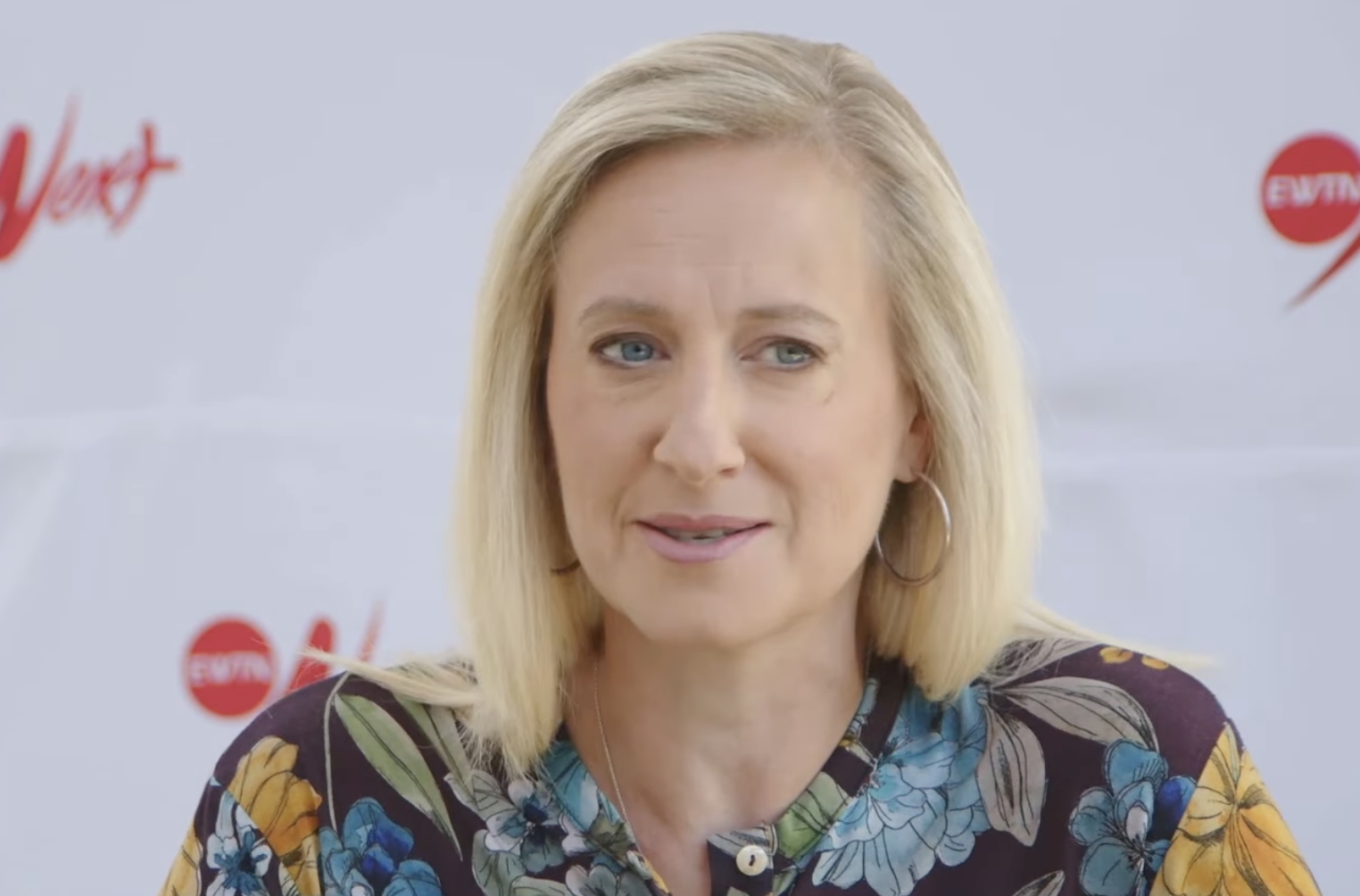
Catherine Ruth Pakaluk is director of political economy and associate professor at The Catholic University of America in Washington, D.C. | Credit: EWTN/Screenshot
The West “became wealthy using these cheap fossil fuels. It is stingy and inhumane” to deny developing nations this same opportunity, she said, and to instead require the use of wind and solar energy, which “are costly and don’t work” as well as fossil fuels.
Patrick Fleming, a Catholic environmental and agricultural economist who evaluates public policies related to agricultural sustainability and poverty at Franklin and Marshall College, agreed.
“To get the horsepower for large-scale efficient farming, nothing can match the power of machinery that burns fossil fuels,” he told EWTN News. “Likewise, heating a home in winter can’t be done with battery power. You need something you can burn.”
Fleming, who also holds a degree in theological studies from the Pontifical John Paul II Institute, acknowledged that while wealthier countries have a greater responsibility to develop more sustainable practices, “poorer countries need to build roads, schools, hospitals; fossil fuels make the building of such infrastructure more affordable and feasible.”
“You can’t do a lot of that development work with renewable energy,” he said.
Fleming said that globally, “by far, the biggest source of emissions is land use change, or deforestation for agriculture.”
He advocated for regenerative agricultural practices, telling EWTN News that “agricultural soils could sequester all the carbon globally if they were managed with regenerative principles.”
“You fit farming to the place, you work in cooperation with the natural order, as opposed to extracting and getting as high of a yield as you can without an eye to the long-term health of the land,” he said.
The manifesto’s three principal signatories are Cardinal Jaime Spengler, president of the Latin American and Caribbean Episcopal Council; Cardinal Fridolin Ambongo, president of the Symposium of Episcopal Conferences of Africa and Madagascar; and Cardinal Filipe Neri, president of the Federation of Asian Bishops’ Conferences.
Additional signatories include Monsignor Ryan Pagante Jiménez, vice president of the Federation of Catholic Bishops’ Conferences of Oceania, and Cardinal Ladislav Nemet, vice president of the Council of Bishops’ Conferences of Europe.
U.S. bishops‘ letter does not call for fossil fuel ban
Last month, the U.S. Conference of Catholic Bishops (USCCB) issued “An Invitation to Ecological Conversion for U.S. Catholics,” noting that “progress to slow climate change remains elusive” and emphasizing the need for personal and communal conversion, prayer, and action to protect the vulnerable and the earth as humanity’s common home.
Citing Pope Francis’ Laudato Si’ and Laudate Deum, the U.S. bishops’ Lenten letter described how “instances of extreme weather, wildfires, droughts, and floods are now common,” disproportionately affect vulnerable groups like refugees, farmers facing erratic patterns, children suffering hunger and dehydration, migrants fleeing lost livelihoods, and declining species in forests and coral reefs.
Everything is “interconnected,” with the “cry of the earth” linked to the “cry of the poor,” the bishops wrote.
In its letter, the USCCB promoted discernment and advocacy but did not call for treaty-level interventions or direct fossil fuel bans.
In their manifesto, however, the global south bishops praise an initiative called the Fossil Fuel Treaty as a way to address “the root of the problem.”
To ensure that all nations are held accountable for the dictates of the Fossil Fuel Treaty, the bishops claim a mandatory open-source Global Fossil Fuel Registry must be created to ensure “a just and equitable transition.” They do not explain who will monitor this registry or hold nations that fail to meet the treaty’s standards to account, however.
The treaty advocates for an immediate stop to all new coal, oil, and gas exploration and production, calling any new authorization of such endeavors “unethical.”
The bishops demand that wealthy nations reduce their energy consumption, promoting the values of “happy sobriety” and the “less is more” approach to “good living” promoted in Laudato Si’, emphasizing reduced consumption in wealthy nations to ensure access to “clean” energy as a fundamental right for all.
Pakaluk called such language “ignorant.”
“There’s a pattern: People continually think we will run out” of resources, she said, but the “laws of economics are well understood.”
“The bishops don’t understand the nature of economic growth. They are worried that the consumption of some takes away from the consumption of others,” she said. “This is patently false. When you consume, you have more opportunity. To consume, you have to work … My consumption doesn’t diminish yours; it contributes to it. It’s why anyone gets wealthy.”
Pakaluk said she is certain “the path these countries will follow will be what” the West followed as it became wealthy: as countries become richer, they will “start caring for the environment in various ways because they can now absorb that.”
As wealth builds, “people will switch to more electric power” and will develop a “renewed and sustained interest in nuclear power,” which, she said, is the “only way to sustain a technology-based future.”
The manifesto also strongly rejects what it calls “false solutions” such as “green capitalism,” neo-extractivism, carbon markets, and the creation of new sacrifice zones for critical mineral extraction in the global south.
The manifesto stresses equity and differentiated responsibilities, asserting that rich nations, which are, historically, responsible for fossil fuel-driven wealth and “bear an ecological debt to the global south,” must lead the phaseout by providing financial support, technology transfers, and compensation for poorer, fossil-fuel-dependent countries.
In this context, the bishops also call for a “fair distribution” of goods but do not give specifics for what this would look like practically.
The bishops also demand participatory, democratic processes that protect Indigenous, Afro-descendant, and marginalized communities and safeguard human rights.
Pakaluk blamed political and economic corruption and a lack of property rights, not greed in the West, for the slow development of the global south, calling developing countries’ “terrible monetary regimes” a “plague.”
Archbishop Josef Grünwidl of Vienna has called for a Church in which “renewal and change” are possible, telling Austria’s bishops that what comes from the Holy Spirit cannot be stopped by canon law.
Grünwidl delivered the sermon on March 11 at the Austrian Bishops’ Conference spring plenary in a Styrian parish church, Kathpress reported.
The Vienna archbishop said he was firmly convinced that “what comes from the Holy Spirit, canon law cannot hold back.” He said this applies also to the role of women in the Church.
Listening to women’s voices
Grünwidl addressed the recent Vatican report on “women’s participation in the life and leadership of the Church,” the final report of the synod study group, published March 10.
The document recalled the great female figures of Scripture and the example of Jesus, who in many ways did not conform to the patriarchal norms of his time, Grünwidl said.
Women were among Jesus’ followers, a publicly known sinner was permitted to touch him, and it was not an apostle but Mary Magdalene — a woman — who was the first witness of the Resurrection, the archbishop said.
“I trust that our Church will become more in keeping with Jesus and the Gospel when we walk together synodally, listen more to the voices of women, and include them in decision-making processes,” Grünwidl said.
“When we as a Church heed the demands of the Sermon on the Mount and look to the example of Jesus, renewal and change become possible,” the archbishop said. “When during Lent we try day by day not merely to serve by the book but to live love, then Easter will happen within us.”
Former member of controversial ‘Priests’ Initiative’
The Austrian newspaper Der Standard also described him as a former member of the initiative who is “open to reforms.” Grünwidl’s name no longer appears on the group’s official membership list, but he was still presented as a “supporter” on a television broadcast as recently as 2023.
At the start of his tenure as apostolic administrator of the Archdiocese of Vienna in January 2025, Grünwidl addressed his former membership, Kathpress reported.
He said he had left the group for two reasons. He felt Pope Francis had “overtaken” the initiative’s proposals and ideas, and he could no longer support its banner slogan of disobedience. “Critical obedience” was important to him, he said, adding that he “cannot imagine open opposition to the bishop in the Church.”
Austrian broadcaster ORF reported in October 2025 that the new Vienna archbishop was “open to reforms.” He had recently emphasized that celibacy was for him personally a deliberately chosen way of life but “not a matter of faith” and should therefore not be a mandatory requirement for priests.
On the topic of women in the Church, Grünwidl identified “an urgent need for clarification,” ORF reported. He said the female diaconate should continue to be discussed and that admitting women to the College of Cardinals was conceivable.
This story was first published by CNA Deutsch, the German-language sister service of EWTN News. It has been translated and adapted by EWTN News English.
The National Eucharistic Pilgrimage has opened registration for the 2026 pilgrimage and announced the schedule for its public events.
In celebration of the 2026 theme, “One Nation Under God,” and the nation’s 250th anniversary, many of the events will not only bring the faithful together in prayer but also will reflect U.S. history.
The journey will take place from Pentecost through Independence Day weekend. Pilgrims will travel the Eastern seaboard on the St. Frances Xavier Cabrini Route, named for the first U.S. citizen to be canonized.
A group of nine Perpetual Pilgrims will carry the Blessed Sacrament through several of the original 13 colonies, 18 dioceses, and two Eastern-rite eparchies. The faithful are invited to join the public processions and other events.
“In the past few years we’ve witnessed a powerful renewal of Eucharistic faith across the country,” said Jason Shanks, president of the National Eucharistic Congress.
“The National Eucharistic Pilgrimage is one of the most visible expressions of that renewal, as believers bring Jesus in the Eucharist out into our streets and communities and inviting people everywhere to encounter him,” he said.
Schedule highlights
The procession will pass through the dioceses of St. Augustine, Florida; Savannah, Georgia; Charleston, South Carolina; Charlotte, North Carolina; Richmond and Arlington, Virginia; Washington, D.C.; Baltimore; Wilmington, Delaware; Camden and Paterson, New Jersey; Manchester, New Hampshire; Portland, Maine; Boston, Springfield, and Fall River, Massachusetts; Providence, Rhode Island; and Philadelphia.
The events hosted by the dioceses will offer opportunities for Mass, prayer, and community service.
In St. Augustine, the faithful can walk the grounds at the Our Lady of La Leche Shrine, the oldest Marian shrine in the U.S., while learning about the Florida martyrs’ cause for canonization.
There will also be a testimony from Monsignor James Boddie Jr., the first Black diocesan priest ordained in Florida, at Christ the King Catholic Church.
In Savannah, the faithful can learn about the Georgia martyrs who will be beatified on Oct. 31. Father Pablo Migone will share the story of the martyrdom of Friars Pedro de Corpa, Blas, Miguel, Antonio, and Francisco during a bilingual presentation.
The faithful can attend Mass at the Cathedral of the Sacred Heart in Richmond, celebrated by Bishop Barry Knestout. There will be a Holy Hour with prayers and songs of praise led by Our Lady of Mount Carmel’s Grupo Carismatico.
There will also be a presentation on the theme of mosaics and the communion of saints at St. Bede Catholic Church. Attendees can learn about a few of the saints who are being highlighted in St. Bede’s mosaic project.
The nation’s capital will serve as the halfway point for the National Eucharistic Pilgrimage. On June 6, the pilgrimage will partner with the annual Catholic Information Center Eucharistic procession that brings the real presence through Washington, D.C., near the White House and past the U.S. Capitol.
Near Baltimore, there will be a procession and hymns on the grounds of the Washington Monument State Park, which has the country’s first monument to President George Washington.
There will be a Mass in the Basilica of the Assumption celebrated by Archbishop William E. Lori. The basilica is the first cathedral constructed in the United States and was designed by architect Benjamin Henry Latrobe under the guidance of Bishop John Carroll, America’s first bishop.
The final mainland procession will be from the Cathedral of the Immaculate Conception in Portland, Maine, to the Casco Bay Ferry Terminal. The diocese chartered a ferry to make multiple trips to Peaks Island so passengers can travel while adoring the Eucharist.
In Boston there will be adoration available at multiple historic sights including Plymouth Memorial Park and Bunker Hill.
The pilgrimage will conclude over Independence Day weekend in Philadelphia. There will be 24 hours of Eucharistic adoration in the Cathedral Basilica, showings of the feature film “Cabrini,” and a solemn closing Mass and Eucharistic procession through the city.
“It’s my joy, and that of the Church in Philadelphia, to host the closing events of the National Eucharistic Pilgrimage, which will be held in what I affectionately call the City of Saints,” Archbishop Nelson Perez of Philadelphia said in a press release.
“As the only diocese in the country that houses two saints, St. Katherine Drexel and St. John Neumann, this is the place that Catholics can reference to remember our history in this great country and the future we are building here,” Perez said.
For the faithful who cannot attend in person, people can participate by submitting prayer intentions and spending time in Eucharistic adoration. The pilgrimage aims to gather 250,000 Holy Hours of prayer for the renewal of the nation, which will be presented to national leaders.
People can also participate by utilizing the online lecture series. Every week, a new lecture will be released on the Manna app exploring the intersection of faith, culture, and what it truly means to be American.
“As we approach the 250th anniversary of our nation, this pilgrimage is a powerful reminder that the deepest foundation of our country is our dependence on God,” Bishop Andrew Cozzens of Crookston, Minnesota, chair of the National Eucharistic Congress, said in a press release.
“By carrying the Eucharist across our nation and gathering in prayer, we are asking the Lord to renew the Church and to bless our country so that we may truly be one nation under God,” he said.
In a final vote, members of Scottish Parliament (MSPs) have rejected a bill that would have made assisted suicide legal — a dramatic turn of events that Scotland’s Catholic bishops are attributing to the power of prayer.
Reacting to the result immediately after its announcement on March 17, Scotland’s bishops told EWTN News: “Prayer is what moved hearts on this important issue. We are over the moon. Glory be to God that life has triumphed tonight!”
Bill sponsor Liam McArthur and his supporters were confident of the Assisted Dying for Terminally Ill Adults (Scotland) Bill becoming law. In the first vote in May 2025, Parliament voted 70 to 56 in favor of the bill progressing to Stage 2. The bill was then amended at Stage 2 before moving to Stage 3 for a decisive vote. in the end, however, MSPs rejected it, voting 69 to 57 against the bill.
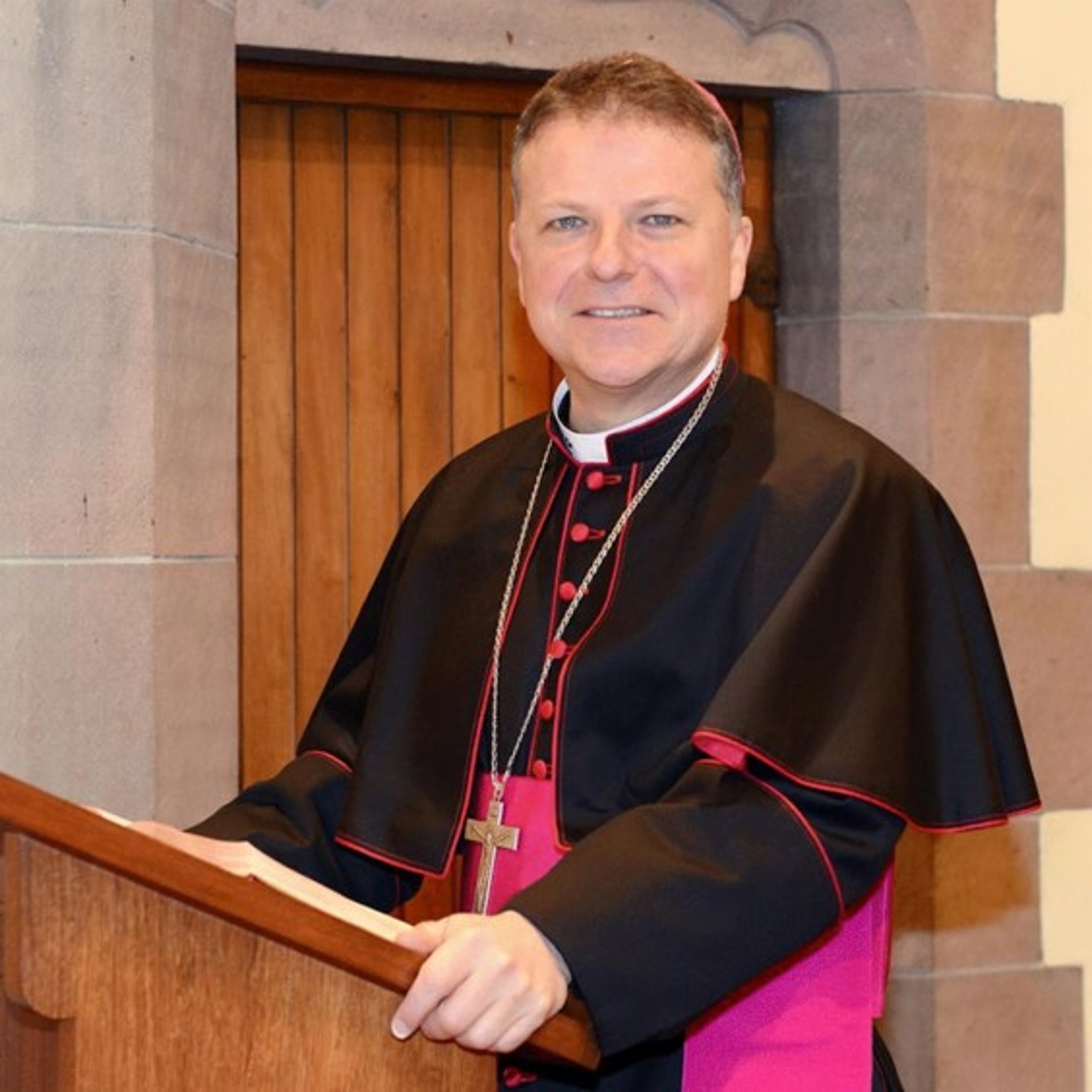
Bishop John Keenan, president of the Bishops’ Conference of Scotland, said the vote against the assisted suicide bill would “protect some of Scotland’s most vulnerable individuals from the risk of being pressured into a premature death.” | Credit: Photo courtesy of the Bishops’ Conference of Scotland
After an emotional debate, 12 MSPs changed sides, moving from supporting the Bill at Stage 1 to opposing it. Notable MSPs who swapped sides included Jamie Hepburn (Scottish National Party), Daniel Johnson (Labour), and Brian Whittle (Conservative), who publicly announced their decisions during the debate.
This followed other notable announcements in the buildup to the vote by Scottish Conservative leader Russell Findlay and Scottish National Party MSPs Audrey Nicoll and Collette Stevenson, who had initially supported the bill and then shared their decisions to vote against it.
Commending MSPs for voting against the legislation, Bishop John Keenan, president of the Bishops’ Conference of Scotland, said after the vote: “I would like to express my gratitude to all MSPs for their serious engagement with this issue and for the thoughtful and considered attention they have given to the bill. I am especially grateful to those who upheld the principle of human dignity and advocated on behalf of the vulnerable.”
The Catholic Church teaches that assisted suicide is inherently immoral. In advance of the final vote, Keenan commented that a vote against the bill would “protect some of Scotland’s most vulnerable individuals from the risk of being pressured into a premature death.”
“Every human life possesses inherent value,” he said. “Genuine compassion is not expressed through ending a life but through accompanying those who suffer and ensuring they receive the medical, emotional, and spiritual support that recognizes their dignity.”
Alisdair Hungerford-Morgan, chief executive of pro-life charity Right To Life UK, called the result “a great and deeply significant victory for the most vulnerable people in Scotland.” | Credit: Photo courtesy of Right To Life UK
Pro-life groups opposing the bill also highlighted the importance of the vote for the vulnerable. In a message to EWTN News, Alisdair Hungerford-Morgan, chief executive of pro-life charity Right To Life UK, called the result “a great and deeply significant victory for the most vulnerable people in Scotland.”
Hungerford-Morgan told EWTN News: “People nearing the end of their lives, no matter what their condition, need love and support, not a pathway to suicide, which is exactly what the Scottish assisted suicide bill would have done."
The vote followed an intense and long debate over five sessions, culminating in the final debate and vote on March 17.
Hungerford-Morgan said: “If this bill had passed in the Scottish Parliament and gone on to become law, it would have ushered in an irrevocable change that would have put the vulnerable at risk and seen the ending of thousands of lives through assisted suicide in Scotland.”
He added: “After two years of debate, and the most intense scrutiny that the question of assisted suicide has ever received in Scotland, Holyrood, which is widely regarded as one of the world’s most socially and politically progressive legislatures, has come to the conclusion that introducing assisted suicide is unsafe and dangerous.”
Paul Atkin, pro-life officer at the Archdiocese of St. Andrews and Edinburgh, highlighted “the strength of engagement across our archdiocese” due to the fact that, from the 12 MSPs who changed their votes to opposing the bill, eight represent constituencies within the Archdiocese of St. Andrews and Edinburgh.
Atkin told EWTN News: “The defeat of this bill is a welcome result, reflecting the strength of engagement across our archdiocese. From the archbishop’s leadership to parishes who organized hundreds of letters, this was a united effort which made the difference.”
Praising the “remarkable contribution” of the archdiocese, Atkin paid tribute to the “polite, persistent engagement from the Catholic community,” which helped “shape outcomes and protect the most vulnerable.”
Opponents of the bill called for attention to now move away from assisted suicide toward investment in palliative care. “Our next priority must be to strengthen palliative care by ensuring that it is properly funded and accessible to all who require it,” Keenan said.
Echoing this viewpoint, Hungerford-Morgan urged MSPs to “unite to focus on renewed efforts to promote and improve palliative care.”
Following the defeat of the bill, Hungerford-Morgan turned his attention to a separate bill currently being debated in the House of Lords in London that would legalize assisted suicide in England and Wales, initiated by Labour MP Kim Leadbeater.
Calling on the Leadbeater Bill’s sponsors to “reject assisted suicide,” he said: “This victory will have an impact far beyond Holyrood as the Leadbeater Bill is being debated in the House of Lords. Instead of pushing ahead with this dangerous bill, its sponsors should follow Scotland’s example and reject assisted suicide.”
On March 18, the Catholic Church honors St. Cyril of Jerusalem, a fourth-century bishop and doctor of the Church whose writings are still regarded as masterful expressions of the Christian faith.
St. Cyril is also remembered for his exhaustive biblical knowledge and his endurance in the face of misunderstanding and opposition.
Eastern Catholics and Eastern Orthodox Christians, who likewise celebrate him as a saint on March 18, also remember him on May 7 — the date of a miraculous apparition said to have occurred soon after his consecration as a bishop.
Cyril was most likely born in Jerusalem around the year 315, shortly after the legalization of Christianity throughout the Roman Empire.
Although that legalization put a stop to many of the persecutions that threatened the Church for two centuries, it indirectly gave rise to a number of internal controversies — both in regard to theology and to the jurisdiction of bishops — in which Cyril would find himself involved.
Cyril received an excellent education in classical Greek literature as well as in the Bible. He was ordained to the priesthood by Bishop Maximus of Jerusalem and succeeded him as bishop in 348.
During his early years as a bishop, most likely around 350, he delivered a series of lectures to new initiates of the Catholic Church. Twenty-four of the lectures have survived and are studied today.
In a 2007 general audience, Pope Benedict XVI praised the saint for providing an “integral” form of Christian instruction “involving body, soul, and spirit.” St. Cyril’s teaching, the pope said, “remains emblematic for the catechetical formation of Christians today.”
In 351, three years after Cyril became the bishop of Jerusalem, a large cross-shaped light appeared for several hours in the sky over the city — an event that many interpreted as a sign of the Church’s triumph over heresy. It could also, however, be understood as a sign of the suffering the new bishop would undergo in leading his flock.
Unlike many other Eastern bishops and priests of the fourth century, Cyril did not allow his classical learning to lead him away from believing in the full humanity and divinity of Christ.
However, the man who consecrated Cyril as a bishop, Archbishop Acacius of Caesarea, was an ally of the Arians, who claimed that Jesus was a creature and not God. Because of his connection to the archbishop, Cyril himself was unjustly suspected of heresy by many of his brother bishops.
But he also found himself at odds with Acacius, who claimed to have jurisdiction over the birthplace of the Church. Altogether, these disputes led to Cyril being exiled from Jerusalem three times in the course of 20 years, with his longest exile lasting more than a decade.
Eventually, however, the Eastern bishops came to acknowledge Cyril’s orthodoxy and legitimacy as a bishop — both of which they confirmed in a letter to the pope in Rome, in which they also expressed their admiration of his pastoral efforts.
In 381, St. Cyril participated in the Second Ecumenical Council, which condemned two different forms of Arianism and added statements about the Holy Spirit to the Nicene Creed of 325.
St. Cyril of Jerusalem died in 387 and was named a doctor of the Church by Pope Leo XIII in 1883.
This story was first published in March 2011 and has been updated.
ROME — A martyr of communist persecution in Czechoslovakia and the most recently beatified Slovak, Blessed Ján Havlík, is reaching an international audience through new books, a multilingual documentary, and other initiatives.
Bishop Viliam Judák of Nitra, Slovakia, who is also a historian, co-authored a book titled “Our Saints: Lexicon of Saints and Beatified Connected With the Soil of Slovakia” featuring the young martyr. Though Slovakia does not have many proclaimed saints, it has many real saints “according to the understanding of the Gospel,” the bishop wrote, lamenting that the faithful lack “spiritual binoculars and a healthy historical memory” if they do not see them.
The book came out at the beginning of 2026, shortly after the bishop blessed a commemorative plaque on the house in Nitra where Havlík lived.
Havlík was born on Feb. 12, 1928, in what was then Czechoslovakia and became a seminarian of the Congregation of the Mission (Vincentians). When the communist regime began its persecution of the Church, he continued to study secretly but was arrested, accused of treason, tortured, sentenced to 14 years — later reduced to 10 — and transported to labor camps. For evangelizing his fellow prisoners, he received an additional year behind bars.
After his release, Havlík spent his final years “preparing children for their first holy Communion, visiting the sick, and translating religious texts.” He died on Dec. 27, 1965, at the age of 37 as a consequence of torture and hard labor. Testimonies recounted that he never complained nor blamed his persecutors.
Havlík was beatified on Aug. 31, 2024, at the national shrine in Šaštín — the same site where Pope Francis celebrated Mass during his apostolic visit to Slovakia in 2021. Cardinal Marcello Semeraro, prefect of the Dicastery for the Causes of Saints, presided over the beatification rite and described Havlík as a model of faithfulness to Christ.
“In many cases and even in different contexts it is difficult, sometimes heroic, to remain faithful to Christ,” Semeraro said at the ceremony.
A new book on the beatification, “Three Days with the Unbreakable,” has also been published. Co-writer Silvia Lehutová said the beatification “was not just a one-time event or a technical gesture.”
She added: “In silence and prayer, we were touching something sacred,” stressing that Havlíkʼs heroism is not “reserved for the past, but a challenge for us today.”
The English, French, Spanish, and Italian dubbing of the 2024 documentary “On the Way to Perfection” was released in 2026. Director Branislav Valko said the dubbing was done “to bring his life and testimony of faith to an international audience,” adding that Havlík’s story must “also inspire today’s generation and show that faith and courage have timeless value.”
A new reliquary containing part of Havlík’s bone was also presented this year, along with a portrait by artist Terézia Sedláková, who said she was inspired by St. Carlo Acutis. “I tried to capture youth, purity, and deep faith that transcend suffering,” the painter said.
Semeraro noted at the beatification that Havlík had met Blessed Titus Zeman, a Salesian priest who was also persecuted under the communist regime and beatified in 2017, while both were imprisoned.
Artificial Intelligence (AI) is in full bloom in 2026, impacting virtually every professional and educational realm of society.
Mindful of this reality, Pope Leo XIV recently advised the priests of Rome to use “their brains more” rather than AI when preparing homilies, a practice that appears to be beginning to spread among some members of the clergy.
What do priests think about this trend? To delve deeper into this dynamic, ACI Prensa, the Spanish-language sister service of EWTN News, consulted several of them on the matter. Drawing from their different vocations and apostolates, they all shared the same conclusion: AI can be a useful tool, but it “can never replace grace.”
Conveying the word just as Christ himself did
Father Alfonso Peña, who serves at the Cathedral of Seville in southern Spain, said that AI can serve as a tool for coming up with ideas and even as a source of inspiration. However, he pointed out that it cannot replace “the priest’s pastoral discernment or spiritual experience.”
In Peña’s view, “the homily must flow from the heart of the pastor and from his relationship with God and with his people”; therefore, preaching cannot be reduced to a well-written text, “since it is born of the Word and of a concrete knowledge of the community one serves.”
“Christian preaching,” he said, “remains a living encounter with the Gospel and with people. Technology can assist, but the authenticity of faith and ministry cannot be delegated to a machine.”
Along these same lines, Spanish priest Fernando Gallego, one of the founders of the “Jóvenes Católicos” (Young Catholics) platform, emphasized that the primary mission of priests is to transmit the word of God “just as Christ himself transmitted it.”
He further pointed out that it is indispensable for words to be accompanied by deeds. “AI will always be inferior to the preaching of a priest who is consistent and authentic, one who preaches based on his own experience.” For the diocesan priest, the key — and that which “truly moves the heart” — is the “authenticity of consistency.”
God’s people ‘need more than algorithms’
On the occasion of the solemnity of St. Joseph, Alberto Figueroa, the bishop of the Diocese of Arecibo in Puerto Rico, was asked to deliver the homily just minutes before the start of the Mass, which was celebrated during a regional gathering of the Latin American and Caribbean Episcopal Council (CELAM, by its Spanish acronym) in Santo Domingo.
“Upon seeing my consternation, a priest approached me and said: ‘If you like, I can ask the AI to prepare a homily on St. Joseph for you.’ I thought it was a joke, for until then, I hadn’t known that such a thing was possible. I absolutely refused. I will never accept a machine writing my homilies!” he told ACI Prensa.
Due to the limited time he had available, he used the tool to review Patris Corde— Pope Francis’ apostolic letter on St. Joseph. “And with the help of the Holy Spirit, I was able to rise to the challenge of preaching that day quite acceptably.”
After sharing this personal anecdote, the prelate said that “it’s one thing to seek a reference, a text, or up-to-date information, and quite another to rely on it to do what can only be done respectably through personal effort and prayer, he said. God’s people “need more than algorithms,” he emphasized.
The machine has neither a soul nor the capacity to love
Father Ignacio Amorós, known for his commitment to digital evangelization, highlighted the “wisdom” with which Pope Leo XIV has issued guidance regarding these new challenges, which he considers to be “a vital warning” in the world of preaching.
In his view, the utility of AI as a tool is undeniable, as it enables rapid analysis, finding specific biblical texts, or the synthesis of ideas in seconds, thereby “saving the time otherwise spent physically searching through books.”
However, he emphasized that the time spent searching is also a space for God and that “there is something sacred in the very human ‘process’ of searching, reading, and reflecting.” For the priest, this effort and preparation time is “what creates space for God, allowing his ideas to be imprinted upon our own hearts. God and love are always creative and original.”
“We must leave room for him in prayer to speak to us about what we must preach, always maintaining unwavering fidelity to sacred Scripture, tradition, and the magisterium. If we outsource the entire search process to an algorithm, we miss out on that intimate, prior conversation with the Lord,” he noted.
The priest also pointed out that AI can also “overload us with information to the point of paralysis,” running the risk of falling “into a superficial intellectualism,” one that constructs discourses that are “theologically perfect, but there’s no heart in it.”
Amorós likened this situation to “the danger we sometimes face in our own spiritual lives, when we turn prayer into an intellectual discourse rather than an exchange of affection with God. The machine processes data and simulates empathy, but it has no soul, no conscience, nor the capacity to love.”
The ‘God-incidences’ of the Holy Spirit
He also emphasized that, nowadays, “people are thirsting for authenticity; they listen to and welcome whatever has truly been sifted through the heart of the priest.” For this reason, he pointed out that it is absolutely necessary to pass everything through prayer.
“Ultimately, you convey what you have inside. If the homily has not been prayed, it cannot truly penetrate the hearts of the faithful,” he said.
Amorós stated with conviction that AI “will never be able to replace the grace and the irreplaceable action of the Holy Spirit, who touches hearts.” This is something, he assured, that he has witnessed countless times in his personal experience and in his evangelization efforts on social media.
“At times, God has placed on my heart to share a specific detail, one that from a human perspective, I believed to be unimportant — only for it to turn out to be exactly what people needed to hear and the message went viral,” he said. “Or I have preached on a specific inspiration during Mass and, upon finishing, realized that there was a particular person in the pews who desperately needed to hear precisely that. These ‘God-incidences,’ this profound spiritual connection, are the exclusive work of the Holy Spirit, and no technology will ever be able to replicate them.”
For Father Francisco Javier “Patxi” Bronchalo, a priest of the Diocese of Getafe in Spain, AI can never replace a homily or a personal testimony, since priests deliver these “from experience and from what we carry in our hearts at any given moment and that is irreplaceable.”
“We should not ask ChatGPT to do that, because it impoverishes the word we offer to the faithful,” he pointed out.
Father Mario Fernández Torres, a diocesan priest from Madrid, invited priests to employ “supernatural intelligence,” which he said is the Holy Spirit, in order “to breathe pastoral life into the text after having taken it to prayer and imbued it with a more personal and spiritual dimension.”
Father Antonio Torres, a Spanish Trinitarian priest, contributed a similar idea, encouraging the use of the advantages offered by artificial intelligence, albeit “within its proper bounds.”
“The homily is an act of the spirit; therefore, it must be meditated upon and prayed over, taking into account the circumstances surrounding us and the situation of the community,” he said.
This story was first published by ACI Prensa, the Spanish-language sister service of EWTN News. It has been translated and adapted by EWTN News English.
Bishop Mark Seitz of El Paso, Texas, released the first pastoral letter on mass detention and deportations.
The “current national campaign of mass detention and detention is a grave moral evil, one which must be opposed, with prayer, peaceful action, and acts of solidarity with those affected,” Seitz wrote.
The Diocese of El Paso will hold a vigil on March 24 to “plead for respect for human life,” Seitz announced in the letter. He invited the faithful “to march and pray” with him and Auxiliary Bishop Anthony Celino as “an act of Lenten solidarity.”
“In this holy season of Lent, God invites us to journey with the suffering Jesus to the cross and to new life in the Resurrection,” Seitz wrote. “For this reason, I take this opportunity to speak to all the faithful in our El Paso Catholic community, and in particular to immigrant families.”
“Our Holy Father, Pope Leo XIV, told me personally to stand in solidarity with suffering migrant families and not to remain silent,” he said. “I will do everything I can to uphold the God-given dignity of every person in our borderlands community.”
The message written by Seitz was the first pastoral letter, a message authored by a U.S. bishop, on mass detention and deportations, according to the Diocese of El Paso.
The letter follows the United States Conference of Catholic Bishops’ (USCCB) special message on immigration approved at the 2025 Fall Plenary Assembly on Nov. 12, which expressed the bishops’ opposition to “the indiscriminate mass deportation of people.”
The bishops also addressed their concerns over the conditions of detention centers and prayed “for an end to dehumanizing rhetoric and violence, whether directed at immigrants or at law enforcement.”
Deportation and detention facilities
“To those of you affected by hatred and discrimination and afraid of what comes next, know that the Church stands with you,” Seitz wrote. “As your bishop, I carry your pain daily in my heart and in my prayers.”
The bishop wrote that people in the El Paso community are being taken by law enforcement as they leave immigration court proceedings, workers are being taken from their jobs, and parents are no longer able to work because the government has taken away their work permits.
Seitz also detailed the treatment of immigrants in detention centers, specifically at El Paso’s Camp East Montana immigrant detention center.
“Young women are languishing in mental torture for months in private detention centers, even when, coerced by the conditions of their imprisonment, they beg to be deported,” he wrote. “So many people are once again being made to feel like they are less than American.”
To combat this, the El Paso Catholic Church “will redouble our ministries with those in the downtown courthouse, in the detention centers, in Ciudad Juarez and with families in our parishes,” Seitz wrote. “We will continue to celebrate your contributions to our community, to defend your human dignity, and to work to end racism and make immigration reform a reality.”
Need for ‘significant immigration reforms’
“While we do need significant immigration reforms, it is an injustice to make families, children, and the vulnerable pay the price of our inaction,” Seitz wrote. “Policies, laws, and borders must always be at the service of human dignity, genuine community security, and human flourishing.”
Addressing law enforcement, Seitz said he is “blessed with many friendships” in local law enforcement and immigration enforcement agents. “Their work to keep our community safe is vital,” he said. “But the death of those in immigration detention is unacceptable.”
… the death of those in immigration detention is unacceptable.
Bishop Mark Seitz
Diocese of El Paso
Thirty-eight people have died in custody of Immigration and Customs Enforcement (ICE) since the start of fiscal 2025, 58% more detainee deaths in ICE custody than occurred during all four previous fiscal years combined (24 deaths), according to ICE detainee death reporting data.
Seitz called on immigration enforcement to follow the Gospel rather than “immoral order,” offering them guidance on how to decide what actions align with the faith.
“No one has to obey an immoral order. I implore all involved to carefully discern the moral requirements of the Gospel at this moment with integrity and honesty,” Seitz said.
“I promise the pastoral support of our priests, chaplains, and myself as you navigate the demands of conscience with sincerity. You are also in my prayers,” he wrote.
“May Mary of Guadalupe, who challenges us to build up a common home of tenderness and love, pray for us,” Seitz concluded.
Homeland Security Department responds
“The real ‘grave moral evil’ is criminal illegal aliens killing innocent Americans,” a spokesperson for the Department of Homeland Security said in a response to EWTN News seeking comment about Seitz’s message. “Laken Riley, Jocelyn Nungaray, Rachel Morin, and countless other Americans should still be alive today. Open borders have deadly consequences. We will continue to fight to stop another senseless tragedy from happening to another American family.”
This story was updated at 4:20 p.m. ET on March 17, 2026, to include comments from a Department of Homeland Security spokesperson.
While Iran’s Kharg Island has drawn global attention due to its pivotal role in the energy market amid escalating military tensions, its Christian history remains far less known, even though its architectural remains and ecclesiastical carvings testify to a forgotten chapter in the region’s past.
Kharg Island is located in the northeastern part of the Persian “Arabian” Gulf, about 25 kilometers (15.5 miles) off the Iranian coast, opposite the city of Bushehr.
Because of the island’s strategic position and deep waters, it has held particular importance throughout history and is also one of the few islands in the Gulf with its own source of fresh water — a factor that helped make settlement there possible since ancient times.
Although the island is neither an oil field nor a giant refinery, it serves as Iran’s most important gateway for oil exports to the world. It contains oil storage facilities capable of holding more than 20 million barrels of crude arriving through a vast network of pipelines, before being shipped from its large terminals.
Around 90% of Iran’s oil exports pass through the island. These exports total roughly 1.5 million barrels per day — a figure that exceeds the output of most OPEC countries.
In the context of recent developments, U.S. President Donald Trump announced that the bombing that struck the island two days ago destroyed military assets without targeting its vital oil infrastructure, since hitting those facilities could send already-high oil prices even higher.
According to the latest reports, Axios cited a U.S. official as saying that Trump is leaning toward the idea of direct control over the island, which could deal a severe economic blow to the Iranian authorities. Such a move, however, would require the deployment of ground forces, which would not be easy to carry out.
A Christian presence
Although no conclusive evidence is available, it is likely that a Christian presence on the island began in the fourth century and that in the following century Kharg became part of the Diocese of Beth Qatraye of the Church of the East.
The confirmed Christian presence there, however, dates to the late Sasanian period in the sixth century. Notably, the fall of the Sasanian Empire to Arab forces in the seventh century did not bring that presence to an end.
On the contrary, the island experienced significant ecclesial activity afterward that continued until the ninth century. From that point on, the Christian community on the island gradually declined until it eventually disappeared.
The most prominent archaeological witness to this period is a monastic complex regarded as the largest Christian archaeological site discovered so far in the Gulf region. It was uncovered by French archaeologist Roman Ghirshman in 1960 and dates to the seventh century, or at the latest the eighth century. The site includes a central church where floral stucco decorations were found, along with a number of interior rooms, including a dining hall, a hall for the instruction of monks, a library, and a room for copying texts, in addition to at least 19 adjoining three-chamber monastic cells.
It is worth noting that excavations on the island have remained limited. Ghirshman focused primarily on the church more than on the monastery itself or other sites on the island. For that reason, it remains likely that other Christian remains have yet to be discovered.
The island also contains rock-cut tombs dating to various periods, including the Seleucid, Parthian, and Sasanian eras.
Significantly, Christians reused some of these ancient tombs, where “Nestorian crosses” were found carved into the stone, along with grave markers decorated with floral motifs in the shape of the cross.
ACI MENA, the Arabic-language sister service of EWTN News, also contacted the Assyrian Church of the East Patriarchate to better understand the monastery’s history and significance. According to the patriarchate’s secretary, Patriarch Mar Awa III, head of the Assyrian Church of the East, incorporated into the new patriarchal complex in Erbil, Iraq, is one of the cross designs used at the monastery on Kharg Island. The patriarchate also said the property today belongs to the state.
Today, the monastery site is surrounded by a security fence tied to the island’s military use, limiting access while also contributing in part to its protection. Even so, these remains remain threatened, not only by erosion and oil pollution but also by geopolitical conflict, which repeatedly makes the island a military target. The question remains: Will Kharg’s Christian heritage survive the present conflict, or will it become yet another casualty of international strife?
This story was first published by ACI MENA, the Arabic-language sister service of EWTN News. It has been translated for and adapted by EWTN News English.