Pope Leo XIV calls for ‘examination of conscience’ on migrants at Canary Islands port
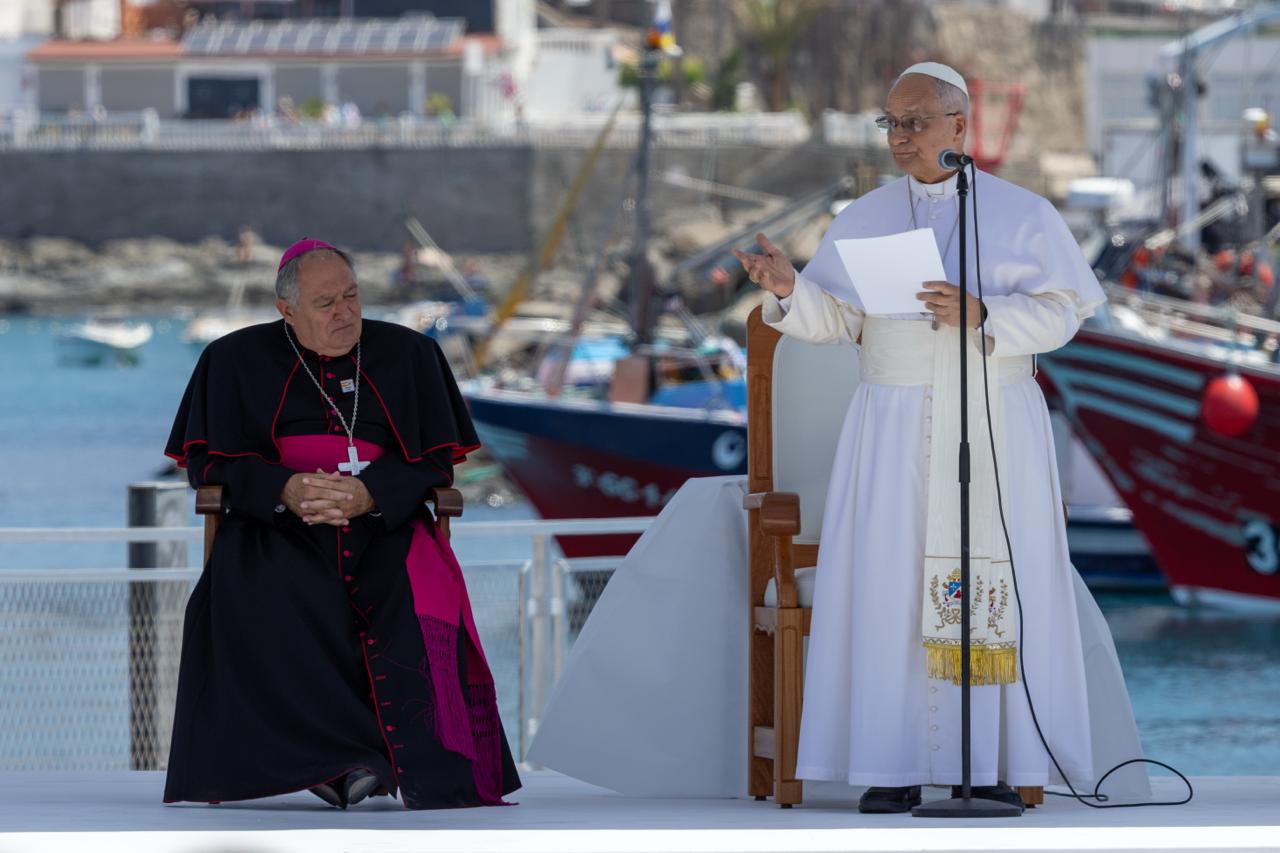
ARGUINEGUÍN, Canary Islands — Pope Leo XIV on Thursday called for an “examination of conscience” on migration during a visit to the port of Arguineguín in Spain’s Canary Islands, a site that became a symbol of the collapse of migration management in 2020.
The small fishing port on the southwest coast of Gran Canaria was once dubbed the “dock of shame” after more than 2,600 migrants were left crowded outdoors there for weeks six years ago, many sleeping on rough concrete after crossing the Atlantic in fragile boats from Mauritania, Senegal, Gambia, Morocco, and parts of the Sahara.
On June 11, Leo turned the site into what many present described as a dock of hope.
“It is not enough to manage arrivals, distribute figures, reinforce borders, or mourn the dead once they have already died,” the pope said.
Human dignity, he said, “requires legal and safe routes, rescue and assistance, real cooperation against traffickers, effective protection for victims, serious processes of welcome and integration, and policies that allow each person to live with dignity in his or her own land.”
Along the same lines, the pope emphasized that while there is a right to seek refuge when one’s life is threatened, there is also a right not to be forced to migrate: “the right to remain in one’s own home without hunger, without war, without persecution, without violence, without the land becoming uninhabitable, without corruption stealing the bread of the poor, without weapons destroying the future of children.”
“We cannot grow accustomed to counting the dead,” Leo said. “Human dignity has no passport and does not lose its value when crossing a border.”
The Canary Islands marked the final stop of Pope Leo XIV’s visit to Spain and one of its most symbolically charged moments. Migration remains an open wound in Europe and beyond, and Arguineguín has long stood as one of its most visible scars.
“This tragedy must become an examination of conscience,” the pope said.
Leo directed his appeal to several audiences. Countries of origin, he said, “must create conditions of peace, justice, and development.” Countries of transit, he added, must “not leave the weak in the hands of criminal networks.”
He also addressed Europe directly, saying it “cannot proclaim human dignity and grow accustomed to the Mediterranean and the Atlantic becoming cemeteries without headstones.” The international community, he said, is called to “effective and persevering cooperation.”
The Church, too, “must allow herself to be challenged,” the pope said. “Welcoming the migrant cannot be something secondary or delegated only to a few volunteers.”
The pope also offered a direct message to ordinary Catholics.
“We kneel before the altar to adore Christ present in the Eucharist, from whom we receive the strength and the reason to live charity,” he said. “Therefore, we cannot then ‘pass by’ the cayucos and pateras, because from prayer all service flows and to it every commitment returns.”
The pope invoked the biblical figures of Leviathan and Rahab to describe the “monsters that lurk in these seas: mafias that traffic in despair, traffickers who enslave women and children, and the indifference of many who allow the poor to be swallowed up by exploitation or oblivion.”
But faith, he said, “does not remain paralyzed before the power of the sea.”
“We believe in a God who subdues chaos, sets limits to evil, and opens a path when death seems to prevail,” Leo said.
Where Christ “commands the sea to be silent,” he added, “the Church cannot remain silent before those who are abandoned to its waters.”
The pope said conversion begins when “the migrant stops being just one more person, stops being a category and a number.”
Leo’s visit to the Canary Islands was one Pope Francis had wanted to make but was unable to carry out. Leo delivered a message echoing the one Francis brought to Lampedusa in 2013. Leo is also scheduled to visit the Italian island on July 4, the day the United States marks 250 years since its founding.
“We cannot grow accustomed to counting the dead,” Leo said. “Human dignity has no passport and does not lose its value when crossing a border.”
In a speech interrupted several times by applause, the pope asked that history “not have to accuse us of having turned the pain of those who suffer into the usual landscape of our coasts.”
Before speaking, Leo listened to several testimonies from people close to the migration crisis.
Tito Villarmea, captain of the maritime rescue vessel Urania, said that in 18 years he has helped rescue more than 20,000 people — “a number that hurts and is not forgotten.”
Although irregular arrivals by sea have fallen sharply this year — down about 35% from the previous year — rescue operations have continued, many in extreme conditions. According to Spain’s Interior Ministry, 10,224 migrants arrived irregularly in Spain from Jan. 1 to May 31, down 35.2% from 15,769 during the same period last year. Irregular land entries into Ceuta and Melilla rose 210% to 2,366 people.
Villarmea recalled one rescue involving a mother traveling in a small boat with her child, surrounded by wounded people and lifeless bodies.
“Once safely on board, the woman approached the child, about 14 years old, took off the cap and jacket, and pulled out some gold earrings to put them on,” he said. “It was a girl. She cried and I cried, because I am the father of two teenagers.”
María Reyes Alemán, a Caritas volunteer, also addressed the pope, describing her work accompanying migrants amid the humanitarian crisis.
“We learned that it was not about solving everything, but about being present,” she said, explaining that small gestures such as a smile or a look can also communicate hope.
Another powerful testimony came from Blessing, a Nigerian woman and trafficking survivor who was not present for security reasons. In a letter read aloud, she recounted leaving Nigeria at age 22, leaving behind her two daughters. When the time came to cross the sea, she said, she saw people who had departed before her group that same day drown.
“The mafia took me to a place where they performed a ritual, the ‘juju,’” she said. “They told me I had a debt of 25,000 euros that I had to pay when I arrived in Europe.”
During six months of captivity, she became pregnant by a man connected to the trafficking network.
“When I arrived in Spain, they took my baby away from me to force me into prostitution,” she said. Her forced enslavement ended when her son was 11 months old and police arrested those holding her captive. She said the Church helped her rebuild her life.
Leo also warned migrants like Blessing not to trust those who exploit hopes for a better future.
“Do not believe those who promise easy paradises in exchange for your body, your money, your silence, or your freedom,” he said.
Such false promises, he said, are “siren songs” and “industries of death.”
The pope also mentioned El Hierro, the least populated of the Canary Islands, which has become a major arrival point for migrants, with more than 50,000 irregular arrivals since 2020. The peak came in 2024, with nearly 30,000 arrivals.
The island’s treatment by authorities has prompted frustration from local officials, including Alpidio Armas, the socialist president of the island council, who did not attend the pope’s events.
El Hierro, Leo said, “has seen thousands of people arrive, torn from their land and entrusted to the fragility of a cayuco.”
There, he said, “there are people recovered from the sea and lifeless bodies rescued from the waters.” For that reason, “the successor of Peter cannot turn away from these docks.”
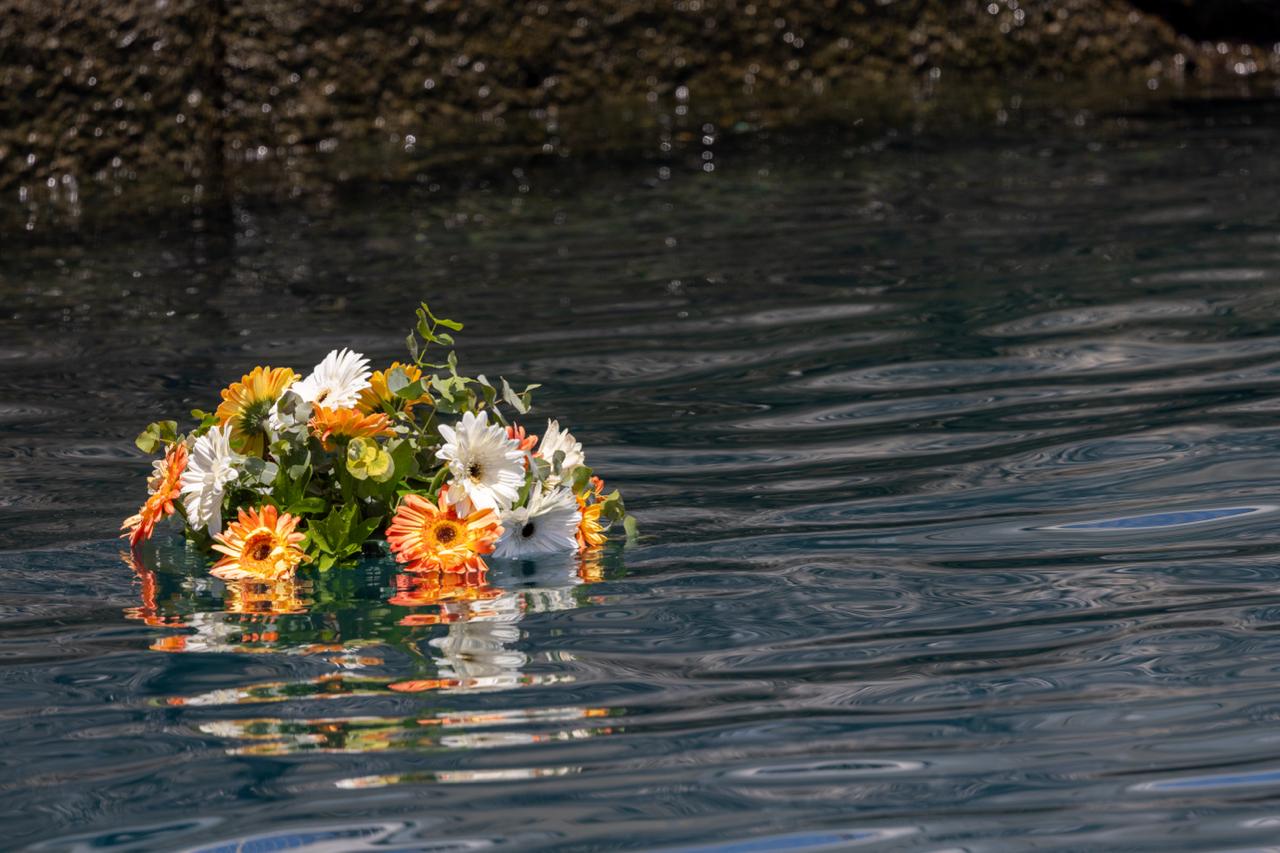
The event concluded with a floral offering in memory of the victims of migration by sea, a symbolic gesture at a place that has become an emblem of suffering but also of solidarity.
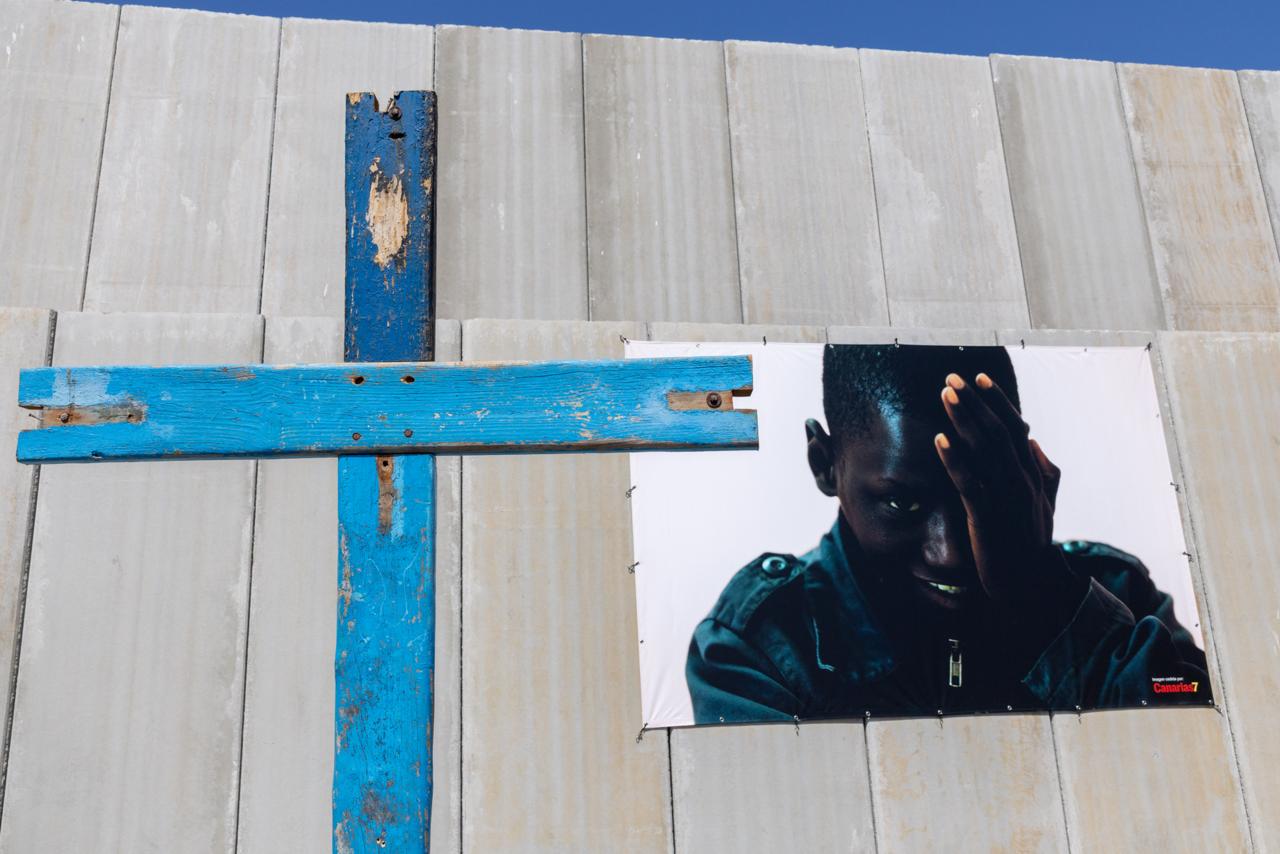
The pope then went to a nearby image of Our Lady of Mount Carmel, patroness of sailors, where he blessed a cross erected as a permanent memorial to those who never reached their destination.
This story was first published by ACI Prensa, the Spanish-language sister service of EWTN News. It has been translated and adapted by EWTN News English.
Saint of the Day – rosary.team