Pope Leo XIV: True justice is never separated ‘from truth and mercy’
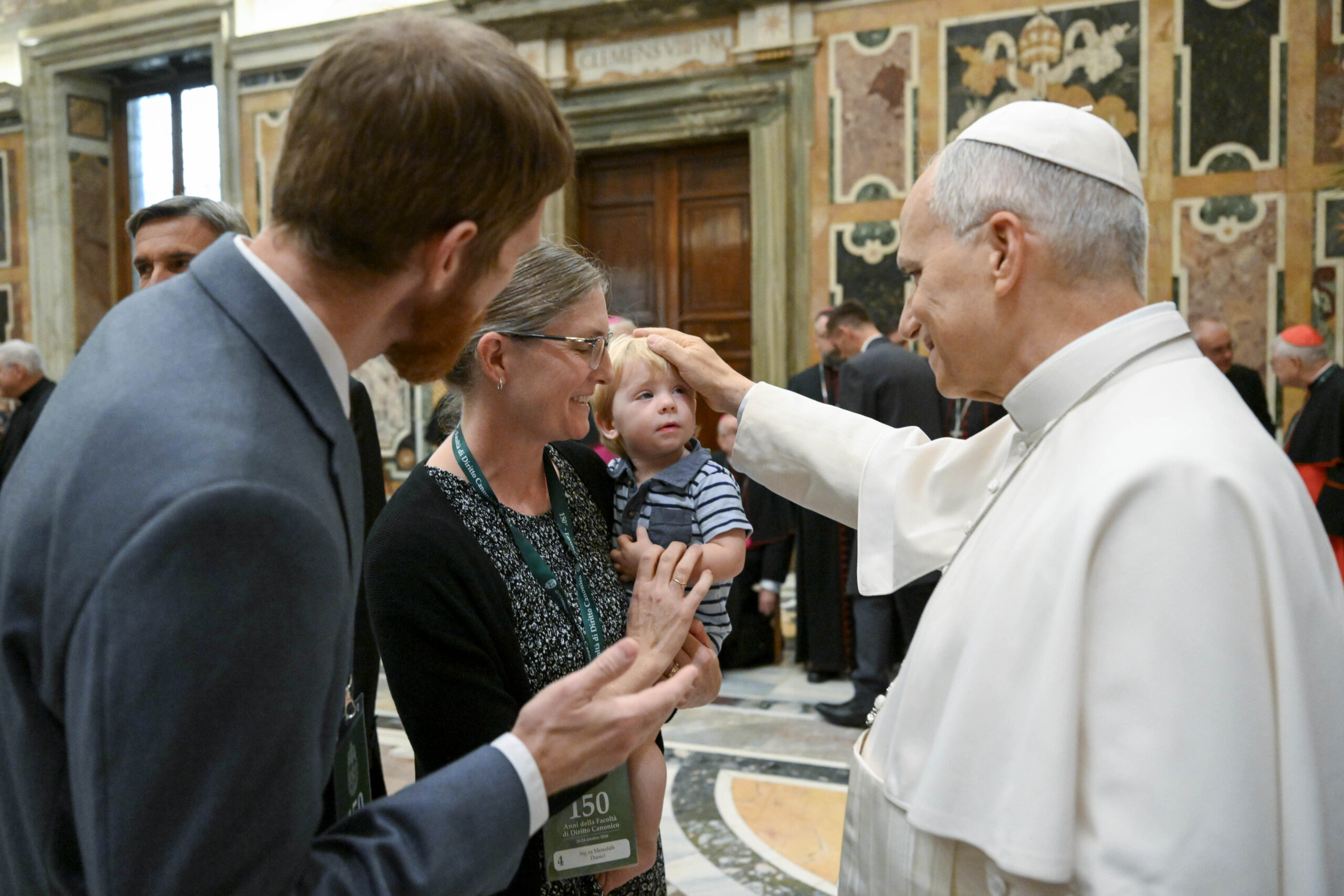
Pope Leo XIV on Friday said that although it is “impossible” to translate the image of the Church perfectly into canonical language, canon law is called to “reflect it.”
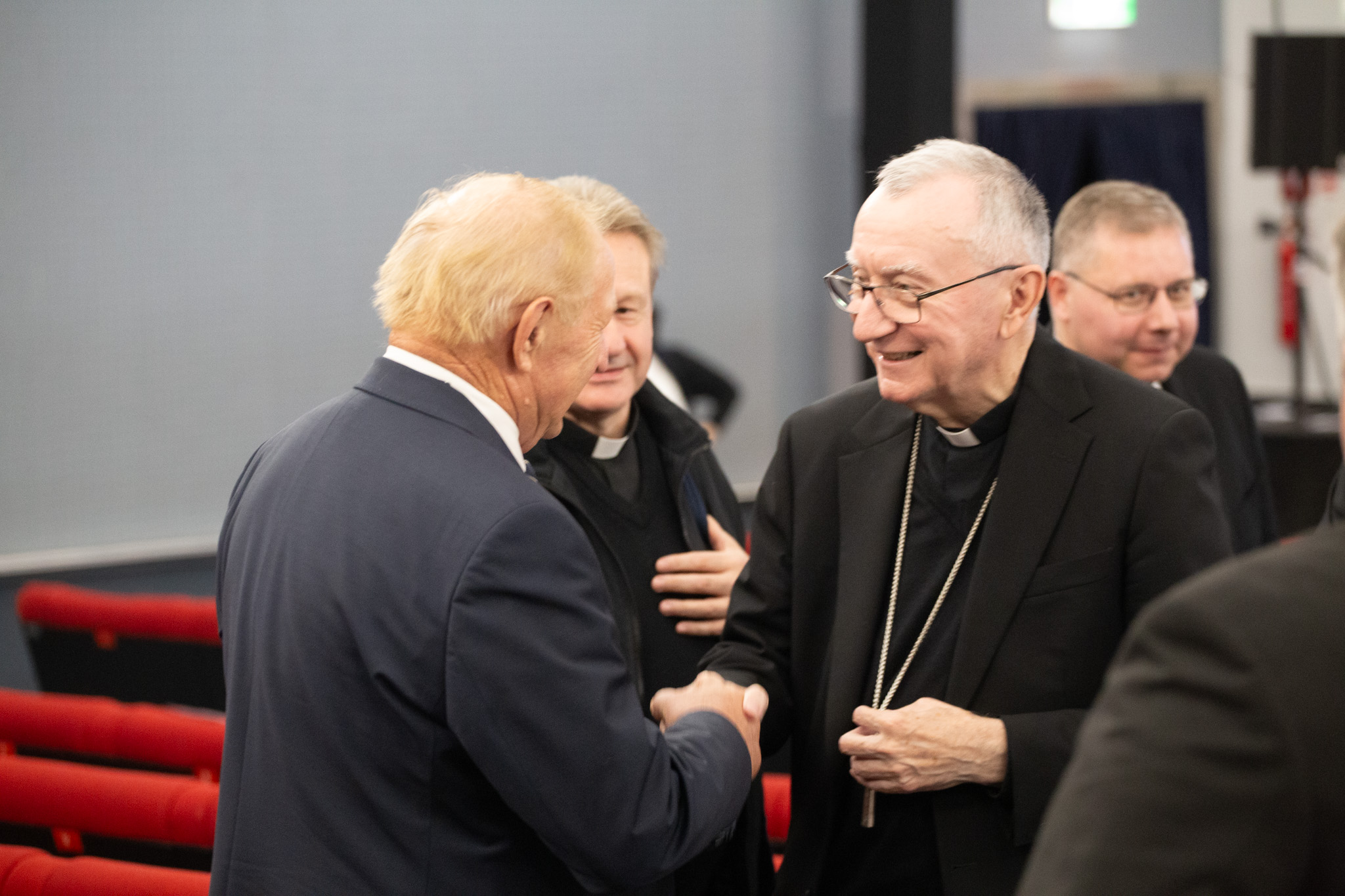
He made the remark during an audience with participants in an international congress organized on the occasion of the 150th anniversary of the Faculty of Canon Law of the Pontifical Gregorian University, one of the most influential academic institutions in the formation of canon lawyers throughout the world.
In his Oct. 23 address, the pontiff recalled that the study of the Church’s law can only be fully understood in light of the ecclesial mystery described by the Second Vatican Council, especially in the dogmatic constitution Lumen Gentium.
Citing St. John Paul II and the apostolic constitution Sacrae Disciplinae Leges, through which he promulgated the 1983 Code of Canon Law, Leo XIV stressed that while “it is impossible to translate the image of the Church perfectly into canonical language,” the Church’s legal system nevertheless has the duty to reflect it.
The pope’s words carry particular significance in light of his academic background. Leo XIV holds a doctorate in canon law and has extensive experience as a specialist in ecclesiastical legislation, a formation that has profoundly shaped his approach to governing the Church.
In this regard, he explained that canon law provides an “essential service in safeguarding ecclesial communion” and is therefore “extremely necessary for the Church.” Its purpose, he added, is “to create such order in ecclesial society that, while giving primacy to love, grace, and charism, it makes their organic development easier.”
The pontiff also insisted that the juridical and pastoral dimensions cannot be separated. “The good of the person and that of the ecclesial community cannot exist independently of one another,” he said.
Heirs to a long canonical tradition
During his address, Leo XIV paid tribute to the Faculty of Canon Law at the Gregorian University, founded on Aug. 16, 1876, by decision of Blessed Pius IX.
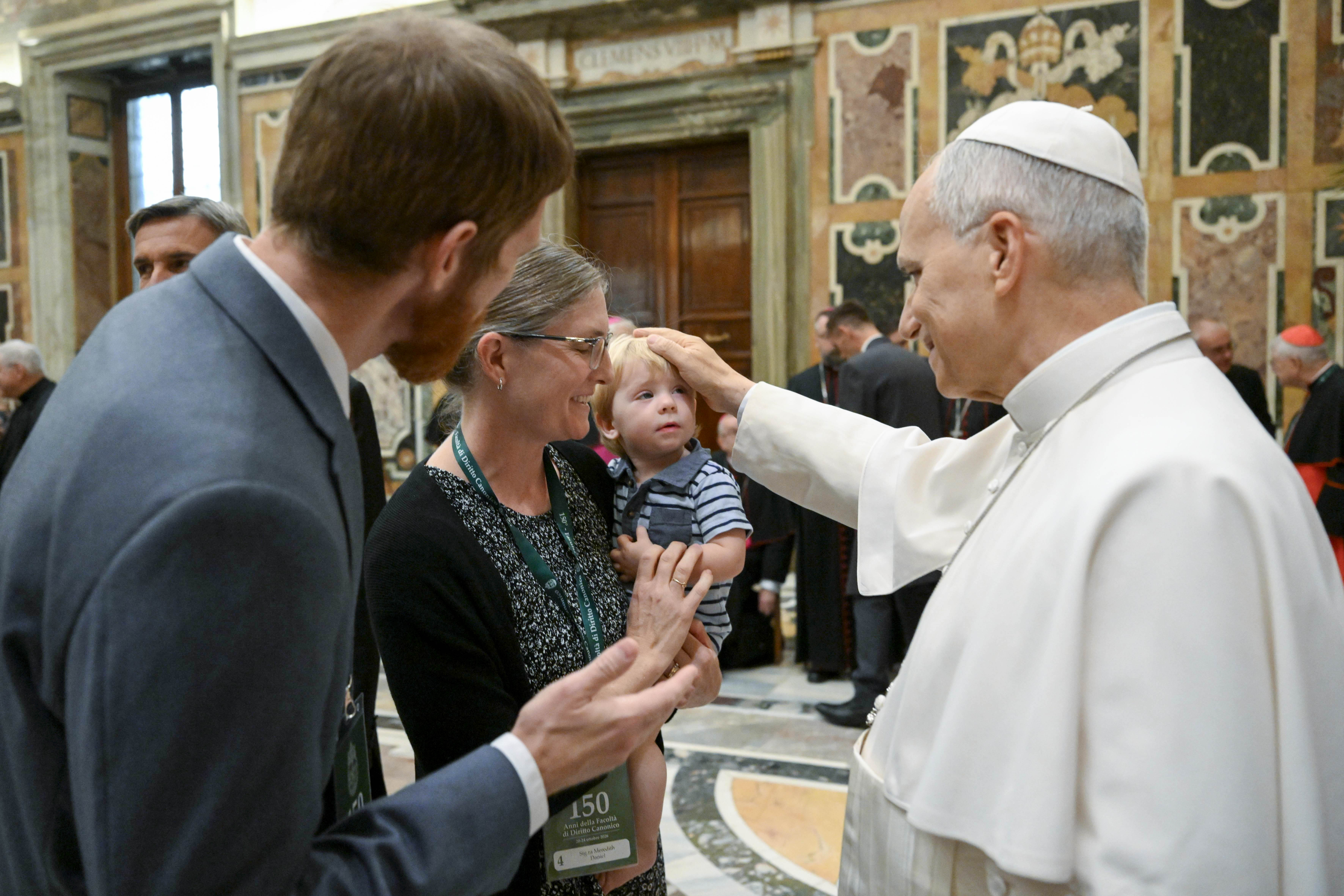
The pope noted that the anniversary represents “a fundamental milestone in a history that began centuries ago” and praised the many scholars who have contributed to the development of canon law. Thanks to them, he said, the institution has consolidated an academic tradition that continues to bear fruit for the universal Church.
“They constitute a kind of unbroken thread linking generations and still today transmit a valuable scientific and ecclesial heritage,” he said.
He also recalled that the Faculty is an apostolic work of the Society of Jesus and shares the Ignatian spirituality summarized in the principle “Non multa, sed multum” (“Not many things, but much depth”).
“What matters is not knowing many things, but penetrating reality deeply, understanding it, and interiorizing it,” he explained, recalling the teaching of St. Ignatius of Loyola.
Forming jurists with an ecclesial sense of justice
In the final part of his address, the pope insisted that the teaching of canon law cannot be limited to the transmission of norms. Its goal, he said, is “to form persons who possess the ecclesial sense of what is just (‘iustum’), acquired through rigorous study of the sources, the canonical tradition, and the theological principles that illuminate the norm.”
Leo XIV also recalled that the Faculty’s own academic program states that “the law of the Church must always tend toward the supernatural good of each of the faithful and the building up of ecclesial communion.”
For this reason, he urged professors and students to work in pursuit of “true justice, never separated in the Church from truth and mercy.”
Drawing on a famous expression of St. Augustine, he added: “Ordinata dilectio est iustitia” — “Ordered love is justice.”
He then encouraged them to offer students “a living experience of the universal Church,” recalling that it finds “in the bishop of Rome the perpetual and visible principle and foundation of unity.”
Addressing students from various countries, he asked them to live the universality of the Church during their years of formation and, upon returning to their dioceses and communities, to bring that experience with them “as a treasure to be shared.”
This story was first published by EWTN News Español, the Spanish-language sister service of EWTN News. It has been translated and adapted by EWTN News English.
Saint of the Day – rosary.team