St. Peter’s Basilica, which is marking 400 years since its consecration, has completed a mosaic restoration in the dome of one of its most ornate chapels.
The Fabbrica di San Pietro — the Vatican institution responsible for maintaining St. Peter’s — announced the project’s completion on Sept. 17. The announcement described the project as necessary to conserve “one of the most significant decorative achievements of early seventeenth-century Rome.” The Italian Mannerist painter Cristofano Roncalli (also known as “Il Pomarancio”) created the mosaics between 1601 and 1604.
The circular hole contains the name of Pope Clement VIII, who commissioned the Clementine Chapel on the upper floor of St. Peter’s Basilica. The restoration of the dome’s mosaics was completed in September 2026. | Credit: Fabbrica di San Pietro
The Clementine Chapel, distinct from another of the same name in the Vatican Grottoes, contains the Altar of St. Gregory the Great (where he is buried), the monument to Pope Pius VII, the Altar of the Lie, and the Altar of the Transfiguration.
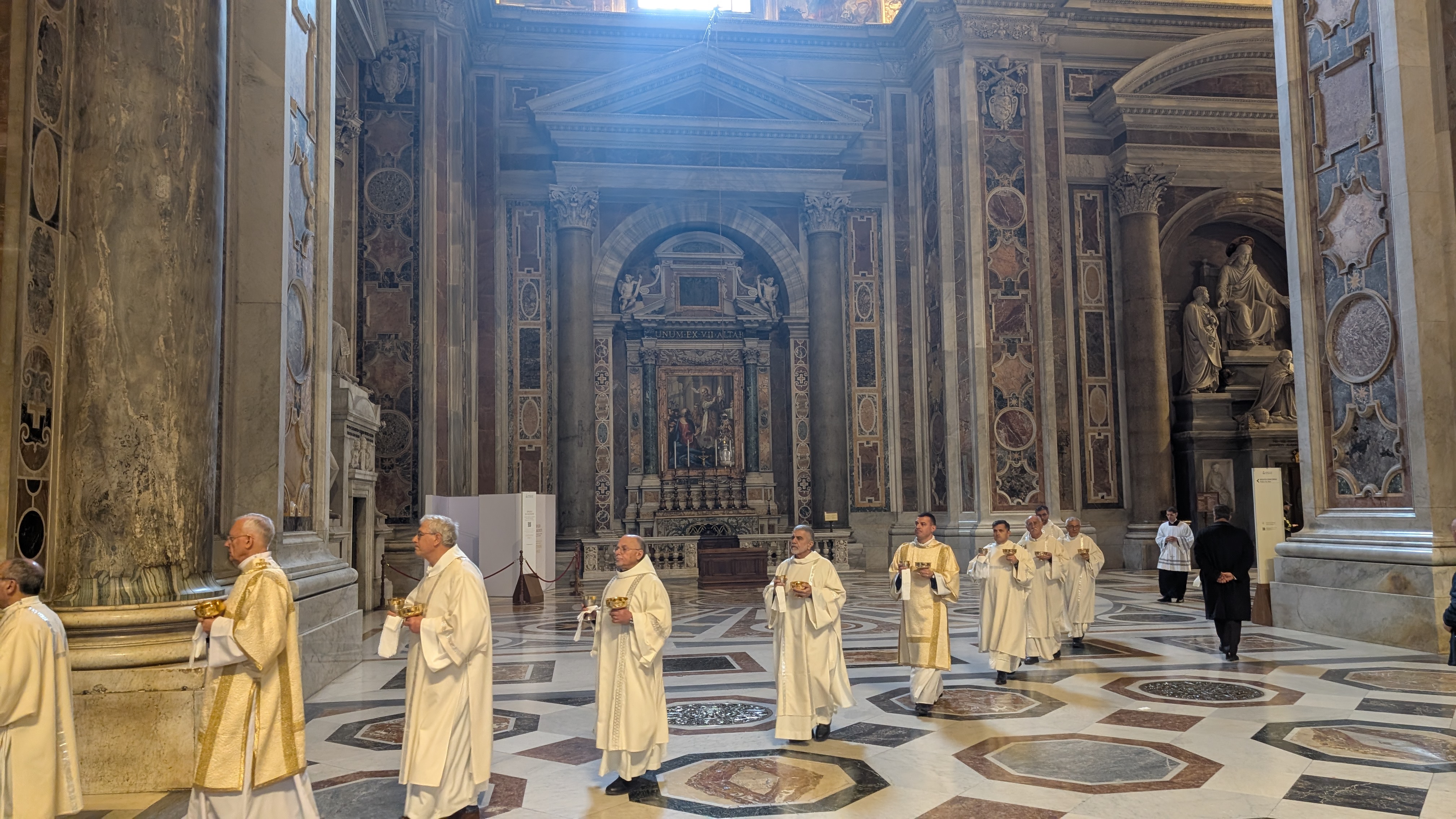
Deacons process through the Clementine Chapel in St. Peter’s Basilica during a chrism Mass with Pope Leo XIV on April 2, 2026. | Credit: Ishmael Adibuah/EWTN News
The restoration included preliminary inspections of the mosaics, cleaning and dust removal, removal of incompatible materials, and efflorescence treatment.
The Clementine Chapel was commissioned by Pope Clement VIII, who reigned from 1592–1605. It was begun and designed by the renowned Italian artist Michelangelo Buonarroti, who also designed the main dome of St. Peter’s Basilica. The Italian architect Giacomo della Porta completed the chapel’s dome in 1580, 20 years before the jubilee year of 1600.
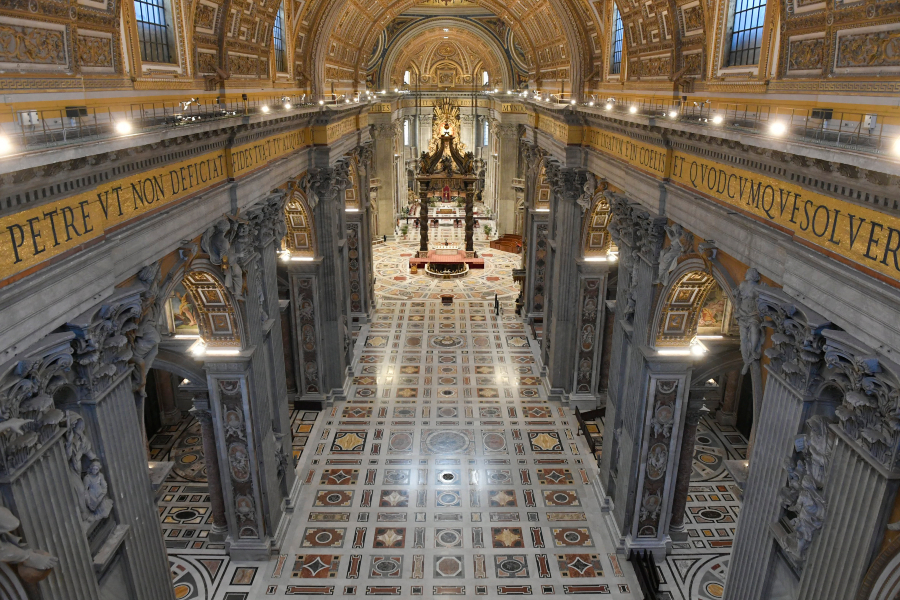
An empty St. Peter’s Basilica. | Credit: Vatican Media
The mosaics were restored as St. Peter’s Basilica marked the 400th anniversary of its consecration. In February, the Vatican announced that it will open new parts of the basilica — including the full terrace — and roll out a “SmartPass” digital entry system.
The basilica, which replaced an earlier Constantinian basilica, was consecrated by Pope Urban VIII on Nov. 18, 1626.
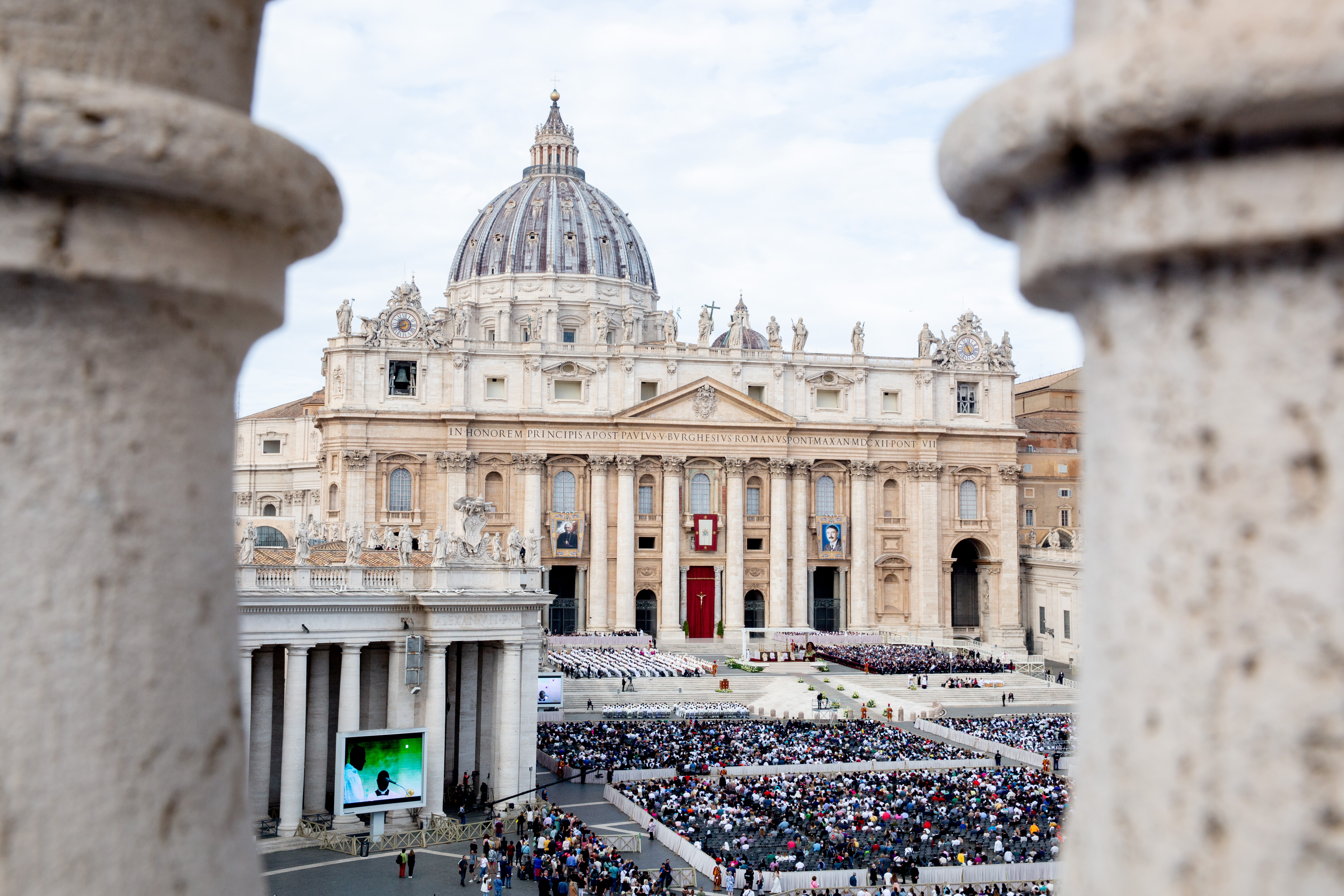
A view of St. Peter’s Basilica during the canonization Mass of St. Giovanni Battista Scalabrini and St. Artemide Zatti on Oct. 9, 2022. | Credit: Daniel Ibañez/EWTN News
Pope Leo XIV has appointed Bishop Brendan Cahill of the Diocese of Victoria, Texas, as the seventh bishop of Joliet, Illinois.
Cahill’s appointment, announced by the Vatican on Sept. 17, makes him the successor to then-bishop Ronald Hicks, who led the diocese from 2020 to 2026. The pontiff appointed Hicks as archbishop of New York in December 2025.
According to the Vatican announcement, Cahill was born in Coral Gables, Florida, on Nov. 28, 1963. He was ordained a priest for the Archdiocese of Galveston-Houston in Texas on May 19, 1990.
Before his ordination, Cahill earned degrees in psychology, African American studies, and dogmatic theology. He studied at the University of St. Thomas in Houston, Xavier University in Louisiana, and the Pontifical Gregorian University in Rome.
After his ordination, Cahill served as a parish priest in the Archdiocese of Galveston-Houston for four years before returning to St. Mary’s Seminary as a faculty member. He was promoted to rector of the seminary in 2001.
After a period of service in the archdiocesan curia, Pope Francis appointed Cahill as the third bishop of Victoria. He received episcopal consecration on June 29, 2015, from the then-archbishop of Galveston-Houston, Cardinal Daniel DiNardo.
In 2025, Cahill was appointed chair of the Committee on Migration for the United States Conference of Catholic Bishops (USCCB).
Cardinal Pietro Parolin, the Vatican secretary of state, said nations should work together to face the challenges of artificial intelligence (AI).
Parolin expressed his concerns about AI on the sidelines of the conference “Faith and Reason in the Age of Artificial Intelligence” held Sept. 16 in Rome at the Palazzo Montecitorio, the seat of the Italian Parliament.
As originally reported by Vatican News, Parolin also delivered a keynote address at the conference, focusing on both the potential and the threats of AI. In his address, he thanked Italian President Sergio Mattarella for his recent appeal for greater collaboration among states on AI governance and said he hoped nations would respond.
“My concern is that there are countries which, in fact, want to go it alone,” Parolin said in his address. “Let us stop and genuinely reflect on what the consequences of artificial intelligence and its use might be.”
‘I try to put a little heart into my homilies’
Speaking to journalists on the sidelines, Parolin stated that he did not use AI to draft his homilies, preferring to “put a little heart” into them.
“Artificial intelligence is all head and no heart. I try to put a little heart into my homilies,” Parolin said to the journalists.
“Today artificial intelligence is imposing itself, because when you open your computer and read something, it already gives you a summary.”
His discouragement of using AI to draft homilies echoes that of Pope Leo XIV. During a Q&A session with priests of the Diocese of Rome in February, he warned priests against this practice.
Holy See diplomacy in Russia-Ukraine conflict
Parolin also responded to journalists’ questions about the Holy See’s advocacy of Ukraine in its ongoing conflict with Russia. He expressed hope that it would reach a peaceful resolution.
“The diplomacy of the Holy See, the diplomacy of sowing, does not produce a harvest. So we hope that, by continuing to sow, one day, when God wills it, we may also reap,” Parolin said.
His comments follow recent interventions by the Holy See in pursuing a peace deal between Ukraine and Russia. Archbishop Paul Gallagher, the Vatican’s secretary for relations with states and international organizations, traveled to Russia from Aug. 25–27 to meet with its leaders to discuss potential resolutions to the war.
VATICAN CITY — As artificial intelligence reshapes workplaces and corporate decision-making, labor leaders and Catholic bishops are calling for workers to have a direct voice in how the technology is introduced and used.
Their argument is not that technological innovation should be resisted but that decisions affecting jobs, wages, and working conditions should not be left solely to corporate executives or automated systems. Instead, they point to collective bargaining, social dialogue, and human oversight as safeguards for workers’ dignity and rights.
Liz Shuler, president of the American Federation of Labor and Congress of Industrial Organizations (AFL-CIO), said protecting workers requires confronting a model in which executives make far-reaching technological decisions without worker input.
“Right now, we have CEOs who want to play God to make decisions that affect hundreds of millions of working people without our input and consent,” Shuler said.
Shuler made the remarks at a Sept. 11 Vatican press conference held in connection with the Fourth Fratelli Tutti Synodal Meeting, a Sept. 10–12 gathering in Rome focused on dialogue between the Global North and South on social and environmental issues. The press conference brought together labor and Church leaders to discuss, among other questions, the impact of artificial intelligence on workers and the need for social dialogue. Other speakers included Bishop Daniel Flores, vice president of the U.S. Conference of Catholic Bishops; Cardinal Jaime Spengler; and labor leader Gerardo Martínez.
For Shuler, social dialogue is essential to ensuring that AI is developed and deployed with human dignity in mind. She compared the current technological transition to the introduction of electricity during the second industrial revolution.
“Electricity was a new technology that was raw and revolutionary and dangerous, and companies were racing to make profits and people were suffering,” she said.
Shuler linked that history to Pope Leo XIII’s 1891 encyclical Rerum Novarum, which addressed the relationship between labor and capital. It was “workers organizing together in a union who stood up to demand safety from the government, from power companies, and negotiated to make sure electricity was installed and used responsibly to benefit everyone,” she said.
She also pointed to the partnership between the AFL-CIO and Microsoft as an example of how organized labor can seek a formal role in the development and introduction of AI.
Shuler said the agreement “guarantees workers a voice in the development of AI” and “puts into writing our workers’ right to form a union.”
Martínez similarly argued that worker protections need not come at the expense of technological innovation. He summarized the labor movement’s approach in three principles: “Not resisting innovation, not accepting exclusion, and negotiating transition.”
Under that approach, unions do not reject technological advances but insist that automated systems should not independently determine fundamental working conditions.
“We cannot accept that an algorithm decides by itself about employment, salary, and rights that correspond to a worker,” Martínez said.
He said the objective should be integration rather than a confrontation between workers and technology: “The challenge is not technology against work. The challenge is technology with worthy work, productivity, distribution, and development with social justice.”
Flores connected the issue of worker participation to Catholic social teaching, particularly the principle of subsidiarity and the importance of allowing communities affected by technological change to express their concerns.
“From the Catholic point of view, history is not always a matter of what the powerful decide, that there are other things that move history,” Flores said. “One of them is social friendship, and a sense of justice, and a sense of what is right.”
Those themes also figure prominently in Pope Leo XIV’s encyclical Magnifica Humanitas, which addresses the protection of human dignity amid the development of artificial intelligence.
Spengler cited the encyclical’s call to each generation to shape technological and social change in accordance with human dignity: “Each generation inherits the task of shaping its own era, of guiding history to become a place where the dignity of every person is safeguarded, justice is promoted, and fraternity is made possible.”
Taken together, the speakers presented worker participation as a central question in the development of AI. Their proposed safeguards include collective bargaining, negotiated technological transitions, human oversight, and cooperation among unions, employers, international organizations, and faith communities — with the aim of ensuring that innovation serves workers rather than leaving consequential employment decisions to algorithms alone.
VATICAN CITY — Sixty years after the Second Vatican Council’s declaration Nostra Aetate, the Vatican is calling for a renewed approach to interreligious dialogue aimed at fostering peaceful coexistence without erasing religious differences.
“Today, in the face of those who foment divisions and stir up conflicts, believers of different traditions — and above all their leaders — while remaining aware of their irreducible differences, are called to seek, with clarity and hope, the conditions necessary for peaceful coexistence,” states a new joint note from the Dicastery for the Doctrine of the Faith, the Dicastery for Promoting Christian Unity, and the Dicastery for Interreligious Dialogue.
The document, titled “A Journey of Hope: Sixty Years of Interreligious Dialogue and Fraternity in the Light of the Conciliar Declaration Nostra Aetate,” was published Sept. 16. Pope Leo XIV approved the note at an audience with the prefects and secretaries of the three dicasteries on June 22 and ordered its publication.
The text reviews the teaching of successive popes on interreligious relations, looks back at the path traveled since Nostra Aetate was promulgated in 1965, and turns to the challenges facing dialogue today.
“In stark contrast to those rigid attitudes that seek to resolve conflicts by force, it is time to promote a new ethic of dialogue: a culture of complexity, flexibility, and friendship,” the document states. “It is no longer a matter of fearing or keeping one’s distance from the ‘other believer’ — another civilization, another way of thinking — but of daring the encounter.”
One of the document’s proposals is to give greater recognition to concrete initiatives undertaken by local Churches.
“At the same time, greater appreciation must be given to the concrete initiatives undertaken by the local Churches, which are on the front lines,” the note states. “It is they who, at the local level, develop the most creative and courageous forms of encounter: dialogue commissions, joint projects, educational or humanitarian initiatives, and shared celebrations.”
By gathering and sharing those experiences, the document says, “the universal Church can enrich her life while also identifying and guiding new pastoral paths.”
At the same time, the Vatican note stresses that dialogue does not mean abandoning claims to religious truth.
“It is not, therefore, a matter of renouncing the truth but of proclaiming it in a manner befitting the Gospel: with esteem, listening, and charity,” the document states.
The note says achieving genuine dialogue requires “a genuine shift in mindset,” defined as “abandoning the logic of defensiveness, hostility, or conquest in order to adopt an attitude that is open, benevolent, and courageous.”
It also calls for a renewed pedagogy of dialogue, beginning with formation in seminaries, theological institutes, and pastoral programs.
“It is no longer sufficient to proclaim the importance of dialogue; it must now be lived, providing the faithful with the tools to participate in it in an informed, critical, and serene manner,” the document states.
The note points to knowledge of religions, the history of interreligious relations, guidelines for dialogue, religious literacy, and an understanding of contemporary cultural and geopolitical issues as important elements of such formation.
In its conclusion, the document underscores the importance it assigns to interreligious fraternity amid contemporary conflicts and social challenges.
“Fraternity among believers of different religious traditions is not merely an ideal, but a moral, spiritual, and social imperative,” it states.
“Faced with contemporary challenges — religious extremism, global migration, secularization, and ecological and social crises — religions are called to transform the world and society so that they may become fraternal expressions of God’s will.”
“This commitment necessarily involves a renewed education in dialogue, especially among younger generations, to overcome fears and prejudices and to foster a genuine culture of encounter,” the note concludes.
A version of this story was first published by ACI Stampa, the Italian-language sister service of EWTN News. It has been translated and adapted by EWTN News English.
VATICAN CITY — Pope Leo XIV said Wednesday that the diversity of the world’s peoples “must not be considered as a danger or a threat, but rather as a resource for enrichment and growth.” He also criticized confrontational attitudes that, at times, “degenerate into violence.”
“Conflict, which at times degenerates into violence, is the result of the power of sin and the way it conditions mindsets and actions at every level, causing destruction and death,” he said during the general audience in St. Peter’s Square.
He underscored the need to “be ever more open to the logic of reciprocity, sharing, and care, as is also the case amongst the various members of the human body.”
The pontiff thus continued his catechetical series dedicated to Gaudium et Spes, the pastoral constitution on the Church and its role in the modern world, approved by the Second Vatican Council on Dec. 7, 1965.
According to Pope Leo, the message of the document, which considers “the growing interdependence of men” as “one of the salient features of the modern world,” is especially urgent today.
Risk of delegating important decisions to algorithms
Although the development of communications technology, social media, and artificial intelligence is opening up new possibilities and helping to break down “barriers and distances,” the pope observed that human relationships “are tending to become less and less personal, more virtual.”
From this perspective, he also warned of the risk of “becoming accustomed to delegating to algorithms decisions that are the sole preserve of the human conscience.”
“Ensuring that social relationships have real substance and personal depth is, in this regard, the contribution that the Christian community seeks to offer,” he told the hundreds of faithful gathered in St. Peter’s Square to hear his teaching.
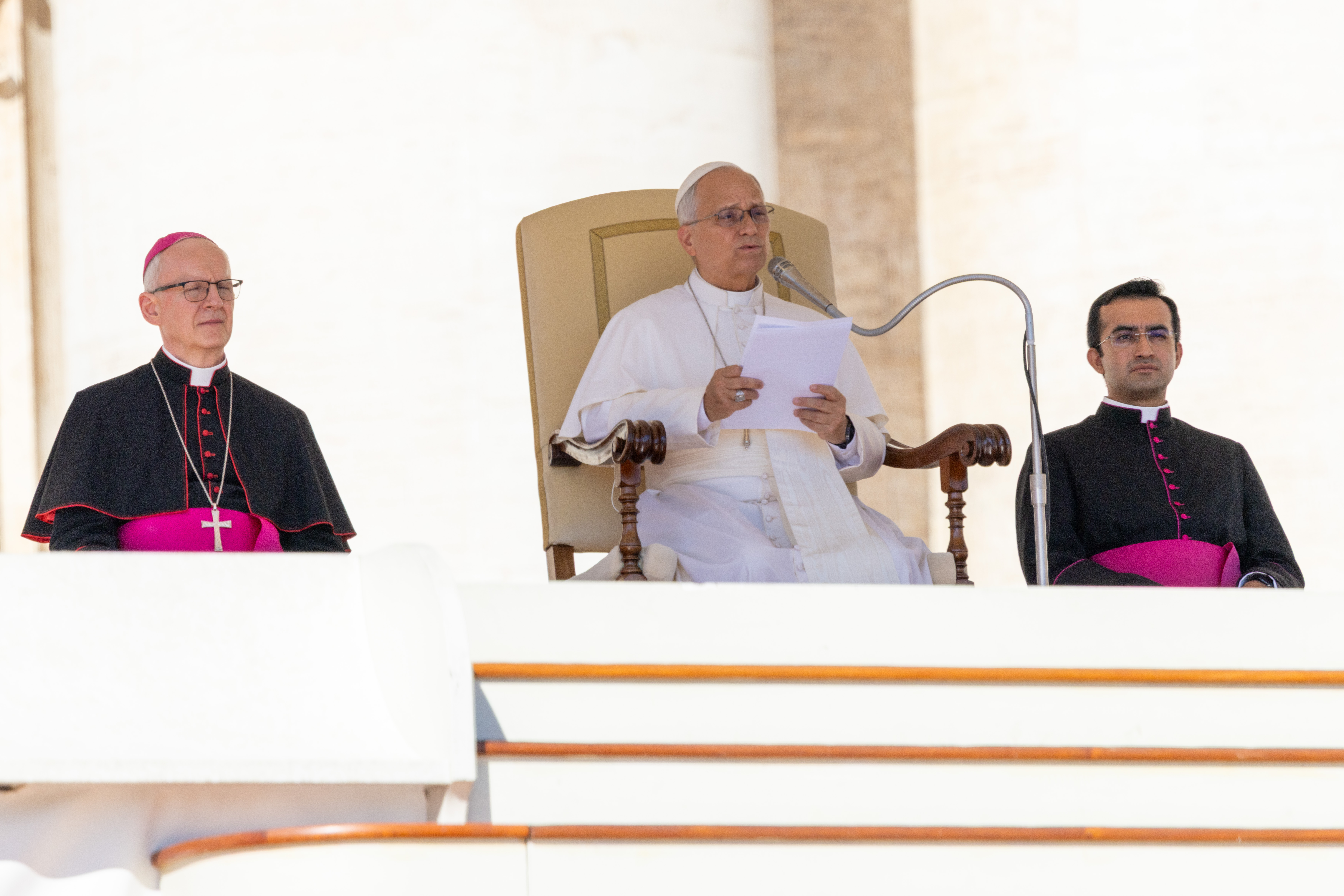
Pope Leo XIV speaks on the human community as described in “Gaudium et Spes” during his weekly general audience address in St. Peter’s Square on Sept. 16, 2026. | Credit: Daniel Ibañez/EWTN News
The pope also recalled that the pastoral constitution Gaudium et Spes offers a concise definition of the common good, understood as “the sum of those conditions of social life which allow social groups and their individual members relatively thorough and ready access to their own fulfillment.”
At the same time, he noted that the document recognizes the interdependence of peoples and states that “every social group must take account of the needs and legitimate aspirations of other groups, and even of the general welfare of the entire human family.”
Respect for human dignity
Building on this approach, the council fathers identified several “practical and particularly urgent consequences,” including respect for the human person.
The pope recalled that Gaudium et Spes states: “Whatever is opposed to life itself, such as any type of murder, genocide, abortion, euthanasia, or willful self-destruction, whatever violates the integrity of the human person, such as mutilation, torments inflicted on body or mind, attempts to coerce the will itself; whatever insults human dignity, such as subhuman living conditions, arbitrary imprisonment, deportation, slavery, prostitution, the selling of women and children; as well as disgraceful working conditions, where men are treated as mere tools for profit, rather than free and responsible persons; all these things and others of their like are infamies indeed.”
Likewise, the pope said that the second consequence of this message is “respect and love for adversaries or for those who think and act in ways different from our own.”
Third, Pope Leo emphasized that the fundamental equality of all human beings gives rise to the demand for social justice. In this regard, he urged people to “overcome the individualistic mindset” and adopt “an attitude of responsibility and participation.”
“The future of humanity depends on each person’s commitment to collaborate with God and with their brothers and sisters in building a more humane world,” the pope concluded.
At the end of the general audience, Leo XIV offered a special greeting to various groups of pilgrims and expressed his “deep appreciation” for the apostolate carried out by prison chaplains.
“May you always be a living presence of the Gospel and of Christian hope,” the Holy Father said, also thanking them for the assistance they provide both to him and to the Secretariat of State in the spiritual care of prisoners who write to the pope each day to share their personal struggles and wounds.
Among those present, Leo XIV also greeted participants in a pharmaceutical care course, encouraging them to combine scientific expertise with human closeness and an integral vision of the person.
This story was first published by ACI Prensa, the Spanish-language sister service of EWTN News. It has been translated and adapted by EWTN News English.
A Vatican conference on modern Christian martyrs concluded with a speech by Pope Leo XIV, who praised their witness and the evangelizing power of their simple, daily holiness.
The pontiff held a private audience at the Vatican on Sept. 16 with participants in the conference “The 21st Century: A New Time of Martyrs?” held at the Patristic Institute Augustinianum in Rome from Sept. 15–16.
The conference, organized by the Dicastery for the Causes of Saints, discussed the ecumenical initiative “Commission for New Martyrs — Witnesses of the Faith” established by Pope Francis in 2023 to document the deaths of Christians of all denominations who have been killed for their faith since 2000.
Christian witnesses propose a faith lived out daily, not an ideology
In his address, Pope Leo praised the dicastery’s work cataloging the lives of Christians killed for their faith and explained that their example can teach believers today to present the faith not as an ideology but as a way of life.
“The evangelizing strength of the new witnesses to the faith represents one of the Church’s greatest resources for proclaiming the Gospel in today’s world,” Leo said. “The witnesses to the faith do not propose an ideology but show a faith lived out in everyday life.”
He also explained the significance of those Christians to Catholics, saying they “are brothers and sisters who, in different geographical, historical, and political contexts, have given their life for the Gospel.”
The pope also said that daily holiness — the holiness next door — can help Christians explain and defend their faith in arguments.
“In indifferent cultural contexts, “holiness next door” and quiet heroism become powerful arguments, capable of speaking to everyone, even the most skeptical.”
Muslims in West Bank are tired of violence against Christians
Speakers at the conference included Cardinal Marcello Semeraro, prefect of the Dicastery for the Causes of Saints, and Cardinal Pierbattista Pizzaballa, Latin patriarch of Jerusalem.
Pizzaballa, who delivered a speech on the suffering of Christians amid ongoing wars in the Holy Land, recounted his experience of explaining that suffering to Muslim students in Palestine.
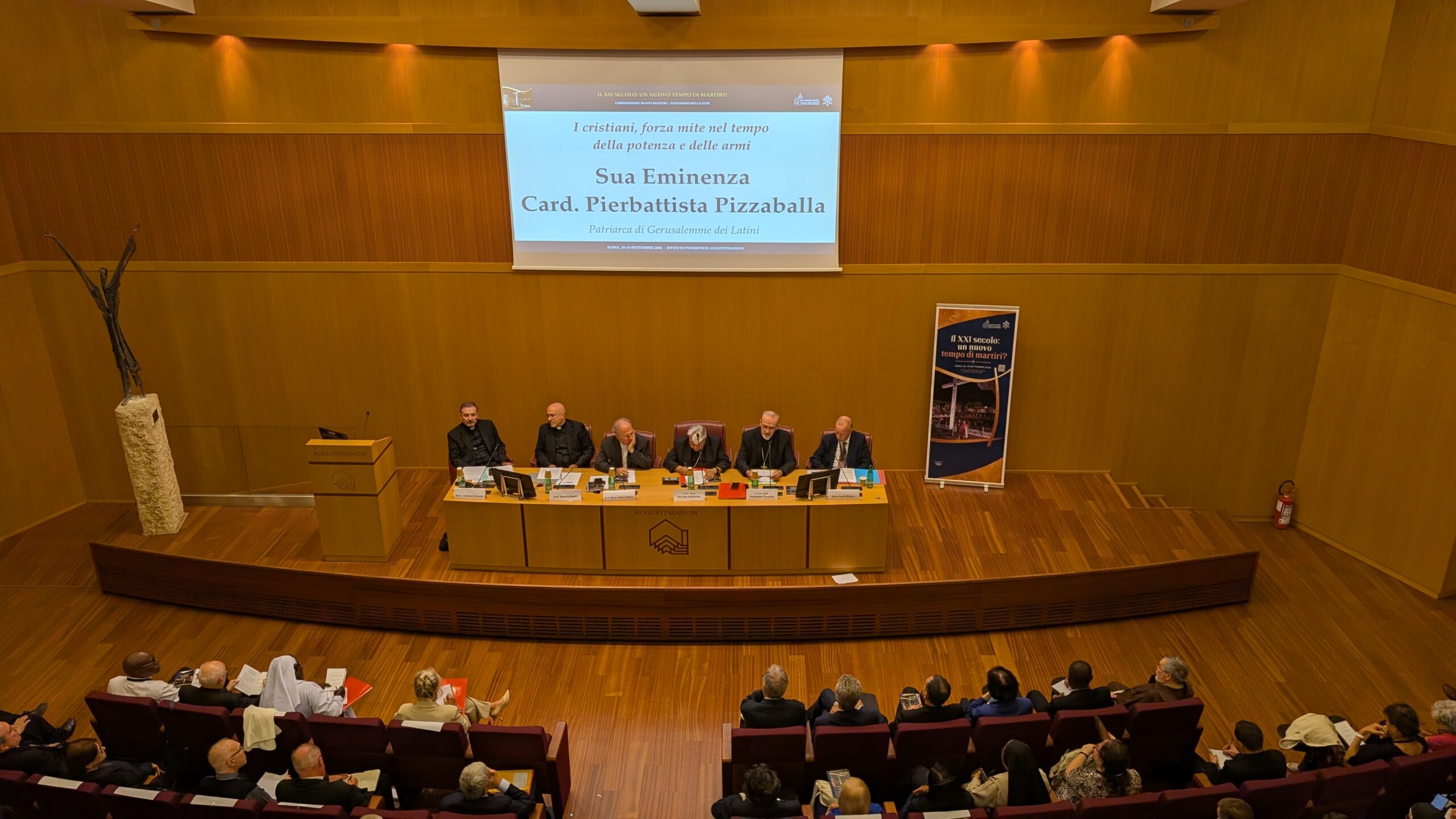
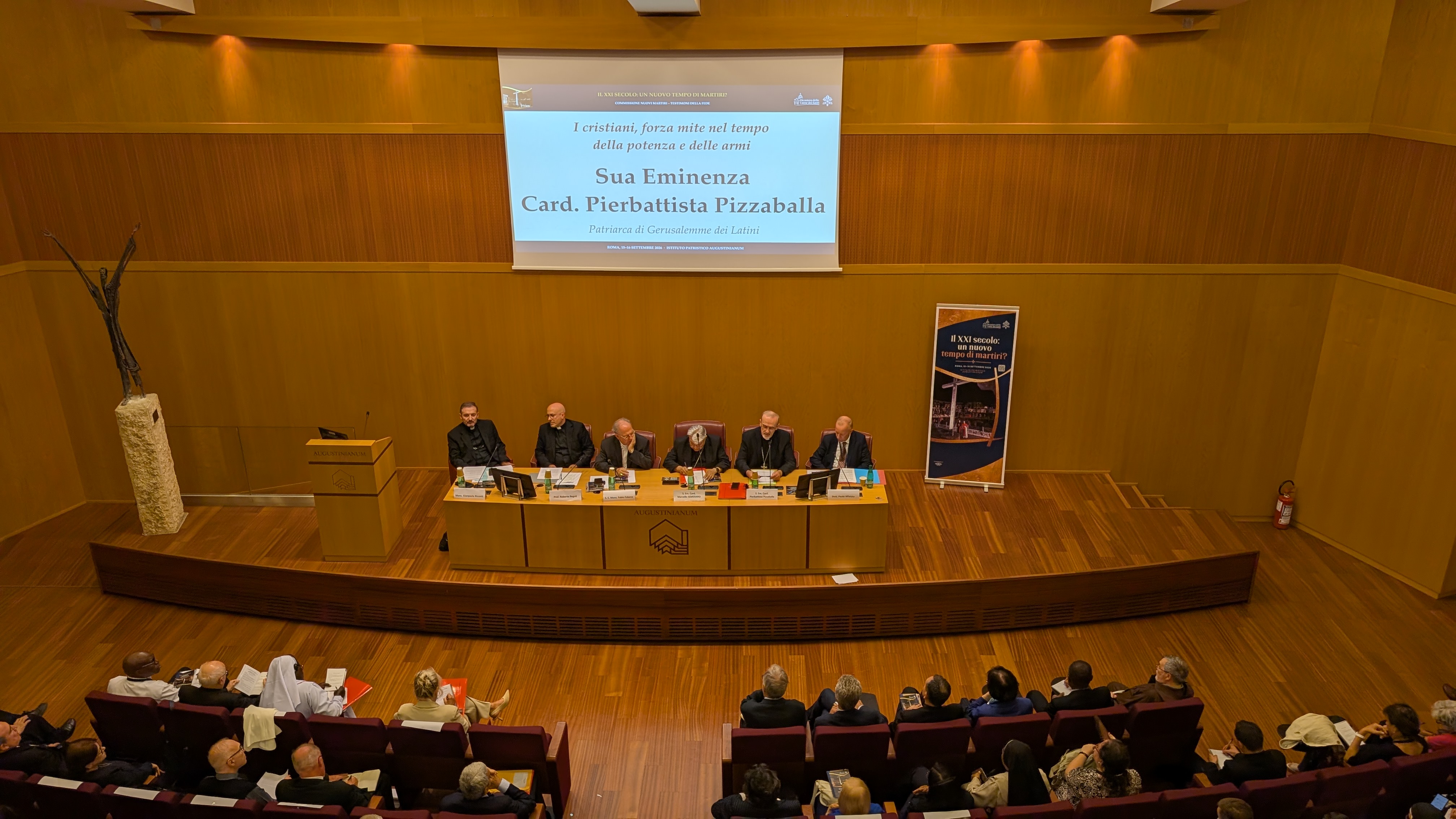
Cardinal Pierbattista Pizzaballa, Latin patriarch of Jerusalem, delivers an address at the conference “The 21st Century: A New Time of Martyrs?” held at the Patristic Institute Augustinianum in Rome from Sept. 15–16, 2026. | Credit: Ishmael Adibuah/EWTN News
“I agreed to meet with young people from the local university [in Palestine] who insisted I come,” Pizzaballa recounted. “I had never experienced that before and was afraid. About 600 students were there, all Muslims. During the discussion, I expected political questions about the war. Instead, all the questions were about life, faith, and Christianity.”
“When I said that Christianity rejects violence …, they stood up and applauded, saying they, too, are tired of living in a system of violence.”
The blood of the martyrs comes before theological disagreements among Christians
Semeraro, in his address, discussed the progress of the “Commission for New Martyrs — Witnesses of the Faith” initiative and emphasized the need to prioritize the sacrifice of Christians for the faith over theological debates.
“The blood of the martyrs comes before our theological dialogues,” Semeraro said. “Where our Christian confessions still have wounds that need to be healed, the martyrs tell us that what is essential is already shared: the confession of Christ, even unto the gift of oneʼs life. This is called the ‘ecumenism of blood.’"
Sister Dorothy Stang and the impact of 9/11 on Christian persecution
Among the Christians mentioned at the conference was Sister Dorothy Stang, an American nun who was murdered in Brazil in 2005 for defending the land rights of the Indigenous peoples. In 2025, she became the first U.S. woman to be included in a permanent memorial in Rome for modern Christian martyrs.
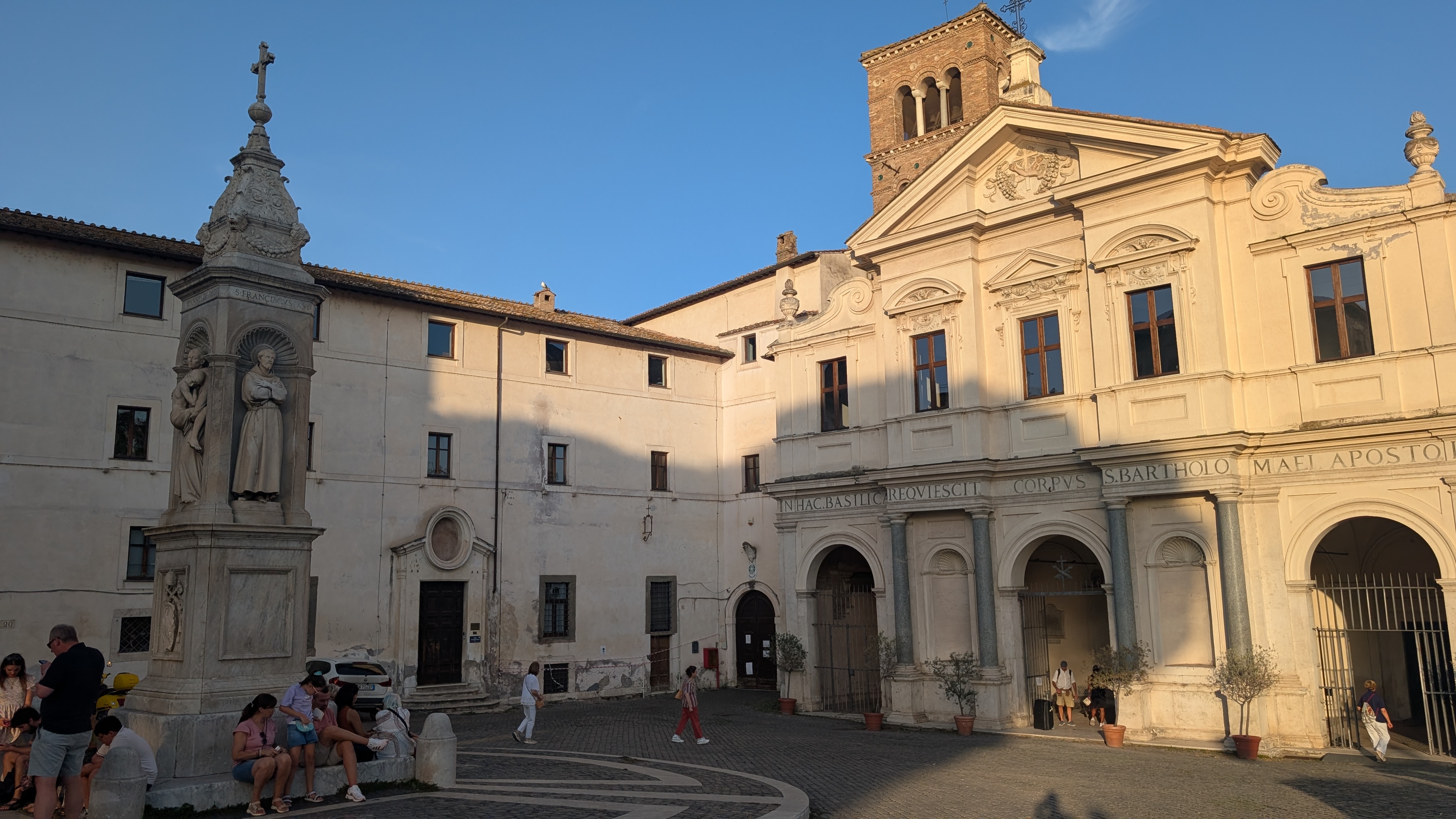
The Basilica of St. Bartholomew on Tiberina Island contains a permanent memorial honoring various 21st-century Christian martyrs, including Sister Dorothy Stang. | Credit: Ishmael Adibuah/EWTN News
Sister Nicoletta Spezzati, a consultor for the Dicastery for the Causes of Saints, described Stang as a “woman of contemplative prayer” who understood that “the predatory devastation of the planet is not simply a moral offense but humanityʼs rebellion against the Creator.”
Marcia Goodman, a niece of Stang, added that her life was rooted in the belief in a sustainable environment for all people.
“It’s especially powerful that Dorothy, a woman, is being recognized as a modern martyr,” Goodman told EWTN News. “She led her life in the belief that all people matter and therefore deserve a place to call home.”
Besides Stang, the impact of the U.S. terrorist attacks on Sept. 11, 2001, on Christian persecution in Europe was also noted. Father Roberto Regoli, president of the Joseph Ratzinger Foundation, described those attacks as a precursor to a new scale of Christian persecution internationally.
“Twenty-five years ago, on Sept. 11, we remember the attacks on the Twin Towers. We remember the airplane that struck the Pentagon in Washington. From those years onward, there was an escalation of conflicts at the international level,” Regoli said.
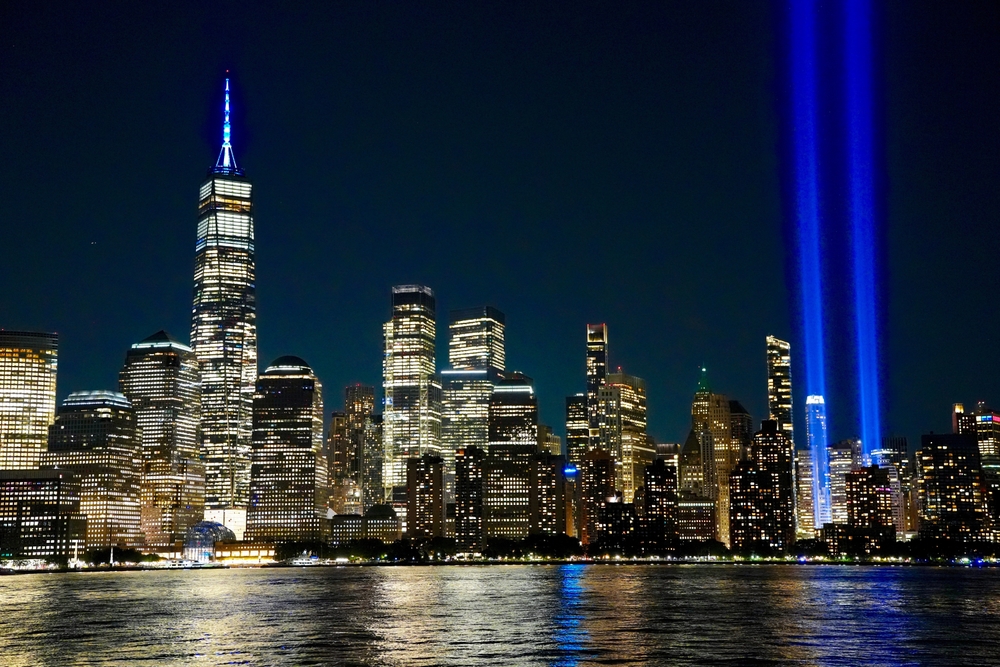
The Tribute in Light annual 9/11 memorial’s twin shafts of light soar skyward over Manhattan’s skyscrapers in 2025. | Credit: George Wirt/Shutterstock
“In the face of secularism, social difficulties, psychological difficulties, and religious tensions, there are men and women — religious and laypeople — who remain where they are. And perhaps this is itself a form of testimony: to remain in oneʼs place,” Regoli added.
The Catholic Church has documented 304 martyrs in Latin America so far this century. These are men and women killed not only for professing their faith but also for defending the poor, confronting organized crime, and protecting creation.
Their stories are part of a global catalog of martyrs promoted by the Vatican that already exceeds 1,700 documented cases.
“Many were murdered for reasons related to drug trafficking, deforestation, or for opposing the exploitation of natural resources,” explained Cardinal Marcello Semeraro, prefect of the Dicastery for the Causes of Saints.
The cardinal noted that while many were missionaries, the group also included lay faithful who gave their lives defending the Gospel and denouncing drug traffickers, protecting Indigenous territories from deforestation, or fighting the illegal exploitation of natural resources.
As he explained, the common thread in these cases is that these individuals became “inconvenient” to those controlling illicit activities. Their Gospel witness clashed directly with economic interests and criminal structures.
A conference to reflect on the new martyrs
Semeraro offered these reflections while presenting the international conference “The 21st Century: A New Era of Martyrs?” at the Vatican, a day of study and reflection dedicated to exploring the witness of Christians who have lost their lives for the sake of the Gospel in various parts of the world.
The gathering, organized by the Commission for New Martyrs — Witnesses to the Faith, was scheduled to take place Sept. 15 at the Pontifical Augustinianum Institute in Rome.
The international congress will bring together some of the most prominent voices from the Church, academia, and journalism in Rome to reflect on Christian witness in the contemporary world.
Participants include Cardinal Fridolin Ambongo, archbishop of Kinshasa, Democratic Republic of Congo; Cardinal Pierbattista Pizzaballa, Latin patriarch of Jerusalem; and Andrea Riccardi, founder of the Community of Sant’Egidio. Experts will also speak, such as Archbishop Fabio Fabene, president of the Commission for New Martyrs; journalist Lucia Capuzzi; historian Father Roberto Regoli; and South Sudanese religious sister Alice Jurugo Drajea, who will share about Christian life amid the war ravaging her country.
The initiative comes a year after the commemoration of the martyrs and witnesses of the faith of the 21st century, presided over on Sept. 14, 2025, by Pope Leo XIV together with representatives of other Christian churches and communities at the Basilica of St. Paul Outside the Walls.
Pope Leo XIV celebrate Mass for the commemoration of the martyrs and witnesses of the faith of the 21st century on Sept. 14, 2025, at the Basilica of St. Paul Outside the Walls in Rome. The commemoration was an ecumenical event that also brought together representatives from Eastern Orthodox churches, Oriental Orthodox churches, various Christian communities as well as ecumenical institutions and officials from Vatican dicasteries. | Credit: Vatican Media
The commission continues to gather testimonies and information regarding Christians killed for their faith, aiming to preserve their memory and document the various forms of persecution and Christian witness in contemporary times.
According to data released by the organization last year, 1,624 martyrs worldwide had been documented between 2000 and 2025. Of these, 304 were from the Americas, a figure that reflects the specific nature of martyrdom in this region today.
The commission also noted that the record now exceeds 1,700 documented cases and that between 100 and 150 new testimonies were added in the last year alone, confirming that the phenomenon remains very much ongoing.
Holiness goes beyond canonization
In his remarks, Semeraro emphasized that holiness in the Church is not limited to those officially canonized.
“The grace of holiness in the Church is represented by canonization, but it is not exhausted by them. Obviously, this does not rule out the possibility that, provided the necessary conditions are met, the corresponding processes of beatification and canonization could be initiated for some of those listed in the catalogue,” he noted.
This is the case, for example, of Floribert Bwana Chui, a young Congolese man from the Community of Sant’Egidio who was murdered in 2007 for refusing to accept bribes and who was beatified in 2025.
However, he noted that the primary goal is to highlight the “high standard of ordinary Christian living” spoken of by St. John Paul II in Novo Millennio Ineunte, which Pope Francis later referred to as that of “the saints next door.”
The anthropological value of holiness
The cardinal also highlighted the deeply human dimension of Christian holiness.
“We need witnesses, martyrs, who have given themselves completely to demonstrate this to us day after day. We need them so that, even in the small choices of daily life, we may choose the good over comfort, knowing that this is precisely how we truly live life,” he explained, citing Pope Benedict XVI’s encyclical Spe Salvi.
Semeraro also highlighted the ecumenical value of this project, a characteristic that he noted St. John Paul II had sought to instill in the commission from its very inception.
Martyrdom continues to grow in the 21st century
During the presentation of the conference, historian Riccardi, vice chair of the commission, maintained that the Church is truly experiencing a “new era of martyrdom.”
He recalled that St. John Paul II promoted the gathering of testimonies from 20th-century martyrs for the jubilee of the year 2000, an initiative deeply shaped by his personal experience under the Nazi and communist regimes. In Riccardi’s view, that insight has proven even more relevant today.
For this reason, he explained, Pope Francis decided to reactivate and consolidate the Commission for New Martyrs, convinced that “the time of martyrdom continues.”
The Churchʼs response has been extensive. Dioceses, religious congregations, lay movements, episcopal conferences, and apostolic nunciatures have sent hundreds of testimonies to the Vatican.
This story was first published by ACI Prensa, the Spanish-language sister service of EWTN News. It has been translated and adapted by EWTN News English.
Pope Leo XIV has appointed Newark, New Jersey, auxiliary bishop Michael Saporito as the new bishop of the Diocese of Metuchen, New Jersey.
The Vatican announced his appointment on Sept. 15, ending a nearly one-year wait for a new bishop of the diocese. The diocese was previously led by then-Bishop James Checchio from 2016 to 2025, after he served as rector of the Pontifical North American College in Rome. Checchio became the archbishop of New Orleans in 2026 after a brief period as its coadjutor archbishop.
The pope has also accepted the resignation of Bishop Francis Malone of Shreveport, Louisiana. Malone, 76, has led the diocese since 2019. Bishops are required to submit their resignations to the pope at the age of 75.
According to the Vatican announcement, Saporito was born in Newark on May 3, 1962. He was ordained a priest for the Archdiocese of Newark on May 30, 1992.
He also earned an accounting degree from Rutgers University and studied at Immaculate Conception Seminary School of Theology in South Orange, New Jersey, for several years before his ordination.
After his ordination, Saporito served as a parish priest at several parish churches throughout the archdiocese: St. Peter the Apostle in River Edge (1994–1999), Our Lady of Visitation in Paramus (1999–2001), St. Elizabeth in Wyckoff (2001–2004), St. Joseph in Maplewood (2004–2011), and St. Helen in Westfield (2011–2020).
In February 2020, Pope Francis appointed Saporito as an auxiliary bishop of Newark. He received his episcopal consecration on June 30 of the same year from Cardinal Joseph Tobin, CSsR, who has served as archbishop of Newark since 2016.
Pope Leo XIV has officially repealed the salary cuts Pope Francis imposed on cardinals and other senior officials working in the Roman Curia.
In a decree published by the Vatican on Sept. 14, the pontiff canceled the cost-cutting measures Francis had established in 2021 to address the Vatican’s financial deficit that year, projected at $60 million.
A Vatican cardinal’s monthly stipend is about $5,768 (5,000 euros). Under those measures, the Vatican cut cardinals’ stipends by 10%.
Francis had previously described these cuts in a March 2021 decree as necessary for an “economically sustainable future” at the Vatican.
Those measures, introduced during the COVID-19 pandemic, also reduced the pay of other senior officials and employees of the Holy See and Vatican City State by 8%. Clergy and religious employed by the Vatican saw their salaries reduced by 3%.
Leo stated in his motu proprio that those salary cuts “may now be set aside, in the certainty that the Institutions of the Holy See and of the Vatican City State will continue, through different means, their commitment to ensuring economic sustainability.”