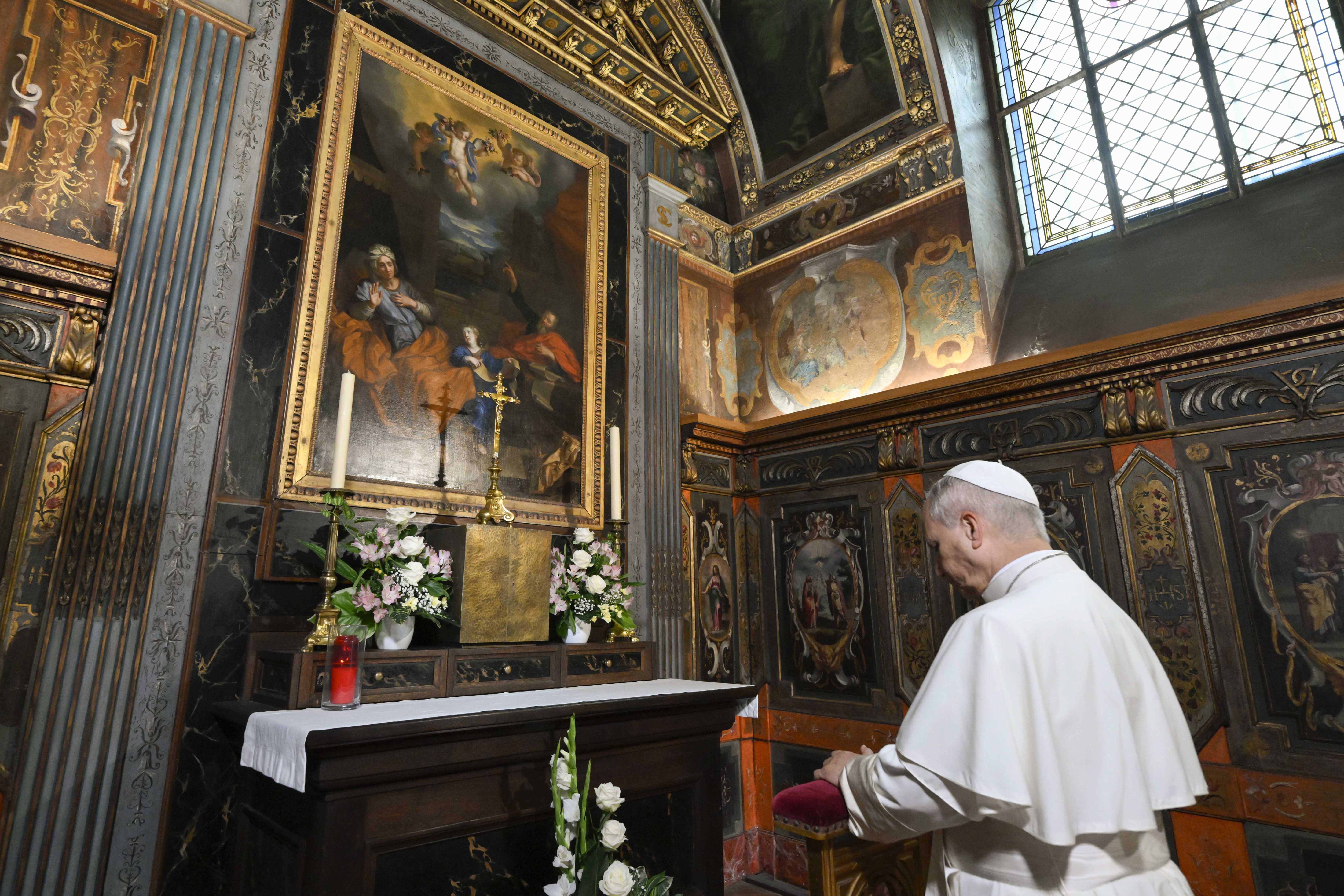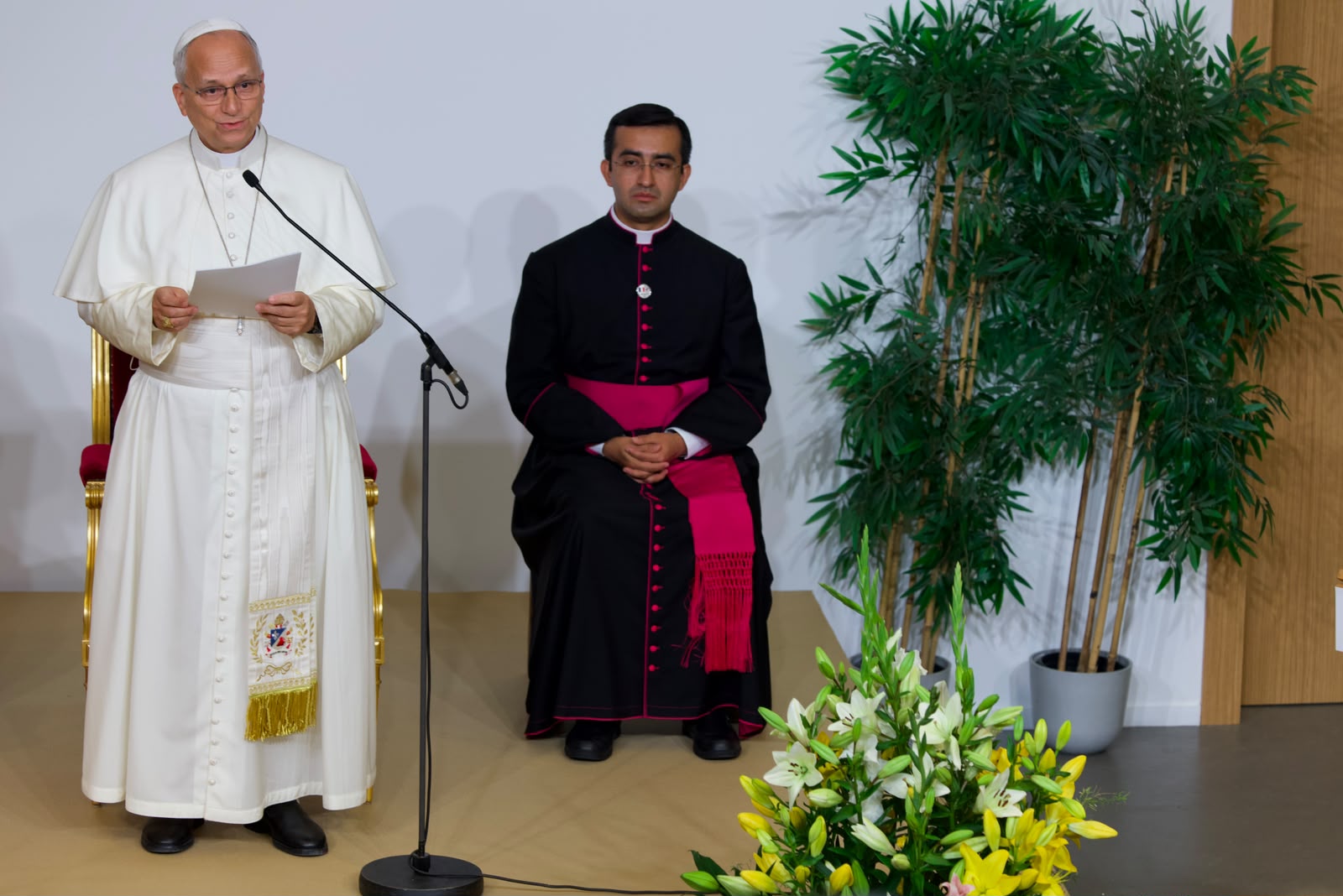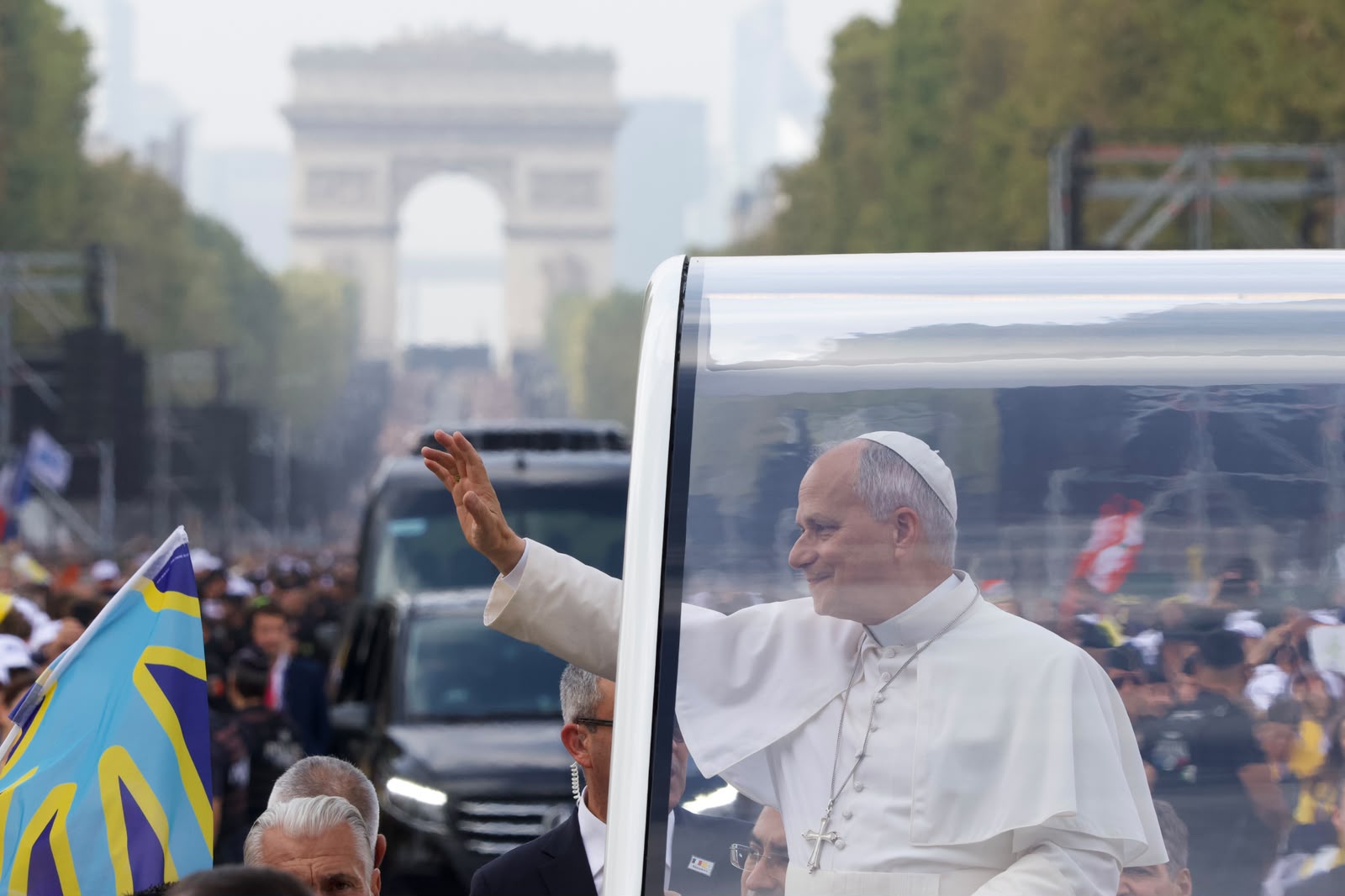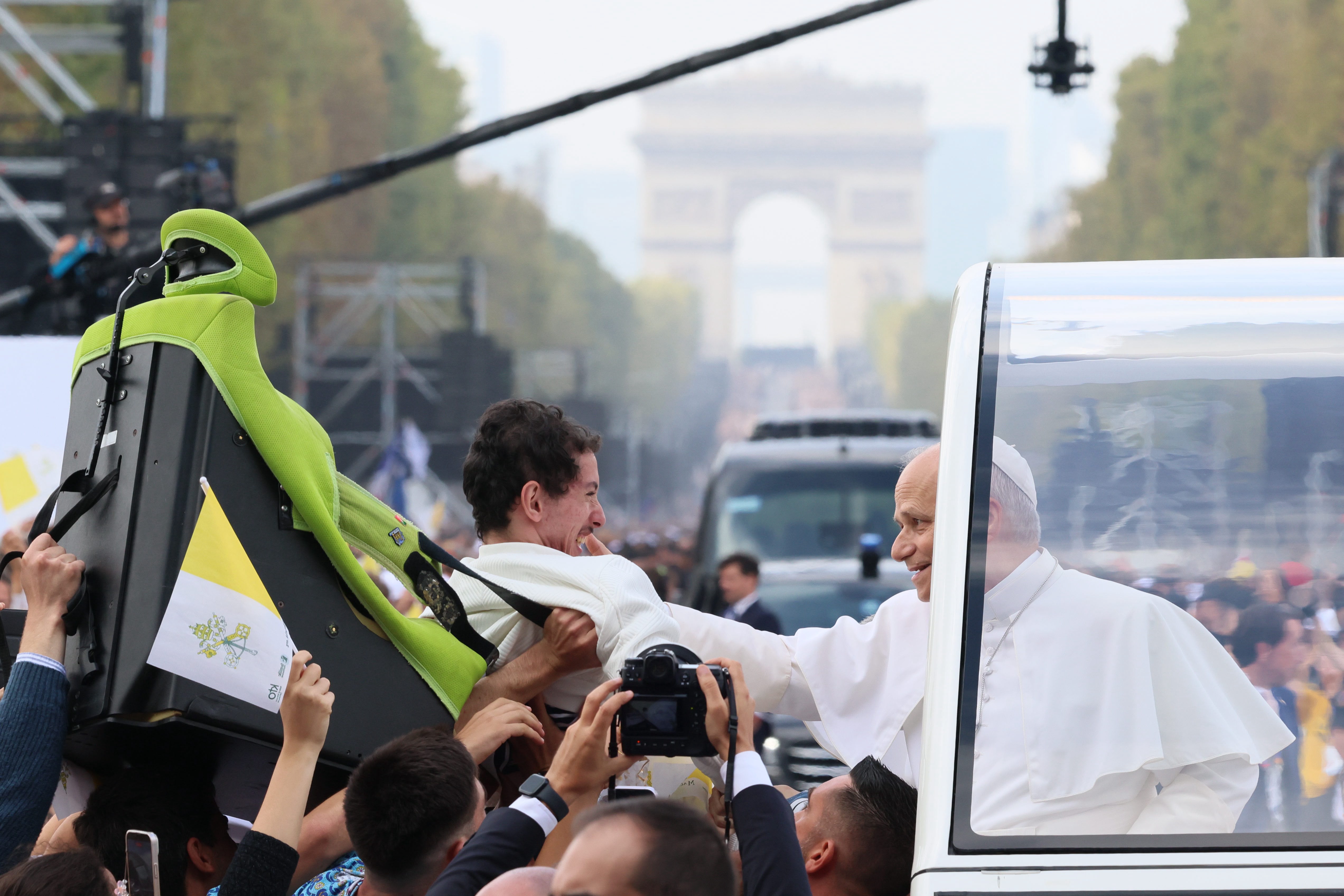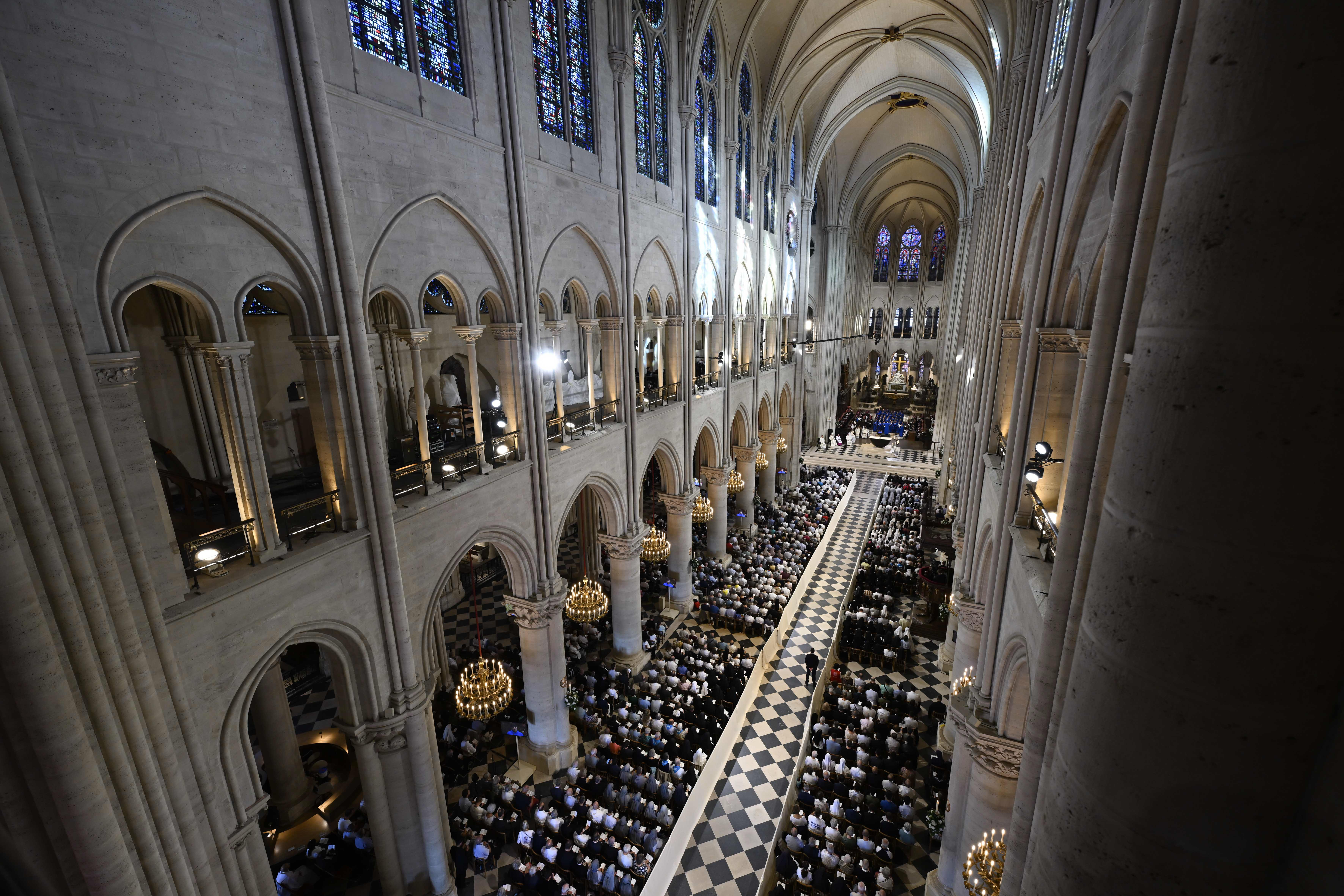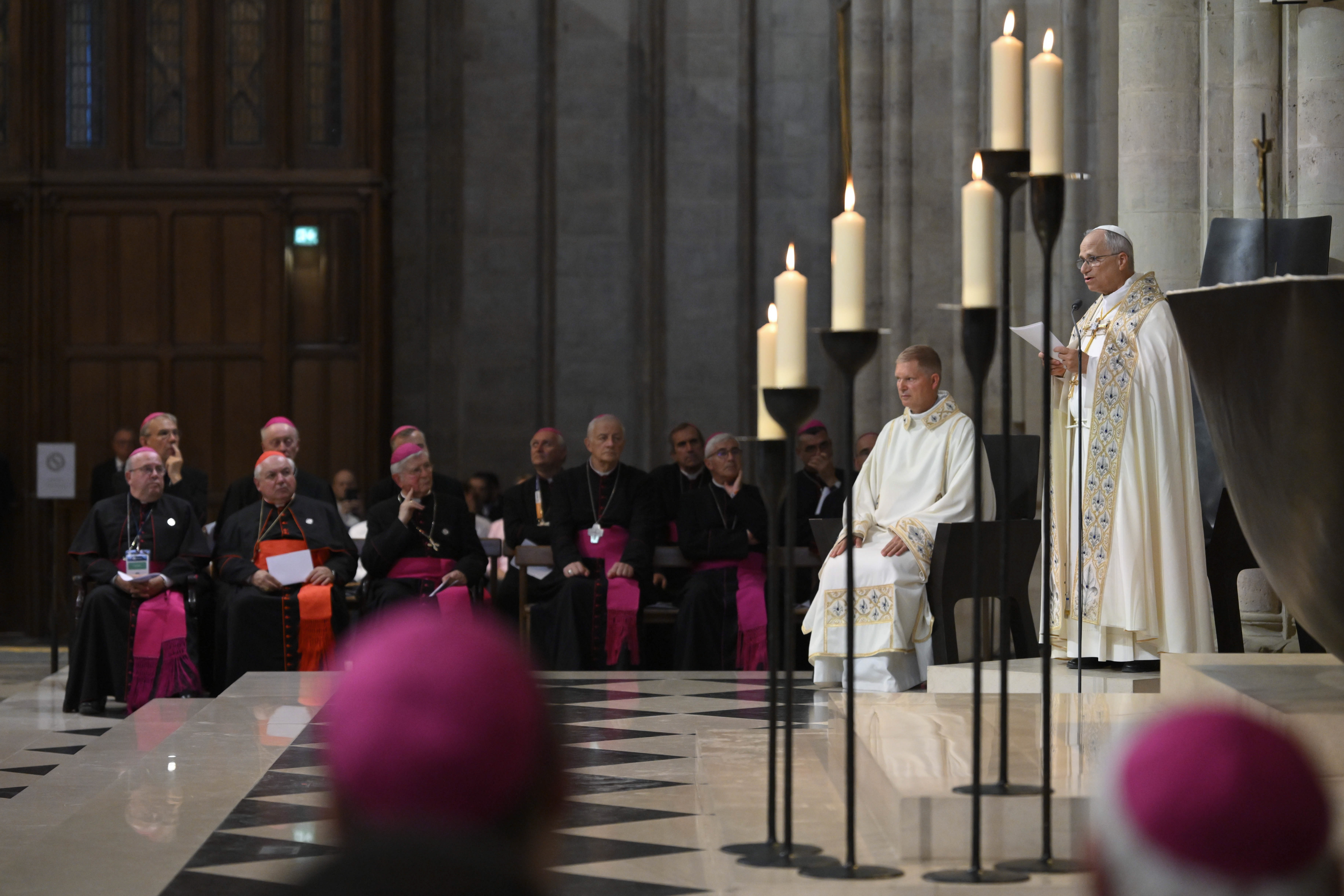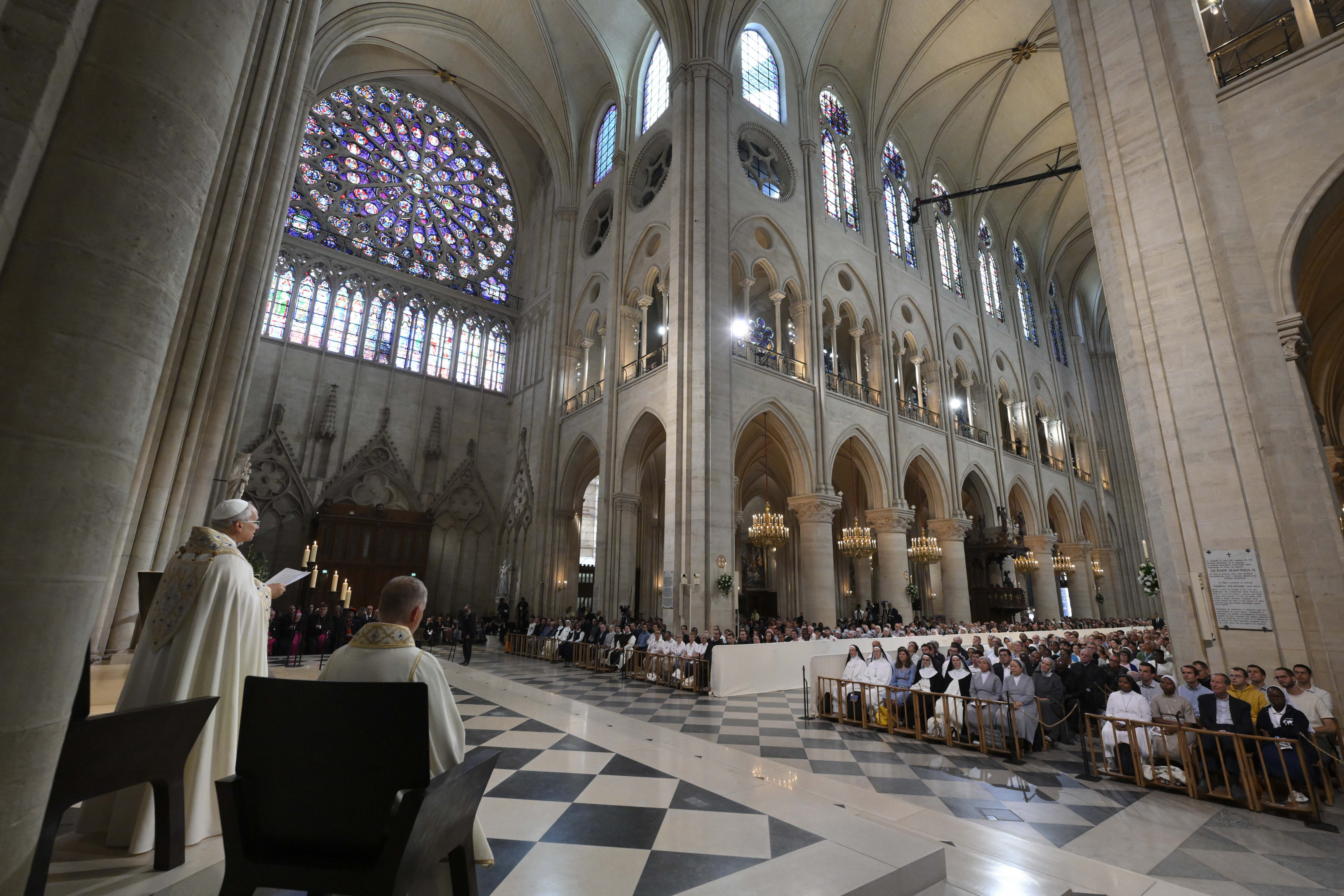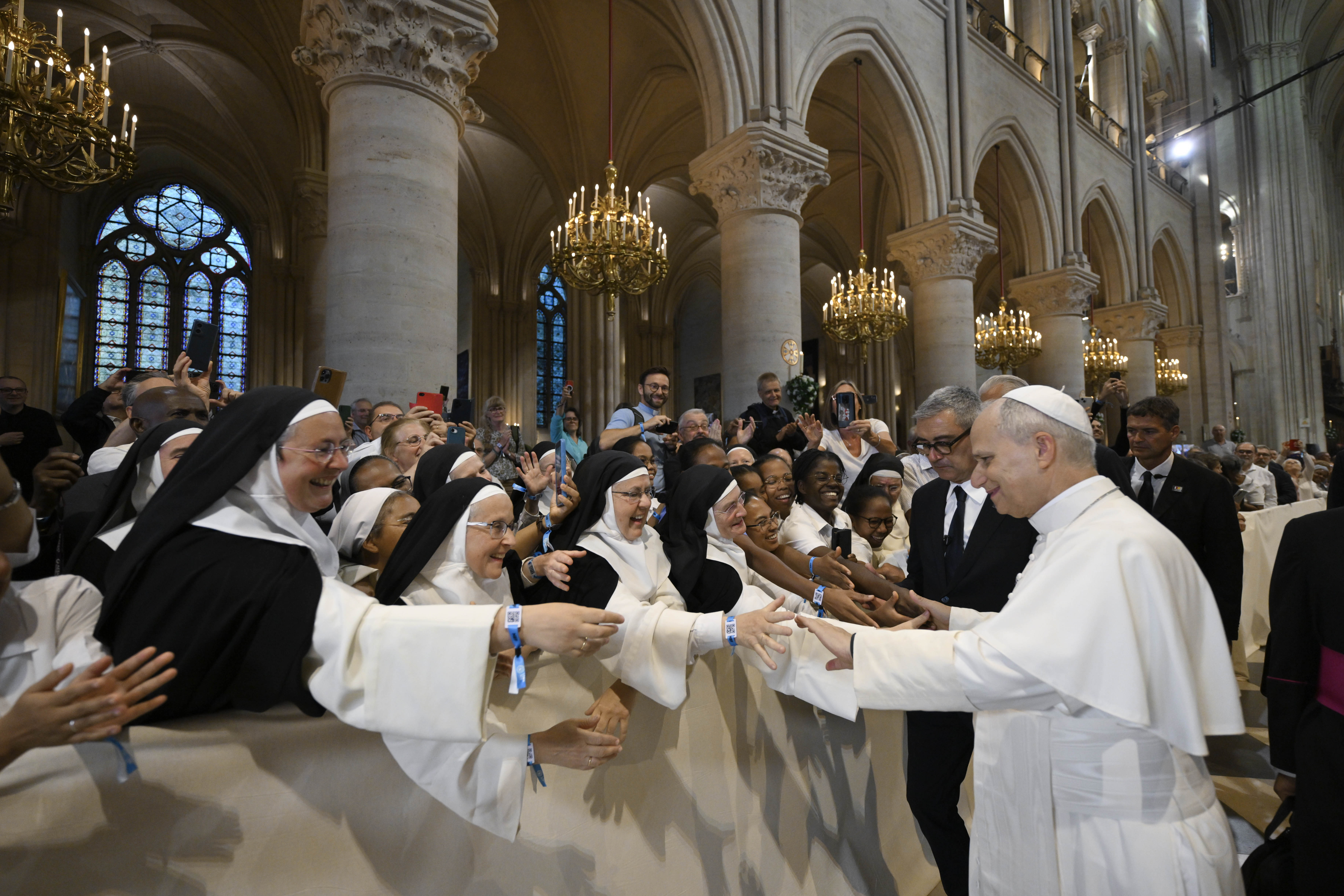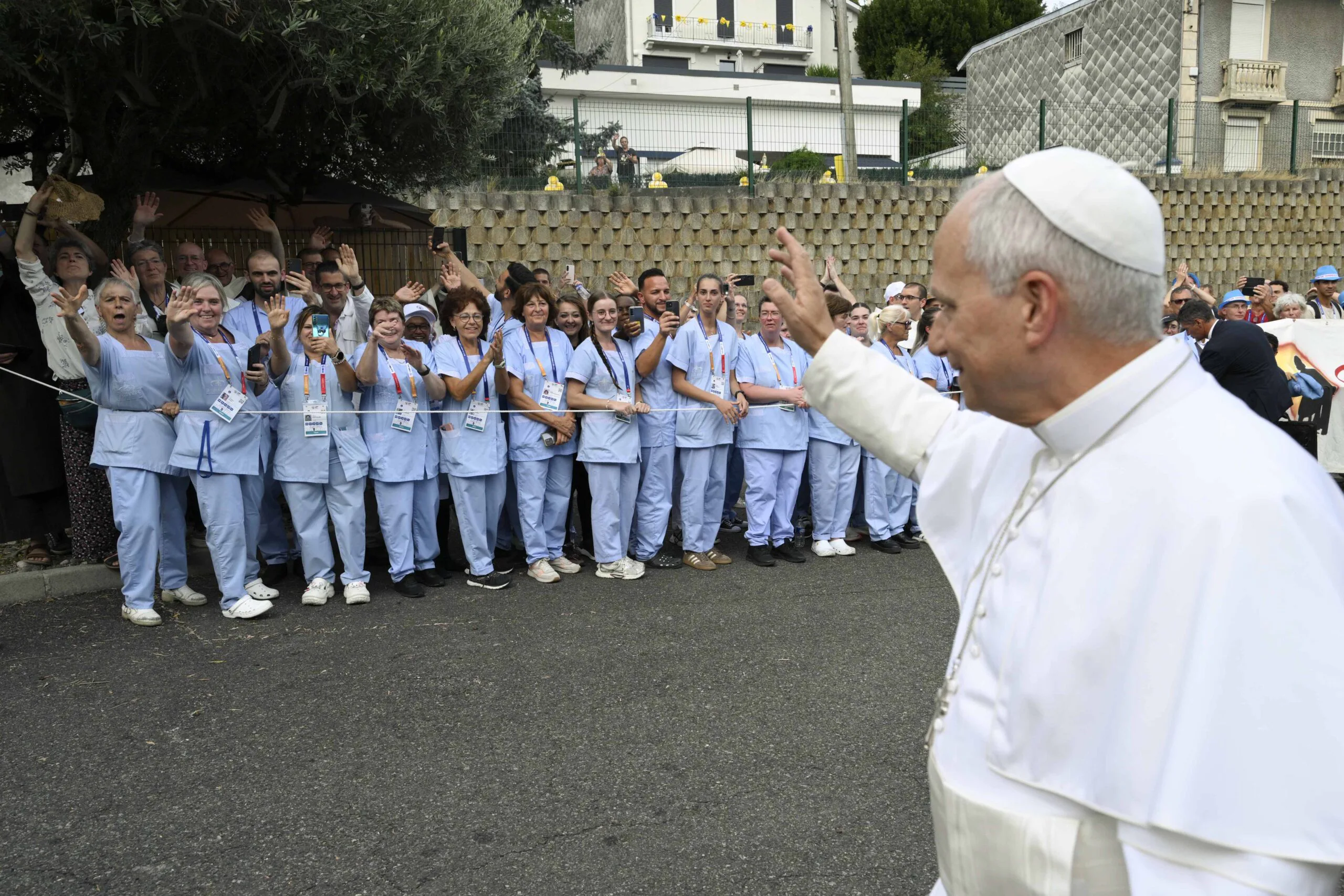
VATICAN CITY — Pope Leo XIV said Sunday that contemplation is not reserved for saints, monks, or hermits but is a necessary part of Christian life that helps make believers credible witnesses to the Gospel.
“We must not think that contemplation is an exclusive experience, reserved only for a few saints or for monks and hermits,” the pope said June 21 before leading the Angelus prayer in St. Peter’s Square.
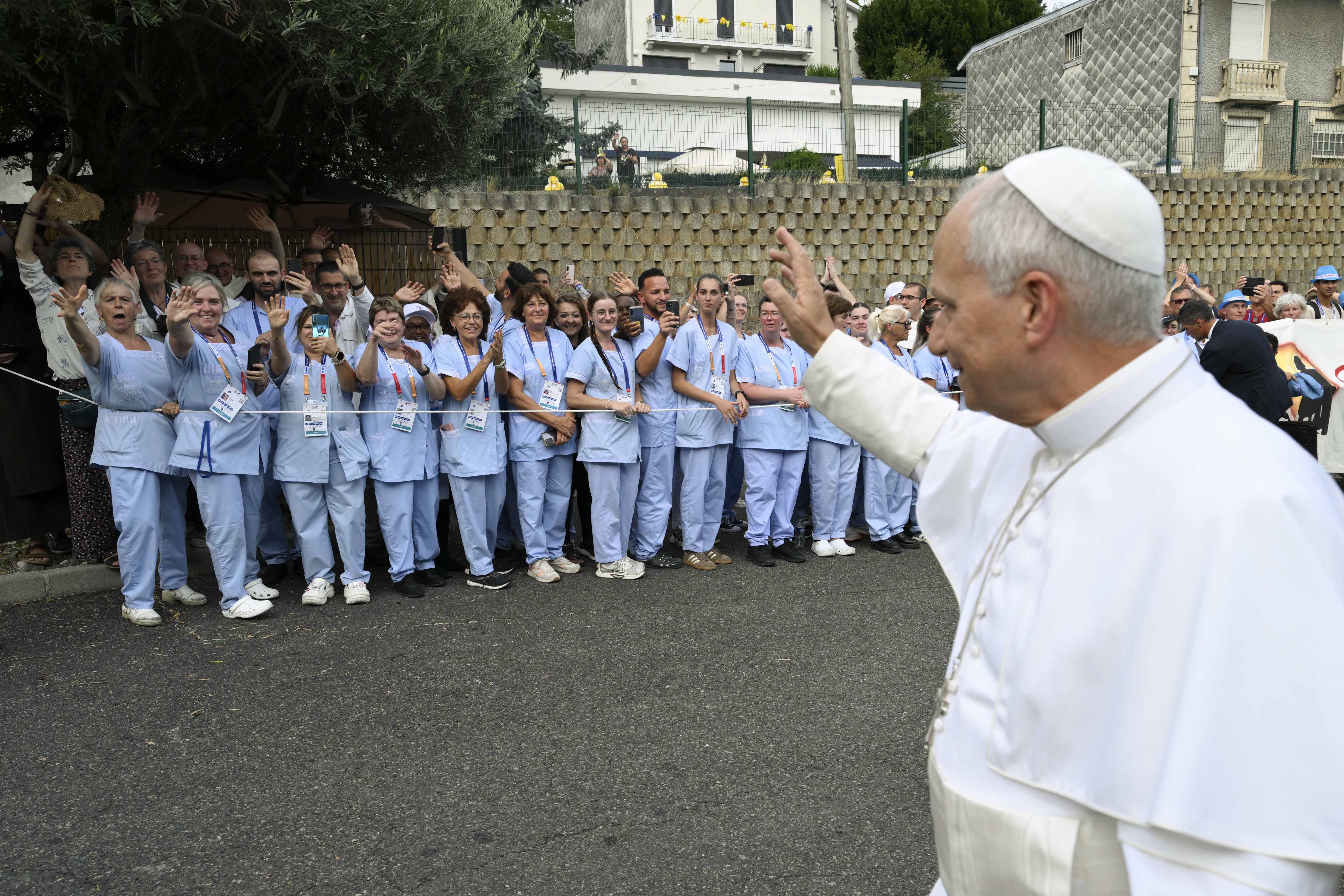
Reflecting on the day’s Gospel reading from St. Matthew, Leo said Jesus’ sending of the disciples on mission shows that proclaiming the Gospel is “first and foremost a sharing of a personal encounter with him, which is unique to each of us.”
“The strength of any apostolate, in fact — beyond techniques and tools — comes from the work of the Holy Spirit within us and from the authenticity of our response,” the pope said.
Citing St. Thomas Aquinas, Leo described preaching as “passing on to others what we have contemplated,” using the Latin phrase “contemplata aliis tradere.”
“We can all do it,” he said, “by striving to set aside, amidst the commitments of our daily lives, quiet moments in which to enter into silence before God, to listen to his voice, to entrust our joys and concerns to him and to review our lives with him.”
This, the pope continued, “helps us to have a more firm and conscious faith, and consequently to be credible and free disciples, men and women capable of reflecting the light of the Gospel in every setting and every situation of life, and of bearing witness to it even where its value is not understood or accepted.”
Pope Leo recalled that St. Matthew wrote for communities facing hostility and persecution, “as so many Christians still do today in various parts of the world.” In such circumstances, he said, “the temptation to become discouraged and to let weariness or fear get the better of them was great.”
“Now, just as then, it is a challenge to remain faithful to Jesus’ teachings and to proclaim his word: to respond to hatred with love, to arrogance with meekness, and to discouragement with perseverance,” he said.
“For this reason, we must deepen the roots of our faith and our mission in an intimate relationship with him,” the pope added. “This gives us the strength not to despair, but to continue to share with everyone, in every circumstance, his message of hope, love and peace. The world greatly needs it!”
After the Marian prayer, Pope Leo turned his attention to refugees, noting that World Refugee Day, established by the United Nations, was celebrated the previous day on the 75th anniversary of the Convention Relating to the Status of Refugees.
The convention, the pope said, “was adopted to protect those who are persecuted and forced to leave their homeland, homes and families.”
“I hope that the spirit that inspired the drafting of this important international instrument may also continue to enlighten the consciences of national leaders today,” he said. “No one can turn a blind eye to those who are seeking protection and safety.”
“I also urge everyone to welcome those who are victims of persecution so that they may live in peace, with dignity, and look to the future with hope,” Leo added.
The pope also greeted members of the Catholic Pentecostal International Dialogue.
“The Church believes as she prays,” he said, “and reflecting together on the principle ‘lex orandi, lex credendi’ is particularly relevant nowadays.”
Turning to Brazil, Pope Leo assured pilgrims from the country of his prayers “for the young people who died a few days ago in a road accident in the State of Ceará.”
He also greeted confirmation candidates from two parishes in Ozieri, Sardinia, and wished all those gathered a happy Sunday.
This story was first published by ACI Stampa, the Italian-language sister service of EWTN News. It has been translated and adapted by EWTN News English.
PAVIA, Italy — Pope Leo XIV on Saturday visited the Basilica of St. Peter in Ciel d’Oro in Pavia, where the relics of St. Augustine are kept, in what amounted to a kind of homecoming for the Augustinian pope.
The basilica, whose construction began in the eighth century, has housed the mortal remains of St. Augustine since around the year 722, when they arrived in Pavia from Cagliari. The relics had previously been brought to Sardinia from Hippo in 504.
The June 20 stop continued Pope Leo’s Augustinian itinerary. In April, during his apostolic journey to Algeria, the pope visited Annaba, the ancient Hippo, where Augustine served as bishop.
Upon his arrival at the basilica, Pope Leo was welcomed by Father Joseph L. Farrell, prior general of the Order of St. Augustine; Father Gabriele Pedicino, provincial prior; and Father Gianfranco Casagrande, prior of the convent. The pope then met with the Augustinian community and, later in the cloister, with bishops of the Lombardy Episcopal Conference.
The last papal visit to the Basilica of St. Peter in Ciel d’Oro took place in 2007, when Pope Benedict XVI came to Pavia and was welcomed by Father Robert Francis Prevost, then prior general of the Order of St. Augustine.
Greeting those present in the cloister, where about 1,800 faithful were gathered inside and outside the basilica, Pope Leo spoke briefly off the cuff.
“I know many of you,” he said. “St. Augustine teaches us to live and to love God and our brothers and sisters. Fraternal love and charity toward all are important; this is the message of Jesus and of St. Augustine. We are signs of love and charity, and we know how to live forgiveness, reconciliation, and peace.”
In his greeting to the Augustinian community, Leo said that “St. Augustine is not ours; he belongs to the Church, and our mission is to make him known in the Church,” because Augustine “has so much to offer in this time.”
The pope said it is necessary “to offer the message of love for Christ and love for the Church,” adding: “May St. Augustine always help us to live this mission.”
In his address in the basilica, Pope Leo praised the Church in Pavia as “a community of ancient tradition that remains alive and present in the city and territory, attentive to the signs of this time and to its challenges, without allowing itself to be discouraged by fatigue, by the secularized context, and by the difficulties in transmitting the faith.”
To avoid discouragement, he said, Christians need “a gaze animated by the spirit of faith” that helps them read reality more deeply and resist “a negative and pessimistic attitude, incapable of generating new life.”
“The gaze that is required of us is instead that of Jesus,” he said.
The pope asked what it means to be “a living Church,” answering that it requires remaining united to Christ, “the living stone, rejected by men but chosen by God.”
“Christ is the foundation of the spiritual building,” Leo said. “He is the cornerstone placed as the basis of our ecclesial journey, of pastoral action, and of evangelization.”
Being built in Christ, he said, protects the Church from the risk of becoming scattered or exhausted by “secondary things” that may be good but do not reach what is essential.
“Since the center is Christ, we all draw from this one source and submit our efforts to the discernment that comes from his light and his word,” the pope said. “Then we help grow a Church in which people walk together, capable of renewing itself without division, in which all recognize one another as brothers and sisters and work joyfully in service of the kingdom of God.”
Leo urged Christian communities to be centered on what is essential, “even if this should involve giving up some structures and some securities of the past.”
“The essential thing is to live with Christ, and spreading his Gospel is what must be close to our hearts,” he said.
The pope addressed that appeal first to priests, calling them to “always return to the center” and to unify everything in their relationship with the Lord. He also encouraged men and women religious, who he said often know the fatigue of updating the charism to which they belong, to begin again from Christ and share their gifts with the whole diocesan Church.
In a secularized world, Leo said, Christians are called above all to bring “the joyful and liberating proclamation of Jesus Christ” and to help people discover or rediscover the faith.
The pope then pointed again to Augustine, saying that “his thought, the story of his conversion, and his spirituality remind us of the value and primacy of interiority.”
“As living stones, we are called to be a Church well rooted in the territory,” Pope Leo said, “a Church that walks amid the struggles and hopes of the people, expert in the art of listening and accompanying.”
He emphasized the importance in Pavia of university pastoral ministry and dialogue with culture, saying that study and scientific work challenge believers to offer a faith capable of illuminating the human search for truth, justice, and beauty.
Before the pope’s address, Bishop Corrado Sanguineti of Pavia described the local Church as “a Church on the journey,” marked by growing communion among religious communities, associations, movements, and pastoral efforts to reach people in the concrete circumstances of their lives.
Farrell, the Augustinian prior general and Prevost’s successor, also addressed the pope. He said Pope Leo’s presence among the Augustinians had “inestimable meaning,” because they are “historically and spiritually, sons of the Church and sons of St. Augustine.”
“We have St. Augustine for a father and the Church for a mother,” Farrell said, noting that the words would sound familiar to Leo because they were the same words then-Father Prevost had addressed to Pope Benedict XVI during his 2007 visit to Pavia.
Pope Leo XIV in Pavia, Italy, on June 20, 2026. | Credit: Daniel Ibáñez/EWTN News
After leaving the basilica, Pope Leo went to Piazza Duomo, where he prayed before the Blessed Sacrament and venerated the relics of St. Syrus, the first bishop of Pavia.
On the steps of the cathedral, the pope blessed a heated cradle intended for abandoned newborns and prayed before the image of Our Lady of Colombina. The then-Cardinal Prevost had been expected to visit the shrine of Colombina last year, but his election to the papacy made the visit impossible.
Speaking off the cuff on the cathedral steps, Pope Leo greeted young people and the large Peruvian community present in the city.
“We all want to live in peace,” he said. “It is very important that we never lose hope. But, as St. Augustine told us, if we want to change the times, if we want the world to live in peace, we must begin with ourselves.”
“That means no more words of hatred, no more insults, no more bullying, no more all those things that create war between people, between communities, between countries,” the pope said. “We must all learn to be builders of peace and promoters of reconciliation.”
After the visit to the cathedral, Pope Leo walked despite the intense heat to Piazza Vittoria for a meeting with the city’s residents.
The beauty of Pavia, Leo said, is demanding because it represents “the precious inheritance of a past that becomes a commitment for the present.”
“The city is in fact a gift and a task for those who live there,” he said.
Referring to schools, universities, hospitals, and parishes, the pope said they are “significant places” that testify to welcome, education, and culture. In different ways, he said, they attest to “the same care for the person-in-community, with his dignity and his values,” which unite citizens as one people and also underlie the Italian Constitution.
The city, Pope Leo said, points to “a human condition: The city is one for all; it is singular and plural.”
“To be social means to be solidary, behaving as authentic partners, motivated by the common good and not by partisan interests,” he said. “Citizens are always fellow citizens.”
Speaking before about 3,500 people gathered between the cathedral and Piazza Vittoria, the pope warned against indifference and called for renewed participation in civic life.
“When indifference seems to break apart our community, it is necessary to renew the active participation of all in city life,” he said. “Faced with forms of degradation and civic illiteracy, we are called to share languages of dedication and service, which safeguard squares, parks, and streets as places of encounter par excellence.”
Good citizenship, he said, “knows how to cultivate concord through dialogue and constructive encounter among the people and cultures that animate Pavia.”
“Today I invite each of you to repeat within yourselves: I care about our city,” the pope said. “I care about the health of the person next to me. I care about the beauty of the place where I live. I care about the quality of life in the environments where I work and where I spend my free time.”
Leo also highlighted the University of Pavia, saying its students experience not “an agglomeration of knowledge” but a system capable of forming the person “without speculating on his labor.”
“To promote the sciences, in fact, means to promote man, who must always remain the protagonist of his own research,” the pope said. “To every form of knowledge there corresponds a form of care.”
Returning to Augustine, Leo said “one cannot believe without thinking, nor is it possible to illuminate the highest questions of reason without faith.”
“With this trusting openness, human reason asks and plans,” he said. “It does not close itself within the logic of profit or domination but discovers new ways to care for itself and for the world.”
Faith, he added, reminds people that they are not “subjects of an anonymous fate” but are sustained by the certainty that God is “creator and savior of life.”
“Thanks to your commitment, Pavia is prosperous not only in goods but also in virtues: Always honor the dignity of every human life!” he said.
Earlier in the day, Pope Leo began his brief but intense visit to Pavia at the National Center for Oncological Hadrontherapy, known by its Italian acronym CNAO.
The papal helicopter landed in Pavia shortly before 2:40 p.m. on a day of particularly high temperatures. The pope was welcomed by local authorities and Sanguineti.
“Great emotion, an atmosphere of joy, a hot day because of the heat — we think it is a beautiful moment for everyone and an experience of faith for many,” the bishop told accredited journalists gathered in the press room inside the bishop’s residence.
The cancer center, inaugurated Feb. 15, 2010, treats patients with solid tumors that cannot be cured surgically or with traditional radiotherapy, using hadrontherapy: irradiation with beams of protons and carbon ions.
CNAO was the first center dedicated to hadrontherapy in Italy and remains the only one in the country able to offer carbon ion therapy.
Inside the facility, the pope greeted administrators, medical staff, and several children undergoing treatment at the center, together with their parents.
“Help the whole world understand how, when there are difficult moments, if there is not the presence and love of the family, everything is more difficult,” the pope said off the cuff. “God does not want anyone to suffer. What God promises us is that he will always be present, even when we are too weak; he sends us angels.”
The pope thanked CNAO, “which works miracles,” and its staff, saying “God works in our lives also through doctors, nurses, and so many people.”
“When things are difficult,” he said, “let us place all our trust in God.”
After leaving Pavia, Pope Leo was scheduled to stop in Sant’Angelo Lodigiano to venerate the relics of St. Frances Xavier Cabrini before returning to the Vatican.
This story was first published in threeparts by ACI Stampa, the Italian-language sister service of EWTN News. It has been translated and adapted by EWTN News English.
SANT’ANGELO LODIGIANO, Italy — Pope Leo XIV paid tribute Saturday to St. Frances Xavier Cabrini, the first U.S. citizen ever canonized as a Catholic saint, holding her up as a model for how the Church should respond to migrants today.
Before returning to the Vatican after a daylong visit to the northern Italian city of Pavia, the pope traveled to Sant’Angelo Lodigiano, in the Diocese of Lodi, the birthplace of Cabrini, the Italian-born missionary who became a tireless defender of migrants in the United States at the beginning of the 20th century.
Cabrini died in Chicago in 1917 — the same city where Pope Leo was born. She was beatified by Pope Pius XI in 1938 and canonized by Pope Pius XII in 1946.
Welcomed by about 5,000 faithful, Pope Leo visited the Parish of Santi Antonio Abate e Francesca Cabrini for adoration of the Blessed Sacrament and to venerate the heart of St. Frances Xavier Cabrini.
“When I learned that Sant’Angelo Lodigiano is only a few kilometers from Pavia,” Pope Leo said, “I thought I would take the opportunity, and here I am.”
The pope said Mother Cabrini, following the guidance of Pope Leo XIII and St. John Baptist Scalabrini, “interpreted the signs of the times” and understood that her dream of going to China, in imitation of St. Francis Xavier, had to be fulfilled where the need was greatest.
“Today that sign, that is, the phenomenon of migration, has entered a different phase, certainly more complex, yet no less capable of challenging the Church,” he said.
Pope Leo asked what Cabrini’s missionary soul would say if she were alive today.
“For my part, I inherited and carried forward the magisterium of Pope Francis with the apostolic exhortation Dilexi te on love for the poor,” he said. “And there, where it speaks of charity in the form of accompanying migrants, the figure of St. Frances Cabrini appears right alongside St. John Baptist Scalabrini. What could be more timely than a missionary charism placed at the service of migrants?”
The pope also urged young people to learn more about Mother Cabrini, saying that those who come to know her “are captivated by her.”
“Her soul was at once contemplative and active,” Pope Leo said. “She was immersed in the love of the heart of Christ, and this gave her an extraordinary capacity for work and strength of spirit.”
In his greeting to the pope, Bishop Maurizio Malvestiti of Lodi praised what he called Mother Cabrini’s “original and highly fruitful” union of contemplation and social charity.
Both dimensions, he said, were “overwhelming and farsighted in an evangelical reading of the times and of new realities,” marked by “ecumenical and interreligious intuitions” that testify that “no one is a stranger in history: We are all called to fraternity in justice and peace.”
The stop in Sant’Angelo Lodigiano was the final leg of Pope Leo’s brief but intense visit to Lombardy.
This story was first published by ACI Stampa, the Italian-language sister service of EWTN News. It has been translated and adapted by EWTN News English.
Pope Leo XIV on Friday highlighted the role of synodality in promoting the common good and avoiding new divisions.
In his private audience with the participants of the Borgo Dialogues at the Vatican on June 19, Leo praised their work as a commitment to the “ecological, social, and economic transformation of the world.” He also described their work as grounded in the Church’s vision to promote global unity.
“Your dialogues have been structured on the Catholic Church’s vision of synodality, listening from the ground up while fostering global unity,” Leo said.
In his remarks, the pope drew extensively on his recent encyclical on artificial intelligence, Magnifica Humanitas. He urged leaders to resist the temptation to prioritize profits over a civilization of love.
“In the face of the temptation to build the ‘Tower of Babel,’ which represents the idolatry of profit at the expense of the most vulnerable and enhances the risk of dehumanization, we are called to contribute to the construction of the New Jerusalem, the civilization of love, in which love is the only guiding principle of economic, political, and cultural life.”
The Borgo Dialogues were held June 17–19 at the Borgo Laudato Si’, part of the Pontifical Villa Gardens in Castel Gandolfo. Inspired by Pope Francis’ encyclical Laudato Si’, the meetings brought together leaders from academia, culture, and business to focus on global ecological challenges and related topics.
Pope Leo XIV on Thursday highlighted the role of universities in an increasingly polarized world, describing them as “privileged places for dialogue.”
During a private audience at the Vatican with the board of governors of the Hebrew University of Jerusalem on June 18, Leo said the universities can be promoters of peace at a time “often characterized by violence and pointed rhetoric.”
“While not always easy, universities must constantly work to ensure that opportunities for meaningful encounters remain available,” Leo said in his remarks. “In an atmosphere where respectful dialogue is possible, everyone can grow in knowledge through learning from the points of view and living testimonies of others, even those with whom they might disagree.”
The pope also highlighted the role of the university amid a rise in armed conflicts worldwide. Citing his message for the 59th World Day of Peace in January, Leo encouraged higher education leaders to work for peace within and beyond their academic communities, even if peace seemed impossible.
“Rather than believing peace to be impossible and beyond our reach, we must seek to promote it in our communities and to welcome and recognize it in our own lives,” Leo said. “I pray that through forming artisans of peace, the university community may continue to be a beacon of hope and unity in a world that is increasingly divided.”
Pope Leo XIV has declared American religious sister Mary Teresa Tallon venerable.
The pontiff signed a decree on Thursday recognizing the heroic virtue of the foundress of the Parish Visitors of Mary Immaculate in New York. He also recognized the heroic virtue of several others, bringing them closer to sainthood.
Just before signing the decree, he met with Cardinal Marcello Semeraro, prefect of the Dicastery for the Causes of Saints.
Mary Teresa Tallon: Making every soul count
Tallon was born on May 6, 1867, in Hanover, New York, as the daughter of Irish immigrants.
In 1887, at the age of 19, Tallon joined the Sisters of the Holy Cross, despite her family’s disapproval. She remained part of the congregation for the next 33 years, teaching in Catholic schools in South Bend, Indiana.
During this time, Tallon was inspired to establish a new congregation dedicated to contemplation and to preaching the Gospel to the neglected. In 1920, she left the Sisters of the Holy Cross and, on Aug. 15, established the Parish Visitors of Mary Immaculate (PVMI). She gave it the motto “Make every soul count.”
Considered a gifted scholar, Tallon authored a report documenting the first decade of the Confraternity of Christian Doctrine in New York for the National Catechetical Congress in 1936.
Tallon died on Feb. 10, 1954, after a prolonged illness.
In 2013, she was declared a servant of God in recognition of her holiness.
Others declared venerable
Pope Leo XIV on June 18 also moved several other servants of God along the path to sainthood.
Two Italians were declared venerable: Maria Agnese Tribbioli, a religious sister who founded the Pie Operaie di San Giuseppecongregation, and Maria Petra Giordano, a Dominican nun.
Others included Spanish nun Clara Andreu y Malferit and Belgian missionary Júlio Maria de Lombaerde.
Leo also recognized the martyrdom of Juan Torres Torres and 19 companions, all Catholic priests, for having been killed “in odium fidei” (“in hatred of the faith”) in Spain during the Spanish Civil War.
VATICAN CITY — Peruvian President José María Balcázar said Pope Leo XIV has given him “permission” to confirm to reporters the pope’s intention to visit five cities in the country — Lima, Chiclayo, Piura, Pucallpa, and Cusco — during the first half of November.
“He has confirmed to us that he will be in Peru in the first half of November. From Lima, he will go to Chiclayo, from Chiclayo to Piura, from Piura to Pucallpa, in the jungle, and he would also visit Cusco,” he said, following a private meeting with Pope Leo XIV at the Vatican on June 18.
The president noted that the team responsible for organizing papal flights will ultimately determine the route.
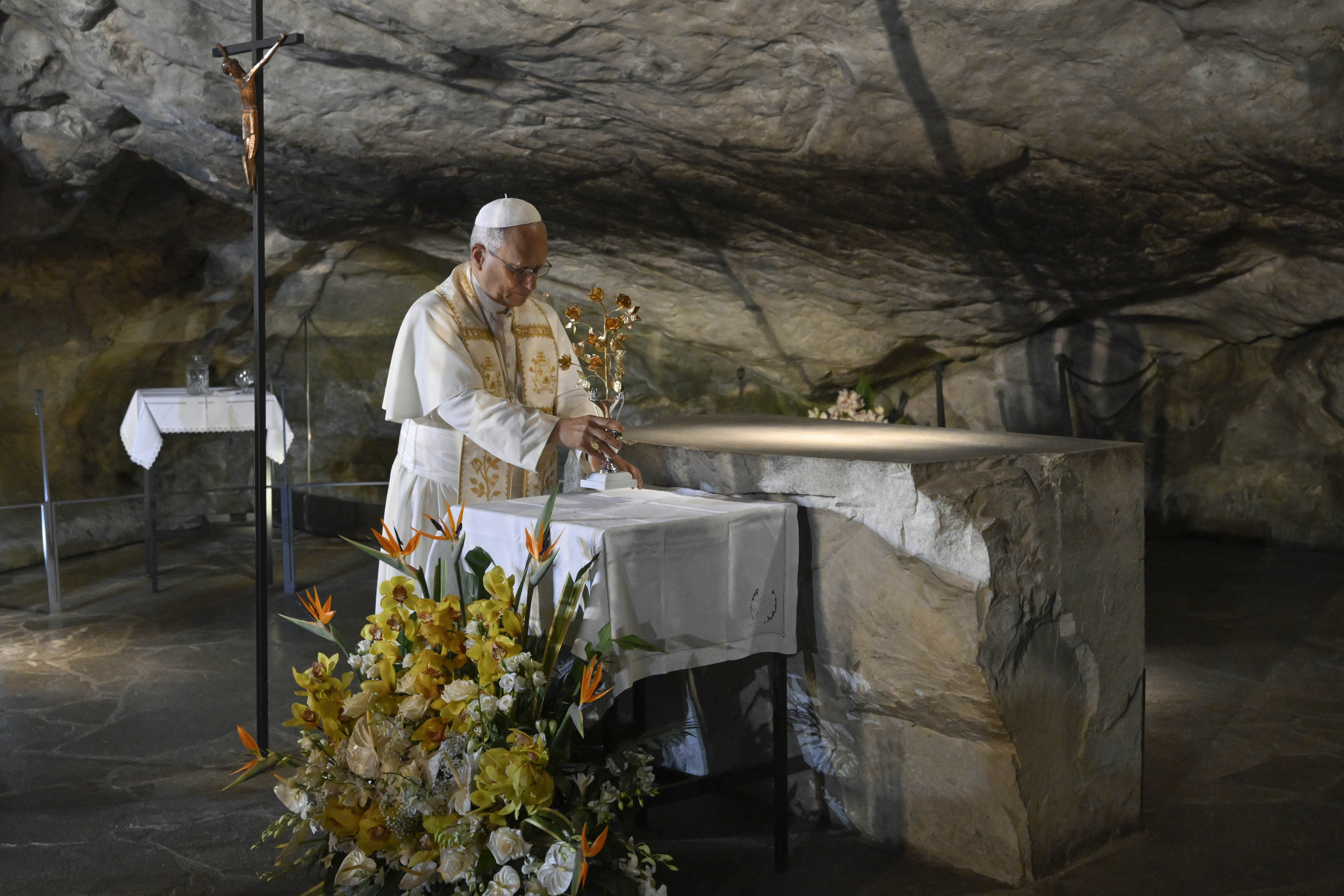
He also did not rule out a possible stop in Arequipa: “As [Pope Leo] will handle it, according to his team of cardinals and the way he plans everything, it’s possible that he could also be in Arequipa.”
Balcázar also said he offered the pontiff several suggestions. Among them, he proposed that after his visit to Chiclayo, he could travel by helicopter “to the Andean area of Incahuasi and Cañaris, which is a very poor, Quechua-speaking region that he knows very well.”
“We have offered him a helicopter to reach any place he wishes quickly, because he wants to cover as many small towns as possible in the north and also in the jungle and Cusco,” he told the group of journalists, among them EWTN News, waiting for him after his private audience with the Holy Father.
Balcázar shares details of his meeting with the Holy Father
The president described the meeting as “magnificent and friendly” and highlighted as a meaningful detail that he is a “congressman for Lambayeque, Chiclayo,” the city where the pope lived from 2015 to 2023.
“We have known each other before,” he explained, referring to the reason why the private audience, held in the Vatican’s Apostolic Library, lasted “almost two hours.”
Balcázar’s visit coincided with the vote count from the second round of Peru’s presidential elections. According to the president, they discussed the country’s political situation, especially the need for the transition of power after the election to be “as orderly as possible, without major conflicts, and for the loser to recognize the winner.” He added that the pope “is concerned that we are still in the middle of this vote.”
The official proclamation of the winner is expected in mid-July.
During the meeting, they also discussed the encyclical Magnifica Humanitas, published May 25, which focuses on issues such as artificial intelligence and human rights. “We went through his entire encyclical, which, of course, I have read, and what comes through is a powerful call to the common good,” he said.
They also spoke about migration. The pope, Balcázar explained, is “aware that there are criminals who migrate from one country to another,” but at the same time is “even more aware that we should not persecute migrants moving from one country to another, because the world has always been marked by migration everywhere, and those migrants must be given the right to life, especially, as he emphasizes, in a very important chapter on human rights.”
“Those human rights must have concrete substance, not just a lyrical declaration, but must be translated into material and objective realities,” he added.
After leaving the Apostolic Palace around 1 p.m. Rome time, the president went to the Vatican Gardens, where he stopped to pray before the image of St. Rose of Lima, enthroned in a historic ceremony presided over by the pope in January.
Vatican highlights good relations with Peru
According to the Vatican, in the subsequent meeting with Secretary of State Cardinal Pietro Parolin and the secretary for relations with states and international organizations, Archbishop Paul Richard Gallagher, “satisfaction” was expressed over the good relations between the Holy See and Peru, along with a desire to strengthen them further.
They also discussed “matters of common interest, including socioeconomic developments, illegal mining activity, the promotion of the common good and dialogue, and efforts to foster social cohesion.”
Likewise, “there was an exchange of views on the regional and international sociopolitical situation, with particular attention to migration, organized crime, and the repercussions of conflicts.”
Visit still awaits official confirmation
At the beginning of June, Balcázar stated that Leo XIV would visit Peru on Nov. 10, though several months remain before the trip and the Holy See has not yet officially confirmed the final itinerary.
This story was first published by ACI Prensa, the Spanish-language sister service of EWTN News. It has been translated and adapted by EWTN News English.
Pope Leo XIV has emphasized the value of the Eastern Catholic Churches, warning that failing to understand them is harmful to the Church.
In a private audience with members of the Reunion of Aid Agencies for the Oriental Churches on June 18, Leo highlighted the great gift of the Eastern Churches in communion with Rome. He also explained that these Churches offer Catholics a rich diversity, often unknown to the wider Church.
“Yes, the Eastern Catholic Churches have a great gift to offer the entire Catholic community, which is often unaware of the diverse ecclesial traditions within its ranks,” the pope said. “The Christian East can only be preserved if it is understood: to lose that understanding is to impoverish the Church.”
Leo also stressed the importance of seminary formation for Eastern Catholics preparing for the clergy. He stated that this can help Catholics appreciate not only their own heritage but also that of the Eastern Orthodox Church.
“The Eastern Catholic communities preserve many of these [spiritual riches], sharing them with their brothers and sisters in the Orthodox Churches,” Leo explained. “It is good for us to delve deeper into these treasures together with millions of our Eastern Catholic brothers and sisters, as we look forward to progress toward full unity with all the Eastern Churches.”
His remarks also included an appeal for peace in war-torn regions, particularly those where Eastern Christians are affected.
“Let us pray to Jesus, the Lord of peace, and appeal to people’s consciences so that they may be moved by indignation; and may respect for humanity and a proper sense of civility be restored!”
VATICAN CITY — Pope Leo XIV presided Thursday over the funeral rites for Cardinal Camillo Ruini, remembering him as a servant of the Church who “knew how to guide the people of God.”
The funeral liturgy took place June 18 at the Altar of the Chair in St. Peter’s Basilica, two days after Ruini died late Tuesday, June 16. Several cardinals, archbishops, and bishops were present to bid farewell to one of the most prominent figures of the Italian Church.
“For many years he served the Church, carrying out with the same dedication both the humblest tasks and those most laden with responsibility that the Lord wished to entrust to him,” Pope Leo said in his homily.
The pope recalled Ruini’s long and influential ecclesial service, pointing in particular to the initiatives that “left a deep mark on the journey of the ecclesial community and also on civil society.”
Among them, Leo cited Ruini’s “Cultural Project,” his efforts to promote the contribution of Catholics in Italian religious, civil, and political life, the diocesan synod in Rome and its implementation, and his “active and dialoguing presence at the various levels of the life of the Church, as well as of the secular world and society.”
Reflecting on the readings proclaimed during the liturgy, the pope cited St. Paul’s words that neither death nor life, nor angels, principalities, the present, the future, powers, height, depth, or any other creature “will be able to separate us from the love of God.”
Pope Leo XIV delivers the homily for the funeral Mass for Italian Cardinal Camillo Ruini on June 18, 2026, in St. Peter’s Basilica at the Vatican. | Credit: Daniel Ibáñez/EWTN News
According to Pope Leo, this was “the truth that also animated Cardinal Ruini in his ministry.”
“The love of God is faithful,” the pope said. “Nothing can defeat it or separate us from it, because it is his gift, it comes from him, and it is poured out upon us beyond any merit of our own.”
Leo also quoted from Ruini’s spiritual testament, in which the cardinal, speaking of the many people to whom he felt gratitude for the good he had received, wrote: “From them I received no less than what I tried to give.”
“I think these are words that can also help us to live our responsibilities and our various forms of service with the same humility and the same trust in God,” the pope said.
The pope then turned to another passage from the day’s liturgy, taken from the Gospel of John: “Father, I desire that they also, whom you have given me, may be with me where I am.”
In those words, Pope Leo said, one can see the summary of a program of life — “the direction and ultimate purpose of a life spent for the good of one’s brothers and sisters and lived in the constant search for God’s designs for one’s own salvation and theirs.”
Again citing Ruini’s spiritual testament, the pope recalled the cardinal’s words: “I hope, Lord, that I have acted not for personal interests but for the goals that were entrusted to me and that I shared from the heart.”
Leo’s homily was also marked by memories of the popes Ruini served, including St. Paul VI and especially St. John Paul II, in whom — as Ruini himself wrote in his spiritual testament — the cardinal “experienced” the presence of the Lord.
At the end of the homily, the pope reflected on the episcopal motto Ruini chose as a bishop: “The truth will set us free.”
Those words, Leo said, “summarize the profound understanding of the person and of freedom that Christ has revealed to us and that the Church teaches: We are made for truth and for goodness, and only in this do we find unity, peace, and full fulfillment, in earthly life and for eternity.”
Looking at Ruini’s life, the pope concluded, “at how he lived and how he left this world, we can perceive a sign of the strength and solidity with which a person grows and matures when he finds in the truth that comes from God the center and foundation of his existence.”
This story was first published by ACI Stampa, the Italian-language sister service of EWTN News. It has been translated and adapted by EWTN News English.
Cardinal Camillo Ruini, a formidable strategist of the Church in Italy during the pontificate of St. John Paul II and a key architect of its post-Cold War engagement with politics and culture, died Tuesday in Rome.
As head of Italy’s bishops’ conference and vicar of Rome during the 1990s and the 2000s, the cardinal often took strong and influential stances on social and moral issues, giving him a reputation for helping to shape ecclesiastical and political opinion.
Personally courteous, reserved, and even shy in manner, he was also intellectually sharp, politically shrewd, and very determined on questions of principle, especially when it came to “nonnegotiable” issues such as the right to life, marriage, and the family. Any severity he would direct toward ideas rather than persons, while he remained generally polite and respectful toward opponents.
All of this made him a trusted collaborator of John Paul II — and later of Benedict XVI — as he dedicated himself to keeping the Catholic Church in Italy relevant at a time when secularism was increasingly taking hold of the nation’s politics and society.
His skills and tact became most evident in 2004 when he urged Italian Catholics to boycott advocating the liberalization of Italy’s legal restrictions on in vitro fertilization (IVF). The referendum the following year failed due to low turnout and while secularists accused Ruini of having overstepped the mark for a churchman, others praised his strategy and his determination to speak out. Some affectionately awarded him the nickname “Rovini,” meaning the “ruiner” of secularists’ plans.
A year later, the cardinal drew the ire of the “gay lobby” when he warned that giving full legal recognition to unmarried couples would represent an “eclipsing of the nature and value of a family and a very grave harm to the Italian people.” In 2007, he was the key promoter and inspirer of a large Family Day rally in Rome, intended to block civil-unions legislation being pushed by the government of Romano Prodi. He also spoke out on several high-profile “end-of-life” cases, always in defense of the sanctity of human life.
Also known for his views on the relationship between faith and politics, Ruini frequently addressed issues such as secularism, a “healthy secularity” regarding Islam, and what he perceived as the “naturalistic tendency of modern man,” which he considered a significant threat to religious faith.
In Italy he was especially noted for being the architect and longtime president of the Church’s “cultural project,” formed in the aftermath of the collapse of the Christian Democracy era that had dominated postwar Italian politics. The project sought to shift Catholic influence from party politics to the deeper work of shaping national culture and public debate.
Evangelizing mission
Both the cardinal and St. John Paul II worked well together, giving renewed coherence to the Church’s evangelizing mission and devising a framework in connection with John Paul II’s encyclicals. But his positions also drew opposition within the Church, especially from allies of Jesuit Cardinal Carlo Maria Martini, a former archbishop of Milan, who believed he was abandoning the “spirit of the Council.”
“Cardinal Ruini deserves recognition for having steered the ship through the storm, for having shared John Paul II’s vision and for having fought to implement it in our country,” wrote Italian commentator Professor Stefano Fontana in La Nuova Bussola Quotidiana on June 17.
Born in Sassuolo in the province of Modena on Feb. 19, 1931, Camillo Ruini was the son of a local doctor who, during his schooling and in late adolescence, discerned a vocation to the priesthood. At 18 he entered seminary, later continuing his studies in philosophy and theology in Reggio Emilia and then at the Pontifical Gregorian University in Rome.
Ordained a priest on Dec. 8, 1954, Ruini returned three years later to his native Reggio Emilia, where for nearly two decades he formed young clergy as a philosophy lecturer in the diocesan seminary before becoming a widely respected professor and then head of inter‑diocesan and academic theology institutes in Modena and Bologna. Alongside this teaching he threw himself into lay apostolates, serving as chaplain to Catholic university graduates, diocesan delegate for Catholic Action, and president of the John XXIII Cultural Centre — work that honed the intellectual and pastoral instincts he later brought to the national stage.
Appointed auxiliary bishop of Reggio Emilia‑Guastalla in 1983, he soon emerged as a key organizer of the 1985 Loreto ecclesial convention, a landmark attempt to reset relations between the Church and Italian society after the political and ecclesial upheavals of the 1960s and 1970s. In 1985 he joined the bishops’ commission for Catholic education, culture, and schools.
John Paul II elevated him to the cardinalate in 1991, after which he entered the decisive phase of his episcopal career as president of the Italian Bishops’ Conference (1991–2007) and vicar of Rome (1991–2008). A member of several Vatican dicasteries and the author of numerous essays and research works, he also served as grand chancellor of the Pontifical Lateran University. He played a significant role in the 2005 conclave that elected Benedict XVI, and from 2010 to 2014, at the request of Pope Benedict, he served as president of the International Commission of Inquiry on Medjugorje. He also headed the academic committee of the Joseph Ratzinger-Benedict XVI Vatican Foundation.
He praised John Paul II and Benedict XVI but was less at ease during the pontificate of Pope Francis. His criticisms, he suggested, stemmed not from conservatism but from concern that some of the faithful might struggle to understand Francis’ direction of the Church. Upon the pontiff’s death in April 2025, Ruini set out four conditions that, in his view, the new pope should possess: sound doctrine, capacity for governance, a spirit of communion, and the strengthening of the faith. Many observers saw in these criteria an implicit critique of the pontificate just ended.
Final interview
The cardinal continued to speak out publicly up until his final days. In one of his last interviews given to Corriere della Sera to coincide with his 95th birthday in February, Ruini said he disapproved of Benedict XVI’s resignation, praised Francis for his “great courage” but faulted him for “taking too little account of tradition,” and said his first impression of Leo XIV was excellent.
He had a negative opinion of President Trump, saying he had “upset American and world politics,” which were “going in a very questionable direction.” He was also not supportive of restoring the Traditional Latin Mass, saying: “It’s very important for people to understand the language in which they celebrate.”
The cardinal died after suffering from a heart condition in his later years, but he endured his final months with serenity. He spoke and wrote often about death, reported Corriere della Sera, accepting his approaching end with “detachment and even cheerfulness,” and continued to celebrate Mass until shortly before his passing.
In his tribute to the late cardinal published June 17, Pope Leo XIV said the news of his death had awakened in his heart “deep feelings of closeness, together with gratitude to the Lord for the gift of this esteemed man of the Church, who lived his ministry generously.” He recalled the cardinal’s legacy to the Italian Church, remembering him as an “experienced and wise brother, strengthened by deep faith, sharp intelligence, and farsighted vision,” and who “served the Gospel and the Church with discretion and self‑sacrifice.”
Similar heartfelt tributes were received from the ecclesial and political world: John Paul II’s former personal secretary, Cardinal Stanislaw Dziwisz, said Ruini “always sought the good of the Church, with clarity of faith, loyalty to the magisterium, and a deep sense of duty and pastoral responsibility.” He expressed his gratitude for Ruini’s collaboration with John Paul II at “decisive moments” in the life of the Church.
The current Vicar of Rome, Cardinal Baldassare Reina, gave thanks for Ruini’s “long and fruitful Christian life and for his service to the Church,” and Cardinal Matteo Zuppi, president of the Italian bishops’ conference, said the cardinal helped the Church in Italy to “think, discern, speak, and walk in its own time.”
Ruini’s episcopal motto — “Veritas liberabit nos” (“The truth sets us free”) — “remains a summons for all,” he said. Italy’s premier, Giorgia Meloni, described him as a “great man of the Church,” while Prodi recalled a “profound connection” with Ruini, who, as a young man in Reggio Emilia, guided him and other youth in the diocese.
Elisabetta Valgiusti, a Roman citizen who knew Ruini personally, praised him for being a “leading figure in the life of the Catholic Church at every level and in public debate more broadly.” She especially lauded him for his understanding of culture, which she said he saw as a “meeting ground between the Church’s own mission and the nation’s most urgent needs.”
Valgiusti, an EWTN documentary filmmaker who founded Save the Monasteries to help Christian communities through cultural and communication projects, told the National Catholic Register, the sister partner of EWTN News, that she remembered her conversations with him “with gratitude and respect,” especially during the pandemic period.
“We will miss his strong and upright voice, and also his piercing gaze,” she said.
Pope Leo XIV will celebrate the funeral for Ruini at the Altar of the Chair in St. Peter’s Basilica on Thursday afternoon, June 18, together with cardinals, archbishops, and bishops.
This storywas first publishedby the National Catholic Register, the sister partner of EWTN News, and has been adapted and updated by EWTN News.